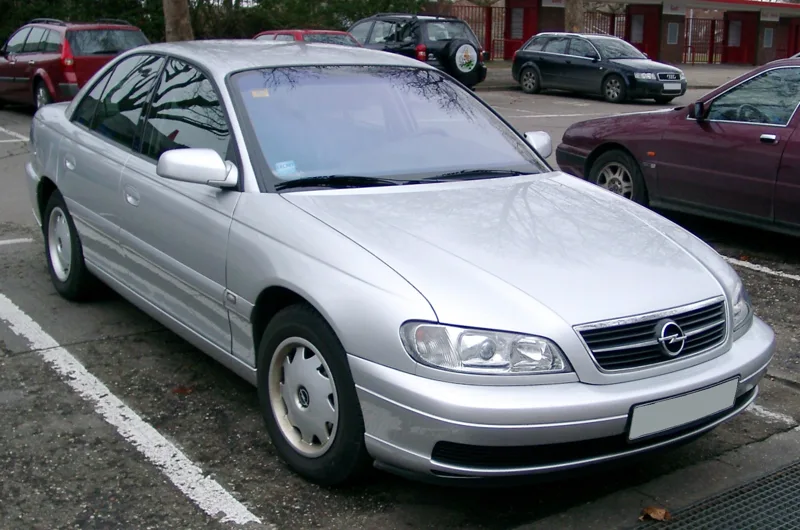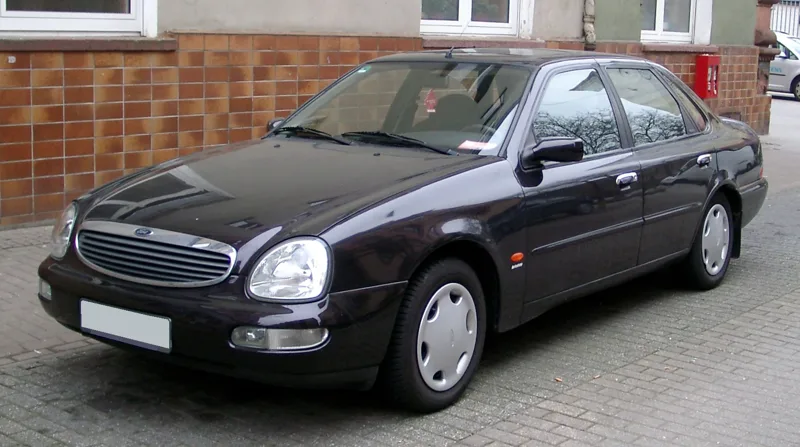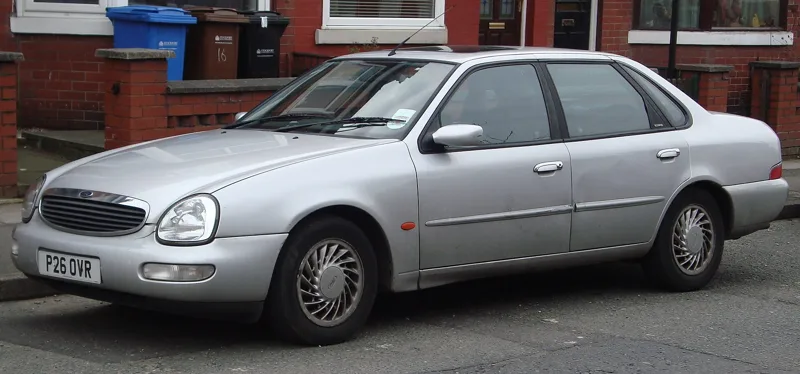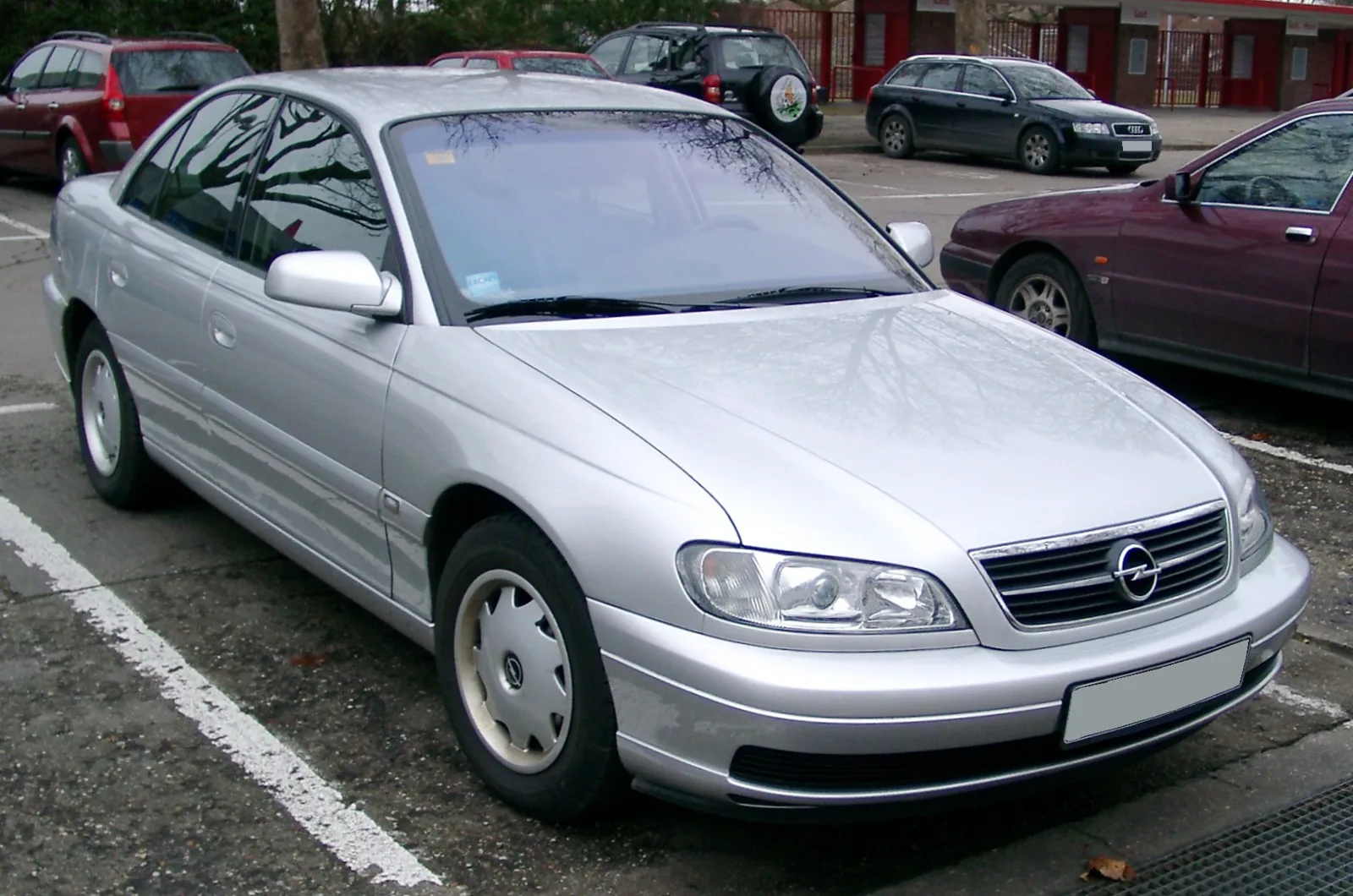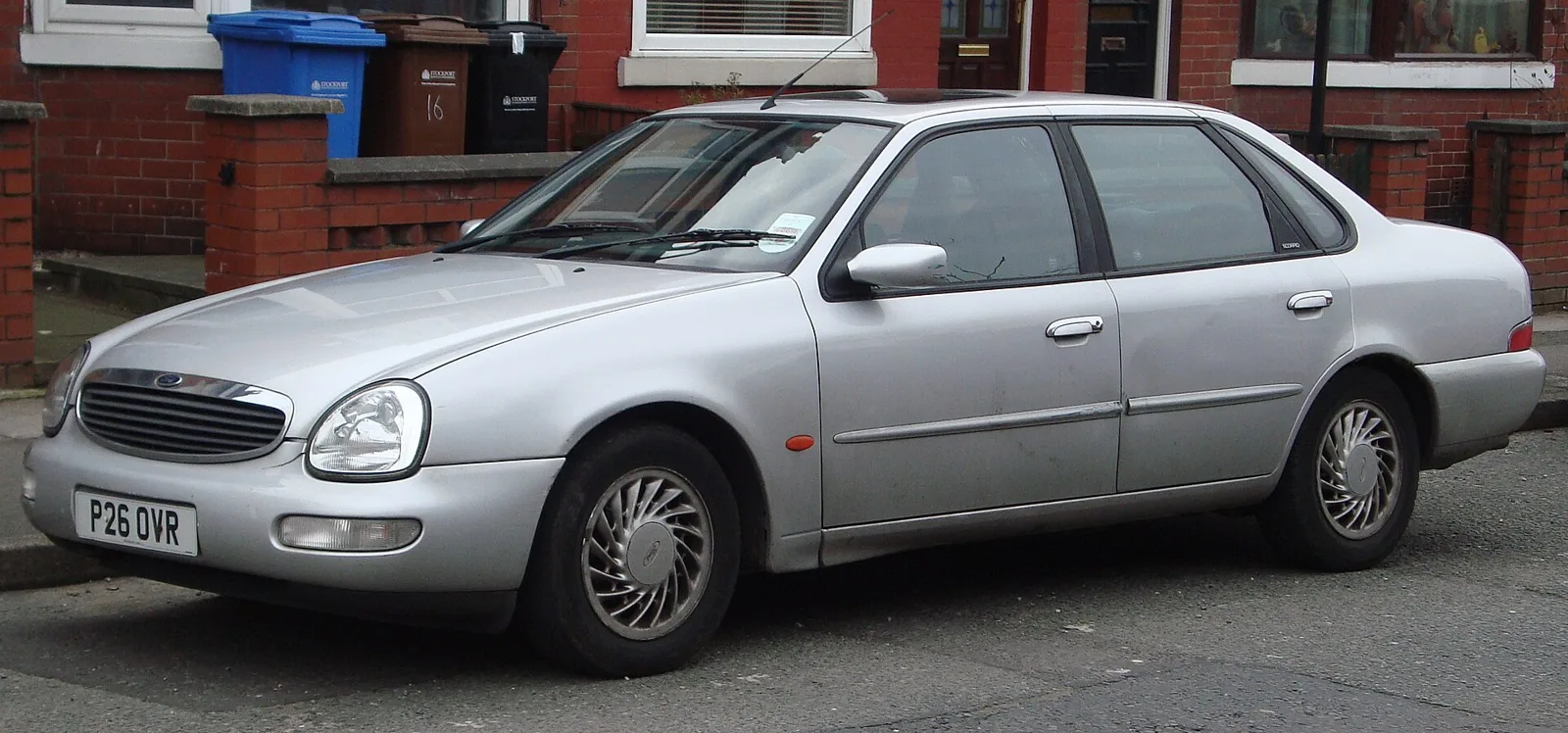
Both were built to take on the German premium saloons of the 1980s, but the Opel Omega won awards and the Ford Scorpio won a reputation for its looks.
The Ford Scorpio was built by Ford Germany from 1985 to 1998 on a stretched Sierra floorpan, with ABS standard across its range. The Opel Omega ran from 1986 to 2003, won European Car of the Year for 1987, and offered a rear-wheel drive layout, a V6 and a range of performance variants.
The Ford Scorpio and the Opel Omega were both European executive cars that tried to take on the Mercedes and BMW saloons. Their first generations overlapped from 1986 to 1994, and their second generations shared the mid-1990s. Both cars were engineered with comfort and space in mind, but only one of them became a byword for controversial styling.
Which came first, and how long did each run?
Ford Germany produced the Scorpio from 1985 to 1998, as the replacement for the European Granada. In the UK and Ireland the car was badged Granada until 1994. The Scorpio was launched more than a year ahead of new rivals from Rover and Opel/Vauxhall.
The Omega went into production in September 1986, and sales began in November. It replaced the final Opel Rekord, which had been in production since 1978. The Omega A ran until 1994, and the second-generation Omega B was made from 1994 until 2003.
The Scorpio lasted until the summer of 1998, when its production finished. It was not directly replaced, and the Omega was succeeded by the Opel Signum in 2003.
Two executive cars from the 1980s: one won European Car of the Year, and the other became a byword for controversial styling.
What were the two cars built to do?
The Scorpio was intended to keep Ford's position in Europe as the main alternative to Mercedes or BMW for buyers who wanted an executive car. Ford's Taurus was of a similar size, but Ford maintained that the Scorpio had to suit different buyers.
Scorpio owners prized stability at speed, a turning circle that was not too wide and room in the back. Americans wanted other things, so the two cars took separate paths even though the Taurus was close in size.
The Omega was meant to take on the BMW 5 Series and the Mercedes-Benz E-Class. Opel later considered a V8 version for that fight, but that plan ended with the prototypes.
How were the two cars engineered?
The Scorpio was codenamed DE-1, because it was intended to straddle the European D and E segments. It was heavily based on the Sierra, sitting on a stretched version of that car's floorpan, and it used a similar styling philosophy to the Sierra and the third-generation Escort.
The Omega was an evolution of Opel's design theme, engineered for aerodynamics because fuel prices were rising. It had a drag coefficient of 0.28, while the Caravan estate was rated at 0.32, and its development programme cost 2.5 billion Deutschmarks, or 1.5 billion pounds.
The Omega used a longitudinal engine with rear-wheel drive, with a five-speed manual or a four-speed automatic. The UK version was sold as the Vauxhall Carlton, a name Opel retained from the Rekord.
Which engines did each car offer?
The Scorpio's early engines were Ford's Pinto units in 1.8 and 2.0-litre sizes, and the Cologne V6 in 2.4 and 2.8-litre form. The larger V6 was later replaced by a 2.9-litre derivative, and the 2.4 stayed in production until 1994.
The Omega offered 1.8, 2.0 and 2.4-litre four-cylinder engines, along with diesel and turbodiesel options. Its six-cylinder range ran from 2.6 and 3.0-litre engines to a 3.0-litre 24-valve version, and the four-cylinder petrol engines were based on Opel's Family II design.
In North America the Merkur Scorpio used the 2.9-litre Cologne V6 tuned to 140 hp (104 kW). Most were fitted with the A4LD four-speed automatic, while the rest had the T-9 five-speed manual.
Specifications side by side
| Specification | Ford Scorpio (first generation) | Opel Omega A (first generation) |
|---|---|---|
| Production | 1985 to 1994 (first generation) | 1986 to 1994 |
| Body styles | Hatchback at launch; saloon from December 1989; estate from early 1992 | Saloon and estate; LS Caravan panel van |
| Layout | Based on the Sierra's stretched floorpan; all-wheel drive later an option | Longitudinal engine, rear-wheel drive |
| Four-cylinder engines | Pinto 1.8 and 2.0 litre; 2.0 DOHC from 1989 | 1.8, 2.0 and 2.4 litre; 2.0 and 2.3 diesel; 2.3 turbodiesel |
| V6 engines | Cologne 2.4 and 2.8 litre, later 2.9 litre; 2.9 litre 24-valve Cosworth from 1990 | 2.6, 3.0 and 3.0 litre 24-valve |
| Transmissions | Not given | Five-speed manual or four-speed automatic |
| Drag coefficient | Not given | 0.28 (0.32 Caravan) |
| ABS | Standard across the whole range | Electronic engine management and ABS |
| Awards | Not given | European Car of the Year for 1987 |
| Other markets | Merkur Scorpio in North America, 1988 to 1989; Granada in UK and Ireland | Vauxhall Omega in the UK; Chevrolet Omega in Brazil; Isuzu distribution in Japan |
| Development cost | Not given | 2.5 billion Deutschmarks (1.5 billion pounds) |
What did the Omega's performance versions add?
The Omega 3000 was the sports version of the Omega A. It had a straight-six 3.0-litre 12-valve engine rated at 177 PS (130 kW), a lowered suspension, a limited-slip differential and a 220 km/h (137 mph) top speed. It reached 100 km/h in 8.8 seconds.
In October 1989 the Omega 3000 gained an optional 24-valve engine, with 204 PS (150 kW), a 240 km/h (149 mph) top speed and a 7.6-second run to 100 km/h. In Britain the same car was the Carlton GSi 3000.
The Lotus Omega, built in cooperation with Lotus in 1989, went further. Its 3.6-litre engine used two Garrett T25 turbochargers and an intercooler to make 377 bhp (281 kW; 382 PS). At 1,663 kg it reached 100 km/h in 5.3 seconds, and it was known in Britain as the Lotus Carlton.
The Omega Evolution 500 was a limited series built with Irmscher, with 500 examples made so Opel could compete in the DTM touring car series. It had a three-litre straight-six making 230 PS (169 kW).
How did the Scorpio's naming work in Britain?
In the UK and Ireland, Ford kept the Granada name for the Scorpio, making it effectively a Mk III Granada. The Scorpio name was used there as a trim designation rather than the model name, positioned above the traditional Ghia top of the range.
Those cars were marketed as Granada Scorpio, but they were badged simply as Scorpio, with an elongated Granada beneath. The name was dropped entirely for the second generation, when the Scorpio name was adopted across the range.
What were the Scorpio's reliability and running costs like?
The Scorpio Cosworth, with its 2.9-litre 24-valve Cosworth V6, was large and fast, and its fuel consumption suffered as a result. Owners often said that about 25 mpg was as much as the engine would give.
Prop-shaft deterioration over time was also a known problem on early Mark I and Mark II Cosworths. In the 1998 Top Gear survey the second-generation car scored particularly low for reliability.
How did the Omega reach other markets?
In Brazil the Omega was sold as the Chevrolet Omega, with Opel six-cylinder engines until 1994. When Omega A production ended in Germany, General Motors do Brasil moved to a 2.2-litre four with 116 PS (85 kW; 114 hp) and 197 N-m of torque.
The Brazilian car then used a locally produced 4.1-litre Chevrolet straight-six, which made 168 PS (124 kW; 166 hp) and 285 N-m. Lotus tuned that engine and fitted multi-port fuel injection, and the Chevrolet Omega was produced in Brazil until 1998.
In Japan the Omega A and the Vectra became the first Opels distributed by Isuzu rather than by Toho Motors, from July 1989. The Omega sat above the Isuzu Aska in the Isuzu line-up.
How did the Omega B's engines develop?
The Omega B's engines were not a major break from the Omega A, except for the diesel. Opel's own 2.3-litre diesel gave way to a turbocharged BMW M51 inline-six, first coded U25DT and updated to the Euro 2 compliant X25DT during 1996.
A 2.2-litre 16-valve engine joined the range in late 1999 to replace the 2.0. In 2000 a 3.2-litre V6 took over from the 3.0, and a 2.6-litre V6 replaced the 2.5. In 2001 a BMW M57 2.5 DTI diesel with common rail fuel injection arrived.
What did the Scorpio offer in its equipment?
The Scorpio's list of standard and optional equipment was generous for its time. Options included a heated windscreen, cruise control, electrically adjustable front and rear seats, and later all-wheel drive. The car had a spacious rear seat and was praised for comfort.
Its most notable advance was anti-lock braking standard across the whole range, which made it the first mass-produced car to offer that. The early Chubb lock barrel gave way to a Tibbe lock by about 1987.
The Omega A had its own technology. It had electronic engine management, an on-board computer, an air-conditioned glovebox and an LCD instrument cluster from 1987 until 1991. Its self-diagnosis system could be read at authorised service stations, and it was one of the first cars with individual heated rear seats.
How did the Scorpio's styling reception compare with the Omega's?
The Scorpio's second-generation styling was controversial from the start. It was the first Ford design developed entirely on CAD/CAM, and its bulging headlights and wide grille drew heavy criticism from press and public alike.
Critics attacked the front and the rear. One reviewer called the Scorpio the ugliest car in Britain, and a Top Gear survey in 1998 placed it third among the worst N-registered cars to own, with a particularly low score for reliability.
Some reviewers were kinder. Jeremy Clarkson said the car was as talented as the Vauxhall Omega, which was one of its main rivals, and the Scorpio was widely praised for its interior, handling and value.
The Omega's reception was warmer. It was European Car of the Year for 1987, ahead of new versions of the Audi 80 and BMW 7 Series, and the Omega B won the Irish Car of the Year title and a Japanese import award in 1995.
What did the second generations bring?
The Scorpio's second generation was launched at the Paris Motor Show in October 1994. It was sold as a saloon or estate only, and it kept the same floorpan and engines as the first generation, with self-levelling rear suspension on the estates.
Its headlights and door handles came from the Ford Crown Victoria. A facelift in September 1997 darkened the headlight surrounds and toned down the grille, but the car finished production over the summer of 1998.
The Omega B arrived in 1994 with a new exterior and a traditional rear-wheel drive chassis. It was sold in the US as the Cadillac Catera from 1997 to 2001, and its platform formed the basis of the Holden Commodore VT. A facelift in autumn 1999 added an electronic stability program.
Opel also explored a V8 Omega. The V8.com concept with GM's LS1 V8 was shown at Frankfurt in 1999, and an Omega V8 was shown at Geneva in March 2000. Production was cancelled after 32 pre-series cars, with concerns over the transmission.
Which buyer suits each car?
A buyer who wanted an executive car with an awards pedigree, a choice of diesel power and a range of sporting variants would look at the Omega. The Lotus Omega and the Omega 3000 gave that buyer a real performance choice.
A buyer who wanted a roomy executive saloon with excellent rear legroom and a heavier focus on comfort would look at the Scorpio. Its styling was the sticking point, and the criticism fell most heavily on the second generation.
Neither car earned a clean record. The Omega took the awards and the performance variants, while the Scorpio took the styling row and a place in the Dutch royal stables. A buyer who valued looks and quiet would choose differently from one who wanted a sports saloon.