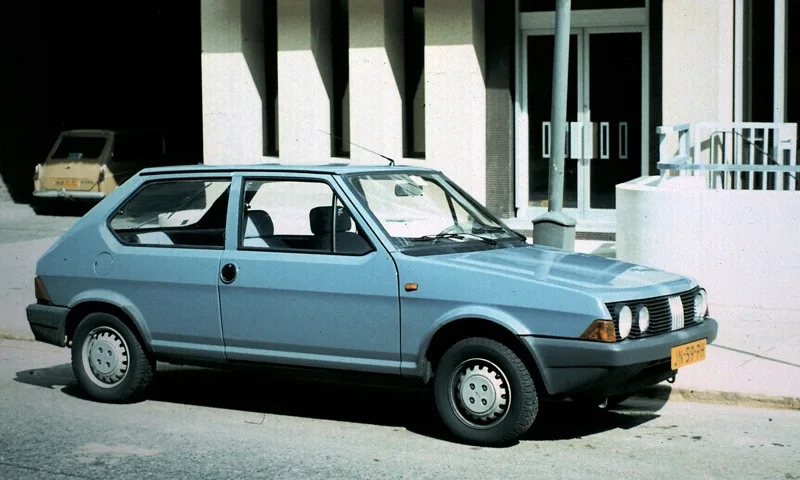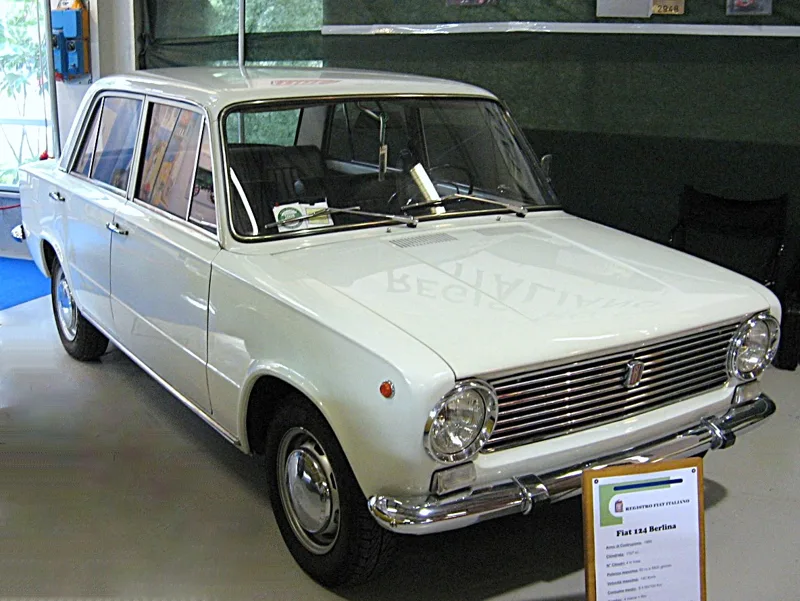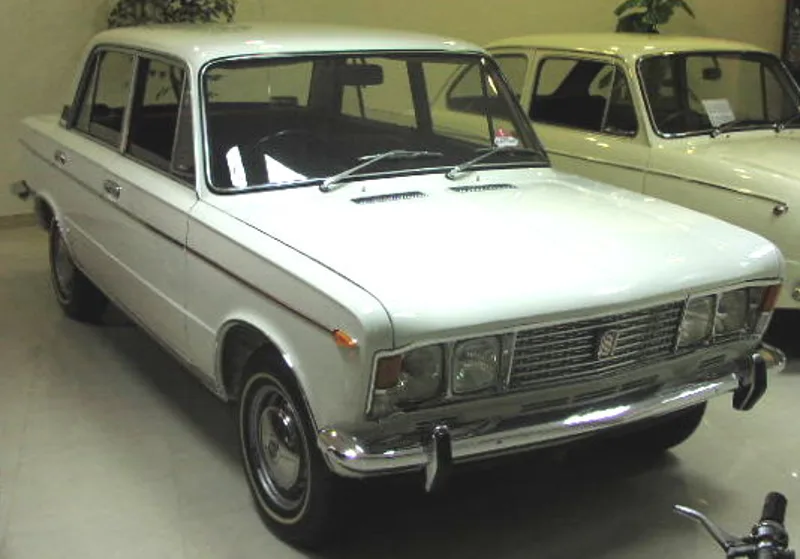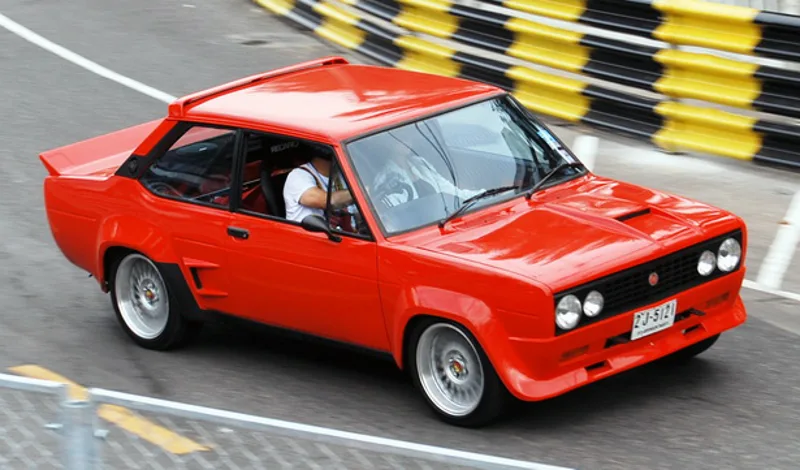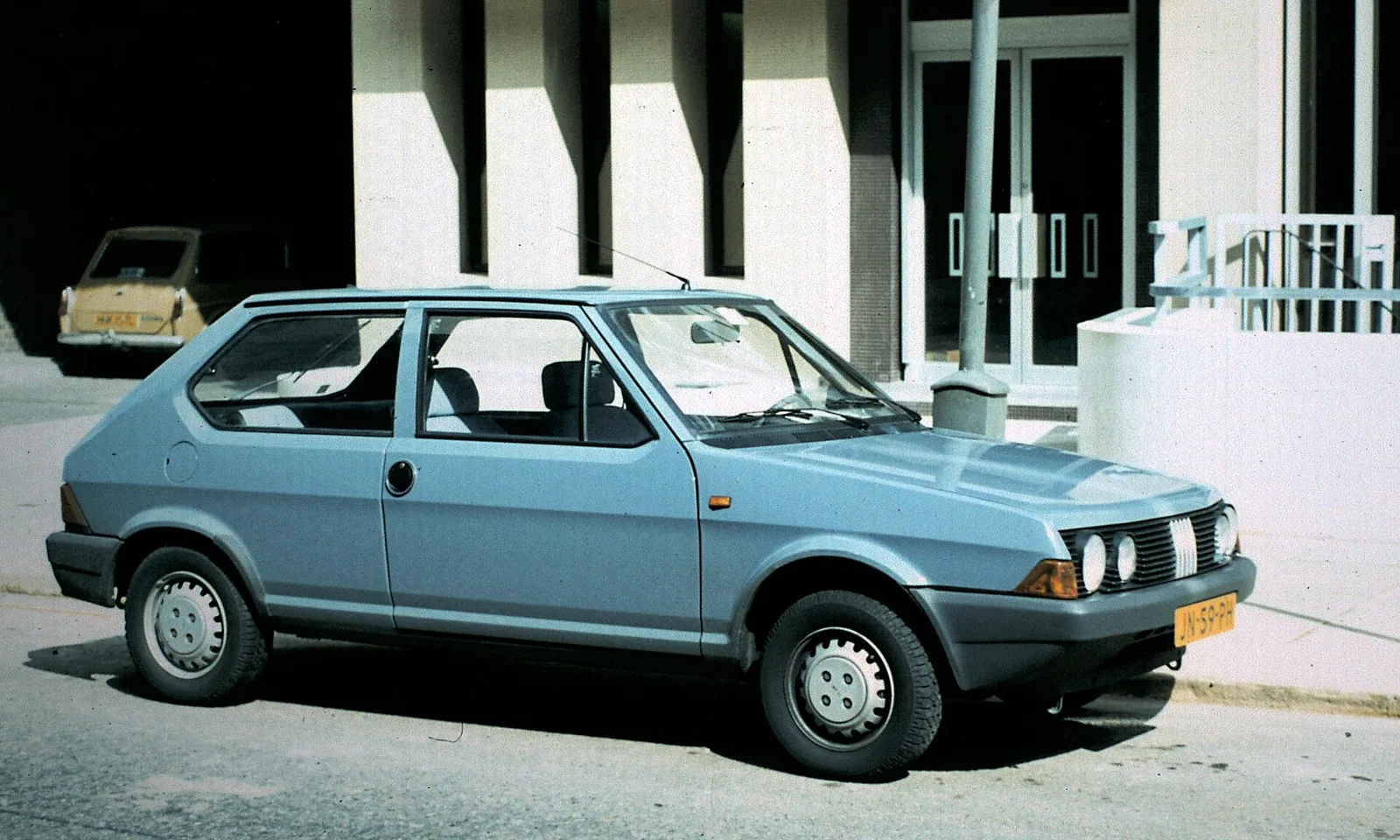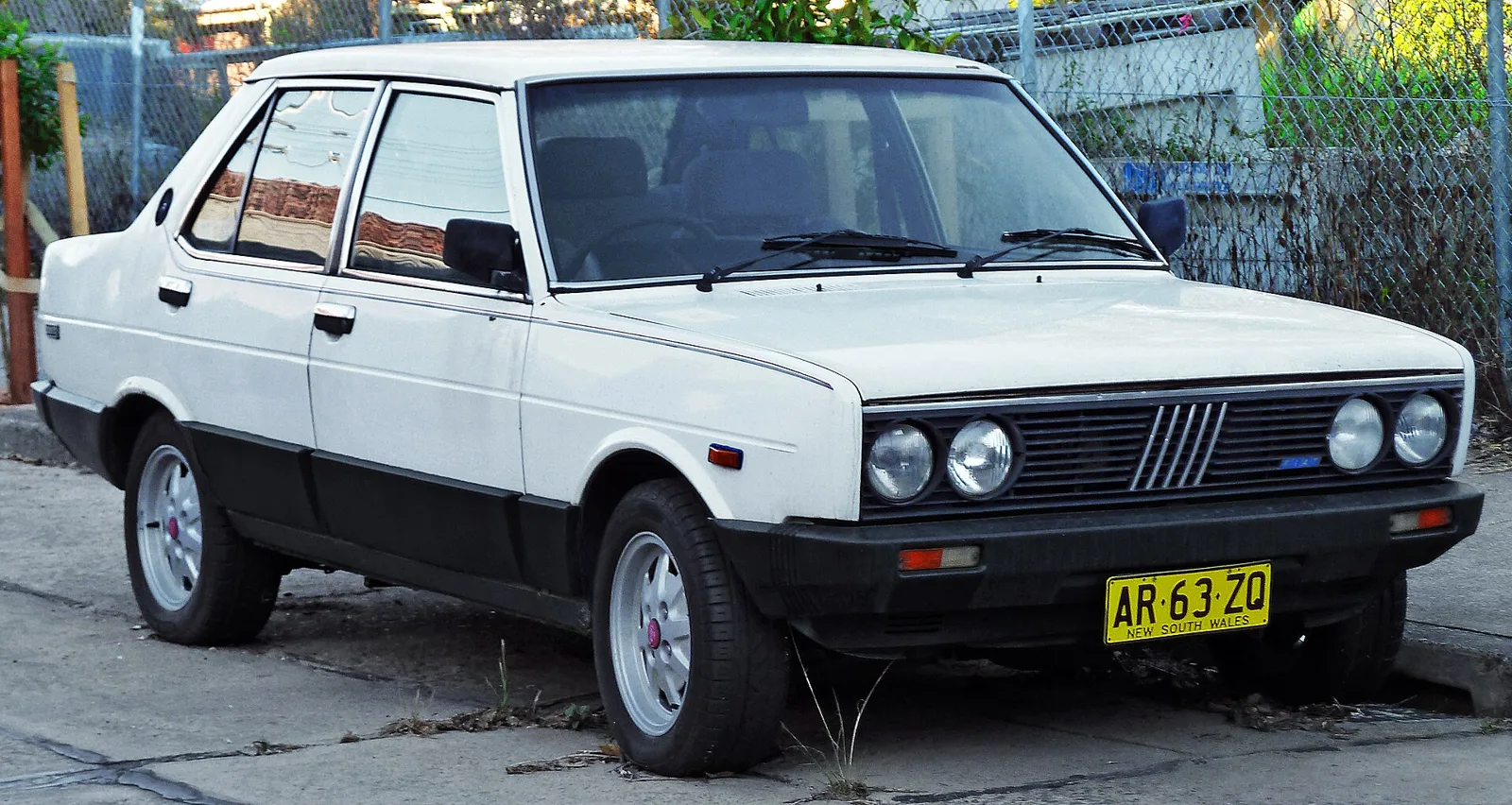
Built from 1974 to 1984 across Turin and many other countries, the 131 paired sensible family motoring with a works rally record.
Launched in 1974, the 131 was a saloon and estate built in Turin and sold as the Mirafiori in some markets. Its Abarth rally version took the manufacturers' World Rally Championship in three seasons, and a two-door Brava reached the United States from 1978. Its Abarth rally version won the manufacturers' World Rally Championship in 1977, 1978 and 1980.
The Fiat 131 was a mid-size family car that Fiat built and sold from 1974 to 1984, and it was also known as the Mirafiori after the Turin district where it was made. It replaced the 124 with a steel monocoque body, rear-wheel drive and a solid rear axle, and it later sold in many countries under licence.
When did the Fiat 131 launch, and what was it?
The 131 debuted at the 1974 Turin Motor Show as a single-generation family car, sold as a pair of saloon bodies and as a five-door estate. It succeeded the Fiat 124, and the Mirafiori name came from the plant district where the cars were built.
The 131 was produced across the whole decade of its life, and total output reached 1,513,800 cars. The range was revised in 1978 and again in 1981, with new engines, interior updates and different lighting that kept the model competitive as its rivals improved.
Its layout was conventional for the period. A three-box steel monocoque carried a longitudinally mounted front engine, with the gearbox directly behind it and a tubular propeller shaft running under the transmission tunnel to a solid live rear axle. That straightforward arrangement made the car easy to adapt for production in plants abroad.
A conventional family car with a three-box body and a solid rear axle that became one of the most successful rally cars of its era.
What engines and transmissions did the 131 use?
The first 131s used 1.3 L and 1.6 L pushrod four-cylinder engines derived from the 124 family, and later versions brought twin-cam units. Buyers could choose a four-speed manual, a five-speed manual or, on the larger engine, a three-speed torque converter automatic.
Every engine was an inline four with a cast iron block and an aluminium cylinder head. The original pushrod engines were claimed to be the first of their type with a belt-driven camshaft, and the later double overhead camshaft versions used a toothed timing belt to drive the valves.
Fuel reached the engine via one Weber ADF twin-choke carburettor, supplied from a steel tank in the boot. Ignition used contact breakers with Marelli distributors, a system typical of cars of that era.
Series 1 cars came in two trim levels. The base Mirafiori, also called Normale or Standard, kept single square headlamps and simpler furnishings. The better equipped Special, or simply S, had four round headlamps, three square dials, an adjustable padded wheel and reclining seats.
Options that were exclusive to the Special included air conditioning, a tachometer, a limited-slip differential and a vinyl roof. Any body could be paired with either engine and trim, except that the Special estate came only with the larger 1.6 unit.
How did the 131 suspension and brakes work?
Front suspension used MacPherson struts with track control arms and an anti-roll bar, while the rear combined double trailing arms, a Panhard rod and coil springs. Front disc brakes and rear drums were fitted, and a load-sensing valve controlled the rear brake bias.
The independent front layout was sound engineering for its time. The rear design, although it used a solid live axle, was considered advanced because the trailing arms and Panhard rod controlled the axle precisely, which gave the car good stability and handling.
Braking was more conventional. Front discs used a single-piston sliding caliper, but the rear drums were a step back from the 124, which had discs at all four corners. A tandem master cylinder with a vacuum servo worked two separate hydraulic circuits.
The load-sensing valve adjusted rear brake effort according to how much weight the car carried and how it pitched under braking. The handbrake was a floor-mounted lever working the rear axle through Bowden cables, and the secondary dashboard switches were lit by a central bulb whose light travelled through fibre optics.
How did the 131 sell in its first years?
The 131 went on sale in a difficult market, because it launched during the oil crisis and amid strikes and high inflation in Italy. Sales built slowly, and the car found a stronger reception in export markets than it did at home.
Initial sales were disappointing. Parts and material costs rose at the same time that demand fell, but sales gradually recovered as the car matured and as dealers in other countries took up the model with enthusiasm.
The 131 reached the United States in 1975 with a DOHC 1.8 litre four carried over from the 124 but fitted with more emissions equipment. It was offered with a GM three-speed automatic, and the American cars were marketed in a different way from the European range.
Not every 131 was a production car. A coachbuilder run by Salvatore Diomante near Turin produced a limousine conversion of nearly five metres, showing how far the body could be stretched.
Which performance models did Fiat build?
The Abarth Rally was built in 400 examples for homologation in 1976, and it was developed through a three-way effort between Fiat, Bertone and Abarth. Its twin-cam engine delivered strong performance on the road, and in competition the car became one of the most successful rally machines of its generation.
Built for homologation, the Abarth Rally used a DOHC four-valve derivative of the twin-cam engine with a double downdraught Weber 34 ADF carburettor. The road car's output was 140 PS (138 bhp; 103 kW) at 6400 rpm, with 172 N m (127 lb ft) of torque reached at 3600 rpm.
Bertone took part-completed two-door shells from the Mirafiori line, fitted plastic mudguards, a plastic bonnet and a boot lid, and reworked the metal structure so it could carry independent rear suspension. The cars then went to Fiat's Rivalta plant, where they received their Abarth mechanicals.
Race cars switched to dry sump lubrication and, later, mechanical fuel injection. On the track, output reached 240 PS (237 bhp; 177 kW) by 1980, and Walter Rohrl took the drivers' World Rally title that year.
What was the 131-2000 Racing?
The 131-2000 Racing was a South African model that competed in Group 1 standard car racing in 1978. Group 1 rules required competing cars to match their road-going counterparts, and the two-door Mirafiori coupe with a twin-cam engine was among the few cars suited to the class.
Fiat needed 100 units to meet the obligatory figure for the contest, and the 131 Racing parts that were meant to supply that run were lost. Around 200 imported kits were lost when a freighter went down off Kenya, taking Weber carburettors, camshafts, pistons and limited-slip differentials to the bottom.
Fiat's South African motorsport team went on to build 16 road cars, along with a handful of race and rally machines, using parts bought during a visit to Italy. At least 12 of the street cars remain roadworthy today, and one of the original racers is still owned by the driver who made it famous.
The engine was based on the 2-litre twin-cam Lampredi unit from the Fiat 132. It used two twin-choke 40 IDF carburettors, redesigned exhaust manifolds, hot camshafts and high-compression pistons giving 10.2:1, which produced 96 kW (131 PS; 129 hp). The suspension was lowered by 30 mm and fitted with reinforced dampers.
What changed with the Series 2 in 1978?
The 1978 facelift brought new DOHC Twin Cam engines badged Supermirafiori, larger rectangular headlamps and a new interior that won a Compasso d'Oro in 1979. Fiat also introduced a diesel and a sporting Racing model in the same period.
Steering geometry was revised to reduce understeer and lighten the steering at low speeds. The exterior gained larger rectangular front lights, new bumpers on the Supermirafiori and bigger rear lights. The dashboard and a single-spoke steering wheel formed part of a new CL and Supermirafiori interior designed by Rodolfo Bonetto.
The Racing, badged Mirafiori Sport in the UK, launched in 1978 with a 115 PS twin-cam engine. It had four round headlamps with smaller inner lamps, a different grille, spoilers, extended wheel arches and a short-throw five-speed gearbox, and it could reach 180 km/h (110 mph).
Diesel engines arrived with the Series 2 and were built in Sofim's new factory at Foggia. Diesel cars received four equal round headlamps and a bulge in the bonnet to clear the taller engine. The estate version changed its name to Panorama then.
Diesels had been tested in competition before they reached showrooms. Abarth prepared three diesel-engined cars for the 1977 London-Sydney Marathon, and two of them finished, in 15th and 23rd place.
How did the 131 fare in the United States?
The 131 reached the United States as the Brava, a two-door model, which was joined by the Super Brava from mid-1978. The car was marketed with a 1.8 litre engine at first, and before 1978 ended a more powerful 2 litre twin-cam replaced it.
For 1980 a fuel-injected version added 102 hp (76 kW), and the estate was dropped from the range. For 1981 electronic fuel injection became standard and the headlamps changed to single rectangular units. That year was the last for the Brava and the 131 in the American market.
Popular Mechanics, in its January 1991 edition, placed the 1979 Fiat 131 in its Overall Worst category, describing it as the most trouble-prone car recorded in the magazine's Owner Report history. That verdict remains one of the sharpest judgements on the model's American career.
Was there an experimental 131 hybrid?
Yes. Fiat showed the 131 Ibrida in 1979, a prototype with a 903 cc engine taken from the 127 and detuned to 33 hp (24 kW). It was paired with a 24 kW DC electric motor, and regeneration through the braking system provided additional power.
The batteries were 250 amp units stored in the boot, and they added 175 kg (386 lb) to the weight. That penalty was large for a car of this size, and it made the hybrid a demonstration of possibility rather than a practical road car.
The prototype never reached production, but it shows Fiat testing electric assistance as early as 1979, long before hybrid cars became common on the road.
What did the Series 3 change in 1981?
The Series 3 arrived in March 1981 with a new 1.4 litre engine, a revised 1.6 and more room for passengers. Central locking and electric windows became standard on Supermirafiori models, and the Racing and Sport versions ended production shortly afterwards.
The Mirafiori engines moved from pushrod units to single overhead camshaft engines with a balance shaft. New clutches and gearboxes arrived with a tweaked suspension, and the fuel tank grew by three litres to 53 L (14.0 US gal; 11.7 imp gal).
Passengers gained 6 cm (2.4 in) of length and 2 cm (0.79 in) of height. The door hinges were changed to give a wider opening angle, and lower rubbing strips covered every model up to CL specification.
In June 1981 a supercharged model called the Volumetrico Abarth appeared in some countries. Built in a small series of about 200 units, also known as the 2000 TC Compressore, it could reach 190 km/h (118 mph).
What replaced the saloon and estate?
The saloon was discontinued in 1983 when the Ritmo-based Regata arrived, while the estate survived as the Maratea until 1984. The Maratea offered a 115 PS 2.0 TC engine or a 72 PS 2.5 diesel, and it kept the four round headlamps and five-bar grille of the Series 3 family.
Production of the Maratea ended in 1984, when it was replaced by the Regata Weekend, which filled the same role in the range. The Regata saloon had already taken over the saloon's place a year earlier.
In Australia the saloon received a final update for the 1984 model year. Round quad headlamps and a five bar grille arrived, alongside 14-inch wheels with unique offset and a 20 mm brake master cylinder bore, plus a revised central locking arrangement.
How did the 131 perform in rallying?
The 131 Abarth was a Group 4 rally car that took the manufacturers' title three times, in 1977, 1978 and 1980. The car also helped Markku Alen collect the 1978 FIA drivers' cup, while Walter Rohrl took the 1980 drivers' title.
Between 1976 and 1981 the 131 won 20 WRC events, with drivers including Sandro Munari, Timo Salonen, Attilio Bettega and Michele Mouton. Its Group 4 predecessor, the 3.5-litre Abarth SE 031, had earlier won the 1975 Giro d'Italia automobilistico.
Factory cars wore Olio Fiat's blue and yellow colours between 1975 and 1977. In 1978 and 1979 the team was sponsored by Alitalia and wore its red, white and green colours, a look that became as recognisable as the car's engineering.
Rally success built the car's reputation in Italy and abroad, and that reputation helped its image well beyond the family-car market. Results came across many events, from the Giro d'Italia automobilistico to the full World Rally Championship calendar.
How did the 131 spread to other countries?
Licensees built the 131 across Europe, Africa, Asia and South America, and many of those versions stayed in production long after Fiat dropped the car from its Western European market. SEAT, Tofas and Polski Fiat were among the most significant producers.
SEAT began building the 131 in Barcelona in early 1975, initially as the 131 L with a 1,438 cc OHC engine and the 131 E with a 1,592 cc DOHC unit. Diesel versions followed, and a 2,500 cc Sofim diesel became one of the most successful taxi engines in early 1980s Spain.
By 1982 the SEAT range matched the Italian Series 3 bodywork, with CL, Supermirafiori and Diplomatic models. The Diplomatic used a 1,995 cc engine, and the Panorama estates were chosen by the Spanish national police as patrol cars.
Tofas began building the Murat 131 at Bursa in Turkey, with bird-named variants called Sahin, Dogan and an estate called Kartal. Production continued in Turkey from 1977 to 2002, with CKD assembly in Egypt from 1991 to 2009 and in Ethiopia from 2006 to 2010.
In Poland, Fabryka Samochodow Osobowych assembled 3102 Polski Fiat 131p cars between 1975 and 1981. Many went to state institutions and party officials, and the first series used Special trim under the Mirafiori name before the L and CL trims arrived.
El Nasr built the 131 at Helwan in Egypt from 1982 onward, using complete knock-down kits. Other CKD assembly took place in places as far apart as Cordoba, Bogota, Jakarta, Lisbon and Livingstone, which shows how widely the design was adopted.
What are the Fiat 131 specifications?
| Specification | Detail |
|---|---|
| Type | Mid-size family car, front engine, rear-wheel drive |
| Production | 1974 to 1984; 1,513,800 built |
| Body styles | Two-door and four-door saloon, five-door estate |
| Series 1 engines | 1,297 cc or 1,585 cc OHV inline four |
| Series 3 engines | 1.4 litre and revised 1.6 litre single overhead camshaft |
| Transmission | Four-speed manual standard; five-speed and three-speed automatic options |
| Front suspension | MacPherson struts, track control arms, anti-roll bar |
| Rear suspension | Solid axle, double trailing arms, Panhard rod, coil springs |
| Brakes | Front discs, rear drums, load-sensing valve |
| Fuel tank | 53 litres (14.0 US gal; 11.7 imp gal) from Series 3 |
| Abarth Rally | 140 PS (138 bhp; 103 kW) at 6400 rpm, 400 built in 1976 |
| World Rally titles | Manufacturers in 1977, 1978 and 1980 |