From a Citroen 2CV on the French Riviera to four world championship rally wins, a Pikes Peak record and a leading role in FIA women in motor sport.
Michele Mouton raced for Audi and Peugeot during the 1980s. She won four world championship rallies, finished second in the 1982 drivers' title and later led the FIA women in motor sport commission.
Michele Mouton is a former French rally driver who competed in the World Rally Championship for the Audi factory team. She won four rounds and finished runner-up in the 1982 drivers' championship. In 1985 she also set a record time to win the Pikes Peak International Hill Climb, and she later became the first female president of the FIA commission for women in motor sport.
How did Mouton get into rallying?
Mouton was born on 23 June 1951 in Grasse, a town on the French Riviera close to the mountain stages of the French rally calendar. Her parents grew roses and jasmine on their large property. She began studying law after leaving school, but soon gave it up to concentrate on rallying, having already driven her father's Citroen 2CV from the age of 14.
Her interest in competition grew in 1972, when a friend, Jean Taibi, asked her to practise the Tour de Corse with him. She later co-drove for him in the 1973 Monte Carlo Rally, which was the first ever World Rally Championship event. Her father then suggested she switch to the driving seat if she wanted to continue, and promised her a car and one year to prove herself.
The first woman to win a world championship rally, who then took the same skills into rallying's governance.
What were Mouton's early results?
She made her driving debut in an Alpine-Renault A110 at the Rallye Paris-Saint-Raphael Feminin and then tackled the Tour de France Automobile. At the end of 1973 she finished eighth overall in the Ile de Beaute event, a companion to the Tour de Corse. In 1974 she made her world championship driving debut and finished twelfth in the Tour de Corse, and she ended the year as French and European ladies' champion.
In 1975 she successfully defended her ladies' titles and raced at Le Mans. Alongside Christine Dacremont and Marianne Hoepfner, she won the two-litre prototype class in an all-female team. The result attracted a major sponsor, the French oil company Elf, and she looked back on the race with a memory of passing almost everybody on slick tyres in the rain.
Why did Mouton join Fiat?
Fiat France signed Mouton for the 1977 season to partner Jean-Claude Andruet. She was not initially impressed by the handling of the Fiat 131 Abarth, but the car proved successful and she was consistent. She finished eighth in the Tour de Corse in 1977 and fifth in the same event for three years from 1978 to 1980.
Outside the world championship she won the 1977 RACE Rallye de Espana in a Porsche Carrera RS and finished second in the 1977 Tour de France Automobile. She was runner-up to Bernard Darniche in the European Rally Championship that year. In 1978 she won the Tour de France Automobile in the 131 Abarth, and she finished fourth in the FIA Cup for Drivers, the forerunner of the drivers' world title.
How did Mouton's Audi career begin?
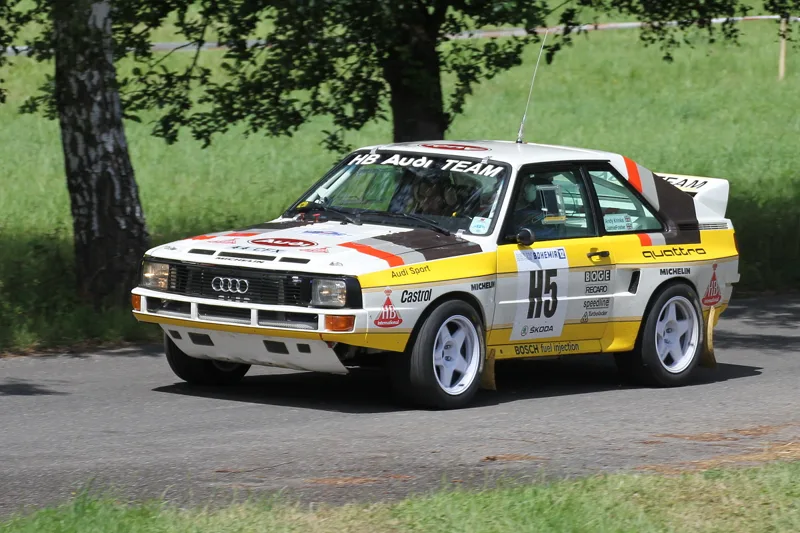
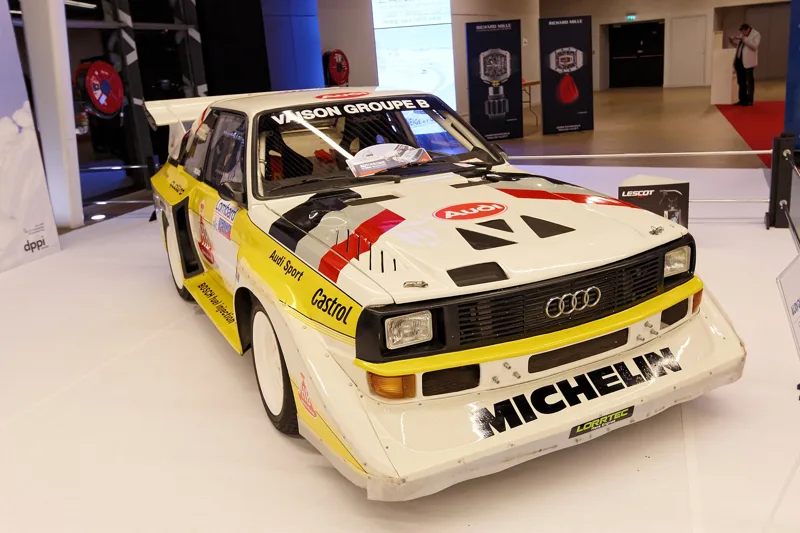
In 1980 Audi Sport, the company's new factory team, called Mouton and offered her a World Rally Championship programme for 1981. The Quattro, the first rally car to combine a turbocharger with four-wheel drive and more than 300 bhp, was not yet homologated. Hannu Mikkola, who was in charge of its development, advised her to switch to left-foot braking to counter the understeer she felt at first.
Before the 1981 season she had co-driven a Quattro at the Northern Lights Rally in Finland with Freddy Kottulinsky, and she showed encouraging pace on slippery surfaces. Audi did not enter her in the Swedish Rally that year, because she lacked experience on ice and snow. Her 1981 season began badly. She withdrew from Monte Carlo before the start after dirt entered the fuel system. At the Rally Portugal, with the Italian co-driver Fabrizia Pons, she won seven stages and took a career-best fourth place despite electrical problems. At the Rallye Sanremo, a mixed surface event, she took the lead when the local driver Michele Cinotto crashed and held off Henri Toivonen and Ari Vatanen to win.
That Sanremo result was the first time a female driver had won a world championship rally. Vatanen had been confident before the event that he would never lose to a woman, and his response after the finish was the story of the weekend. Mouton's own description of the final night, with a brake pad problem and a long stage ahead, shows how close the margin was. She finished the season eighth in the drivers' championship, and Audi was fifth in the manufacturers' standings.
What happened in the 1982 title fight?
Mouton finished the 1982 world rally season second overall, behind Walter Rohrl and ahead of the Toyota driver Per Eklund. She won in Portugal with eighteen stage wins, and she took the Acropolis Rally ahead of two Opel drivers. She also won in Brazil when Rohrl lost a wheel on the final day, which narrowed the gap in the championship.
Her Swedish Rally debut came in 1982. She briefly sat third, then slid into a snowbank and struck the Quattro of Hannu Mikkola, who had left the road at the same spot, and she still finished fifth. The season was dangerous. Her Monte Carlo accident came on stage twelve at over 110 km/h (70 mph), and the crash that followed in Sweden involved her team-mate Hannu Mikkola. The Rallye Cote d'Ivoire, which Audi had entered because of its title battle with Opel, began just after she received news that her father had died of cancer. He had asked her to start the rally.
On the final day her lead was under pressure from mechanical problems and the chance of a Rohrl win. With about 600 km left she went off the road and rolled the car, and she drove the damaged Quattro for five more kilometres before she stopped. Rohrl inherited the win and became the first two-time world champion in rallying. Audi still took the manufacturers' title, and Mouton's season had put the team at the heart of the contest.
How did Mouton compete in 1983 to 1985?
In 1983 the Group B era began and Mouton drove the Audi Quattro A1, with Stig Blomqvist as the team's third regular driver. She finished fourth in Sweden, second in Portugal and third in the Safari Rally. The 1983 season was full of retirements, including her Corsica event, but she still claimed a seventh place at the Sanremo tarmac round.
In 1984 Audi added Walter Rohrl and Mouton became part-time, competing in five world championship events. She finished second in Sweden behind Blomqvist, a result she described in terms of dancing on ice and snow. It remains her last WRC podium. Away from the championship, she made her Pikes Peak debut with Pons in an Audi Sport Quattro, and the open rally category produced a record time for her.
The 1985 season was limited for the factory team, because Peugeot Talbot Sport had beaten Audi in the previous year. Mouton tested the Sport Quattro and the Quattro S1, which she found the most difficult rally car she had driven. She contested the British Rally Championship, but reliability problems left her with a single finish. Her only world championship event was the Ivory Coast rally, where a controversy about swapped cars was never settled. Her Pikes Peak win that year beat Al Unser Jr's 1982 record by about thirteen seconds.
Why did Mouton move to Peugeot?
Her move to Peugeot came after a contract break with Audi at the close of 1985. In the German Rally Championship she won six of eight events, including the Rallye Deutschland, while her WRC programme in the Peugeot 205 Turbo 16 was limited to two rounds. Her nickname, der schwarze Vulkan, referred to her temperament and long black hair. She became the first female driver to win a major rallying championship.
Her WRC outings were in Monte Carlo and Corsica. In Corsica in 1986 she was running third when gearbox trouble forced her out. Within days the FISA announced that Group B would end, and she had remarked from Corsica that the end of Group B would be the end for her. In October 1986, two weeks after taking the German title, she announced her retirement, saying it was a good time to stop.
What did Mouton do after rallying?
In 1988 Mouton helped set up the Race of Champions alongside Fredrik Johnsson. The event was created partly to remember Henri Toivonen, and it marked a decade since the rally world championship began. She also took part in rally raids for Peugeot, driving a chase car at the 1988 Rally of Tunisia, and she was press driver at the Dakar Rally in 2004 and 2009.
In 2000 she finished second in the London to Sydney Marathon in a Porsche 911, and in 2008 she reunited with Pons for the Otago Classic in New Zealand. In 2010 she became the first president of the FIA Women and Motor Sport Commission, and in 2011 she was appointed the FIA's manager in the World Rally Championship. She has also been recognised for her career, including a knighthood of the Legion of Honour in 2011 and the first FIA lifetime achievement award in 2024.
How did her family shape her career?
Mouton credited her father, Pierre, with the support that made her career possible. He loved driving and fast cars, and he had been a prisoner of war for five years before he came home without the chance to compete. He attended many of her rallies, and her mother came along too.
When she announced her retirement she also said she wanted to start a family with the Corsican sports journalist Claude Guarnieri. Their daughter Jessie was born in 1987, and
What is Mouton's legacy?
Mouton is often described as motor sport's most successful female driver, and rally historians place her alongside Pat Moss as the benchmark for women in the sport. Stirling Moss regarded her as one of the best drivers he had seen, and Niki Lauda called her a superwoman. Her life and career were the subject of Queen of Speed, a documentary that won an Emmy for best sports documentary.