From a Laukaa farm to four drivers' titles with Peugeot, Lancia and Toyota, then a late career with Ford, Subaru and Hyundai.
Finnish driver Juha Kankkunen spent 1983 to 2002 as a factory works driver in the World Rally Championship. He collected 23 round wins and four drivers' crowns, and his titles came with Peugeot, Lancia and Toyota. He later became team manager of Toyota Gazoo Racing WRT.
Juha Kankkunen is a Finnish former rally driver whose factory World Rally Championship career ran from 1983 to 2002. Over that period he collected 23 round victories and four drivers' titles, and he became champion with three different manufacturers: Peugeot, Lancia and Toyota. Sebastien Loeb and Sebastien Ogier have since won more titles, but Kankkunen's three-manufacturer feat stood alone until Ogier matched it in 2020.
Who is Juha Kankkunen?
Juha Matti Pellervo Kankkunen was born on 2 April 1959 in Finland and grew up on a family farm in Laukaa, in Central Finland. He drove for Toyota, Peugeot, Lancia, Ford, Subaru and Hyundai during a factory career that ended after the 2002 season.
His record of four titles was once the most in the series, and his three-manufacturer success was rare enough to remain unique for many years. Both facts still shape how his career is discussed.
A rally driver who won titles for three manufacturers, then built a second career in ice speed records and team management.
How did Kankkunen get into rallying?
Kankkunen grew up near the Rally Finland route, where his father rallied and raced on ice for fun. He began driving at seven, owned his first car at 12, and debuted in rallying in 1978. His first WRC event was the 1979 1000 Lakes Rally, where he finished 14th in a Ford Escort RS2000.
Timo Makinen, a friend of his father, coached him. Financial backing came from Timo Jouhki, who later managed Tommi Makinen and Mikko Hirvonen, and that support let Kankkunen compete often and build experience. His father had taught him to drive on an ice track.
How did Kankkunen's first Toyota years go?
Toyota Team Europe signed him in 1983 after good results for Toyota Finland. In his first season he was teammate to Bjorn Waldegard, the 1979 world champion, finishing sixth at the 1000 Lakes and seventh at the RAC Rally, then retiring in Cote d'Ivoire.
The following year he entered four WRC events with Fred Gallagher as co-driver, retired in three and finished fifth at his home event. In 1985 he won the Safari Rally on his first attempt, the first driver ever to do so.
That 1985 season also brought a second win at the Cote d'Ivoire rally. He tied with Waldegard on penalty time at 4 hours 46 minutes, and won on the tiebreak.
Why was the 1986 Peugeot season so controversial?
Peugeot signed Kankkunen for 1986 to replace Ari Vatanen, who was recovering from a near-fatal accident. He won in Sweden, at the Acropolis and in New Zealand, driving the 205 Turbo 16 E2, and the season ended in a dispute over Group B cars and the Sanremo rally.
Group B was banned for the following year after Henri Toivonen died at the Tour de Corse. The decision outraged Peugeot team principal Jean Todt. Later Peugeot were excluded from the Rallye Sanremo, which handed Lancia a triple win.
Stewards had ruled, on re-examination, that the underbody fins on the 205s were illegal side skirts, even though the cars had passed scrutiny before the rally. Going into the Olympus Rally in the United States, Markku Alen led Kankkunen by a point. Alen won the event and held the title for eleven days until Peugeot's appeal succeeded.
The FIA deemed the Sanremo exclusion illegal and annulled those results, which made Kankkunen the youngest champion in the series' history.
Did Kankkunen defend his title with Lancia in 1987?
Yes. He became the first driver to defend a world title successfully. With Peugeot withdrawn, he moved to Lancia Martini and drove the Delta HF 4WD. He won the Olympus Rally and the season-ending RAC Rally, edging out his teammates Biasion and Alen for the championship.
He led his Lancia debut at Monte Carlo until the final stage, when team boss Cesare Fiorio controversially made him finish second behind Miki Biasion. His Olympus win came by only 12 seconds over Biasion in a six-hour event.
He was presented with the International Rally Driver Award at the Autosport Awards for the second year running. Still, his uneasy acceptance of team orders favouring Biasion, an Italian driver in an Italian car, made a move elsewhere for 1988 likely.
What happened to Kankkunen at Toyota in 1988 and 1989?
Kankkunen returned to Toyota Team Europe in 1988, but the title defence faltered. The Celica GT-Four ST165 was unreliable, he retired in three rallies in a row, and he finished 37th in the drivers' standings.
Outside the WRC he had a much better year. Driving a Peugeot 205 T16, he took the Dakar Rally at the first try, after the 405 T16 of his compatriot and teammate Ari Vatanen was stolen while Vatanen led. He finished runner-up to Vatanen at Pikes Peak and won the first Race of Champions, beating Timo Salonen in the final to become Champion of Champions.
The 1989 season was better. The GT-Four scored its first win at Rally Australia, and he was third in Corsica and in the RAC Rally. That gave him third in the championship, and Toyota took its best-ever manufacturers' position, second.
How did Kankkunen win his third title in 1991?
He returned to Lancia for 1990, and by the halfway point he was fourth in the championship, behind Toyota's Carlos Sainz. He finished third that season, and Lancia's manufacturers' crown made it four in a row, a record.
In 1991 he won the Safari, the Acropolis, his home 1000 Lakes Rally and Rally Australia, and the RAC Rally made five wins. That RAC victory, ahead of Kenneth Eriksson and Sainz, gave him a third drivers' title, and his 150 points that year remain a record for a single season.
He also became the second two-time Race of Champions winner, beating Didier Auriol in the final. In 1992 he finished on the podium in all nine events he contested but won only in Portugal. Before the last rally Sainz led him by two points, and Sainz's RAC win confirmed the title for the Spaniard.
How did Kankkunen win a fourth title at Toyota in 1993?
Kankkunen rejoined Toyota in 1993, when Lancia left the championship. Midway through the season his co-driver Juha Piironen suffered a brain haemorrhage, and two substitutes took the seat. Kankkunen still won five of his ten WRC events and took a record fourth drivers' title.
He used Nicky Grist and Denis Giraudet for different rallies, and his RAC win that year was his 20th in the series, breaking Markku Alen's record. Teammate Auriol helped bring Toyota the manufacturers' crown, the first ever for a Japanese maker.
He also won the Finnish Sportsman of the Year award, becoming the second motorsport figure to do so, behind Keke Rosberg, the 1982 Formula One champion.
What went wrong for Kankkunen in 1994 and 1995?
In 1994 he opened with second at Monte Carlo and a Portugal victory. At the Safari he crashed from the lead after hitting a pothole that rain had made at 180 km/h (112 mph). Mechanical trouble then cost him places in Argentina and Sanremo, and in Finland he rolled his car and lost 20 minutes.
He slipped out of the title fight and finished behind Auriol and Sainz. It was the only time in his career that a teammate took the title while he was in contention.
In 1995 he led the championship by seven points with two rallies left. At the penultimate round, Rally Catalunya, he was almost a minute clear and looked set for his first tarmac win, but a pacenote error by him or his co-driver Grist ended in a crash.
The FIA then found Toyota guilty of using illegal turbo restrictor bypasses, banned the team for 12 months and stripped its drivers of points, Kankkunen included. The FIA president, Max Mosley, said there was no suggestion the drivers knew what was happening.
In 1996 he drove for private Toyota entries at three rallies. His best finishes were fourth in Sweden, then third in Indonesia and a second place in Finland.
Why did Kankkunen move to Ford and then Subaru?
Kankkunen joined Ford's factory team halfway through 1997, replacing Armin Schwarz. Joining mid-season left no room for a title push of his own, so his job was to support Carlos Sainz. He led the Acropolis Rally until a team order sent him behind Sainz.
In Finland in 1997 he lost to the defending champion, Tommi Makinen, by seven seconds, a margin that is still the narrowest in that event's history. He finished fourth runner-up at the RAC Rally that season.
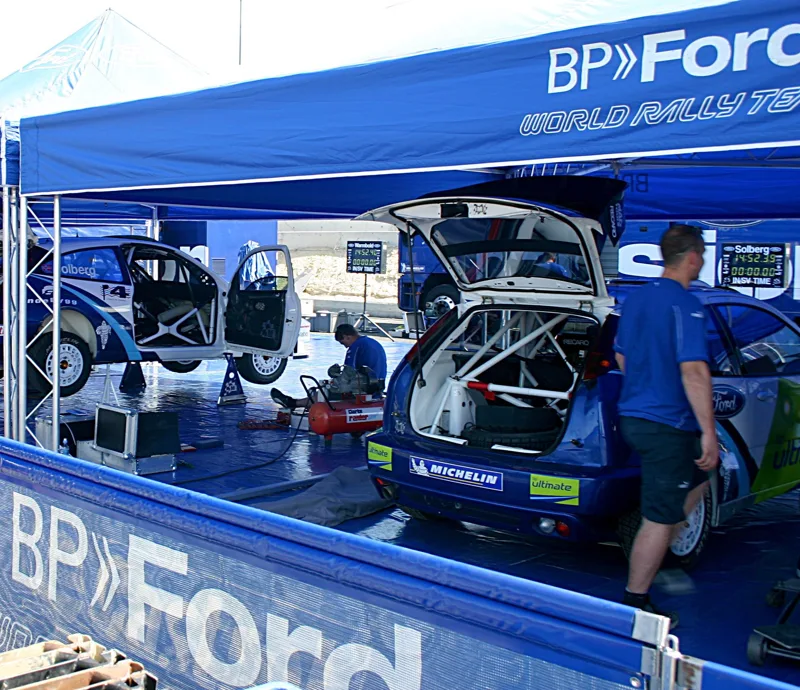
He stayed with Ford in 1998, with Bruno Thiry as teammate. The Escort WRC was winless in its final year while the team concentrated on the Focus. Kankkunen finished on the podium seven times, and he and the team both ended fourth in their championships.
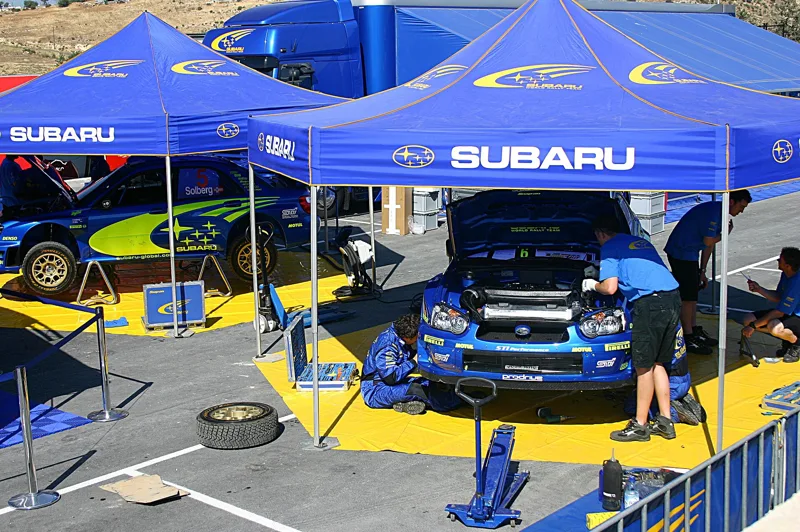
Ford then signed Colin McRae, and Kankkunen moved to Subaru for 1999. He won in Argentina, his first win in more than five years, by 2.4 seconds from his teammate Richard Burns. Subaru had offered a deliberate 10-second penalty as a team order, but team principal David Richards ruled it out while the TV cameras were filming.
He also won his home rally, beating Burns to what became his final WRC victory. Subaru finished one-two on the RAC, but Toyota took the manufacturers' title by a four-point margin. Kankkunen was fourth in the drivers' championship.
The 2000 season went worse. His best result was second at the Safari behind Burns, and after only two other podium finishes he was eighth in the drivers' standings.
What did Kankkunen do after leaving the WRC?
Kankkunen's WRC career wound down after 2000. In 2001 Subaru did not offer a deal, and he competed in only one world rally, the Rally Finland for Hyundai, retiring with technical problems. For 2002 Hyundai offered a 14-round package he was not keen on, so the deal was scaled back to nine gravel rallies.
Hyundai finished fourth in the manufacturers' championship that year, its best WRC result, and Kankkunen retired after the season. Hyundai's fifth place in New Zealand was his best result of the year.
In 2004 he stood for the European Parliament under the banner of the conservative National Coalition Party. His 17,815 votes were not enough for a seat. He was also a shareholder in Flying Finn, Finland's first low-cost airline, which later went bankrupt, and in a Ruka luxury property company with Jari Kurri.
In 2004 he signed with Volkswagen's works rally raid team for the 2005 Dakar Rally. After a rival crashed into his stranded car, he was pulled out after the tenth stage.
In early 2007 Kankkunen set an ice speed record on a frozen arm of the Gulf of Bothnia near Oulu, driving his own Bentley Continental GT. Across the flying kilometre the average came out at 321.65 km/h (199.86 mph), with a peak of 331 km/h (206 mph). The old mark had stood at 296.34 km/h (184 mph) with a Bugatti EB110 Supersport.
In 2011 a figure of 330.695 km/h (205.48 mph) was recorded in an E85-fuelled Bentley Continental Supersports convertible. Bentley marked that with a limited run of 100 Supersports models.
On 23 July 2010 organisers said he would enter the 2010 Rally Finland, marking the event's sixtieth jubilee, alongside long-time co-driver Juha Repo in a Ford Focus RS WRC 08. At just over 51 years old he finished eighth, ahead of many regular WRC drivers.
Since the 2025 season he has run the Toyota Gazoo Racing WRT squad as team manager. In the same season he was credited as the first person to win a manufacturers' title both as a driver and as a team manager for the same maker.
How did Kankkunen's seasons line up?
| Years | Team | Highlights |
|---|---|---|
| 1983-1985 | Toyota Team Europe | Safari win in 1985, on his first attempt |
| 1986 | Peugeot | Title, and youngest champion after the Sanremo annulment |
| 1987 | Lancia | Defended the title; first driver to do so |
| 1988 | Toyota | Dakar Rally win; 37th in the WRC standings |
| 1989 | Toyota | First GT-Four win at Rally Australia; third overall |
| 1990 | Lancia | Third overall; Lancia's fourth manufacturers' title in a row |
| 1991 | Lancia | Third drivers' title; 150 points |
| 1992 | Lancia | Podium in all nine events; one win in Portugal |
| 1993 | Toyota | Record fourth title; five wins |
| 1994 | Toyota | Runner-up in Monte Carlo; teammate Auriol took the title |
| 1995 | Toyota | Lead lost after the Catalunya crash and the ban |
| 1997 | Ford | Second in Finland, seven seconds behind Makinen |
| 1998 | Ford | Seven podium finishes; fourth overall |
| 1999 | Subaru | Wins in Argentina and Finland; fourth overall |
| 2000 | Subaru | Second at the Safari; eighth overall |
| 2001 | Hyundai | One rally, Finland; retired |
| 2002 | Hyundai | Fifth in New Zealand; retired after the season |