From a Talbot Sunbeam in 1988 to the 2001 title by 44 points, the career of a rally driver who died in 2005 aged 34.
Richard Burns was an English rally driver who won the World Rally Championship in 2001 and was runner-up in 1999 and 2000. No other Englishman has won the World Rally Championship as a driver, and he died in 2005, aged 34, after a brain tumour.
Richard Burns was an English rally driver whose 2001 World Rally Championship title made him the first Englishman to win the series as a driver. He was runner-up in 1999 and 2000, and his results helped Mitsubishi to a manufacturers' title in 1998 and Peugeot to one in 2002. He died in 2005, aged 34, after a long illness.
Who was Richard Burns?
Richard Alexander Burns was born on 17 January 1971 in Reading, Berkshire, and grew up in Oxfordshire. He drove for Mitsubishi, Subaru and Peugeot in a career that ran from 1990 until 2003. His co-driver for the whole of that career was Robert Reid.
Burns is still discussed as the only Englishman to win the World Rally Championship as a driver, and his time with Subaru is the period most associated with his title.
The first Englishman to win the World Rally Championship, whose title came on the final round and whose later career was cut short by illness.
How did Burns start out in rallying?
Burns took the wheel at eight, in a field near home, in his father's old Triumph 2000. He joined the Under 17 Car Club at eleven and was its driver of the year in 1984. A day behind the wheel of a Ford Escort at a rally school near Newtown, followed by an early backer in David Williams, set him on his path.
His first rallies, in 1988, were in a Talbot Sunbeam he owned, though that machine lacked the pace to stand out. In 1989 he borrowed other competitors' machines and rallied events that used stages from bigger championships, which let him progress.
In 1990 Williams bought him a Peugeot 205 GTI for the Peugeot Challenge. Winning that series earned him a place on a WRC round in Great Britain the same year.
How did Burns move into the World Rally Championship?
In 1991 Burns met Robert Reid, and the two finished 16th overall on their first WRC rally together, while winning the A7 category. Williams then bought him a Group N Subaru Legacy, and with Prodrive's support he won the National Championship in 1992.
In 1993 he entered the British Rally Championship with the Subaru Rally Team, where Alister McRae was also a driver. He won four rounds and became the youngest champion in the series' history, while a seventh place at a very snowy British WRC round added to his reputation.
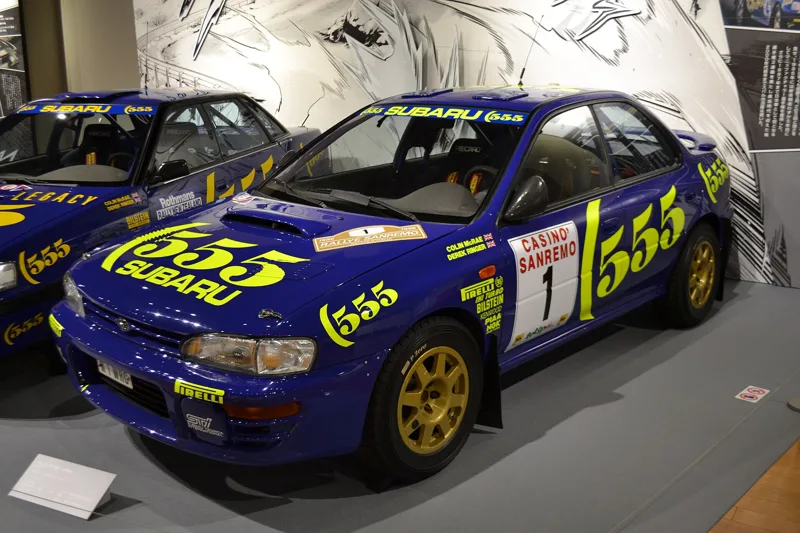
He stayed with Subaru through 1994 and 1995, then tried the Asia Pacific series, a calendar that took in New Zealand and Australia. At the end of 1995 he placed third at the RAC Rally, trailing his Subaru colleagues in the fight for the title, and Colin McRae won his first and only WRC crown that year.
What were Burns's years with Mitsubishi like?
Mitsubishi Ralliart gave Burns his first international opportunity in 1996, and he took the win on Rally New Zealand that year. That event was then part of the Asia-Pacific championship, but the result showed his promise to the Mitsubishi team.
In 1998 he claimed his maiden WRC victory on the Safari Rally, which is widely regarded as the toughest test on the calendar. A second win came on Rally GB, his last event for Mitsubishi, where a late retirement by Carlos Sainz handed the drivers' title to Tommi Makinen and secured the constructors' title for the team.
The 1997 season was harder. He drove a Lancer Evolution, the same type as Makinen, but the car was re-badged as the Carisma GT. He finished fourth five times in eight rallies, was second on the Safari, and ended the championship seventh overall.
How did the Subaru years lead to the 2001 title?
Burns returned to the Prodrive-run Subaru works team under David Richards for 1999, alongside Juha Kankkunen and Bruno Thiry. He finished second in the drivers' standings that year, the best championship position of his career, and Subaru finished second in the manufacturers' series.
A team-order mix-up gave Kankkunen the win on Rally Argentina, and Burns finished second behind him at the 1000 Lakes Rally. In 2000 a mid-season crash in Finland cost him momentum, and Marcus Gronholm went on to take the title. Burns recovered to win the Rally of Great Britain that season.
How did Burns win the 2001 World Rally Championship?
He started the 2001 season with no points in the first two rallies, then built momentum with a fourth place in Portugal and second places in Argentina and Cyprus, both behind Colin McRae. His only individual rally win that year came in New Zealand, where McRae was second.
A second place on Rally Australia brought him within two points of McRae, who had emerged as the series leader. Consistent scoring carried Burns forward, while his rivals suffered setbacks, including a dispute over McRae's late arrival at a time control in Australia.
The final round in Great Britain decided the title. Burns's rivals had all retired by the end of the second day, so his third place behind Peugeot's Marcus Gronholm and Harri Rovanpera made him champion with 44 points. It was the lowest winning total since the points system changed in 1997.
At the finish he told Robert Reid that he was the best in the world, a remark that became part of the story of the title. Subaru marked the success with the RB5 special edition of the Impreza, and a legal fight followed over his services for 2002, which Peugeot won.
What happened to Burns at Peugeot?
Burns returned to Peugeot for 2002. Although the team was the strongest of the period, he struggled to match his team-mates Marcus Gronholm on gravel and Gilles Panizzi on tarmac. The team's existing tally of ten WRC wins did not grow during his time there.
He won Rally Argentina, but his Peugeot 206 was found to be underweight and he was disqualified, which handed the victory to Sainz. In New Zealand he was leading until near the end of day two, when he rolled the car and retired.
In 2003 he collected seven podiums and led the championship for most of the season, still without a win. He had agreed to rejoin Subaru for 2004, where he was to be partnered by Petter Solberg, the eventual 2003 champion.
In November 2003, with his title hopes alive at Wales Rally GB, he suffered a blackout on the way to the rally in the car of Ford's Markko Martin. He was withdrawn from the event, and with it his title fight. Doctors diagnosed an astrocytoma, a malignant brain tumour.
Doctors treated the tumour through 2004, and in April 2005 he had an operation that was later called a success. Later that year he was unable to drive, and at an August fan day his co-driver Robert Reid took the wheel of his private cars instead.
How did Burns die, and how is he remembered?
Burns died on 25 November 2005 at Wellington Hospital in London, aged 34, after several days in a coma caused by the brain tumour. The date was four years to the day after he won the world title.
A service in his memory took place at St Luke's Church in Chelsea on 22 December 2005, and he was laid to rest in Checkendon, the village of his childhood. Top Gear broadcast a tribute, and Jeremy Clarkson said that the news had dominated the programme.
Subaru paid its respects at Castle Combe in 2006, as more than fifty RB5 Imprezas ran on the circuit. The RB320, a special edition WRX STI, followed in 2007 with a Prodrive performance kit rated at 320 bhp (240 kW), and the proceeds went to the RB Foundation.
The RB Foundation, named after his initials, was launched at the 2006 Goodwood Festival of Speed to help people living with serious injury or illness. Money also goes to the Michael Park Fund, a group that works to make motorsport safer. The band Travis dedicated their 2007 album The Boy with No Name to his memory.
What were Burns's main WRC seasons?
| Season | Team | Notable result |
|---|---|---|
| 1996 | Mitsubishi Ralliart | Won Rally New Zealand |
| 1997 | Mitsubishi | Second on the Safari; seventh overall |
| 1998 | Mitsubishi | Won the Safari and Rally GB |
| 1999 | Subaru | Second in the drivers' standings |
| 2000 | Subaru | Won Rally GB; crashed out in Finland |
| 2001 | Subaru | World champion with 44 points |
| 2002 | Peugeot | Argentina win later disqualified |
| 2003 | Peugeot | Seven podiums; title fight ended by a blackout |