From a 1968 Formula Two team to the Concorde Agreement, the FIA presidency, Euro NCAP and the long fight over Formula One's commercial rights.
Born in London in 1940, Mosley co-founded the March racing team, served as FOCA's legal adviser and negotiated the first Concorde Agreement. He later led the FISA and then the FIA, serving as FIA president from 1993 to 2009, and he died in 2021.
Max Mosley was a British barrister, businessman and racing driver who became one of the most influential figures in Formula One. He co-founded March Engineering, negotiated the Concorde Agreement as legal adviser to the teams' association, and served as president of the FIA from 1993 to 2009.
Who was Max Mosley?
Max Rufus Mosley was born in London on 13 April 1940. He read physics at Christ Church, Oxford, where he graduated in 1961, and he was secretary of the Oxford Union during his time there. He changed to law and was called to the bar in 1964.
His career combined law, team management and governance.He is best remembered for his decisions as FIA president, but his years in racing and at March came first.
From a 1968 Formula Two team to the Concorde Agreement and the FIA presidency, a lawyer who reshaped how the sport was run.
How did Mosley start in motor racing?
Once he was qualified, Mosley taught law in the evenings, and that income paid for his own racing. Between 1966 and 1967 he competed in more than 40 races at national level and won 12 of them. Racing was something his legal work could finance.
In 1968 he formed the London Racing Team with Chris Lambert to compete in European Formula Two, the category just below Formula One. The cars were prepared by Frank Williams, later a Formula One team owner, and the team entered a series that was dangerous at the time.
His first Formula Two race was the 1968 Deutschland Trophae at Hockenheim, the event in which double world champion Jim Clark was killed. Within two years both of Mosley's 1968 teammates, Piers Courage and Chris Lambert, had died in racing accidents. His best result that year was eighth at a non-championship race at Monza.
After two large accidents on his Lotus in 1969, Mosley decided that he was not going to become world champion and retired from driving. The engineer Brian Hart later said that Mosley might not have been especially quick, but he was a thinking driver who kept out of trouble.
What did March Engineering achieve?
March Engineering was founded by Robin Herd, Alan Rees, Graham Coaker and Mosley, and it took its name from the initials of its founders. Mosley put in 2,500 pounds of capital, and he handled the legal and commercial matters from 1969 to 1977.
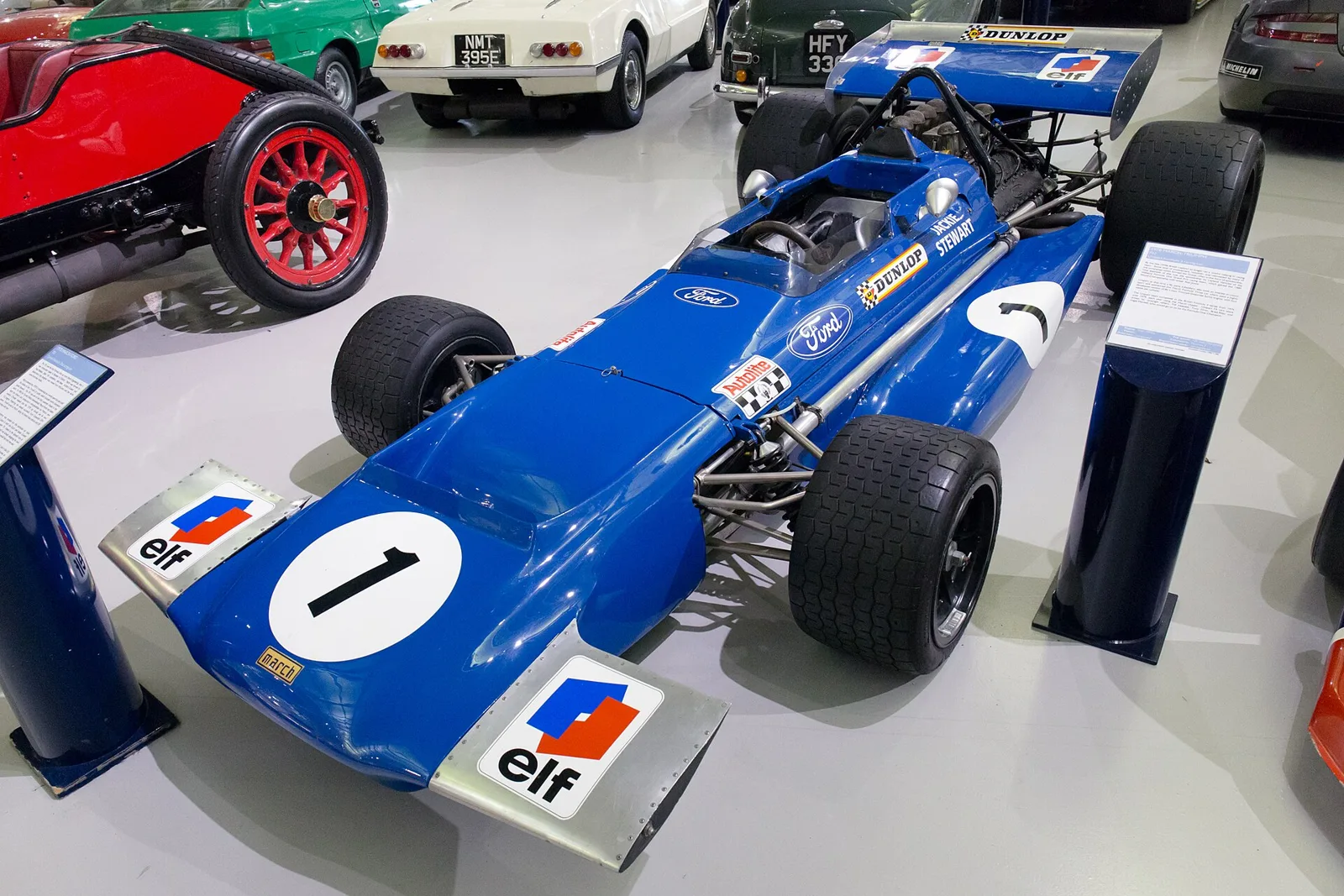
The team announced ambitious plans to enter Formula One in 1970, despite limited resources. By the first race of that season it had entered five cars, two of them run by the factory team and the rest by customers. Mosley also negotiated sponsorship from Firestone and the oil additive maker STP.
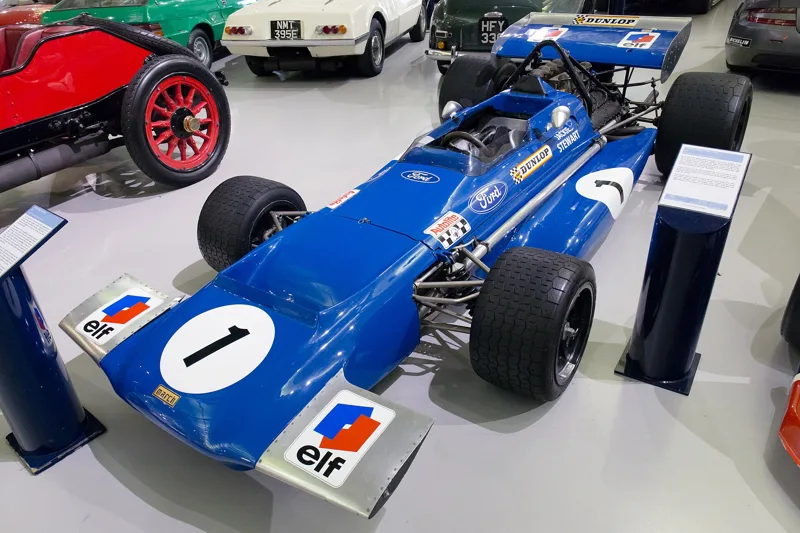
The early results were strong. March won three of its first four races in Formula One, and one of those was the 1970 Spanish Grand Prix, won by reigning champion Jackie Stewart in a Tyrrell customer car. The team finished third in the Constructors' Championship that year and sold 40 cars to customers in the lower formulae.
The money did not follow. The Formula One operation cost more than the customer business earned, and the lead driver's contract was expensive. Mosley secured full control of the finances at the end of 1970, and he and Herd borrowed 20,000 pounds from relatives and friends to keep the company going into 1971.
In 1971 March ran Alfa Romeo engines in a third car, but they proved uncompetitive. Ronnie Peterson, in a Cosworth-powered car, finished second in the Drivers' Championship that year, but the company had lost 71,000 pounds by the end of 1971, and Rees left early in 1972.
The company found success elsewhere. Losing money on an early deal with Jochen Neerpasch, then at Ford, led to an exclusive BMW engine arrangement for 1973. March cars with BMW engines went on to win five of the next 11 European Formula Two championships.
Formula One remained a struggle. Its works team won a single race in both 1975 and 1976, and by the end of 1977 Mosley had had enough. He sold his shares to Herd, stayed on as a director, and left to work for FOCA full-time. March's Formula One involvement ended that year.
How did Mosley shape FOCA and the Concorde Agreement?
Mosley began representing March at the Grand Prix Constructors' Association in 1969, where he was tolerated by the established teams because he was a lawyer. In 1971 Bernie Ecclestone bought the Brabham team, and the two men quickly began working together on the association's business.
FOCA dates from 1974, when Ecclestone, Chapman, Mayer, Mosley, Tyrrell and Williams set it up to speak for the teams commercially. It represented the teams' commercial interests in dealings with the sport's governing bodies, and in 1978 Mosley became its official legal adviser.
In that role he and Marco Piccinini negotiated the first Concorde Agreement, which settled a long-running dispute between FOCA and FISA. The agreement gave FISA control of the rules and FOCA control of commercial and television rights, and it set the template for the sport's structure for the following decades.
The dispute had reached a peak in 1980 and 1981. FOCA announced its own World Federation of Motor Sport and ran a non-championship South African Grand Prix in 1981, whose worldwide television coverage helped persuade FISA to negotiate. Mosley left FOCA in 1982 to work for the Conservative Party, a year after the agreement was signed. The most recent version of the Concorde Agreement expired on 31 December 2007.
Why did Mosley return to the governing bodies in 1986?
Mosley returned to motorsport in 1986 as president of the FISA Manufacturers' Commission, with the support of Ecclestone and Jean-Marie Balestre. That year he also set up Simtek Research, a racing technical consultancy, with Nick Wirth, a former March employee.
In 1991 he challenged Balestre for the presidency of FISA. He campaigned on the view that Balestre could not manage his roles at the FIA, the Federation Francaise du Sport Automobile and FISA effectively, and he won the election 43 votes to 29.
He resigned a year later to seek a re-affirmation of his mandate, as he had promised during the campaign, and FISA immediately re-elected him. In 1993 he became president of the FIA, and FISA was merged into the FIA as its sporting arm.
His election followed an agreement with Balestre that the Frenchman would step down as FIA president in Mosley's favour, in return for a new role as president of the FIA Senate. Mosley wanted to involve the FIA in road safety as well as motorsport, a remit that covered the interests of motorists worldwide.
How did the 1994 safety programme come about?
The deaths of Ayrton Senna and Roland Ratzenberger at the 1994 San Marino Grand Prix led Mosley to set up an Advisory Expert Group chaired by Professor Sid Watkins. Watkins learned of his new role by hearing Mosley announce it on the radio, and he later described the approach as novel and revolutionary.
The group's changes included reducing engine capacity and power, the use of grooved tyres to cut cornering speeds, the HANS device to protect drivers' necks in accidents, circuit redesign and much tougher crash-testing requirements for chassis.
Mosley did not attend Senna's funeral but went to Ratzenberger's. Years later he said that he went because everyone had gone to Senna's and it seemed important that someone attended the other driver's funeral.
What did Mosley's commercial deals with Ecclestone involve?
A 1995 agreement gave Ecclestone the commercial rights to Formula One for 15 years, with those rights due back to the FIA afterwards. In return the FIA received an index-linked annual royalty, which Lovell estimated at around 15 per cent of the commercial income.
In 1996 the FIA also passed the rights to its other directly sanctioned championships to Ecclestone, again for 15 years. Mosley later argued that he had received a better deal than anyone else could have negotiated, because Ecclestone found it harder to take a hard line with someone he had worked with for so long.
The arrangements drew criticism from three team principals, Ron Dennis, Frank Williams and Ken Tyrrell, who felt the teams had not been consulted. They refused to sign the 1997 Concorde Agreement without increased financial returns, and the European Commission began investigating the FIA's agreement with Ecclestone.
In 1999 the Commission issued a Statement of Objections listing its concerns. The matter was settled in 2001, when Ecclestone stepped down as the FIA's vice-president for promotional affairs and the FIA ended its involvement in Formula One's commercial activities.
Mosley proposed extending Ecclestone's rights to 100 years from the original 15, arguing that such a deal was effectively an outright sale and so was not anti-competitive. The Commission agreed, and the settlement returned around $300 million, or 150 million pounds, which the FIA put into a charitable foundation. The FIA Foundation was created in 2001 to work on motorsport and road safety.
What was Mosley's role in Euro NCAP?
Euro NCAP, the European New Car Assessment Programme, grew out of crash-testing work by the Transport Research Laboratory for the British government. The FIA joined the effort in 1996, and Mosley chaired the programme from its launch in 1997 until 2004.
When asked about his most enduring achievement as president, Mosley pointed to using Formula One to promote Euro NCAP crash testing. Euro NCAP reported a strong negative response from car makers at first, but the programme grew and the EU Commission later described it as the most important mechanism for advances in vehicle safety.
How did the tobacco advertising debate affect Formula One?
In 1997, after Labour's election victory, Mosley and Ecclestone met Tony Blair on 16 October to argue against a tobacco advertising ban in Formula One. Mosley argued that the proposed rules were illegal under EU law, and that a ban would lead to races being held outside Europe.
A revised directive took effect in 1998, phasing out sponsorship from 2003 with a three-year extension for global events such as Formula One. The European Court of Justice struck the directive down on 5 October 2000 as unlawful.
A replacement rule came into force in July 2005, and as of 2009 Ferrari was the only Formula One team to keep tobacco sponsorship. The team carried no explicit branding in races because of European legislation.
What happened in Mosley's later FIA years?
Mosley was elected to a fourth term as FIA president in 2005, unopposed. That year only six cars raced at the United States Grand Prix, because the tyres used by the other runners were judged unsafe for the circuit. He rejected a temporary chicane as a solution, arguing that changes to a circuit should follow tried and tested procedures.
In 2006 he was made a Chevalier of the Legion d'honneur in recognition of his work on road safety and motorsport. He also called for Formula One manufacturers to develop technology relevant to road cars, and announced a 10-year freeze on engine development.
In 2007 the World Motor Sports Council found McLaren guilty in the case over Ferrari's technical data, fined the team $100 million and excluded it from the 2007 constructors' championship.
In June 2008 Mosley won a vote of confidence at an Extraordinary General Meeting of the FIA, with 103 votes in favour and 55 against. He had said he would serve to the end of his term, and he stood down when it ended in October 2009, with Jean Todt succeeding him.
How did Mosley's life end?
Mosley died on 23 May 2021 at the age of 81, after being diagnosed with terminal cancer. Bernie Ecclestone confirmed the death, and he was buried in the churchyard at Swinbrook in Oxfordshire. He had spent much of his later life in the public eye as a campaigner for road safety and motorsport governance.
An inquest in 2022 confirmed that his death was a suicide.
How do the main chapters of his career compare?
| Period | Role | Notable outcome |
|---|---|---|
| 1968 | London Racing Team | Formula Two entry; best result eighth at Monza |
| 1969-1977 | March Engineering | Legal and commercial lead; Formula One entries from 1970 |
| 1978 | FOCA | Official legal adviser; first Concorde Agreement |
| 1986 | FISA Manufacturers' Commission | Return to motorsport governance |
| 1991 | FISA | Elected president, 43 votes to 29 |
| 1993-2009 | FIA | President; four terms |
| 1997-2004 | Euro NCAP | Chairman from launch to 2004 |
| 2008 | FIA | Vote of confidence, 103 votes to 55 |