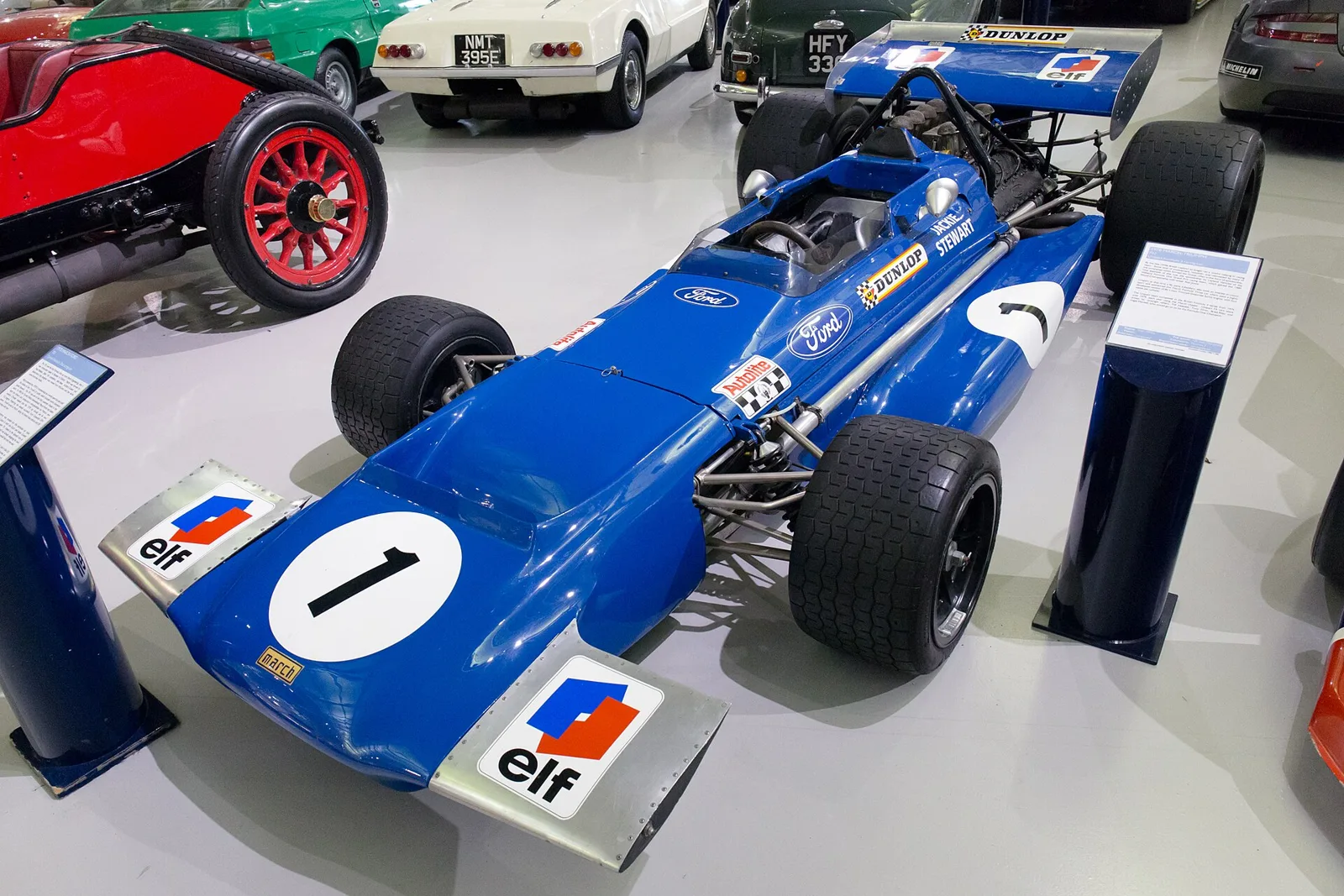
Founded in 1969 by four partners, March sold cars to privateers and dominated Formula Two and Indycar, while its own Formula One effort rarely caught up.
March Engineering was a British constructor and customer car maker that operated from 1969. Its cars enjoyed more lasting success in Formula Two, Formula 3000 and Indycar than in Grand Prix racing, and its engineering drawings were later sold to a new owner.
March Engineering was a British constructor founded in 1969, and its racing cars found far more success in other classes than in Grand Prix racing. The company took its name from the initials of its four founders, and it became a major force in Formula Two and Indycar. Its Formula One team was far less successful.
How did March Engineering start?
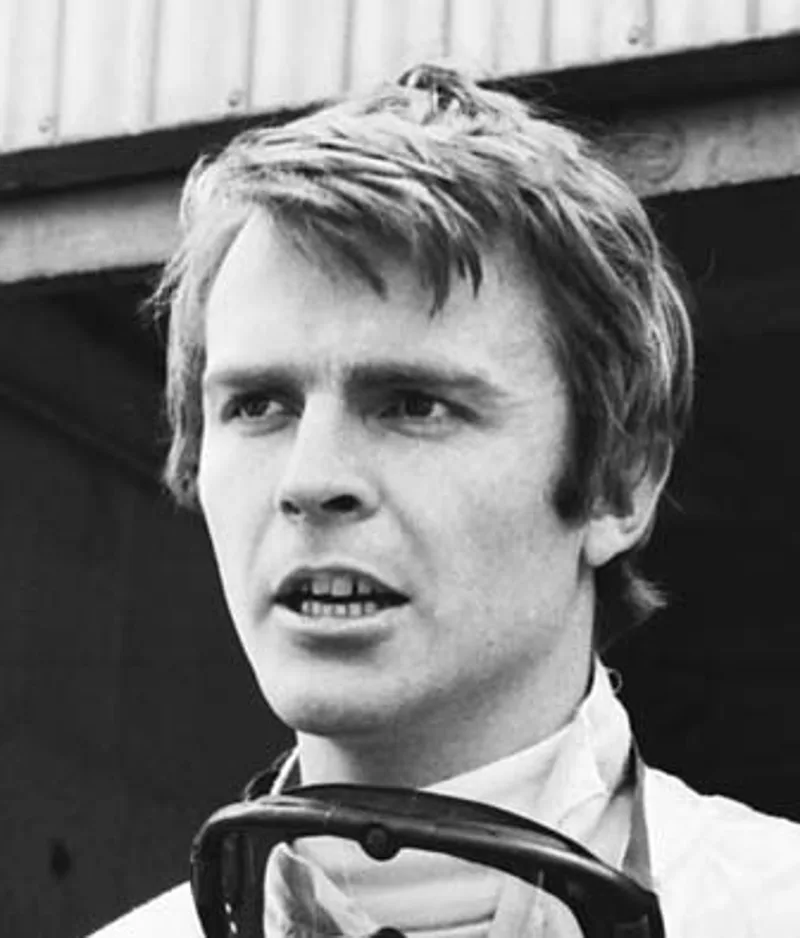
March started trading in 1969, and its name was built from the first letters of four founders: Robin Herd, Graham Coaker, Alan Rees and Max Mosley. Each founder covered one area, and the company set out to supply customer cars for several formulae alongside its own works teams.
Mosley looked after the business side, and Rees ran the team on track. Production fell to Coaker at the Bicester factory in Oxfordshire, and Herd produced the designs. Herd's first Formula One plan was a single-car team built around Jochen Rindt, but Rindt stayed at Team Lotus.
The launch was ambitious. A single Formula Three car was built in 1969, and the firm announced customer cars for 1970 across five categories, from Formula One to Can-Am, and planned works entries as well.
Customer cars, Indy 500 wins and a late Newey design: March was richer in results away from Grand Prix racing.
How did the March 701 perform in 1970?
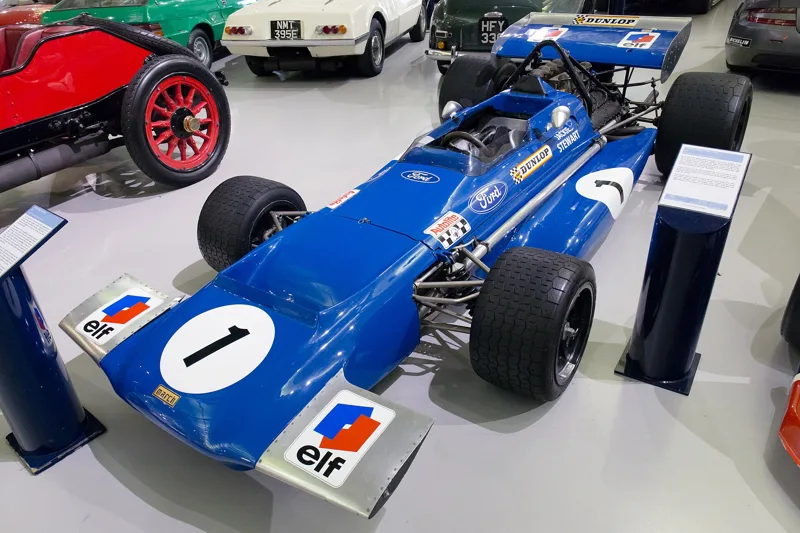
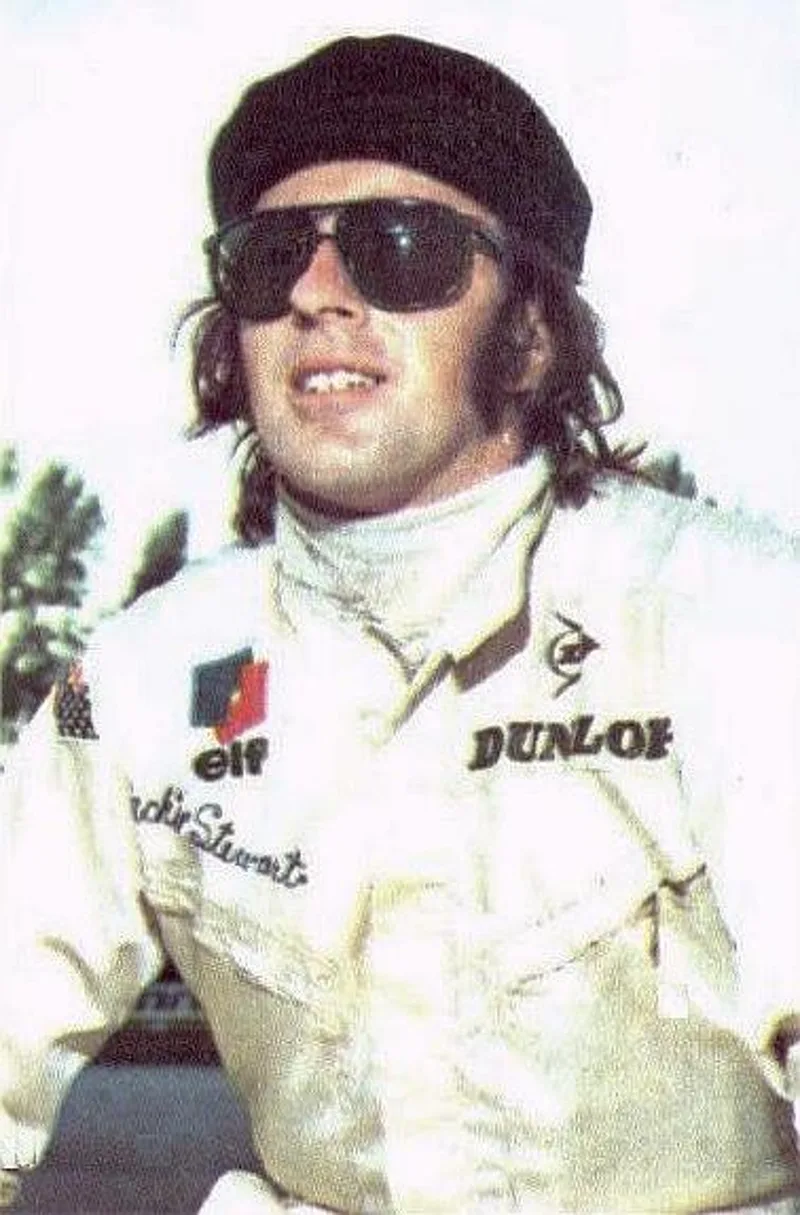
The 701 chassis went largely to Tyrrell, where Jackie Stewart secured the chassis its first Formula One success, in Spain in 1970. The works team ran Jo Siffert, whose drive Porsche paid for, and Chris Amon, sponsored by STP. The factory built ten Formula One chassis that year.
The 701 used aerofoil-profile fuel tanks at the car's sides, a design by Peter Wright. Herd later called it a good 1969 car and said he would have built something closer to the 711 had he ended up running a modest outfit for a driver of Rindt's standing.
Ronnie Peterson raced for Colin Crabbe in a car close to works specification whenever his Formula Two duties permitted, and various 701s went to privateers. The works team won no Grand Prix that year, although Amon and Stewart both took non-championship races.
What was the 711, and how did Peterson do in 1971?
The 711 was March's 1971 Formula One chassis, with Frank Costin supplying the aerodynamics and an ovoid front wing that gained the nicknames Spitfire, for its shape, and tea-tray, for its height above the car. Ronnie Peterson finished second on four occasions, ending the season as runner-up in the World Championship.
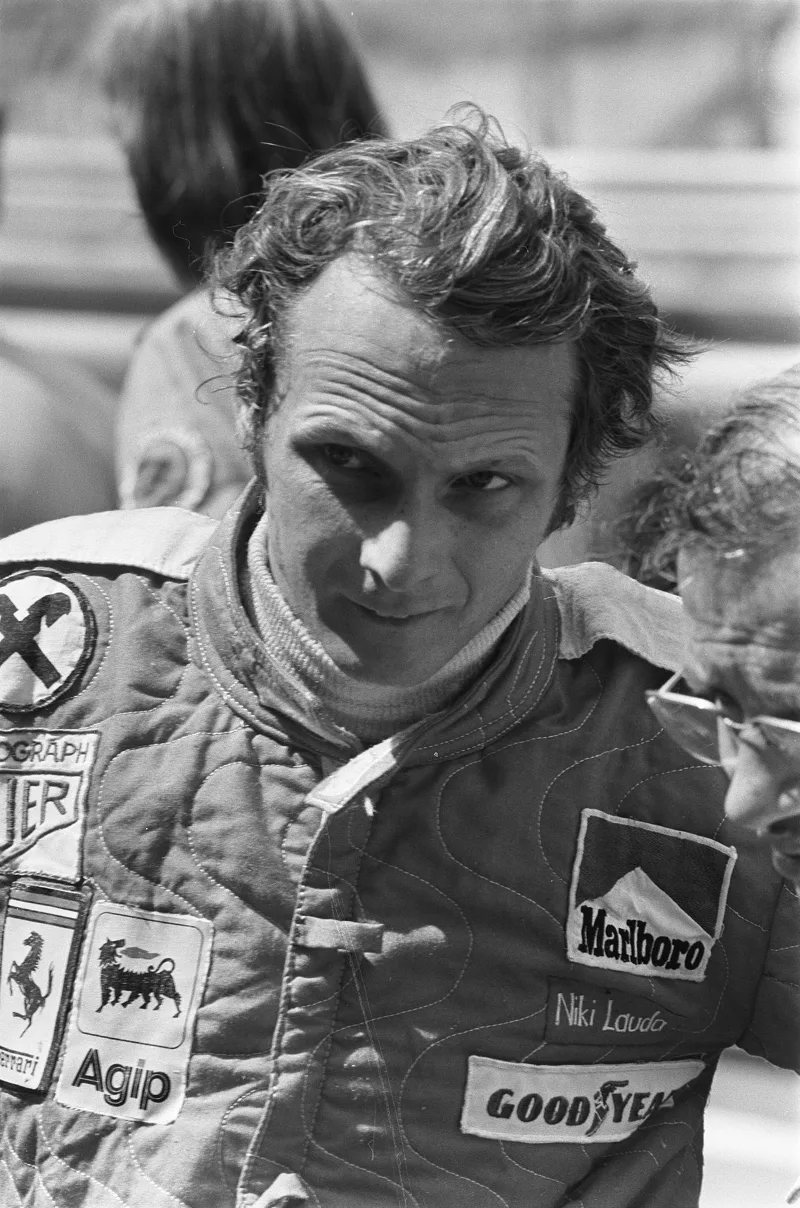
The 1972 season failed to capitalise on that promise. The 721 was a development of the 711, and Peterson and Niki Lauda drove the experimental 721X, which was judged a disaster and abandoned.
The team's rescue came with the 721G, which Mike Beuttler and his backers ordered. It was built in nine days, using a Cosworth DFV and bigger fuel tanks on an existing Formula Two frame, and it set the pattern for March's F1 cars for the rest of the 1970s.
Why was 1973 March's low point in Formula One?
In 1973 March ran an almost unsponsored car, and its four 721Gs were re-bodied as 731s. Hesketh bought a March for James Hunt, and the factory team drifted without money behind it. Roger Williamson, driving a March for Tom Wheatcroft, died in an accident at Zandvoort that year.
The 731s carried nose-mounted radiators and the deformable structures that became mandatory that season. David Purley tried to pull Williamson out of the blazing car at Zandvoort.
The 1974 factory drivers were Hans-Joachim Stuck and Vittorio Brambilla, both quick but costly in accident damage. BMW began pressing March to quit Formula One and concentrate on Formula Two.
How did March win its first Grand Prix in 1975?
March's first Grand Prix win came at the 1975 Austrian Grand Prix, when Vittorio Brambilla scored a surprise victory. Both the Spanish and Austrian rounds that year were rain-shortened, so only half points were awarded. The result gave the works team a win it had been chasing since 1970.
Mark Donohue was killed in practice that weekend, driving a March owned by Penske. Penske had abandoned its own car and bought a March so that it could keep racing.
Lella Lombardi had become the first woman to score a Formula One championship point at the 1975 Spanish round. Frank Williams once bought a 761B that still had orange paint from its earlier life as a 751 driven by Brambilla.
In 1976 Peterson returned from Lotus and took the team's second and final win, at Monza. The 761 was quick but delicate, and by then the Formula One effort had shrunk to a tight budget and a pair of works cars, while a B-team ran under the March Engines name.
BMW pressed March to concentrate on Formula Two. The 2-4-0 experiment of 1977, a 761 with four driven rear wheels tested at Silverstone, was shelved in favour of conventional development. The 2-4-0 model was sold by Scalextric and proved one of the brand's most popular cars.
How did March's Formula One team end in 1977?
The 1977 season was a token effort, with Rothmans-backed cars for Alex Ribeiro and Ian Scheckter that achieved nothing. At the end of the year the Formula One team's assets went to ATS, along with its FOCA membership, and Herd stayed on as a consultant.
From 1978 March concentrated on Formula Two with the works BMW team. Bruno Giacomelli took the title in a 782, and the cars regained the formula's dominance. March also helped build racing versions of the BMW M1 for endurance and one-make events.
How did March's Indy and sports car success develop?
Cosworth-powered March cars won the Indianapolis 500 five straight times from 1983 to 1987, and the 86C won the race in both 1986 and 1987. At one point 30 of the 33 Indianapolis starters were Marches. That run made March the dominant name in American open-wheel racing for those years.
March's FW07 copy for RAM Racing had bombed in Formula One, but the Indy car developed from it was instantly successful, with George Bignotti closely involved in the work.
Sports cars became another line. Prototypes descended from the BMW M1C won in America, and the biggest sports-car success came at the 1984 24 Hours of Daytona.
How did Formula 3000 and Adrian Newey shape the late eighties?
March was the dominant Formula 3000 name early on: Christian Danner won the first title in 1985, Ivan Capelli followed in 1986 and Stefano Modena in 1987. Adrian Newey joined March F1 in August 1987 and designed the 881, which scored 22 points in 1988.
The 881 gave March one of its most notable moments. Capelli passed Alain Prost on lap 16 at the 1988 Japanese Grand Prix and led until Honda power told. No normally aspirated car had led a Grand Prix since 1983 until that race.
The 881 also finished second at the 1988 Portuguese Grand Prix. Its aerodynamics and ultra-slim monocoque were copied across the grid in 1989, which launched Newey as a star designer.
March went public in April 1987 with an initial value of 14.5 million pounds. When the dollar fell against the pound, the American market dried up, and the group lost its footing in other formulae too.
What happened to Leyton House Racing?
The Leyton House group, under Akira Akagi, acquired March Racing in early 1989, and the Formula One operation competed under the Leyton House name for 1990 and 1991, using Ilmor V10 power. The team withdrew at the end of 1991 after Akagi became caught up in the Fuji Bank scandal.
The 1990 French Grand Prix nearly brought an upset. Capelli and Gugelmin used their superior aerodynamics and a smooth track to run on one set of tyres while others stopped, and engine problems slowed Capelli, letting Prost slip by with three laps left.
Ken Marrable, an associate of Akagi, bought the team and resumed the March name for 1992. With little funding the results fell far short of expectations, and the operation closed as the team tried to assemble a project for 1993.
What became of March's engineering assets?
After a series of buyouts and sales, the March group was essentially a financial services outfit. Its engineering assets, including over 30,000 drawings and the design rights for customer cars, passed to Andy Gilberg in the late 1990s. The sale marked the end of March's role as a manufacturer of racing cars.
The records are now available to car owners, racing service providers and historians through an online archive. They cover customer cars, works Formula One cars from the 1970s and other projects built at the Murdock Road facility.
The Formula One name also resurfaced briefly. In May 2009 March Racing Organisation applied for a place in the 2010 season, when a tight budget cap was under discussion. The entry consisted of little more than the name, because the team had been inactive since 1992.
The naming scheme still helps enthusiasts. The first two digits of most designations were the year, running from 69 to 91, and Formula One cars used numbers from 701 to 781 and from 871 to 881.
What were the key March cars and results?
| Year | Car or team | Category | Documented result |
|---|---|---|---|
| 1970 | 701 | Formula One, run by Tyrrell | Jackie Stewart won the Spanish Grand Prix |
| 1971 | 711 | Formula One | Peterson second four times, runner-up in the championship |
| 1975 | Works team | Formula One | Brambilla won the Austrian Grand Prix, the team's maiden win |
| 1976 | Works team | Formula One | Peterson's second and last win, at Monza |
| 1984 | BMW M1C descendant | Sports car | Victory at the 24 Hours of Daytona |
| 1985 | Formula 3000 chassis | Formula 3000 | Christian Danner won the first title |
| 1983 to 1987 | Cosworth-powered Indy car | Indianapolis 500 | Five straight wins |
| 1988 | 881 | Formula One | 22 points, second at the Portuguese Grand Prix |