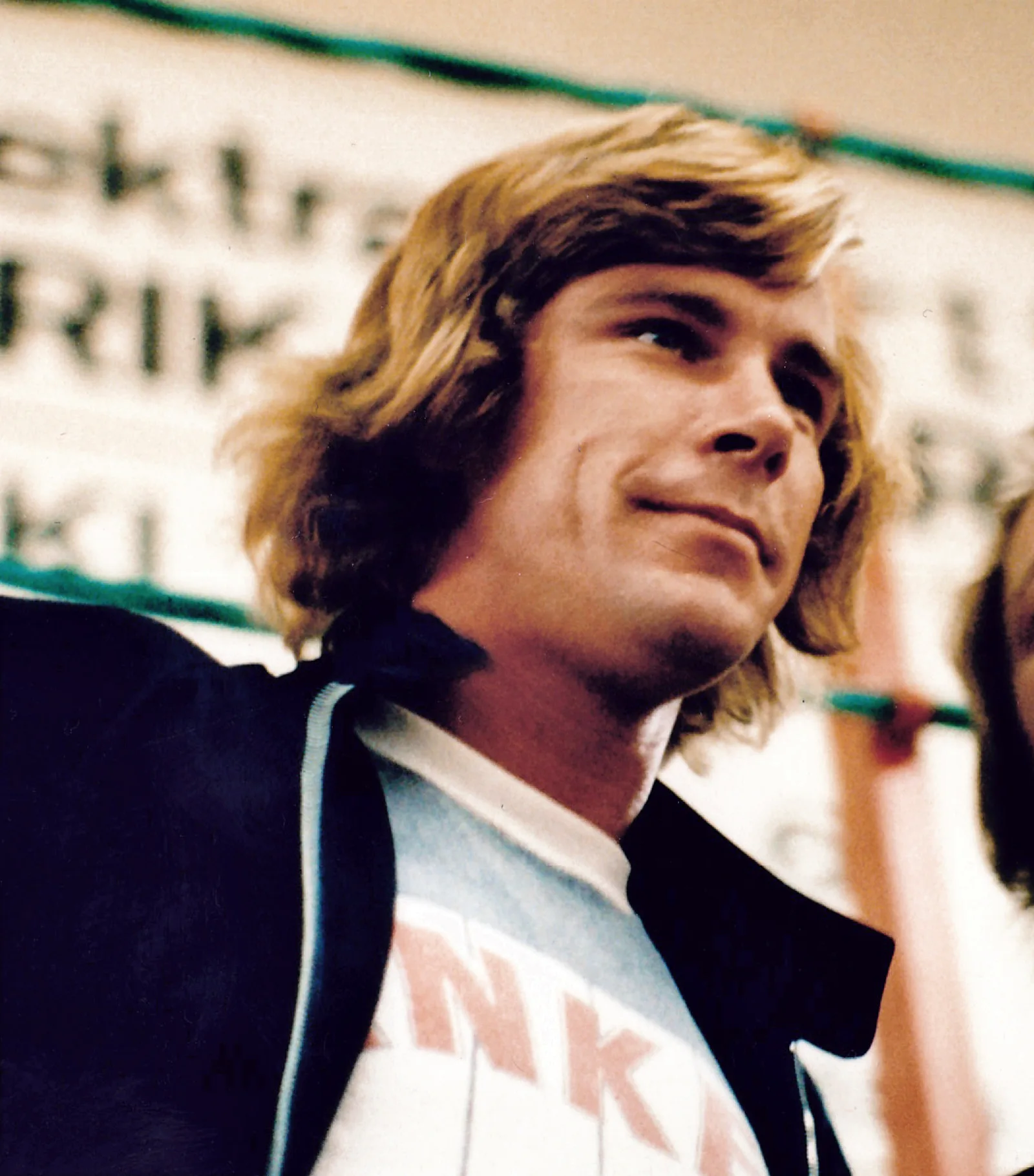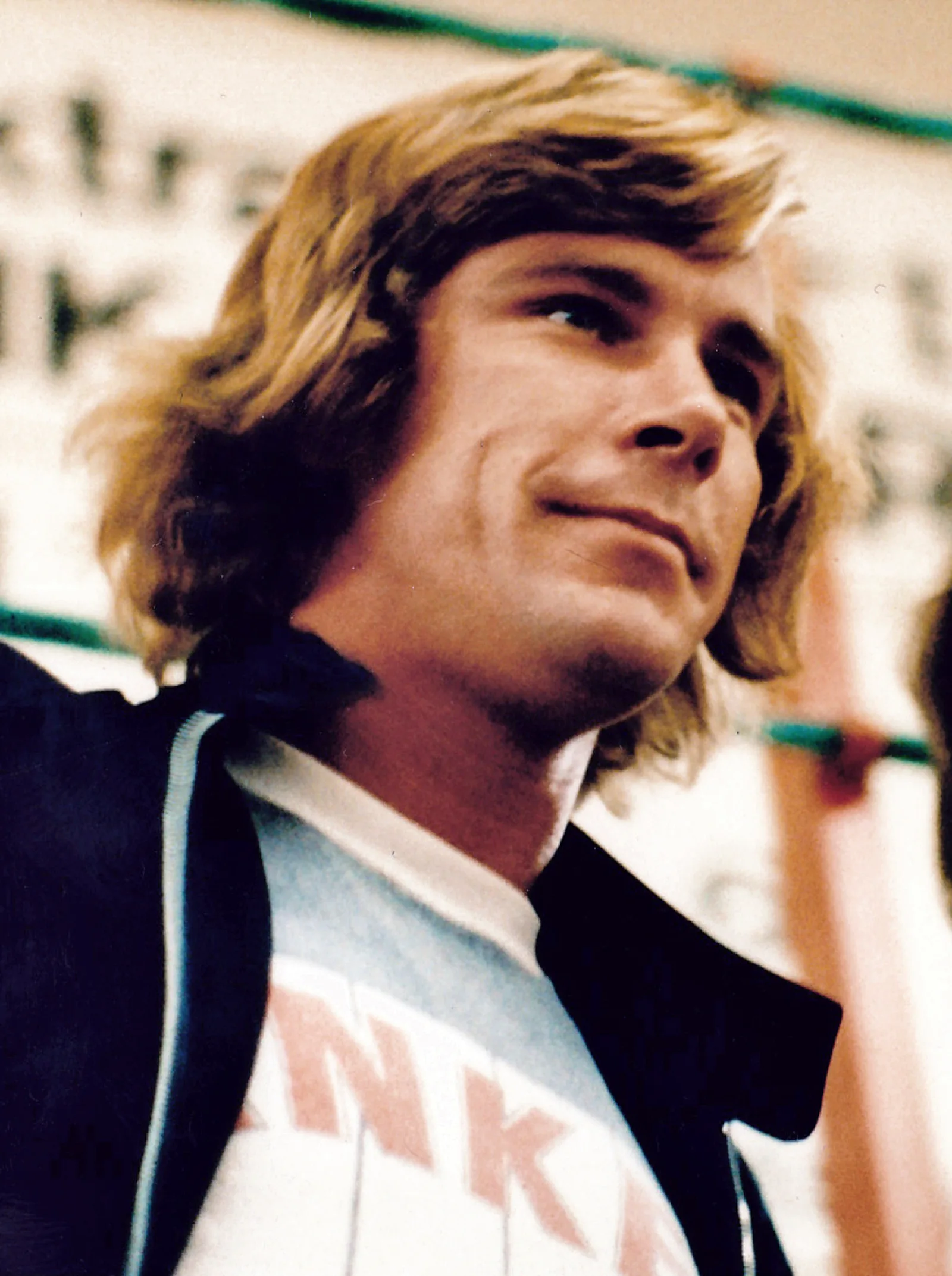
A Formula One driver who took the 1976 title by one point, raced for Hesketh, McLaren and Wolf, then spent thirteen years on the BBC.
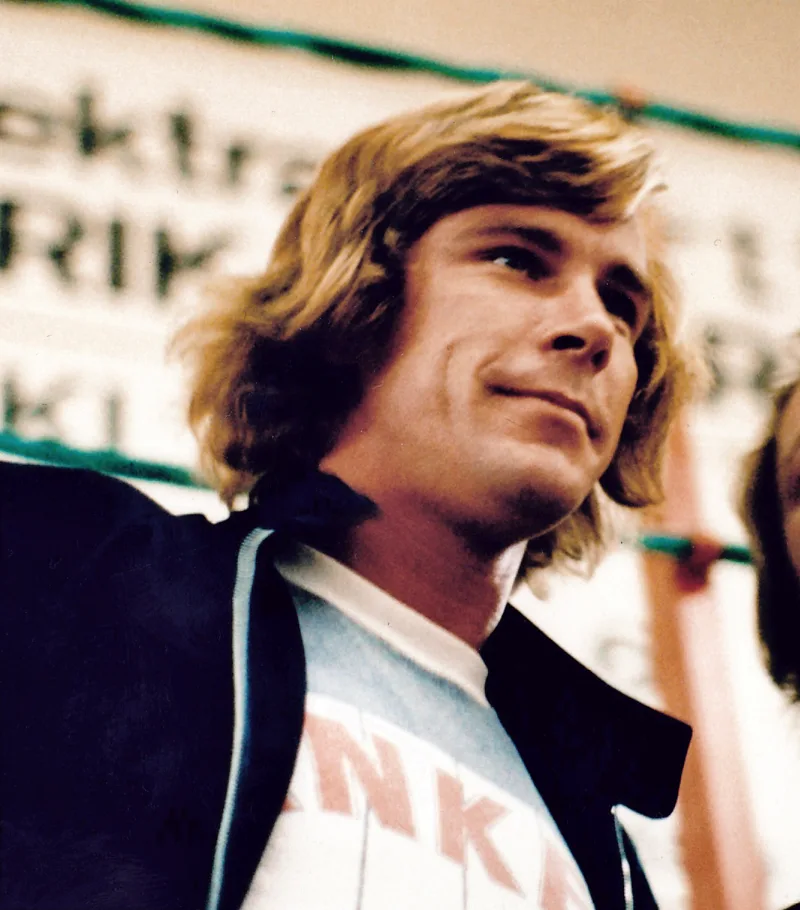
James Hunt was a British Formula One driver from 1973 to 1979 who took the 1976 title with McLaren, winning it by one point. He scored 10 Grands Prix wins, then spent thirteen years as a BBC commentator before dying of a heart attack in 1993, aged 45.
James Hunt, nicknamed 'the Shunt', raced in Formula One from 1973 to 1979 and took 10 Grands Prix over seven seasons. His 1976 title with McLaren was settled by a single point after a bitter contest with Niki Lauda. Once he stopped driving, he became a familiar voice on the BBC's Formula One coverage.
Who was James Hunt?
Hunt was born in Belmont, Surrey, in August 1947 and died at his Wimbledon home in June 1993, aged 45. He began in Minis and touring cars, then moved into Formula Three in 1969, where he caught the eye of Lord Hesketh. His driving was aggressive, and his lifestyle away from the circuit drew plenty of attention.
As a boy he first got behind a wheel on a tractor, during a family holiday on a Pembrokeshire farm. He passed his driving test a week after turning seventeen. The sport took hold of him after his tennis partner's family took him to a Silverstone meeting, which set him on a lasting path toward motor racing.
A Formula One title decided by one point in Japan, a restless driving style and a broadcasting career that lasted until 1993.
How did Hunt get started in racing?
His first real competition was in a Mini, but scrutineers barred him from an event at Snetterton over alleged irregularities in the car. That decision angered him and his team-mate, Justin Fry, who later quit over the modifications being made. Hunt then paid for three more events from his wages as a trainee manager at a telephone company.
In 1968 he switched to Formula Ford in a Russell-Alexis Mark 14, financed through a hire-purchase arrangement. At Snetterton an ignition setting cost him 15 hp, yet he still came home fifth. He went on to win at Lydden Hill and set a lap record at the Brands Hatch short circuit.
What happened in his Formula Three years?
In 1969 Gowrings of Reading financed a Merlyn Mark 11A for him. He collected several wins and regular top finishes, and the British Guild of Motoring Writers recognised him with a Grovewood Award as one of three drivers with promising futures.
A notorious clash followed at Crystal Palace on 3 October 1970. Hunt and Dave Morgan were fighting for second when their cars touched and crashed. Hunt marched over and shoved Morgan to the ground, which earned him stern official censure. The RAC called both drivers in; a tribunal cleared Hunt, and Morgan was suspended from racing for 12 months.
In 1972 he was with the works March team until May, when he was dropped for Jochen Mass. Unable to reach anyone at March, he went to Chris Marshall, his former team manager, who found a spare car. Ignoring the explicit orders of March director Max Mosley, he then raced at Monaco in a car that Jean-Claude Alzerat had given up.
How did his Hesketh years start in Formula One?
In 1973 Hunt joined Hesketh, which ran a March 731 chassis from Harvey Postlethwaite's drawing board. His Monaco debut came in that car, and in his debut year he reached the podium at both the Dutch and the United States races. Hesketh's best finish that year was second at the United States race.
Rival teams treated the outfit as a group of socialites who enjoyed the Formula One spectacle. Hunt also shared a Mirage M6 with Derek Bell at the 1973 Kyalami Nine Hours and took second. At season's end the RAC presented him with the Campbell Trophy, honouring the best British performance in Formula One.
What was the Hesketh 308 like in 1974 and 1975?
For 1974 Hesketh produced the 308, a design inspired by the March that was meant to carry a V12 engine that never appeared. He won the BRDC International Trophy at Silverstone, a non-championship event against most of the regular field. In Argentina he qualified fifth and led for a spell before engine failure ended his race.
His first Grand Prix victory arrived at Zandvoort in 1975. He ended that season fourth in the standings, but Lord Hesketh had exhausted his funds and could not find a sponsor. The operation was finished, and Hunt needed a new employer.
How did Hunt win the 1976 title at McLaren?
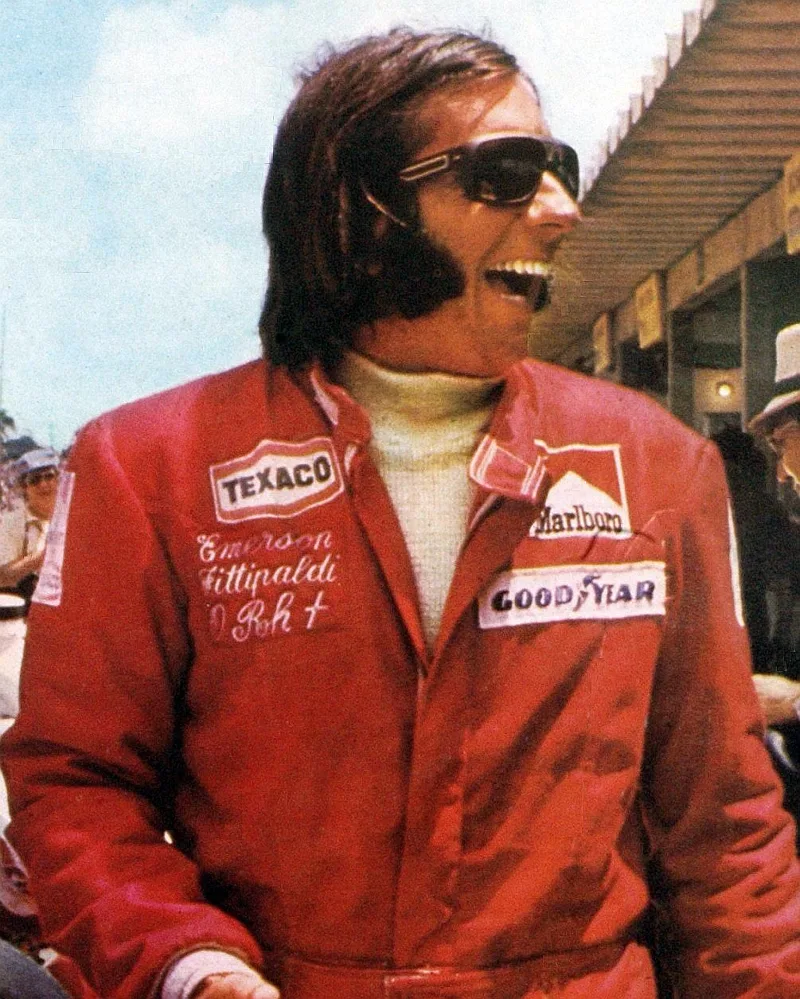
Hunt moved to McLaren for 1976 after Emerson Fittipaldi departed for his brother's Copersucar outfit. John Hogan of Marlboro brokered the arrangement, which paid a retainer of 50,000 dollars plus a slice of the prize money. In Brazil he took pole in a hastily rebuilt M23 in the closing minutes of qualifying.
His first win of the year, at Spain, was struck off because the car was 1.8 cm too wide, although an appeal restored the result. At Silverstone a first-corner collision with Lauda brought out a restart, and Hunt won the second start, only for the FIA to strike out the victory on 24 September after a Ferrari complaint.
Lauda suffered severe injuries at the German Grand Prix on the Nurburgring, and Hunt dominated the restarted race. With Lauda sidelined for two rounds, Hunt narrowed the gap. At Zandvoort he passed Ronnie Peterson on lap 12 and fended off John Watson. At Monza his team was penalised for fuel with an octane level above the permitted limit, and he spun while climbing back from the back of the grid.
At Mosport Park he won after learning that his British result had been revoked and Lauda had been handed the win and three extra points. At Watkins Glen he started from pole and held off Jody Scheckter. The championship then came down to Fuji. Lauda retired early in heavy rain, and Hunt crossed the line third, collecting four points that gave him the title by one point.
He remained Britain's last Formula One champion until Nigel Mansell took the crown for Williams in 1992. He had agreed to join McLaren at the last minute for 200,000 dollars, which made him relatively cheap as champions go, a comparison often drawn with Keke Rosberg's 1982 title.
How did the 1977 and 1978 seasons go?
The M26 struggled in the early races of 1977, while Lauda, Mario Andretti and Scheckter pulled ahead. Hunt won at Silverstone after running behind John Watson's Brabham for 25 laps, and he later took the race at Watkins Glen. At Fuji he won again but stayed away from the podium ceremony, which cost him a fine of 20,000 dollars.
In 1978 he managed only eight points. Lotus had made its Lotus 79 work with ground effect aerodynamics, and McLaren responded slowly. His inexperienced team-mate, Patrick Tambay, even out-qualified him once, and in Germany Hunt was disqualified for cutting a corner during a tyre change.
Peterson's crash at the 1978 Italian Grand Prix hit Hunt hard. At the start his Lotus was driven into the barriers and caught fire. Hunt helped pull him from the wreck, but Peterson died in hospital the following day. For years Hunt laid the blame on Riccardo Patrese, though later video showed that Patrese had not made contact with either car.
Why did Hunt leave McLaren for Wolf in 1979?
Harvey Postlethwaite talked Hunt into joining Walter Wolf Racing for 1979. The one-car team offered a family-style atmosphere reminiscent of Hesketh's early days. Its ground effect car, though, was off the pace, and Hunt lost interest fast. Scheckter took that year's title in a Ferrari 312T4.
Results were grim. In Argentina the front wing detached on a fast lap and hit his helmet. He retired in Brazil, and the Spanish race ended for him after 26 laps in a crash. At Zolder a new Wolf WR8 was hit so hard that it rebounded onto the circuit. At Monaco a broken driveshaft brought his race to a stop four laps in.
On 8 June 1979 he declared that he was stepping away immediately, and Keke Rosberg took over his seat. Peter Warr later recalled that Hunt had been badly affected by Peterson's accident and that his enthusiasm for the job had gone.
What did commentary bring after racing?
Hunt became a BBC commentator alongside Murray Walker on the Formula One programme. He made a guest appearance at the 1979 British Grand Prix and then stayed on for thirteen years, until his death. His first live broadcast came at the 1980 Monaco Grand Prix, when he rested his plaster-cast leg in Walker's lap.
Both men shared a single microphone, which produced some tense moments. On one occasion he took hold of the microphone cord and snapped it like a whip, wrenching the mic out of Walker's grip. The BBC's television sport chief, Jonathan Martin, worried that Hunt ran on adrenaline, and Hunt often walked into the booth minutes before a race began.
His frank opinions won him a new audience. He had little patience with drivers he judged to be half-hearted, and in 1989 he dismissed Rene Arnoux's view that non-turbo cars did not suit his style. He also took aim at Jean-Pierre Jarier for blocking race leaders.
He tried to keep his commentaries off air in South Africa during apartheid. When that proved impossible, he handed his fees to black-led groups fighting to end apartheid. He also wrote columns on Grand Prix racing for The Independent and for magazines.
Did Hunt attempt a comeback?
In 1980 McLaren considered him for the United States Grand Prix West after Alain Prost hurt his wrist. Hunt asked for 1 million dollars for the one race, and Marlboro offered half that. The talks collapsed when Hunt injured a leg on the ski slopes.
In 1982 Bernie Ecclestone offered him a salary of 2.6 million pounds for the season, and Hunt refused it.
In 1990, after losing 180,000 pounds in Lloyd's of London, he considered a return with Williams. He tested at the Paul Ricard circuit and found himself several seconds slower than the leaders. He then tried to win over a Philip Morris Europe marketing chief, but the plan went nowhere.
What did Hunt do outside racing?
Marlboro brought him on as an adviser and tutor to its sponsored drivers, coaching them on racing tactics and attitude. He mentored the young Mika Hakkinen, and their conversations ranged beyond the track. He also took small screen and advertising roles, including the 1979 slapstick film The Plank and a Texaco Havoline advert.
What is the legacy of 'the Shunt'?
Hunt drove with a fast, tail-happy style that often ended in dramatic accidents, which is where the nickname came from. The reputation followed him through his career and into the public imagination. The label stuck, even though he was no more prone to crashes than his rivals in the lower formulae.
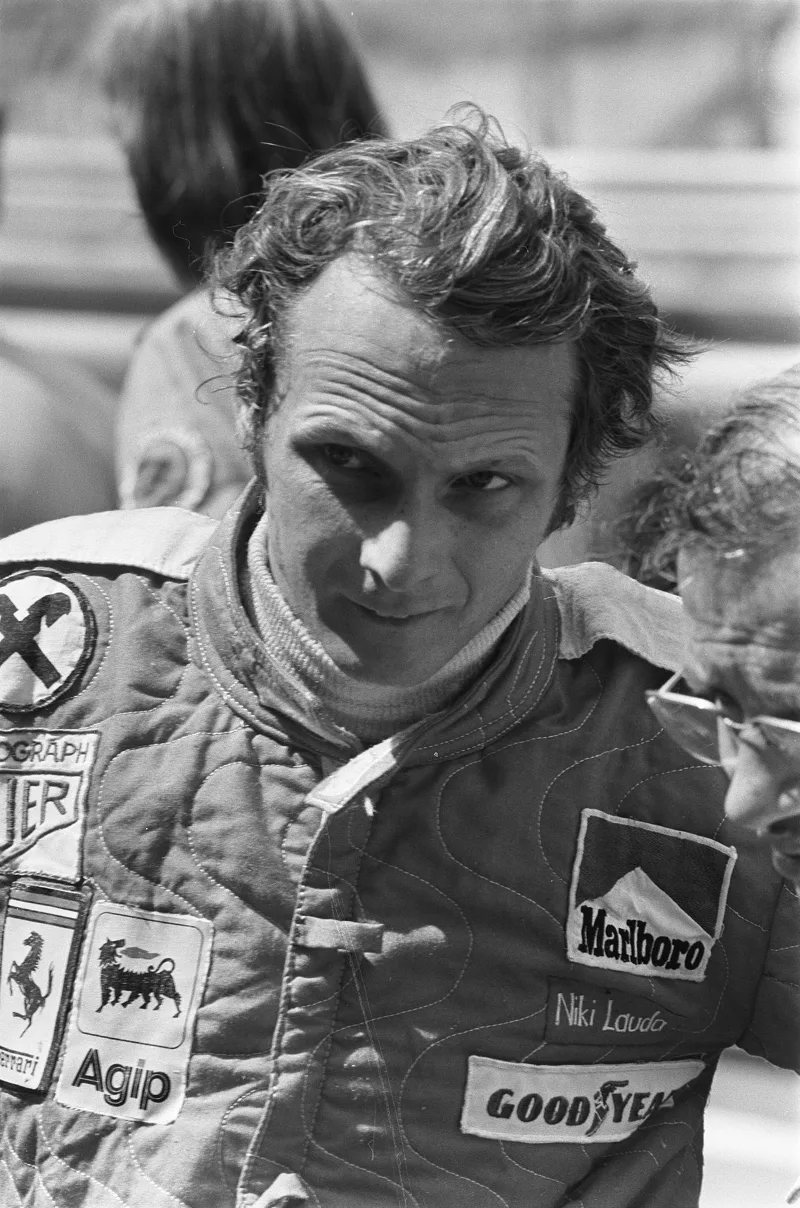
Niki Lauda said he respected Hunt because the two could run side by side, wheel to wheel, for 300 kilometres or more without touching. After the 1976 title Hunt inspired many teenagers to take up racing, and a racing centre in Milton Keynes, the James Hunt Racing Centre, opened in 1990 and carried his name.
Kimi Raikkonen wore a helmet bearing Hunt's name at Monaco in 2012 and repeated the tribute in 2013. Hunt's own helmet carried his name in bold letters over blue, yellow and red stripes that echoed his school colours at Wellington College. Chris Hemsworth played him in the 2013 film Rush, which dramatised the 1976 title battle with Lauda.
How did his career compare across teams?
| Team | Seasons | Standout result |
|---|---|---|
| Hesketh | 1973-1975 | Second at the 1973 United States Grand Prix |
| McLaren | 1976-1978 | World champion in 1976 by one point, decided at Fuji |
| Walter Wolf Racing | 1979 | Eighth place in South Africa |
| Career totals | 1973-1979 | 10 wins, 14 poles, eight fastest laps and 23 podiums |
How did Hunt die?
He passed away at home in Wimbledon in the small hours of 15 June 1993. He had complained of chest and upper-body discomfort the evening before, and the cause of death was a heart attack. He was 45. A memorial celebration was held at St James's Church, Piccadilly, on 29 September 1993, attended by 600 people.
The Motor Sport Hall of Fame added him on 29 January 2014. Lauda later said he was not surprised to hear of the heart attack, only saddened.