Roland Ratzenberger and Ayrton Senna died at Imola in separate accidents, and the 1994 San Marino Grand Prix became a turning point for safety in Formula One.
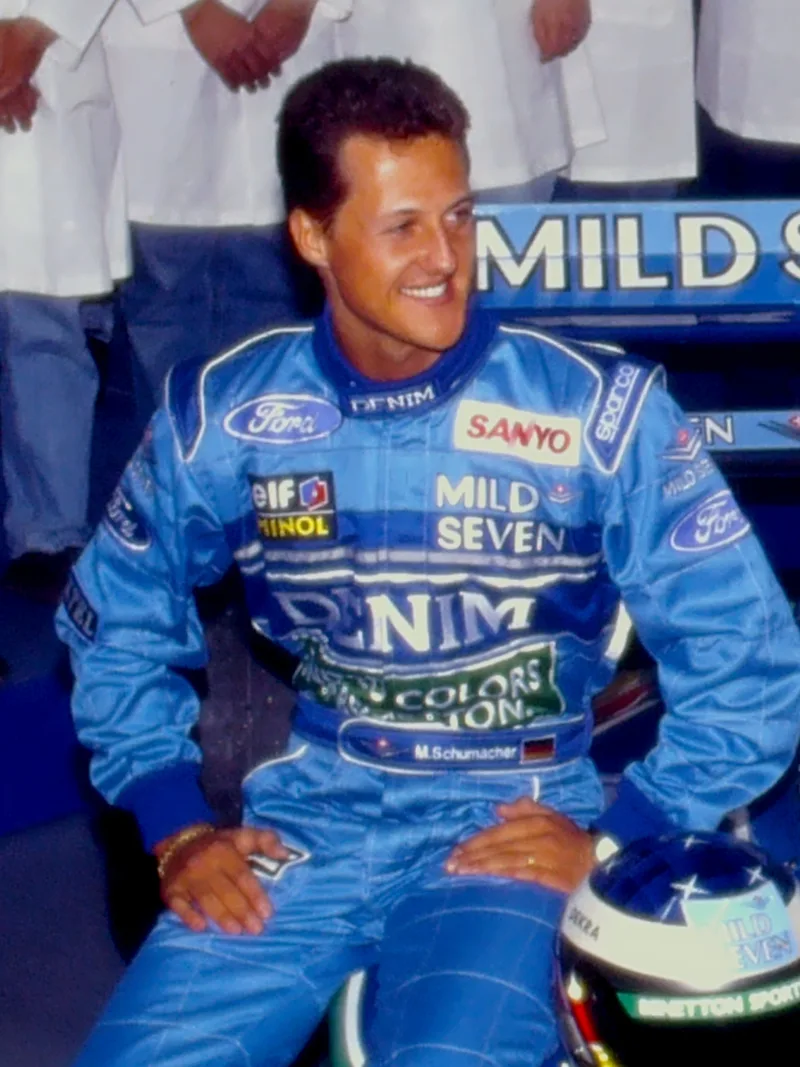
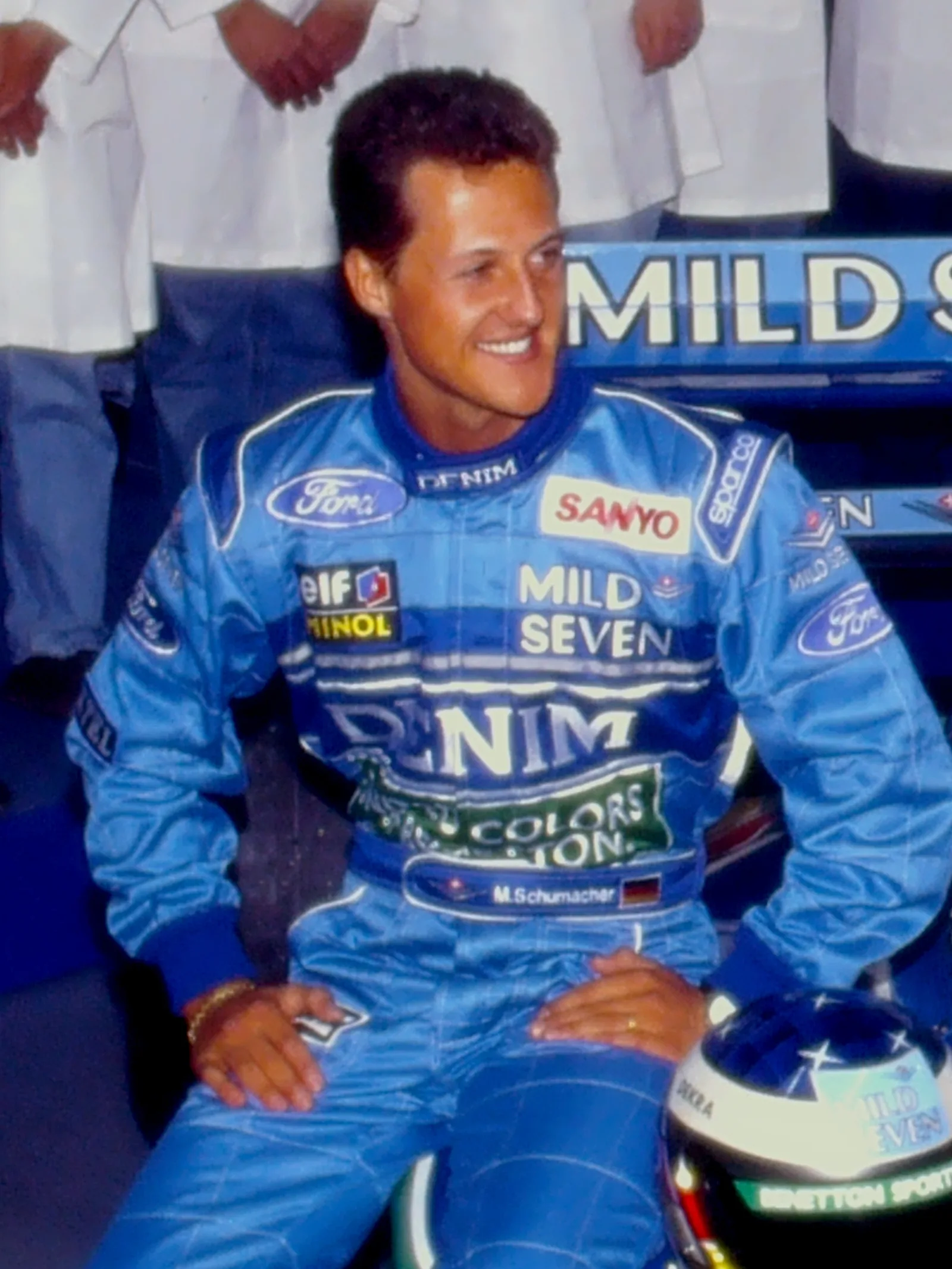
Michael Schumacher won at Imola in 1994 for Benetton, but the event is best known for the deaths of Roland Ratzenberger in qualifying and Ayrton Senna on lap seven. Those losses reshaped how Formula One approached safety, and the rules that followed still matter.
The 1994 San Marino Grand Prix at Imola was won by Michael Schumacher for Benetton, with Nicola Larini second for Ferrari and Mika Hakkinen third for McLaren. The weekend is remembered for the deaths of Roland Ratzenberger, who was killed in qualifying, and Ayrton Senna, who was killed in the race. Those two losses became a turning point for safety in Formula One.
Why was the 1994 San Marino Grand Prix so important?
The race is the event that most changed Formula One's approach to safety. Ratzenberger died in qualifying and Senna was killed on lap seven of the race, the first fatalities in the championship since the 1982 Canadian Grand Prix and the first involving two drivers since the 1960 Belgian Grand Prix.
The deaths led to the Grand Prix Drivers' Association being reformed after a 12-year hiatus. Track layouts and car designs were changed, and new circuits were built with large run-off areas to slow cars before they reached a wall. Regulation changes followed, aimed at slowing the cars.
The sport then went 20 years without a fatality. The streak ended in 2014, when Jules Bianchi crashed at the Japanese Grand Prix and died from his injuries the following year.
The deaths at Imola became a turning point for Formula One safety, and the changes that followed still shape the sport.
What was the championship picture going into Imola?
Schumacher led the drivers' championship with 20 points going into the third round, ahead of Rubens Barrichello on seven. Benetton led the constructors' table on 20 points, with Ferrari on ten and Jordan on seven. Hill was third on six points, tied with Berger, and Alesi was fifth on four.
Two drivers had changed. JJ Lehto replaced Jos Verstappen at Benetton, after Verstappen had taken over from Lehto for the opening two races when Lehto was injured in pre-season testing. At Jordan, Eddie Irvine was serving a three-race suspension, so Andrea de Cesaris took his seat for this race.
What happened to Barrichello in Friday practice?
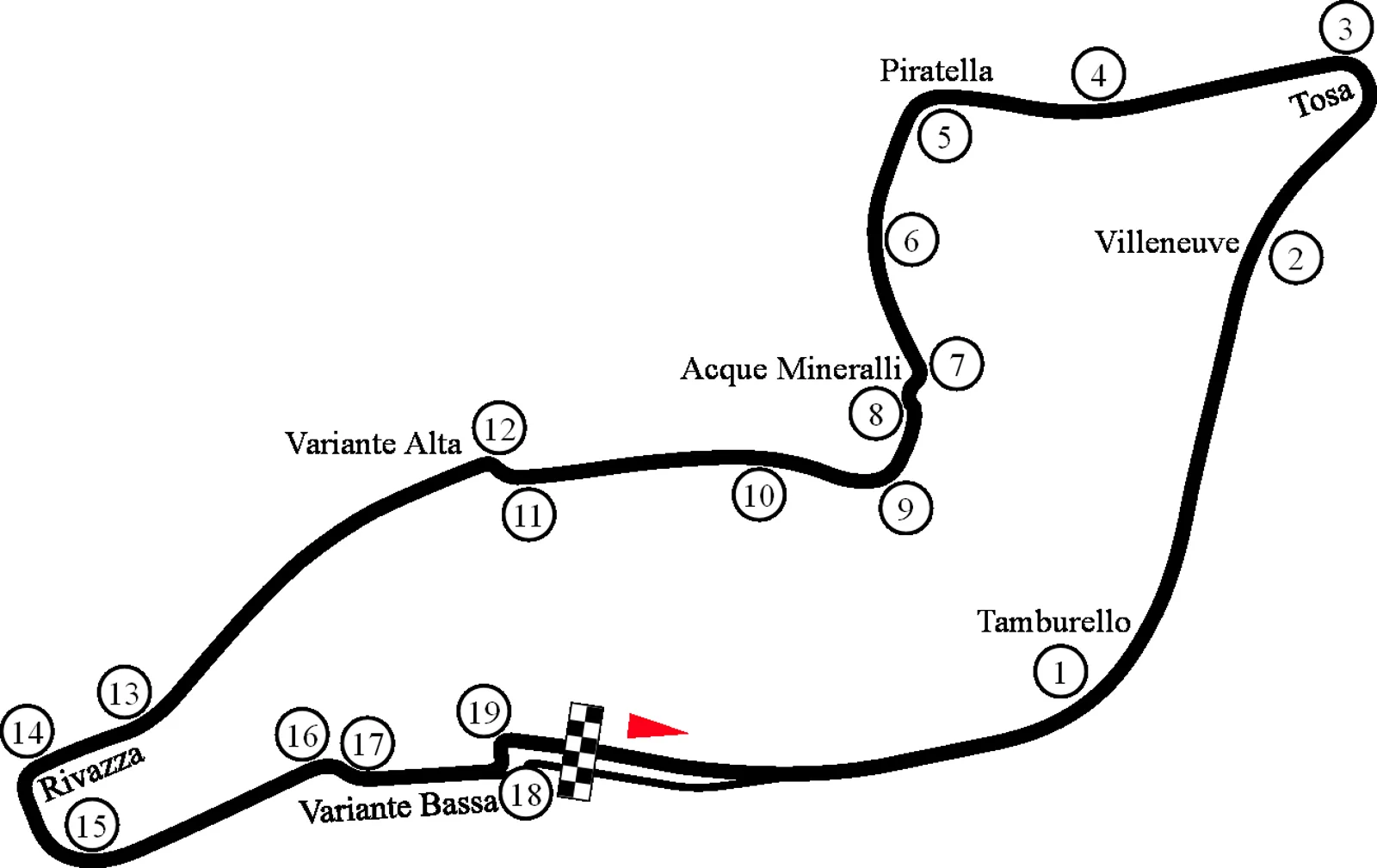
Rubens Barrichello, driving for Jordan, hit a kerb at the Variante Bassa at 225 km/h (140 mph) and was launched into the air. He struck the top of the tyre barrier, and the impact, measured at 95 g, knocked him unconscious. His tongue blocked his airway, and emergency work by FIA doctor Sid Watkins saved his life.
Barrichello's car rolled several times after landing and came to rest upside down. Medical teams treated him at the site, and he was taken by helicopter to Maggiore Hospital in Bologna for tests. He had a sprained wrist and a broken nose, and he was kept under observation.
He regained consciousness and found Senna looking over him at the medical centre. Senna then returned to his car and carried on with his session. Barrichello came back to the circuit the next day, but his broken nose and a plaster cast on his arm kept him out of the rest of the weekend.
Damon Hill later recalled that the drivers brushed themselves off and carried on qualifying, reassured that their cars were tough. Senna's Friday practice time, set despite a spin, was 1:21.598, 1.157 seconds quicker than Hill, 1.250 seconds quicker than Schumacher and 1.469 seconds quicker than Berger.
What happened to Roland Ratzenberger on Saturday?
Ratzenberger, in his first season in Formula One, crashed at the Villeneuve curva in his Simtek eighteen minutes into the final qualifying session. His front wing had been damaged earlier, and it gave way at over 300 km/h, leaving him unable to steer or brake properly.
He had run over a kerb at the Acque Minerali chicane on the previous lap, and the impact is believed to have damaged his front wing. Rather than return to the pits, he continued on another fast lap. As the car passed 300 km/h the wing gave way, most likely because two bolts attaching it to the nose had failed, and it was pushed under the car, lifting the front wheels off the asphalt.
He hit the bare concrete wall almost head-on at about 314 km/h (195 mph). There were no tyre barriers at the Villeneuve curva, and the impact was measured at 500 g, the highest ever registered in Formula One. Investigators found three separate fatal injuries: a basilar skull fracture, blunt trauma from the front left tyre entering the survival cell, and a ruptured aorta.
The session was stopped by a red flag, and doctors were on the scene within a minute. Ratzenberger was airlifted to the anaesthesia and resuscitation unit at Maggiore Hospital at 14:07 local time. He was confirmed dead at 14:15 local time, and it was determined that he had died almost immediately upon impact.
The session restarted 48 minutes later, but Williams and Benetton took no further part. Ratzenberger's death was the first fatality at a race weekend since Riccardo Paletti was killed at the 1982 Canadian Grand Prix. It had been eight years since Elio de Angelis died testing a Brabham at the Paul Ricard circuit.
How did Senna's weekend unfold after Ratzenberger's death?
Senna had qualified on pole on the strength of his Friday time, having set no lap on the Saturday after the crash. Michael Schumacher was alongside him on the front row, with Berger third, and Hill improved by a second to take fourth. Ratzenberger's earlier lap would have been enough for 26th, the final grid slot.
Watkins, who ran the sport's on-track medical team at the time, wrote in his memoirs that Senna broke down and cried on his shoulder when he heard the news. Watkins tried to persuade Senna not to race the following day, pointing out how much he had already achieved. Senna replied that some things were beyond anyone's control and that he had to go on.
Barrichello's injury meant the final grid place passed to Pacific's Paul Belmondo, the only driver to miss the cut, as the first alternate. Belmondo declined to take the spot out of respect for Ratzenberger, and because he felt that he had not earned the race place and Ratzenberger had.
At the drivers' briefing on 1 May 1994, the field agreed to reform the Grand Prix Drivers' Association, and its first directors were Schumacher, Berger and Senna. The association then pushed for better car and circuit safety.
What was the race like before the red flag?
The race began at 14:00 CEST in dry, sunny weather. Michele Alboreto had to start from the pit lane in a spare Minardi after a problem with his race car. At the start, JJ Lehto stalled his Benetton on the grid, and Pedro Lamy's Lotus ran into the back of it. Debris went over the safety fencing, causing minor injuries to a police officer and eight spectators.
Lamy was uninjured and quickly left his car. Lower down, Brundle, who had started thirteenth, passed two cars and Lehto to reach tenth on the opening lap. No stoppage was declared for the accident, and instead the safety car, driven by Max Angelelli, was deployed. The field held position behind it at reduced speed, which allowed tyre temperatures to drop.
Senna and Gerhard Berger had raised concerns at the drivers' briefing that the safety car was not fast enough to keep the tyres hot. The car in use was an Opel Vectra, and it travelled very slowly. Its brakes had been overwhelmed and began to fade on the first lap, so the driver had to slow down to avoid causing an accident himself.
Senna pulled alongside the safety car several times, urging the driver to go faster. The procedure used at the 1994 Pacific Grand Prix, in which the safety car led the grid on the formation lap, had been dropped for this race. During the safety car period Erik Comas and Eric Bernard made contact, and Comas pitted so his Larrousse crew could check a vibration.
The race restarted at the end of lap five, once the track was clear of debris. Jonathan Palmer, commentating for the BBC alongside Murray Walker, remarked on Schumacher's pace, and speculation grew that he might make only one pit stop. Senna and Schumacher pulled away from Berger after the restart, while Hill had made a poor getaway. Senna was planning two stops.
What happened on lap seven at Tamburello?
On the seventh lap, Senna was leading Schumacher at about 305 km/h when his car could not make the Tamburello left-hand corner. It continued in a straight line into the unprotected concrete barrier at 211 km/h, and he was killed instantly. Track officials later found a furled Austrian flag in the wreckage, which Senna had planned to raise after the race in honour of Ratzenberger.
A red flag was shown at 14:17 local time, and Watkins went to the scene to treat Senna. Under a red flag, cars must slow and return to the pit lane or grid unless told otherwise. That protects marshals and medical staff at the scene and allows medical cars to reach the crash more easily.
Why did the Larrousse incident draw criticism?
About ten minutes after the crash, the Larrousse team sent Comas to the end of the pit lane for release, although the circuit was under a red flag. Marshals had to wave him down as he approached the scene at close to full speed, and he stopped before reaching the emergency vehicles and marshals on the track.
Comas described confusion about whether he was allowed to rejoin. Commentator Allard Kalff called the situation ridiculous, and John Watson said he was gobsmacked. Comas was so distressed by what he had seen at the accident scene that he withdrew from the race, and he did not speak about it for more than ten years.
The pictures of Senna being treated, carried on the world feed from the host broadcaster RAI, were judged too upsetting for general viewing by the BBC. The corporation abandoned the RAI feed and focused on its own camera in the pit lane, and other broadcasters, including ESPN and Nine Network, took that feed instead. Murray Walker later said it had been upsetting to talk to viewers while avoiding the images shown on RAI.
Ferrari team principal Jean Todt remarked that the crash was replayed so often that even someone who did not want to watch it could barely avoid it. Martin Brundle reported from the pit lane that televisions in the garages were being switched off soon after the crash, and that reports suggested Senna was all right.
What did the 1994 race lead to for safety?
The deaths led to the reformation of the Grand Prix Drivers' Association, changes to track layouts and car design, and a long push for safety. From 2003 the FIA mandated the HANS device, which was designed to prevent the type of injury Ratzenberger suffered.
Of Ratzenberger's death, the reformed association proved the most lasting legacy. Its demands centred on car and circuit safety, prompted by Imola and by other serious accidents that season, and they fed into a much wider change across the sport.
Senna was given a state funeral in Sao Paulo, where around 500,000 people lined the streets to watch the coffin pass. Some estimates put the figure at 2 million. Italian prosecutors brought manslaughter charges against six people over Senna's death. Among them were Frank Williams, Adrian Newey and Patrick Head, together with Federico Bendinelli, Giorgio Poggi and Roland Bruynseraede. All six were later acquitted, after a case that dragged on for more than 11 years, including an appeal and a retrial.
Race summary
| Finish | Driver | Team | Note |
|---|---|---|---|
| First | Michael Schumacher | Benetton | Won the race after the restart at the end of lap five |
| Second | Nicola Larini | Ferrari | First points of his career |
| Third | Mika Hakkinen | McLaren | Finished on the podium |
| Retired | Ayrton Senna | Williams | Killed on lap seven at Tamburello |
| Did not race | Roland Ratzenberger | Simtek | Killed in Saturday qualifying |