A Salzburg racer who made his Formula One debut in 1994 and died in qualifying for the San Marino Grand Prix, a loss that reshaped the sport's safety rules.
Austrian Roland Ratzenberger raced for Simtek at three Formula One weekends in 1994. His only race start came at the Pacific Grand Prix, where he ended up 11th, and he was killed in qualifying at Imola on 30 April 1994, one day before the Senna accident.
Roland Ratzenberger was an Austrian racing driver who competed at three Formula One weekends in 1994 for Simtek. He lost his life on Saturday 30 April 1994 during qualifying at Imola, one day before Ayrton Senna's fatal accident in the race.
Who was Roland Ratzenberger?
Roland Walter Ratzenberger was born in Salzburg on 4 July 1960 and became one of the few Austrians to reach the top tier of motorsport. He spent much of his career in touring cars and endurance racing before he got his chance in Formula One in 1994, and his death that year helped trigger far-reaching safety reforms.
Ratzenberger grew up close to the Salzburgring, which opened in 1969 not far from his home. At age seven, a grandmother took him along to a local hillclimb at Gaisberg, and as a teenager he began spending time in the workshop of Walter Lechner, a Formula Ford team owner based nearby. At 18 he finished technical school and joined Lechner's new racing school at the circuit.
His death that year helped trigger far-reaching safety reforms.
How did his racing career develop before Formula One?
Ratzenberger rose through Formula Ford, winning the Austrian and Central European championships in 1985 and the Formula Ford Festival in 1986. He then spent two seasons in British Formula Three before turning to touring cars and sportscar racing.
He began in German Formula Ford in 1983. In 1985 he finished second at the Formula Ford Festival at Brands Hatch, and a year later he won it. British Formula Three followed, and his name briefly made him a celebrity, because it resembled that of the puppet Roland Rat. He appeared on a TV-am programme, and the TV-am branding was placed on his car for a time.
In 1987 he finished second in the World Touring Car Championship for Team Schnitzer, driving a BMW E30 M3. Across ten races that year he collected four podium finishes. In 1988 he joined the Demon Tweeks team for the closing rounds of the British Touring Car Championship, and in 1989 he finished third in the British Formula 3000 Championship.
Did he race at Le Mans?
Yes. Ratzenberger made his first appearance at the 24 Hours of Le Mans in 1989, sharing a Brun Motorsport Porsche 962 that retired in the third hour. He took part in four further editions between 1990 and 1993, and in 1993 he finished fifth overall in a Toyota 93C-V and won the C2 class with the SARD team.
Ratzenberger's co-drivers in that Brun entry were Maurizio Sandro Sala and Walter Lechner. Ratzenberger drove for SARD in 1990, 1992 and 1993, and he returned to Brun in 1991. Five starts in total gave him a steady presence in the event through the early 1990s.
Racing in Japan and Formula 3000
During the 1990s Ratzenberger concentrated on Japanese racing. In the Japanese Sports Prototype Championship he took a win in each of 1990 and 1991, both with SARD. He also competed in the Japanese Touring Car Championship, where he finished seventh in 1990 and again in 1991, driving a BMW M3.
He ran a test session at Willow Springs in a CART Lola T91/00 run by Dick Simon Racing. He returned to Japanese Formula 3000 in 1992 with the Stellar team, where a slow start gave way to a win after the team upgraded its car. He finished seventh overall that year and was 11th in 1993.
How did his Formula One career unfold?
Ratzenberger signed for the new Simtek team in 1994 on a five-race deal, partnered by David Brabham. He failed to qualify at the Brazilian Grand Prix, but he finished 11th at the Pacific Grand Prix, his only Grand Prix start, after starting 26th on the grid.
A German backer, Barbara Behlau, negotiated the sponsorship deal over the 1993-1994 winter, which made the Simtek drive possible. He had wanted a Formula One seat for years. He came close to a drive with Jordan for its inaugural season in 1991, but he lost a sponsor during the negotiations and Bertrand Gachot took the seat. By 1994 former Formula 3000 rivals Eddie Irvine and Johnny Herbert had already reached the top level, and he was determined to follow.
The Simtek car was uncompetitive, and at Interlagos it was not fast enough to qualify. Ratzenberger's result at the Pacific round, held at the TI Circuit in Aida, stood out because he was the only driver in the field who had raced at the venue before. His sponsor was present at the San Marino round, which was the halfway point of his contract.
What happened at Imola in 1994?
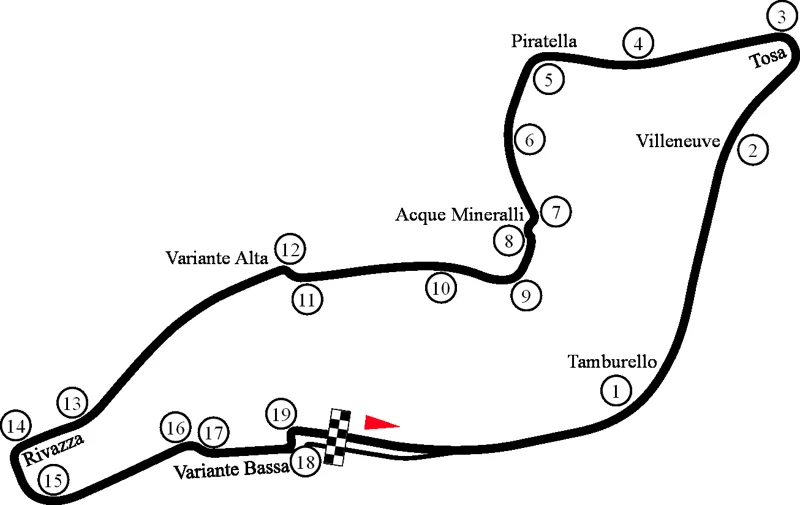
On Saturday 30 April 1994, during the second qualifying session for the San Marino Grand Prix, Ratzenberger crashed at the Villeneuve corner after a broken front wing lodged under his car. He was taken to hospital and pronounced dead on arrival.
The weekend had begun on Friday 29 April, when Rubens Barrichello crashed at the Variante Bassa at 225 km/h (140 mph) and was injured. Earlier in Saturday's session, Ratzenberger had gone off at the Acque Minerali chicane. He checked the car to the best of his ability and carried on, not knowing that the front wing had been damaged.
On a later lap, while entering the high-downforce Villeneuve corner, the wing snapped and jammed beneath the car. The car struck the outside wall at 314.9 km/h (195.7 mph). He was moved by ambulance to the circuit's medical centre, then flown by air ambulance to a hospital in Bologna.
He was at the wheel of a Simtek S941 when the car struck the wall. Doctors gave a basilar skull fracture as the official cause of death. Three separate fatal injuries were recorded in total, including blunt trauma from the front-left tyre, which penetrated the survival cell, and a ruptured aorta. He was the first driver to die at a Grand Prix weekend since Riccardo Paletti in 1982, and the first to die in a Formula One car crash since Elio de Angelis during testing for 1986.
The Senna weekend and what followed
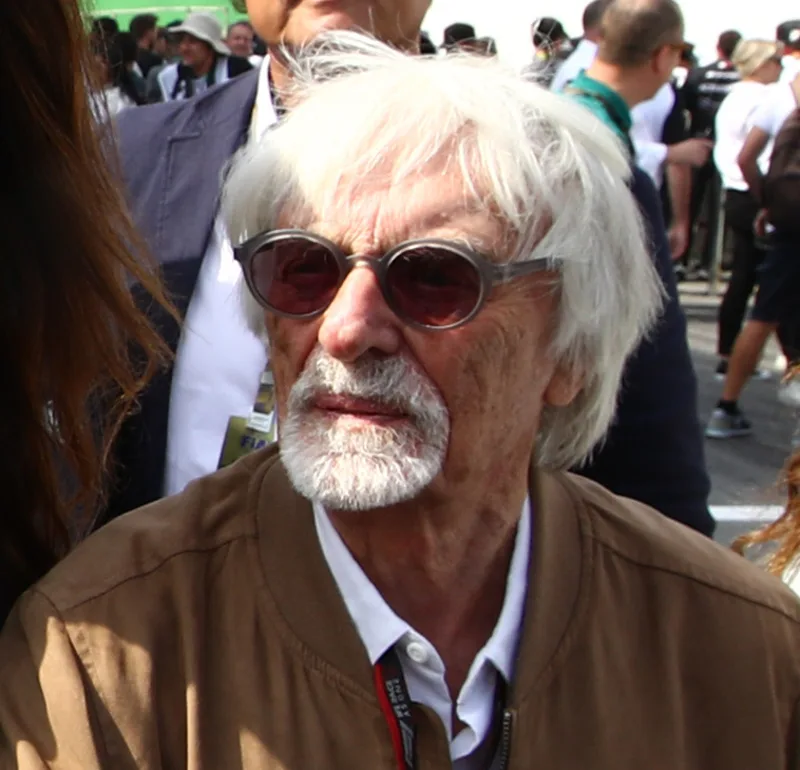
Bernie Ecclestone personally told the stunned Simtek team of Ratzenberger's death. Brabham chose to race on the Sunday, deciding that he had to pick the team up and carry on. Ayrton Senna heard the news from neurosurgeon Sid Watkins, who suggested he skip the next day's race. Senna refused to quit, although he withdrew from the rest of qualifying.
Ratzenberger's grid slot was left empty, and Paul Belmondo declined an offer to occupy it out of respect for him. On lap seven of the race, Senna's car struck an unprotected concrete barrier at Tamburello and he suffered fatal injuries. Track officials later found a furled Austrian flag in Senna's car, which he had intended to raise in Ratzenberger's honour.
Michael Schumacher won the race, and the podium went without champagne as a mark of respect for both drivers. He was laid to rest at Maxglan, a district of Salzburg. At Monaco, the following round, the two front grid slots stood empty, painted in Austrian and Brazilian colours. His name stayed on a Toyota entry for Le Mans later that year, while his friend Eddie Irvine took the wheel.
Legacy and the Grand Prix Drivers' Association
At the drivers' briefing on the Sunday morning, the remaining drivers agreed to re-form the Grand Prix Drivers' Association. The planned first directors were Senna, Gerhard Berger and Michael Schumacher. The reformed body pressed for much stronger safety standards after the Imola crashes and other accidents that year.
From 2003 the FIA required the HANS device, a head-restraint system designed to prevent the kind of injury that killed Ratzenberger. Only five drivers attended his funeral, among them Brabham, Johnny Herbert, Heinz-Harald Frentzen, Karl Wendlinger and Gerhard Berger. FIA president Max Mosley went as well, and he later said that Ratzenberger had been forgotten because everyone had gone to Senna's funeral.
Ratzenberger's career at a glance
| Period | Series or event | Highlight |
|---|---|---|
| 1983 | German Formula Ford | Racing career begins |
| 1985 | Austrian and Central European Formula Ford | Two national championships |
| 1986 | Formula Ford Festival | Event won |
| 1987 | World Touring Car Championship | Second place with Team Schnitzer |
| 1989 | British Formula 3000 | Third overall |
| 1989 to 1993 | 24 Hours of Le Mans | Five starts, C2 class win in 1993 |
| 1990 and 1991 | Japanese Sports Prototype Championship | One race win each season |
| 1992 and 1993 | Japanese Formula 3000 | Seventh overall in 1992, 11th in 1993 |
| 1994 | Formula One with Simtek | 11th at the Pacific Grand Prix |
| 1994 | San Marino Grand Prix | Fatal crash in qualifying on 30 April |