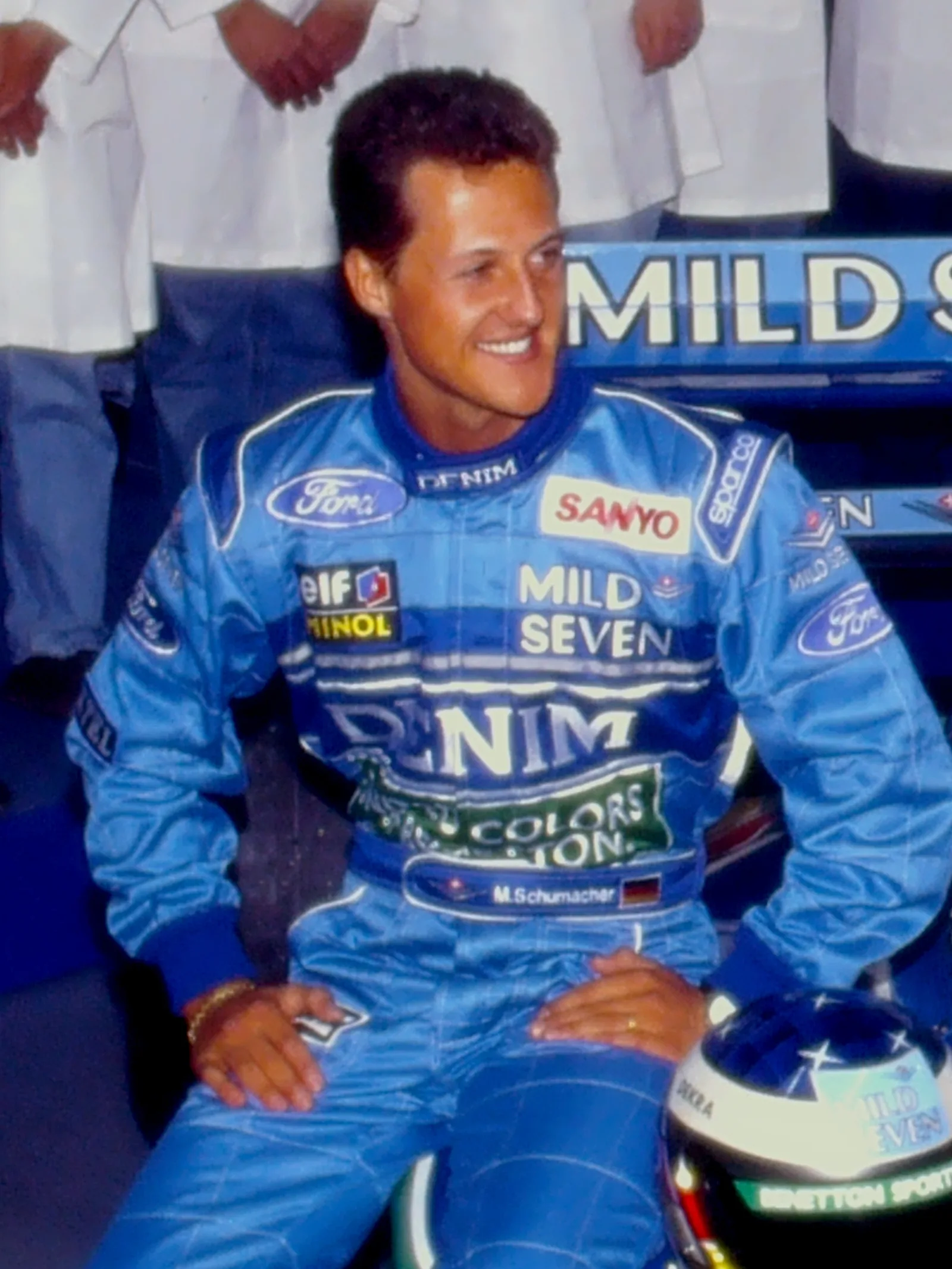
Benetton, Michael Schumacher and a run of rule disputes ran through the 1994 season, and the FIA never found proof that its suspected systems were used in a race.
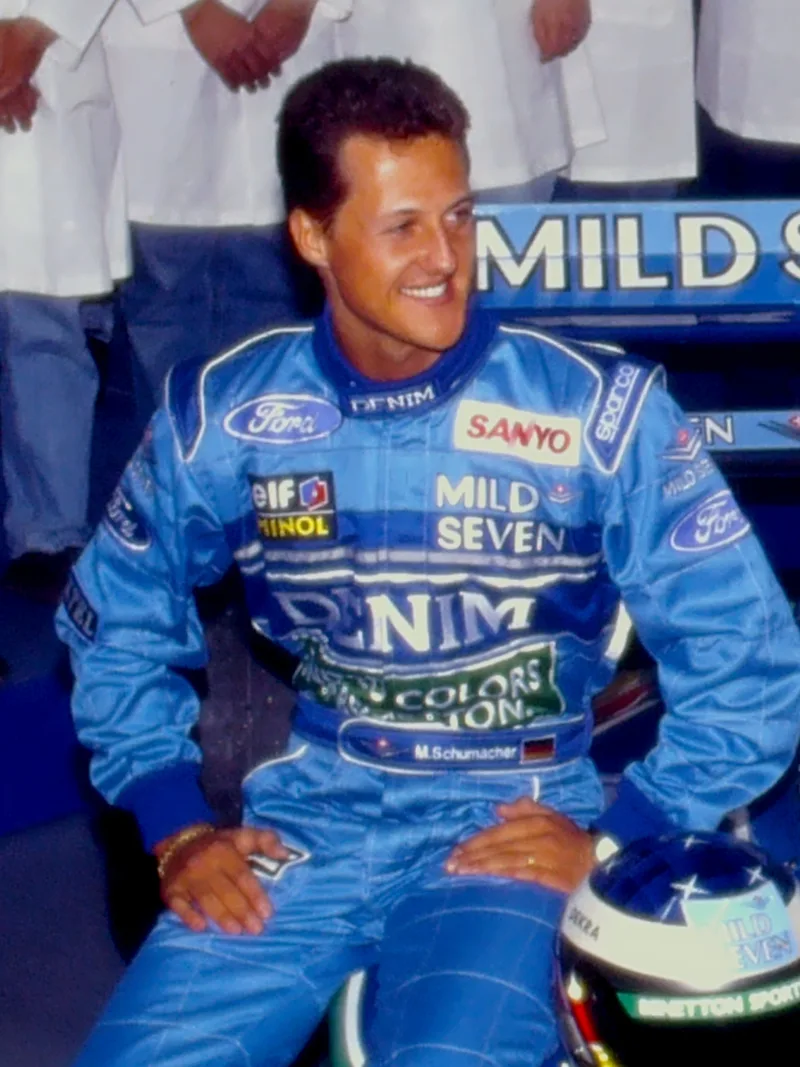
The 1994 cheating allegations centred on Benetton and Michael Schumacher, who were accused of using traction control and launch control in a season when such aids were banned. The FIA found hidden software but no evidence it was used in a race, and Schumacher still won the title.
The 1994 Formula One season was dogged by allegations of illegal driver aids, and most of them centred on Benetton and Michael Schumacher. Investigators uncovered a concealed launch control function in Benetton's code yet had no proof it had ever been used in a race, while a refuelling fire and a worn plank led to penalties that reshaped the title fight. The season is remembered as much for these disputes as for the racing itself.
What were the 1994 rules that caused the suspicion?
The FIA announced the 1994 technical regulations at the 1993 Canadian Grand Prix, and electronic aids were among the biggest changes. Power brakes and traction control were banned, and anti-lock braking and active suspension were also outlawed for the season. The aim was to stop electronics levelling the field and putting more weight on the car than on the driver.
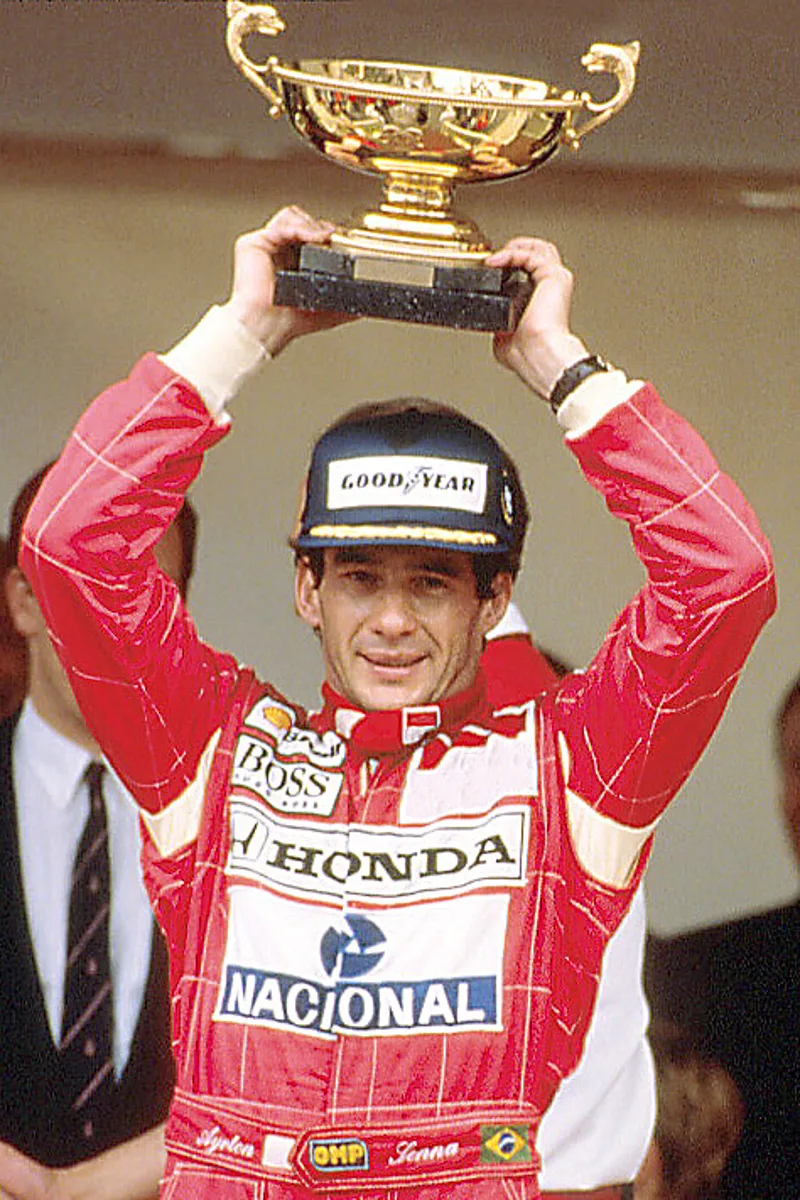
Not everyone welcomed that approach. Ayrton Senna spoke against traction control and said he preferred to keep control of the car himself, while later warning that a season without driver aids would bring more accidents. Max Mosley, the FIA president, warned that such systems were dangerous and hard to predict.
The FIA found the hidden software, but it never found the proof it needed to pin the 1994 title on cheating.
Why did the rule changes matter so much to Williams?
Williams held a clear edge through its active suspension and other driver aids, so some in the paddock read the bans as a way of curbing the team. The unraced continuously variable transmission was also banned, and Williams had spent several years developing that system.
Refuelling was reintroduced for the first time since 1983, which required every team member at a pit stop to wear fire-protective clothing. Ferrari was thought to stand to gain, because its V12 was less fuel-efficient than the V10 and V8 engines of its rivals.
How did the early races fuel the suspicion?
The first accusation came at the Brazilian Grand Prix, the opening round. Senna led the race and pitted on lap 21, with Schumacher close behind. Benetton's crew made a very quick stop for Schumacher, who emerged in front of Senna and went on to win after Senna spun out of the race.
At the Pacific Grand Prix, Ferrari's test driver Nicola Larini confided to Italian reporters that he had run traction control in practice. Ferrari and Larini later denied the claim to the wider press. Senna retired on the first lap after colliding with Mika Hakkinen, then stood and listened to the cars leaving the track. He came back to the Williams pit suspicious that the Benetton had been running illegal software.
What happened after the deaths at San Marino?
The 1994 San Marino Grand Prix claimed the lives of Senna and Roland Ratzenberger, and the FIA moved quickly afterwards. It asked the three teams that had finished first, second and third to supply their engine management program code. Ferrari complied at once, while McLaren and Benetton handed theirs over only after the deadline, and each team was fined $100,000 for the delay.
The Benetton code was the centre of the dispute. Cosworth regarded the software as its own property and would not let Benetton give it to the FIA, so the FIA watched a demonstration at Cosworth's engine facility instead. Benetton and McLaren had both kept hidden functions in their software, but the FIA found no evidence that either had been used in a race.
The Monaco Grand Prix brought further technical changes. The diffuser was restricted to reduce downforce, and the revised cars showed problems in testing. Ligier suffered two cracked wing mountings, Williams noted a cracked mounting at Jerez, and Pedro Lamy's Lotus lost its rear wing at Silverstone. The car cartwheeled at 170 mph (270 km/h) and crashed through a fence, and Lamy was taken to hospital.
Benetton team boss Flavio Briatore criticised Max Mosley in a letter dated 25 May, arguing that the changes had reduced stability and that the rules were ill-considered. Pump fuel and a plank wear rule were introduced later in the season, the first for the Canadian Grand Prix and the second for the German Grand Prix on 31 July.
How did the launch control finding change the story?
Allegations flared again at the French Grand Prix, where Schumacher started third and overtook both Williams drivers into the first corner. Coulthard, who was commentating for Eurosport that day, said the start reminded him of traction-control starts from the 1993 season, when such aids had been legal.
That July, the FIA examined Benetton's data recorders from Imola and uncovered launch control software with a concealed trigger. A laptop could switch it on, and it was missing from the driver's menu, appearing only as an invisible option. Benetton admitted the code existed but said it was redundant and could only be started by recompiling the program code.
The FIA concluded that the best evidence was that Benetton had not used launch control at the San Marino Grand Prix. The rules at the time banned traction control itself rather than software that might have implemented it, so no action could be taken. Had the evidence shown otherwise, the team could have faced exclusion from the championship.
Willem Toet, Benetton's aerodynamics chief in 1994, insisted that the system worked through rotational inertia, which he said was legal. He also argued that Schumacher's left-foot braking may have misled Senna, although drivers had used that technique since the early 1970s.
Why was the British Grand Prix penalty so controversial?
At Silverstone, Hill took pole, but Schumacher, starting second, overtook him on the parade lap. The five-second penalty came 27 minutes after the incident, and Benetton said it had not been told of the penalty. Schumacher stayed on track and was given the black flag on lap 21. Benetton's Briatore and technical director Tom Walkinshaw went to argue the case with the race director.
Schumacher eventually served the penalty on lap 27 and finished second behind Hill. The FIA fined Schumacher and Benetton $25,000 for breaching the sporting regulations, and Benetton's team manager Joan Villadelprat said the race stewards had made a mistake because the team was not notified within 15 minutes, as the rules required.
What did the German refuelling fire reveal?
The most serious incident came at the German Grand Prix, when Jos Verstappen's Benetton caught fire during refuelling after the fuel nozzle would not seat properly. Verstappen suffered minor burns, and four Benetton mechanics were also burned. Intertechnique, which made refuelling equipment for all the teams, was asked to examine the Benetton factory.
The FIA stated that a foreign object had slowed the closing of the fuel valve and that a fire-prevention filter had been taken out. An outside estimate said fuel flowed in 12.5% faster without the filter, saving one second per pit stop. Intertechnique later said Benetton had never asked for the filter to be removed, and Benetton blamed a fault in the equipment.
| Date | Event | Outcome |
|---|---|---|
| British GP, lap 21 | Schumacher overtakes Hill on the parade lap | Five-second penalty, black flag and $25,000 fine |
| German GP | Verstappen's refuelling fire | Filter removal found, guilt recorded, no punishment |
| Belgian GP | Plank wear of 7.4 millimetres against a minimum of nine | Schumacher disqualified and appeal rejected |
| 26 July meeting | FIA council sits on the British GP incident | Two-race ban and fines of $500,000 to $600,000 for Benetton |
| 7 September hearing | Fuel filter and Belgian appeal reviewed | Benetton found guilty without punishment |
How did the Belgian plank case end Schumacher's season?
Schumacher lost his result at the 1994 Belgian Grand Prix after his car's plank showed excessive wear. The plank had to measure at least nine millimetres after the race, and most of the plank on his car measured 7.4 millimetres. Benetton argued that the wear came from a spin during the race, but its appeal was rejected.
Schumacher had also lost six points for his second place at Silverstone and was given a two-race ban. An appeal let Schumacher race at Hockenheim, but the two-race ban stood, so he sat out the Italian round on 11 September and the Portuguese round on 25 September. JJ Lehto replaced him for both races.
What did the FIA finally decide?
The World Motor Sport Council met in Paris on 7 September to hear the fuel filter case and the Belgian appeal. It found that Benetton had removed the filter in good faith, without authorisation from Intertechnique, and that the team had not tried to cheat. Because the council accepted that the filter had been removed in good faith, Benetton was found guilty without punishment.
At the same hearing McLaren was found to have breached the technical regulations with a fully automatic upshift device that had run in Mika Hakkinen's car at San Marino. McLaren was not punished because the FIA accepted that it had believed the device was legal. The Benetton statement after the hearing welcomed the outcome and said the team had been cleared of any cheating.
Did the allegations decide the 1994 title?
Benetton issued a statement denying rumours that Schumacher would quit, saying he would complete the season. He did finish the season, and he won the Drivers' World Championship at Adelaide in 1994. The title was decided by a collision with Hill, which the stewards ruled a racing incident.
Public opinion was divided over that collision, and many in the British media were hostile to Schumacher. Observers saw the two-race ban, which left him one point behind before the final round, as petty. Many believed it reflected a feud between Benetton and the FIA, with Schumacher treated unfairly in his pursuit of his first title.
What was the legacy of the 1994 allegations?
The FIA later admitted that it had struggled to police driver aids. The FIA reversed course at the 2001 Spanish Grand Prix, readmitting traction control, launch control and fully automatic gearboxes. Launch control and automatic transmissions were banned again for 2004, and from 2008 teams had to use identical electronic control units to stop them hiding traction control or other aids.
Toet's 2015 article on LinkedIn described how the team had built a traction control system using spark cutting, which gave the 1994 allegations a fresh airing two decades later. Schumacher stayed at Benetton for 1995, won another title that year, and then joined Ferrari for 1996, where he remained until 2006 and won five more Drivers' titles.