The Dutch driver who raced in Formula One from 1994 to 2003, won his class at Le Mans in 2008 and later coached his son Max from karting.
Dutch driver Jos Verstappen raced 107 Grands Prix between 1994 and 2003, scoring two podiums and 17 championship points. He later won the 2008 Le Mans LMP2 class and coached his son Max, a four-time Formula One champion, from karting.
Jos Verstappen is a Dutch racing and rally driver who competed in Formula One from 1994 to 2003. He later won the LMP2 class at the 24 Hours of Le Mans in 2008, and he now competes in the European Rally Championship as a privateer. He is also the father of four-time Formula One World Champion Max Verstappen, whom he coached from karting.
Who is Jos Verstappen?
Johannes Franciscus Verstappen was born on 4 March 1972 and grew up in Dutch Limburg. He competed in 107 Grands Prix in Formula One between 1994 and 2003, and he later raced in sportscars and rallies. He speaks Dutch, English and German.
Verstappen began karting at the age of eight. He became Dutch junior champion in 1984, and in 1989 he won the two-class Karting European Championship, a double title that stood unmatched until his son Max repeated it in 2013.
Those karting titles were the first step in a career that would take him from Dutch tracks to the Formula One grid.
A 107-Grand-Prix veteran, a Le Mans class winner and the man who guided his son from karting to four world titles.
How did his junior titles shape the route to Formula One?
Verstappen won his first major titles in karting, first as Dutch junior champion in 1984 and then with the two-class European title in 1989. Those results gave him the profile needed to move up to Formula Opel in 1991.
The titles in single-seater racing came quickly. The European Formula Opel championship in his first year and the German Formula Three title in 1993 gave him a strong record before his Formula One test.
How did Verstappen move from karts to single-seaters?
In 1991 Verstappen moved into car racing with Formula Opel Lotus, and he won the European championship in his first year. In 1992 he took the Benelux Championship and the EFDA Nations Cup, and in 1993 he won the German Formula Three title, which also brought the Masters of Formula 3.
Van Amersfoort Racing, which also developed Christijan Albers, Tom Coronel and Bas Leinders, offered him a Formula Three seat. He also raced New Zealand Formula Atlantic during the same period.
How did his Formula One debut come about?
Verstappen first drove a Formula One car in a test for Footwork Arrows at Estoril on 28 September 1993. After that test every team except Ferrari and Williams approached him, and Benetton signed him as a test driver for the 1994 season.
His test lap times would have qualified him for a race, which made him a driver the teams wanted to sign. The Benetton deal turned that interest into a race seat in the 1994 season.
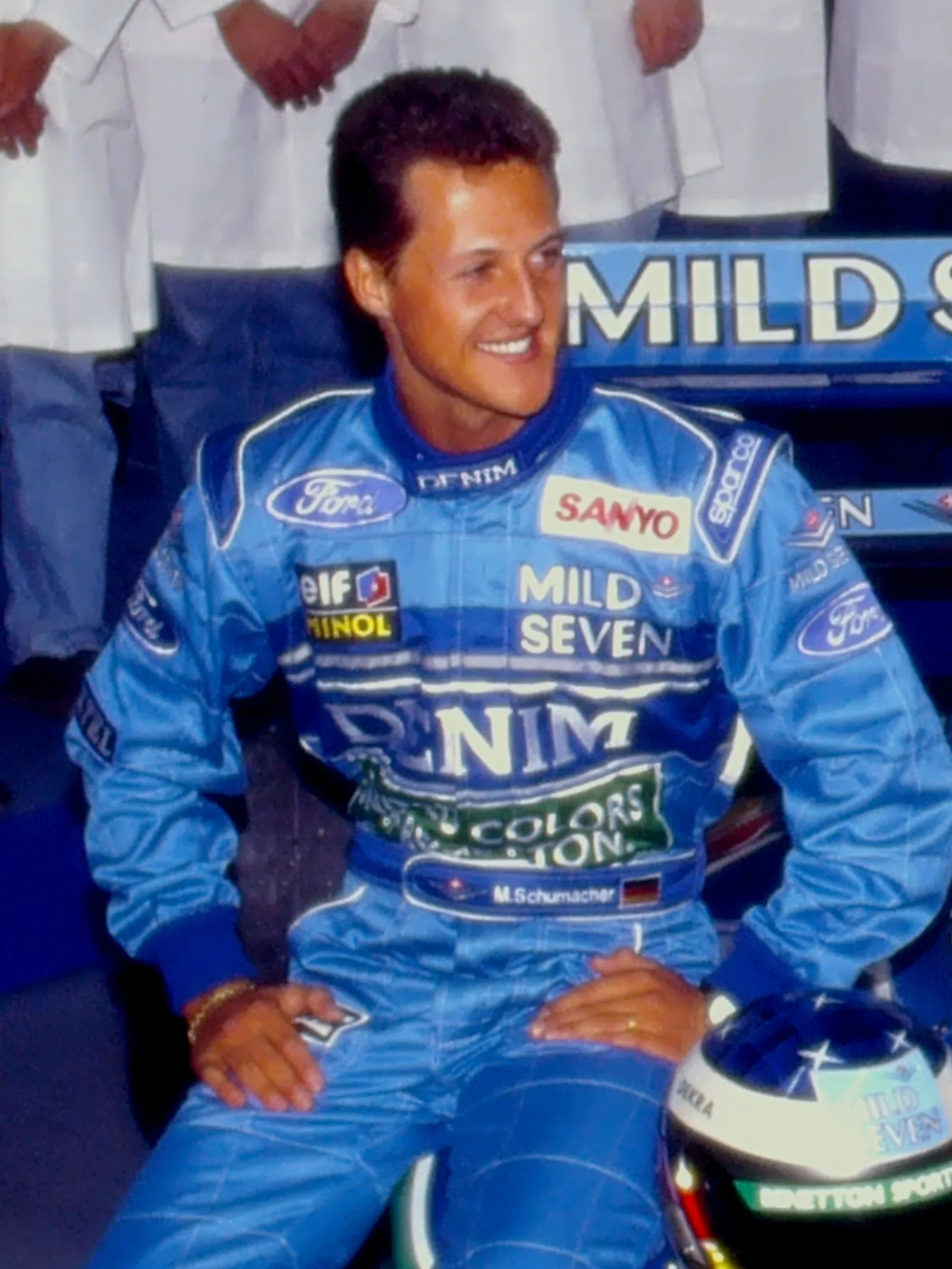
His race debut came in Brazil in 1994, when he stepped in for the hurt JJ Lehto alongside Michael Schumacher. In that race he collided with Eddie Irvine, which caused a multi-car accident.
What were Verstappen's results in the 1994 season?
Verstappen's best 1994 results were two third places, in Hungary and Belgium. The Hungarian podium made him the first Dutch podium finisher in Formula One, and his best qualifying position was sixth at the Belgian Grand Prix.
At Hungary Schumacher let him unlap himself on the final lap. The Belgian third place followed Schumacher's disqualification from the race.
At the Pacific Grand Prix he ran sixth before spinning on cold tyres immediately after a pit stop. At the German Grand Prix fuel leaked during a pit stop and the car caught fire, leaving him with minor burns.
In practice for the French Grand Prix he rammed the pit wall, and the debris destroyed a television installation there. Johnny Herbert replaced him for the last two races of the season, and Benetton lost the Constructors' title to Williams that year.
What happened at Simtek and Footwork?
In 1995 Flavio Briatore loaned Verstappen to Simtek, where he finished only once in five races. Simtek went bankrupt after the Monaco Grand Prix, and in 1996 he drove full-time for Footwork.
At the 1995 Argentine Grand Prix he ran sixth before a poor pit stop and a gearbox failure ended his race. That result was the best of a difficult season with the team.
In 1996 he ran fifth at Interlagos before retiring, and he finished sixth at Buenos Aires. Footwork was then taken over by TWR, whose owner threatened to replace him unless he re-signed.
A suspension failure at the Belgian Grand Prix caused a crash that left him with a prolonged neck injury. Damon Hill's availability then led to Verstappen being dropped for 1997.
How did the Tyrrell, Stewart and Honda years go?
In 1997 Verstappen drove for Tyrrell, where his best result was eighth at the wet Monaco Grand Prix. In 1998 he replaced Jan Magnussen at Stewart for the French Grand Prix, and in 1999 he was a test driver for Honda.
At Tyrrell the car had an underpowered Ford Cosworth engine, and he briefly ran fifth at the Canadian Grand Prix. His team-mate was Mika Salo, and the team struggled at the back of the field.
Tyrrell was sold to British American Tobacco, which took the pay driver Ricardo Rosset as a team-mate for the new team's first season.
At Stewart the team struggled to run its two cars at one pace. The Honda test team included Harvey Postlethwaite, who died of a heart attack during the project, and when Honda's works project was dropped, Verstappen was left without a seat.
What did the return to Arrows bring?
Verstappen returned to Arrows in 2000 and scored points at the Canadian Grand Prix. The 2000 Arrows car was unreliable but fast in a straight line, which kept the team competitive in places.
For 2001 the team switched to Asiatech engines, and its only point of the year came at the A1-Ring. In 2002 he lost his seat late in the day, when Heinz-Harald Frentzen was chosen instead.
How did his Formula One career end at Minardi?
Verstappen returned to the cockpit in 2003 with Minardi, where his best finish was ninth at the Canadian Grand Prix. The team's only provisional pole came at the French Grand Prix, which he recorded, but he was outperformed by his rookie team-mate Justin Wilson.
Minardi operated with limited funds and underpowered engines that year. The season was difficult, and his Formula One career closed after it.
What did Verstappen's Formula One career total?
Verstappen competed in 107 Grands Prix, scoring two podium finishes and 17 championship points, which is 117 in the modern points system. Those numbers place him among the most experienced Dutch drivers in the sport's history. He is the second-best performing Dutch driver in Formula One history, behind only his son Max.
Sixth on the grid at Belgium in 1994 was his best qualifying performance. His podium in Hungary that year remains the first by a Dutch driver in the sport.
Key moments in his Formula One career
His first moment came at the 1993 test at Estoril, where his times caught the attention of every team except Ferrari and Williams. That interest turned into the 1994 Benetton seat and an early podium in Hungary.
The middle years were a struggle with weaker machinery. Simtek went bankrupt after Monaco in 1995, and Footwork was taken over by TWR, before a crash in Belgium left him with a neck injury that changed his 1997 plans.
The later years moved between Tyrrell, Stewart, the Honda test team and Arrows. His final Formula One season came with Minardi in 2003, when his top result was ninth in Canada.
How did Verstappen perform in A1 Grand Prix and endurance racing?
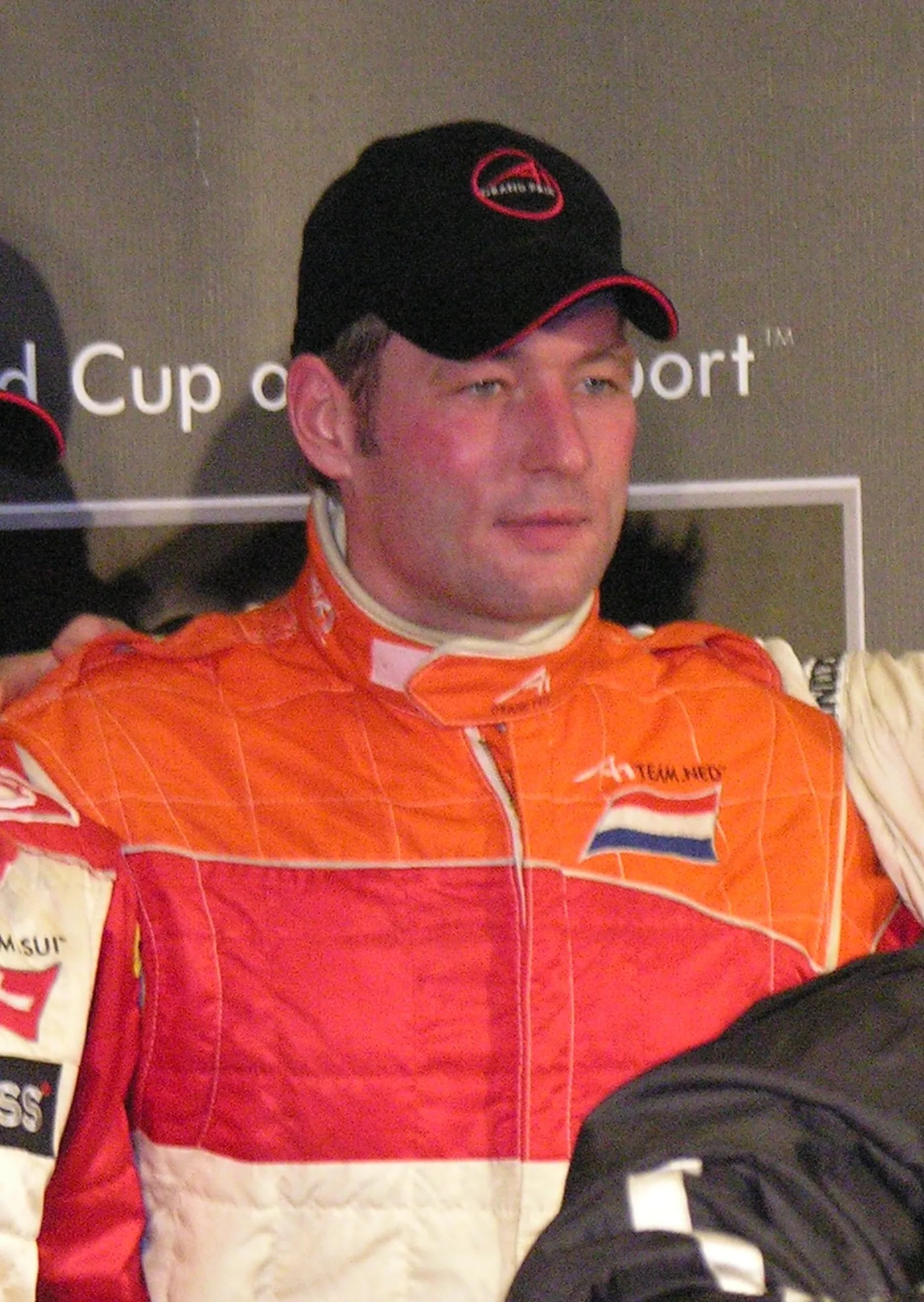
He was confirmed as the driver of the A1 Team Netherlands in July 2005, and the team won the feature race at Durban. In September 2006 he split with the team after it failed to secure payment guarantees.
Jeroen Bleekemolen took over his seat for the team's next race, and Bleekemolen had also driven for the team at Le Mans in 2008.
In 2008 he entered the 24 Hours of Le Mans and the Le Mans Series with Van Merksteijn Motorsport, driving a Porsche RS Spyder. He won the 1000km Catalunya and the 1000km Spa, and his win at the Nurburgring clinched the LMP2 Drivers' title.
The 2008 Le Mans race brought him the LMP2 class win, with team owner Peter van Merksteijn Sr. alongside him in the car. He returned to Le Mans in 2009 in a Lola-Aston Martin.
Did Verstappen race in rallying?
Yes. In 2022 he took part in the Ypres Rally on his own entry, and since 2025 he has raced in the European Rally Championship without a works team. His rallying came long after his Formula One career had ended in 2003.
Rallying gave him a new discipline after his circuit career, and the move came more than two decades after his Formula One debut.
How did Verstappen coach and manage Max?
Verstappen coached and managed his son Max from karting from 2002. Max went on to win four Formula One World Drivers' Championships, in 2021, 2022, 2023 and 2024.
Verstappen married Sophie Kumpen in 1996, and their children were Max, born in 1997, and Victoria, born in 1999. Max's racing career began in karts under his father's management.
What legal matters were reported?
A 1998 incident at a karting track left a man with a fractured skull. Verstappen and his father, Frans, were convicted of assault in its aftermath, and each received a five-year suspended jail sentence after an out-of-court settlement with the victim.
In December 2008 a Belgian court acquitted Verstappen of assault but found him guilty of threats. In January 2009 he was convicted again and given a three-month suspended sentence and a fine.
In 2012 a charge arising from an incident in Roermond was withdrawn after he had been held for two weeks. In 2016 a complaint filed by his father was withdrawn as well.
Formula One career at a glance
| Season | Team | Result |
|---|---|---|
| 1994 | Benetton | Two third places, in Hungary and Belgium |
| 1995 | Simtek | Loaned by Benetton; team bankrupt after Monaco |
| 1996 | Footwork Arrows | Fifth at Interlagos, sixth at Buenos Aires |
| 1997 | Tyrrell | Eighth at the wet Monaco Grand Prix |
| 1998 | Stewart | Replaced Jan Magnussen at the French Grand Prix |
| 1999 | Honda | Test driver; works project dropped |
| 2000 | Arrows | Points at the Canadian Grand Prix |
| 2003 | Minardi | Best finish ninth at the Canadian Grand Prix |
How has his career continued since 2003?
After Formula One he raced in A1 Grand Prix and sportscars, and later moved into rallying.
Max's four championships now define the family's racing legacy.
His rallying and endurance work show a driver who stayed in competition for decades after his Formula One career had ended, from A1 Grand Prix to Le Mans and the rally stages.