Sixteen rounds, one win for the champion and a season of deaths, a drivers' strike and a row over water tanks that still shaped the result.
Sixteen rounds made up the 1982 Formula One World Championship, held between 23 January and 25 September. Keke Rosberg won the drivers' title with a single victory, while Ferrari took the Constructors' Championship.
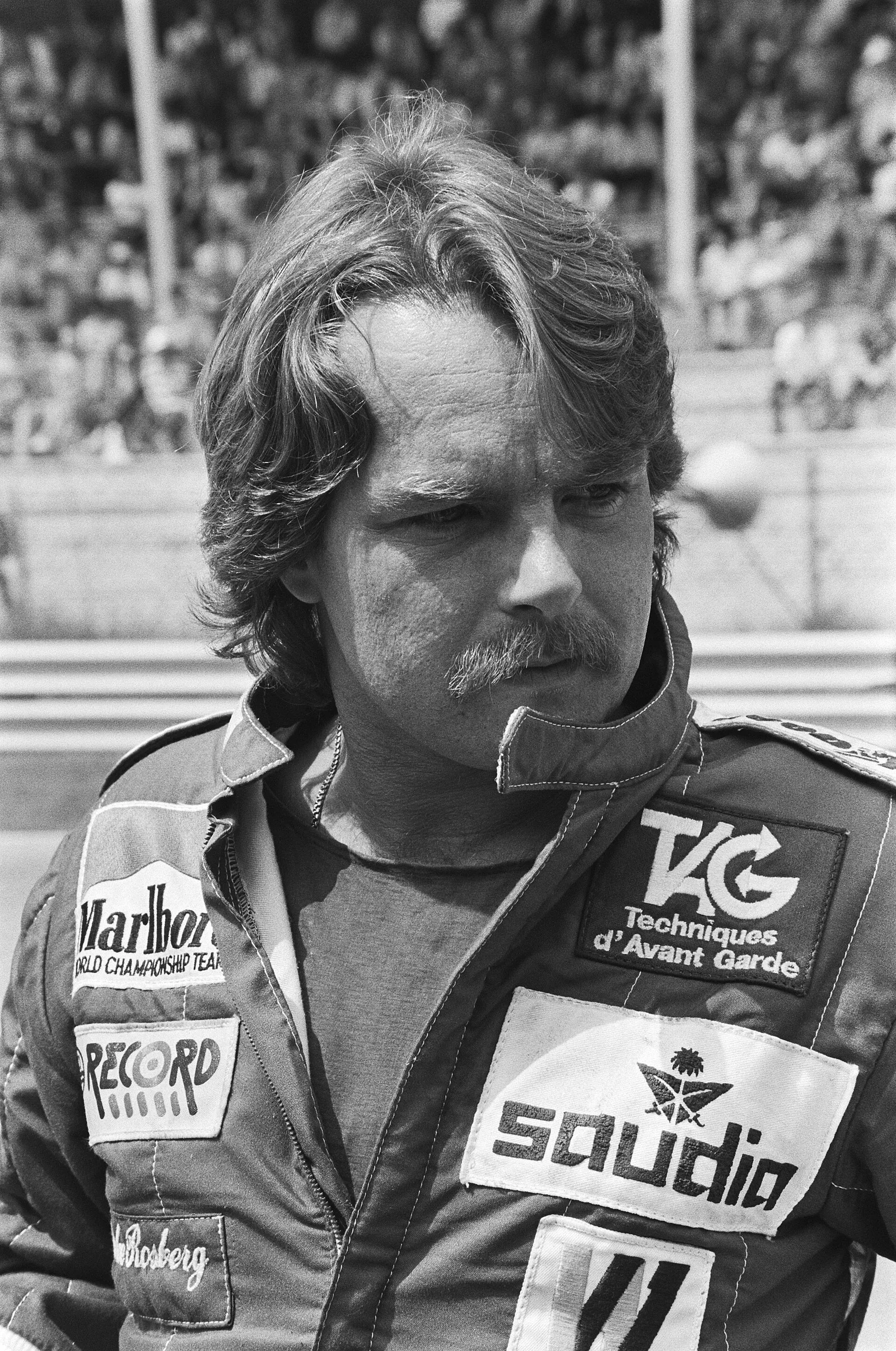
The 1982 season was a year of tragedy, dispute and an unlikely champion. Keke Rosberg won only one race, the Swiss Grand Prix, but his consistency carried him to the title, while Ferrari secured the Constructors' Championship in a season that claimed the lives of two drivers.
What was the 1982 Formula One World Championship?
The 1982 championship ran for sixteen rounds between 23 January and 25 September and was the 36th season of FIA Formula One racing. It included two competitions, the 33rd World Championship for Drivers and the 25th for Constructors. Rosberg won the drivers' title and Ferrari took the Constructors' crown.
Eleven different drivers from seven teams won races during the year, and no driver won more than twice. Nine different winners in nine consecutive races, from Monaco to the Swiss round, made the middle of the season one of the most unpredictable stretches in the sport's history.
The season is remembered for its tragedies. Two drivers died, and Didier Pironi, the championship leader at mid-season, suffered a career-ending accident in qualifying for the German Grand Prix.
A champion with one win, two deaths and a strike that set the tone for the year.
Why did the 1982 season open with a drivers' strike?
Before the first race, drivers received a letter from FISA containing a new Super Licence application. It said drivers could not switch teams freely during a season, and it forbade actions that might harm the moral or material interests of Formula One. Six drivers refused to sign, including Lauda, Pironi, Villeneuve, Arnoux, Giacomelli and de Cesaris.
On the Wednesday before the South African Grand Prix, Pironi objected on behalf of the drivers, and Balestre excluded every driver who had not signed from the next practice session. Almost all the drivers went on strike, and the dispute was only partly resolved on the Friday. Each driver was fined 5,000 dollars, the Super Licence was scrapped, and the drivers' association GPDA was disbanded.
The South African race itself went ahead. Prost won from Reutemann, and Lauda finished fourth on his return to Formula One after a short absence.
How did the FISA-FOCA war shape the 1982 rules?
The 1982 rules were shaped by the continuing FISA-FOCA war and the Concorde Agreement signed the year before. The cars were allowed to enter in larger numbers, with entries rising from 30 to 34 and starters from 24 to 26, and a pre-qualifying session was introduced for the three weakest teams.
The ground-effect rules of 1981 were reversed. The banned skirts had locked air under the car, which required very stiff suspensions. Porpoising made the cars hard to control, and drivers reported strain and blurred vision on bumpy circuits.
Some teams also exploited a loophole. Non-turbo cars were weighed after the race in a condition that allowed fluids to be refilled, so teams built their cars lighter than the minimum and carried water tanks that were dumped on the track after leaving the pit lane. Keke Rosberg later described the tank as the one thing that gave the non-turbo teams a theoretical chance against the turbos.
Which teams and drivers changed for 1982?
Lauda returned after two years away to partner John Watson at McLaren. Ferrari and Renault kept their race-winning pairings of Villeneuve and Pironi, and Prost and Arnoux. Piquet stayed at Brabham, partnered by Riccardo Patrese, who moved from Arrows. Few of the leading teams changed their line-ups over the winter.
Williams had lost both its 1981 drivers, because Alan Jones and Carlos Reutemann had announced their retirements. Reutemann returned for the first two races before retiring unexpectedly at the end of March, and Rosberg, who had entered 36 Grands Prix, became the team's main driver.
The mid-season changes were many. Mario Andretti replaced Reutemann for the United States West round, then returned to Ferrari for the last two races. Tambay replaced Villeneuve from the Dutch round, and Mansell missed two races after a crash in Canada. Jochen Mass walked away from Grand Prix racing after the French crash.
What happened in the early races?
Brazil followed South Africa, and Piquet won at Jacarepagua, with Rosberg second. Both were later disqualified over the water tanks, which handed the victory to Prost. Patrese retired from exhaustion on lap 34, and Piquet fainted on the winners' rostrum.
At Long Beach, Lauda won in only his third Grand Prix back in the sport. De Cesaris had taken pole and led, but he retired after his engine failed. Villeneuve was later excluded from the results after a protest over Ferrari's double rear wing.
The San Marino round at Imola was run without most of the FOCA teams, which had boycotted the race after the water tank ruling. Pironi won, although Villeneuve was on course to win and his team had signalled that the drivers should conserve fuel. Villeneuve was furious, and said afterwards that he would never speak to Pironi again.
Why did the Belgian and Monaco rounds matter?
At Zolder, Villeneuve was killed in qualifying. He went out on a second set of fast tyres, continued driving fast on a flying lap, and collided with Jochen Mass, who had moved over on the racing line. Ferrari withdrew from the race, which Watson won for McLaren.
Monaco was the first race after Villeneuve's death. Ferrari ran only one car, and Prost led a large margin until a light rain shower triggered a chaotic finish. Prost crashed out, and Patrese took his first career victory after Pironi, de Cesaris and Daly ran out of fuel.
How did the North American rounds unfold?
Detroit hosted its first Grand Prix in 1982, and the circuit was not ready on time. Watson, who qualified 17th, used Michelin tyres to good effect and took the lead on lap 37 when Rosberg had gearbox problems. He won from Cheever and Pironi, and he took the lead of the championship.
Canada brought more tragedy. Pironi had qualified on pole, but he stalled at the start, and Riccardo Paletti crashed into his stationary car in his second Formula One race. Paletti died in hospital, and Piquet won the restarted race from Patrese, a Brabham one-two that remained the last of its kind in the team's history.
Who led the championship at the midpoint?
After Canada, Watson led on 30 points, ten clear of Pironi. Patrese had 19 points and Prost had 18, while Rosberg had 17. Prost had scored no points since the Brazilian round, and his teammate Arnoux was far off the pace in the title race.
Pironi then led the championship by nine points after the French round, and he was seen as the likely title winner. His hopes ended at Hockenheim, where he crashed in qualifying and suffered severe leg injuries.
Who won the German, Austrian and Swiss rounds?
Tambay won the German Grand Prix for Ferrari, his first victory in a Grand Prix, ahead of Arnoux and Rosberg. Piquet had led comfortably before clashing with Salazar while lapping him, and he hit and kicked his rival after getting out of the car.
In Austria, de Angelis won his first Grand Prix after a close finish with Rosberg. Prost led for much of the race before retiring five laps from the end, and most of the turbo cars retired early.
Rosberg won his maiden Grand Prix at the Swiss round, held at Dijon-Prenois. He passed Arnoux and then Prost in the closing stages, and his victory took the championship lead for good.
How did the Italian and Las Vegas rounds finish?
At Monza, Arnoux won his second race of the season, with Tambay second and Andretti third for Ferrari. Rosberg finished eighth without points, and Watson took three points for fourth place, which left him with a mathematical chance of the title.
The season ended in Las Vegas, where Alboreto won for Tyrrell in a race held in intense heat. Watson was second, and Rosberg's fifth place was enough to secure the title.
What were the race winners and results in 1982?
Rosberg won one race, Watson, Lauda, Pironi and Arnoux won two each, and Prost also took two after the Brazilian disqualification. Piquet, Patrese, Tambay, de Angelis and Alboreto each won once. Rosberg's single win matched the record of Mike Hawthorn in 1958 as the joint-fewest of any champion.
| Race | Winner | Team | Note |
|---|---|---|---|
| South Africa | Prost | Renault | Recovered from a puncture to win |
| Brazil | Prost | Renault | Piquet and Rosberg disqualified later |
| United States West | Lauda | McLaren | Back in Formula One after his break |
| San Marino | Pironi | Ferrari | Team signals to save fuel ignored |
| Belgium | Watson | McLaren | Ferrari withdrew after Villeneuve's death |
| Monaco | Patrese | Brabham | First career victory |
| Detroit | Watson | McLaren | Took the lead on lap 37 |
| Canada | Piquet | Brabham | Paletti died after the start crash |
| Netherlands | Pironi | Ferrari | Tambay's first race for Ferrari |
| Great Britain | Lauda | McLaren | Brabham's ploy failed |
| France | Arnoux | Renault | Won ahead of teammate Prost |
| West Germany | Tambay | Ferrari | First Grand Prix victory |
| Austria | de Angelis | Lotus | First Grand Prix victory |
| Switzerland | Rosberg | Williams | Maiden victory |
| Italy | Arnoux | Renault | Tambay and Andretti followed for Ferrari |
| Las Vegas | Alboreto | Tyrrell | Rosberg fifth clinched the title |
How were points scored in 1982?
Points went to the top six classified finishers. The Drivers' Championship counted each driver's best eleven results, but no driver scored in more than eleven races, so no drop rounds applied. The Constructors' Championship counted every round, which kept the final standings close.
Published standings separated championship points, shown without brackets, from total points scored, shown in brackets. The two figures can differ, which matters in a season with disqualifications.
What was the legacy of the 1982 season?
Villeneuve's death and Pironi's injury removed two leading drivers from the sport. The season also ended a turbulent year for Lotus, whose team owner Colin Chapman died later that December. Following a season described as touched by tragedy and clouded in controversy, FISA announced that ground effect would be banned for 1983.
Five drivers scored their first ever Grand Prix victory during the season, and Rosberg became only the second champion to win the title with a single win, following Mike Hawthorn in 1958. The season produced some of the most memorable racing of the era.