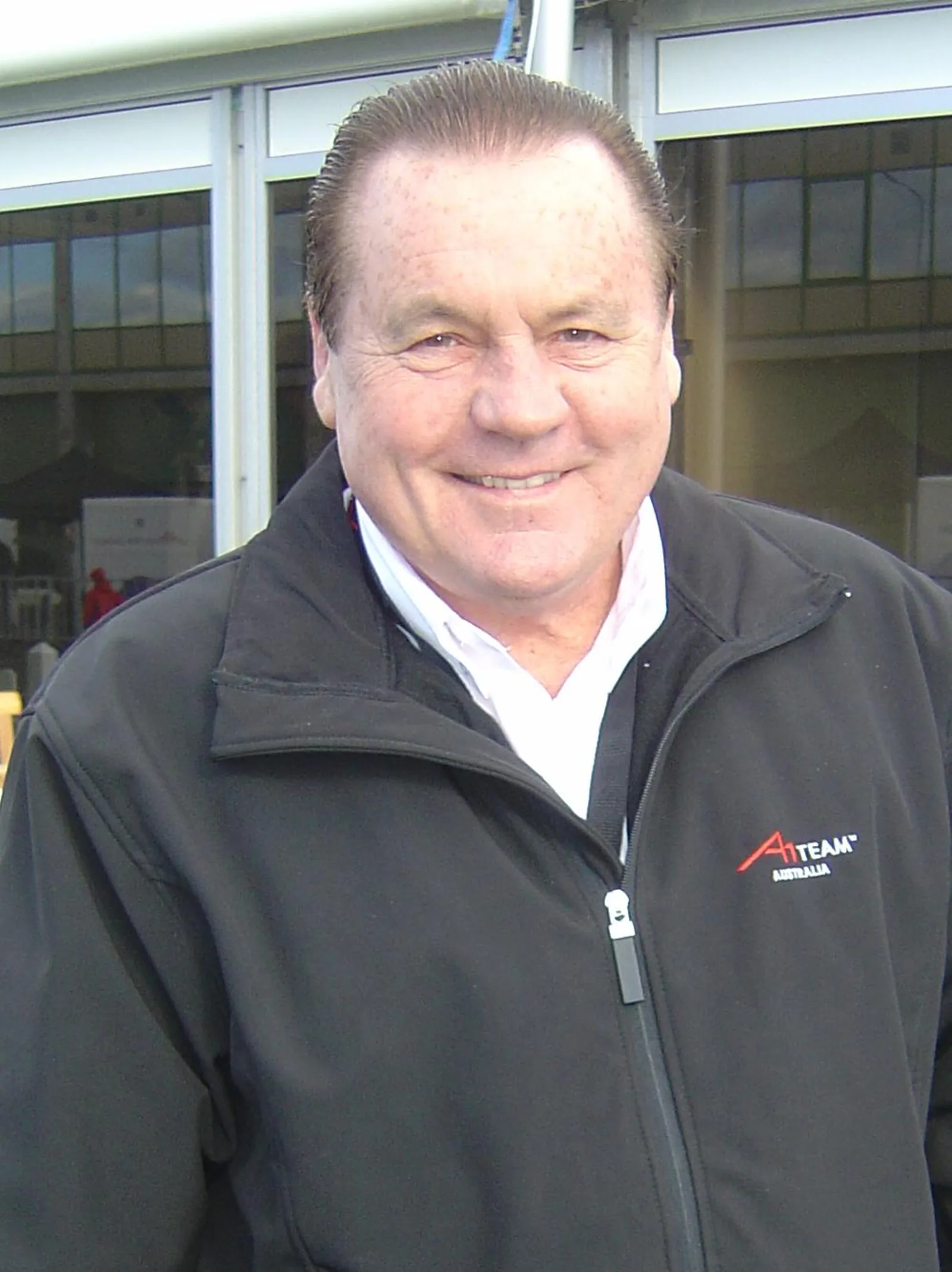
From a Melbourne car dealership to the Williams team, Alan Jones took 12 Grands Prix, the 1980 world title and the Australian Grand Prix as a driver.
Australian Alan Jones competed in 117 Grands Prix, winning 12 of them. His 1980 world title with Williams was the highlight, and he also won the 1978 Can-Am championship and the 1980 Australian Grand Prix. He also raced touring cars and endurance events in Australia and Europe for many years afterwards.
Alan Jones was an Australian racing driver who competed in Formula One from 1975 to 1986. He became world champion in 1980 with Williams, the first driver to win the title for that team, and he finished his Grand Prix career with 12 wins. His story also includes Can-Am success, a famous Australian Grand Prix victory and a long career in touring cars.
Who was Alan Jones?
Born in Melbourne, Victoria, on 2 November 1946, Alan Stanley Jones came from a racing family. He raced in Formula One between 1975 and 1986, winning 12 Grands Prix in 117 starts. The 1980 World Drivers' Champion title made him the second Australian to win it, behind Sir Jack Brabham.
He attended Xavier College in Melbourne. His father, Stan Jones, had won the 1959 Australian Grand Prix, and the younger Jones wanted to follow him into the sport. Early on he worked in his father's Holden dealership and raced a Mini and a Cooper on the side.
Jones grew up with motorsport in the family, but his path to the top was slow. Money was never plentiful, and he spent the early 1970s piecing together drives in Britain, often through the buying and selling of second-hand cars. The obstacles he faced shaped the determined style that later defined him on track.
A Melbourne driver who came up the hard way, Alan Jones took the 1980 world title for Williams.
How did Jones start his career in Europe?
In 1967 Jones headed for Europe, yet he lacked the money even for a Formula Ford seat, and so he returned home. He returned to Britain in 1970 with fellow Australian Brian McGuire, and the pair bought and sold second-hand cars to fund racing. Those early years were hard, and his first big plan went badly wrong.
Jones bought a Lotus 41 that he meant to adapt to Formula Two specification and sell in Australia to finance a Formula Three season. A testing shunt at Brands Hatch destroyed the car, and Jones suffered a broken leg. That setback delayed everything he had planned for the coming season.
A later opportunity in Brazil, arranged through a firm that promoted drivers' interests, ended quickly. The engine failed in his first two races, and the gearbox broke in the third, so the chance did not last. Jones then returned to Britain and found a steadier route through Formula Three.
In 1971 he campaigned a Brabham BT35 in Formula Three and had a reasonable season, which earned him tests with March at Silverstone. March did not offer him a drive, so in 1972 he raced for GRD in Formula Three. The team kept him on for 1973, and he lost that year's title only because of a misfiring engine in the final round at Brands Hatch.
In 1974 Jones drove a March for Harry Stiller and made his Formula 5000 debut for Stiller at Brands Hatch. Stiller then bought a Hesketh 308 for Formula One and signed Jones to drive it. That deal, after a long wait with no work, gave Jones his first real seat in the top category.
What were Jones's first Formula One seasons like?
Jones made his first Formula One start at the 1975 Spanish Grand Prix, in a Hesketh at Montjuic. The Hesketh team stopped racing after four races, and he moved to Graham Hill's team, where his best result was fifth at the Nurburgring. Between 1975 and 1977 he drove for four different teams.
The Spanish weekend was one of the most tragic in the sport's history. Rolf Stommelen's crash killed five spectators, and the race is remembered for that loss.
After the Hesketh team stopped, Jones was named as the replacement for the injured Stommelen at Graham Hill's team. He raced four times there, and his best finish with Hill was fifth at the Nurburgring. The results were modest, but they gave him a route back into regular Formula One racing.
In 1976 Jones earned his first full-time seat with John Surtees, driving the TS19. The car carried a sponsorship from Durex that led the BBC to refuse coverage of Formula One races that season. He still finished several races well, with a fourth place in Japan at the final race of the year the best of them. He chose not to continue with Surtees in 1977.
Shadow turned to Jones to take over from Tom Pryce, who had died in a freak accident in South Africa. Jones was racing in America when the call came, and he made the most of the chance. He won at the Osterreichring, the first victory of his Grand Prix career, and finished seventh in the championship with 22 points.
How did Jones become Williams' world champion?
Jones joined Williams in 1978 as the team worked to rebuild after struggling in its early years. He won the Can-Am title that year in a Lola, and near the end of 1979 he won four races in five Formula One events. The 1980 title followed, with five championship wins and ten podiums, and a 13-point margin over Nelson Piquet.
Frank Williams wanted to revive a team that had struggled in its early seasons, and Jones was the driver chosen to deliver its first real success. Ferrari had also shown interest, holding a meeting with him at Maranello, but Gilles Villeneuve got that drive in the end.
In 1978 Jones also raced in the Can-Am series with Haas-Hall, taking nine poles in ten races and winning five of the nine events he contested. He missed the Laguna Seca round because of a Formula One scheduling clash, and his stand-in finished twelfth there. The Can-Am success gave him another title before his best Formula One years began.
In 1979 Jones helped put Williams on the Formula One map with the FW07. Four wins in five races near the end of the season took him to third in the championship, and that result set up a strong 1980 campaign. He also finished second at Watkins Glen for the team that year.
Seven victories came in 1980, but the Spanish round was later struck from the championship and the Australian race never counted, leaving five that did. He also finished on the podium ten times. At the end of the year he was 13 points clear of Nelson Piquet, and he became Australia's first world champion since Jack Brabham.
The 1981 season was harder. A combative relationship with Carlos Reutemann produced an intense rivalry that may have cost both drivers the title. Jones finished four points behind Piquet and three behind Reutemann. He announced his retirement after the season, having capped it with a win at Las Vegas.
What was Jones's Australian Grand Prix win?
In November 1980 Jones won the Australian Grand Prix at Calder Park in his Williams FW07B. The race was non-championship, and the field was made up mostly of Formula 5000 cars. He remains the last Australian to win that race, and he joined Stan as a family winner of the event.
Jones had finished fourth in the 1977 edition, but a penalty of 60 seconds for a jumped start dropped him down the order. Officially he finished 20 seconds behind winner Warwick Brown. Without the penalty, he would have won by about 40 seconds, which showed how dominant the car was that day.
The Calder Park win meant the family name appeared on the list of Australian Grand Prix winners. Few father-and-son pairs have managed that, among them the Hills and the Rosbergs. Jones and his father remain among them.
Why did Jones come back to Formula One?
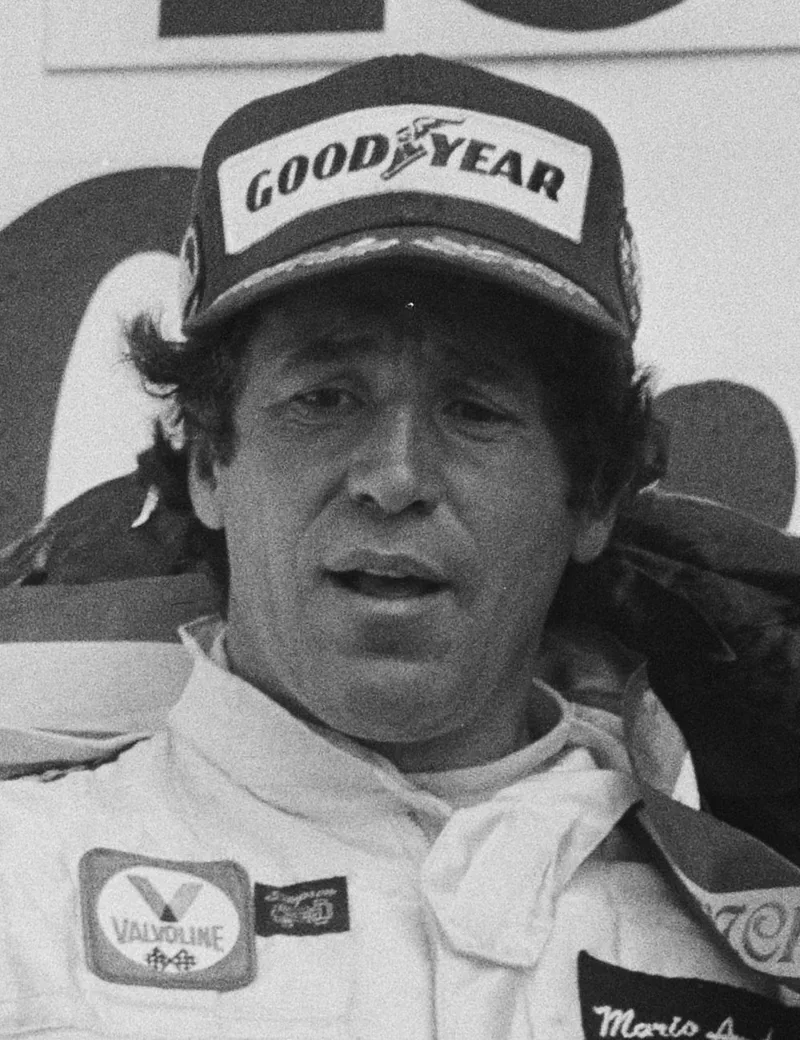
Jones retired after 1981 but returned for a one-off Arrows drive in 1983 and then joined Team Haas in 1985 and 1986. Ferrari approached him in 1982, but he did not reply promptly, and the seat went to Mario Andretti. His later comebacks were brief and often unsuccessful.
His first comeback was a single race with Arrows at the United States Grand Prix West in Long Beach. He qualified 12th, but fatigue forced him out after 58 laps. A week later he finished third at the Race of Champions at Brands Hatch, behind Keke Rosberg and Danny Sullivan, and that was his last drive for Arrows.
A later interview revealed that Ferrari had reached out to him from mid-1982, once Gilles Villeneuve had died and Didier Pironi had been injured. He was enjoying life in Australia and did not answer them promptly. Mario Andretti got the seat instead and handled the final pair of 1982 races, at Monza and Caesars Palace.
Jones returned to full-time Formula One at the end of 1985 as the first driver for Team Haas, an American-owned squad based in England. Its first race was the 1985 Italian round, held at Monza. In the Lola THL1, Jones qualified 9.851 seconds off the pace of pole sitter Ayrton Senna, then retired after six laps when the engine blew.
In 1986 Patrick Tambay joined him at Haas. The Ford V6 was short of power next to engines made by Honda, TAG-Porsche, BMW, Ferrari and Renault, and that held the team back. Once Haas lost its backing and its money ran out, Jones quit Formula One for good, having scored 12 wins, six poles and one title.
How did Jones perform outside Formula One?
After leaving Formula One, Jones raced in Australian GT events, touring cars and endurance races. He also took a sixth place at Le Mans in 1984 and a top four finish at Bathurst the same year. His touring car career was marked by hard racing and some stop-start seasons.
His first full season of racing came in 1982, when a Porsche 935 carried him to the Australian GT title. That series included duels with the touring car star Peter Brock, whose Chevrolet Monza was run for Bob Jane. Those battles between the two Australian names are still remembered as some of the best domestic racing of the period.
The 1984 24 Hours of Le Mans was his first start at the event. Driving a Porsche 956B for Kremer Racing with Vern Schuppan and Jean-Pierre Jarier, he dueled for the lead early on, but damage and a broken conrod in the final stages left him sixth overall. At the Sandown 1000 km he partnered Schuppan and led the opening lap of the inaugural FIA World Championship event staged in Australia
At Bathurst in 1984 he and Warren Cullen drove a Holden VK Commodore to a top four finish. The team was unlucky not to finish second, because a rear brake pad mistake forced a late fuel stop. In 1985 he partnered Colin Bond in the Australian Touring Car Championship, using an underpowered Alfa Romeo GTV6, before leaving for Haas.
At SUGO in September 1987 he took a win in an All Japan Touring Car round, driving a Toyota Supra for Team Tom's. The factory-backed Supra struggled in the rest of that series. He later returned to Bathurst, finishing third in 1988 for Colin Bond in a Ford Sierra RS500.
Jones later moved to a team run by Tony Longhurst, racing Sierras and then BMW M3s in the early nineties. The team's reliability improved with the BMWs but cost some speed. A move to Glenn Seton Racing brought better results, and in 1993 he was second in the championship behind Seton, his team leader.
His aggressive style also produced several incidents with rivals during the 1993 touring car season. The most notable came at Symmons Plains, where he forced cars off the track. He raced his final Bathurst in 2002, finishing seventh with Dick Johnson Racing.
What did Jones do after racing?
After Formula One, Jones worked as a commentator for Channel Nine's coverage from 1987 to 2002. He later joined Network Ten as a Formula One commentator in March 2013. He also served as team director for the Australian franchise of A1 Grand Prix from 2005 until the series ended in 2010.
His Channel Nine role saw him host Formula One telecasts from the network's Sydney studios, mostly alongside Darrell Eastlake. He also worked as a pit reporter at the Australian Grand Prix, where his relationships in the sport helped him gather information. He reported for Nine's Australian motorcycle Grand Prix broadcasts as well.
In November 2005 he tried the Grand Prix Masters at Kyalami, yet neck pain made him stand down before qualifying. He later wrote an autobiography, AJ, with motorsport writer Andrew Clarke, which was published in August 2017.
How is Jones remembered in motorsport?
He is remembered as the first Australian world champion since Sir Jack Brabham, and as a demanding driver. The Hawthorn Memorial Trophy came his way in 1979, 1980 and 1981, and in 1980 he received an MBE for services to motor racing.
In 1989 he entered the Sport Australia Hall of Fame. His 1980 season, with a 13-point margin over Piquet, is the centrepiece of that record.
His career also belongs to a small group of Australian motorsport names whose success crossed the Formula One and touring car worlds. From a Melbourne dealership to the Williams garage, his story shows how persistence and an aggressive style can carry a driver a long way.
Career summary by season
| Season | Team | Key result |
|---|---|---|
| 1975 | Hesketh, then Hill | Fifth at the Nurburgring with Hill |
| 1976 | Surtees | Fourth place in Japan |
| 1977 | Shadow | Maiden win at the Osterreichring; seventh with 22 points |
| 1979 | Williams | Third in the championship; four wins in five events near the end |
| 1980 | Williams | World champion, 13 points ahead of Nelson Piquet |
| 1981 | Williams | Four points behind Piquet and three behind Reutemann |
| 1983 | Arrows | Third at the Race of Champions; retired after 58 laps at Long Beach |
| 1985 | Haas | Retired after six laps at the Italian Grand Prix |
| 1986 | Haas | Retired from Formula One at the end of the season |