From a 1934 handicap race to a fast, high-altitude circuit, an apartheid boycott and a 1993 farewell that Africa is still waiting to follow up.
The South African Grand Prix began in 1934 at East London, joined the Formula One World Championship in 1962 and moved to Kyalami in 1967. It was suspended after 1985 because of apartheid, returned in 1992 and 1993, and has not been held since. Kyalami remains an active circuit.
The last Formula One race on the African continent was run in 1993. More than three decades on, plans to bring the South African Grand Prix back in 2024 have been abandoned, and Rwanda has secured a deal, running from the 2030s, to host an African Grand Prix of its own.
The story of the South African Grand Prix runs from a handicap race on the coast in 1934 to a fast, high-altitude circuit outside Johannesburg that became one of the sport's great tests, and then to a long political and financial wait. Kyalami is the circuit that stayed.
How did the South African Grand Prix start?
The race began in 1934 as a handicap event on East London's Prince George Circuit, in Cape Province. It drew leading European drivers including Bernd Rosemeyer, Richard Seaman and Richard Shuttleworth, and Luigi Villoresi won the 1939 race. The Second World War ended it, but it returned in 1960 within the Formula One programme and joined the World Championship two years later.
| Circuit | Grand Prix years | Length and character |
|---|---|---|
| Prince George, original road course | From 1934 | 24.4 km (15.2 mi) through the populated parts of East London |
| Prince George, shortened | From 1936 | 17.7 km (11.0 mi) |
| Prince George, permanent circuit | Built 1959; World Championship races from 1962 | Purpose-built track that kept the old name |
| Kyalami | 1967 to 1985, 1992 and 1993 | 4.529 km (2.814 mi) at roughly 1,500 metres above sea level |
Africa has not hosted a Formula One race since 1993.
What happened at East London?
The earliest editions used a road course threading through the populated parts of the coastal city. It was trimmed from 24.4 km to 17.7 km in 1936, and after the war a permanent circuit built in 1959 kept the Prince George name.
The first World Championship Formula One race in South Africa took place on 29 December 1962. Jim Clark's Lotus developed mechanical trouble and Graham Hill took the win and the championship. The race returned to East London in 1963, 1965 and 1966, though the last of those was stripped of championship status because a new 3-litre formula came into force the same day. In 1967 it moved to Kyalami.
Why was Kyalami such a demanding circuit?
Kyalami, which opened in 1961, is a fast circuit outside Johannesburg, an inland city high above sea level, and its altitude, about 1,500 metres (5,000 ft), shaped the racing. Thin air hurt naturally aspirated engines, whereas turbocharged ones controlled how much air they took in. In 1982 turbo cars held a horsepower advantage of 150 hp and often sat on the front row.
Harry Pierce and Dick Bremner designed and cleared the original, sweeping circuit with friends and workers in the mid-1950s. It opened on 4 November 1961 with the Kyalami 9 Hours. The name comes from the Zulu words Khaya lami, meaning "my home", and the circuit sits in Midrand, in Gauteng, north of Johannesburg.
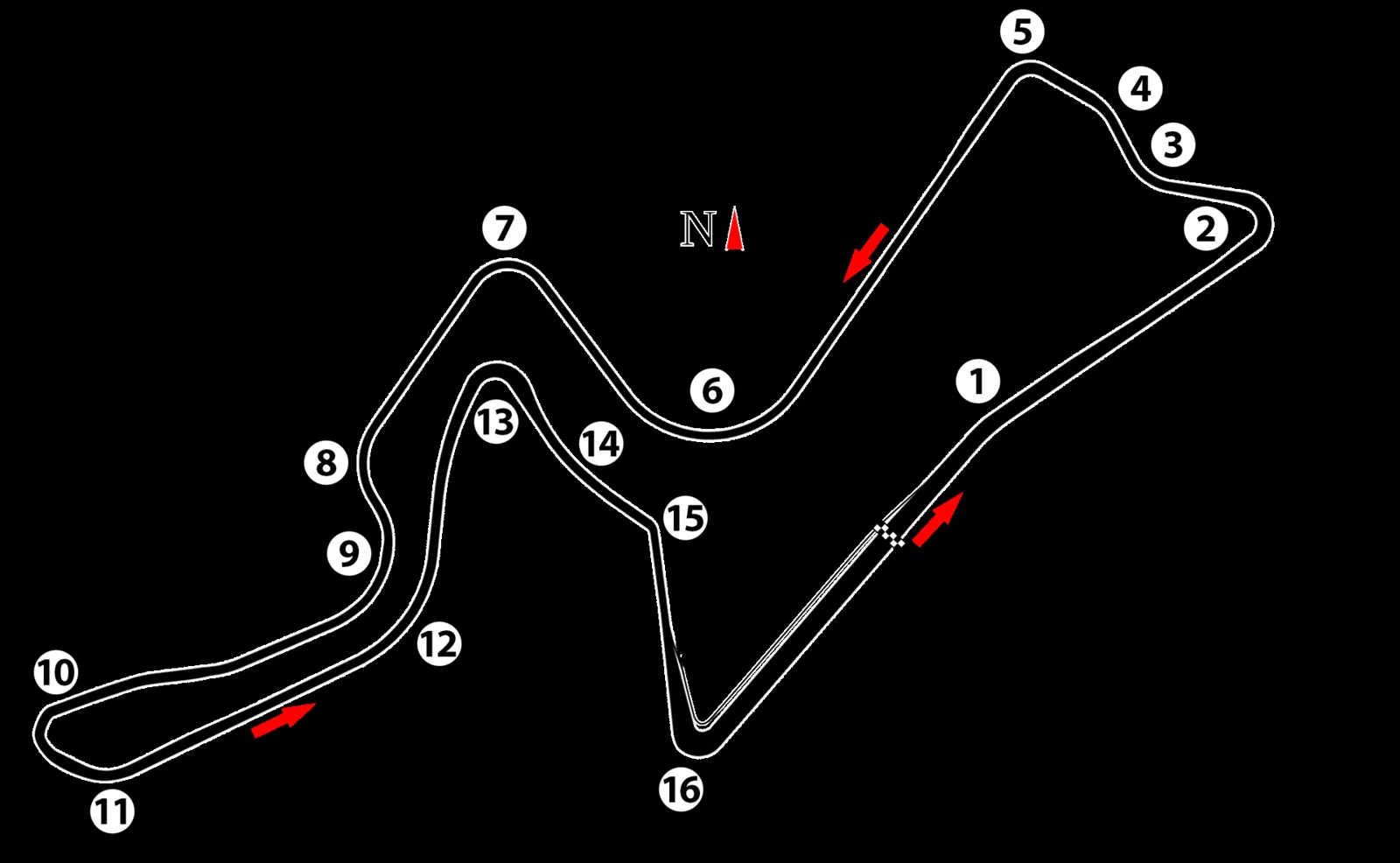
The clockwise original layout had a long straight and nine corners whose names mixed local geography, culture and racing slang. Crowthorne Corner was named for a nearby hotel, Barbecue Bend for the braais held beside it, and Jukskei Sweep for the river and the settlers' horseshoe-like game that gave the river its name. Sunset Bend, a fast right-hander, took its name from the setting sun that drivers faced. Leeukop Bend, a tight hairpin, took the name of Lion's Head hill and a prison on land behind it.
What was the original Kyalami layout?
Each lap started by the pit lane entrance, on a main straight that ran downhill into the first bend, Crowthorne Corner. Clubhouse Bend was a 90-degree left-hander named for the motorsport clubhouse beside it. The Esses began with a left-hander, followed by a right-handed 90-degree bend that led into a steep climb, and the Kink was a right deviation that split the main straight into two sections.
Who won at Kyalami?
The first South African Grand Prix at the new venue in 1967 went to Pedro Rodriguez, after privateer John Love ran into fuel problems late on while close to victory. In 1968 Clark took his last Formula One win, passing Juan Manuel Fangio's record for career victories; he was killed in a Formula 2 event at Hockenheim before the year was out.
Jackie Stewart won in 1969, and the next year Jack Brabham took his final Formula One victory. Mario Andretti won in 1971 on his Ferrari debut. In 1974 Peter Revson crashed head-on into the barriers in testing and later died of his injuries, and that race gave Carlos Reutemann his first victory.
Jody Scheckter's win in 1975 made him the first and only South African to win his home Grand Prix. The 1977 race, won by Niki Lauda, is remembered for a terrible accident in which Tom Pryce hit track marshal Frederick Jansen Van Vuuren at speed, killing both men. Ronnie Peterson won late in 1978 from Patrick Depailler and Riccardo Patrese, and Gilles Villeneuve took a rain-affected 1979 event.
In total Clark won four times and Lauda three, with Alain Prost, Nigel Mansell and Stewart on two each. Among constructors, Ferrari and Williams lead with four wins each.
What did the turbo era and the 1981 race do to the Grand Prix?
Renault dominated in 1980 and 1982, and Prost won in 1982 despite a wheel coming off part-way through. The 1981 event fell victim to the FISA-FOCA war. No agreement could be reached on whether it counted for the World Championship, so it was staged as a Formula Libre race. Only teams allied to FOCA took part, in cars that fell short of the strict 1981 regulations.
The 1982 edition is remembered as one of the most infamous, because the drivers, through their association, went on strike over the superlicence conditions FISA had imposed. In 1983 the race closed the season with a three-way fight for the title among Prost, Nelson Piquet and Rene Arnoux. Prost and Arnoux both retired with engine problems, and Piquet's third place was enough for the championship.
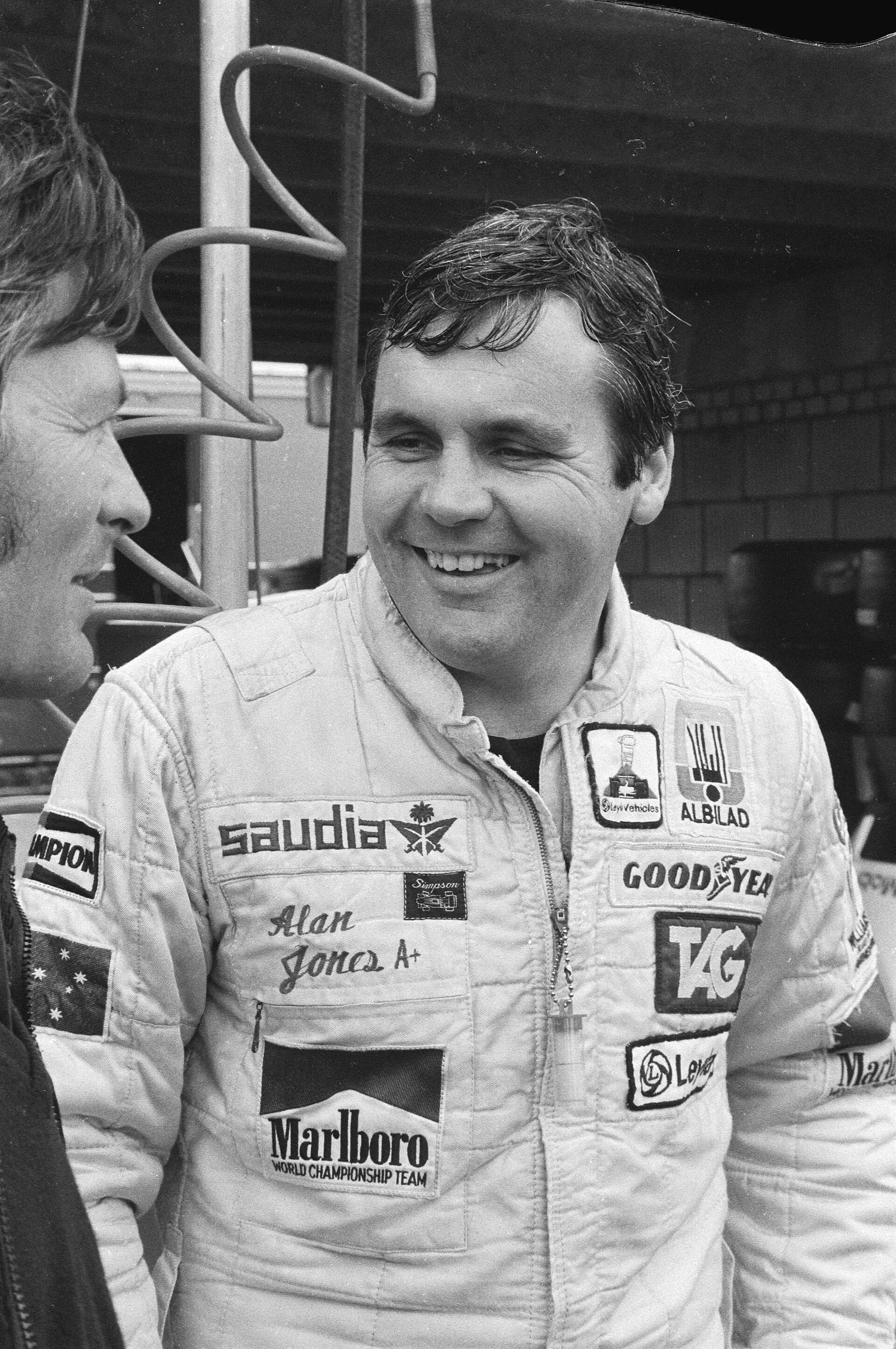
The 1984 race came early in the season. Prost started from the pit lane and drove through the field to finish second behind Lauda, whose third win at the circuit made him its most successful driver.
Why did Formula One stop going to South Africa?
By 1985 the event was mired in controversy. The South African government had declared a state of emergency because of apartheid-related violence, many countries boycotted events in South Africa, and some governments tried to stop their drivers taking part. Ligier and Renault withdrew in line with a French government ban on sporting events there, though Prost and Philippe Streiff, driving for British teams, started.
Mansell won his second consecutive Grand Prix, and Keke Rosberg's second place gave Williams a one-two. It was the last South African Grand Prix until apartheid ended.
What happened when Formula One came back?
Formula One returned in 1992 and 1993, after apartheid ended in 1991. Mansell dominated the first race back, and in 1993 Prost beat Ayrton Senna and Michael Schumacher after an intense three-way battle.
A commercial development led to the circuit being rebuilt in 1989. The old pit lane, start/finish straight, Crowthorne Corner, Barbecue Bend, Leeukop Bend and the Kink all disappeared, and Jukskei Sweep was heavily modified. Only Sunset Bend, Clubhouse Bend and the Esses survived with lesser changes, turning one of the quickest tracks on the calendar into a tight, winding strip.
Formula One quit after only two races on the new layout, when the promoter went bankrupt. Kyalami passed to the South African Automobile Association in 1993, which made the venue pay its way, but a Grand Prix was beyond its means. The last race on the original circuit was held on 26 November 1988.
What has Kyalami hosted since?
Motorcycles kept the circuit busy. The South African motorcycle Grand Prix stayed until 1992, and Superbike World Championship rounds were held from 1998 to 2002 and again in 2009 and 2010. The Superstars Series finale came in 2009 and 2010, plus the South African leg of A1 Grand Prix in 2008-09.
In 2014 Kyalami was auctioned without reserve on 24 July and sold for R205 million to Toby Venter, owner of Porsche South Africa. A further R100 million went into upgrades, which won the circuit FIA Grade 2 status. International racing returned in November 2019 with the Kyalami 9 Hours, the final round of the 2019 Intercontinental GT Challenge. A six-hour round of the 2020-21 World Endurance Championship was pencilled in for 6 February 2021, but the calendar was revised during the COVID-19 pandemic and Kyalami was removed.
The circuit's current events include the Festival of Motoring in August and the South African Endurance Series Kyalami 9 Hours in November, with a Kyalami 24 Hours listed for 2027.
What else has run at Kyalami?
Long before it was a Grand Prix venue the circuit hosted the Rand Grand Prix from 1961 to 1965 and the South African Formula One Championship from 1961 to 1975. The Kyalami 9 Hours was held from 1965 to 1973, and the South African Springbok Championship Series also ran there.
The World Sportscar Championship came for the Kyalami 1000 km in 1974, 1983 and 1984, and the South African Formula Atlantic Championship ran from 1976 to 1979. Later visitors included a Birkin Cars/TVR Invitational Race in 1995, the Vodacom Festival of Motor Racing from 1998 to 2000, sidecar world championship rounds in 2000 and 2002, and Grand Prix Masters in 2005. The 2008 celebrations of the nine-hour revival's 50th anniversary drew veterans such as David Piper. In its modern guise the Kyalami 9 Hours was held in 2019, 2020, 2022 and 2023 as part of the Intercontinental GT Challenge.
Where this goes next
In April 2018 Adrian Scholtz, chief executive of Motorsport South Africa, named two main obstacles: the high cost of hosting and the lack of any South African track meeting FIA requirements. In June 2022 Formula One president Stefano Domenicali reportedly flew to South Africa to meet circuit representatives, but the circuit missed the 2023 provisional calendar.
In early 2023 a deal for a 2024 return was close. In June the FIA declared that the race would not return, citing the South African government's position over Russia's invasion of Ukraine.
South Africa made a fresh bid in 2025 for a return as early as 2027, and the FIA signed off planned upgrades to Kyalami in June 2025 to bring it up to Formula One standards. According to Autosport.com, however, no deal is imminent and a deal looks "far-fetched". Rwanda and Nigeria were also competing to host a Grand Prix in Africa, and Rwanda won a 10-year agreement in October 2026, beginning in the 2030s, for an African Grand Prix.