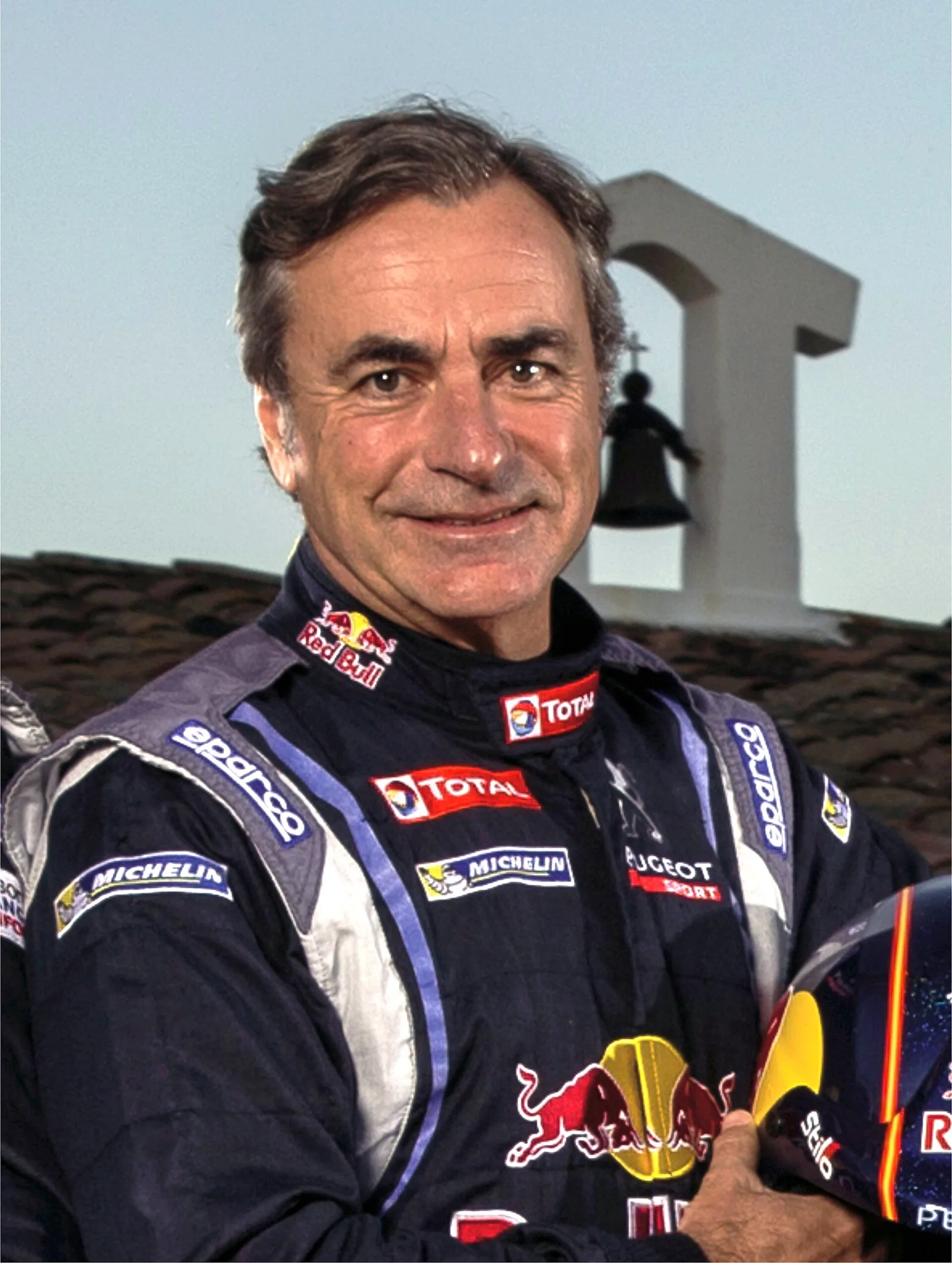
From SEAT Panda rallies to Toyota's world titles of 1990 and 1992, Subaru and Ford stints, a run of Dakar victories and an Extreme E team of his own.
Carlos Sainz is a Spanish rally driver who won the World Rally Championship drivers' title with Toyota in 1990 and 1992. He also won the Dakar Rally four times, in 2010, 2018, 2020 and 2024, and received the Princess of Asturias Sports Award in 2020.
Known as El Matador, Carlos Sainz collected two world rally crowns with Toyota, in 1990 and 1992. He was runner-up four times, helped develop the Subaru that gave the marque its first manufacturers' title, and won the Dakar Rally four times, the last at the age of 61. Sainz later founded an Extreme E team and received Spain's Princess of Asturias Sports Award in 2020.
At one point he held the WRC record for career starts, a mark later beaten by the Finnish co-driver Miikka Anttila. His career shows how a driver can reinvent himself across rallying, rally raid and electric off-road racing.
How did Sainz start in rallying?
As a teenager, Sainz was a talented all-round sportsman. He played football and squash, became Spanish squash champion at 16, and Real Madrid gave him a trial. On a road trip to the Alps with friends he showed his early driving skill on snowy mountain roads in a friend's SEAT 131, and that friend later became his first co-driver.
Sainz began rallying in 1980 and won his first championship in 1981, in the inaugural Copa Panda one-make series for young drivers launched by SEAT. In 1982 he became SEAT's official driver in a Group 2 Panda rally car. He finished runner-up in the Spanish Rally Championship in 1986 and then won it in 1987 and 1988 with a Ford Sierra RS Cosworth.
Toyota's 1989 programme was already competitive. Teammate Juha Kankkunen gave the Celica GT-Four ST165 its debut win at the inaugural Rally Australia, and Sainz would almost have won the title that year but for a late mechanical failure on the RAC Rally.
Ford gave him his first World Rally Championship starts in 1987, when he finished seventh on the Tour de Corse and eighth on the RAC Rally. His co-driver from 1988 was Luis Moya, who stayed with him for the next fifteen years.
Before reaching the top flight, Sainz had also taken the Copa Panda title as a young driver. His early success in one-make and national series helped build the reputation that Toyota later relied on.
El Matador's two world titles with Toyota, a Subaru title push and four Dakar wins, the last at 61.
How did he win his first world title with Toyota?
Sainz moved to Toyota Team Europe in 1989 as Ford's rally programme faded. Early in that season he had four retirements, then finished on the podium in three rallies in a row. In 1990 he won the Acropolis, Rally New Zealand, the 1000 Lakes and the RAC Rally, and he claimed his first world drivers' title ahead of Didier Auriol and Juha Kankkunen.
He was the first non-Nordic driver to win the 1000 Lakes Rally, a result that set him apart in Finland. In 1991 he narrowly lost the title to Kankkunen, despite a roll in Australia that left him in a neck brace. Both drivers won five rallies that year, a first in WRC history, and their points totals of 150 and 143 broke the 140-point record that Sainz had set a year earlier.
In 1992 Sainz won the Safari Rally and his home round in Catalonia. The title was settled in a three-way battle with Auriol and Kankkunen. Auriol retired, and Sainz's victory ahead of Ari Vatanen and Kankkunen confirmed his second world title.
What happened after Toyota?
Sainz left Toyota after 1992 because the 1993 team was sponsored by Castrol, a rival to his personal Repsol backing. He joined the Lancia-backed Jolly Club, where the ageing Delta lost ground through the season. His best result was second at the Acropolis, and his results were later affected by disqualification for illegal fuel on the San Remo Rally. Lancia withdrew from the sport at the end of the year.
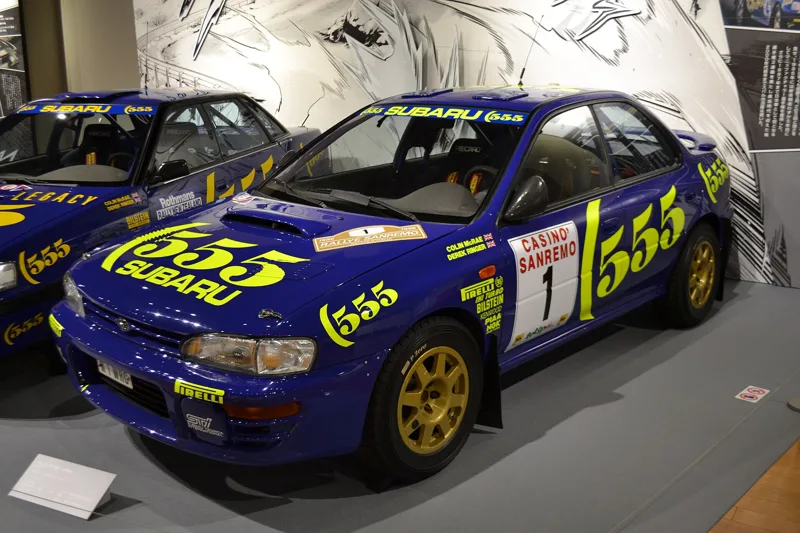
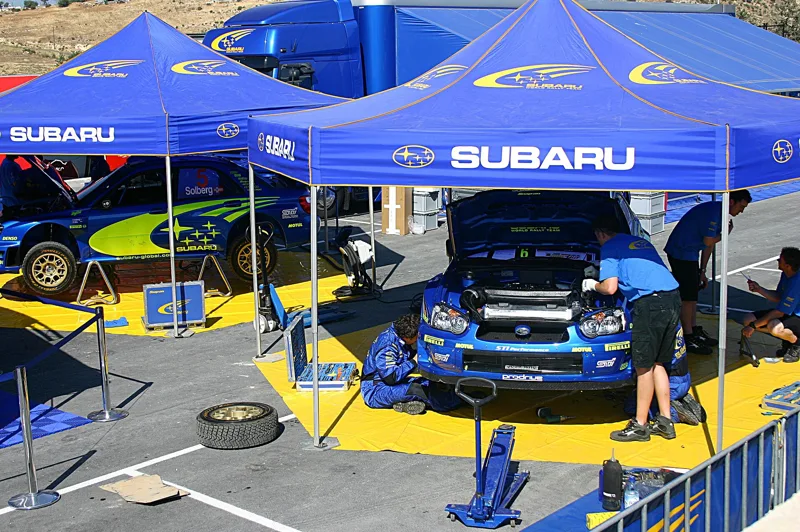
In 1994 he joined the young Subaru World Rally Team, replacing Ari Vatanen. His experience and perfectionism helped develop the Impreza into a sustained challenge to Toyota and Ford. In 1995 he won the Monte Carlo Rally, the Rally Portugal and the Rally Catalunya, and he was tied with Colin McRae at the top of the championship going into the final round. McRae won the RAC Rally 36 seconds ahead of him, and Subaru secured its first manufacturers' title with a triple win.
He returned to Ford in 1996, bringing Repsol with him, and won the inaugural Rally Indonesia. He finished third in the championship that year and won Indonesia and the Acropolis in 1997, although he again lost the title to Makinen and McRae. He won the Race of Champions at the end of 1997.
In 1998 he went back to Toyota, won the Monte Carlo Rally and the New Zealand Rally, and was poised for the title. A mechanical failure just 300 metres from the finish of the last stage at Rally Great Britain ended his title hopes, and Toyota and Sainz both gifted the championship to Mitsubishi's Tommi Makinen.
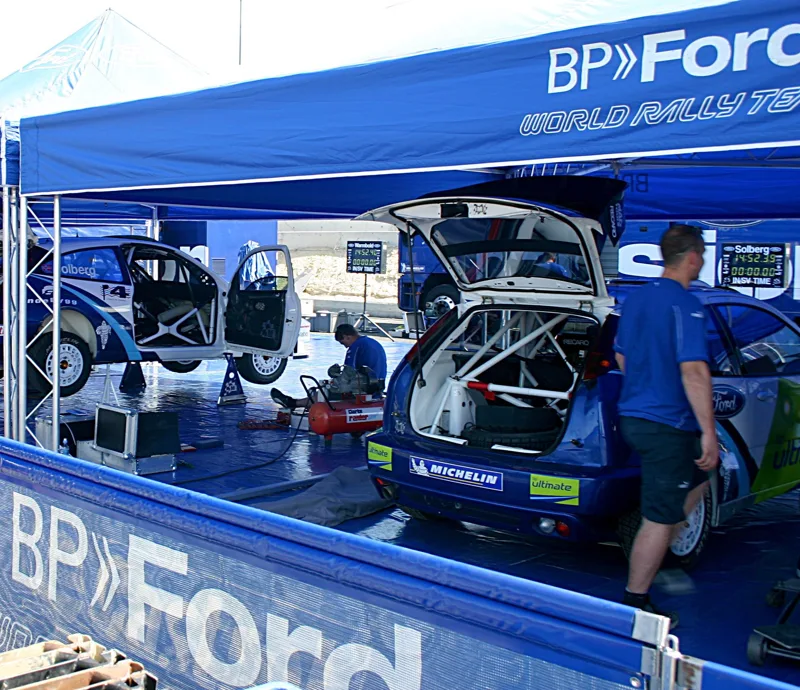
A quieter 1999 brought eight podiums but no wins. Ford then took him back for 2000, when he won the inaugural Cyprus round and finished third in the standings. He had five podiums in 2001, finishing sixth, and in 2002 he inherited the Rally Argentina win after the Peugeot disqualifications.
What did his Citroen years achieve?
Sainz moved to Citroen for 2003 alongside Colin McRae and won in Turkey, the first gravel win for the Xsara WRC, finishing third in the championship. He scored his final world rally victory at the 2004 Rally Argentina. He announced his retirement during the Rally Catalonia that year, and drivers, co-drivers and team directors spoke of him as the best rally driver in history.
His 2004 retirement announcement was followed by an invitation back to the team. He finished fourth in 2004 after missing the final rally in Australia following an accident during pre-event reconnaissance. Citroen then called him back in 2005 to replace the faltering Francois Duval, and his two rallies back impressed with fourth and third finishes at the age of 43.
How did his Dakar career develop?
Sainz turned to rally raid in 2006, driving a Volkswagen in the Dakar Rally with Andreas Schulz. In 2007 he continued with Volkswagen alongside Michel Perin, and he won the FIA Cross-Country Rally World Cup with the team. In 2008 he won the Central Europe Rally, the relocated Dakar that year after a terrorist attack made the original route impossible.
In January 2009 he led the Dakar until he crashed out on stage 12. He won the Silk Way Rally in 2009 and again in 2010, and at the 2010 Dakar he teamed with Lucas Cruz to take his maiden Dakar win, edging out his teammate Nasser Al-Attiyah. He finished third in 2011 and then tried a two-wheel-drive buggy in 2013, retiring after an engine failure.
He tried the 2014 Dakar as well, but was forced to retire after a crash on stage 10. He returned with Peugeot in 2015, when Cyril Despres was his partner. He crashed out that year and was forced to retire from the lead in 2016 after a gearbox failure. In 2018 he took the second Dakar win of his career with Peugeot. He drove a Mini for X-Raid in 2019, finishing 13th, and won the 2020 Dakar with Lucas Cruz, with a lead of 6 minutes 21 seconds.
He returned to the Dakar with Mini in 2021 and recorded three stage wins on the way to third overall. After joining Audi in 2022 he won his fourth Dakar Rally in 2024, becoming the oldest Dakar winner at 61.
What were his Volkswagen, historic and Extreme E projects?
As Volkswagen Motorsport prepared its WRC programme for 2013, Sainz was part of the project. He drove the new Polo R WRC for the first time near Trier in 2011, and he tested the car on gravel in Spain and in Finland in 2012. He also returned to competition in 2012 on historic events with his old co-driver Luis Moya, winning a historic rally in a Porsche 911. In December 2012 he dismissed rumours that he would drive a Polo WRC in 2013, though he said he was available for testing.
In November 2020 he teamed up with QEV Technologies to form Acciona | Sainz XE Team for Extreme E, the all-electric off-road series. The team debuted at the Desert X-Prix in 2021 and achieved a podium at the Arctic X-Prix, finishing sixth in the teams' championship. In 2022 it took two podiums and finished third in the teams' standings.
The January 2023 Dakar crash left Sainz with multiple spinal fractures, and Mattias Ekstrom took over his seat for the season. The team won two races that year and finished second overall, losing the championship to RXR by 11 points. For 2024 Fraser McConnell replaced Ekstrom, and two rounds were cancelled.
What honours has Sainz received?
He received the Gold Medal of the Royal Order of Sporting Merit in 1994, the Olympic Order in 1997 and the Grand Cross of the Royal Order of Sporting Merit in 2001. In March 2012 he was inducted into the Rally Hall of Fame alongside Michele Mouton. In May 2020 fans and expert journalists voted him the greatest WRC driver of all time, and on 16 June 2020 he received the Princess of Asturias Sports Award.
Family ties also run through the sport. His son, Carlos Sainz Jr., has raced in Formula One for a series of teams, and the two share a surname in every paddock.
Career summary
| Years | Series | Team | Highlights |
|---|---|---|---|
| 1987-1988 | Spanish Rally Championship | Ford | Champion in both years |
| 1990 | World Rally Championship | Toyota | First world drivers' title, four rallies won |
| 1992 | World Rally Championship | Toyota | Second world title |
| 1995 | World Rally Championship | Subaru | Monte Carlo, Portugal and Catalunya wins |
| 1996-1997 | World Rally Championship | Ford | Third in 1996; Indonesia wins in both years |
| 2003 | World Rally Championship | Citroen | Turkey win; third in the championship |
| 2010 | Dakar Rally | Volkswagen | First Dakar win |
| 2018, 2020, 2024 | Dakar Rally | Peugeot, Mini, Audi | Further Dakar wins |
| 2020-2024 | Extreme E | Acciona | Sainz XE Team | Podiums in 2021 and 2022 |