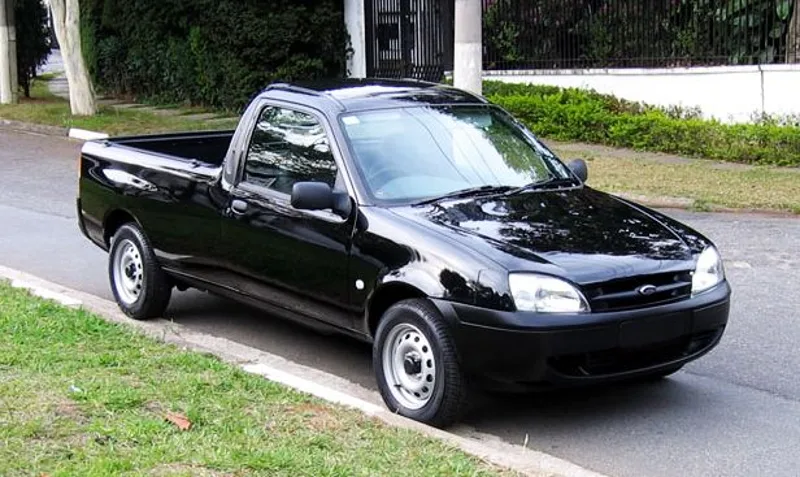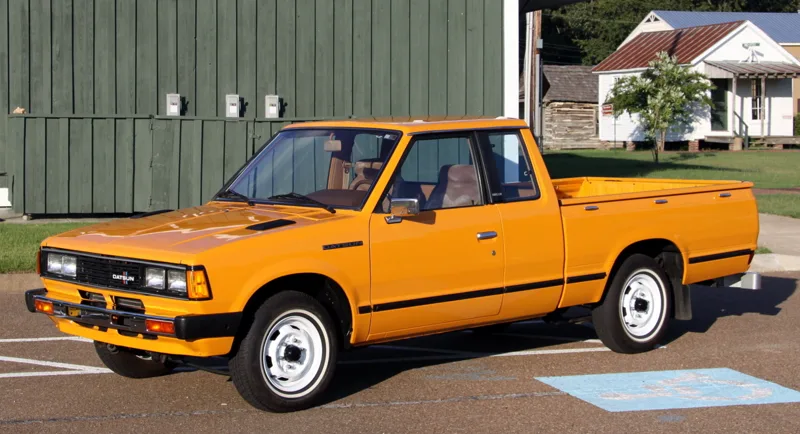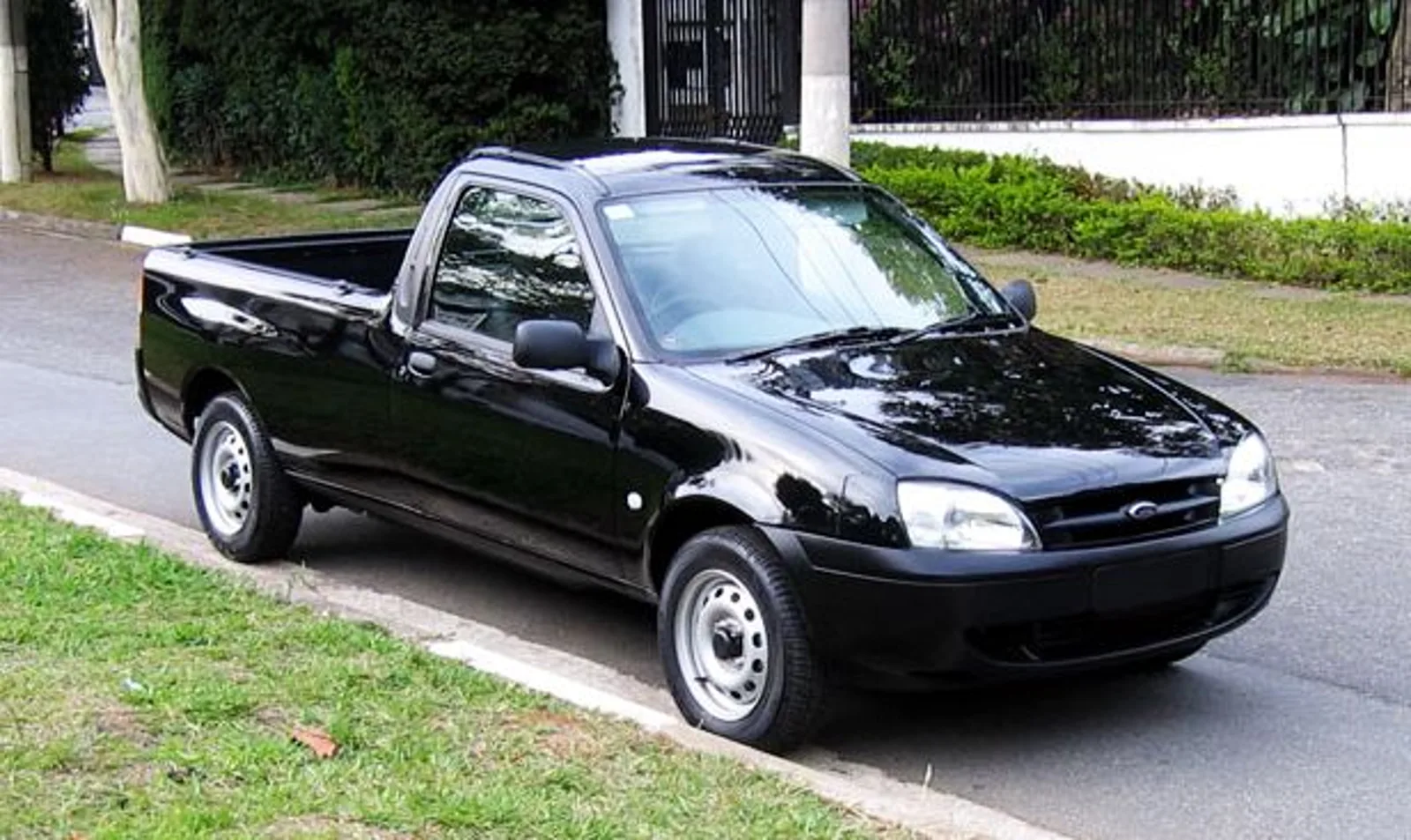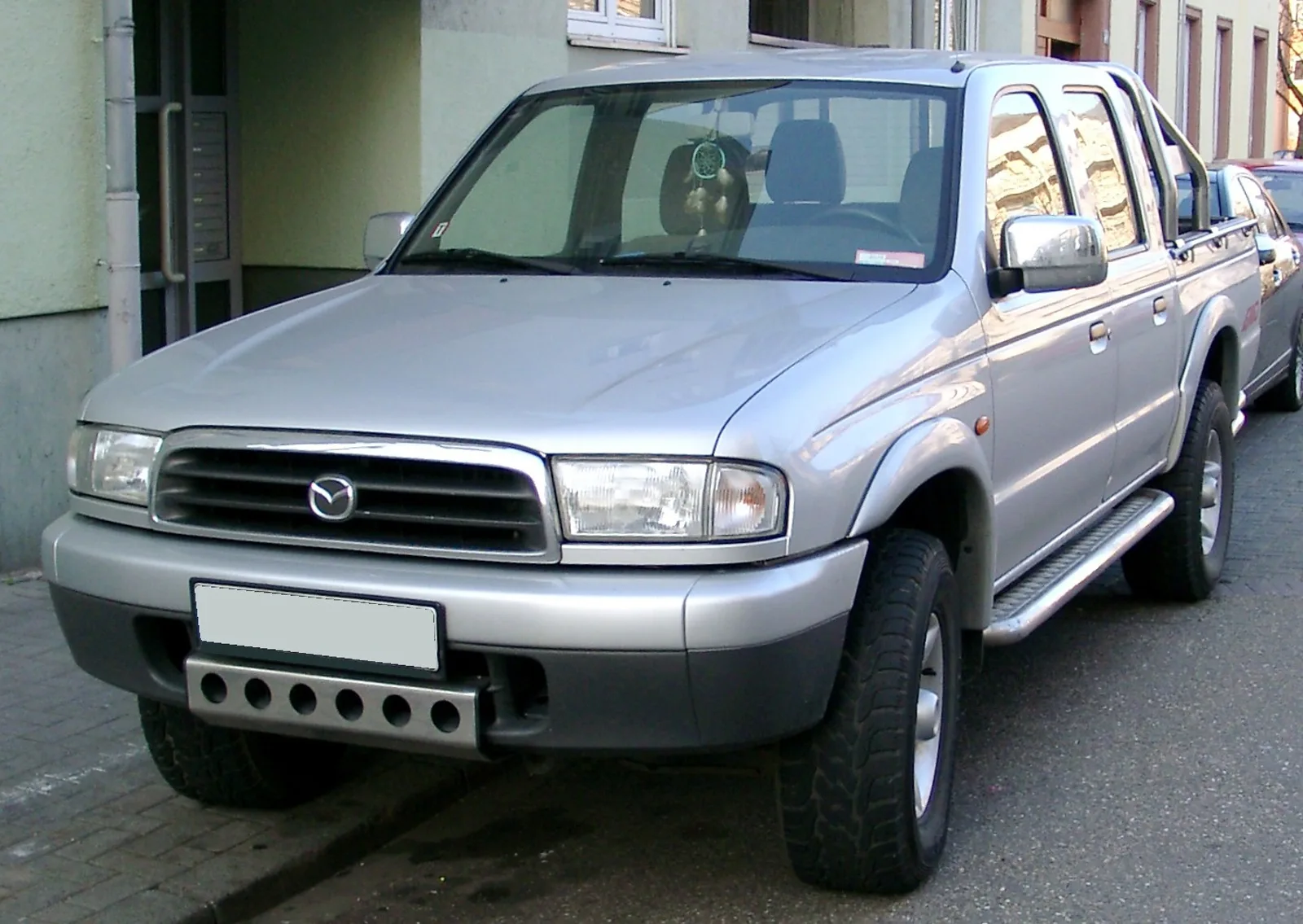
A Japanese workhorse that became a Proceed, a Ford Courier and a Ford-built Ranger twin, with a Wankel-engined one-off along the way.
Between 1961 and 2006 Mazda built the B-Series pickup in five generations. Ford sold Mazda-built versions as the Courier and Ranger, the line gave way to the BT-50 in 2006, and about 1.8 million trucks had been built by 1985.
The Mazda B-Series was a pickup range that Mazda built across five generations, starting as a commercial vehicle sized above a kei truck. It ran from 1961 to 2006, traded under Proceed, Bravo and Bounty names in different markets, and also wore Ford Courier and Ford Ranger badges along the way.
Where did the Mazda B-Series come from?
The B-Series began in Japan in August 1961 as the B1500, a pickup slotted above a kei truck. Mazda named its trucks after engine displacement, so the B1500 carried a 1.5-litre engine and the B2600 a 2.6-litre unit. Japanese buyers knew the line as the Proceed for most of its run.
Other markets used their own names. Australia called the truck the Bravo, New Zealand the Bounty and South Africa the Drifter, while Thailand offered the Magnum, Thunder and Fighter names.
Ford also sold Mazda-built pickups as the Courier and the Ranger. In North America, a Mazda-badged version of the Ford Ranger carried the B-Series name between 1994 and 2010.
The line was replaced by the Mazda BT-50 in 2006, after five generations of production.
A kei-sized workhorse that became a Proceed, a Ford Courier and a Ford-built Ranger twin over five generations.
What came before the B-Series?
Before the B-Series, Mazda built three-wheeled trucks from 1931 and its first four-wheeled trucks from 1958. Mazda's early three-wheelers were known as auto rickshaws, and the D1100 was briefly called the Romper. The 1962 rule change then let commercial vehicles grow longer.
The D1100 had a small air-cooled engine under the seat. A water-cooled unit replaced it in 1959, when the larger D1500 joined the range. From 1962 the line also offered a two-litre D2000, and both the D1500 and D2000 were built until the Mazda Kraft arrived in June 1965.
Mazda's three-wheeled line moved on through the K360 of 1959, and then the larger T1500 and T2000.
How did the first-generation B1500 perform?
The first B1500 went on sale in Japan in August 1961, and the model that followed became the first Proceed of a long-running series. Its 1,484 cc OHV water-cooled engine made 44 kW (59 hp; 60 PS), and the truck carried a one-ton payload.
The suspension combined a torsion bar at the front with leaf springs at the rear, which gave a comparatively smooth ride for the period. The B1500 was revised between late 1962 and September 1963, and the revised truck had a longer cabin.
The revised cabin gained 80 mm (3.1 in) of length, and the body and wheelbase were stretched too. The grille became a new trapezoidal design with thirteen bars instead of nine, and the truck gained turn signals on the fenders.
Body variants included the standard two-door styleside pickup, a double-cab truck and a light van introduced in September 1962. The van had a fully glazed two-door body and a fold-down tailgate, and its electric window was rare in Japan at the time.
The B1500 was sleeker and more powerful than its Japanese rivals, but it cost more and sold below expectations.
What changed in the second generation?
The 1966 B1500 Proceed, presented in October 1965, kept the 1,484 cc OHV engine but used a downdraft carburettor. Its output rose to 72 PS (53 kW) at 5,200 rpm, and the squarer body carried four headlights. A 1600 model arrived in January 1971.
The 1600 cc model was rated at 95 PS SAE in global markets, while importers in Europe quoted 75 PS DIN (55 kW). Japan quoted 100 PS (74 kW) SAE gross, and the Japanese car was advertised as the GT-Truck.
In March 1972 the Proceed 1300 arrived with a 1.3-litre engine making 87 PS (64 kW) SAE gross, and it stayed on sale in Japan until 1975.
New Zealand built the B1500 from CKD kits starting in 1967, after a government order for 672 units, and the work was done at Steel's Motor Assemblies.
The B-Series reached the United States with the 1972 B1600. The rotary-powered Rotary Pickup followed in 1974, and the engine grew to 1.8 litres for the 1975 B1800. Engines across the second generation ran from 1.3 litres up to 1.8 litres.
Was there a Rotary Engine Pickup?
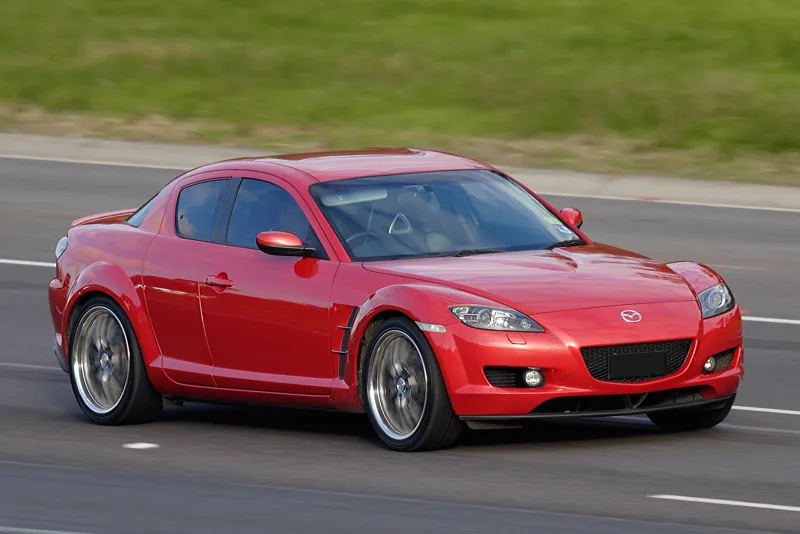
Yes. The Rotary Engine Pick-up, or REPU, was the world's first Wankel-engined pickup truck. It was sold only in North America from 1974 to 1977 and used a four-port 1.3-litre 13B engine with a four-barrel carburettor. Enthusiasts still seek the trucks out today.
Sales started strongly with 14,366 units in 1974 but fell to 632 in the 1976 model year, as the energy crisis hit demand. Mazda restamped many 1974 trucks as 1975 models.
The 1976 model year brought a five-speed in place of the four-speed, and the 1977 update added a 3 in (76 mm) cab stretch. Sales still slid to 1,161 in 1977, after which the model was discontinued.
Road & Track praised the smooth, quiet power and the interior. Observed fuel economy was 14.3 L/100 km (16.5 mpg-US; 19.8 mpg-imp), and the truck retailed for about US$3,500.
The REPU also saw competition, as many Mazda rotary cars did. One finished third in the 1976 SCCA Mojave 24 Hour Rally, driven by Malcolm Smith and Jack Sreenan.
What was the Ford Courier?
The first-generation Ford Courier arrived for the 1972 model year, priced at a little over US$3,000 and close in price to a full-size Ford pickup. Ford imported the Mazda-built truck to answer the popularity of small Toyota and Nissan (Datsun) pickups in the western states.
Among the compact pickups of the day, it used a sub-2.0-litre four-cylinder, a four-speed manual, rear-wheel drive and a 635 kg (1,400 lb) load rating. It was also cheap next to full-size trucks.
To avoid the 25 percent duty on light trucks, Couriers came in as cab chassis, which carried only a 4 percent tariff. A truck bed was then fitted in the United States.
Its body matched the B-Series, but the front end was distinct, with a grille modelled on the larger Ford F-series and large single headlights. Early cars had a 1.8-litre overhead cam engine delivering 55 kW (74 hp) at 5,070 rpm and 125 N m (92 lbf ft) of torque at 3,500 rpm.
A four-speed manual was standard, a three-speed automatic was optional, and a five-speed manual was added in 1976.
How did the third generation differ?
The third generation arrived in April 1977 as the PE chassis, built for the Proceed 1600. It was more comfortable than its predecessor, with a woodgrain dashboard, and it was sold outside Japan as the B1600 and later the B1800. The 2.0-litre B2000 followed for the 1980 US model year.
The Japanese Proceed 1600 was rated at 71 kW (95 hp; 97 PS), with its top speed put at 140 km/h (87 mph). Japan ended its truck version in October 1979 because commercial buyers preferred vans.
A diesel 2.2-litre B2200 arrived in 1981, and the range was reskinned in 1982 with new sheetmetal below the belt line. Its engines ran from a 1.6-litre petrol unit to the 2.2-litre diesel.
Long-bed models were named Sundowner in some markets, a nod to Australian herders who made camp wherever sundown found them. The B-Series was replaced in January 1985.
In 1977 the Courier gained front disc brakes and an optional Ford-built 2.3-litre engine, the same unit used in the Pinto and Mustang II. In 1979 the base engine grew to 2.0 litres.
Between 1979 and 1982, Jet Industries converted Courier bodies into electric vans, the ElectraVan 750, mainly for local government service. They reached about 113 km/h (70 mph) and covered 80 to 97 km (50 to 60 miles) per charge.
What was the fourth-generation B-Series?
The fourth-generation UF Proceed and B-Series arrived in January 1985 and was built until June 1999. A five-speed manual was the main choice, with a four-speed automatic and part-time four-wheel drive offered as options. A 2.6-litre B2600 followed in 1986, and the B2200 gained 2.2 litres in 1987.
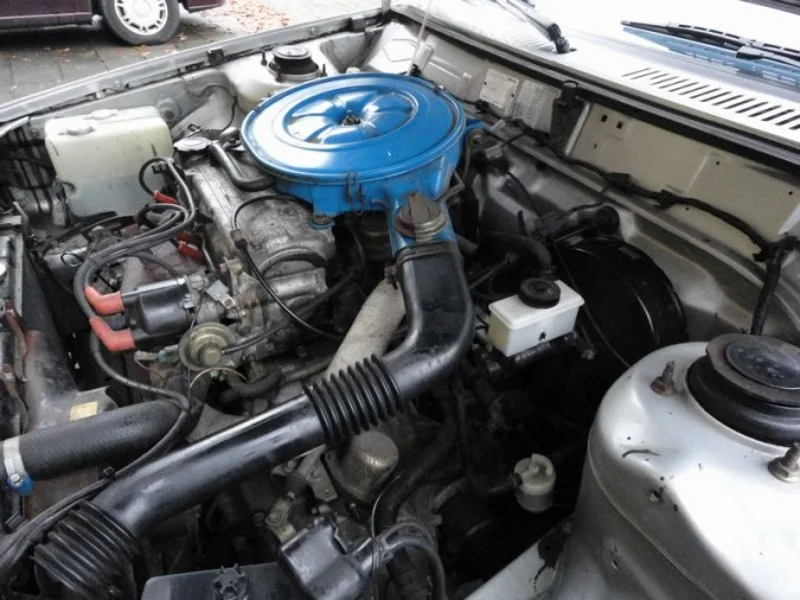
The B2600 used a Mitsubishi engine, and in 1988 Mazda replaced it with its own family of four-cylinder units. From the 1989 model year the B2600 became the fuel-injected B2600i.
The truck also returned to Japan as the Proceed in 1990, sold mostly as a lifestyle truck in one layout, a 4WD petrol Cab Plus. From 1991 an SUV-style version called the Proceed Marvie was sold as the Ford Raider in Australia, with three rows of seats.
In South Africa, SAMCOR fitted the Ford Essex V6 as a range-topping option, first at 3.0 litres and later at 3.4 litres. The engine came from Ford's Struandale plant in Port Elizabeth.
Across the fourth generation the engine choice ran from 2.0-litre petrol units to 2.6-litre fuel-injected engines, with a diesel and a 2.5-litre Thai unit in between.
How were North American trucks equipped?
North American B-Series trucks came in base, SE-5 and LX trims for the 1986 to 1989 model years, and the LX was renamed LE-5 from 1990. The 1986 B2000 was praised for its comfortable ride and car-like feel, and Mazda trucks topped J.D. Power's customer satisfaction rankings for three consecutive years.
The base truck was utilitarian, with breathable vinyl upholstery and steel wheels. The SE-5 was the sporty choice, with dual black tow mirrors and painted spoked wheels, while the LX was a luxury truck with chrome trim.
The Convenience Package cost $650 at 1986 prices and added a four-speaker radio and cassette, power steering, cruise control and halogen headlamps.
Cosmetic change was modest across the run, and the 1990 model year brought the first major refresh. Developing the 1986 to 1993 trucks cost Mazda over US$100 million, and sales fell as the parent platform aged.
How did the fifth generation sell worldwide?
The fifth-generation UN B-Series arrived in the 1998 model year, with production at AutoAlliance Thailand from May 1998. Across more than 130 countries it wore many badges, and in Europe and Asia it became the Ford Ranger.
Australia received a 4.0 V6 Courier in January 2005, and the B-Series name returned in September 2005 with the B4000 Bravo in DX, DX+ and SDX trims.
Fuel tanks were 63 L on 2WD Stretch and Dual Cab models and 70 L on 4WD and 2WD Regular Cab trucks.
In March 2002 Mazda developed a 2.9-litre version of its 2.5-litre diesel, sold as the B2900 in general markets and the Gulf States. In Venezuela and nearby Latin markets, trucks were assembled in Colombia with 2.6-litre four-wheel drive and an entry-level 2.2-litre rear-wheel-drive option.
In China, the Fuzhou Automobile Works in Fujian built the design under the Forta name in single, space and crew cab forms.
What happened when Ford built the B-Series?
From 1994 Mazda sold a rebadged Ford Ranger in North America, built by Ford at its Twin Cities plant in Minnesota. Building in Minnesota sidestepped the 25 percent duty that hit imported light trucks, and the B-Series name ended with the 2009 model year.
The Ford-built version shared its mechanical underpinnings with the Ranger, but it kept its own front fascia and bed panels. The 1994 truck was the second Mazda light truck Ford assembled, following the 1991 to 1994 Mazda Navajo.
From 2002 the truck was called the Mazda Truck in North America, and the final vehicle was produced on 11 December 2009.
Mazda North America had no current plans to market the BT-50 in the region, so the Ranger-based truck remained the last B-Series version for American buyers.
What are the Mazda B-Series specifications?
| Specification | Detail |
|---|---|
| Type | Pickup truck, five generations |
| Launch | Japan, August 1961, as the B1500 |
| Final generation | UN, 1998 to 2006 |
| First engine | 1,484 cc OHV, 44 kW (59 hp; 60 PS) |
| First-generation payload | One ton |
| Rotary Pickup engine | 1.3-litre 13B, four-port Wankel with a four-barrel carburettor |
| Rotary Pickup sales | 14,366 in 1974; 632 in the 1976 model year; 1,161 in 1977 |
| Ford Courier engine | 1.8-litre overhead cam, 55 kW (74 hp) |
| Proceed 1600 | 71 kW (95 hp; 97 PS), top speed 140 km/h (87 mph) |
| Diesel | 2.2-litre, 60 PS (44 kW; 59 hp) |
| B2600i | 2.6-litre G6, 90 kW (121 hp), North America |
| Fifth-generation fuel tanks | 63 L or 70 L |
| Total built | 1.8 million by January 1985 |
| Successor | Mazda BT-50 from 2006 |
The figures above come from specific generations and markets rather than a single model, so the table is best read alongside the generation sections.