An iron-block inline-four family introduced in 1983, spanning naturally aspirated, turbocharged and twin-cam versions across Mazda, Ford and Kia cars.
The Mazda F engine was an iron-block, alloy-head inline-four family introduced in 1983 as the 1.6-litre F6. Its members ran from 1.6 litres to 2.2 litres in SOHC and DOHC form and were fitted to Mazda, Ford and Kia cars and trucks.
The Mazda F engine is a family of mid-sized inline-four engines with iron blocks and alloy heads, built in SOHC and DOHC forms from 1983. Its members ranged from the 1.6-litre F6 to the 2.2-litre F2, and they powered Mazda trucks, saloons and coupes as well as models badged by Ford and Kia.
Where did the Mazda F engine come from?
The F family grew out of earlier Mazda engines, the VC and the MA, which were rear-wheel drive units mounted in a longitudinal layout. Successor engines were designed for transverse front-wheel drive, a shift that gathered pace in the late 1970s and early 1980s. The MA was later designated the F, and the F6 arrived in 1983 as the 1.6-litre member of the family.
The VC was all new in 1975, a 1.8 L (1,769 cc) overhead camshaft inline-four that carried an eight-valve alloy head and an iron block. Pre-1975 1.8 Couriers used the earlier long-stroke VB engine instead. The MA was a 2.0 L (1,970 cc) with the same 80 mm bore as the VC but a longer 98 mm stroke.
The VC went into a wide range of models, from the Luce and 929 to the Capella, Courier, Bongo and Parkway. The MA was fitted to the Luce and Cosmo, the 929 wagon, the Capella, the B2000 and the Ford Courier. The family was built at the Miyoshi Plant in Miyoshi, Hiroshima, Japan.
An iron-block inline-four family that took Mazda from trucks and saloons to twin-cam and turbocharged versions.
What head types made up the F range?
The F range used four basic head types: a diesel SOHC 8-valve head belonging to the R-series, a petrol SOHC 8-valve head, a petrol SOHC 12-valve head and a petrol DOHC 16-valve head. Only the petrol 8-valve and 12-valve versions shared the same gasket pattern.
Several blocks and strokes accepted these heads, so one head type could appear across several displacements. The R-series diesels are closely related to the F-series and share essentially the same engine block, which is why the two families are often discussed together.
How did the F6 and F8 perform?
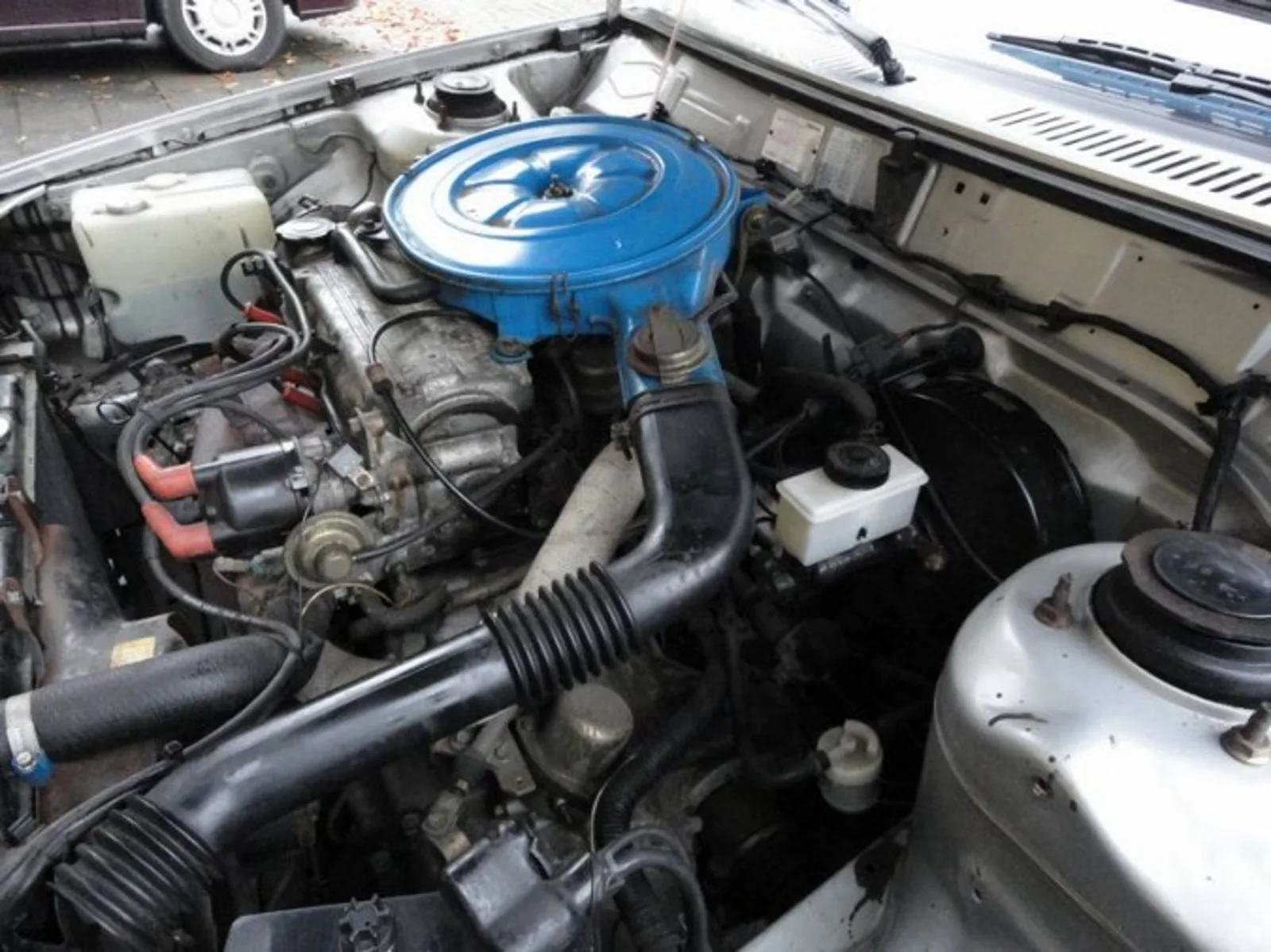
The F6 was the smallest F-family engine, an 8-valve SOHC unit measuring 81 mm by 77 mm for bore and stroke. It produced 74 PS (54 kW; 73 hp) at 5500 rpm, while the 1.8 L (1,789 cc) F8, a destroked FE, made 81 PS (60 kW; 80 hp) at 5500 rpm in carburetted form.
The F6 replaced the earlier F/NA 1.6 from the previous generation. It was fitted to the Capella and 626 from 1983 to 1987 and to the B1600 until 1985, with 121 N-m (89 lb-ft) of torque at 3500 rpm. The F8 ran a very high rod-to-stroke ratio of 2:1 and a compression ratio of 8.6:1, and its carburetted torque of 133 N-m (98 lb-ft) peaked at 2500 rpm, low in the rev range.
What did the F8-DOHC and FE offer?
The F8-DOHC is a twin-cam version of the F8, basically a de-stroked FE-DOHC displacing 1.8 L (1,789 cc). Peak output was 115 PS (85 kW; 113 hp) at 6000 rpm, and torque reached 156 N-m (115 lb-ft) at 5000 rpm, and it is usually found in wagon variants.
The exhaust cam matches the FE-DOHC, while the intake cam has lower lift and feeds a single long manifold runner. The F8-DOHC is usually identified by its unpainted cam cover, which is the simplest way to tell it apart.
The FE was a 2.0 L (1,998 cc) with a square 86 mm bore and stroke. In its 8-valve carburettor form, output was 82 PS (60 kW; 81 hp) at 5000 rpm, while torque peaked at 152 N-m (112 lb-ft) at 2500 rpm. Fuel injection and a 12-valve SOHC head, paired with a 10.0:1 compression ratio against 8.6:1 on the carburettor version, lifted the figures to 120 PS (88 kW; 118 hp) at 5300 rpm, and torque rose to 178 N-m (131 lb-ft) at 3700 rpm.
How did the FET and FE-DOHC differ?
The FET was a fuel-injected, turbocharged version of the 8-valve FE, rated at 137 PS (101 kW; 135 hp) at 5250 rpm. The FE-DOHC was a 16-valve twin-cam variant, and none left the factory with a turbocharger. European 10.0:1 trim gave it 148 PS (109 kW) at 6000 rpm.
The FET used a small turbocharger without an intercooler, running 7 psi (0.48 bar) of boost. Peak torque was 237 N-m (175 lb-ft) at 2800 rpm. The Japanese version, sold as the Magnum Turbo, was rated at 145 PS (107 kW; 143 hp). Its figure is considered conservative, because the naturally aspirated fuel-injected FE peaked at 120 PS.
The FE-DOHC keeps the FE's square 86 mm dimensions but adds four valves per cylinder and a rod-to-stroke ratio of 1.74. It is usually recognised by a gold-coloured cam cover, though not always, and it is commonly called the FE3 because that name is stamped into its head castings. At least five variants existed, each with its own compression ratio, camshaft and ECU tuning.
Which cars used the FE-DOHC?
The FE-DOHC was first fitted to the GD 626 GT, the Capella and the 626 Coupe GT, and it was sold mainly in European and Japanese markets. New Zealand also received European-market models, while Kia used the engine in its own range in other markets.
Samcor, the South African licensee that built Mazdas, fitted the FE-DOHC to the Mazda 323 from 1991 to 1994. South African Ford Laser and Meteor 2.0 16v models used it in 1992 and 1993. The GV wagon kept the engine until 1997, and Capella cargo variants also carried it.
Kia introduced the engine in March 1992 in the Concord, a licence-built version of the 1982 Mazda Capella. The 1995 to 2003 Sportage was reconfigured for rear-wheel drive, with low-duration cams, a long single-runner intake manifold and only the 9.2:1 compression ratio.
What was VICS and where was it used?
VICS, short for Variable Inertia Control System, was Mazda's variable intake setup for the FE-DOHC. It had two sets of runners, a long set for low to medium speeds and a short set for higher revs, and a vacuum solenoid opened the short runners past 5400 rpm.
The arrangement resembles Toyota's Acoustic Control Induction System in purpose. Butterflies inside the manifold open or close the short runners according to engine speed, and the same idea went on to many later Mazda engines, including the BP. The K-series V6 used a different mechanism, called VRIS, for a similar result.
Two VICS manifolds existed. One had steeper, straighter runners, while the other was kinked for packaging reasons. The F8-DOHC and some Kia versions of the FE-DOHC used a conventional intake manifold without VICS.
How did the F2 and F2T extend the family?
The F2 is a stroked FE, with bore and stroke of 86 mm and 94 mm, displacing 2.2 L (2,184 cc). It was introduced for the 1988 to 1992 GD platform cars, and the same engine powered the B2200 pickup and the Ford Probe. The F2T added a turbocharger and an intercooler to that engine.
The high-output F2H2, used in rear-drive versions of the Mazda 929, raised compression to 9.2:1 giving 129 PS (95 kW; 127 hp) and 191 N-m (141 lb-ft) of torque. The North American F2, at 8.6:1, delivered 112 PS (82 kW; 110 hp) at 4700 rpm, with 176 N-m (130 lb-ft) of torque. Most were 12-valve SOHC engines, although the B2200 used an 8-valve version.
The F2T used an IHI RHB5 VJ11 turbocharger and an air-to-air intercooler, and its compression ratio was lowered to 7.8:1. Output reached 147 PS (108 kW; 145 hp) at 4300 rpm, with torque of 258 N-m (190 lb-ft). Mazda had to strengthen the transmission to cope, and the H-type gearbox it developed was its strongest front-wheel drive unit yet. The F2T went into the 626 GT, MX-6 GT, Probe GT and Telstar TX5 Turbo.
What changed with the FS and FP?
The FS and FP were structurally different from the original F-blocks, with much smaller bore spacing, a shorter deck height and smaller head and journal dimensions. The 2.0 L (1,991 cc) FS and the 1.8 L (1,839 cc) FP are therefore closer to Mazda's BP engine than to the earlier F-series.
The FS displaced 2.0 L (1,991 cc) and measured 83 mm by 92 mm for bore and stroke. Its most common form was rated at 130 PS (96 kW; 128 hp), with torque of 183 N-m (135 lb-ft), while Japanese domestic versions reached 170 PS (125 kW; 168 hp). The highest-output Japanese variant was the Mazdaspeed Familia FS-ZE, which also made 170 PS.
In 1998 the FS became the FS-DE, which brought distributorless ignition and solid shim-on-bucket lifters in place of hydraulic ones, along with oil squirters and a windage tray. Mazdaspeed turbocharged the US FS-DE in 2003 as the FS-DET for the Mazdaspeed Protege. That engine produced 172 PS (127 kW; 170 hp) with a fuller torque curve than the naturally aspirated FS-ZE, and it was otherwise identical to the regular FS-DE.
The FS-DE's variable intake system had a known defect. The screws holding its butterfly valves could come loose and be drawn into the engine, and some engines had to be replaced entirely because of the damage. The VTCS butterflies, which close to promote clean cold-start combustion, had a reputation for being noisy.
The 1.8 L (1,839 cc) FP is a destroked FS with an 83 mm bore and an 85 mm stroke. It delivered 124 PS (91 kW; 122 hp), along with 163 N-m (120 lb-ft) of torque, and it uses its own block, crank, rods, pistons and timing belt. Its maximum compression in European trim was 15 bar (220 psi), the same as the European FS, while the North American FS managed 11.5 bar (167 psi).
Which models carried the F engines?
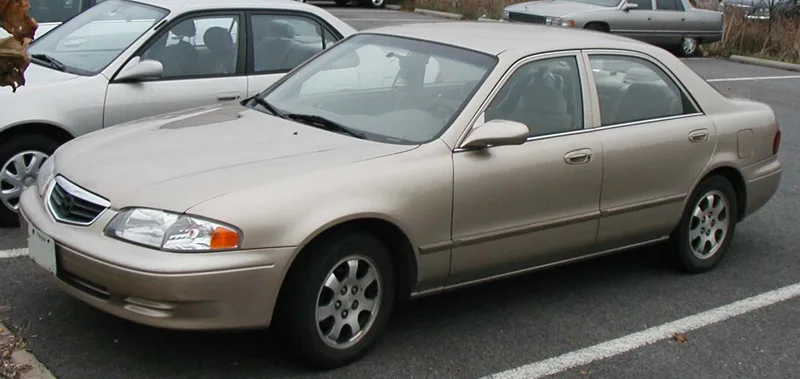
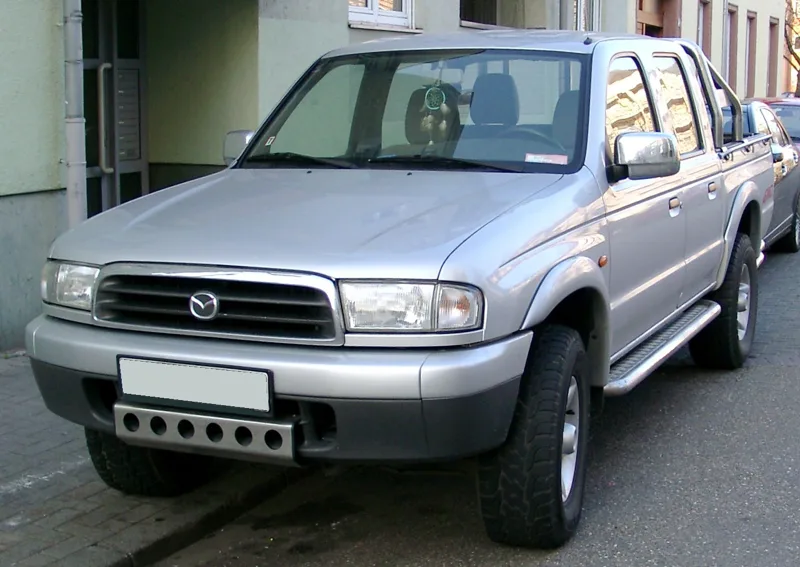
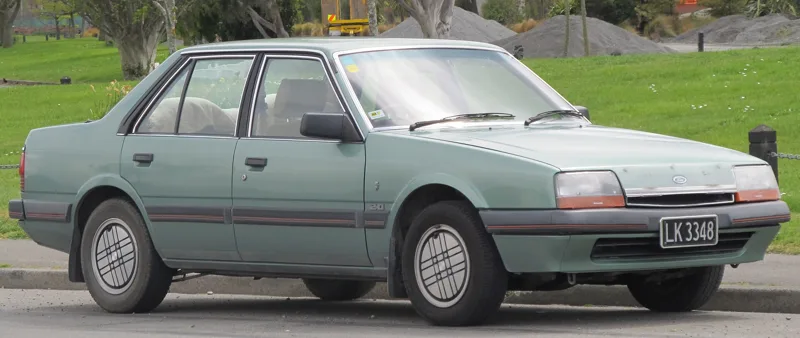
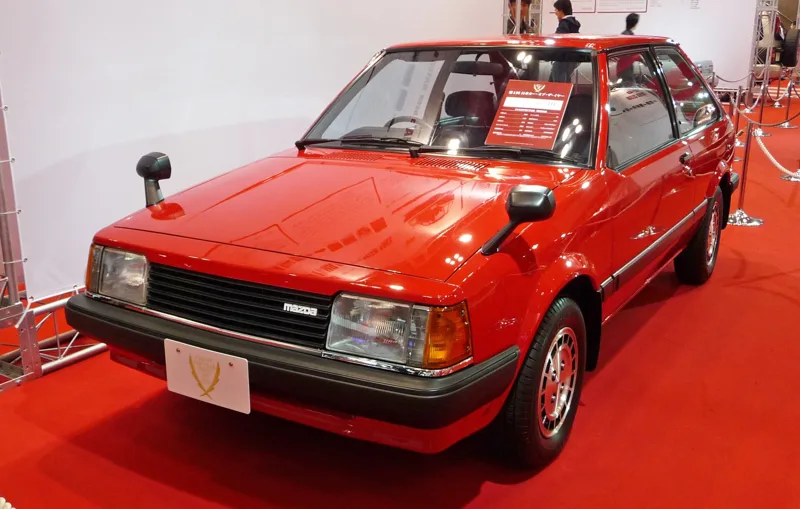
The F engines went into a long list of Mazda models, including the Luce, Cosmo, 929, Capella and 626, plus the Bongo and B-Series trucks. Ford sold versions as the Courier, Telstar and Probe, and Kia used the engine in the Concord, Capital and Sportage.
The VC went into the Luce and 929, the Cosmo, the B1800, the Capella, the Courier, the Bongo and the Parkway between 1974 and 1984. The MA powered the Luce and Cosmo, the 929 wagon and the B2000, and the Ford Courier also used it from 1977 to 1985.
The F8 was used in the Capella and 626 from 1983 to 1991, in the Persona and Eunos 300 from 1988 to 1992, and in the Bongo and Ford Econovan from 1984 to 2005. It also appeared in the Kia Capital and Kia Concord and in the Asia Rocsta from 1993 to 1999.
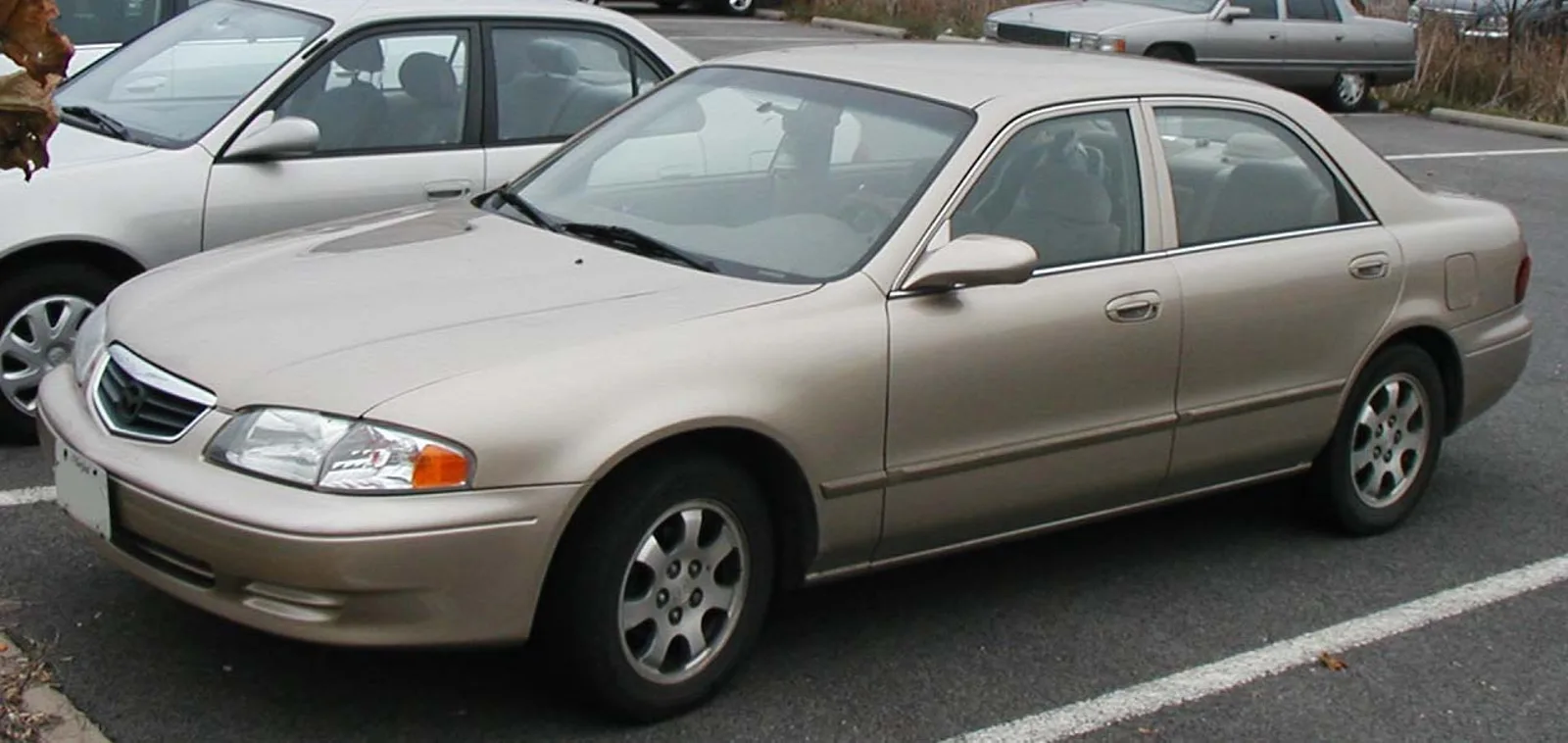
The FS went into the 626 from 1993 to 2002, the MX-6 and Probe from 1993 to 1997, and the Capella from 1999 to 2003. The FP was fitted to the Eunos 500, Capella and 626, the Protege, the 323 Astina and Protege in Australia, the Ford Laser and the Premacy until 2004.
What are the main figures across the family?
| Engine | Displacement | Bore x stroke | Peak output | Notes |
|---|---|---|---|---|
| VC | 1.8 L (1,769 cc) | 80 mm x 88 mm | 85 PS (63 kW; 84 hp) at 5000 rpm, 1981 UK B1800 | Overhead camshaft, all new in 1975 |
| MA | 2.0 L (1,970 cc) | 80 mm x 98 mm | 90 PS (66 kW; 89 hp), two-barrel | Later designated F |
| F6 | Smallest F-family engine | 81 mm x 77 mm | 74 PS (54 kW; 73 hp) at 5500 rpm | Compression 8.6:1 |
| F8 | 1.8 L (1,789 cc) | 86 mm x 77 mm | 81 PS (60 kW; 80 hp) at 5500 rpm | Carburetted 8-valve |
| F8-DOHC | 1.8 L (1,789 cc) | Destroked FE-DOHC | 115 PS (85 kW; 113 hp) at 6000 rpm | Mostly wagons |
| FE | 2.0 L (1,998 cc) | 86 mm x 86 mm | 120 PS (88 kW; 118 hp) at 5300 rpm, fuel injected | 12-valve SOHC |
| FET | 2.0 L (1,998 cc) | 86 mm x 86 mm | 137 PS (101 kW; 135 hp) at 5250 rpm | Turbocharged, 7 psi boost |
| FE-DOHC | 2.0 L (1,998 cc) | 86 mm x 86 mm | 148 PS (109 kW) at 6000 rpm, European 10.0:1 | 16-valve DOHC |
| F2 | 2.2 L (2,184 cc) | 86 mm x 94 mm | 112 PS (82 kW; 110 hp) at 4700 rpm, North America | Used in the B2200 |
| F2T | 2.2 L (2,184 cc) | 86 mm x 94 mm | 147 PS (108 kW; 145 hp) at 4300 rpm | Turbocharged, 7.8:1 |
| FS | 2.0 L (1,991 cc) | 83 mm x 92 mm | 130 PS (96 kW; 128 hp) | Distributorless from 1998 as FS-DE |
| FP | 1.8 L (1,839 cc) | 83 mm x 85 mm | 124 PS (91 kW; 122 hp) | Own block and crank |
Across the table, displacements run from 1.8 litres for the VC, F8, F8-DOHC and FP up to 2.2 litres for the F2 and F2T. The turbocharged rows show how far output rose above the naturally aspirated versions of the same displacement.
Why does the FE-DOHC timing belt matter so much?
The FE-DOHC has an interference valvetrain, so a broken timing belt causes piston and valvetrain damage and the engine should then be replaced. Regular belt changes are therefore vital to the engine's life.
The valve gear uses wide-angle geometry, flat-tappet 33 mm HLA bucket lifters and two valve springs per valve. The stock springs are fairly low-rated, a choice that favoured fuel efficiency, valvetrain longevity and quieter running by damping harmonics.
Anyone building a Kia-spec head should check the gasket. Its coolant passage holes suit a rear-wheel drive cooling system, and fitting that gasket in a front-wheel drive cooling configuration gives poor flow and can overheat cylinder 4.
What is the legacy of the Mazda F engine?
The F family ran from the 1983 F6 to the Premacy, the last listed application, which ended in 2004. Its variable intake ideas carried into later Mazda designs, while the FS and FP formed a separate branch that stayed closer to the BP than to the original F-block.
Identifying a particular engine relies on its cam cover, its head casting and its code. The FE-DOHC is often recognised by a gold cam cover and the FE3 stamp, the F8-DOHC has an unpainted cover, and codes such as FE-DE, FE-ZE and FS-DE mark later revisions.
The F8 and FP are often confused because the FP is incorrectly called the F8. Anyone checking an engine should read the block, crank and head markings rather than rely on the name alone, since the two engines are different designs.