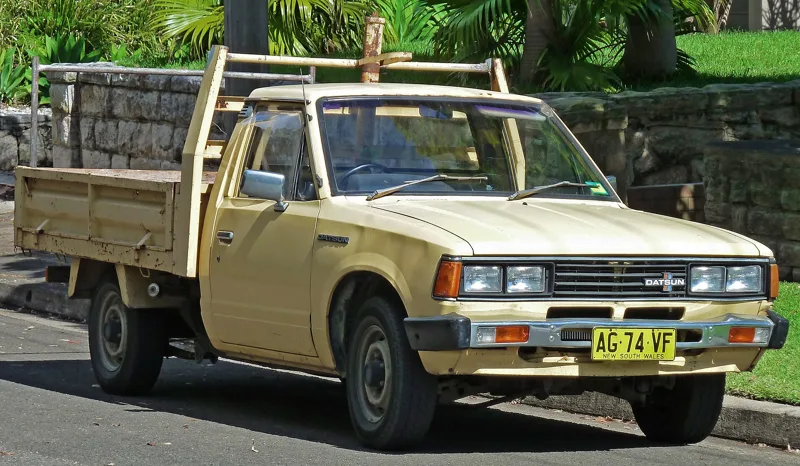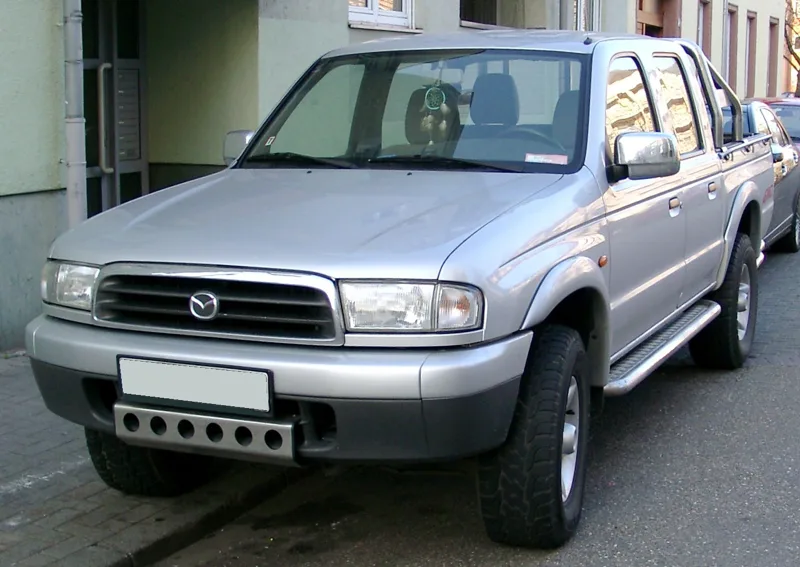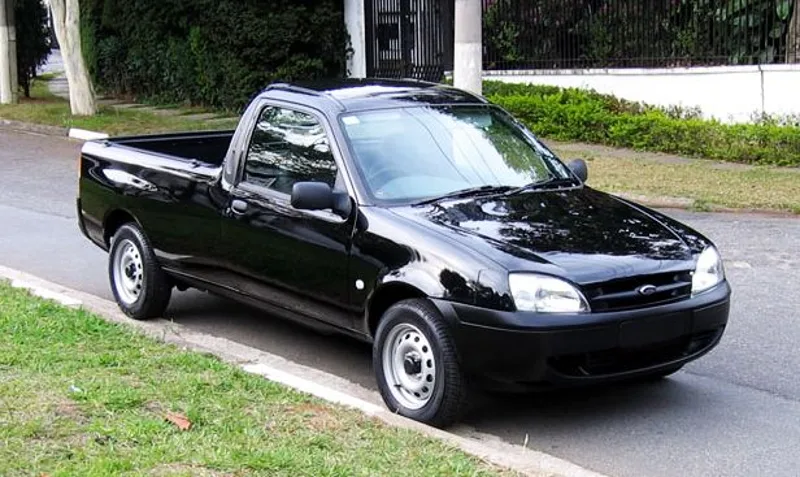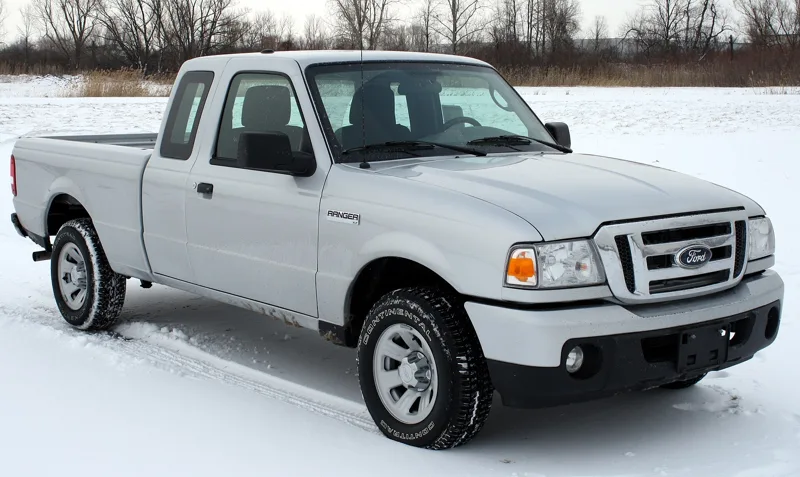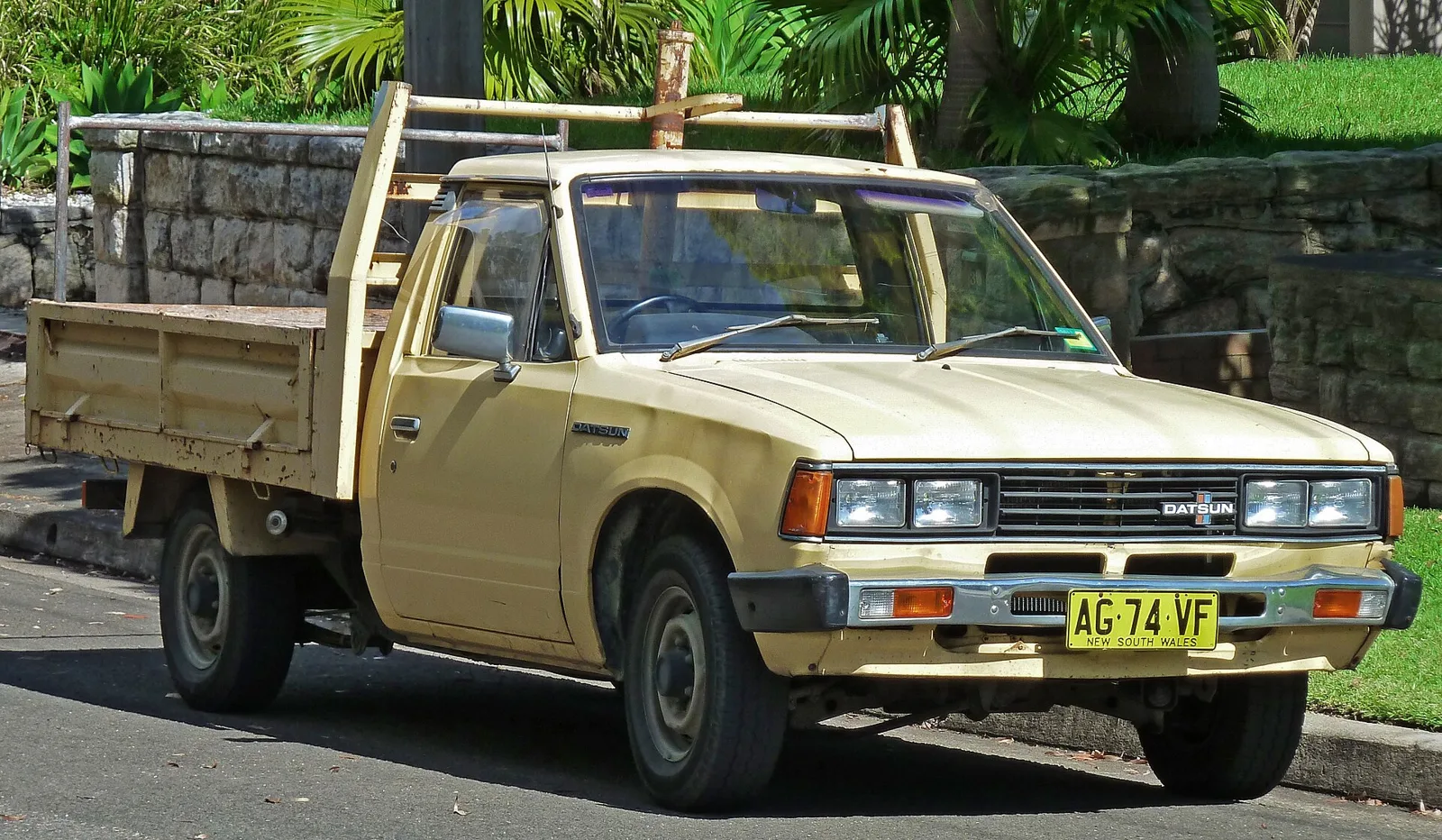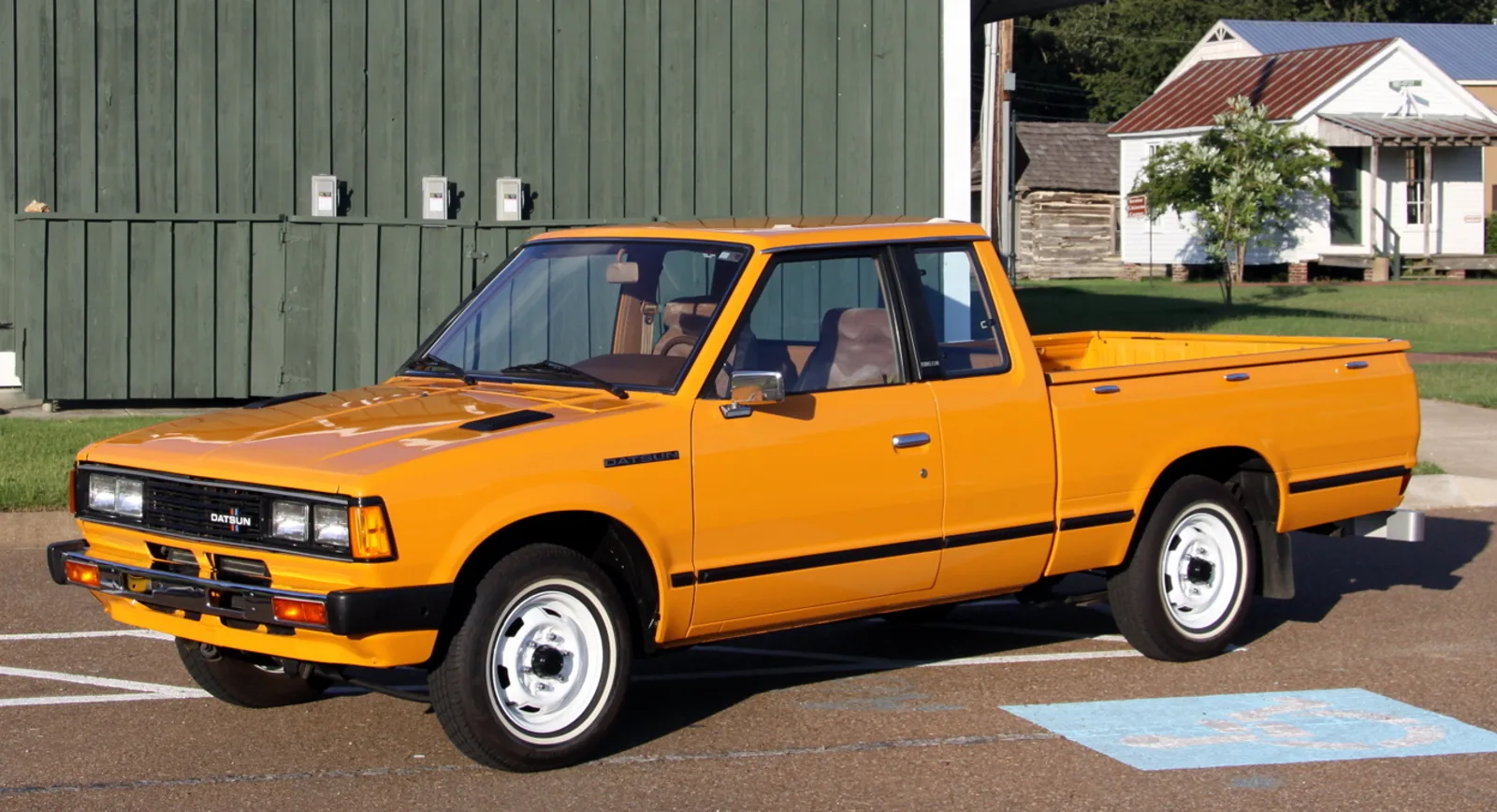
Two Japanese pickups that overlapped from 1961 to 1997, with different engines, export routes and one rotary-engined detour.
The Datsun Truck was a Nissan compact pickup built in Japan from 1955 to 1997, while the Mazda B-Series ran from 1961 to 2006. Both sold into the same small-truck market, and each brought its own engines, export history and later models to the rivalry.
The Datsun Truck and the Mazda B-Series were two of Japan's best-known small pickups, and for several decades they went after many of the same buyers. Nissan's Datsun Truck was built from 1955 to 1997, while Mazda's B-Series ran from 1961 to 2006. Both trucks started modestly, but they took different routes through engines, export markets and later replacements.
Which truck came first and how long did each last?
The Datsun Truck line began with the Type 13 in April 1934 and kept producing into 1997, when the Frontier and Navara replaced it. The Mazda B-Series started in August 1961 as the B1500 and lasted until 2006, when the BT-50 took over.
The modern Datsun lineage is usually dated from the 120, introduced in January 1955 as a load-carrying version of the 1000 sedan. The 120 used the 25 PS, 860 cc Type 10 engine until 1959, and the larger Nissan Junior was offered alongside it as a commercial vehicle.
Earlier Datsun trucks were built until early 1944 in the form of the 14T, 15T and 17T, and the post-war 1121 followed the 17T in 1946. The post-war 1121 used simple pressed metal and wood body parts.
The Mazda story begins in Japan with the B1500 of August 1961. It had a torsion bar front suspension and a leaf spring rear.
Two Japanese pickups that overlapped for decades, with different engines, export routes and one rotary-engined detour.
How did the Datsun Truck grow through the 1950s?
Two steps mattered most in the 1950s: the 220 of November 1957 raised payload to 850 kg (1,874 lb), and the G220 of August 1958 lifted it to 1,000 kg (2,200 lb). Hydraulic brakes had already arrived with the 5147 in 1951, when the model moved to a longer wheelbase.
The 4146 of August 1950 introduced the 860 cc Type 10 engine, rated 15 kW (20 hp; 20 PS). Its extra output did little for speed, and top speed only rose from 67 to 70 km/h (42 to 43 mph).
The 6147 went further with a 25 PS D-10 engine, and its payload rose from 500 to 600 kg (1,100 to 1,300 lb). It was built until the 120 series arrived in 1955.
The 220 was the first Datsun truck exported to the United States, and the series is credited with establishing Datsun in that market. It was also the first Datsun truck with a 12 volt electrical system.
The 223 used a 1.2-litre E-1 engine rated 60 PS, and the 320 Series that followed in August 1961 produced the same 60 PS. The 320 was described as a best seller in the truck segment before the 520 took over the range.
What did the Datsun 520 and 620 add?
The 520 ran from May 1965 to May 1968 with a 1.3-litre, 67 hp J13 engine. In 1968 the 521 became the first compact half-ton pickup sold in the American market, and the 620 followed in February 1972 with production through 1979.
The 620 came as a regular cab truck, and the King Cab extended cab joined the range in 1977. The U620 was a crew cab utility version that seated four.
The 521 was the facelifted 520, and it was the model that brought Datsun a compact half-ton pickup to America in 1968.
Where did the Mazda B-Series come from?
The B-series grew out of Mazda's commercial range and sat above a kei truck in size. Its model names followed engine capacity, so the B1500 carried a 1.5 L engine. The line ran through five generations and was known in Japan as the Proceed for most of its production.
The first B1500 went on sale in Japan in August 1961 with a 1,484 cc overhead valve engine rated 44 kW (59 hp; 60 PS). It had a one-ton payload and a torsion bar front suspension with a leaf spring rear.
That first model was more expensive than its rivals and failed to meet sales expectations.
Naming changed from market to market. Australia and New Zealand used the Bravo and Bounty names, and Ford sold the B-series as the Courier and the Ranger. The Ford Ranger was also sold in North America as a Mazda B-series from 1994 until 2010.
Which engine upgrades and markets shaped the B-series?
The 1966 Proceed kept the 1,484 cc engine but raised output to 72 PS at 5200 rpm. A 1600 cc version arrived in January 1971 rated 95 PS SAE, and the B-series reached the United States as the B1600 in 1972.
The B1500 was the first Japanese pickup assembled in New Zealand from CKD kits. Assembly began in 1967 after a government order for 672 units, which showed that the model had a real export base outside Japan.
The B1800 was sold in North America from 1975. Mazda had also released the Rotary Pickup in the US in 1974, and the third generation appeared in April 1977 as the PE chassis for the Proceed 1600.
The Proceed 1600 claimed 71 kW (95 hp; 97 PS) and a top speed of 140 km/h (87 mph). In the US the 1980 B2000 used a 2.0-litre engine, and a B2200 diesel followed in 1981.
What made the Rotary Engine Pickup different?
The Rotary Engine Pickup was the first Wankel pickup in the world. It used a 1.3-litre 13B rotary engine and was sold only in North America from 1974 to 1977, which made it a short, regional experiment in the B-series family.
Sales started strongly. The first model year, 1974, saw 14,366 sold in North America, but numbers fell sharply afterwards, with 632 units sold in the 1976 model year. The four-speed manual was upgraded to a five-speed for 1976.
The last model year, 1977, saw 1,161 sold before the model was discontinued. Buyers paid about US$3,500 when new, and the truck returned an observed 16.5 mpg-US (14.3 L/100 km; 19.8 mpg-imp).
The Rotary Engine Pickup also had a motorsport moment, finishing third in the 1976 SCCA Mojave 24 Hour Rally.
How did the Ford Courier fit into the story?
The first Ford Courier arrived for the 1972 model year at just over US$3,000. It used a 1.8-litre overhead cam engine rated 74 hp at 5,070 rpm, and Ford imported it as a response to the popularity of small Japanese pickups among young buyers in the western states.
A four-speed manual was standard, with a three-speed automatic as an option, and a five-speed manual joined the range in 1976. The load capability was 1,400 lb (635 kg), which made it a compact working truck rather than a full-size pickup.
The 1977 redesign offered a Ford-built 2.3-litre engine as an option. The Courier reached Australia in 1979.
The Courier used the B-series body styling, but its front end was different. Its grille echoed the larger Ford F series, and single headlights replaced the B-series twin units.
How did the two trucks compare on specifications?
| Specification | Datsun Truck | Mazda B-Series |
|---|---|---|
| Production span | 1955 to 1997; line began with Type 13 in April 1934 | 1961 to 2006, five generations |
| Launch model | Datsun 120, January 1955 | B1500, August 1961, Japan |
| First engine | 860 cc Type 10, 25 PS | 1,484 cc OHV, 44 kW (59 hp; 60 PS) |
| Payload | 850 kg (1,874 lb) for the 220; 1,000 kg (2,200 lb) for the G220 | One-ton payload (no metric figure given) |
| Later engine | 1.3 L J13, 67 hp (520 series) | 1600 cc, 95 PS SAE (January 1971) |
| US entry | 220 series, first Datsun truck exported to the United States | B1600 in 1972 |
| Notable milestone | 521, first compact half-ton pickup sold in the American market, 1968 | Rotary Engine Pickup, first Wankel pickup in the world, 1974 to 1977 |
| Successor | Frontier and Navara (1997) | BT-50 (2006) |
Both trucks used a torsion bar front suspension. Transmission detail is too thin on the B-series side to compare directly, so none is made here.
Read across the table and the pattern is clear. Datsun's early growth came through higher payloads and an American export push, while Mazda's came through engine upgrades, a New Zealand assembly base and a rotary experiment.
Which buyer suits each truck?
Neither truck has a clear overall winner on the figures available. The Datsun Truck suits a buyer who values its early American history and the 520 and 521 models, while the Mazda B-Series suits a buyer who wants a longer production run and a broader family of trucks.
The 521 stands out as the most specific American milestone in the Datsun material, since it reached US buyers in 1968 as a compact half-ton pickup. The 520 and 620 generations that surround it run from the mid-1960s to the late 1970s. Buyers who want the B-series story will find a truck that stayed in production from 1961 to 2006 and carried many national names.
A full production total for the Datsun Truck is not available, so the sales race cannot be settled on the figures. The B-series does have a known overall total, with 1.8 million trucks built before the model was replaced in January 1985.
Mazda's B-series also had the most unusual single model in this comparison. For a buyer curious about rotary engineering, the Rotary Engine Pickup is the option to examine, although its production was small and it was sold only in North America.
Mazda's truck was one of several players in the segment, and it competed with the Toyota Hilux in the same market. Ford's Courier then brought a Mazda-built truck into the Western market as a rival to Datsun and Toyota pickups.