How a compact truck built to replace the Courier became the best-selling compact pickup in the United States, then returned in mid-size form.
Sold across the Americas since 1982, the Ranger began as a compact pickup built to replace the Courier. It topped its segment in the United States for almost two decades, and it returned in 2019 as a mid-size model that Ford still builds today.
The Ford Ranger has been a pickup nameplate in the Americas since 1982, first as a compact truck and later as a mid-size model. It was built across three North American plants, ran for years in South America as a locally produced model, and returned to North America in 2019 after a long gap.
What is the Ford Ranger?
The Ford Ranger is a pickup range that Ford sold in North and South America under the Ranger nameplate. Introduced in early 1982 for the 1983 model year, it replaced the Mazda-sourced Ford Courier and was the best-selling compact truck in the United States from 1987 to 2004.
Through its life the Ranger was a close rival to the Chevrolet S-10 and its Colorado successor, along with their GMC counterparts. Ford retired the model from North America from 2012 to 2018 while it concentrated on full-size F-Series trucks.
A compact pickup built to replace the Courier, later returned in mid-size form and still sold across the Americas.
Where did the Ranger's story begin?
The Ranger grew out of the Courier, which Ford introduced for the 1972 model year as its first compact pickup. Ford partnered with Mazda to market the Mazda B1800 in North America, and the Courier became the first of several jointly built vehicles between the two companies.
The partnership spread the risk of entering a segment Ford had not worked in before, and it brought Mazda funds it badly needed. The Ranger was then developed to replace that Mazda-sourced truck with a vehicle Ford designed itself.
Why did Ford start Project Yuma?
Project Yuma began in 1976 as the replacement for the Courier, and it was meant to produce the first domestically built compact truck. Its $700 million price tag was driven by fuel economy rules, since Ford had to comply with the 1985 CAFE standards.
Ford's forecast at the start of the project was stark. It expected that nearly 50% of pickups sold in the United States would need a four-cylinder engine to meet the rules. Compact trucks then held a 5% share of pickup sales, and the company expected that share to climb steeply by the mid-1980s.
Research also showed that buyers wanted more interior room, flexibility for work and personal use, and comfortable seats.
How was the first Ranger designed?
The design was built around fuel efficiency, with a 20 MPG target and a 0.45 drag coefficient that beat the two-door Mustang. Wind tunnel testing shaped the body, and high-strength steel, magnesium and aluminium parts were used to keep the weight down.
Even the standard front bumper spoiler was measured in fuel terms, adding 1 MPG on its own. The front suspension was computer-optimized, which made the front stabilizer bar optional.
The cargo bed was narrower than the F-Series, yet it could still carry a four-foot-wide sheet of material. Recesses across the bed held supports, so the sheet could sit above the wheel wells. The Ranger was also approximately 18 inches shorter and 11 inches narrower than an equivalent F-100 or F-150.
Did the 1979 fuel crisis threaten the project?
Yes. The 1979 fuel crisis nearly doomed the Yuma and Ranger project, at a time when Ford had yet to profit from its F-Series redesign. Ford president Don Petersen kept the compact truck project alive.
Petersen had several reasons. General Motors was developing a domestic compact of its own, and Petersen believed buyers would pay nearly the same for a compact as for a full-size truck. Around 1980 the project truck took the Ranger name, borrowed from a mid-to-upper trim the F-Series had used since 1965.
Where was the Ranger built?
The first three generations were built in Louisville, Kentucky, Edison, New Jersey, and St Paul, Minnesota. The fourth generation is made at Wayne, Michigan, while the Ranger T6 used in South America came from Argentina's General Pacheco plant.
Louisville Assembly built the Ranger from 1982 to 1999, and from 1993 to 2004 Edison also produced it. Twin Cities Assembly in St Paul was the sole North American Ranger plant for most of its life, and it made the truck until 2011.
Twin Cities Assembly was built in 1925, and the final 2012 Ranger, produced on December 16, 2011, ended 86 years of production at that plant. The plant was the only North American Ranger site across 29 model years, and its final truck was a white SuperCab Sport built for the pest-control company Orkin.
What was the first-generation Ranger like?
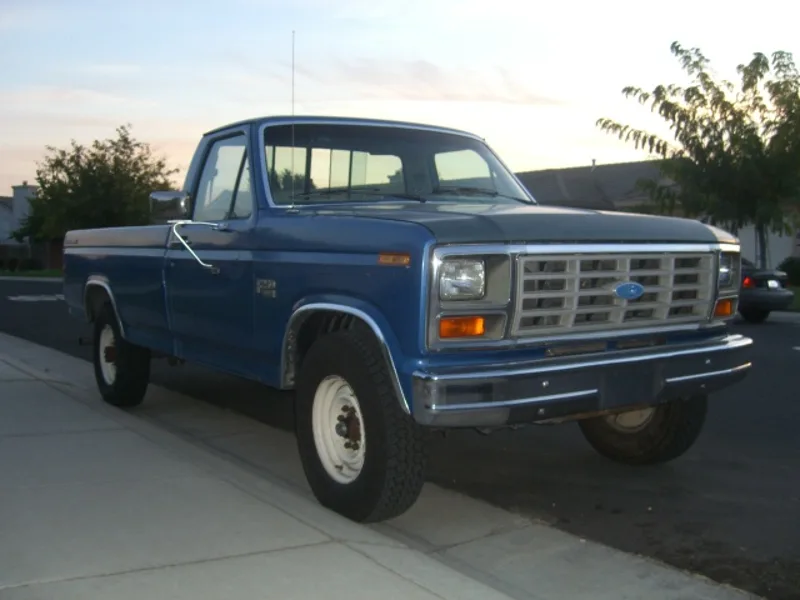
The first Ranger rolled off the Louisville line on January 18, 1982. Ford advanced the launch by several months to compete with the Chevrolet S-10, and the first trucks reached showrooms in March 1982.
The first 1983 Ranger was priced at US$6,203 and was initially sold beside its Courier predecessor. Four-wheel-drive models offered a payload of 1,600 pounds, which matched or beat the F-100 in payload capacity despite the much smaller exterior.
The Bronco II, a two-door SUV that used a shortened Ranger chassis, arrived in 1984. A major mid-cycle revision followed for 1989, improving the exterior aerodynamics and the interior ergonomics. The Explorer SUV was derived from the facelifted Ranger in 1991.
What engines did the first Ranger offer?
From 1983 to 1992 the first-generation Ranger used Lima four-cylinders in two sizes, Cologne V6s in three sizes, and the 3.0 litre Vulcan V6. Diesel four-cylinders came from Mazda, which sourced them from Perkins, and from Mitsubishi.
The twin spark-plug Pinto engine arrived in 1989 and stayed in use until 2001. The 4.0 litre Cologne V6 was introduced in 1990, and in modified form it lasted until the 2012 model-year discontinuation in North America.
A four-speed manual was standard on all engines for 1983 and 1984, with a five-speed as an option. The Mazda M5OD-R1 transmission became the standard unit in 1989.
The GT package used a 140 hp V6 from the Cologne family. A 1989 prototype fitted a 220 hp V6 from the Taurus SHO and a five-speed from a Mustang GT, but the decision not to build that variant meant the GT was shelved for 1990.
Which trims did the first Ranger come in?
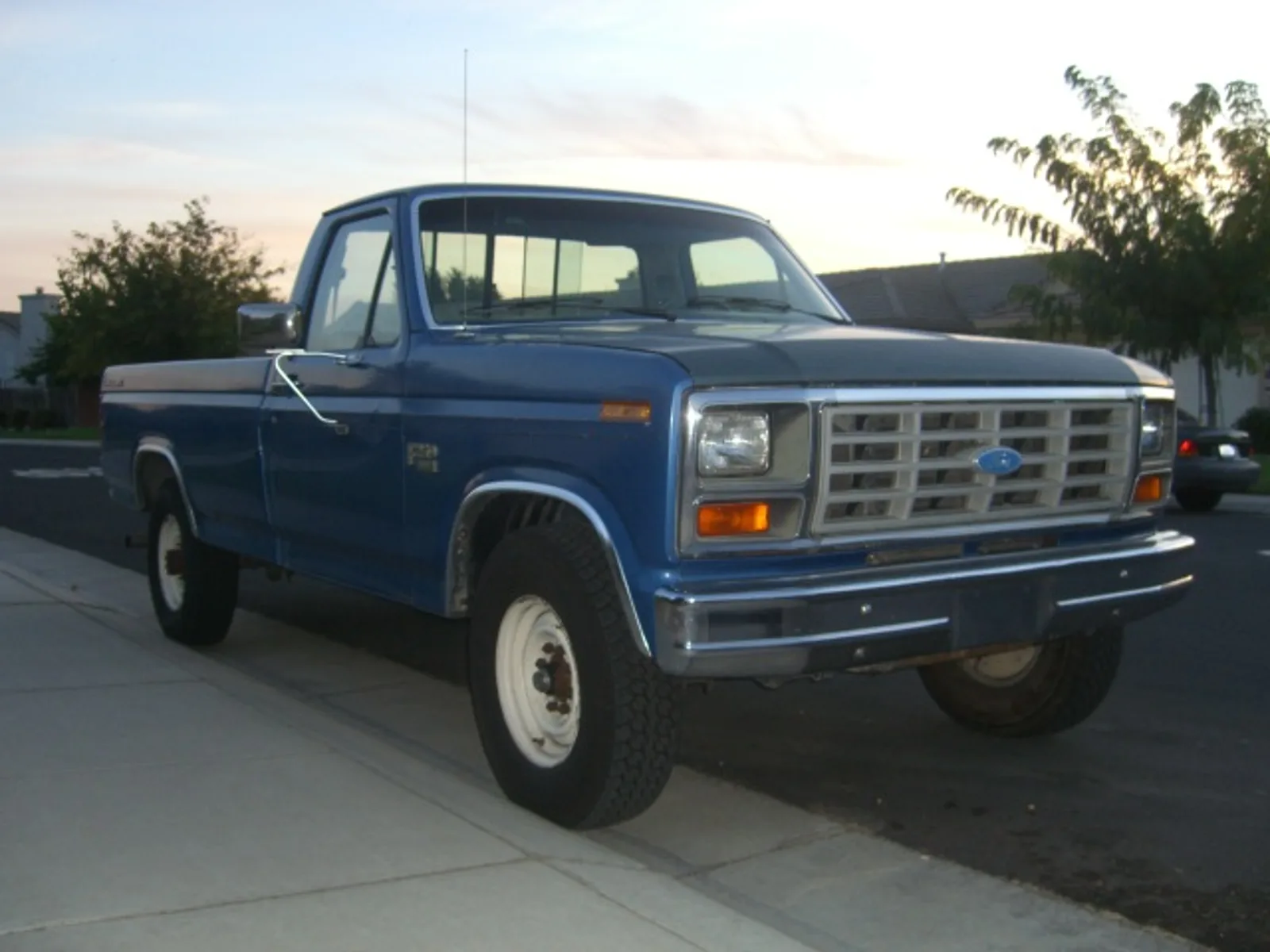
The first-generation Ranger came in five trims: S, Ranger, XL, XLS and XLT. The S was aimed at fleets, the XLS offered a sportier look with bucket seats, and the XLT had two-tone paint and chrome trim for buyers who wanted more finish.
The GT was a sport package for regular-cab trucks with two-wheel drive. It ran from 1987 to 1989 and came in red, white or blue, with two bucket seats and a centre console. A ground effects package followed for 1988.
What changed with the second generation in 1993?
The second generation arrived for 1993 after a long first run, sharing no body panels with its predecessor. It moved to a more aerodynamic shape and no longer shared its front fascia with the Explorer, and the Ranger Splash brought a stepside-style bed to the compact segment.
Ford began building the Ranger for Mazda in 1994, and Mazda sold it as the B-Series. The 1995 mid-cycle revision brought a new grille and a dashboard shared with the Explorer, and from 1996 the Ranger offered dual airbags, the first compact pickup to do so.
The wheelbases carried over at 107.9 inches and 113.9 inches, while the SuperCab stretched to 125.2 inches. The cab itself was widened by nearly three inches, which was a major departure from other compact trucks.
How did the second-generation engines and gearboxes work?
The 2.3 litre four-cylinder was the standard engine, retuned to 98 hp. The 3.0 litre V6 produced 140 hp and rose to 145 hp in 1995, while the 4.0 litre V6 offered 160 hp as the top option.
In 1997 the 5R55E five-speed automatic arrived, becoming the first five-speed automatic offered by an American manufacturer.
What did the third generation bring in 1998?
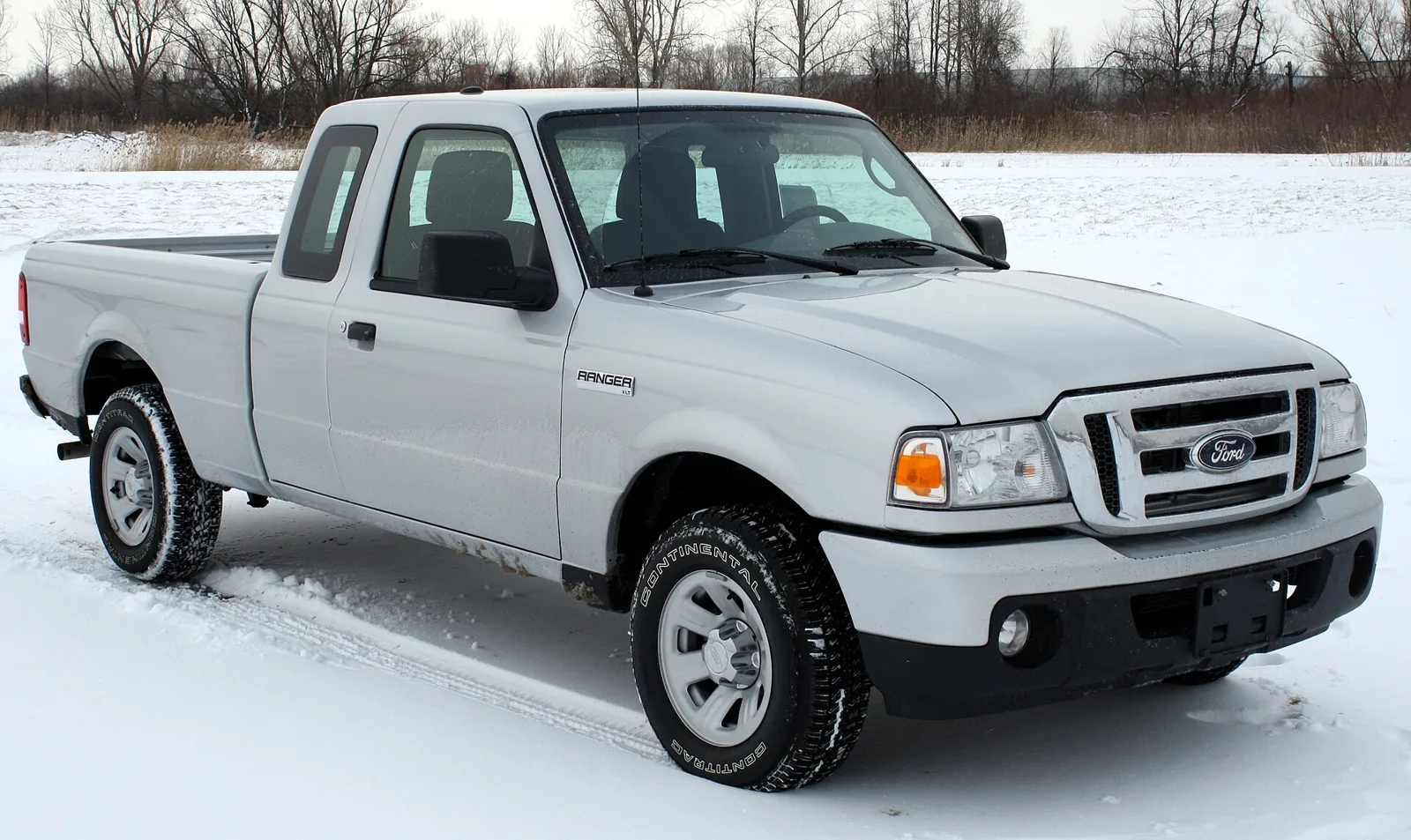
The third generation arrived for 1998 with a redesigned frame, whose rails forward of the firewall became fully boxed. Wheelbases grew to 111.6, 117.6 and 125.9 inches, and the long-running Twin I-Beam front suspension was replaced by a short/long-arm design.
The standard engine was a new 2.5 litre four-cylinder that produced 117 hp (87 kW) and remained in place until 2001, when a 2.3 litre DOHC unit took over. The 3.0 litre V6 ended production after the 2008 model year.
Two rear-hinged doors arrived on the SuperCab in 1999, which made the Ranger the first compact pickup to offer that layout. Rear-wheel drive stayed standard, with four-wheel drive as an option.
Which trims defined the third generation?
The third generation started with the XL and XLT trims, and for 1999 Ford added Sport and Off-Road versions of each. The Edge arrived in 2001, while the FX4 and Tremor followed in 2002, and the lineup kept changing through the late 2000s.
The FX4 was the flagship of the off-road line, built with heavy-duty components. Ford counted 17,971 FX4 Level II trucks built from 2002 through 2007, and 45,172 FX4 Off Roads built from 2003 to 2009.
The Tremor was largely an appearance package at first, with a 485-watt stereo and 16-inch wheels from 2002. It became a stand-alone trim for 2003 and 2004.
How safe was the Ranger?
The Ranger was the first small pickup with dual airbags. When the Insurance Institute for Highway Safety first tested it in 1998, it earned an acceptable frontal crash rating, while many competitors were rated marginal or poor.
Toyota's Tacoma also earned an acceptable rating in that round. The Ranger's later safety upgrades included a tyre pressure monitoring system from 2007 and front combination head and torso airbags from 2010.
The 2010 Ranger also gained electronic stability control as standard, earned a good rating in the side impact test and an acceptable rating in the roof strength test.
What variants came out of the Ranger line?
The Ranger spawned several variants, from an electric truck to a rebadged Mazda pickup. Each one had its own story, and some are now largely forgotten.
The Ford Ranger EV was built from 1998 to 2002, with 1,500 units produced. It was the first battery electric vehicle Ford built in North America, and nickel metal hydride batteries replaced the original lead-acid packs in 1999. It was offered only through lease.
Mazda's version ran from 1994 to 2010 under the B-Series name, with B2300, B3000 and B4000 badges matched to the engine size. Mazda later renamed the range the Mazda Truck, and the last one came off the line at Twin Cities Assembly on December 11, 2009.
How did the Ranger develop in South America?
Ford of Argentina began building the Ranger for South America in 1998, at its General Pacheco plant. The company introduced a four-door double cab that was exclusive to South America, and Ford did not sell that body in the United States or Canada.
Ford of Argentina offered three turbo-diesel options: a 2.5 litre four-cylinder rated 115 hp (85 kW) from 1998, a 2.8 litre rated 135 hp (99 kW) from 2002, and a 3.0 litre rated 163 hp (122 kW) and 280 lb ft (380 N m) from 2004. A US$156.5 million upgrade to the plant followed in 2007.
The Argentine Ranger came in three wheelbase and bed combinations, at 111.5 inches (2,831 mm), 117.6 inches (2,987 mm) and 125.7 inches (3,192 mm). In 2012 Ford of Argentina replaced the US-derived Ranger with the larger Ranger T6, which later reached North America.
What is the fourth-generation Ranger?
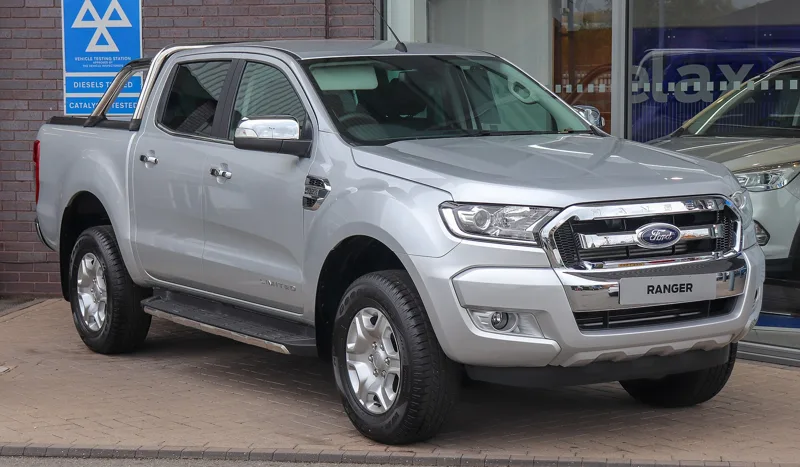
The fourth generation returned for the 2019 model year as the first mid-size Ranger in North America. Built from the Ranger T6 designed by Ford Australia, it moved to a 2.3 litre turbocharged four-cylinder paired with a 10-speed automatic.
The two-door standard cab was dropped, so every example was a SuperCab or SuperCrew with four full doors. Production took place at the Michigan Assembly Plant in Wayne, Michigan, and an earlier North American project was cancelled before this version arrived.
What is the fifth-generation Ranger?
The fifth generation debuted on May 10, 2023. Its Raptor version uses the 3.0 litre EcoBoost twin-turbocharged V6 also used in the Explorer ST, while the 2.7 litre twin-turbo V6 is an optional engine on the XLT and Lariat trims, producing 315 hp (235 kW; 319 PS).
Production was held up by the global supply chain crisis and by a United Auto Workers strike that halted output from mid-September to the end of October 2023. Unlike the previous generation, this model was engineered for the American market from the outset.
The third brake light moved from the tailgate to the top of the cab, and amber side markers were added to the front quarter panels. The base engine remained the 2.3 litre EcoBoost carried over from the previous generation.
What were the Ranger's key figures by generation?
| Generation | Years | Engine range | Notable figure |
|---|---|---|---|
| First | 1983 to 1992 | Lima four-cylinders in two sizes; Cologne V6s in three sizes; 3.0 L Vulcan V6 | 1,600 lb payload on 4x4 models; US$6,203 launch price |
| Second | 1993 to 1997 | 2.3 L at 98 hp; 3.0 L V6 at 140 hp (145 hp from 1995); 4.0 L V6 at 160 hp | Cab widened by nearly three inches; dual airbags from 1996 |
| Third | 1998 to 2011 | 2.5 L four at 117 hp; 2.3 L DOHC from 2001; 3.0 L V6 ended after 2008 | Wheelbases of 111.6, 117.6 and 125.9 in |
| Fourth | 2019 onward | 2.3 L turbocharged four with 10-speed automatic | First mid-size Ranger in North America |
| Fifth | 2023 onward | 2.7 L twin-turbo V6 at 315 hp (235 kW; 319 PS); Raptor 3.0 EcoBoost V6 | Debuted May 10, 2023 |