Ford's worldwide mid-size pickup built on the T6 platform, now in its second generation with diesel, petrol and plug-in hybrid versions.
Introduced in 2011, the T6 Ranger was a body-on-frame pickup that Ford Australia designed to replace separate regional Rangers. It reached North America for 2019, and the second generation, sold from 2022, adds diesel, petrol and plug-in hybrid options.
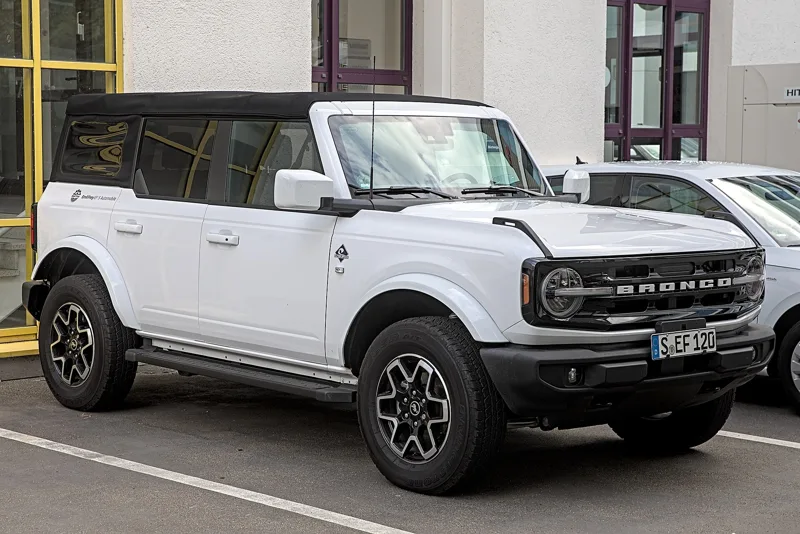
The Ford Ranger T6 is a mid-size pickup that Ford has built since 2011. Ford Australia designed it to replace the separate Rangers that had been sold in different parts of the world, and it became the company's largest pickup line where the F-Series is absent. Its T6 body-on-frame platform also underpins the Ford Bronco and Ford Everest.
Why did Ford create a single global Ranger?
The T6 Ranger consolidated the worldwide Ranger range into one model line. It replaced the 1998 to 2012 Ranger sold in North and South America, along with the Mazda-derived Ranger that had been sold in Asia-Pacific, Europe and several Latin American markets. The result was a single design from one engineering team.
Its size falls between the Maverick compact and the F-150 full-size pickup. Where Ford does not market the F-Series, it is the largest pickup in the company's range. Mazda and Volkswagen have also sold rebadged versions, including the Mazda BT-50 from 2011 to 2019 and the current Volkswagen Amarok.
A single global pickup that started as one truck for many markets and grew into a diesel, petrol and plug-in hybrid family.
Why was the Ranger absent from North America until 2019?
At first the T6 was kept out of the United States and Canada. When it arrived in 2011, Ford was concentrating its North American resources on improving the fuel efficiency of its F-Series. Falling sales of compact and mid-size pickups had already ended the Ranger and the Explorer Sport Trac there.
Changing buyer demand in the mid-2010s brought the T6 Ranger back. It was introduced to North America for the 2019 model year, shortly before the compact Maverick arrived for 2022. Elsewhere, the Ranger Raptor and the Ranger Super Duty filled the top of the range where the F-Series was absent.
What was the first-generation P375 Ranger?
The first-generation T6 Ranger debuted at the Sydney show in October 2010, and production began in mid-2011. Its codename was P375, and it carried the PX model code in Australia. Most international markets treat it as the third-generation Ranger, while North America counts it as the fourth.
The P375 came in three body styles. The single cab offered 43 cubic feet (1.21 m3) of cargo space, while the four-door extended cab and crew cab offered 64 cubic feet (1.82 m3). A chassis cab was also sold, taking the place of the Ford Falcon cab-chassis in Australia.
How did ground clearance and capacity work?
All four-door Rangers had the same ground clearance in two-wheel and four-wheel drive. Two-door versions could be ordered with a Hi-Rider option in two-wheel drive, which matched the clearance of the 4x4. Hi-Rider versions, including the Wildtrak, had 31 in (800 mm) of water-fording clearance, against 24 in (600 mm) for standard-height trucks.
The T6 could tow 7,700 lb (3,500 kg). Diesel models with the 2.2-litre Duratorq could carry 2,939 lb (1,333 kg) of payload. Front brakes used twin-piston calipers on 11.9 in (302 mm) rotors, and rear drums were fitted to two-wheel drive trucks and Hi-Riders.
Where was the first-generation Ranger built?
The Ranger was first produced at the AutoAlliance and later Ford Thailand Manufacturing facilities in Rayong, Thailand. Production also took place in Argentina and South Africa, with CKD assembly in Nigeria and Vietnam. North American trucks came from the Michigan Assembly Plant in Wayne, Michigan.
The Argentine Ranger contained 46 percent locally made parts as of 2022, and 70 percent of its output was exported. The same base also underpins the newer Mazda BT-50 and the second-generation Everest. The Troller T4 off-road vehicle, built in Brazil, adopted a shorter-wheelbase version of the T6 frame.
What changed with the facelifts?
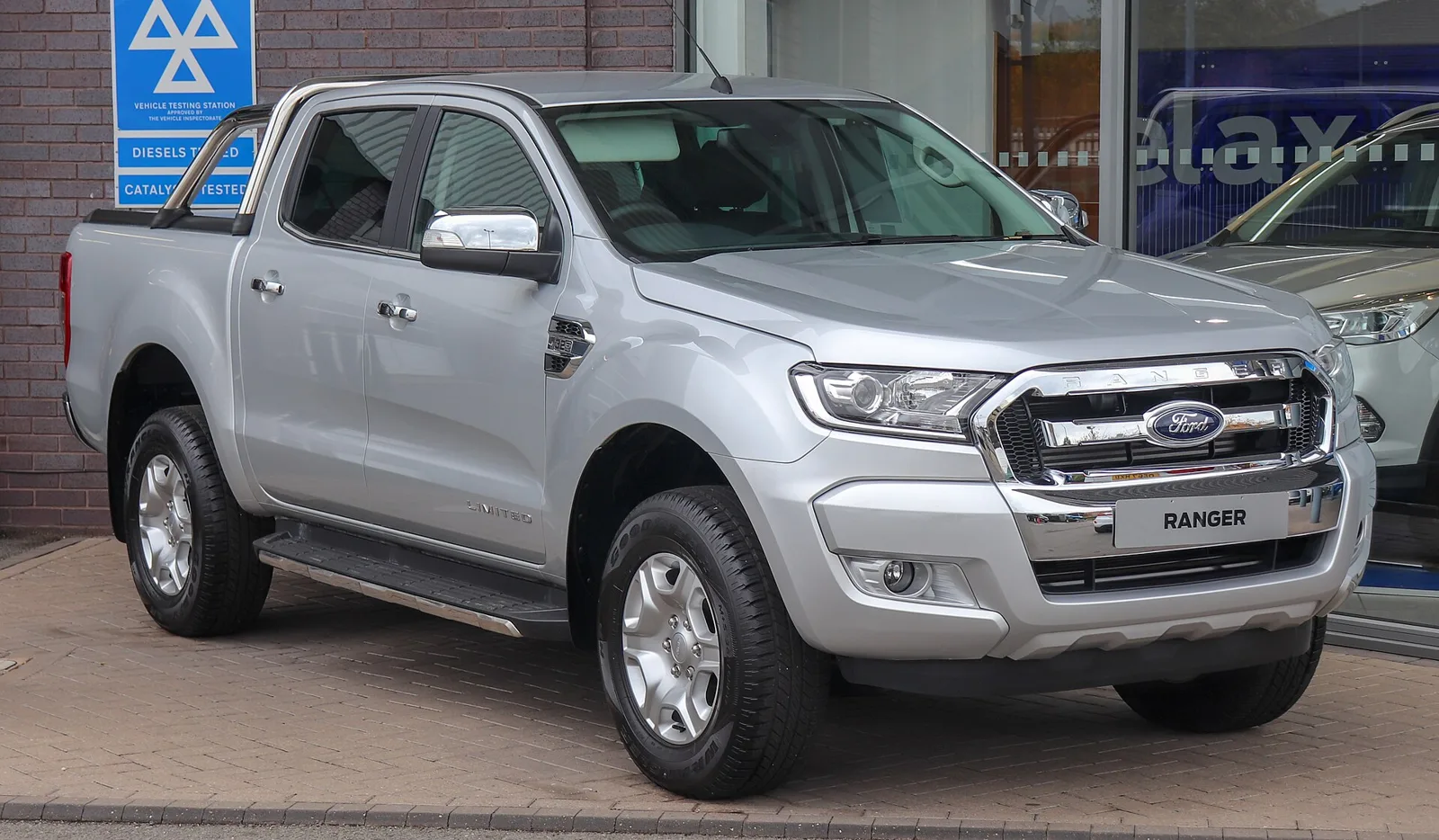
In 2015 the P375 underwent a major mid-cycle redesign, codenamed PX MkII in Australia. The front fascia gained elements of Ford's Kinetic Design. The rectangular three-bar grille gave way to a slightly oval grille with a single centre bar, which set the Ranger apart from the mechanically similar Everest. The interior was overhauled, while the rear stayed largely the same.
The 2019 update, PX MkIII, changed little on the outside, but it brought new front suspension and let XLT and Wildtrak buyers choose the 2.0-litre engine from the Ranger Raptor. The interior gained safety upgrades and a new infotainment system based on Ford SYNC 3.
Which trims and special versions were offered?
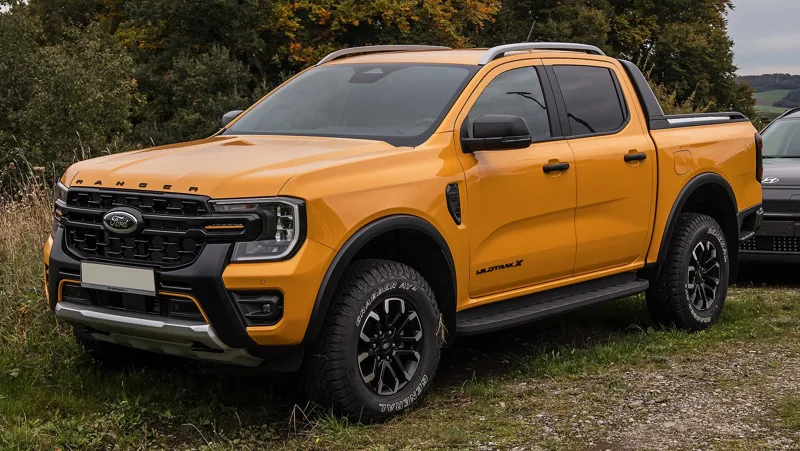
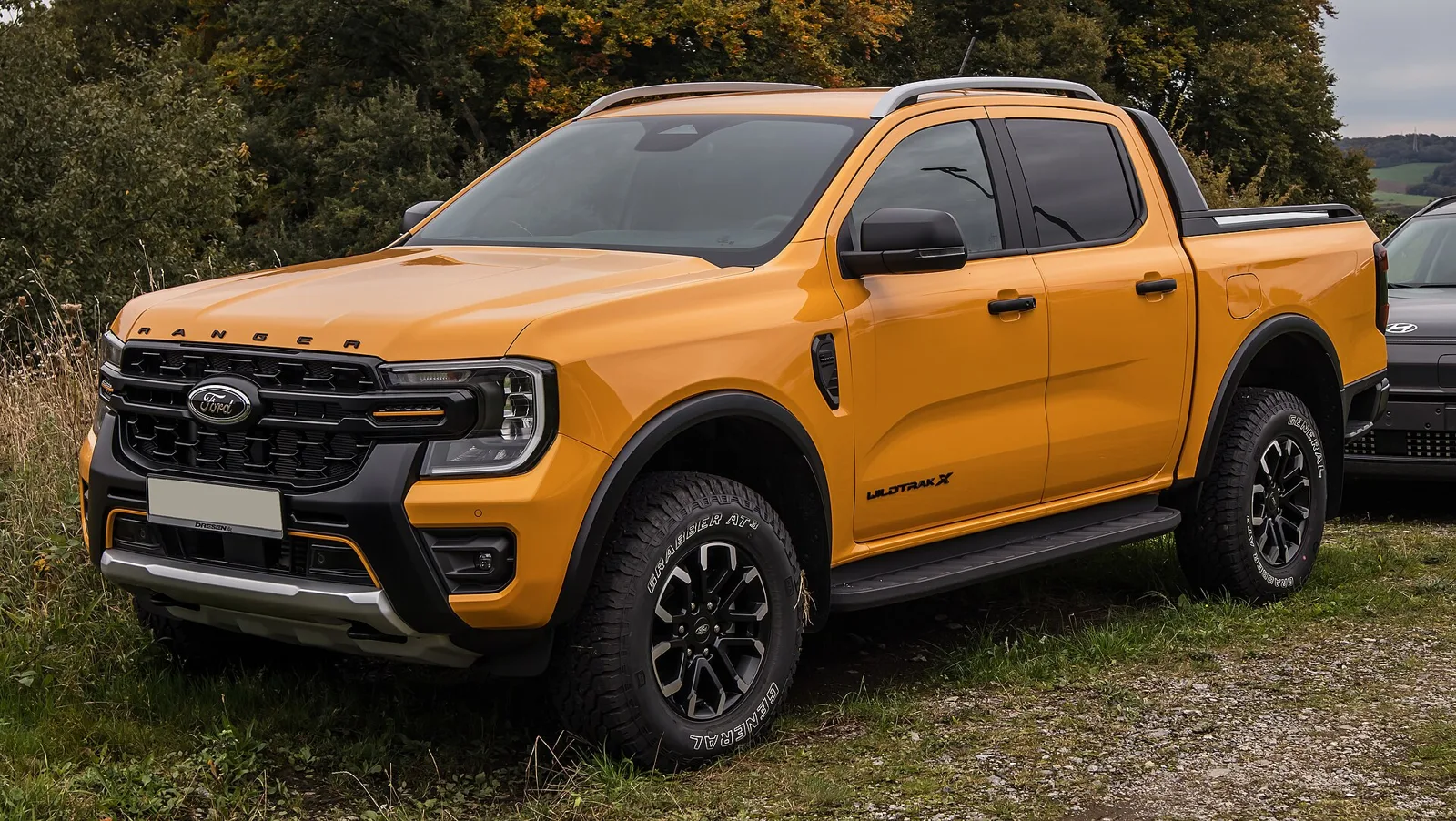
Worldwide the Ranger used the traditional Ford truck trims XL, XLS and XLT. Four-wheel drive versions added the Sport, FX4, Wildtrak and Wildtrak X, each with model-specific exteriors. The Wildtrak was a special edition in Australia and the UK, with a 3.2-litre Duratorq diesel, a dark grey grille, 18-inch wheels and an exclusive Pride Orange paint.
In North America the first trucks came in XL, XLT and Lariat, with the FX4 as a 4x4 package. The Tremor off-road trim arrived in 2020 for the 2021 model year. It was offered on XLT or Lariat 4x4 SuperCrews, and it added FOX dampers, multi-leaf rear springs, 17-inch painted aluminium wheels and 32-inch General Grabber ATx tyres.
What was the Ranger Raptor?
The Ranger Raptor was unveiled in Thailand in February 2018 as an off-road performance truck. It brought the 210 hp 2.0-litre EcoBlue bi-turbo diesel to the Ranger, paired with a 10-speed automatic, along with standard four-wheel drive and upgraded suspension. Like the F-150 Raptor, its grille replaced the blue oval with block lettering spelling FORD.
The first Raptor was not sold in North America. Ford said it was designed for markets without the F-150 Raptor, and that adapting it for a more powerful petrol engine in the US would have been costly. The second-generation Raptor was later confirmed for the United States and Canada from 2023.
How did the Ranger perform in safety tests?
The first-generation Ranger had six airbags, or seven in Europe, with dual front and side bags, curtain bags and a driver's knee airbag in Europe. Standard anti-lock brakes were joined by emergency brake assist. Australian XLT and Wildtrak models could add a Tech Pack with adaptive cruise control, lane keeping aid, lane departure warning and automatic high beams.
Latin NCAP rated the most basic Latin American Ranger, with three airbags and no electronic stability control, at three stars for adults and four for infants in 2016. A later test in 2019 on the same configuration gave four stars for adults and four for infants. In January 2021 the Wildtrak Double Cab 2.0 EcoBlue was named Pick-up of the Year by the British magazine What Car?, which also gave the Ranger five stars.
How did the Ranger come to North America in 2019?
The fourth-generation truck was shown at the 2018 Detroit show and sold as a 2019 model. It was the first Ford mid-size pickup for the region since the Explorer Sport Trac. To meet American crash standards and to raise payload, the truck was given fully boxed frame rails and a frame-mounted steel bumper. Production started on 29 October 2018.
North American Rangers used a 127 in (3,226 mm) wheelbase in every configuration, in SuperCab and SuperCrew forms. The bonnet and grilles were redesigned for private buyers, and the tailgate gained a spoiler. Only an aluminium bonnet and tailgate were used, far less aluminium than the F-Series. The truck was built on the Ranger 4x4 HiRider chassis, and Ford had no plans for a two-door version there.
The sole North American powertrain was a 2.3-litre EcoBoost inline-four with direct injection, four valves per cylinder and a twin-scroll turbocharger, paired with a 10-speed 10R80 automatic. Trim levels were XL, XLT and Lariat, with STX, Sport, Chrome and FX-4 options. The 2021 Tremor added off-road hardware for 4x4 SuperCrews.
What is the second-generation P703 Ranger?
The second-generation T6 Ranger, known as the P703 and in Australia and Thailand as the RA, debuted in November 2021. Ford Australia led its development with heavy input from Ford's Asian, North American, African and European subsidiaries. Production began in the second quarter of 2022 in Thailand and South Africa, and the truck was sold in more than 100 markets.
Dubbed the T6.2, the new Ranger kept the same basic body shape, door and glass openings, and most chassis hardpoints. Ford's chief platform engineer for the T6, Ian Foston, said that most parts are not directly interchangeable with the previous truck. The chassis was upgraded, with a longer wheelbase and tracks 50 mm (2.0 in) wider each side, and a new suspension placed further outboard for greater wheel travel.
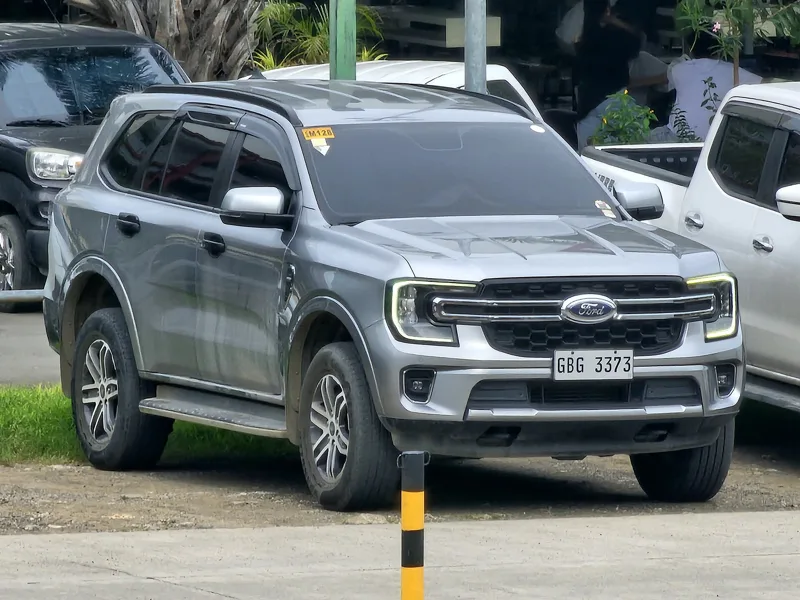
The engine bay was reworked to accept a 3.0-litre Power Stroke V6 turbodiesel, first seen in the 2018 F-150 and heavily modified for the Ranger. The bed grew wider so that a standard pallet of 1.2 m by 0.8 m could fit. The P703 shares its underpinnings with the third-generation Everest and the second-generation Volkswagen Amarok, and Volkswagen has taken part in its development since 2017 under the Ford-VW alliance.
What did the second-generation Raptor deliver?
The second-generation Ranger Raptor was unveiled in February 2022. It used a 3.0-litre twin-turbo EcoBoost V6 from the Bronco Raptor with a 10R60 automatic. The Australian car produced 292 kW (392 hp), while the European version was limited to 210 kW (282 hp) by EU emissions rules. The North American Raptor was rated at 302 kW (405 hp), and Ford CEO Jim Farley confirmed its sale in the United States and Canada from 2023.
What about the plug-in hybrid and Super Duty?
In September 2023 Ford unveiled a plug-in hybrid Ranger. It combined a 2.3-litre EcoBoost with an electric motor and a rechargeable battery pack, for an expected electric range of 45 km (28 miles). Output was 271 hp (202 kW) and 690 Nm (509 lb ft) of torque, more than the 3.0-litre Power Stroke or the Raptor's V6. It is built in South Africa, because of tooling constraints at the Thailand plant, and Ford had no North American plans for it.
The Ranger Super Duty was unveiled on 4 April 2025. It was aimed at fleet and industrial buyers who needed more towing and hauling than the standard Ranger offered, particularly in Australia where the F-150 is imported and converted to right-hand drive. Its braked tow rating is 4,500 kg (9,920 lb), payload reaches 1,982 kg (4,370 lb), and the gross combination mass is 8,000 kg (17,640 lb).
The Super Duty uses F-250 eight-lug wheels and the 3.0-litre Power Stroke, rated at 154 kW (207 hp) and 600 Nm (443 lb ft). The truck carries 130 L (34 US gal) of fuel and has locking differentials at both ends, scales built onto the bed and a snorkel. It is built in Thailand and will not be offered in North America.
How did the second-generation Ranger sell in Europe?
The second-generation Ranger reached Europe in November 2022, with Raptor deliveries starting the same month. Europe offers single cab, double cab and chassis cab bodies. In 2024 the Ranger was Europe's best-selling pickup for the tenth consecutive year, with 60,400 units sold and a 43.6 percent share of its segment, up 4 percent on the year before.
The Ranger is also the best-selling pickup in Ireland, Germany, Belgium and the United Kingdom. A Super Duty version is planned for Europe before the end of 2026.
Which Asian and Latin American markets got the new Ranger?
Thailand launched the second generation on 21 March 2022, alongside the Everest, with Sport, Wildtrak and Raptor trims. Its Bangkok show launch drew 2,589 bookings for the Ranger and Raptor. Malaysia, Vietnam, the Philippines and Taiwan followed in 2022 and 2023, each with its own mix of trims and engines.
China had the Ranger introduced for the first time in 2023. Its base layout used a 260 hp 2.3-litre EcoBoost petrol or a 186 hp diesel with rear-wheel drive, and a 6-speed manual was standard with an 8-speed automatic optional. Argentina launched the model on 23 June 2023, and Brazil followed on 22 June 2023 with four grades, the diesel V6 in the upper ones.
How did the second-generation Ranger do in Australia?
Australia launched the second-generation Ranger on 19 July 2022 with six grades: XL, XLS, XLT, Sport, Wildtrak and Raptor. Engines included the 2.0-litre EcoBlue single and bi-turbo diesels and the 3.0-litre V6 turbodiesel, with the EcoBoost V6 only in the Raptor. The Ranger was offered in single, super and double cab bodies, as pick-ups or cab-chassis.
Ford's Australian line-up has changed often since launch. A PHEV went on sale in March 2025, a Tremor arrived in July 2024 with a batch of 1,150 units, and the Ranger Super Duty followed in January 2026.