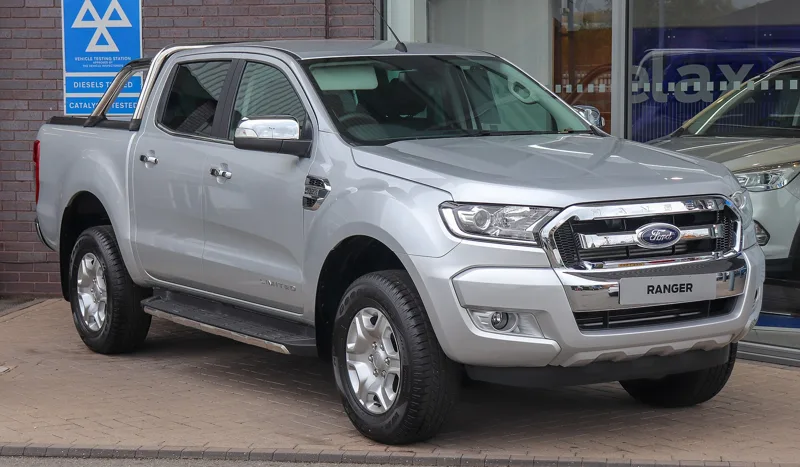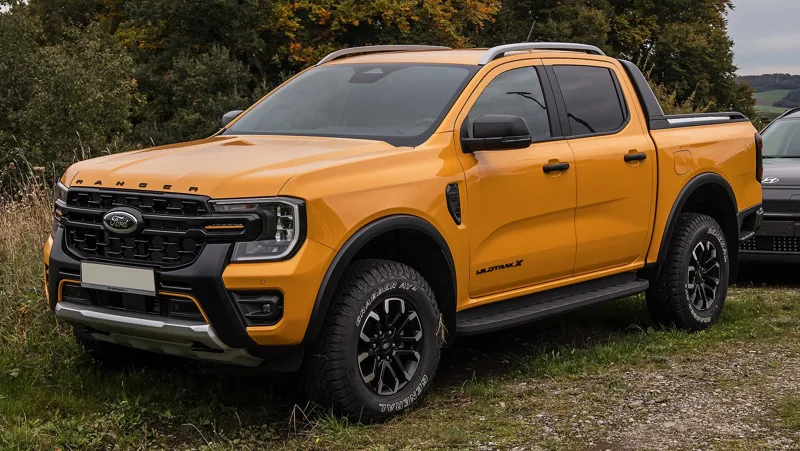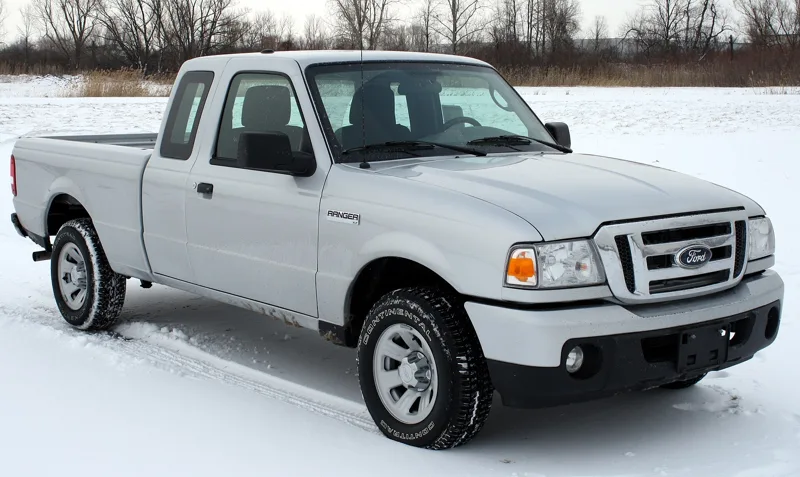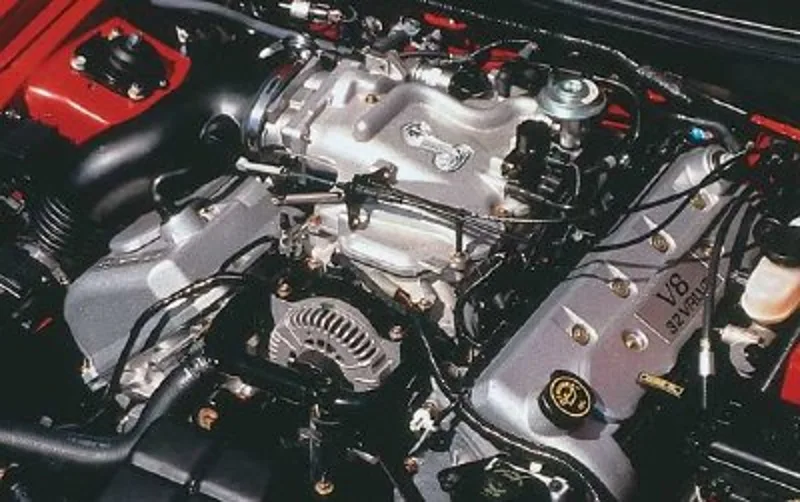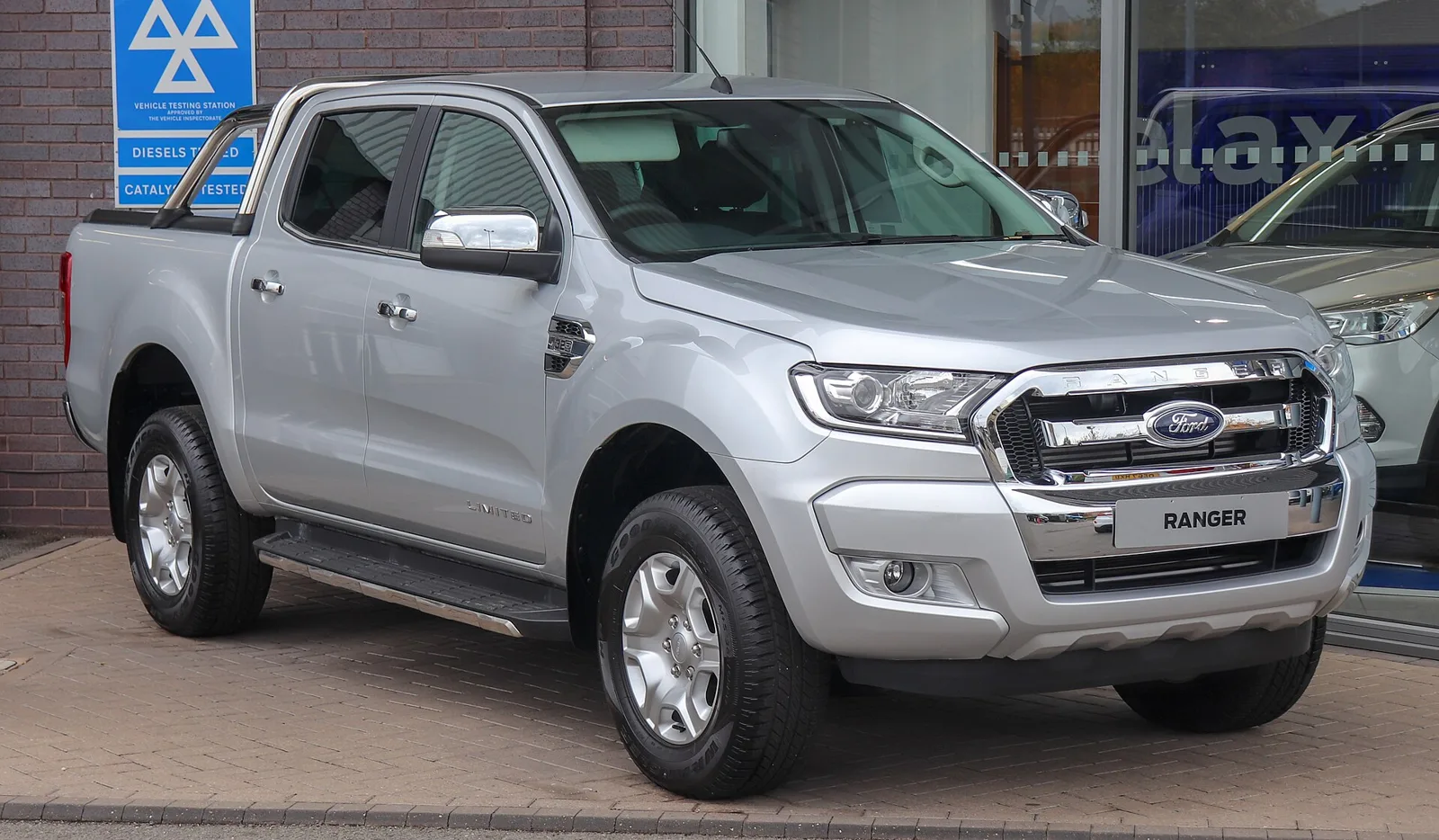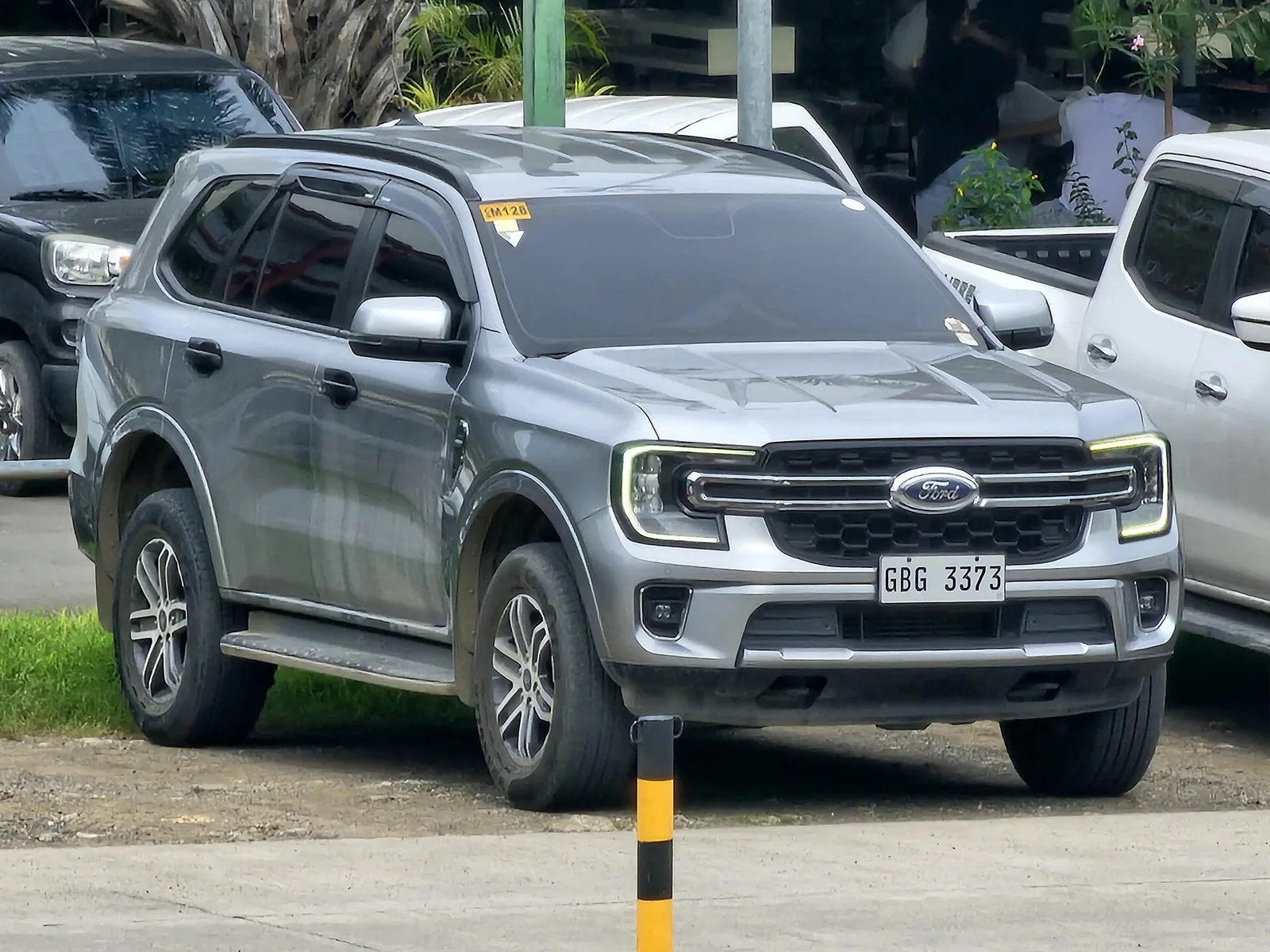
From a 2003 Bangkok debut to a V6 towing model with a clutch-pack four-wheel drive system, the Everest has moved with each Ranger.
Ford's Everest is a mid-size, seven-seat family SUV built on the Ranger pickup and first sold in 2003. It has been built largely in Thailand, and it has never had a Mazda counterpart, so it is not a badge-engineered twin. Three generations have followed the Ranger from one design to the next.
The Everest began life in 2003 as a Ranger-based seven-seater for Asian buyers. Over three generations it has moved with each Ranger, gaining new engines, facelifts and export markets from Australia to the Middle East.
What is the Ford Everest?
The Ford Everest is a mid-size SUV that Ford Motor Company has produced since 2003. It was developed mainly for Asia-Pacific buyers and built largely in Thailand, and each generation rests on a Ranger pickup. Unlike the Ranger, which shared designs with Mazda models until 2020, the Everest never had a Mazda equivalent.
The model is sold under a different name in India, where it is called the Endeavour. The Everest name was avoided there because a spice-making brand already used it in the country.
A Ranger-based seven-seater that grew into a V6 towing family SUV, with its own clutch-pack four-wheel drive.
Where did the first-generation Everest come from?
Ford unveiled the first Everest in March 2003 at the 24th Bangkok International Motor Show. Developed under chief platform engineer Masaki Makihara, it shared 60 percent of the Ranger's components, including its 2.5-litre intercooled turbo-diesel engine and its styling from the front to the B-pillars.
Development took four years and cost US$100 million, including the investment needed to manufacture the vehicle. The Everest was designed specifically for Asian markets, rather than being sold as a Mazda-branded twin.
The chassis kept the Ranger's double wishbone independent front suspension, with a live axle on leaf springs at the rear, adjusted for the new vehicle. The rear differential could not be locked, which set it apart from later models.
The first Everest came as a three-row seven-seater. In some markets, such as Indonesia, it was also offered as a 10-seater with face-to-face third-row bench seats.
It was sold across Southeast Asia, India, the Middle East, Central America, the Bahamas and several African countries. Production was split between the AutoAlliance Thailand plant in Rayong and CKD kits assembled in Chengalpattu, India and Hai Duong, Vietnam.
Why was the Everest called the Endeavour in India?
In India the vehicle was sold as the Ford Endeavour, because the Everest name was already used by a spice-making brand in the country. The Endeavour went on sale on 14 October 2003, and its Indian production ended on 9 September 2021.
The closure of all Ford manufacturing plants in India removed local production. Attempts to continue building the car in the country under a contract arrangement fell through, so the nameplate left the Indian market.
How did the 2006 facelift change the first generation?
The March 2006 facelift replaced the whole front and side body panels to match the redesigned Ranger, and it brought a new 3.0-litre TDCi engine and a five-speed automatic. The facelifted 3.0 TDCi car was launched in the Philippines from 1 July 2006.
Although the changes were large, the car kept its U268 project code and most of its mechanical parts. Ford and some journalists sometimes call the 2006 to 2015 model the second-generation Everest, which can confuse the timeline.
The update also introduced a BorgWarner transfer case and an Active-Shift-on-the-Fly function for four-wheel drive, the first time either had appeared on the model. Indonesian sales of the 3.0-litre version began in August 2006.
What changed in the 2009, 2012 and 2013 updates?
A second facelift in May 2009 gave the Everest a rounder fascia that resembled the facelifted Ranger. The front fender, bonnet, headlights, grille and bumper were all changed, and larger 18-inch polished alloy wheels, a redesigned tailgate and new tail lamps were added.
A smaller update in September 2012 revised the front grille. In August 2013 the Everest received a final facelift with a redesigned front bumper, brought into line with other global Ford models.
What was the second-generation Everest?
The second generation, codenamed U375, first appeared as a near-production concept at Ford's Go Further event in Sydney in August 2013. Based on the T6 Ranger, it was developed by Ford Australia under chief program engineer Todd Hoevener, and in Australia it carried the UA model code.
The new model had rounder proportions. It was shorter in length but wider and taller than its predecessor, and its wheelbase measured 2,850 mm (112.2 in), a little less than the 2,860 mm (112.6 in) of the first car.
It was also shown at the Bangkok Motor Show in March 2014 and at the Guangzhou International Motor Show before its public debut. In China the car was made by the JMC-Ford joint venture at JMC's Nanchang factory.
How did the 2018 facelift change the second generation?
A facelift in May 2018 coincided with the Ranger update and brought a new 2.0-litre bi-turbo diesel, a 10-speed automatic and Autonomous Emergency Braking. A kick-activated power liftgate and new alloy wheels were also made standard. The facelift also brought design tweaks and an equipment list update.
Interior changes included more soft-touch materials and an ebony dark colour scheme. A further facelift followed for the 2021 model year, introduced in Thailand in November 2020.
What is the Arquus Trapper VT4?
The Arquus Trapper VT4 is a light-duty tactical vehicle for the French military, built on the second-generation Everest. Arquus announced its 4,000th model on 15 September 2022, and all VT4s were delivered to the French military by 3 August 2023.
The vehicle shows how the Everest engineering could be reused for a specialised role, well beyond the family SUV market it was designed for.
What is the third-generation Everest?
The third generation, codenamed U704 and known as the UB series, was revealed on 1 March 2022. Ford Australia developed it, and its front end shares most components with the P703 Ranger. Overall dimensions stayed much the same, apart from an extra 50 mm (2.0 in) in wheel track and wheelbase.
The T6 platform still underpins the Everest, with longer control arms for the independent front suspension and a Watts link at the rear to suit the wider track. Each car gets underbody armour, a rear locking differential, off-road drive mode selection and a pair of front tow hooks.
The vehicle offers 800 mm (31.5 in) of wading depth. The four-wheel-drive model can be ordered with a 3.0-litre turbo-diesel V6 and a towing capacity of 3,500 kg (7,716 lb). To handle that load Ford improved the engine cooling, stiffened the frame and raised the front and rear axle load ratings.
Rather than a conventional centre differential with a limited-slip or locking function, the Everest uses an electromechanical clutch pack to connect and disconnect the front and rear wheels. It can run in rear-wheel drive on high-grip surfaces, and it can engage fully in off-road conditions.
How did the third-generation Everest sell in Australia?
The third generation went on sale in Australia on 12 May 2022 with four trim levels: Ambiente, Trend, Sport and Platinum. It was named Wheels Car of the Year for 2022, the first Ford to win the award since the SX Territory in 2004.
Engines were a 2.0-litre EcoBlue bi-turbo and a 3.0-litre V6 turbo-diesel, with four-wheel drive standard on the Sport and Platinum. Changes followed steadily, including a Sport 4x2 in October 2022, a Wildtrak 4x4 with the V6 in May 2023 and the off-road Tremor in August 2024.
In August 2025 the two-wheel-drive variants were discontinued because the New Vehicle Efficiency Standard classed them as passenger vehicles with stricter rules. In November 2025 the single-turbo unit became the base engine, the V6 was offered on every trim, and the Active trim replaced Ambiente and Trend.
In April 2026 a limited Wildtrak with orange exterior accents returned, capped at 1,000 units.
Which other markets received the third-generation Everest?
The third generation reached Thailand on 21 March 2022, the Philippines on 28 July 2022, New Zealand in September 2022 and South Africa on 28 September 2022. Vietnam, Malaysia and Indonesia followed between mid-2022 and mid-2023, and several of these launches came alongside the Ranger (T6).
Thailand launched with the 2.0 Turbo Sport 2WD and the 2.0 Bi-Turbo Titanium+ 4WD, and the Everest took 914 bookings during the 43rd Bangkok International Motor Show. Later Thai additions included a Wildtrak and a Platinum with the V6 diesel.
The Middle East received the car on 10 October 2023 with a 2.3-litre EcoBoost turbo-petrol engine and a 10-speed automatic, in XLS, XLT and Limited grades. A Middle Eastern Tremor was revealed in 2025 with a 2.7-litre twin-turbo petrol engine borrowed from the Ford F-150, producing 310 horsepower (231 kW; 314 PS) and 400 lb ft (542 Nm).
How did the Southeast Asian ranges develop?
Southeast Asian launches were staggered, and each market built its own line-up. Vietnam started with four trims in July 2022 (Ambiente, Sport, Titanium and Titanium Plus), while the Philippines launched five variants that July. All of them used the 2.0-litre EcoBlue single-turbo, except the top Titanium+ 4x4, which used the bi-turbo.
Indonesia launched on 8 June 2023 alongside the Ranger (T6), with XLT and Titanium trims that both used the 2.0-litre EcoBlue bi-turbo and four-wheel drive. A Sport model with black exterior accents followed in April 2025 on the single-turbo 2WD, and a Platinum with the 3.0-litre V6 arrived in July 2026 as the flagship.
Malaysia opened on 24 September 2022 with 2WD Sport, 4WD Trend and 4WD Titanium, and a Wildtrak with the bi-turbo joined in November 2023. A Platinum with 3.0-litre V6 and 2.0-litre turbo-diesel engines followed in June 2026. Vietnam moved to five variants in May 2026, adding a 2.3-litre EcoBoost turbo-petrol on the flagship Platinum+.
What are the Ford Everest specifications?
| Specification | Detail |
|---|---|
| Launch | March 2003, Bangkok International Motor Show |
| First-generation engine | 2.5-litre intercooled turbo-diesel, 60 percent shared with the Ranger |
| Facelift engine | 3.0 TDCi from March 2006 |
| Second-generation wheelbase | 2,850 mm (112.2 in) |
| 2018 facelift engines | 2.0-litre bi-turbo diesel with a 10-speed automatic |
| Third generation revealed | 1 March 2022, UB series |
| Third-generation track and wheelbase | 50 mm (2.0 in) more than before |
| Towing capacity (V6 4x4) | 3,500 kg (7,716 lb) |
| Wading depth | 800 mm (31.5 in) |
| Middle East Tremor | 2.7-litre twin-turbo petrol, 310 horsepower (231 kW; 314 PS) |
| Australian launch | 12 May 2022 |