An Australian-engineered Ranger built for 100 markets, a HiLux with 17.7 million sales and two rivals whose parts trace back to both.
Ford Australia is the Ranger's design and engineering home, and the truck is built in Thailand and South Africa for over 100 markets. Toyota's HiLux dates from 1968, with 17.7 million sold by 2017. The Isuzu D-Max and Mazda BT-50 are tied to both through shared platforms and rebadging.
Every Ranger vs HiLux argument rests on two global products with surprising roots. The Ranger was designed and engineered by Ford Australia, and is now built for more than 100 markets. The HiLux, which began life in 1968, had sold 17.7 million units worldwide by 2017. Around them sit rivals that turn out to share their parts.
Ford Ranger T6: a global ute engineered in Australia
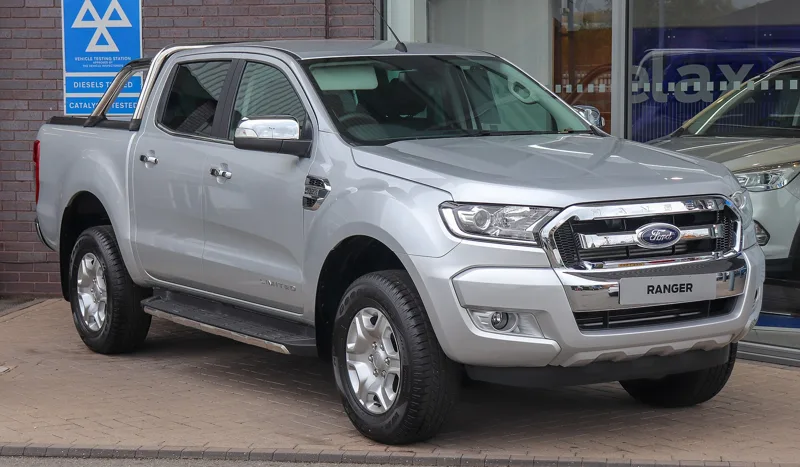
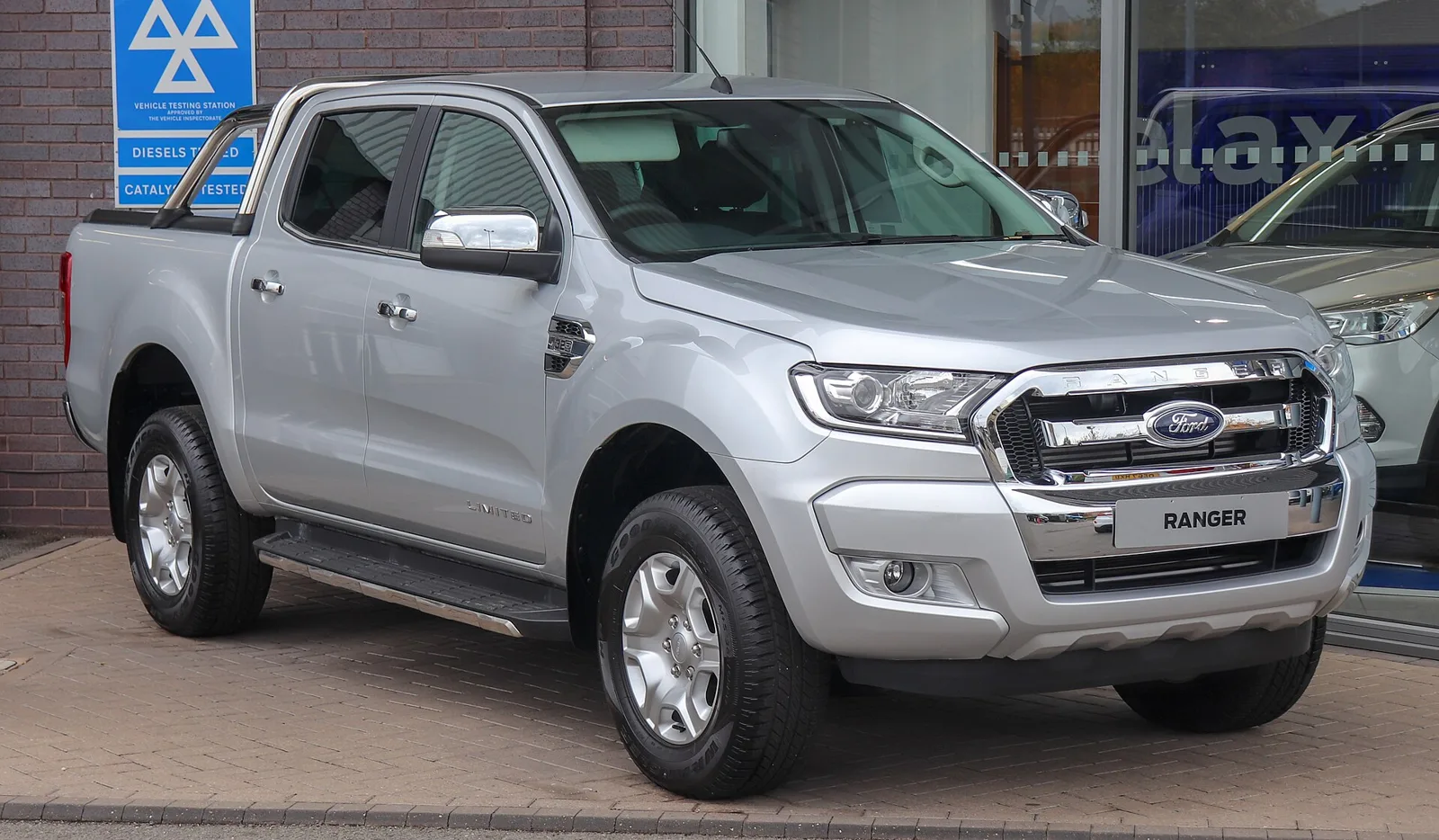
The Ford Ranger (T6) is a mid-size pick-up built by Ford since 2011. Ford Australia designed and engineered it, and the result brought the company's worldwide Ranger production into a single range, replacing both the 1998 to 2012 Ranger of the Americas and the Mazda-derived truck that carried the Ranger name across Asia-Pacific and Europe. It sits on Ford's body-on-frame T6 platform, which also underpins the Bronco and the Everest. Mazda's BT-50 from 2011 to 2019 and the current Volkswagen Amarok are rebadged versions.
Ford showed the first-generation Ranger in Sydney, at the Australian International Motor Show, in October 2010, and production started in mid-2011. Ford codenamed it P375, though Australians know it as the PX. It comes as a single cab, an extended cab and a crew cab, and as a chassis cab that effectively replaced the Falcon cab-chassis in Australia. Hi-Rider versions, Wildtrak included, can wade through 800 mm (31 in) of water, while standard-height trucks manage 600 mm (24 in). The T6 is rated to tow 3,500 kg (7,700 lb), and with the 2.2-litre Duratorq diesel its payload is 1,333 kg (2,939 lb).
Production was spread across the world from the start: Rayong in Thailand, Argentina and South Africa, with kit assembly in Nigeria and Vietnam. In 2015 the PX received a mid-life redesign, with an oval grille and a fully overhauled interior, and in 2019 came a new front suspension, a new SYNC 3-based infotainment system and the option to order the XLT and Wildtrak with the 2.0-litre engine from the Raptor.
The Ranger was designed in Australia, the HiLux has sold 17.7 million units, and their rivals share parts.
Wildtrak, Raptor and the equipment that matters
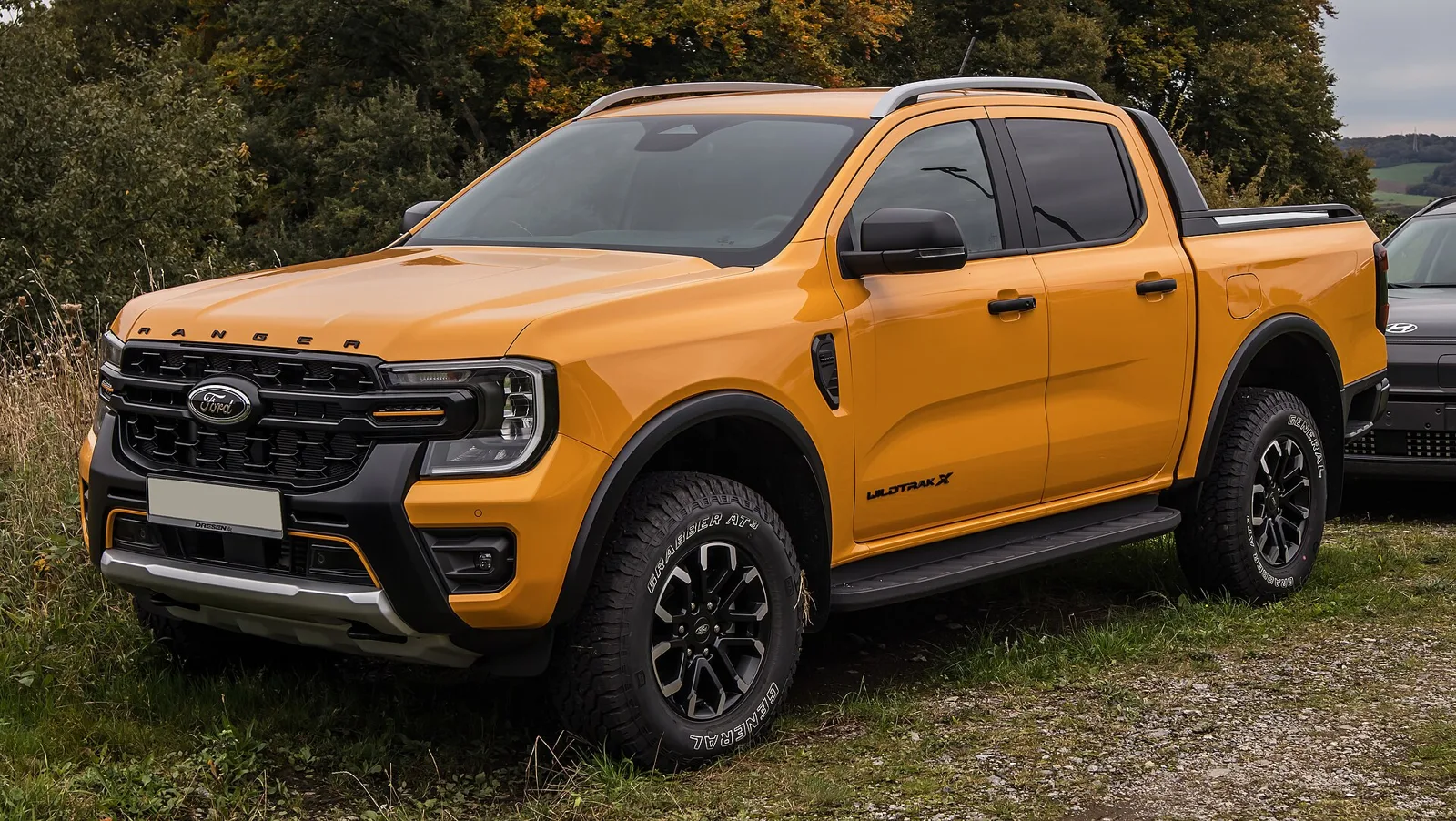
Ford offers the Ranger in XL, XLS and XLT grades. Four-wheel-drive versions add Sport, FX4, Wildtrak and Wildtrak X. The Wildtrak began as a special edition in markets that include Australia and the UK, with a 3.2-litre Duratorq diesel, a dark grey grille, 18-inch wheels and a colour exclusive to the trim, Pride Orange.
The Raptor arrived in Thailand in February 2018. It introduced a twin-turbo 2.0-litre EcoBlue diesel making 210 hp to the Ranger, paired with a 10-speed automatic, and standard four-wheel drive with an upgraded chassis and suspension. Ford kept it out of North America, saying it was built for places that never get the F-150 Raptor.
Safety matters in this class. The first-generation Ranger has six airbags, seven in Europe, with anti-lock brakes and emergency brake assist. In Australia the XLT and Wildtrak could be ordered with a Tech Pack that added adaptive cruise control, automatic high beams, lane departure warning and a lane keeping aid, using a windscreen camera and a radar in the grille. In January 2021 What Car? named the Ranger Double Cab 2.0 EcoBlue 213 Wildtrak automatic its Pick-up of the Year, with five stars out of five.
The second-generation Ranger
The second generation, codenamed P703 and known as the RA in Australia, debuted in November 2021. Ford Australia still led development, with heavy input from the company's Asian, North American, African and European arms. Thailand and South Africa began building it in the second quarter of 2022, supplying over 100 markets worldwide.
Ford calls it the T6.2, because it is not completely reengineered. The basic body shapes and dimensions, the door and glass apertures and most chassis hardpoints carry over, along with many engine and transmission choices. In countries where Ford does not market the F-Series, the Ranger is the largest pick-up it sells, and there it is also offered as the off-road Raptor and, since 2025, as the Super Duty with its high payload.
The Ranger in North America
The T6 Ranger skipped the United States and Canada at first. When it launched in 2011, Ford was putting its effort into improving the fuel economy of its F-Series trucks, and falling sales of compact and mid-size pick-ups had already killed off the old Ranger and the Explorer Sport Trac. Changing demand in the mid-2010s brought it back for the 2019 model year, unveiled in Detroit in 2018, with production starting on 29 October 2018.
That version needed boxed frame rails and a sturdier steel bumper to meet American crash rules, and it comes with one engine, a 2.3-litre EcoBoost four-cylinder and a 10-speed automatic. Ford did not bring the Wildtrak or the Raptor to North America. Where the F-Series is sold, the Ranger fits in size between the compact Maverick and the full-size F-150.
Toyota HiLux: 17.7 million trucks and a clever tax dodge
The Toyota HiLux began as the RN10 in March 1968. Hino Motors developed and built it at the Hamura plant, with a 1.5-litre four-cylinder engine making 57 kW (77 PS), enough for a claimed 130 km/h (81 mph) flat out. Toyota says the name is a portmanteau of "High Luxury", which sounds grand but only meant comfortable next to the spartan, heavy-duty Stout it sat beneath. A long-wheelbase version came in April 1969 and box vans followed in July 1970.
May 1972 brought the RN20, nicknamed the RokeHi, short for Rocket Hilux, with a more comfortable interior. Its 2.0-litre 18R engine could be paired with a three-speed automatic, though a period road test in South Africa recorded only 136.1 km/h (84.6 mph) from the automatic, despite a claimed 89 kW (119 hp).
The United States gave it a lesson in trade policy. From November 1971 trucks sold there left Japan as a cab chassis, and a bed was built locally and bolted on. This kept Toyota out of a 25 percent tariff on imported light trucks, the chicken tax, and cut its bill to 4 percent. Later the name changed: the HiLux became the "Pickup" in North America from the 1976 model year and the "Truck" from 1984, and in 1995 the Tacoma replaced it there, while the HiLux carried on in the rest of the world.
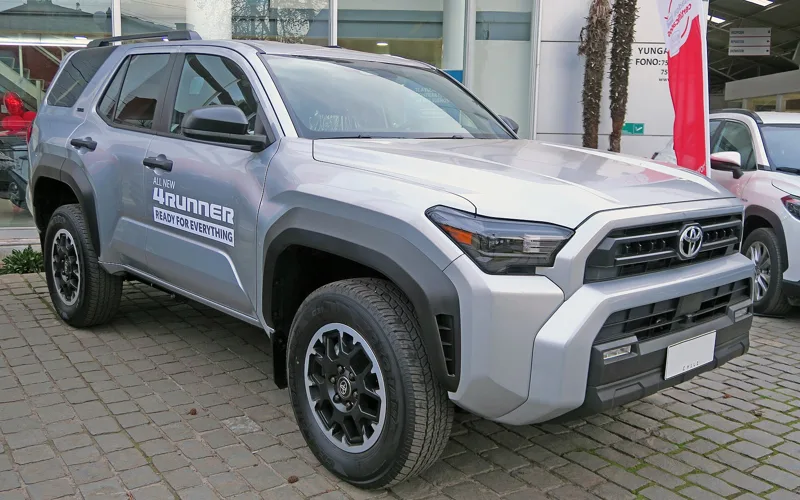
The 1978 redesign, which brought wider front and rear tracks and torsion bar front suspension, introduced a four-wheel-drive version in January 1979. Australia first received the 1.6-litre 12R in rear-drive models and a 2.0-litre 18R-C with 63 kW (86 PS) in four-wheel drive trucks, whose top speed was 130 km/h (81 mph). Diesel arrived on rear-drive trucks in September 1979, and double cabs from October 1981. The 1983 generation added the Xtracab, which left 150 mm (6 in) behind the seat for storage. Its short-wheelbase four-wheel-drive version also gave rise to the 4Runner, called the HiLux Surf in Japan.
Since the seventh generation of 2004, the HiLux has shared its ladder-frame IMV platform with the Fortuner SUV and the Innova people-mover.
Isuzu D-Max and the Holden connection
The Isuzu D-Max premiered in Thailand in 2002 as a successor to the Faster and KB. Australians first knew it under another badge. From 2003 to 2008 it was sold as the Holden Rodeo, then relaunched as the Holden Colorado after the split between GM and Isuzu cost GM the right to use the Rodeo name. In October 2008 the D-Max itself went on sale in Australia, alongside the almost identical Colorado. It was sold under the name Isuzu UTE Australia, separate from the company's truck business.
In Thailand, where the D-Max made its world premiere, Isuzu became the third maker to sell lifted two-wheel-drive pick-ups, after Toyota and Ford. A common-rail diesel family arrived in October 2004, starting with a 3.0-litre making 107 kW (146 PS). The European D-Max uses a 2.5-litre twin-turbo diesel with 120 kW (163 PS) and 400 Nm.
Colorado buyers could choose a 2.4-litre four-cylinder, the Australian-made 3.6-litre Alloytec V6 or a 3.0-litre Isuzu diesel. The RC Colorado gave way to the RG in June 2012.
The second-generation D-Max arrived in 2011 on a new Isuzu ladder-frame chassis called i-GRIP, which Isuzu said was 42% stronger than before. The wheelbase grew by 45 mm (1.8 in) to 3,095 mm (121.9 in) on all three body styles. Front suspension is independent double wishbone, the rear a leaf-spring arrangement above a long-span axle. A Terrain Command knob switches between two- and four-wheel drive. Electronic stability control, traction control, anti-lock brakes and electronic brakeforce distribution, which senses the payload and adjusts the rear braking, were all fitted. A 2015 facelift in Thailand brought a 1.9-litre turbodiesel in place of the 2.5-litre, and 2017 added Bi-LED projector headlamps.
Mazda BT-50: a rival with two sets of parents
The BT-50 has been through two partners. Launched in Bangkok in March 2006, the first shared Duratorq diesels with the Ranger. The second generation, revealed in October 2010 at the same Sydney show as the Ranger, was based on the Ranger T6. A Mazda team at Ford Australia's design centre in Melbourne styled it, though the two trucks have just three exterior panels in common: windscreen, roof and rear screen. Revised models followed in Australia in September 2015 and 2018, the latter adding Apple CarPlay and Android Auto.
The third generation, unveiled in Australia on 17 June 2020, changed sides. Following a tie-up announced on 11 July 2016, it is built on the third-generation D-Max at Isuzu's plant in Samrong, Thailand. An Isuzu executive told CarsGuide that Mazda had no part in the D-Max's development and would receive a finished truck. Mazda still made most of the body panels unique and used its Kodo design language. The 3.0-litre Isuzu diesel replaced the 3.2-litre five-cylinder Ford diesel.
It reached Australia in October 2020 in XT, XTR and GT trims as a single, extended or double cab. A 1.9-litre diesel and entry-level XS arrived in November 2021. Its adaptive cruise control reads the road with twin windscreen cameras rather than a grille radar, so owners can fit off-road accessories at the front.
| Ute | Platform shared with | Australian link |
|---|---|---|
| Ford Ranger (T6) | Bronco, Everest; rebadged as BT-50 (2011-2019) and Amarok | Designed and engineered by Ford Australia |
| Toyota HiLux | Fortuner and Innova (IMV platform, since 2004) | Australian four-wheel-drive models of the 1978 generation used a 63 kW 2.0-litre engine |
| Isuzu D-Max | Chevrolet Colorado (first and second generation); BT-50 (third generation) | Sold as the Holden Rodeo and Colorado; own brand from October 2008 |
| Mazda BT-50 | Ranger T6 (second generation); D-Max (third generation) | Third generation released in Australia October 2020 |
Where this goes next
The BT-50 was facelifted on 18 October 2024 with a grille similar to the Mazda CX-5, a 7-inch digital driver display and a 9-inch touchscreen. In March 2026 Mazda added Boss and Thunder variants in Australia, both with the 3.0-litre turbo diesel.