A 1932 letter, a Ford designer called Lew Bandt and a rivalry with Holden produced the vehicle Australians still reach for: church on Sunday, pigs on Monday.
The ute began in Australia when Ford Australia released the coupe utility in July 1934, after a farmer's wife asked for one vehicle for church and for taking pigs to market. Holden followed in 1951, and Ford and Holden built car-based utes until 2016 and 2017.
In 1932 a farmer's wife wrote to Ford Australia with a request that sounds like a joke: a car she could take to church on Sunday that could also haul the family's pigs to market on Monday. Ford's reply, delivered in July 1934, became the coupe utility, and then the ute. In 2023, 2024 and 2025 the best-selling new vehicle in the country was a ute.
What is a ute?
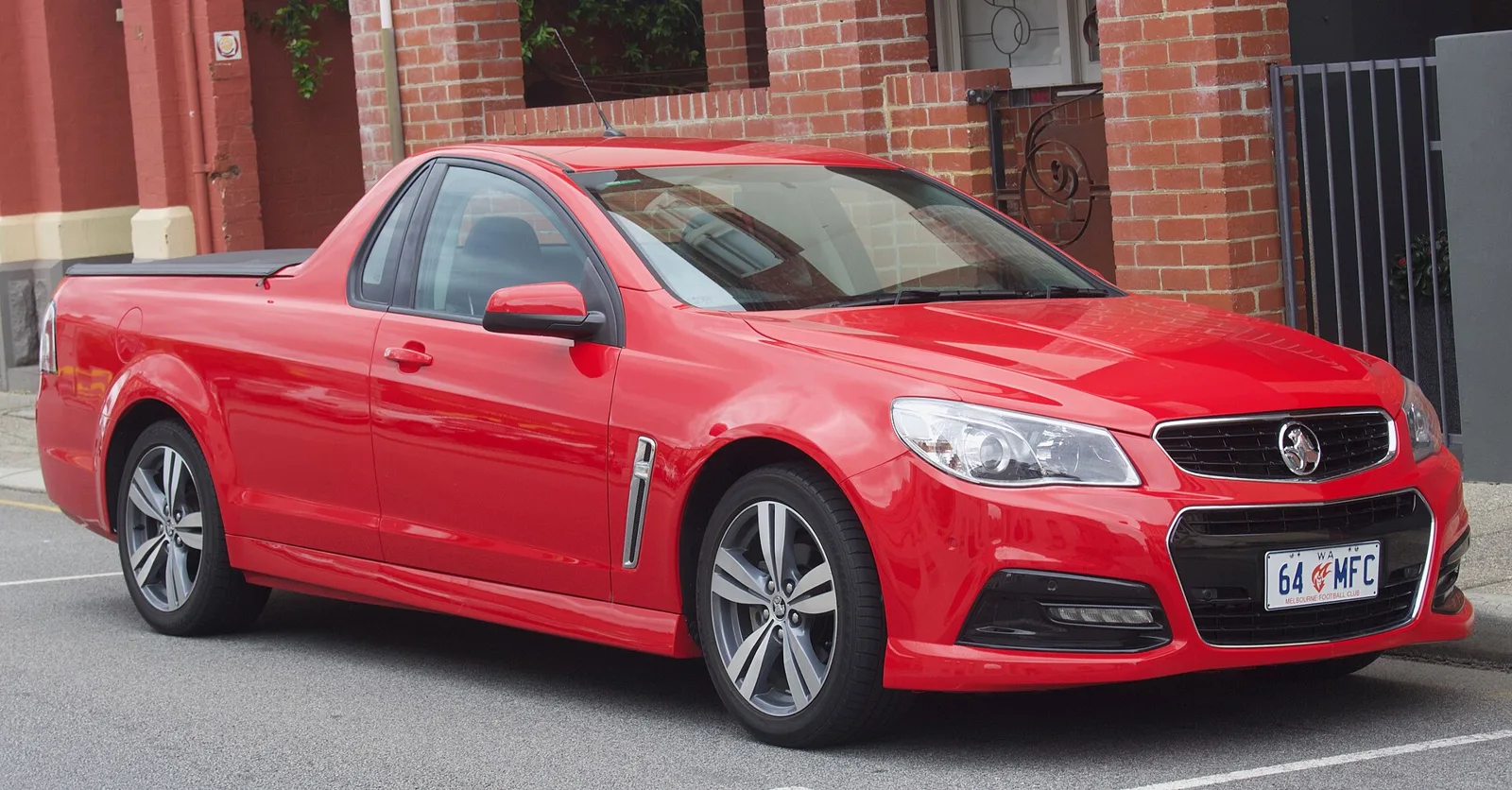
The word started as short for "utility" or "coupe utility". In Australia and New Zealand it describes a vehicle that has an open tray behind its cabin and needs only a regular driver's licence. Traditionally the term meant a car-based vehicle with the cargo tray built into the body, so that the front of the tray forms the rear wall of the cabin. Australian-made utes were rear-wheel drive and shared their chassis with a passenger sedan, unlike a pickup truck, whose tray is separate from the cab.
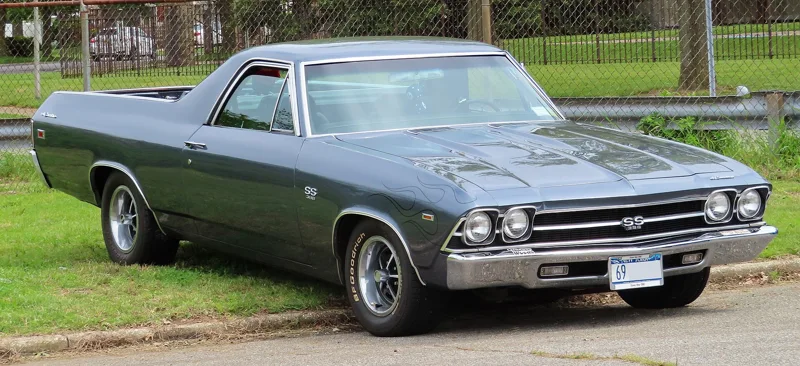
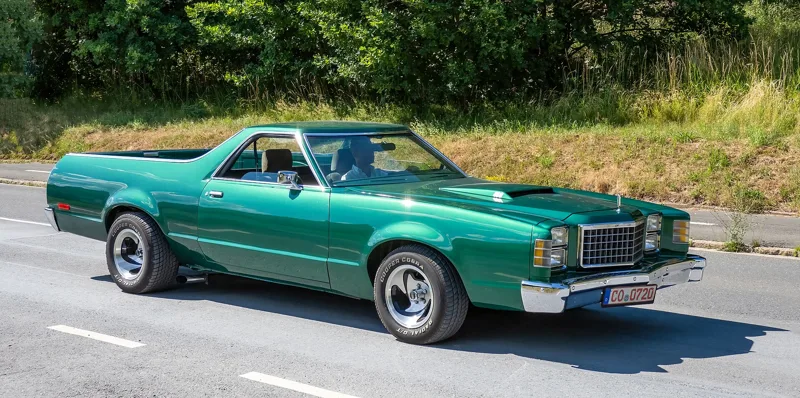
Modern speech is looser. In the twenty-first century "ute" covers any vehicle with a cargo area at the rear, which other countries would call a pickup truck. Cars that fit the original sense include the Subaru BRAT, Chevrolet El Camino, Ford Ranchero, the Australian Falcon and the Holden Commodore.
A farmer's wife wanted one vehicle for church on Sunday and pigs on Monday, and Australia got the ute.
Who invented the ute?
The popular answer is Ford Australia, and the story is well documented. After the 1932 letter, Ford designer Lew Bandt set to work in October 1933 with the draftsman A. Scott. Bandt took the cabin and roofline of the five-window V8 coupe from Ford, then lengthened the rear with a fixed panel on either side and a hinged tailgate to form a load area. The result went on sale in July 1934 as the coupe utility. When it was shown in the United States, Henry Ford is said to have nicknamed it the "Kangaroo Chaser".
Care is needed with the word "invented". Motoring historian Norm Darwin suggests the leap was not large, because roadster utility models had been made by various manufacturers as early as 1924, and the United States already had soft-top roadster utilities, also called roadster pickups, in the 1920s. Darwin also suggests other makers were working on the same idea at the same time, since General Motors-Holden answered in September 1934 with coupe utilities badged Bedford and Chevrolet, only two months after Ford's launch, using a three-window coupe roof. Others followed quickly. So the ute may not have had a single inventor, though Ford gets credit for the first Australian coupe ute.
How did the Holden ute join the story?
In 1951 Holden released a utility based on its 48-215 sedan. With both Ford and Holden now making them, Australia had the beginnings of a tradition: tray-backed two-door vehicles built on sedan underpinnings. The Holden Utility was catalogued with the 48-215 through HR ranges from 1951 to 1968, then with the Belmont and Kingswood from 1968 to 1984. In 1984 Holden dropped the ute, and it missed the VB to VL Commodores. It returned in 1990 on the VN Commodore chassis and stayed in the range until Australian production ended in 2017.
The Commodore explains why the Holden ute vanished for six years. When Holden developed the first Commodore, the VB of 1978, the Opel-based design needed so much re-engineering for harsh Australian roads that development costs reportedly rose to A$110 million. That left too little money for a wagon, and Holden also judged the Commodore's underpinnings a poor foundation for ute and long-wheelbase versions, so the VB was a sedan only. Utility and long-wheelbase versions arrived in 1990.
Ford and Holden were not alone. Chrysler joined them, and many smaller makers offered their own versions of popular models. If a car had no factory ute, a coachbuilder outside the factory could convert one to a buyer's order. Chrysler's Valiant utility ran from 1965 to 1979.
The Commodore line itself was a long-running Australian story. Sold from 1978 to 2020, it was built locally until 20 October 2017. The Holden Utility variant arrived in 1990 alongside long-wheelbase Statesman and Caprice models, and a new Holden Ute was launched in 2000, followed by the four-door Crewman utility in 2003. In 2000 the Commodore became the first Australian ute with independent rear suspension, while the Falcon ute kept a live axle until production ended in 2016.
Ford Falcon ute: the long rival
Ford had its own successor to the 1934 original. The Falcon ute ran from 1961 to 2016, introduced in May 1961 as the Falcon range grew beyond the first sedans and wagons. For its first 38 years it kept the coupe ute shape. With the 1999 AU Falcon, the cargo bed became separate from the cabin, while the Falcon front end and cabin remained, which allowed utility and cab-chassis versions to be made side by side.
The Falcon itself is part of the context. Ford Australia built the full-size Falcon from 1960 to 2016. From the 1972 XA series, each Falcon was designed, developed and built locally, after an American-influenced first decade in which the car was re-engineered for harsher conditions. Over 3 million Falcons and derivatives were made over seven generations. The Falcon once dominated fleets of taxis and police cars in Australia and New Zealand. Ford announced the end of local production in May 2013, and the final Falcon, a blue XR6, rolled off the line on 7 October 2016.
Ford's choice of the Falcon was a response to Holden. During the 1950s Ford's Australian sales faltered because Holden had no effective competitor and imported parts carried a tariff. On a visit to Detroit in 1958, Ford Australia's executives saw the Falcon being prepared for its US launch: about Holden's size but low, long, wide and modern. The Broadmeadows plant was built in 1959 for it, to a Canadian design with a roof meant for snow, which suits Melbourne's heavy hail.
The first Falcon, the XK of September 1960, was essentially a right-hand drive American car, and complaints about durability on rough outback roads followed. Collapsing front ball joints earned it the nicknames "foul can" and "fault can". The XM of 1964 brought the first Falcon body designed in Australia, and the XP of 1965 was the make-or-break model. Ford's deputy managing director Bill Bourke proved its strength by driving a fleet of XP Falcons around the You-Yangs testing grounds for 70,000 miles (110,000 km) at over 70 mph (110 km/h), and the car took Wheels magazine's Car of the Year. The XR of 1966 added the first Falcon V8, the 289 cubic inch (4.7 litre) Windsor.
How do the Ford and Holden utes compare?
| Feature | Ford | Holden |
|---|---|---|
| Early coupe utility | Released July 1934 | Bedford and Chevrolet coupe utilities, September 1934; Holden Utility from 1951 |
| Ute years | Falcon ute 1961 to 2016 | Commodore-based ute 1990 to 2017 |
| Rear suspension | Live axle to the end | Independent from 2000 |
| Performance ute | FPV F6 | HSV Maloo |
| Local production ended | 2016 | 20 October 2017 |
Did the idea spread overseas?
The idea did spread, with Americans arriving late. Ford released the Ranchero in 1957, built on a two-door station wagon and sold through the 1979 model year, with 508,355 made in total. Chevrolet followed in 1959 with the El Camino, based on the two-door Brookwood wagon. Dodge built the Rampage from 1982 to 1984, the first American-brand pickup with front-wheel drive. In North America such cars are classed as light trucks, though the El Camino shared its body and chassis with Chevrolet car lines.
Elsewhere the idea took different forms. Utes have been built in Brazil since the 1970s, usually from hatchbacks, with the Chevrolet Montana, Volkswagen Saveiro and Fiat Strada as current examples. In South Africa, where the word is "bakkie", Australian Kingswood, Falcon and Valiant utes arrived under different names: Valiant Rustler, Ford Ranchero and Chevrolet El Camino.
Why did Australians love the ute?
Because it did two jobs. The farmer's wife stated the case in 1932, and the combination of work vehicle and family transport held through the decades. The ute became ubiquitous in rural areas, and Australians built a culture around it, with events called ute musters and a custom look called the "B&S style". Owners fit bullbars and spotlights, oversized mudflaps, flaps over the exhaust pipe and UHF aerials. Deniliquin has hosted the Deni Ute Muster since 1999, and the event is now a major draw for the area.
Performance utes joined the scene too. The FPV F6 and the HSV Maloo were sold in Australia, and the 2017 HSV GTSR Maloo has a 6.2 L (378 cu in) supercharged V8 making 435 kW (583 hp). The Australian V8 Utes series races lightly modified production Holden and Ford utes.
The Falcon family brought performance of its own. The Falcon GT of 1967, with a Mustang-sourced V8, is regarded as the start of the Australian muscle car, and the GT-HO of August 1969 was a homologation special built for racing, its letters standing for Handling Option.
What does the ute look like now that local production has ended?
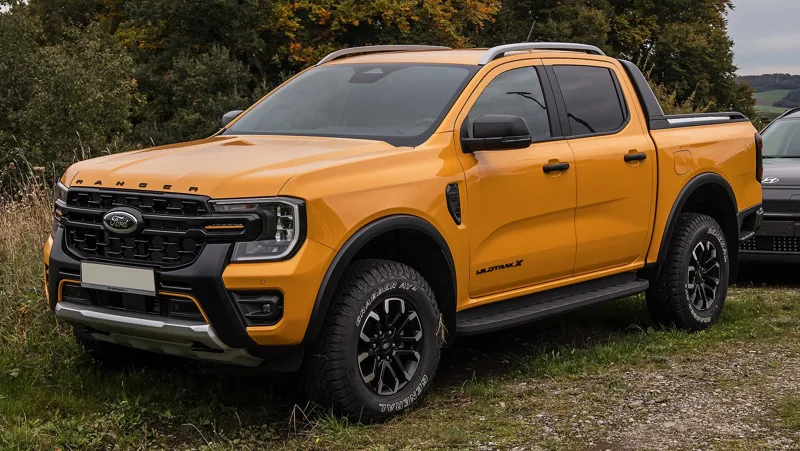
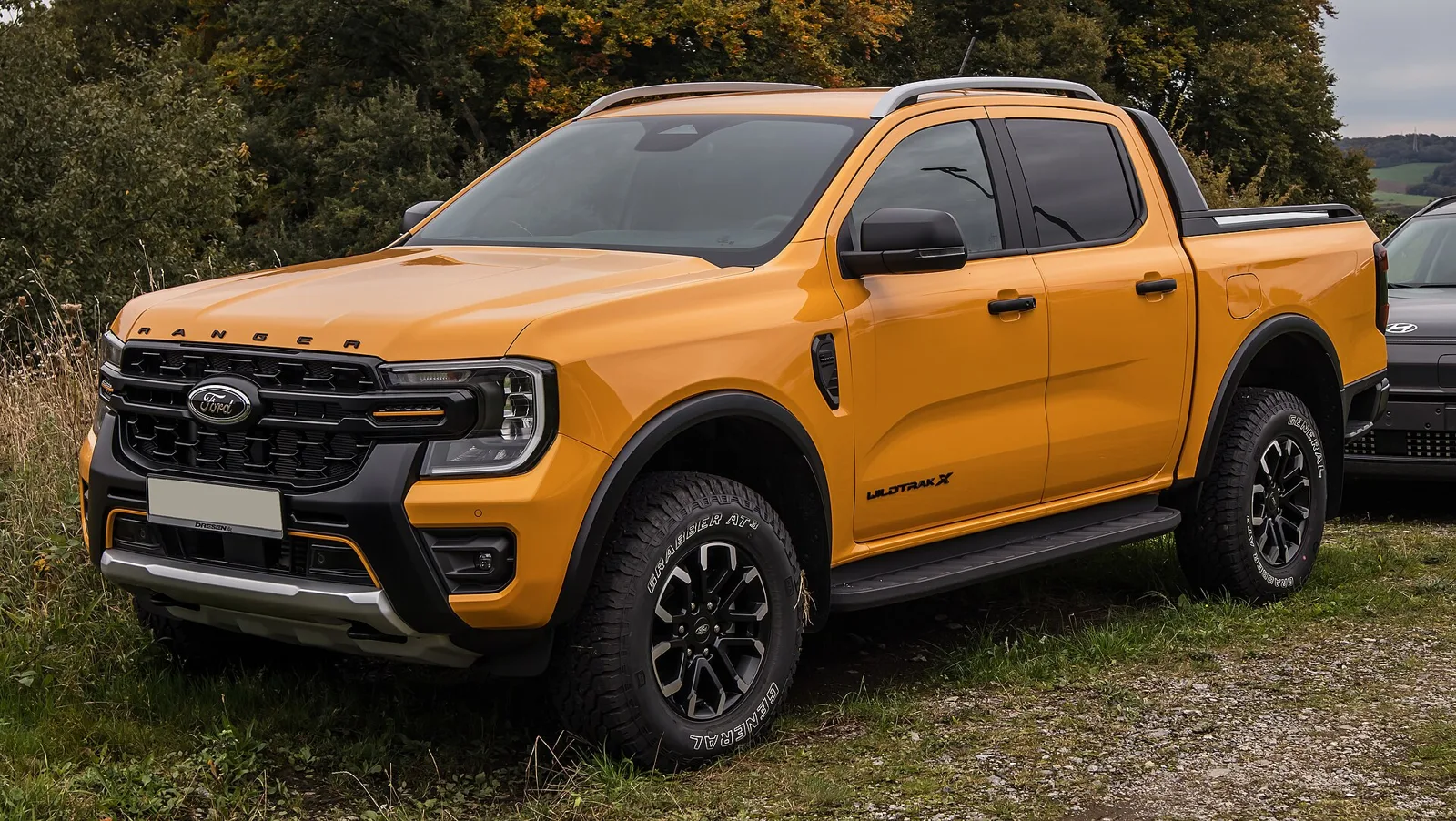
The ute has outlived the factories. Ford Australia designed and engineered the Ranger (T6), though it is built elsewhere, and the Ranger topped Australian new-car sales in 2023, 2024 and 2025. Mitsubishi's Triton, on sale since 1978, ranked fifth among all new cars in 2019. In 2011 the Toyota Hilux was the highest-selling ute. The Mazda BT-50 has been on sale since 2006, the Nissan Navara since 1985, the Volkswagen Amarok since 2010, and the Isuzu D-Max sells where the Holden Rodeo once did. Kia has produced the mid-size Tasman ute since 2025.
Holden's tradition continued for a time through imports: the Holden Rodeo from 1980 to 2008, a rebadged Isuzu, and the Colorado from 2008 to 2020, a rebadged Chevrolet built in Thailand. Mercedes-Benz sold the X-Class on a Nissan Navara chassis between 2017 and 2020.
What about American pickups in Australia?
Ford, Ram and Chevrolet export full-size and heavy duty pickups to Australia, where local remanufacturers convert them to right-hand drive. Owners can have them de-rated to a maximum gross vehicle mass of 4.5 tonnes so they can be driven on a regular car licence instead of a truck licence.
Many American pickups weigh more than 3.5t, which puts them in the Medium Goods (NB) category. That category must meet ADR 80/04, derived from Euro VI, instead of the ADR 79/05 rule derived from Euro 6.
What does this mean if you want a ute?
The choice is now between imports. Buyers can pick from the Hilux, Ranger, Triton, Navara, D-Max, BT-50 and Amarok, and since 2025 the Kia Tasman. The traditional car-based style ended with the Holden Commodore VF ute in 2017, closing a tradition that began with Ford in 1934. Tray choice still matters: in New Zealand a wellside tray, a moulded tub with fixed sides, is favoured for in-city work, while a flat-bed with removable sides, often fitted by dealers rather than the factory, suits rural use.
Where this goes next
The Greens in Victoria have called for higher registration fees on American-sized pickups, to deter people from buying them. They cite concerns about road and parking infrastructure, the safety of other road users in crashes and the lower emissions standards for heavy vehicles.
One export plan went nowhere. In 2008 the VE Commodore ute was proposed for North America as the Pontiac G8 ST, and a rebadged Holden Ute was shown in New York in March 2008, planned for a third-quarter 2009 release. At least one prototype was built, yet GM held back, citing budget cuts, the 2008 financial crisis and Pontiac's near bankruptcy.