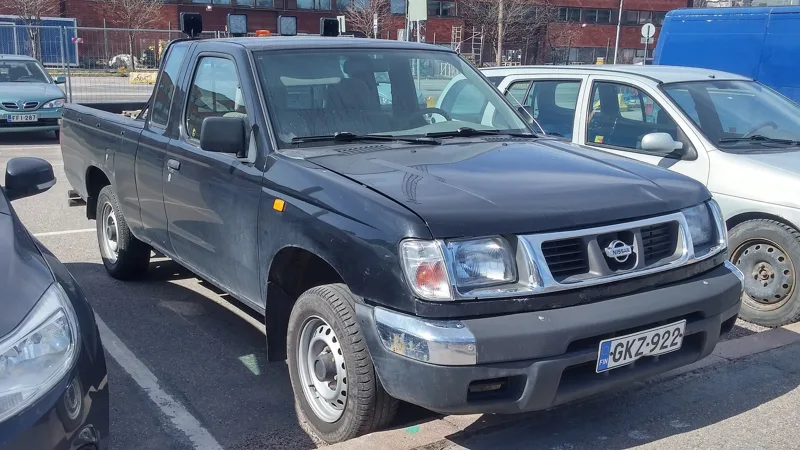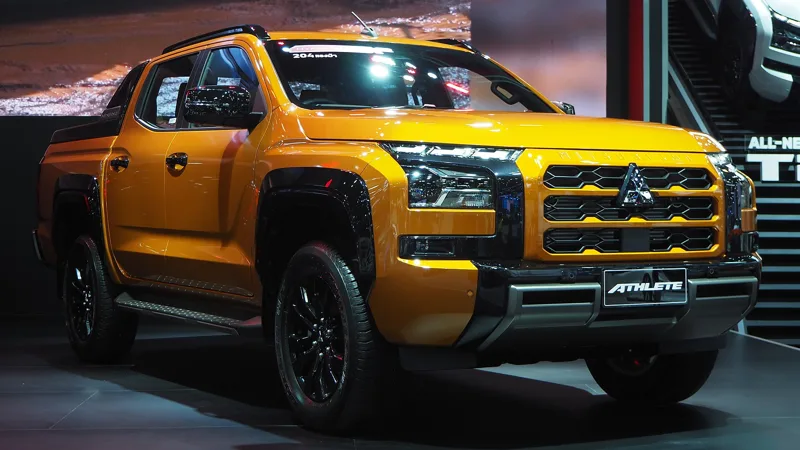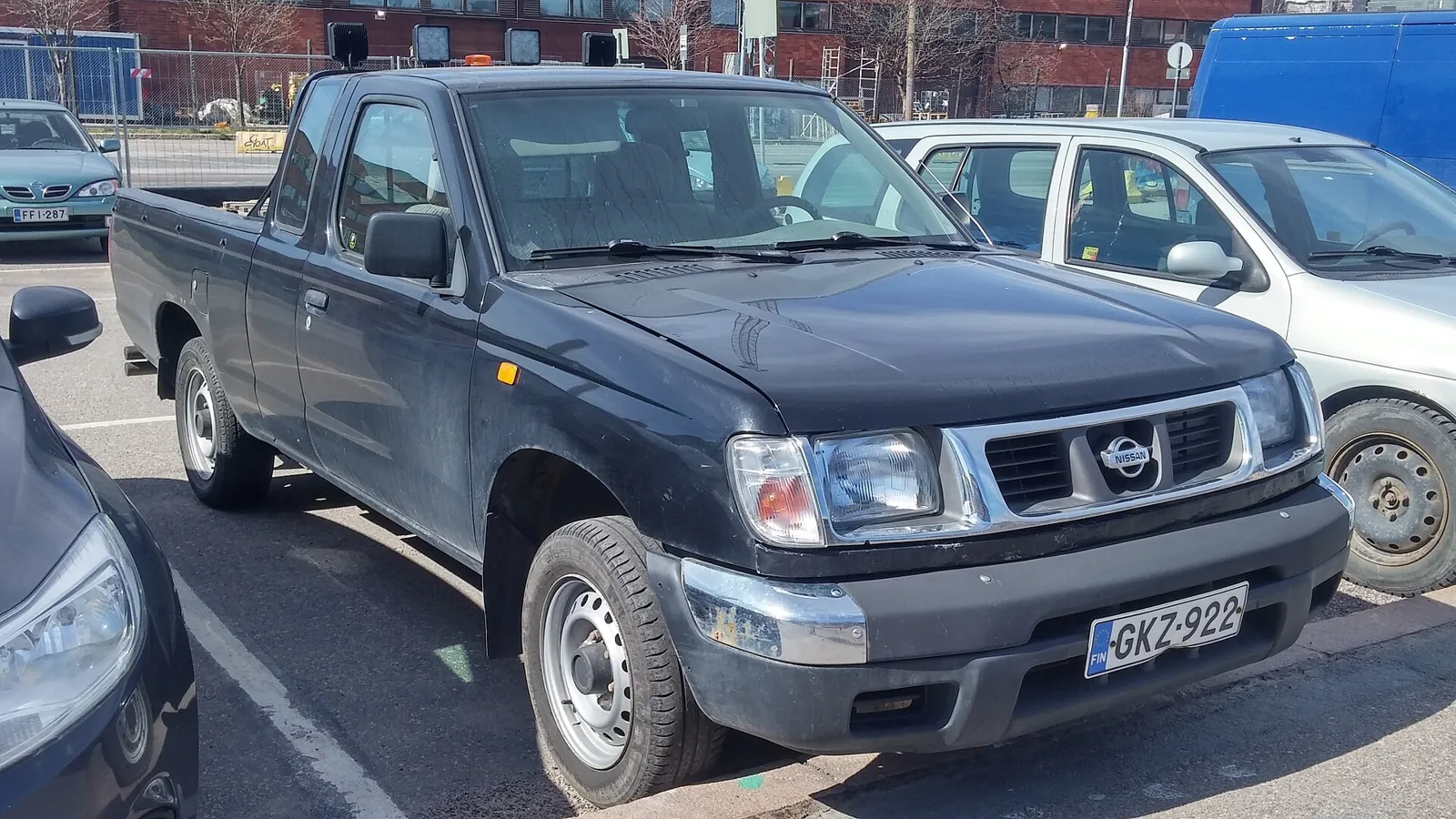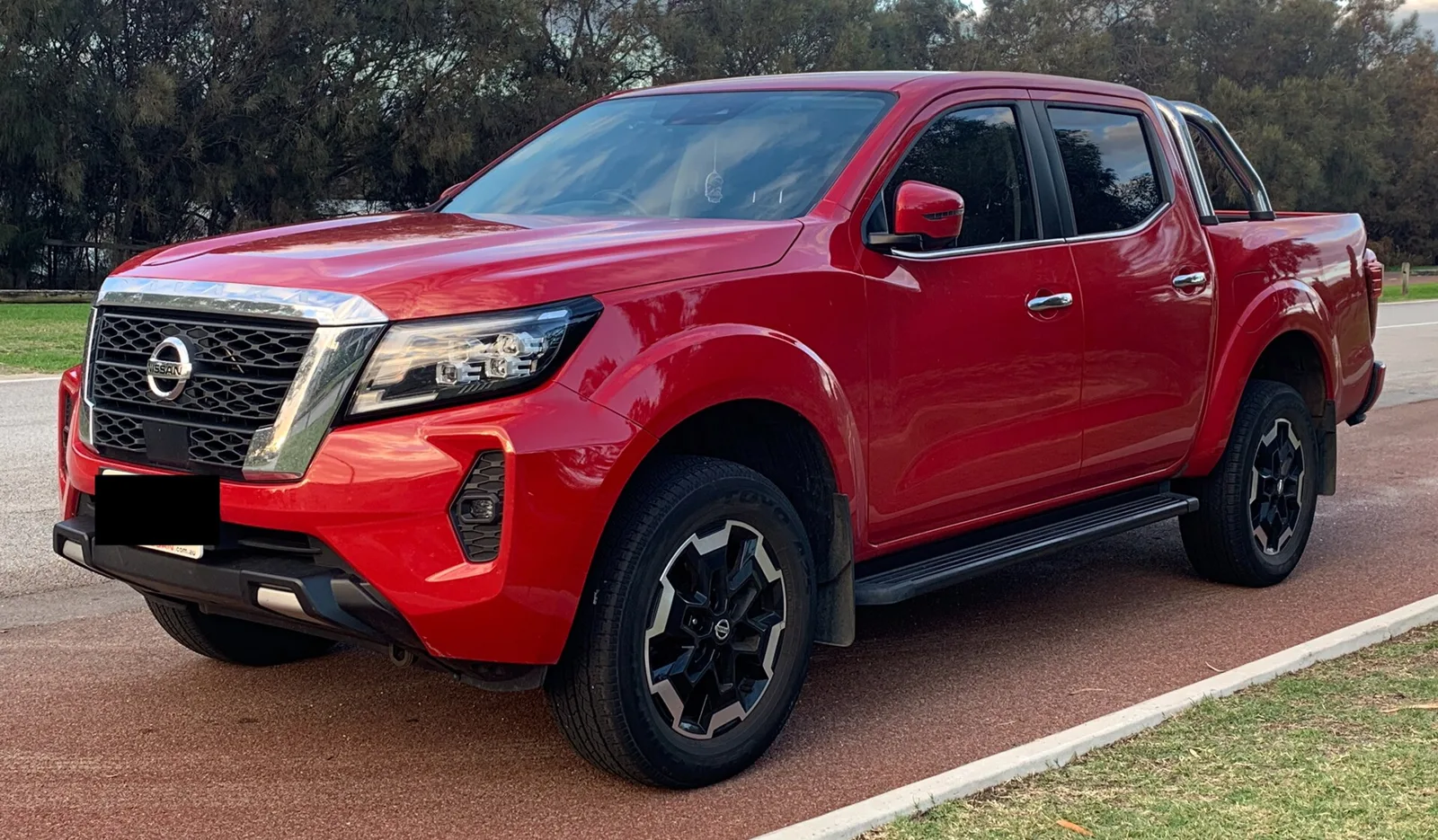
A pickup nameplate used from the D21 of 1985 to the D27 of 2025, with Frontier and NP300 versions across the Americas and Asia.
The Nissan Navara is a pickup nameplate that began with the D21 in 1985. It has since passed through the D22, D40, D23 and D27, and it appears as Frontier or NP300 in several regions.
The Nissan Navara is a nameplate for pickups that Nissan has sold since the D21 of 1985. It has worn different names on different continents, from Frontier and NP300 to Pick Up, and the latest model, the D27, was revealed in Australia in November 2025.
Where does the Navara name come from?
The name comes from the Navarre region of northern Spain, which fitted the nameplate's European heritage. In most of the Americas the same trucks sold under Frontier or NP300 badges, and the name shifted again in several Asian and African markets.
The D21 had succeeded the Datsun 720, which Japan knew as the Nissan Datsun Truck. Its name Navara was used in Australia and New Zealand, where it sold alongside the Frontier-badged versions of other markets.
A pickup that changed names across continents and still earns its place in local rally and off-road history.
How did the D21 and D22 differ?
The D21 was unusual for its time because it was available worldwide in two body styles. The A-body, designed in Japan, came as a single or dual cab, while the S-body King Cab was designed at Nissan's studios in San Diego, with a different bonnet and wider front guards.
More than ten years after the D21 came the D22, a compact pickup that Nissan still builds as a cheaper alternative to the D40 in many markets. Design was first planned for Nissan Design International in La Jolla before being handed to Japan in 1994 and 1995.
When did the D22 reach North America?
United States production began at Smyrna, Tennessee in 1997 with two-door regular and King Cab models. A four-door Crew Cab was first produced in April 1999 and launched as the 2000 Frontier Crew Cab in May 1999.
The facelifted D22 appeared at the Chicago Auto Show in February 2000 for the 2001 model year. It had bolder styling aimed at younger buyers, a new grille, bumper and lights, and built-in fender flares and tailgates.
How did D22 production spread across markets?
Egypt exported to the Middle East and South Africa exported to African markets. Mexico started building the D22 in 2008, offering a single-cab chassis and a crew-cab Pickup, while Brazil started production around 2002 and sent cars to Argentina.
In Chile the model was marketed as the Nissan Terrano, a name that had been used on the WD21 SUV. It was sold from 1998 to 2014, and the national automobile association said it was the most sold automobile in Chile in 2010.
Japan dropped the D22 after 2002. Taxation rules and falling demand for pickups left it with no successor in its home market.
What engines did the D22 use?
The first D22 had a KA24DE four-cylinder, and the VG33E V6 joined in 1999. A 3.0-litre V6 arrived in June 2000, and a supercharged 3.3-litre V6 came with the 2001 facelift, which turned out to be the strongest petrol option.
Early Australian cars used the QD32 3.2-litre normally aspirated diesel with 75 kW, alongside a 2.0-litre petrol SOHC unit. The ZD30 diesel arrived with series 2 in 2001, and the car kept its 2.5-litre turbo-diesel as the only engine by 2005.
Australian buyers found the ZD30-powered D22s fairly reliable, which was not always true of the Patrol models sold alongside them.
In Chile, 2012 brought a switch to common rail injection from Mexican-built cars, while the 3.0-litre and 3.2-litre diesels were dropped at the same time.
What did the D40 bring in 2004?
The D40 appeared at the 2004 North American International Auto Show on the new F-Alpha platform, and its body styling resembled that of the full-size Titan. It used a fully boxed ladder frame with a 125.9-inch wheelbase and an overall length of 205.5 inches (5.22 m).
The standard North American engine was the 4.0-litre VQ-family V6, the VQ40DE, which produced 261 hp (195 kW) and 281 lb-ft (381 N-m). The QR25DE four-cylinder, also found in the Altima, offered 152 hp (113 kW) and 171 lb-ft (232 N-m).
A six-speed manual was standard with a five-speed automatic optional, and towing capacity was rated at 6,500 lb (2,950 kg). Both rear-wheel drive and four-wheel drive were available.
How did the D40 sell in Europe and Australia?
In Europe the car was sold as the Navara, with a 2.5-litre YD25DDTi diesel producing either 142 hp (106 kW) or 172 hp (128 kW). The stronger version had 403 N-m (297 lb-ft) of torque, and the trim line-up ran from S and SE to Outlaw and Aventura.
In Australia, New Zealand, South Africa and South America the D40 had a 2.5-litre turbo-diesel in mid and high power, along with a 4.0-litre V6 petrol making 198 kW (266 hp) and 385 N-m (284 lb-ft). Five-speed automatics were standard.
Thailand started its single cab in March 2008, and the Malaysian double cab followed in November 2008 with a 128 kW diesel. Nissan Thailand introduced the Navara Calibre later that year with a 144 PS engine.
The 2008 Thai single cab had 15-inch wheels and standard power steering, with electric mirrors and central locking as options. Its 2.5-litre engine's torque fell from 356 to 294 N-m, and Nissan kept selling the D22 alongside it as the Frontier LCV at a lower price.
What changed in the D40 facelifts?
For North American Frontiers in 2009 and European Navaras in 2010, Nissan updated the shape of several minor components. The 2010 Navara facelift introduced a 3.0-litre V9X V6 turbodiesel, rated at 240 hp (179 kW), and its torque reached 500 N-m (369 lb-ft) at 2,500 rpm.
The revised 2.5-litre YD25DDTi High Power unit produced 190 PS (140 kW) and 450 N-m (332 lb-ft). The front end became rounder, the bumper projected 80 mm further forward, and six-spoke 17-inch alloys were standard.
The facelifted diesel gained stability control, which Nissan called Vehicle Dynamics Control, and every petrol V6 and diesel variant received side-impact and side-curtain airbags to complement the dual front airbags.
How did the Frontier change in 2020?
For the 2020 model year, the Frontier received a 3.8-litre V6 rated at 310 hp (231 kW), paired with a nine-speed automatic. The manual transmission was discontinued, though a six-speed remained in Canada on the Pro-4X.
The line-up was reshuffled, with the King Cab offering rear-wheel and four-wheel drive on the S and SV, the Crew Cab extending both to the SV short and long beds, and the Pro-4X becoming four-wheel drive only. Power windows and locks became standard on every trim.
Why did the D23 replace the D40 outside North America?
On 11 June 2014 Nissan unveiled the third-generation Navara, codenamed D23 and sold as the NP300 Navara. Series production began in July 2014 at a new $360 million plant in Samut Prakan, Thailand, and deliveries started in August.
The D23 was not offered in the United States or Canada, where the larger D41 Frontier replaced the D40. The European model used a 2.3-litre engine from the Nissan NV400, while the D40 stayed in production only with its V6 and automatic.
The Navara added Nissan Intelligent Mobility technology for the 2018 model year, including an Around View Monitor and blind-spot monitoring. In 2019 Premcar produced an off-road focused N-Trek Warrior version.
What did the 2020 D23 facelift bring?
Nissan unveiled the facelifted D23 on 5 November 2020, along with the Pro-4X trim level. The engines stayed the same, but more active safety equipment was added, and the facelifted model reached Australia in the first quarter of 2021.
The pre-facelift model had been made at Barcelona for European markets until 16 December 2021, when the plant shut down. Nissan began building the facelifted Frontier in Argentina in March 2022, where 34% of its parts were made locally and 65% of output was exported.
What spin-offs came from the Navara platform?
The Renault Alaskan pickup was built on the Navara platform and went on sale in Colombia from October 2016 and across Europe in 2017. Its production ran in Santa Isabel, Argentina, from October 2020 until 9 October 2025.
Mercedes-Benz revealed two X-Class concept pickups on 25 October 2016, based on the D23 platform. Production was planned for Barcelona and Cordoba, but the Cordoba plan was cancelled after a disagreement over costs, and the model was discontinued in 2020 because of poor sales.
The Dongfeng Rich 6 arrived in October 2018 as a more premium pickup under the Dongfeng brand. It had a redesigned front end, which added 35 mm of length, with the rest of the body shared with the Navara.
What is the D27 Navara?
Australia and New Zealand saw the D27 revealed on 19 November 2025. It was developed from the sixth-generation Mitsubishi Triton and is built by Mitsubishi Motors.
It uses Mitsubishi's 4N16 2.4-litre turbo-diesel, producing 150 kW (201 hp; 204 PS) and 470 N-m (347 lb-ft). It comes only with an automatic transmission and four-wheel drive, and Australian cars carry locally tuned shock absorbers from Premcar.
The D27 will sell alongside the Navara Pro, which is due to reach Australia in 2027.
Specifications across the generations
| Generation | Launch | Engine | Notable figures |
|---|---|---|---|
| D21 | 1985 | Datsun 720 successor | Two body styles worldwide |
| D22 | 1997 | KA24DE four-cylinder, VG33E V6 | Crew Cab from 1999 |
| D40 | 2004 | VQ40DE V6, YD25DDTi diesel | 261 hp (195 kW), towing 6,500 lb (2,950 kg) |
| D23 (NP300) | 2014 | Four-cylinder, 2.3-litre in Europe | Built in Samut Prakan, Thailand |
| D27 | 2025 | Mitsubishi 4N16 2.4-litre turbo-diesel | 150 kW (201 hp; 204 PS), 470 N-m (347 lb-ft) |
How has the Navara done in competition?
The D40 Frontier platform became a Stage Rally car for the NISMO Stuff Racing team in the Coupe Rallye Quebec series. The team ran the car for more than two years with eight stage rallies and two hill climbs, without a mechanical failure.
In South Africa, Nissan campaigned the D22 and D40 in the local ABSA Off-Road Series and won eight consecutive driver's championships from 2001 to 2008. Hallspeed prepared those cars, and Belgium-based Overdrive later raced Hallspeed-built vehicles in the European rally raid series, including the Dakar.
Did the Navara earn safety ratings?
The D40 was tested by Euro NCAP alongside the Mitsubishi Triton and Isuzu D-Max. It first scored one star with a strikeout, then went to three stars after a software upgrade fixed delayed airbag deployment and inadequate seatbelt restraint.
Later results were stronger. The Latin American 2019 Frontier with two airbags earned four stars for adults and four for infants from Latin NCAP 2.0, while the African NP300 scored zero stars for adults in a Global NCAP 2018 test.
What names has the Navara carried?
The truck appeared under many names: Frontier in the United States, Canada and much of South America, Navara in Europe and Australasia, and NP300 in Mexico and parts of Europe. In Chile it was the Terrano, and in Thailand the Big M Frontier.
Rebadged versions included the Dongfeng Rich, the Bhamo Pickup in Myanmar, the Giad Pickup in Sudan and the Peugeot Pick-Up sold in Africa from 2017 with a 115 PS engine and an 815 kg payload.