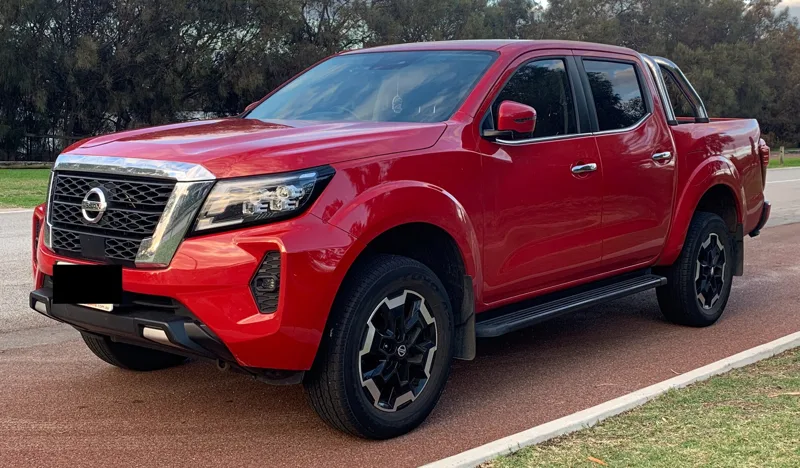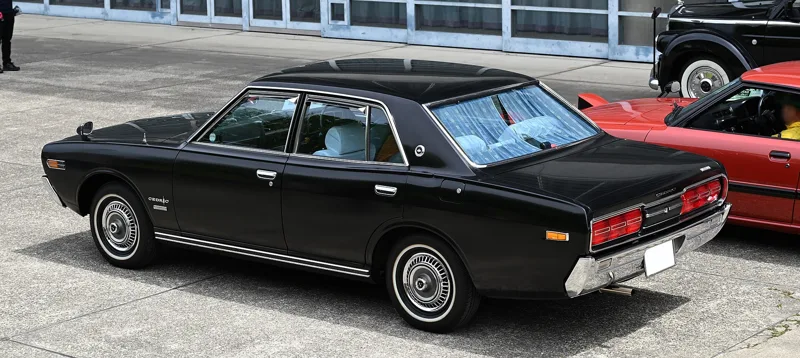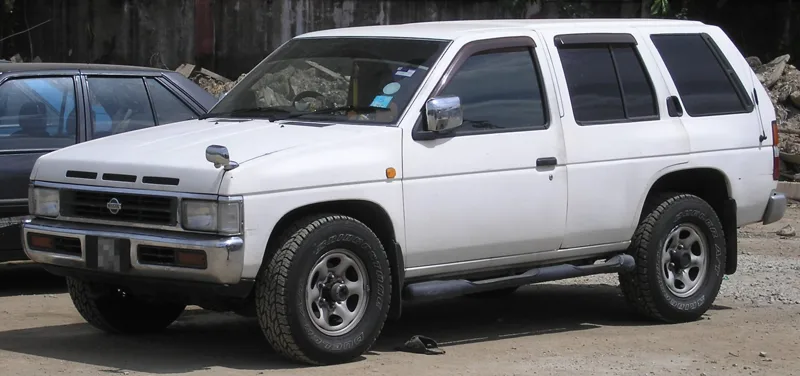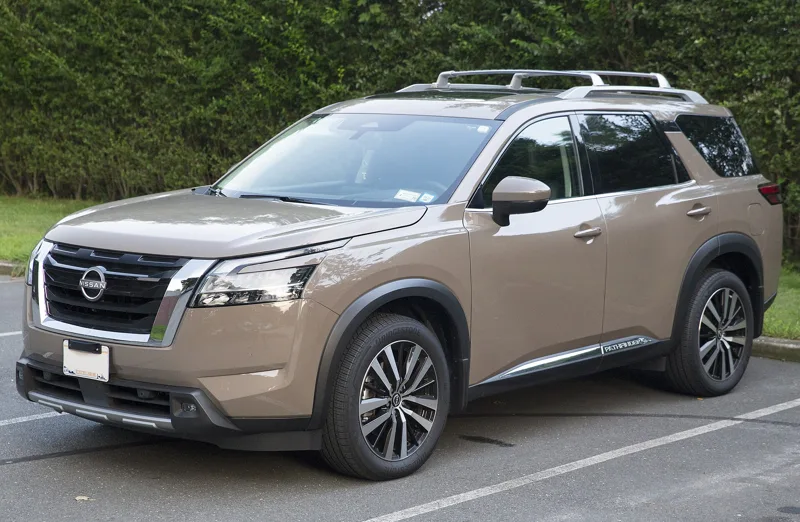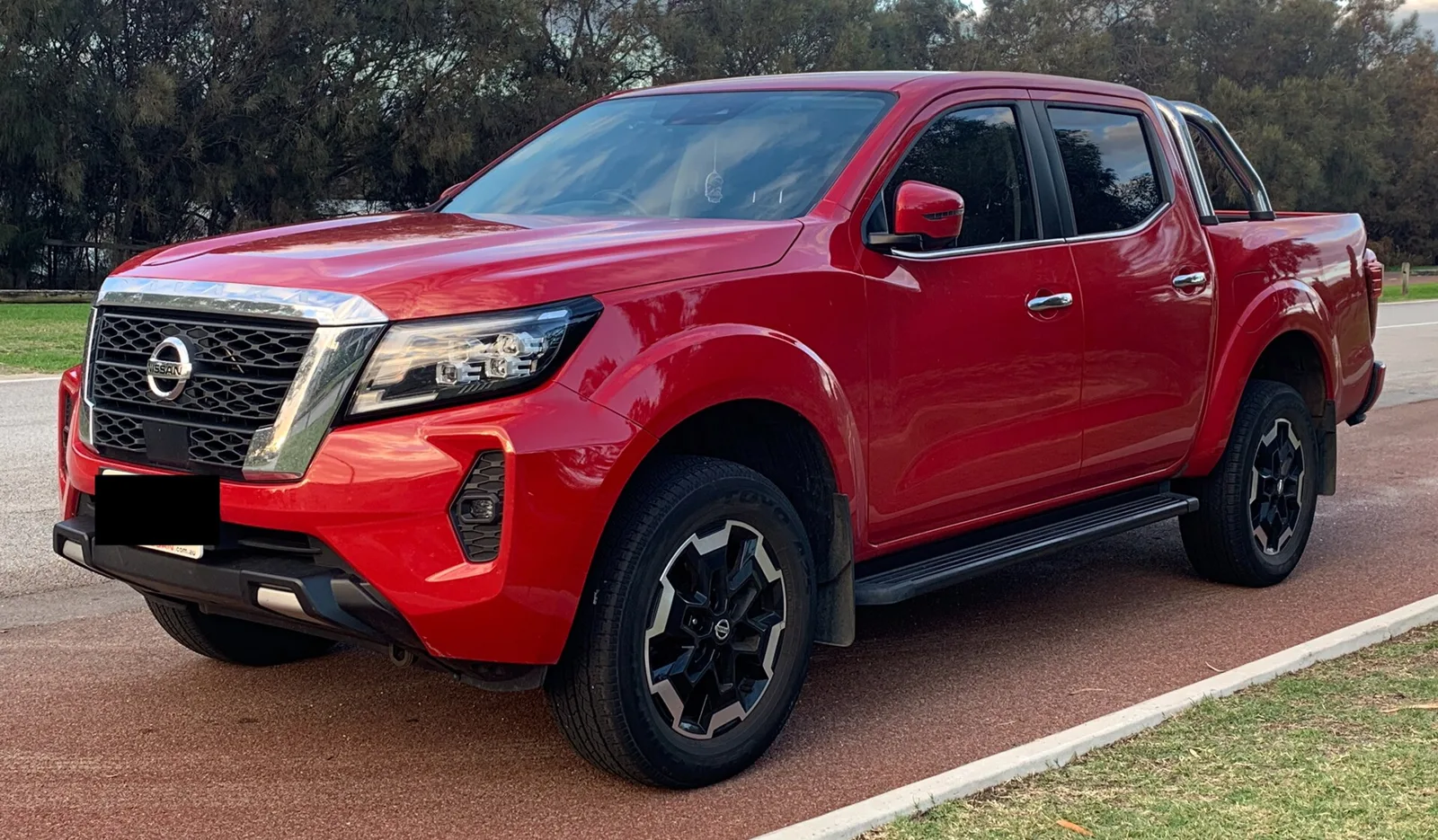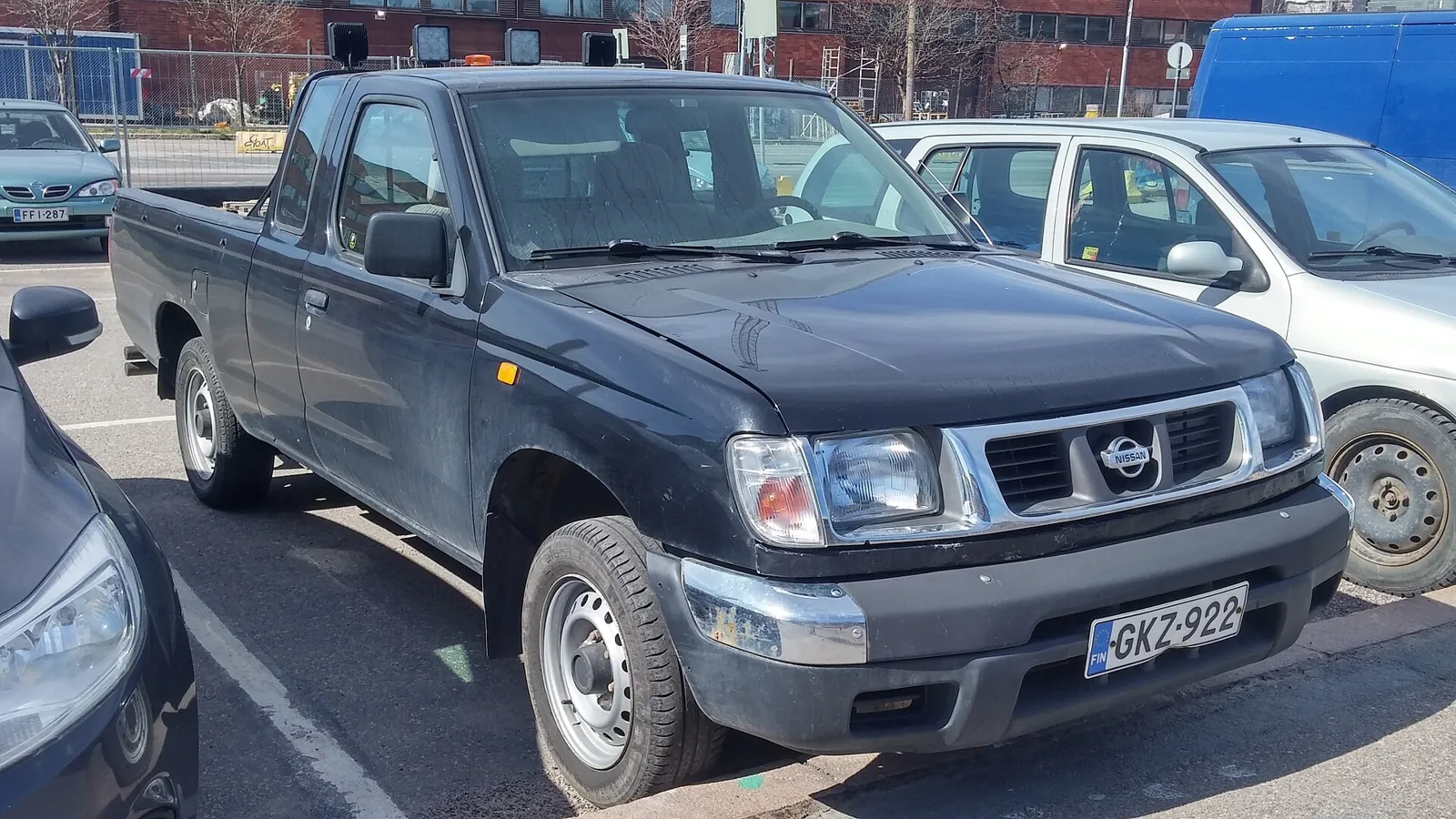
Nissan's D22 compact pickup sold from 1997 to 2021 under many names, with a Frontier for North America, a Navara for Australia and an African NP300.
Nissan's D22 compact pickup went on sale in Japan in January 1997, was sold until 2021 and carried many regional names, including Datsun, Frontier, Navara and NP300. It was an evolution of the D21 with a bigger body and a carried-over chassis. Japanese production ended in March 2012.
The D22 was Nissan's compact pickup from 1997 to 2021, sold in many parts of the world under many names. It became the Datsun in East Asia, the Frontier in North America, the Navara in Australia and Southeast Asia, and the NP300 in Africa, and it stayed on sale for at least 15 years.
Where did the D22 come from?
The D22 was developed while Nissan was in a slump before its restructuring, and that weakness reached the new model. The update made the body stronger and a little larger than the D21's, yet the overall construction hardly changed. The basic chassis was carried over from the D21, and the bigger body meant every 4WD version counted as a 1-number-plate vehicle.
When the D22 reached showrooms in 1997, the D21 was still on sale in about 110 countries. Nissan kept the D22 on sale for at least 15 years after its launch.
A pickup that carried many badges, from the Datsun in Japan to the NP300 in Africa.
How was the D22 different from the D21?
The D22 had a rounder exterior than its predecessor. It kept the strong look of a recreational vehicle but was made more comfortable inside. Nissan presented the car as a stylish personal pickup, and personal-use models received a wider track and chrome parts for presence.
The front interior was the same as the D21's. The King Cab's rear bench had a low cushion, so adults' knees were pushed up towards their chests on longer trips. Getting in and out through the narrow door openings was also harder than in a saloon. Even so, body rigidity, quietness and ride tuning all improved on the D21.
What safety features did the D22 have?
Nissan's triple safety concept applied to the D22. Halogen lamps and side under-mirrors served information safety, ABS was standard on personal-use models and optional for work use, and the body structure absorbs impact through a high-strength cabin. A driver's SRS airbag system completed the package.
The African-market NP300 was rated by Global NCAP in 2018 with zero stars for adult occupants and two stars for child occupants. Latin NCAP had given the same result in 2013.
Age and mileage can bring particular faults. An oil indicator that flashes, a rattling engine and trouble climbing steep hills can all appear. Typical culprits behind that lost power are a failing fuel filter, an injector pump filter that is dirty or broken, and a problem with the capped catalytic converter.
Which names did the D22 sell under?
The pickup carried many badges. In Japan and East Asia it was the Datsun, in North America the Frontier, in Australia the Navara. Other badges included the Big M Frontier, Pickup, Hardbody (later NP300 Hardbody), Fiera and Terrano, the last being the name used in Chile.
Partner and joint-venture brands widened the list further, with Pulso Hodoro Serenza, Tyran Exciter, Dongfeng ZNA Rich and Peugeot Pickup among them. Nissan's own derivative of the platform was the Xterra, and the manufacturers and sales networks behind the badges varied widely.
How did the Datsun range work in Japan?
The D22 went on sale in Japan on 16 January 1997 under the simple name Datsun. Work-use models were called Datsun Truck and personal-use models Datsun Pickup. At launch four engines were available, two petrol and two diesel, namely KA24E, NA20S, QD32 and TD27. Every car came with grey seats.
The double cab came in AX Limited, AX, AD-L and AD grades, and the single cab in DX and DX-L. Autech Japan also sold a Skystar with aero parts, at first only with a 5-speed floor manual, rear-wheel drive and the KA24E petrol engine. The AX-G followed on 14 October 1997, with aluminium wheels and a steel guard bar.
The King Cab reached Japan on 12 January 1998 through Autech Japan, in a cabin designed for the Japanese market. Automatic was the only transmission, paired with a 2,400 cc (146 cu in) petrol unit or a 3,200 cc (195 cu in) diesel. A mid-cycle change on 1 June 1999 replaced the petrol engines with the KA24DE and KA20DE and raised the tank from 60 litres to 75 litres.
Production spread well beyond Japan. Knock-down assembly began in Egypt in December 1997, and Zhengzhou Nissan in China started building the D22 in January 1999. Nissan Egypt Motor, set up in 2004, began making and selling the D22 Pickup in April 2005, with the Middle East as its export target.
How did the Frontier fare in North America?
The Frontier was shown at the Chicago Auto Show in February 1997 as the 1998 model, replacing the D21 pickup that had been built from May 1986 to 1997. It was made at the Smyrna plant in Tennessee. At launch it had regular cab 2WD and 4WD versions and one engine, the in-line four-cylinder 2.4-litre (146 cu in) KA24DE.
The King Cab and the V6 VG33E, of 3.3-litre (201 cu in) displacement, arrived in 1998, somewhat late. Sales had fallen away from the end of the D21 years and did not recover easily. Toyota's Tacoma and the compact pickups of the Big Three took share from it.
Car and Driver compared it with its class rivals and praised its low price and the way its engine and ride balanced. The cheap-looking interior trim and dull styling drew criticism, and the magazine judged it the least truck-like of the five vehicles tested.
A crew cab, or double cab, arrived in May 1999. For the North American compact pickup market it was a first, although the double cab was already a familiar type in Japan and Asia. A special Desert Runner, a 2WD King Cab on the 4WD frame with a raised ride height and bigger tyres, joined the 2000 model.
For 2001 the Frontier was facelifted to shed its plain image. The styling became bolder to appeal to younger buyers, and the VG33ER, with a mechanical supercharger, joined the range. The regular cab was dropped at the same time, and the Desert Runner received a supercharged V6 too.
Production also reached Brazil in April 2002, at a Renault plant in the state of Parana. In 2004 the D40 series, with an entirely new frame, replaced the D22 Frontier, and the single cab for North America ended with it.
In June 2002, at the 7th Beijing International Auto Show, Nissan announced the Paladin, a D22W-type model based on the D22, as it had done with the Xterra. It used the KA24DE and VG33E engines, and production started at Zhengzhou Nissan in 2003.
How did the Navara develop in Australia?
The D22 reached Australia in April 1997, about three months after its Japanese launch. As before, it came as a single cab, King Cab and double cab. The Australian engine range was one in-line four-cylinder petrol and two in-line four-cylinder diesels.
The headlamps, grille and front bumper were restyled in January 2002, and the ZD30 diesel was introduced then. In 2007 an improved 2.5-litre common-rail diesel replaced the earlier unit. With the D23 arriving in 2015, sales in the Australian market ended.
What happened to the NP300 Hardbody?
The pickup went on sale in African markets on 14 March 2002, under the Nissan Hardbody name. The name changed to NP300 Hardbody in 2008, where N stands for Nissan, P for pickup, and 300 for the series number of the commercial range. Buyers could pick from 4x4 and 4x2 High Rider double cabs, High Rider single cabs and plain Workhorse Hardbodies on long or short wheelbases.
The top 4x4 had ABS, with an added gravity sensor that measures deceleration and works with the ABS control unit. The 3.0-litre turbo diesel and the 3.3-litre V6 double cab had driver and passenger airbags. High Rider models had 220 mm of ground clearance, while the standard Hardbody used steel wheels of 14 or 15 inches and the high-spec versions had 16-inch alloys.
In May 2002 three 4x2 single cabs drove from Midrand to Cape Town in South Africa. Their cargo was 2.4 tonnes of maize meal, donated by a food maker to a charity in an urban area. A King Cab joined the line-up on 25 October 2004, and dual airbags were added to some models in December 2005.
On 8 May 2008 a mid-cycle change came with a renaming and a 2.5-litre common-rail diesel meeting EURO 2 emissions rules. Air conditioning became standard on some models. Halogen headlamps and side reflectors were fitted across the range, and the steel ladder-frame chassis was strengthened.
The 25th anniversary Hardbody was announced in July 2013, with a special pricing plan and a 6-year or 150,000 km warranty. It was revealed on 3 December 2013 as the Silver Anniversary limited edition. An improved 2.5 TDI turbo diesel was announced in May 2018.
Late in the model's life, the company confirmed in August 2021 that assembly in South Africa, the D22's final production base, would close that November. The NP300 Hardbody was dropped because the Navara was selling well and because production of the NP200 had to be kept going.
How did the D22 perform in motorsport?
In 2000 a South African-market Hardbody took part in the South African Off-road Championship and won the D-class drivers' title. In 2001 it entered the 23rd Paris-Dakar Rally and won two titles in the South African championship, one for production cars and one in the Super Truck class.
In 2002 the Hardbody won four Class T races and took the drivers' title, as well as the Class D drivers' and manufacturers' championships. It won the Caledon 400 overall in September. In January 2002 at the 24th Dakar, an X-Trail and an R50-type Terrano, both with the VQ35DE engine, were entered.
In 2003 the Hardbody won the Nissan Dealer 400 and the Nissan Sugarbelt 400 overall, and took the ORPI Morocco Rally in June. Its record that year also included a 1-2 finish at the Toyota 1000 Desert Race and an overall win in August. The team returned to Dakar in January 2003 and finished fifth overall.
The Dakar 2004 entry, based on the D22 with the VQ40DE engine, finished fourth overall. In 2005 the D22 Hardbody took the drivers' and manufacturers' titles in South Africa.
What were the D22's key specifications?
| Item | Detail |
|---|---|
| Japan launch | 16 January 1997, as the Datsun |
| Frontier launch | Shown in February 1997 as a 1998 model |
| Early Japanese petrol engines | KA24E and NA20S |
| Early Japanese diesel engines | QD32 and TD27 |
| Frontier V6 | VG33E, 3.3-litre (201 cu in), added in 1998 |
| Fuel tank | 60 litres, enlarged to 75 litres in June 1999 |
| Navara diesel | 2.5-litre (153 cu in) common-rail from 2007 |
| NP300 Hi-Rider ground clearance | 220 mm |
| Japanese production end | 2 March 2012 |
Gearboxes ranged from manuals with floor or column shifts to two automatics from the same maker, a full-range electronically controlled four-speed and a simpler four-speed unit.
Why did production end in Japan?
Japanese sales were already scheduled to end in 2002, which is considered the reason the 2001 facelift was not carried out in Japan. Production for the domestic market ended in August 2002. Production of the D22 in Japan ended on 2 March 2012, which also ended vehicle production at the first zone of Nissan Shatai's Shonan plant.