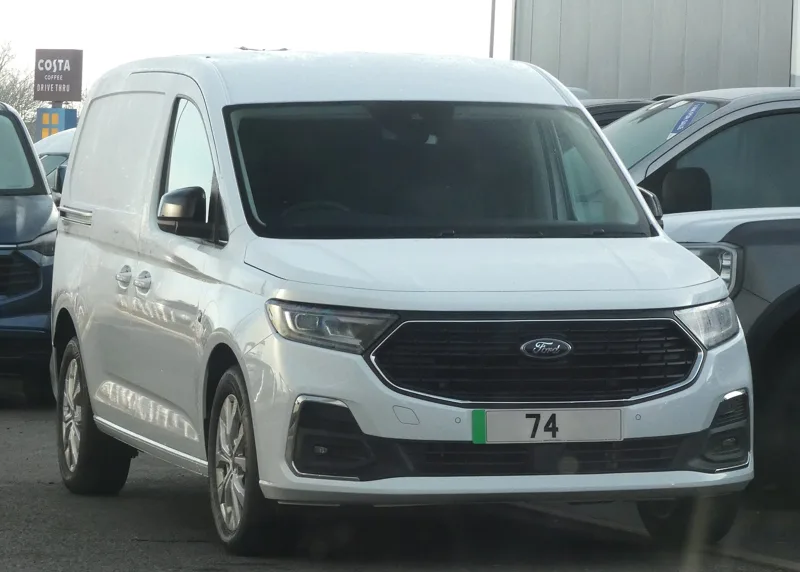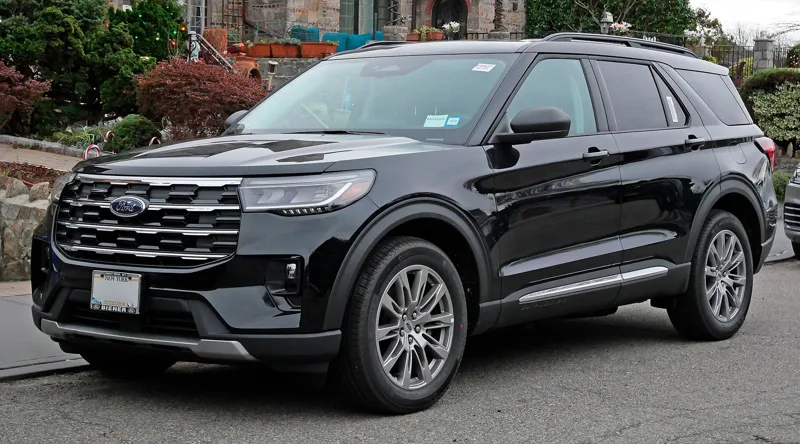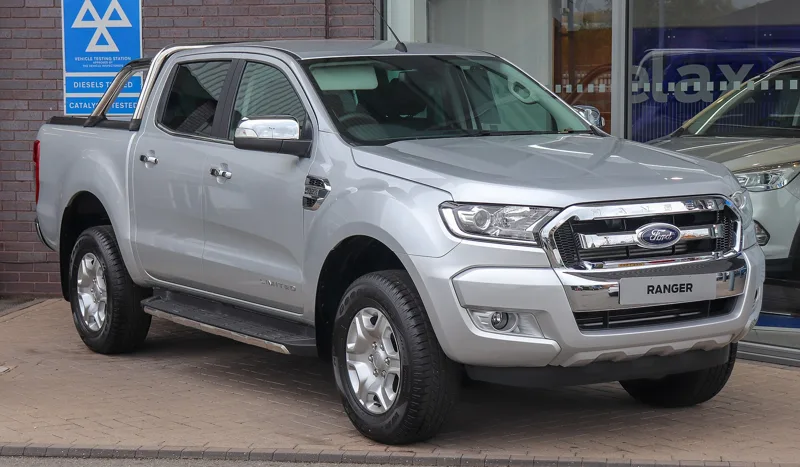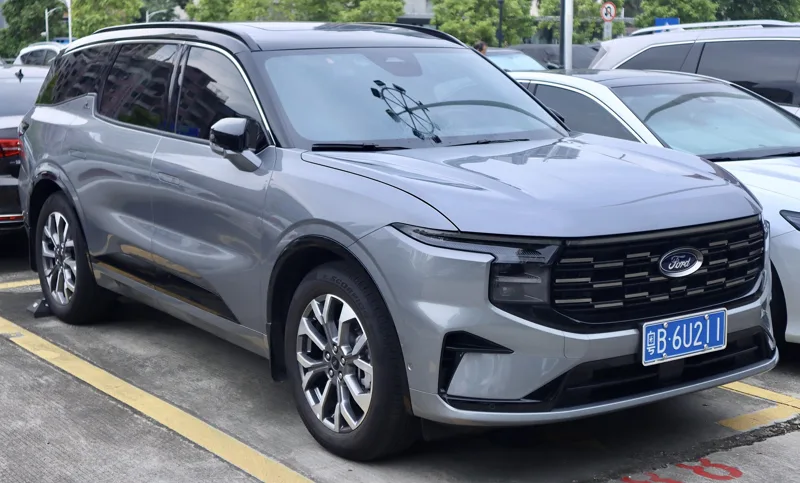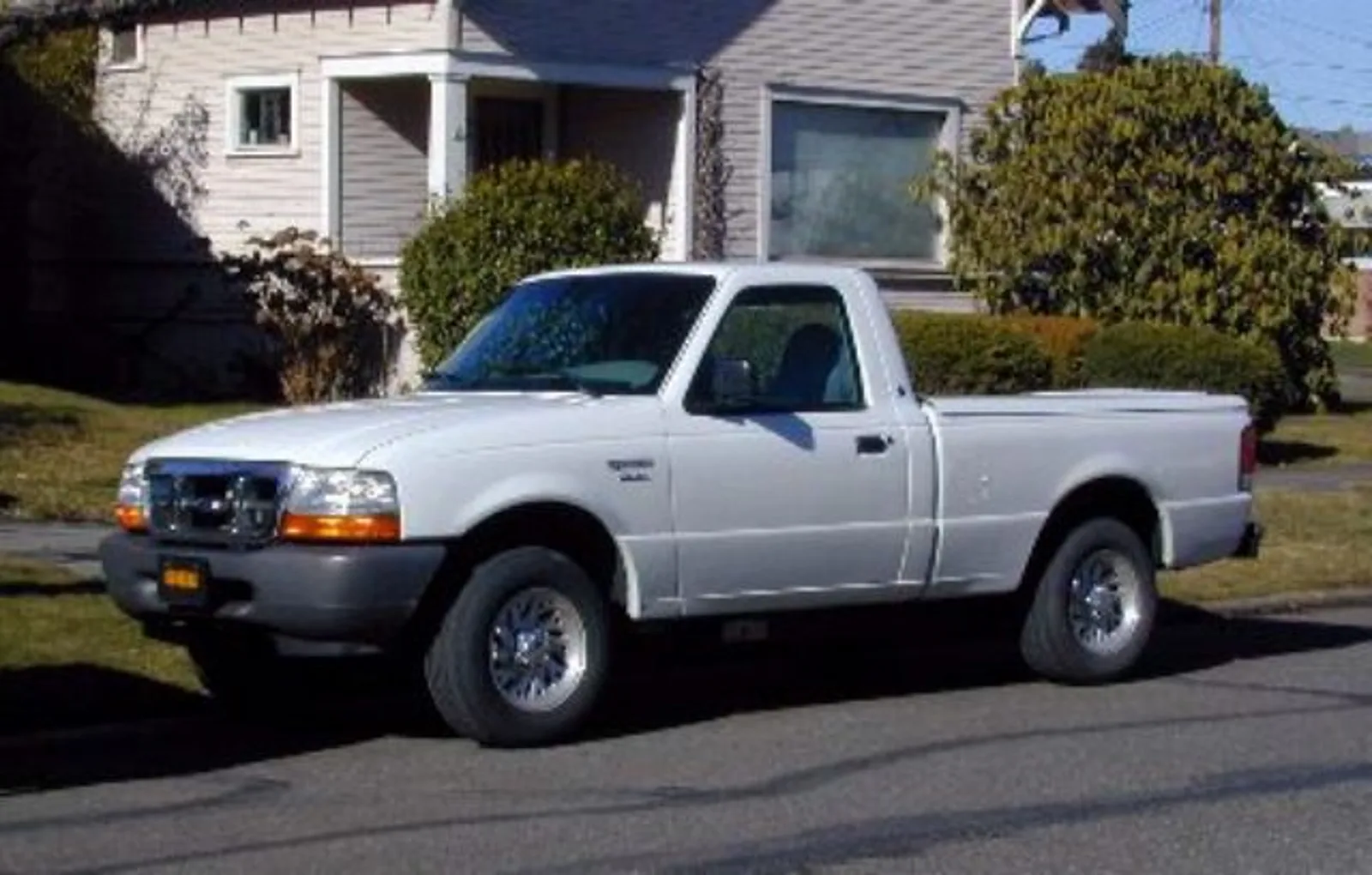
Ford's first all-electric production vehicle, a Ranger XL with a rear-mounted motor, built from 1998 to 2002 and still kept running by owners today.
Built by Ford from the 1998 to 2002 model years, the Ranger EV was a battery-powered compact pickup and the company's first all-electric production car. It was a Ranger XL 4x2 regular cab with a rear-mounted motor and either nickel-metal hydride or lead-acid batteries.
Ford's Ranger EV was a battery electric compact pickup, and it was the company's first all-electric production vehicle. It took a standard Ranger XL and replaced the internal combustion engine with a battery pack and a rear-mounted motor, leaving a truck that looked almost the same from the outside. Most of them went to fleets on lease rather than into private garages.
The truck is also a reminder of how quickly an electric product becomes a historical object. Production ran from the 1998 model year to 2002, and in 2022 an active owners' community was still maintaining and upgrading the trucks.
How much did the Ranger EV cost?
The above-the-line cost of the Ranger EV was US$52,720 before manufacturer discounts and public agency subsidies, equivalent to $105,735 in 2025. Ford Motor Credit offered a three-year lease that, combined with AQMD funding and federal tax credits, could bring the monthly payment down to US$155, equivalent to $310.87 in 2025.
Subsidies made the biggest difference for public buyers. Lawrence Livermore and Berkeley Labs signed for 20 units from Ford Motor Credit, and government-funded Clean Cities programs and AQMD grants were applied to an all-payments-paid version of the lease. The total cost to the labs over the three-year term was $0.
Californian drivers also gained an incentive. The Ranger EV qualified for a California Clean Air Vehicle decal, which allowed single-occupant vehicles to use carpool lanes through 2018.
The first all-electric Ford was a regular Ranger XL with a battery box under the floor and a motor between the rear wheels.
How was the Ranger EV built from a regular Ranger?
The Ranger EV was essentially a Ford Ranger XL 4x2 regular cab with an electric powertrain in place of the standard I4 engine. Final assembly took place at a craft centre in Detroit, Michigan, where the EV powertrain, battery and other EV-specific parts were fitted to conventional trucks built without engines.
Those engine-less trucks, known as gliders, were built at the Ford Twin Cities plant in Minnesota and then shipped to Detroit. The powertrain, battery pack and other electric components were installed there, which kept the production process close to a standard Ranger line.
The changes inside the cabin were small. A tachometer was swapped for an estimated range gauge, while the oil pressure dial became a simple on/off light and the voltage dial was changed to show economy. Other features matched the Ranger XL 4x2 regular cab.
The standard specification included an AM and FM radio with two speakers, fifteen-inch alloy wheels, bench or bucket seats trimmed in cloth, air conditioning and a heater, an automatic transmission and two airbags. Options included a spare tire, a cassette or CD player, two extra speakers behind the front seats, power windows and door locks, and keyless entry.
What did the Ranger EV look like?
From the outside the Ranger EV was almost indistinguishable from a petrol Ranger. The clearest signs were the front charging door in the grille location, the missing tailpipe and a modest script reading Electric on the side. Most trucks were painted Oxford White Clear Coat with a Flint Gray interior.
From behind, the EV's unique rear suspension and the traction motor could be seen, which hinted at its different layout. The battery tray projected slightly below the frame rails, but the most noticeable feature was the ride height. The truck stood close to the height of four-wheel drive vehicles even though it was rear-wheel drive, because it was built on a four-wheel drive frame with a heavier front torsion bar suspension.
The spare tire was carried behind the rear axle, where a hold-down inside the bed could secure it, but the AC motor controller occupied the same area. Carrying a spare in that position meant the central cargo space could not also be used, so owners had to choose between the two.
Aerodynamics were helped by a vinyl snap-on bed cover on aluminium bows. The cover could be hard to re-snap in cold conditions, because the vinyl shrank and stiffened, but the unmodified bed still accepted aftermarket tonneau covers made for petrol models.
What was it like inside the Ranger EV?
The cabin was laid out to feel like a conventional automatic truck. A column shifter offered P, R, N, D and E, and the E position reduced maximum speed while engaging regenerative braking. The key switch had Off, Accessory, Run and Start positions, and the other controls matched the petrol version.
The instruments were rearranged to suit an electric truck. A charge indicator sat in the lower left corner in place of the fuel gauge, a rate indicator in the upper left showed energy use and recovery, and a miles-to-go indicator replaced the tachometer. The speedometer read to 80 mph (130 km/h) rather than the 120 mph (190 km/h) of the petrol truck.
The heating used a ceramic core resistance heater, and the air conditioning was driven by an electric motor compressor. When Start was selected, a gauge came up to the run position within seconds, but it did not show pack voltage. The main contacts only closed once pre-charge was complete, and a plug-in light interlocked with the start circuit.
How did the Ranger EV's chassis work?
The Ranger EV was built on a Ford Ranger four-wheel drive chassis, with a dual A-arm front suspension and torsion bars. The rear used a De Dion tube located by longitudinal leaf springs, which kept the wheels in line while the drive unit sat between them.
The motor was a six-pole alternating current unit rated at 90 hp (67 kW) and able to reach 13,000 rpm. It fed a single-speed three-to-one reduction transmission and differential, all housed in one unit mounted high between the frame rails, with half shafts angling down to the wheels.
The 1998 trucks used carbon fibre monolithic leaf springs, which lacked enough lateral stiffness to locate the axle, so those early cars also had a Watt's linkage. Later trucks switched to conventional steel leaf springs and dropped the linkage.
The wheels were cast aluminium, including the spare, and the tyres had low rolling resistance, closer to those on a full-size sedan than to a truck tyre. The 1998 and 1999 wheels were of a simple design, and later models had wheels with a large spoke pattern.
How far could the Ranger EV go on a charge?
Range depended on the battery fitted. The NiMH version delivered a true 65 miles (105 km) at a steady 65 mph (105 km/h) on flat highways, while the lead-acid version was said to manage up to 65 miles with hard tyres and careful driving, though its actual range was lower.
Both the EPA figures for early models and owners' experience put light suburban use at around 500 watt-hours per mile. The controller allowed strong acceleration even in the economy setting, so a heavy foot reduced range noticeably.
Energy recovery worked well. On a long descent the truck could finish with a noticeably higher state of charge than it started with, across a 3,000 ft (910 m) height difference.
Which batteries did the Ranger EV use?
The Ranger EV was sold with two battery types. Lead-acid packs used 39 valve-regulated modules assembled by East Penn for Delphi, weighing 870.1 kg (1,918 lb) at a nominal 312 V. Nickel-metal hydride packs used 25 Panasonic modules rated at 12.00 Volt, weighing 485 kg (1,069 lb) at a nominal 300 V.
Most trucks carried NiMH packs, which were offered in California and some limited areas outside it, and they were originally sold only on lease. The NiMH pack's voltage swung between its empty and full states. Motorcraft supplied the modules as Panasonic OEM parts.
The lead-acid pack had a nominal capacity of 60 Ah to half of its fully charged level, while the NiMH pack was rated at 95 Ah to one-third of its fully charged level. The lead-acid cells were laid out in two layers, and the NiMH cells sat on a single layer of 25 modules.
All of the batteries sat in one large box bolted to the underside of the vehicle. The box could be removed only with specialised shop equipment, but individual modules could be serviced and replaced from its open top.
How did the Ranger EV cope with cold weather?
Lead-acid packs were sensitive to cold and lost a substantial portion of their capacity in winter. Battery heaters switched on when the truck was plugged in, holding the temperature needed to keep the specified range. NiMH packs did not share that temperature sensitivity, although their range also dropped in cold conditions.
Fleet trucks in cold regions were usually parked outdoors, which made the lead-acid heating system important. Keeping the trucks under cover was the obvious way to protect range in those climates.
NiMH batteries were cooled by two fans, because their charging was limited by heat gain. The first fan circulated air around the batteries, and the second exchanged air inside the battery box. The power electronics, including the motor, the motor controller, the AC controller and the high voltage DC-DC converter, were liquid-cooled.
How did the Ranger EV charge?
Charging used an Avcon conductive connector behind a hinged door to the right of the grille. A NiMH pack took six to eight hours to charge and stored about 30 kW-hr, with charging and discharging regulated by passive control devices. The connector followed the SAE J1772-1998 conductive charging standard.
The connector used the same signalling and wiring scheme as the later J1772-2010 standard, with ground, two hot lines, proximity and pilot. An adapter or a plug upgrade let Ranger EVs use the public charging stations built to the newer standard across the country.
An interlock was built in as well. The start circuit was disabled whenever the charging connector was inserted, and a dash indicator light showed that the truck was plugged in.
What problems did the Ranger EV have?
The NiMH trucks suffered early problems. Some could not accept a charge in hot conditions, and others needed major components replaced, but Ford worked through most of these within the first part of the vehicle's life. Range declined around the 25,000-mile (40,200 km) service life of the batteries, and Ford chose not to fix it under the lease terms.
Replacement cost was a major concern. Some former NiMH operators were surprised that any vehicles had been released with that chemistry, because cell and pack replacements were extremely expensive. Others pointed out that some NiMH trucks had run for over 125,000 miles (201,000 km) on their original packs.
It was not clear what would need to change in the vehicle to accept other batteries, such as PbA or NiCad.
Why did the crush plan spark a backlash?
Ford expected to destroy almost all of its remaining Ranger EV stock by crushing, which several other major manufacturers had also done. The plan drew strong resistance from electric vehicle fans, and the adverse publicity prompted Ford to change its policy.
The change of policy appears to have influenced Toyota as well, which did not destroy all of its leased RAV4 electrics. A persistent few lease returns were allowed to buy their trucks for one dollar, some of them through the dealer's use of a non-specific lease form.
What happened to the surviving Ranger EVs?
Most of the 1,500 vehicles produced have since been destroyed. Several hundred remaining units were refurbished by Blue Sky Motors of Sacramento, California, using selected used and new old stock batteries, and a number of trucks were parted out for spares.
A batch of Ranger EVs was recovered in 2008 and shipped to Norway, where Elbil Import sells them to owners. The owners' community that grew up around the truck runs under the name REVolt, the official site of the Ranger EV owners group.
What came after the Ranger EV?
Ford has announced no plans to resume production. The North American Ranger was discontinued after the 2011 model year, while the Ranger line continued for Europe with the new T6 generation. Ford also partnered with Azure Dynamics to offer an electric version of the Transit Connect van in the United States from 2010 to 2012.
The Azure Transit Connect Electric had an EPA range of 56 miles (90 km), almost identical to that of the Ranger EV. Ford later released an all-electric Focus for the 2012 model year.
What are the Ranger EV specifications?
| Specification | Detail |
|---|---|
| Production | 1998 model year through 2002 |
| Base vehicle | Ford Ranger XL 4x2 regular cab |
| Motor | Six-pole AC, 90 hp (67 kW), maximum 13,000 rpm |
| Gearing | Single-speed three-to-one reduction |
| Lead-acid pack | 39 modules, 870.1 kg (1,918 lb), 312 V nominal, 60 Ah |
| NiMH pack | 25 modules, 485 kg (1,069 lb), 300 V nominal, 95 Ah |
| NiMH range | 65 miles (105 km) at a steady 65 mph (105 km/h) |
| Power use | About 500 watt-hours per mile in light suburban use |
| NiMH charge time | Six to eight hours, storing about 30 kW-hr |
| Charging standard | SAE J1772-1998, adaptable to J1772-2010 |
| Above-the-line cost | US$52,720 (equivalent to $105,735 in 2025) |
| Units produced | About 1,500 |