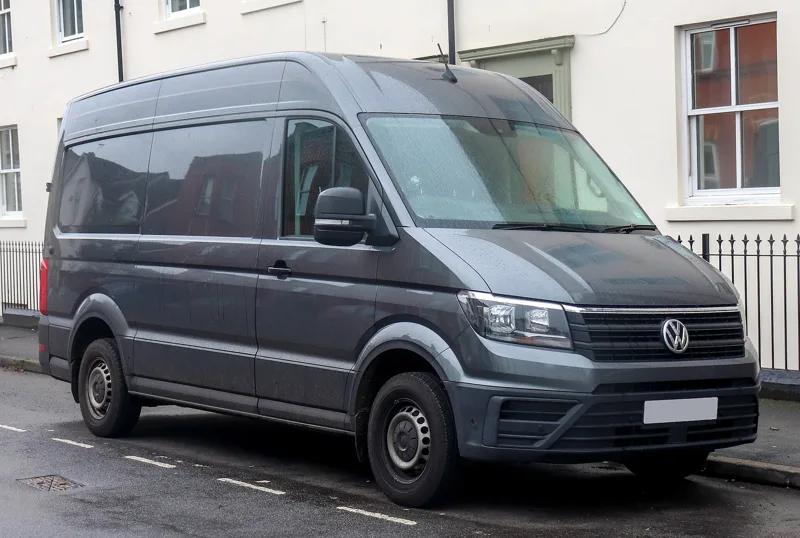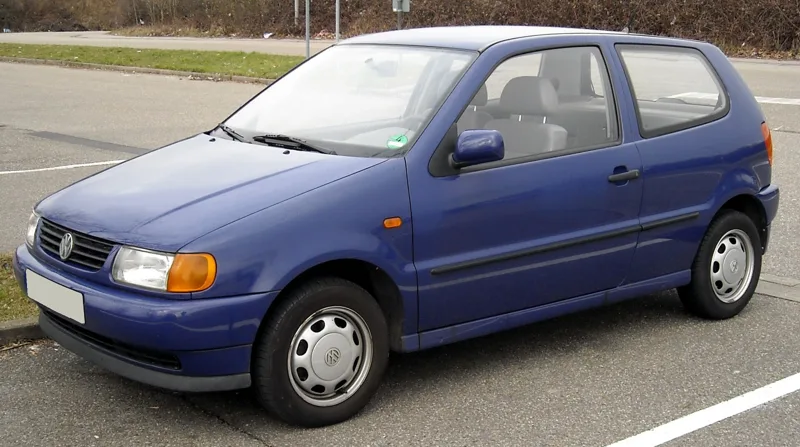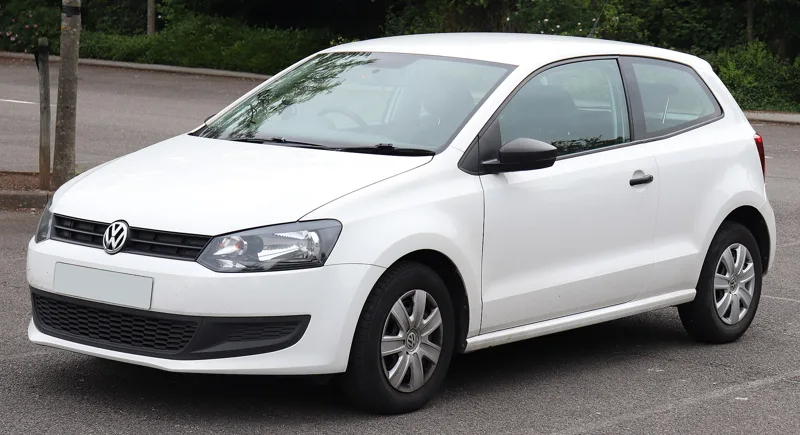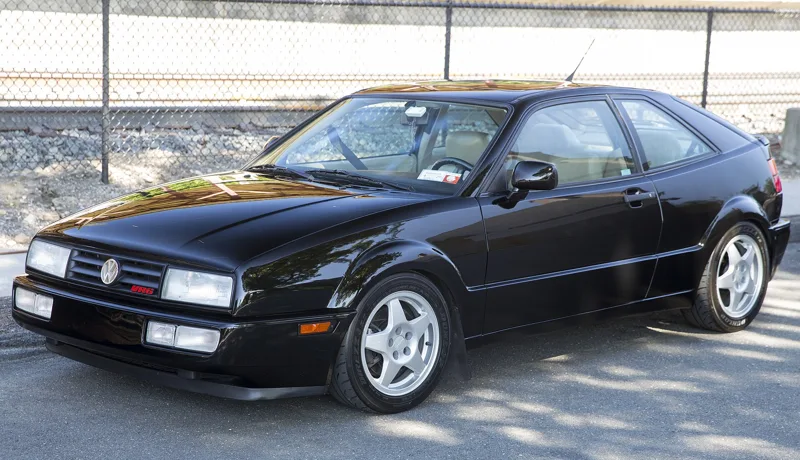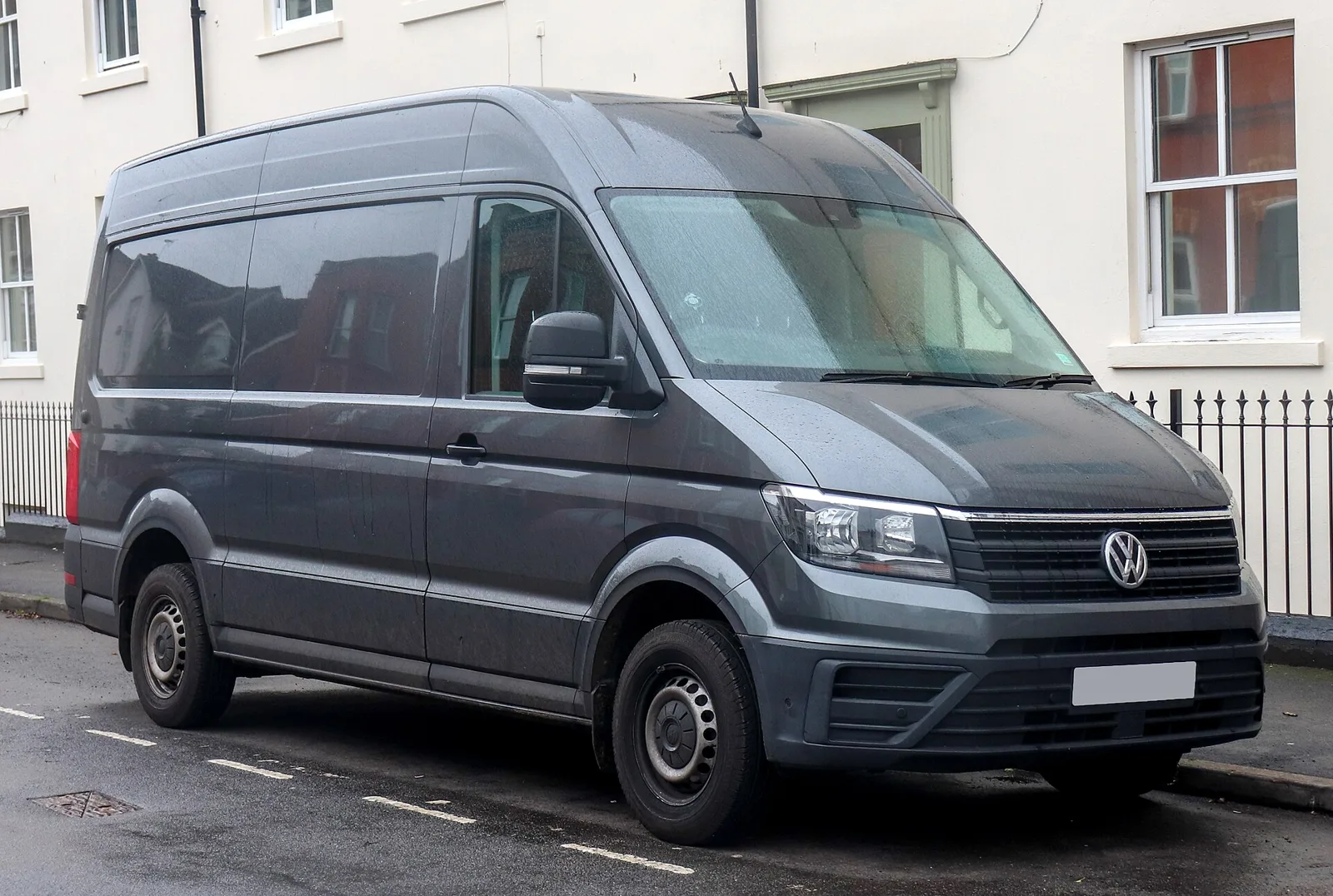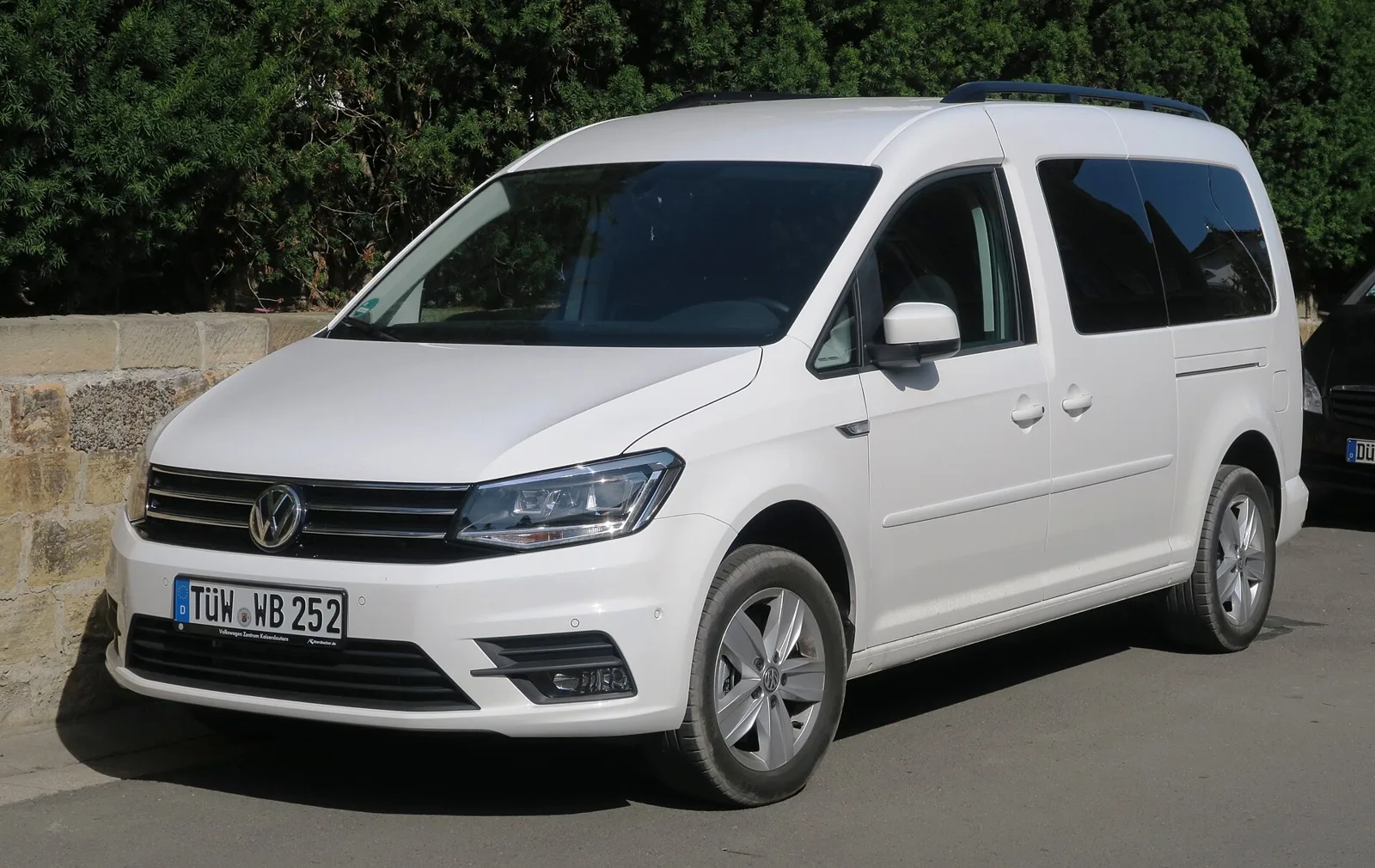
Four generations of Volkswagen's small van, from the 1979 Golf-based pickup and the 1995 SEAT-designed Polo Caddy to the 2020 MQB model and its Tourneo twin.
The Volkswagen Caddy is a small van and leisure vehicle built since 1979 on the platforms of several Volkswagen models. Four generations have been produced, from a Golf-based pickup to the MQB model of 2020, and the later Tourneo Connect is a Ford-badged twin.
Volkswagen has built the Caddy, a panel van and leisure vehicle, since 1979. It has been sold across Europe and many other markets, and the first two generations also offered pickup versions. Each generation has borrowed its underpinnings from a different Volkswagen family, from the Golf in 1979 to the MQB architecture in 2020.
The name never reached North America. Americans knew the first Caddy as the Rabbit Pickup, and the Caddy badge appeared in Europe only from 1982 onwards.
How did the Caddy begin as a Rabbit Pickup?
The Caddy grew out of experiments by Volkswagen of America with Golf derivatives. Engineers led by Duane Miller built an estate and a pickup with a bed of about 1.83 m (6.0 ft). Sheller Globe helped with the early pickup design, and the Rabbit Pickup was built at Westmoreland, Pennsylvania, from 1978 to 1984.
Rabbit Pickups reached American showrooms in late 1979 as 1980 model-year cars. Europe received the same basic vehicle three years later under the Caddy name. North American cars wore rectangular headlamps, and round ones were used everywhere else.
A Golf-based pickup that became a Polo-based van and then an MQB people carrier with a Ford twin.
What was the first-generation Caddy built on?
The first Caddy, the Typ 14, was released in 1979 on the A1 platform it shared with the Golf Mk1. Volkswagen's type codes separated the markets, with Typ 147 for left-hand drive and Typ 148 for right-hand drive. Its rivals included the Ford Courier, the Datsun Truck, the Toyota Hilux and the Subaru BRAT.
European Caddys were built at the TAS plant in Sarajevo from 1982 to 1992. A fibreglass box cap could be fitted over the open bed to create a small panel van with 2.65 m3 (94 cu ft) of enclosed cargo space. A South African plant at Uitenhage made the car from 1981 to 2007, running in parallel with the first-generation Golf.
Worldwide production of the Typ 14 Rabbit Pickup and Caddy topped 207,000 vehicles. For the pickup market, Volkswagen filled the gap with the Taro, a rebadged Toyota Hilux, between 1989 and 1997. The name returned in 1995 on a compact van and people carrier engineered with Skoda and SEAT.
What engines did the early pickups use?
Early pickups relied on 1.5 and 1.6-litre EA827 petrol engines, . Export markets also received a 1.6 diesel, and the Canadian market had a turbodiesel. The US pickup's 1.6 engine made 78 hp (58 kW) in 1979 and 1980, and the 1.7-litre that followed also produced 78 hp from 1981 to 1984.
The American diesel used a five-speed gearbox with a fifth gear labelled E, rated at a 0.76:1 ratio. Its economy was 41 to 54 mpg-US on the EPA cycles for the five-speed diesel, against 23 to 32 mpg-US for the petrol four-speed. The US bed measured 64.4 in (1,640 mm) across and carried a payload of 1,100 lb (500 kg).
How did the second-generation Caddy change?
The Typ 9K, sold as the Polo Caddy, arrived in 1995. SEAT designed it, and it used the SEAT Ibiza 6K as its basis on the A03 platform. Its cargo floor measured 2.6 m2, with a loading volume of 2.9 m3, and a typical payload of 550 kg depending on drivetrain and market.
Safety improved on the older model. A driver airbag was standard, a passenger airbag was optional, and ABS was available along with what Volkswagen called its Electronic Differential Lock. That system was not a true differential lock, since it briefly braked a spinning wheel to send power to the other one.
Production at SEAT's Martorell factory ran from 1996 to 2004, while the SEAT Inca twin was quickly phased out. Production continued in Argentina until 2008 for Latin American buyers. Argentina built a 2005 facelift known as the Derby Van in some markets and the Pointer Van in others. Its front resembled the Polo Classic, and Europe never received it.
What was the Typ 9U?
The Typ 9U, released in 1996, was a rebadged Skoda Felicia Utility and the entry-level light commercial vehicle in the range. It was built in Skoda's Kvasiny plant in the Czech Republic. It measured 4.12 m long and 1.64 m wide, with a turning circle of 11.2 m and a 530 kg payload rating.
Its features were modest. Three-point seatbelts were standard, while twin airbags and ABS were optional. Petrol-engined models came with air conditioning as standard, and the loading area measured 2.0 m2. The Typ 9K, by contrast, offered air conditioning only as an option.
What set the third generation apart?
The Typ 2K arrived in October 2003 at Amsterdam's RAI commercial vehicle show, and production began at Poznan in November that year. It shared about half of its modules with the Golf Mk5 and the Touran, and it came in normal and Maxi body sizes.
Panel vans were only one option. The Caddy Life became a seven-seat people carrier, with 2,850 litres of cargo room once its rear benches were removed and a towing capacity of 1,500 kg. It made its debut at the 2004 Geneva Motor Show, with a payload of 608 kg. The Caddy Maxi stretched the bodywork by 470 mm and offered 4.2 m3 of loading space. Its wheelbase grew to 3,002 mm, the rear overhang became 151 mm longer, and the gap behind the sliding doors widened by 319 mm. Commercial Maxi versions carried a payload of 800 to 810 kg.
Business customers responded well. British Gas signed a landmark deal for 1,000 vans in 2007, equipped with custom racking and a Siemens-designed speed limiter, and the agreement was renewed in 2015. In Australia the Caddy held a 42% share of the small-van market in 2007, despite premium pricing over rivals.
How did the third generation's Life and Maxi versions develop?
The Caddy Life Maxi reached seven seats in three rows, while the basic Life carried five seats in two rows. A Life Colour Concept in 2005 took two bold paint shades, Red Spice and Ravenna Blue, and matched the upholstery and trim to the body colour. Its steering wheel and gear knob were leather-trimmed.
The camping variant, the Caddy Life Tramper, had two seats, a table and a fold-out awning packed inside the tailgate. Its bed was made by folding the seats into a platform of 1.10 m x 2.0 m, and curtains came as standard for privacy. In Australia the same package was sold as the Camper.
The Life had the trim of a conventional five-seat estate, whereas the Kombi was a bare panel van with windows and seats. The Maxi Life people mover appeared at the 2007 Frankfurt Motor Show, carrying the new 2.0 TDI engine rated 103 kW (138 hp; 140 PS). The Maxi range carried over every engine from the standard Caddy, so buyers were not limited by the longer body. A Maxi Tramper camper followed at the 2008 AMI Leipzig show, along with an EcoFuel study car.
How did the Caddy get all-wheel drive and special editions?
A limited Carrera Cup Edition of 250 cars was built for the Swedish market. It was based on the 2.0 TDI, with 17-inch black wheels, a new body kit, a white body with red trim, and black and red leather sport seats with a sport leather steering wheel.
At the 2008 IAA in Hannover, Volkswagen revealed a Caddy 4Motion with all-wheel drive, teamed with the 1.9 TDI and a manual gearbox. The Maxi received the 4Motion drivetrain in early 2010, as the company extended the system across the range.
Van buyers also gave the Caddy a string of awards. Professional Van and Light Truck magazine named it Small Van of the Year in 2007, and Van Fleet World chose it as Best Small Van the same year. In 2008 Fleet News named the Caddy its Best Small Van, Delivery magazine chose the Maxi as its best small van, and What Van? gave the Maxi its Editor's Choice.
What engines did the third generation offer?
The third generation spanned a long engine list. The 2.0 SDI diesel with 69 PS was offered only in panel and panel-window vans, and the 1.9 TDI at 105 PS was dropped later. The 1.6 TDI came in 75 PS and 102 PS forms, with torque figures that rose to 250 Nm on the stronger variant.
Petrol buyers could choose a 1.2 TSI with 86 PS or 105 PS, plus 1.4 and 1.6-litre units. The 2.0 EcoFuel ran on CNG and produced 109 PS. The top diesel, a 2.0 TDI rated 170 PS, was reserved for the Caddy Maxi.
How did the Caddy evolve after the 2010 facelift?
A facelift at the end of 2010 brought a new front borrowed from the Touran Mk1, with headlights and a grille that matched the Golf Mk6. A second facelift in 2015 added a new front fascia, a roof spoiler and a revised interior.
Variants multiplied in the meantime. The Caddy Panel of that period measured 4,405 mm long and 1,802 mm wide, on a 2,682 mm wheelbase, and carried a 750 kg payload with 3.2 m3 of loading volume. The CrossCaddy of 2012 added crossover styling, and the Caddy Alltrack, which succeeded it, debuted at the 2015 Frankfurt show. Abt Sportsline also produced a battery-electric version based on the long-wheelbase Maxi, with an 82 kW (110 hp) motor and a 37.3 kWh battery offering 220 km of range.
What is the fourth-generation Caddy?
The fourth-generation Typ SB was unveiled in February 2020. It was the first Caddy built on the Volkswagen MQB platform, which brought Travel Assist and oncoming-vehicle braking when turning, along with connected infotainment. The range included Kombi, Caddy, Life, Move and Style trims, and the delivery van was offered in several trims as well.
Compared with the Typ 2K, the new model was 92 mm longer and 62 mm wider, while it sat 5 mm lower. Its cargo hatch opening was widened to 1,234 mm, so a EUR pallet could fit, and the Maxi could take a second pallet loaded across the van. The Cargo variant was offered with two seats, while the MPV came with five or seven. In the Cargo Maxi, the loading length reached 2,150 mm, against 1,797 mm for the standard van, and cargo volume rose to 3.7 m3 from 3.1 m3. Cargo width was 1,613 mm in both. The design team was led by Albert Kirzinger.
The Caddy California camper put a slide-out kitchenette in place of the third seating row. In July 2022 a CNG-powered TGI model and a Dark Label special edition joined the line-up. The Ford Tourneo Connect, announced in 2021, is a rebadged fourth-generation Caddy and the first model from the Ford and Volkswagen partnership, with first deliveries beginning in early 2022.
Specifications at a glance
| Generation | Typ | Platform | Launch |
|---|---|---|---|
| First | Typ 14 | A1, from the Golf Mk1 | 1979 |
| Second | Typ 9K | A03, from the SEAT Ibiza 6K | 1995 |
| Third | Typ 2K | Touran-derived | 2003 |
| Fourth | Typ SB | MQB | 2020 |