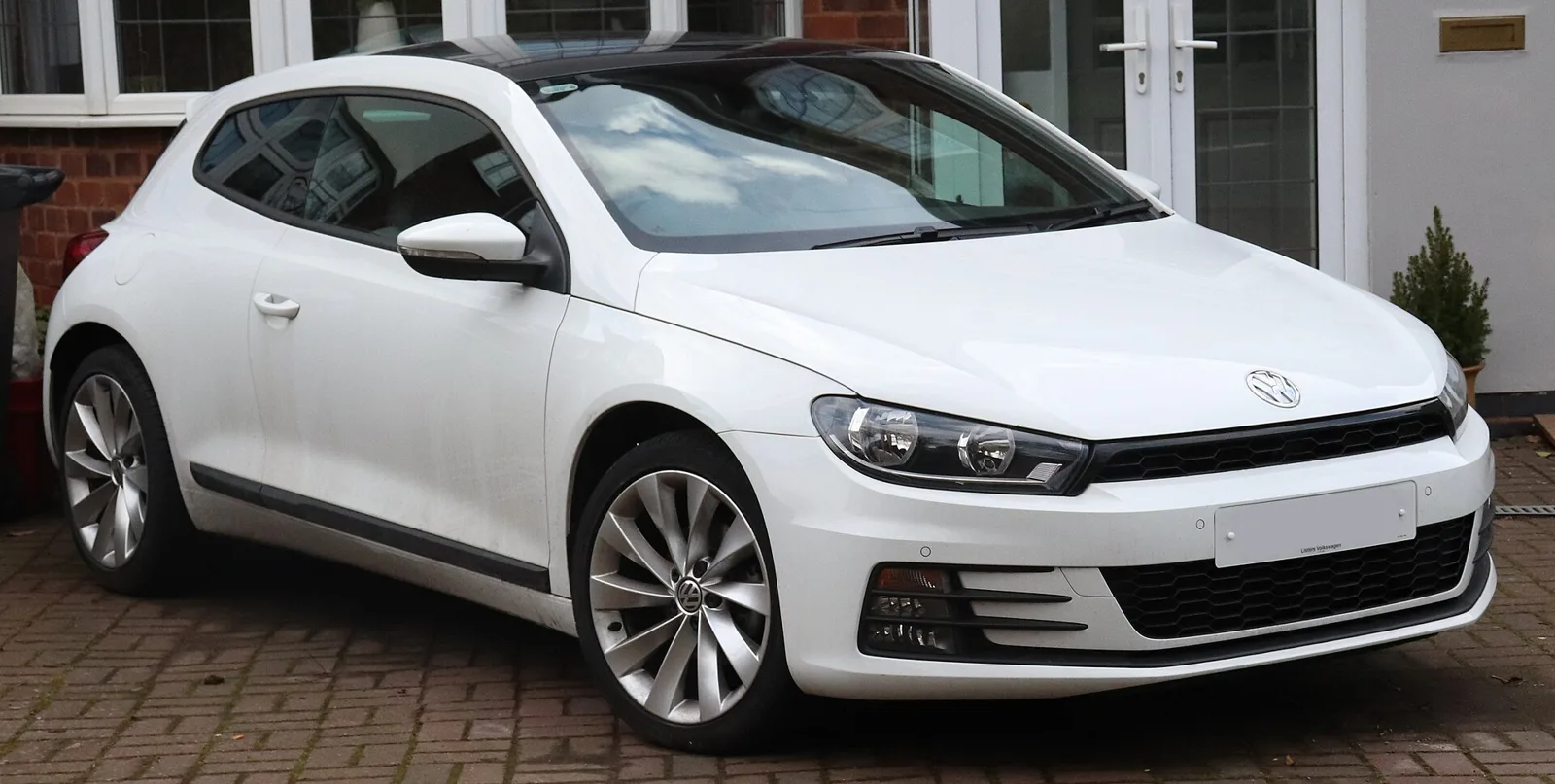
A city car that wore a wolf's name, a Brazilian hatchback that became a Lupo in Mexico, a VR6 coupe that was too expensive, and a Golf that lived on for 25 years in South Africa.
The Volkswagen Lupo was a city car built from 1998 to 2005, the Fox a Brazilian subcompact sold in Europe from 2005 to 2011, the Corrado a sporty coupe made from 1988 to 1995, and the Citi Golf a facelifted Mk1 Golf built in South Africa until 2009. Each filled a gap in the range.
Volkswagen did not call its small hatchback the Fox in Mexico, because the president was named Vicente Fox. So the same Brazilian-built hatchback that replaced the Lupo in Europe was sold in Mexico as the Lupo. It is a neat illustration of how Volkswagen's lesser-known models behave: they turn up where the range has a hole, and they borrow names, platforms and tooling from wherever they can.
The Lupo, the Fox, the Corrado and the Citi Golf are four such cars. One filled the bottom of the German range, one carried a Brazilian small car from Latin America to Europe, one replaced the Scirocco at a higher price, and one kept an old Golf alive in South Africa for a quarter of a century.
The Volkswagen Lupo: a wolf for the city
The Volkswagen Lupo is a three-door city car that Volkswagen built from 1998 to 2005. Its name is Latin for wolf, taken from its home town of Wolfsburg. It shared most of its design with the SEAT Arosa, both derived from the Polo Mk3 platform, and it was introduced in October 1998 to fill the space at the bottom of the range left as the Polo grew bigger and heavier. The right-hand-drive version reached the UK in spring 1999, and in Japan two models with a 1.4-litre petrol engine and a four-speed automatic followed on 11 July 2001.
The Lupo used the A00 platform, a shortened version of the Polo and Ibiza underpinnings. At first there were two trims, the budget E and the upgraded S, with Sport and GTI versions added later. Petrol engines ran from 1.0 to 1.4 litres, with 1.6 litres for the GTI, and diesels from 1.2 to 1.7 litres. The step up from E to S brought painted door mirrors and handles, plus central locking, power windows, split-folding rear seats and rear windows that opened. Jozef Kaban designed the car, which measured 3,530 mm (139.0 in) in length and weighed between 890 and 1,015 kg (1,962 to 2,238 lb).
Lupo 3L: the three-litre car
The most famous Lupo was the 3L (Typ 6E). Volkswagen's aim was to build the first series-production car to use as little as 3 litres of fuel per 100 km. It got there with a 1.2-litre three-cylinder turbodiesel with direct injection, plus lightweight aluminium and magnesium alloys for the doors, bonnet, rear hatch, seat frames, engine block, wheels and suspension. The result weighed only 830 kg (1,830 lb). It also had a drag coefficient of 0.29, low-rolling-resistance tyres, a thinner but stronger steel body, and an automated manual gearbox with a Tiptronic mode.
An ECO mode limited power to 41 bhp (31 kW; 42 PS) and shifted up as early as possible. It also switched on a start/stop system, new to European cars at the time, and disengaged the clutch when the driver lifted off so the car could freewheel. Options were few at first because every extra kilo cost fuel, though electric steering, electric windows and air conditioning were added later to help sales.
Two drivers proved the point. Dr. Miyano, a Japanese economy driver, circled Britain in July 2001 at an average of 119.48 mpg, or 2.36 L/100 km, a record for a standard diesel production car. In November 2003 Gerhard Plattner drove 2,910 miles through twenty European countries, from Oslo to The Hague, on 90.94 euros of fuel, an average of 2.78 L/100 km (101.6 mpg). The Audi A2 1.2 TDI 3L used the same engine and special gearbox, and the 3L manual says the engine runs on rapeseed methyl ester without changes. Volkswagen also showed a 1L Concept, a prototype aimed at a single litre per 100 km.
Sport, FSi and GTI
The Lupo Sport offered a 1.4-litre petrol with 100 PS (74 kW; 99 hp) or a 1.4-litre diesel with 75 PS (55 kW; 74 hp). It had 14-inch Kyalami alloys and fog lamps, and early cars were upholstered in a bright fabric covered in cartoon cats and mice. The petrol version had its own engine tune, a drive-by-wire throttle and bigger front discs.
The FSi was the first Volkswagen petrol car with direct injection. It was a 1.4-litre 16-valve version of the 3L, averaging around 5 litres per 100 km, and Volkswagen said direct injection used about 30% less fuel than a conventional engine of similar power. It was sold only in Germany, Austria and Switzerland.
The 1.6-litre Lupo GTI, introduced in 2000, has been called a true successor to the Golf Mk1. It carried bi-xenon headlights, 15-inch Bathurst alloys and twin central exhausts, and its 125 PS (92 kW) twin-cam engine reached 127 mph (204 km/h) and covered 0 to 60 mph in 7.8 seconds. A six-speed gearbox arrived in March 2002.
How the Lupo ended
The Lupo sold slowly and fell short of Volkswagen's targets. In 2001 a company source claimed that the Lupo would eventually be dropped in favour of a model built in China. Production stopped in June 2005 after more than 480,000 had been made, and the Brazilian-designed Fox took its place in Europe. The Lupo had won the Best Micromini award in Ireland in 1999.
The Fox that Europe got in 2005 was designed in Brazil, and in Mexico it was sold as a Lupo.
The Volkswagen Fox: one name, many cars
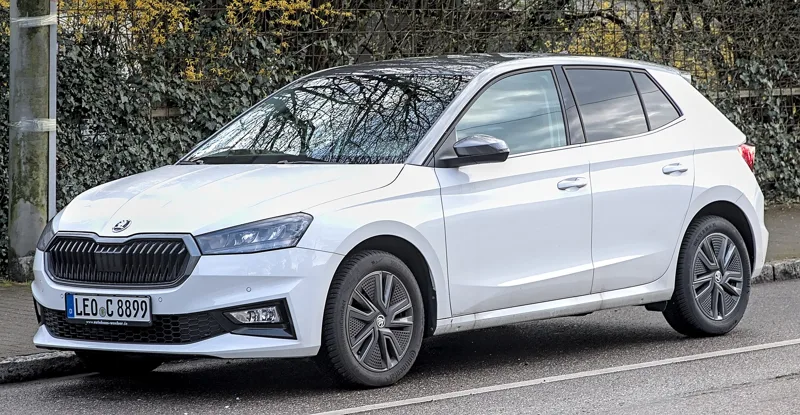
The modern Fox is a subcompact designed and built by Volkswagen of Brazil. It was sold in Latin America from 2003 to 2021 and in Europe from 2005 to 2011, as a three-door or five-door hatchback. The family also includes the Fox Xtreme, known as the CrossFox until 2017, and a small estate called the Suran, SpaceFox, SportVan or Fox Plus, by market. It rides on the PQ24 platform and is based on the fourth-generation Polo.
The name was already crowded. Volkswagen acquired the rights in 1969 when it bought NSU, whose Fox was a motorbike first seen in 1949. It later appeared on special edition Polos, and on the Audi 80 in Australia and the United States. In North America the Fox was a Brazilian-built variant of the Voyage, sold from 1987 to 1993 as an entry-level subcompact against the Yugo and the Hyundai Excel. It had a 1.8-litre 81 PS (60 kW; 80 hp) engine, no automatic, no power steering and no ABS, and the American arm lost money on each car in the early years. In South Africa the Fox was a Jetta-based car sold beside the Citi Golf.
Fox in Latin America and Europe
In Latin America the Fox sat between the cheap Gol and the Polo. Mexico renamed it the Lupo, and Volkswagen of Mexico dropped that version after a short run of 2009 models because of poor sales, replacing it and two ageing cars with the Novo Gol. A new Fox appeared in Brazil in October 2009 and was restyled in 2014. In 2015 the most basic Latin American version earned 4 stars for adult occupants and 2 for infants from Latin NCAP.
Europe first saw the car in April 2005 at AMI Leipzig, as a three-door with a 1.2-litre 40 kW (55 hp) three-cylinder, a 1.4-litre 55 kW (75 hp) four-cylinder, or a 1.4-litre 51 kW (69 hp) TDI. It carried standard twin airbags and ABS. A long options list kept the headline price down, and Euro NCAP gave it four stars. It replaced the Lupo as the entry-level car, and Volkswagen stopped selling it in Europe in 2011, when the Up took over.
The Suran estate was presented in April 2006 and built in General Pacheco, Argentina. A tail extended by 360 mm gave it a bigger boot and more rear legroom than the hatchback, and it competed with the Peugeot 206 SW and Fiat Palio Weekend. It used a 1.6-litre engine making 98 to 103 PS, depending on whether it ran on petrol or an ethanol blend, and it was discontinued at the beginning of 2019. The CrossFox added mixed-use tyres, a raised suspension and a spare wheel on the tailgate.
The Volkswagen Corrado: a coupe too dear for its own good
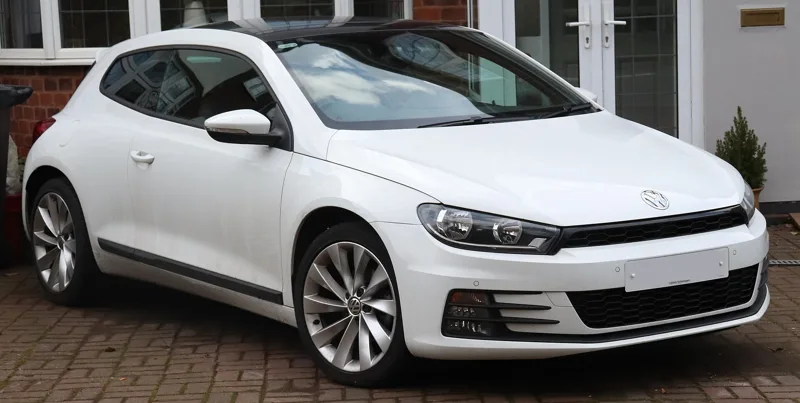
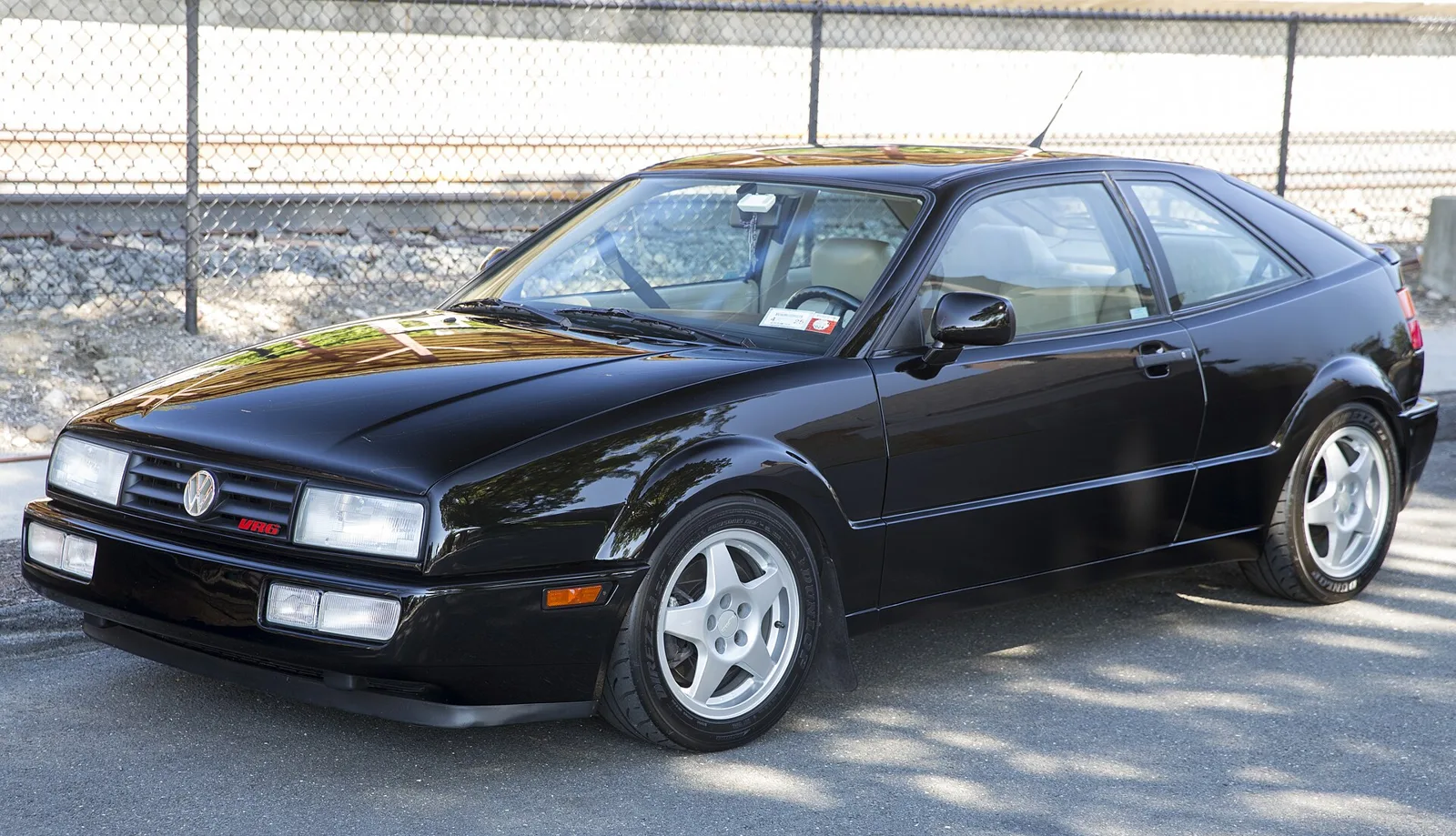
The Corrado was a sport compact that Volkswagen sold from 1988 to 1995, built by Karmann in Osnabrueck. It is a three-door liftback with a 2+2 layout, front-wheel drive and the Golf Mk2's A2 platform. Herbert Schaefer designed it, and it overlapped with and then replaced the Scirocco. Production reached 97,521 over seven years, and about 50,000 went to the United States.
Karmann's body was partly zinc plated and galvanised for rust protection. The flush windows and an active rear spoiler gave it a distinctive look: the spoiler rises automatically above 100 km/h (62 mph), or 45 mph (72 km/h) in North America, and retracts below 25 km/h (15 mph), with a manual override. The name comes from the Spanish verb correr, to run. Prototypes were called Taifun.
Corrado G60 to Corrado VR6
The car launched at the end of 1988 with a 1.8-litre 16-valve engine making 136 PS (100 kW; 134 hp) and the G60, a 1.8-litre supercharged eight-valve with 160 PS (118 kW; 158 hp). The G60 is named after the G-Lader, a scroll-type supercharger whose interior looks like the letter G. Sales started slowly because the Corrado cost far more than the Scirocco, and Volkswagen United States said it had overequipped the car.
The big change came in 1992 with the VR6. In Europe it had a 2,861 cc engine making 190 PS (187 bhp; 140 kW) at 5,800 rpm and 245 N.m at 4,200 rpm, while the United States and Canada got a 178 hp (133 kW; 180 PS) version. The VR6 arrived in America in 1992 as the Corrado SLC, with 3,500 examples, plus 1,500 leftover G60s still on sale. It squeezed six cylinders into roughly the space of a four by setting two banks at an angle of 15 degrees under one cylinder head. A wider front track forced new wings, a new front bumper and a raised bonnet, and the VR6 borrowed rear suspension parts from the Golf A3. The G60 was gone from North America after 1992 and from Europe in 1993, and 1994 was the last American model year. Europe also got a cheaper 2.0-litre 8-valve model with 115 PS (85 kW; 113 hp) from 1993 to 1995.
Rarities and verdicts
Some Corrados are very scarce. The G60 Jet was a German-market economy version in four colours, and the VWMS Corrado 16V G60 never reached series production, with only two factory examples believed to exist, both in Nugget Yellow. The Storm was a UK limited edition of five hundred, split between 250 in Classic Green with cream leather and 250 in Mystic Blue with black leather, on 15-inch BBS Solitude wheels. The Campaign of 1992 was a prize for the six best UK dealers in selling Karmann-built cars, with Dusty Mauve paint and red brick leather. Six were made, and four were known to survive as of 2022. In Japan the Corrado came only with a 1.8-litre engine, as the VR6's displacement above two litres would have meant a heavier tax bill.
Auto Express called it one of Volkswagen's best drivers' cars and the VR6 the most desirable version, and Car magazine listed it among 25 cars to drive before you die. Tiff Needell praised the handling of the G60 on Top Gear in 1988. In 2003 Richard Hammond called it a future classic, but added that it cost too much and found no buyers.
The Volkswagen Citi Golf: the Mk1 that would not retire
The Citi Golf is a right-hand-drive five-door hatchback that Volkswagen built in South Africa from 1984 to 2009, a facelifted first-generation Golf that had ended production in Germany in 1983. The company had assembled the Mk1 there since 1978. When the larger and pricier Mk2 launched in 1984, Volkswagen South Africa found a hole in the entry-level market. It already had the tooling at its Uitenhage plant in the Eastern Cape, and in 1988 it imported more from Westmoreland, Pennsylvania, where Mk1 production ended. It kept only the five-door shell, because three-door tooling would take up space that the Mk2 needed.
A stripped-back EconoGolf was scrapped for looking too much like the 1970s car, and the Mk1 was rebranded instead. The first three prototypes were painted red, yellow and blue with white wheels and bumpers, and Citi decals on the rear doors. The original car came in just those three colours, and the early advertising colour schemes were partly inspired by the Dutch artist Piet Mondriaan. A Sport with a 1.6-litre carburettor engine followed in mid-1985, later enlarged to 1.8 litres.
A locally designed facelift in September 1988 gave the car a sloping grille like the Mk2's, deeper bumpers and an ice-hockey-stick crease on the C-pillar. In 1990 the Citi CTi brought back the Golf GTI's 1.8-litre 82 kW K-Jetronic engine and a flat-out speed of just over 180 km/h, and it was aimed at younger drivers who found the Mk2 GTI too far upmarket. Later changes included quad headlamps around 2001 to 2002, a 2004 dashboard from the Skoda Fabia, and new taillights made by Hella in 2006. By 2008 fuel injection had replaced every carburettor engine.
Special editions piled up: Designa, Citi.com, Deco, VeloCiti, Billabong and Xcite among them. The Citi 1.8iR, unveiled at the Auto Africa Expo in Johannesburg in October 2006, had a 90 kW engine and a claimed 0 to 100 km/h time of 8.5 seconds, and 375 units were made between 2006 and 2008. The last Citi Golf was built on 21 August 2009, and a numbered Citi Mk1 edition of 1000 marked the end. On 11 March 2010 Volkswagen announced the Polo Vivo, based on the Polo Mk4, as the replacement, and a new-shape Vivo was being built beside the new Polo in July 2019.
Which gap each car filled
| Model | Years | Built in | Gap it filled |
|---|---|---|---|
| Lupo | 1998 to 2005 | Germany (home town Wolfsburg) | The bottom of the range as the Polo grew |
| Fox | 2003 to 2021 (Europe 2005 to 2011) | Brazil | Between the Gol and Polo; the Lupo's European successor |
| Corrado | 1988 to 1995 | Osnabrueck, by Karmann | The Scirocco's sporty successor |
| Citi Golf | 1984 to 2009 | Uitenhage, South Africa | An affordable entry-level car once the Mk2 grew |
What took over from the Lupo, Fox and Citi Golf?
The Lupo's spiritual successor, the Volkswagen up!, was released in 2011. The Fox left Europe that same year and was discontinued in Latin America in 2021. Volkswagen used the Fox in Europe instead of developing a genuine Lupo replacement. The Citi Golf passed its role to the Polo Vivo.
Which versions do reviewers and owners single out?
The Corrado VR6 is the version reviewers single out. Auto Express called it by far the most desirable version, and MSN Autos credited it with introducing the VR6 to America. The Lupo GTI has the most standard kit of any Lupo, while the 3L is the fuel-sipping rarity with its aluminium and magnesium panels. The Fox scored four stars in Euro NCAP on its European debut. Among Citi Golfs, the CTi and the 1.8iR are the performance models, and the 1.8iR was limited to 375 cars.