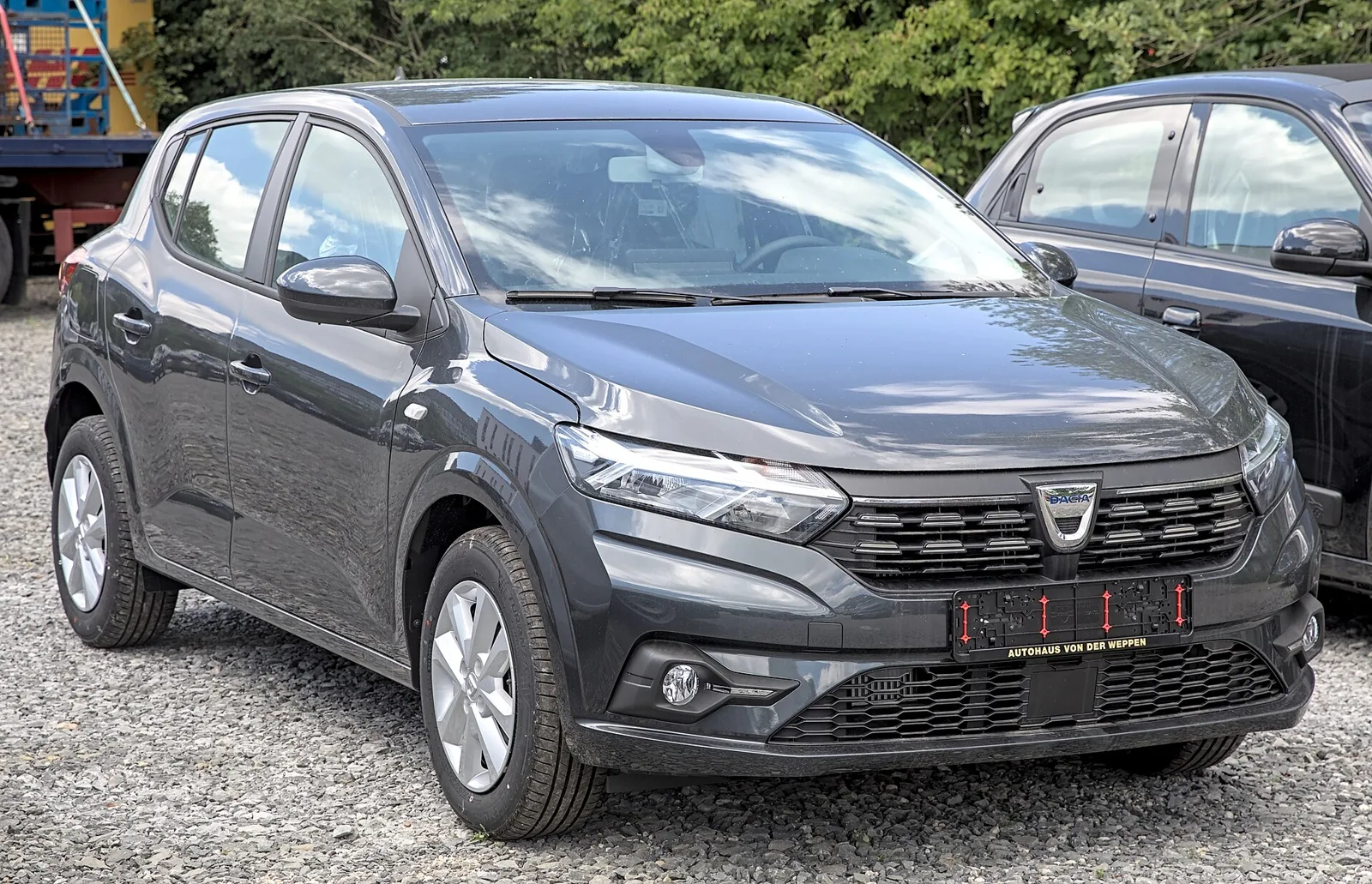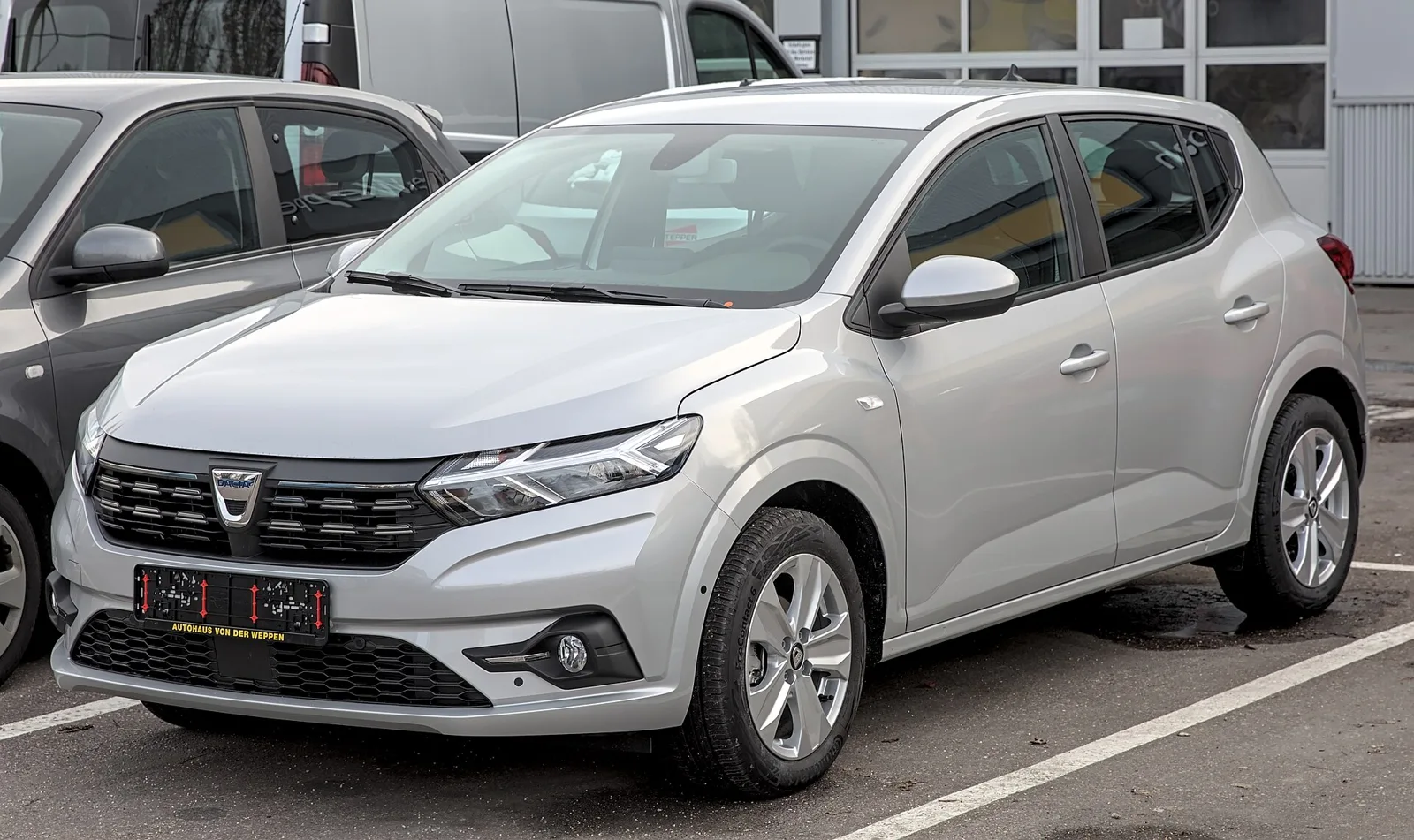
A B-segment hatchback from Romania that began in 2007, grew into a Renault-badged export model and reached its third generation in 2020.
The Dacia Sandero III is the third generation of Dacia's B-segment supermini, launched on 29 September 2020 with three-cylinder engines from 65 hp to 100 hp. It was refreshed in 2022 and again in October 2025, when a 1.2-litre turbo joined the range.
The Dacia Sandero is a B-segment supermini produced and marketed jointly by Renault and its Romanian subsidiary Dacia. It has been on sale since 2007 and reached its third generation in 2020. Under the Renault name it is sold in several other markets, and it has been Europe's best-selling car in several recent years.
How did the first Sandero reach the market?
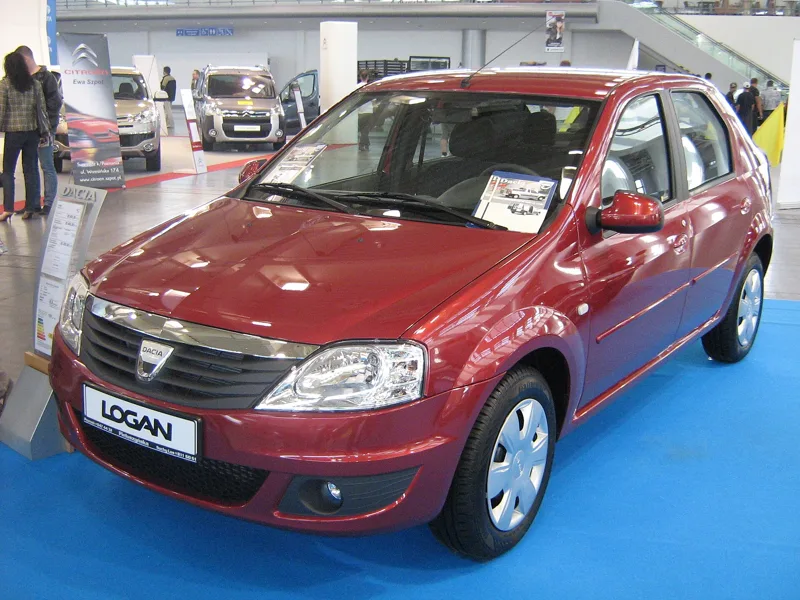
The first generation, codenamed B90, was developed at Renault's Technocentre near Paris, working with engineering centres in Brazil and Romania. It derives from the Dacia Logan sedan, although its wheelbase is slightly shorter.
The car was shown first at the Frankfurt show in 2007, then went on sale in Brazil as a Renault in December 2007. That made it the first Renault model to debut outside Europe. European buyers met it as a Dacia at the Geneva Motor Show in March 2008.
A budget supermini that grew from a Logan-based hatchback into Europe's best-selling car in several recent years.
Where was the first generation built?
Renault started making the Sandero in South Africa in February 2009 and in Russia in December 2009. A Renault version is also built in Colombia, both for that home market and for export to countries including Chile.
The current car is produced in Mioveni, near Pitesti in Romania, for right-hand drive markets such as the United Kingdom, Ireland, Cyprus and South Africa. Renault Algeria has built the Stepway version locally in Algeria since early 2016.
What engines did the first generation offer?
The first generation's most important variant was the Sandero Stepway, a crossover-look model released by Renault do Brasil in October 2008. The Brazilian car used a 1.6 litre 112 hp (82 kW) 16-valve Hi-Flex engine that could run on bio-ethanol.
The European Stepway was unveiled at the Barcelona International Motor Show on 7 May 2009 and went on sale in most European markets from September 2009. Dacia offered it with a 1.6 litre petrol engine producing 90 hp (66 kW), or a 1.5 dCi diesel producing 70 hp (51 kW).
The Stepway was exclusively front-wheel drive, but a four-wheel-drive prototype was built in 2010 by the University of Pitesti.
How did the second generation differ?
The second generation, codenamed B52, was revealed by Dacia at the 2012 Paris Motor Show. A new Stepway variant was shown alongside it, and the hatchback and mini crossover had been spotted in camouflage during June, July and September 2012. Official photos followed on 17 September 2012.
The exterior theme matched the new Logan, while the dashboard drew on the Lodgy. Orders opened in Romania on 1 October 2012, and the car reached British showrooms in 2013, where it joined the Duster and was widely described as the cheapest car on sale.
The Renault Sandero followed in Brazil in June 2014, where the car is also manufactured for South American markets. Sales in Russia began in September 2014, with the Sandero assembled locally at the AvtoVAZ plant.
How safe was the first Sandero?
Euro NCAP tested the basic first generation in 2008 and gave it 3 stars for adults, 4 stars for child occupants and 1 star for pedestrians. Its points were 25 for adults, 38 for children and 6 for pedestrians.
The safety pack version, which added side and head airbags along with front seatbelt pretensioners, scored 31 points for adults, 38 for children and 6 for pedestrians. Those results were rated as 4 out of 5 stars for both adult and child occupants.
In Latin America the most basic car, with no airbags, managed only 1 star for adults and 2 stars for toddlers under Latin NCAP 1.0 in 2012.
How did the second generation score in crash tests?
In May 2013 the second generation achieved 4 stars overall in Euro NCAP for its basic level, an improvement on the 3 stars of the previous basic model. The adult score was 29 points, or 80%, and the child score 39 points, or 79%. Pedestrians earned 21 points (57%), while safety assist managed 5 points (55%).
Those scores earned 5 out of 5 stars for adult and child occupant protection, with 4 out of 5 for pedestrians and the safety assist tests. Optional rear disc brakes were available for the second generation.
In Latin America the picture was more mixed. Latin NCAP 2.0 gave the most basic two-airbag car 1 star for adults and 3 stars for toddlers in 2018, and the four-airbag version 1 star for adults and 4 stars for toddlers in 2019. The updated car reached 3 stars for adults and 4 stars for toddlers that same year.
What did newer Latin NCAP tests show?
Latin NCAP 3.0 tested the updated Sandero in its most basic Latin American configuration in 2024 and awarded it 0 stars, a result similar to Euro NCAP 2014 standards. That was a sharp contrast with the 3 stars achieved by the updated car in 2019.
Global NCAP gave the Sandero for Africa 3 stars for adults and 4 stars for toddlers in 2017, based on the Latin NCAP 2013 protocol. Crash results therefore vary a great deal depending on the market and the equipment fitted.
What was the Sandero R.S. 2.0?
In August 2014 Renault Sport chief Patrice Ratti told Autocar that a hot hatch version of the Sandero was in development. The result was the Sandero R.S., powered by a 150 hp (110 kW) 2.0 16v F4R engine that could reach 100 km/h (62 mph) in 8.0 seconds.
It was the first Renault Sport vehicle to be built outside France. The R.S. went on sale in Brazil in September 2015 and reached Mexico on 21 October 2019. It had three ECU modes (normal, sport and sport plus), and its spec sheet included four discs with ABS, a wheel borrowed from the Clio R.S., electronic stability control and a six-speed manual gearbox.
The R.S. was dropped at the end of 2021 as Brazil tightened its emissions rules.
What changed in the facelifts?
A second generation facelift arrived in November 2016 at the Paris Motor Show. It brought LED daytime running lights and restyled taillights, and Dacia replaced the old 1.2-litre unit in the entry-level trims with a 1.0-litre three-cylinder petrol.
In Brazil a further facelift was announced in July 2019 for the Renault-badged model. It revised the front end slightly and reshaped the rear more significantly, with tail lights running onto the tailgate. The Mexican market never received it because the Kwid hatchback had replaced the Sandero there.
Dacia restyled the car again in June 2022, when it took the new brand logo and a modified grille. The steering wheel was slightly changed to suit.
What does the third generation offer?
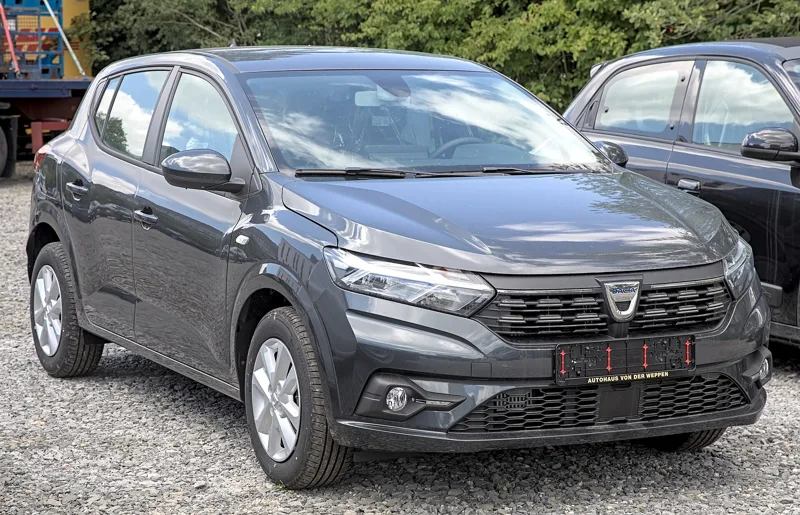
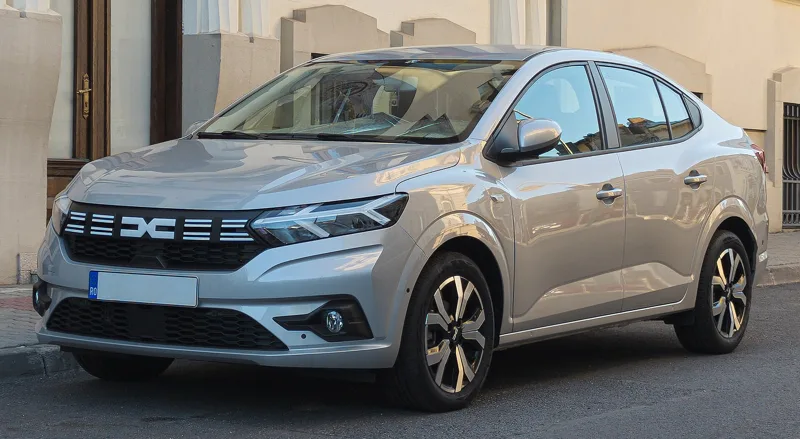
The third generation of the Sandero and Sandero Stepway was launched together with the Logan III on 29 September 2020, following a presentation on 7 September 2020. It sits on the low-spec version of the CMF-B platform.
Every third generation engine is a three-cylinder. The entry model has a naturally aspirated 1.0-litre producing 65 hp (48 kW) with a 5-speed manual. The top trims use a turbocharged 1.0-litre with 90 hp (66 kW), and buyers choose between a 6-speed manual and a CVT. A more powerful ECO-G 100 Bi-Fuel version makes 100 hp (74 kW) with a 6-speed manual.
Lower-spec cars get a modular multimedia system called Media Control with removable smartphone support, while upper trims have an 8-inch touchscreen with Android Auto and Apple CarPlay. Depending on the market, equipment includes LED headlights, blind-spot warning, park assist with a reverse camera, keyless entry and heated front seats.
What changed in the 2025 refresh?
On 6 October 2025 the Sandero and Sandero Stepway received a facelift. The front fascia was redesigned with new headlights and fog lights, while new alloys, infotainment and a revised steering wheel completed the update. The rear was also updated slightly.
The biggest mechanical change was a new 1.2L direct injection turbocharged engine, sold as the ECO-G 120 and available in bi-fuel petrol and LPG form. It is the same engine found in the Renault Clio VI of that year, and it can be paired with a 6-speed manual or, for the first time in the car, a 6-speed wet-clutch EDC automatic.
Why did Top Gear keep joking about the Sandero?
The Sandero became a running joke on the British programme Top Gear. In Series 11 and Series 12 James May would deliver Good News about the car during the news segment, and Jeremy Clarkson would respond with a short reply before changing the subject.
The joke was later printed in The Big Book of Top Gear, and in Series 12 the presenters switched roles, with Clarkson bringing up the car and May brushing it off. When May once announced bad news about a delay, the reply became a popular internet meme.
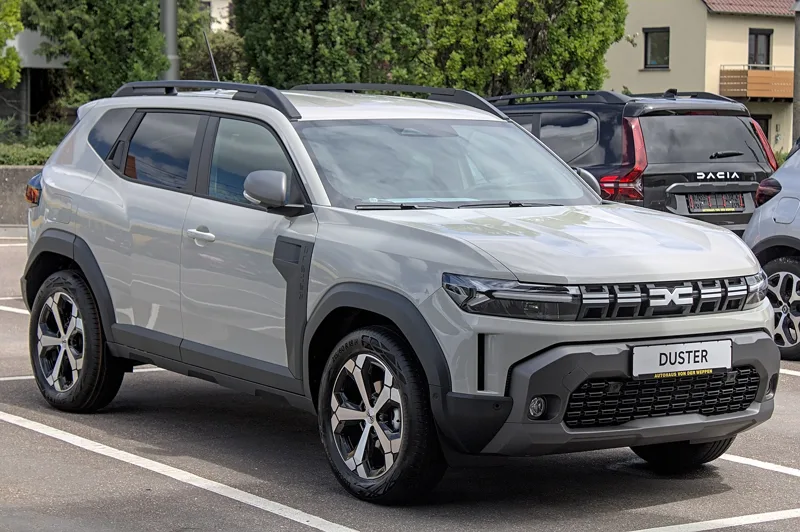
In Series 14, during a trip to Romania, Clarkson bought May a used Sandero, which was then damaged by a reversing lorry while parked. The gag returned for the Duster and the Lodgy in later series.
How did the second generation fare in the Top Gear challenge?
In Series 21 the second generation Sandero took part in a challenge for 1.0-litre three-cylinder cars alongside the Ford Fiesta and Volkswagen Up!. The task ended in the abandoned city of Pripyat, and the Sandero was the sole car that got through every challenge and returned from the city.
May pointed out the large price gap between the Fiesta and the Sandero, saying that at 17,500 pounds against 7,500 pounds he could afford to lose his car and still be better off than Hammond. Despite the mockery, May has said he has a genuine affinity for the Sandero.
What did reviewers say about the Sandero?
In January 2013 the British magazine What Car? named the second generation Best supermini less than 12,000 pounds, praising its real space at a bargain price. What Car? gave the Sandero the same award again in 2014 and 2015.
Auto Express gave the Sandero Stepway 4 out of 5. In 2021, May filmed a favourable review of the Sandero for the DriveTribe YouTube channel.
What are the Dacia Sandero III specifications?
| Specification | Detail |
|---|---|
| Segment | B-segment supermini |
| Third generation launch | 29 September 2020, alongside the Logan III |
| Platform | Low-spec version of CMF-B |
| Base engine (2020) | 1.0-litre three-cylinder, 65 hp (48 kW), 5-speed manual |
| Top turbo engine (2020) | 1.0-litre turbo, 90 hp (66 kW), 6-speed manual or CVT |
| ECO-G 100 Bi-Fuel | 100 hp (74 kW), 6-speed manual |
| 2025 engine | 1.2L turbo ECO-G 120, petrol or LPG bi-fuel |
| R.S. 2.0 (second generation) | 150 hp (110 kW), 0 to 100 km/h in 8.0 seconds |
| Euro NCAP, second generation (2013) | 4 stars overall for basic level |
| Latin NCAP 3.0 (2024) | 0 stars for the most basic configuration |