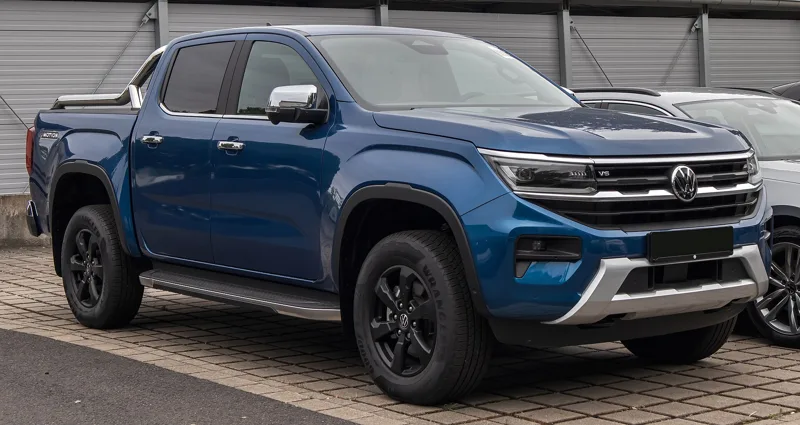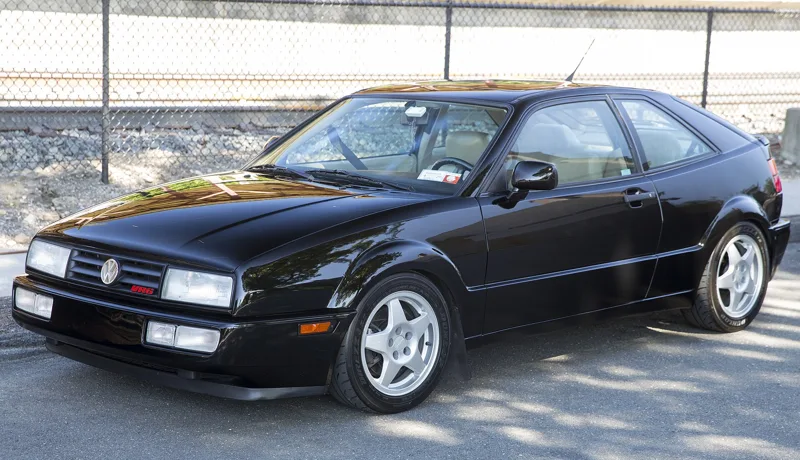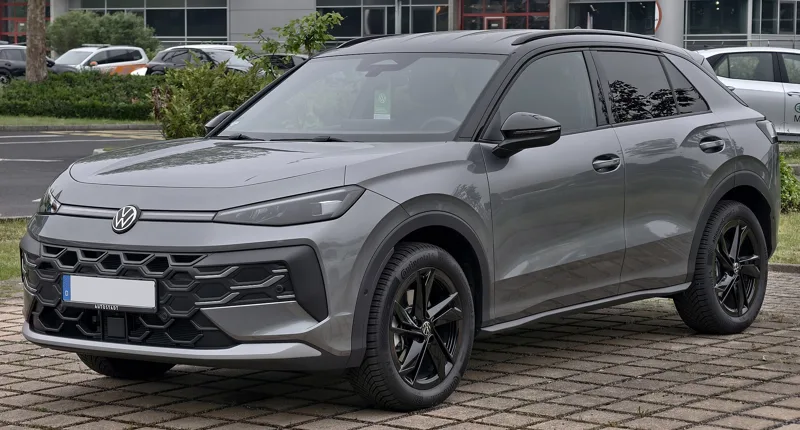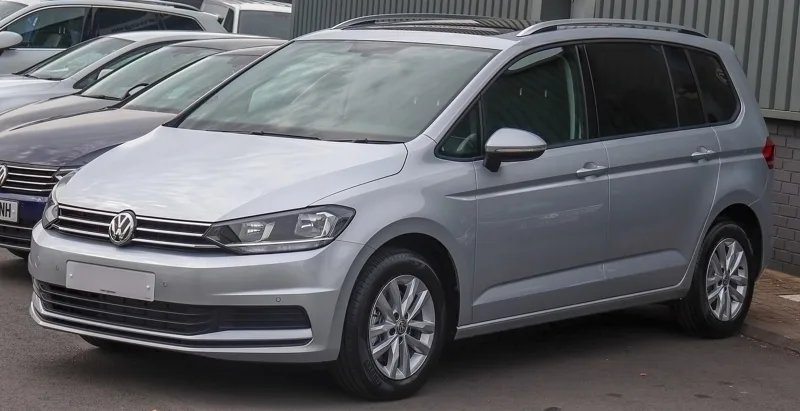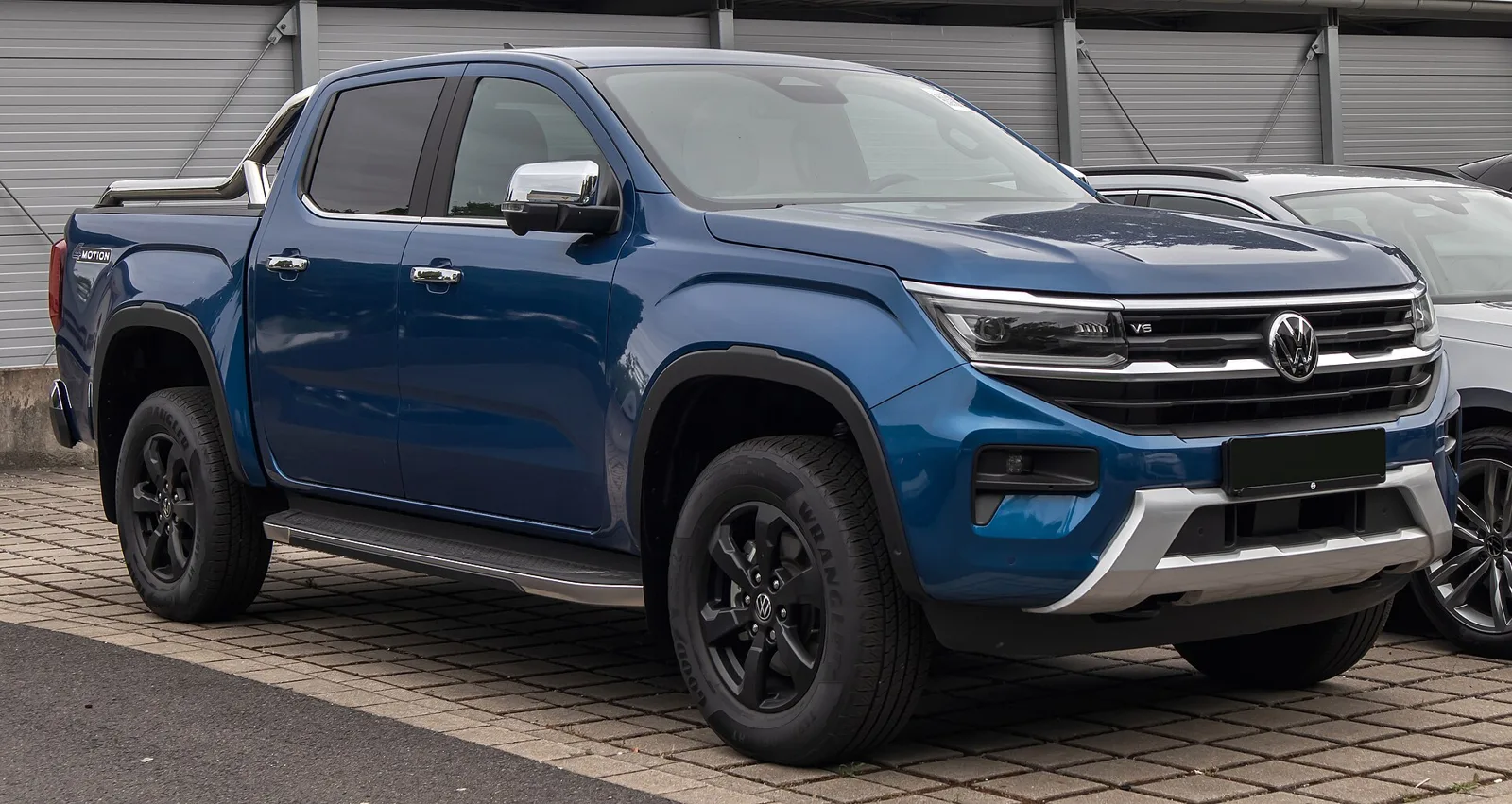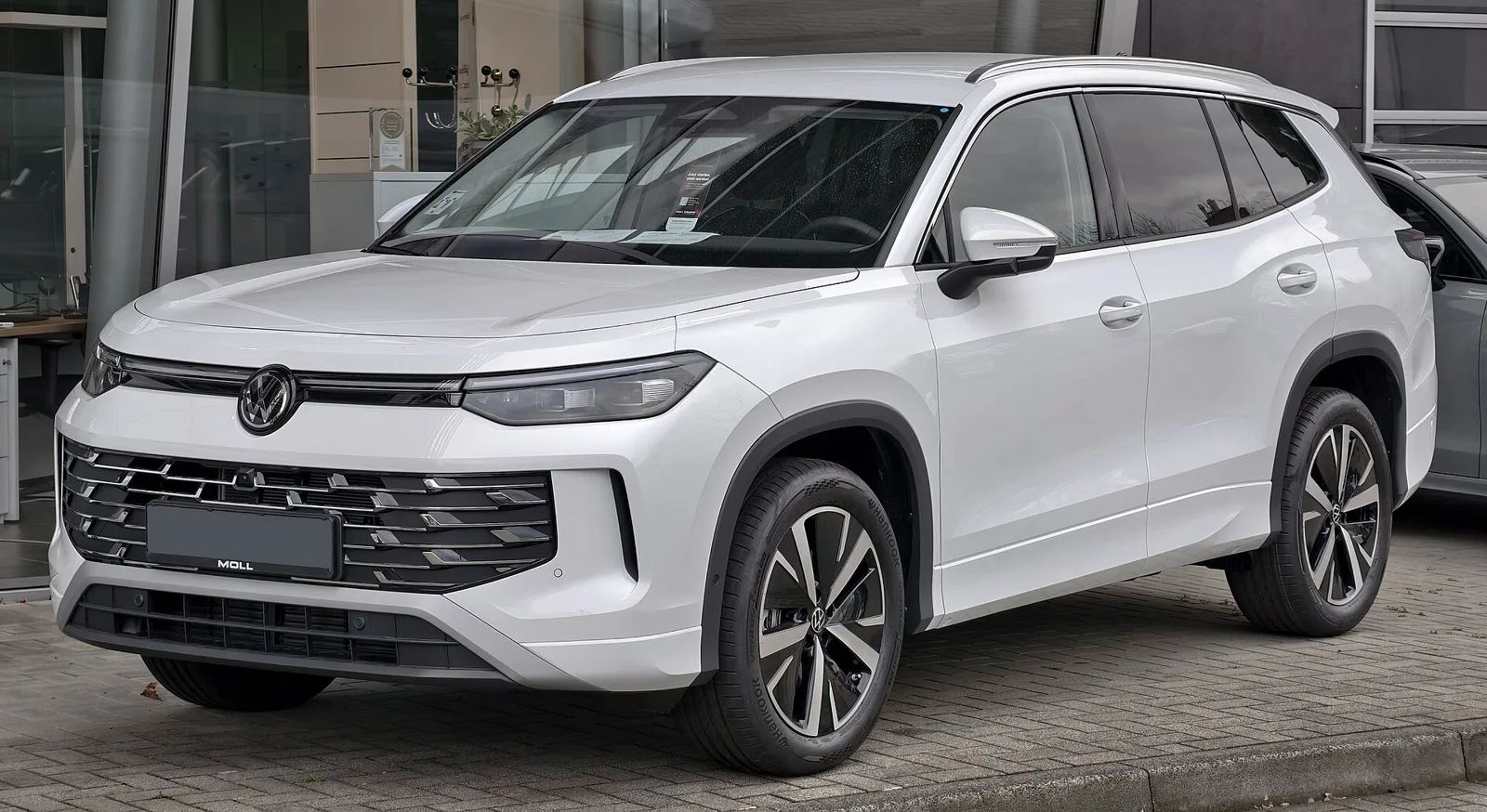
A Brazilian design built in Spain, an Indian-made subcompact with Mexican buyers, and a Chinese nameplate that went global in 2024.
The Taigo is a Polo-based coupe crossover built in Spain for Europe from a Brazilian design. The Taigun is a T-Cross-based subcompact built in India for India and Mexico. The Tayron is a larger crossover, first sold in China and, from 2024, in many other markets.
Volkswagen built the Taigo without a single physical prototype. Designers and engineers used virtual and augmented reality instead, and the company says that trimmed ten months from the schedule. It is a fitting start for a family of crossovers whose members were each shaped by where they would be sold: Taigo for Europe, Taigun for India, Tayron for China and, since 2024, much of the world.
What are the Volkswagen Taigo, Taigun and Tayron?
All three are crossover SUVs, but they are not related models. The Taigo and Taigun are subcompact (B-segment) cars, while the Tayron is a larger machine that now sits between the Tiguan and the Touareg. Each carries a name that signals its home market as much as its size.
The Taigo is the European cousin of a Brazilian car, and the Taigun is an Indian-built car sold in India and Mexico. The Tayron began as a Chinese nameplate from FAW-Volkswagen in 2018. According to Volkswagen, the name combines the words tiger and iron.
The Taigo was designed without a physical prototype, and the company says that saved ten months.
Where did the Volkswagen Taigo come from?
The Taigo began life as the Nivus, which Volkswagen unveiled in Brazil on 28 May 2020. Other South American markets got it in 2021, and the European version arrived on 28 July 2021, a year after the Nivus debut. It was the first Volkswagen developed in Brazil to be built and sold in Europe.
Production for the European market began in the second half of 2021 at the Pamplona plant in Spain, where the Polo and T-Cross are also made. About 30 people from the Spanish team worked on the project, according to Volkswagen do Brasil, and some travelled to Brazil to study the development car before European production began.
The Nivus itself is made at the Anchieta plant in Sao Bernardo do Campo, alongside the Polo and Virtus. Brazilian-built cars go to Latin American markets, and Mexico took imported Nivus cars from December 2021.
How is the Taigo built on the Polo?
Think of the Taigo as a Polo that has been to the gym and bought a longer coat. It sits on the Volkswagen Group MQB A0 platform and shares its side doors, windscreen, roof stamping, suspension setup and most of its interior parts with the Mk6 Polo. Sharing parts like this keeps costs down.
What changes is the outside. The front end is entirely redesigned, and the bonnet is raised to give a taller, more rugged stance. A new C-pillar stamping and different rear bodywork open up the boot, which grows from 300 litres in the Polo to 415 litres in the Nivus. The European Taigo is listed with 438 litres, against 455 litres for the European T-Cross, so the sloping roof costs some luggage space.
A platform, in this sense, is the set of underpinnings a maker reuses across several cars: floor, axle mounts, the basic layout of the front end. Changing the visible shell on top is far cheaper than starting again, which is why one family of parts can yield a hatchback, a crossover and a saloon.
That roofline is the point. Volkswagen pitched the Taigo as a "coupe crossover", a low-roof alternative to the taller T-Cross, and described it as the first SUV coupe in the European small car segment. In Europe it sits alongside the T-Cross; in South America it sits below it.
One limit follows from the platform: there is no all-wheel drive in any market, because MQB A0 was not designed to support it.
What engines does it use?
The European Taigo is front-wheel drive only and launched with two petrol engines. The 1.0-litre three-cylinder turbo makes 95 PS (70 kW; 94 hp) or 110 PS (81 kW; 108 hp), and a 1.5-litre four-cylinder turbo makes 150 PS (110 kW; 148 hp). The 95 PS version has a standard five-speed manual. The 110 PS engine comes with a six-speed manual or a seven-speed DSG dual-clutch automatic. An R-Line is the flagship trim.
The Brazilian Nivus is tuned for local fuel. Its 1.0-litre TSI, badged 200 TSI, makes 118 PS (87 kW; 116 hp) on petrol and 130 PS (96 kW; 128 hp) on ethanol, with a six-speed automatic. An export-only 170 TSI with a five-speed manual goes to countries such as Argentina and Uruguay, where manual gearboxes are still more popular than in Brazil.
How safe is it?
Euro NCAP tested the Taigo in 2022 as a partner model to the Polo and awarded the maximum five stars. The Latin American Nivus, with six airbags, stability control and an optional collision avoidance system, earned five stars from Latin NCAP 3.0 the same year. Rear disc brakes are an option on the Nivus.
What is the Volkswagen Taigun and who is it for?
The Taigun is a different answer to a similar question. Built in India and aimed at Indian and Mexican buyers, it is based on a long-wheelbase version of the T-Cross, with a front end like the Chinese-market T-Cross and a slightly reworked C-pillar. Volkswagen says it rides on the MQB A0 IN platform, developed for India and shared with the Skoda Kushaq.
The production car was revealed on 31 March 2021 and went on sale on 23 September 2021. Under the Volkswagen Group's India 2.0 plan, it uses up to 95 per cent local parts. The only visible change from the 2020 prototype was a drop in wheel size from 19 to 17 inches.
Localisation is the quiet engine behind that. When most of a car's parts are made in the country where it is assembled, the maker avoids import duties and shipping costs, and can keep the price within reach of local buyers.
The name has a past. In 2012 Volkswagen showed an unrelated Taigun concept based on the Up city car, aimed at Europe, Brazil and India for 2016. That plan was cancelled because the car was judged too small for the way the market was moving, and the T-Cross took its place in 2018.
What is under the Taigun's bonnet?
Two petrol engines, both turbocharged. The 1.0-litre three-cylinder TSI produces 115 PS (113 hp; 85 kW) and is paired with either a six-speed manual or a conventional torque-converter automatic, also with six speeds. The 1.5-litre four-cylinder TSI produces 150 PS (148 hp; 110 kW) and uses a seven-speed DSG. A six-speed manual once offered with the 1.5 was discontinued in 2024.
How well did the Taigun do in crash tests and sales?
In October 2022 Global NCAP tested the Taigun at Volkswagen's expense. It scored five stars for adult and child occupant protection and was the first car to do so under the organisation's tougher protocols. Driver chest protection in the side tests was rated marginal, and the driver's left tibia was the one body region in the frontal offset test that was not good or acceptable.
Indian cars come with six airbags, i-Size ISOFIX anchorages, stability control and post-collision braking as standard. Left-hand-drive cars exported to Mexico add autonomous emergency braking and standard side airbags.
By September 2024 the Taigun had passed 100,000 sales, counting domestic and export. Exports go to Mexico from 2022 and to Indonesia, where the car is sold as the T-Cross through the importer PT Garuda Mataram Motor and went on sale in February 2022. A GT Edge Trail special edition with adventurous styling was announced in India in November 2023.
What is the Volkswagen Tayron?
The Tayron is the biggest of the three and the one with the widest reach. The first generation, Typ 5N, was previewed in March 2018 as a near-production concept called the VW Advanced Midsize SUV, shown at the premiere of the Touareg III. The production car appeared at the Chengdu Motor Show in September 2018 and went on sale in China in October.
FAW-Volkswagen built it with 1.4-litre and 2.0-litre turbo engines and a seven-speed dual-clutch gearbox, in 280TSI, 330TSI and 380TSI trims. There were also R-Line and GTE plug-in hybrid versions. A coupe-styled Tayron X, announced in April 2020, was slightly longer at 4,640 mm (182.7 in) and echoed a coupe concept shown at Auto Shanghai in 2019.
How did the second-generation Tayron change things?
The second generation, Typ DN, was presented at the 2024 Paris Motor Show in October. It has optional three-row seating, slots between the Tiguan and the Touareg, and replaces the Tiguan Allspace, the long-wheelbase, three-row version of the Tiguan Mk2. It is the first Tayron sold outside China.
As of 2026 it is produced at five locations: Wolfsburg in Germany, Puebla in Mexico, Changchun in China, Chhatrapati Sambhajinagar in India, and Pekan in Malaysia, where it is assembled from complete knock-down kits, meaning the parts arrive in boxes and are put together locally.
What is the Tayron called in China and North America?
In China the second generation is the Tayron L, with the L pointing to its longer dimensions and separating it from the first generation. In North America, where the Tiguan Mk2 was only sold in long-wheelbase form, the Tayron is badged as the Tiguan. Unveiled the night before the press days at the 2024 Los Angeles Auto Show, that third-generation Tiguan is offered only with two rows of seats and is 170 pounds (77 kg) lighter than the long-wheelbase car it replaces there.
For a buyer, the practical lesson is that the badge does not tell you the car. A first-generation Tayron is a different car from the second-generation one, a Tiguan in Los Angeles is a Tayron under another name, and a T-Cross in Indonesia is a Taigun. Checking the market, the plant and the generation matters more than reading the nameplate.
The three crossovers side by side
| Model | Aimed at | Built in | Platform or base | Debut |
|---|---|---|---|---|
| Taigo | Europe (Nivus in Latin America) | Pamplona, Spain | MQB A0, Mk6 Polo | 28 July 2021 |
| Taigun | India and Mexico | India | MQB A0 IN, long-wheelbase T-Cross | 31 March 2021 |
| Tayron (second generation) | China, global; Tiguan in North America | Wolfsburg, Puebla, Changchun, India, Pekan | Replaces the Tiguan Allspace | October 2024 |
What does the 2026 Taigun facelift bring, and where is the Tayron built?
The Taigun has the clearest near-term news. The facelifted car debuted on 9 April 2026, with sales due to start in June 2026. It brings a connected LED daytime running light signature, illuminated badges front and rear, a connected rear light bar, sequential indicators and welcome and goodbye animations in the tail lamps.
Inside there is a more modern dashboard, a 10.25-inch digital driver display, a larger 10.1-inch touchscreen, a panoramic sunroof, new upholstery, cleaner ambient lighting and automatic climate control. Higher variants add a rear-seat massage function. The side profile stays familiar, with the changes concentrated at the front and rear.
The Tayron is still spreading. With five plants now building the second generation, and a version badged as the Tiguan for North America, it is the one of the three with the widest manufacturing footprint.