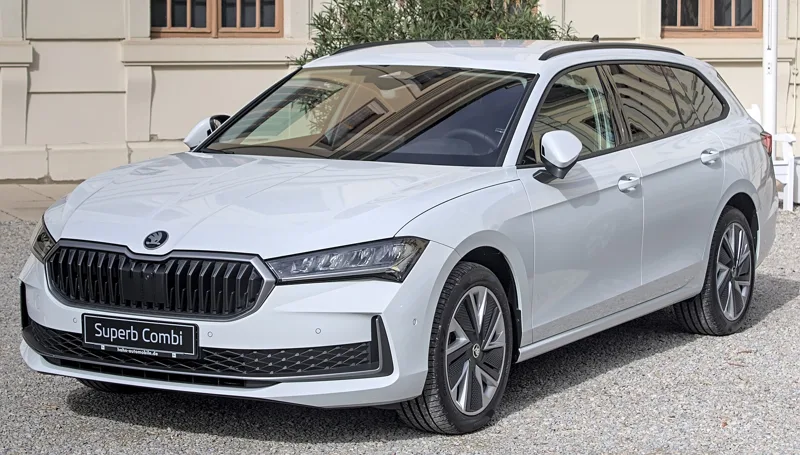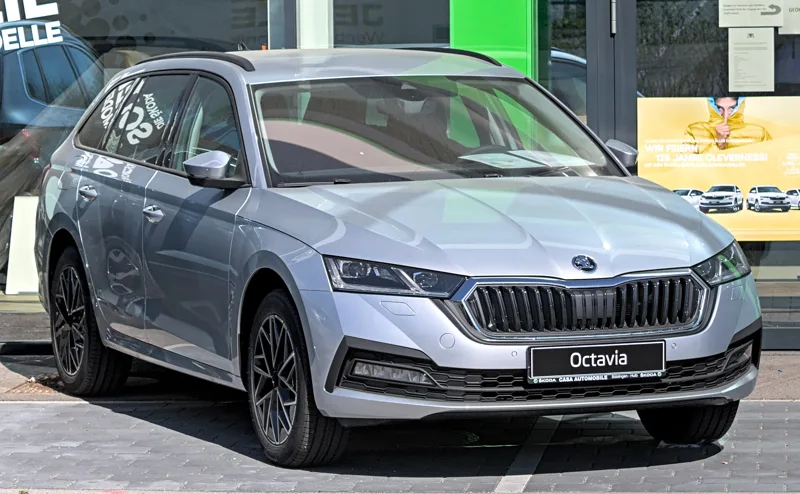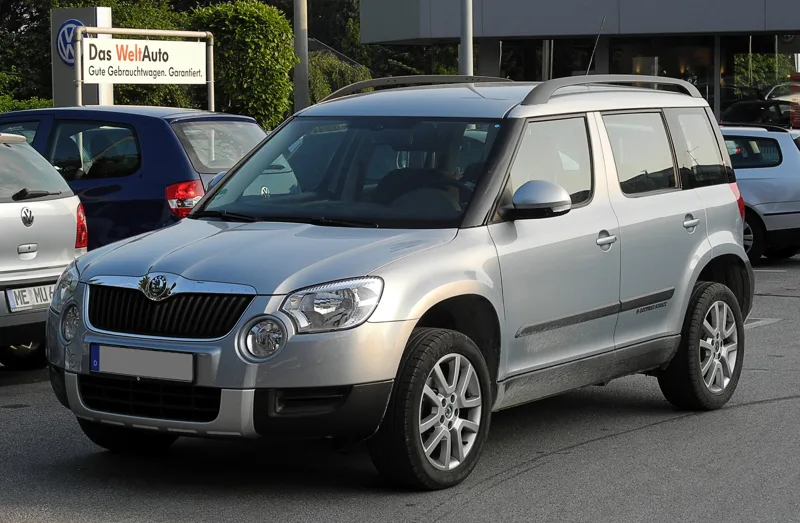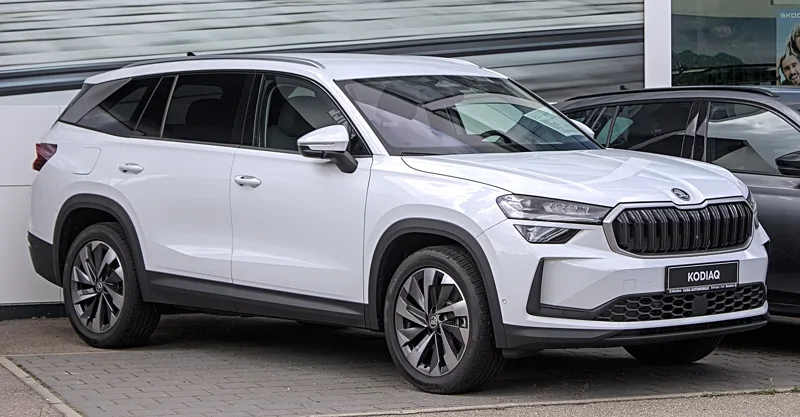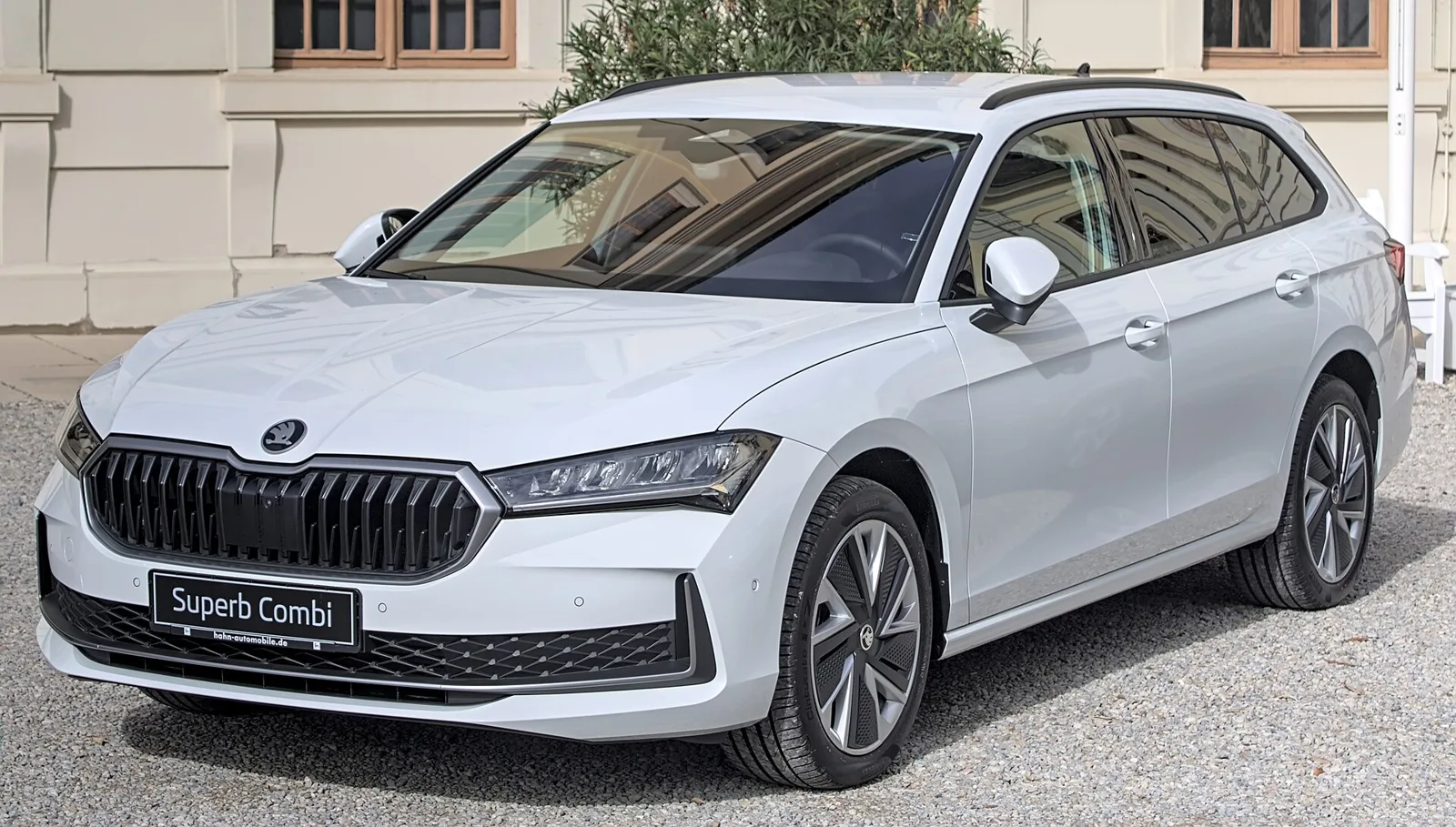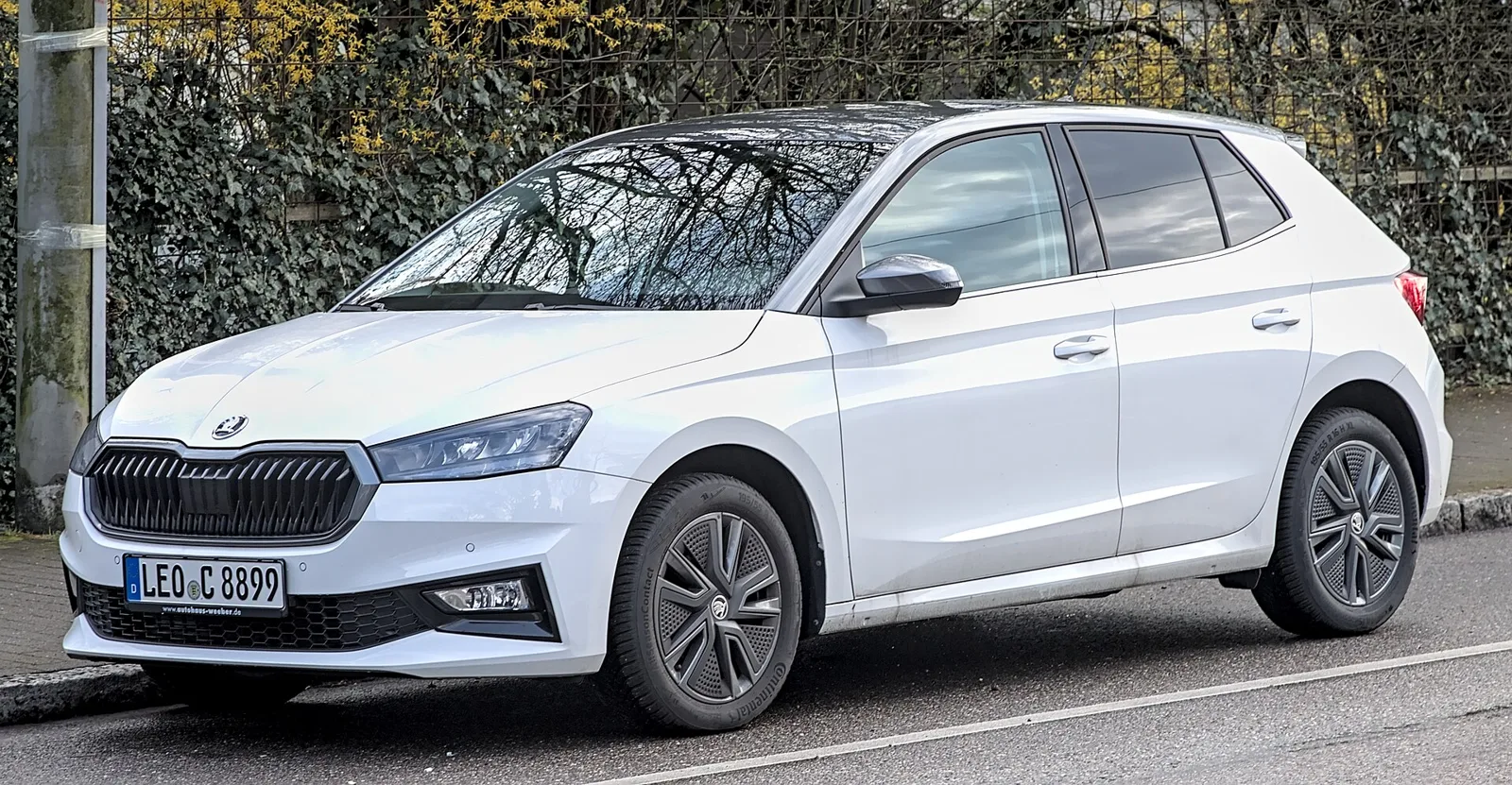
From a Fabia that undercut the Volkswagen Lupo to the VarioFlex Roomster and the Tel Aviv launch of the Scala, Skoda's small-car range under Volkswagen Group ownership.
The Skoda Fabia launched in 1999 as a Volkswagen-engineered small car priced to undercut sister brands. The Roomster of 2006 added a tall, flexible family hatchback, and the Scala of 2019 stretched the Polo platform to fit between the Fabia and Octavia. The Roomster ended in 2015 without a successor.
When the first Skoda Fabia went on sale, its cheapest version cost less than Volkswagen's smaller three-door Lupo, even though nearly everything mechanical in it came from Volkswagen. That combination of Volkswagen engineering and a lower price became the Fabia's calling card.
The Fabia, the Roomster and the Scala are three answers to the same question: how much car can a Volkswagen Group budget brand offer for the money. One was a conventional hatchback that grew into hot diesels and economy specials, one a tall, boxy small family car with removable seats, and one a stretched-platform hatchback that sits between the Fabia and the Octavia.
How did the first Fabia change Skoda?
The first-generation Fabia (type 6Y) was presented at the Frankfurt Motor Show in September 1999, with production having begun that July. It replaced the Felicia, which was discontinued in 2001, and arrived as a hatchback, an estate called the Combi and a saloon called the Sedan. It was the first car built on the group's A04 platform, a foundation it had in common with the Volkswagen Polo Mk4 and the SEAT Ibiza, and in 2000 it took the What Car? Car of the Year title in the UK.
The range ran from the 1.0 8v Classic to the 2.0 Elegance, with a 1.9 PD TDi RS later added at the top. Part of the Fabia's success lay in the fact that its mechanical parts were all developed by or with Volkswagen, yet offered at prices that undercut other models in the group. The Combi followed in September 2000 at the Paris Motor Show.
The last of the old Skoda engines
The only traces of pre-Volkswagen Skoda in the Fabia were the 1.0 and 1.4 MPI engines, pushrod designs with three-bearing crankshafts, adapted from the company's own 1.3 engine that had powered the 130 and the Favorit. The low-cost 1.0 arrived in April 2000. The pushrod 1.0 and 1.4 ended in April 2003, soon after a Czech-built three-cylinder 1.2 MPI appeared. That engine, built at Mlada Boleslav, was a local derivative of Volkswagen's 1.6-litre four. In 2003 it was renamed HTP, for High Torque Power, a name that reflected strong torque despite modest peak power.
The four-valve twin-cam version arrived at the start of 2003, and unlike the single-cam engine it was also offered in the saloon and Combi. No three-cylinder petrol engine was larger until 2014, when BMW's 1.5-litre turbo arrived, and Volkswagen later put it in its own Polo. Skoda developed it specifically for the Fabia, and it gave better performance and economy than the older engines.
A facelift in summer 2004 changed the fog lights, grille, rear lights and steering wheel, and brought a Sport model. It first used the 55 kW (75 PS) 1.4 petrol with a manual gearbox, then swapped quickly to the 1.2 HTP, which was less powerful but revved more freely. The Sport added red seat belts and privacy glass. At the 2006 Geneva show, minor changes included a centre rear headrest, a central three-point belt and four more body colours, and a 1.4 16v engine of 59 kW (80 PS) replaced the 55 kW (75 PS) one.
Trim names changed over time. The launch trims were Classic, Comfort and Elegance, with Comfort later renamed Ambiente. Eastern European markets, where buying power is lower, received Easy and Junior models, some with unpainted bumpers and mirrors. The Junior had no power steering and borrowed a larger 380 mm wheel from the Octavia I, instead of the usual 370 mm. The Praktik panel van, with rear windows and seats removed, sold in the same markets.
That gives C-segment dimensions on a B-segment foundation, which keeps the price competitive.
What made the Fabia RS special?
The Fabia RS, introduced in 2003 and sold as the vRS in the UK, was not the first diesel hot hatch but it was the first to be exclusively diesel, with no petrol equivalent. It used Volkswagen's 1.9-litre Pumpe-Duse turbodiesel with 96 kW (130 PS) and 310 N m (229 lb ft) at 1900 rpm, and a six-speed manual gearbox. The Scottish Car of the Year Awards crowned it Diesel Car of the Year for 2003, and its Band C tax rating in the UK added to its cost advantage.
| Measured by | 0-100 km/h |
|---|---|
| Official | 9.6 seconds |
| Autocar | 7.1 seconds |
| Auto Express | 8.1 seconds |
| FastHatchbacks.com | 8.5 seconds |
Several magazines and websites measured quicker times than the official figure. The in-gear numbers were more striking: 50 to 70 mph took 5.6 seconds, quicker than the 6.0 seconds of a BMW 330i, and 20 to 40 mph in 2.4 seconds matched the Lotus Elise 111R. The RS still achieved better than 6.2 L/100 km (46 mpg-imp; 38 mpg-US) and a top speed of 128 mph (206 km/h). On the Top Gear and Fifth Gear test tracks it beat a similarly priced MINI Cooper.
For 2007 the UK received 1,000 vRS SE cars. Each had numbered black leather seats piped in blue and red brake callipers, was painted Race Blue metallic, and added cruise control, tinted rear glass and a six-CD changer. The last Mk1 RS left the line in March 2007, registered 2007/07, and Skoda UK says only 22 of those plates exist apart from the 1,000 SEs.
How did the second Fabia move Skoda forward?
The second-generation Fabia (type 5J) was presented at the Geneva show in March 2007 and went on sale in April. It was slightly larger than its predecessor and borrowed styling from the Roomster. Thomas Ingenlath and Peter Wouda designed the two cars' exteriors at the same time to create synergies. The Combi was announced in August 2007 and shown at Frankfurt in September, with 7 mm (0.3 in) more length, 46 mm (1.8 in) more height and a boot that grew by 54 litres to 480 litres.
The petrol line-up mixed new Audi-sourced engines and carry-overs. Both 1.2-litre three-cylinders gained 4 kW, to 44 kW (60 PS) and 51 kW (70 PS). A single 1.4-litre 16v produced 63 kW (86 PS), and a 1.6 with variable valve timing, at 77 kW (105 hp), topped the range and could be paired with a six-speed Aisin tiptronic. Diesels included 1.4-litre Pumpe-Duse three-cylinders of 51 kW (70 PS) and 59 kW (80 PS), and a 1.9-litre four at 77 kW (105 PS). Every EU car had ABS and front and side airbags, with curtain airbags and stability control optional. The saloon and the VRS were dropped, the latter until the 2010 facelift.
The GreenLine used the 59 kW 1.4 diesel to return 4.1 L/100 km and 109 g/km of CO2. The Fabia Scout, a rugged version of the Combi shown as a study at the 2007 Frankfurt show, reached production in May 2009 at Mlada Boleslav. A roof in a contrasting colour was a new option.
The 2010 facelift
The facelift premiered at the 2010 Geneva show, with a new front bumper and fog lights, xenon headlights on higher models and new steering wheels. The 1.2 TSI turbo petrols replaced the 1.4 and 1.6 MPI engines, with notable gains in economy and emissions, and the Aisin automatic gave way to a seven-speed DSG dual-clutch gearbox, which cut CO2 by more than 30 per cent on the 77 kW (105 PS; 103 hp) automatic compared with the old 1.6. The diesels moved to common rail with four valves per cylinder.
The sports VRS came back as a hatchback and an estate with the 1.4-litre twin-charged engine of the Volkswagen Polo Mk5 GTI, making 132 kW (180 PS) and fitted with a seven-speed DSG as standard. A top speed of 226 km/h for the Combi VRS made it the fastest production Fabia. The new GreenLine used a 55 kW 1.2-litre three-cylinder diesel returning 3.4 L/100 km and 88 g/km. The Austrian economy driver Gerhard Plattner covered 2,006 km on a single tank, an average of 2.21 L/100 km (127.8 mpg imp / 106.4 mpg US).
A Monte Carlo version borrowed design features from the Fabia Sports Design Concept shown at the 2009 Geneva show, and at the 30th Worthersee meeting Skoda revealed the Fabia VRS 2000 design study based on its Super 2000 rally car. On 4 May 2012 Skoda built its three-millionth Fabia. Production totalled 1,790,900 first-generation cars and 1,704,100 second-generation ones.
The Cake advert, China and India
In the UK, Skoda launched the new Fabia with a campaign called Cake, showing a car made of cake in which rivets became raisins, metal became marzipan and spark plugs became sugar. Shanghai Volkswagen Automotive introduced the Fabia in China at the 2008 Guangzhou Motor Show for the 2009 model year. In India, Skoda launched the car in 2008 to praise from the magazines, but it could not match the hype built by the earlier Octavia. Dealer problems, steep prices and the brand's attempt to present itself as a luxury marque held it back, so Skoda India chose to introduce stronger engines at lower prices and tighten dealer quality and service costs.
The third generation of the Fabia followed in 2015 and the fourth in 2021.
What was the Skoda Roomster?
The Skoda Roomster was a small five-door, five-seat family car with a high roof, built from 2006 to 2015 over a single generation with one facelift. It has been described variously as a hatchback, an estate and an MPV. Thomas Ingenlath and Peter Wouda styled it, it premiered at the 2006 Geneva show, and it shared its platform and components with the second-generation Fabia. Skoda built it at Kvasiny, and sales began in June 2006.
The Roomster started as a concept shown at the Frankfurt show in September 2003. The concept was shorter than the production car, at 4,055 mm (159.6 in) against 4,205 mm (165.6 in), and had a shorter wheelbase of 2,617 mm (103.0 in) where the production car measured 2,710 mm (106.7 in). It also had a single sliding rear door on the passenger side, which gave way to two conventional rear doors.
VarioFlex and engines
Skoda marketed the interior layout as VarioFlex. The rear seats split 40-20-40 and could slide lengthways or sideways, with the middle seat removable. They reclined by up to 7 degrees, folded forward, or came out completely to make a flat load surface that could be raised or lowered by 250 mm (9.8 in).
The engines came from the Volkswagen Group. The 1.2-litre three-cylinder petrol began at 47 kW (64 PS) and rose to 51 kW (69 PS) with the second-generation Fabia. The 1.4 made 63 kW (86 PS) and the 1.6 made 77 kW (105 PS), with an optional six-speed tiptronic automatic on the 1.6. Diesel buyers had a 1.4 TDI three-cylinder in two outputs, 51 kW (69 PS) and 59 kW (80 PS), or a 1.9 TDI four-cylinder with 77 kW (105 PS). The roof could be white, black or silver, an off-road Scout trim arrived late in 2006, and a panoramic sunroof was optional.
The Roomster Praktik, a five-door two-seater panel van, joined from March 2007, using a name previously applied to a Fabia Combi van. Its load bay was 1,605 mm long, at least 1,016 mm wide and 900 mm high, with 1,900 litres of space and a payload of 550 to 640 kg (1,213 to 1,411 lb). Extras included a moveable bulkhead, hidden storage under the floor, six lashing points and roof rails along the whole length. It was aimed at Central and Eastern Europe and was never sold in right-hand-drive markets.
The 2010 Roomster facelift mirrored the Fabia's, with a revised front, new fog lights and steering wheel, 1.2 TSI engines and a DSG gearbox. The GreenLine used the 55 kW 1.2 diesel and was rated at 4.2 L/100 km and 109 g/km.
The Roomster that never came
Development of a second-generation Roomster began in October 2015, and spy photographs that month showed it would be a rebadged Volkswagen Caddy rather than a new design. In December 2015 Skoda scrapped the project so it could focus on the Kodiaq crossover, and cost was also given as a reason. About 100 prototypes are estimated to have been built before cancellation.
Where does the Skoda Scala fit?
The Scala is a C-segment small family car meant to sit between the Fabia and the Octavia. It was unveiled in December 2018, with the premiere on 6 December in Tel Aviv, because Skoda is the best-selling European brand in Israel. An online configurator opened in January 2019 and sales officially began in May 2019. It had spent four years in development and was previewed as the Vision RS concept at the 2018 Paris Motor Show.
Skoda announced the name on 15 October 2018. Before that Felicia, Garde, Spaceback and Popular had all been guessed. Scala means stairs or ladder in Latin, and Skoda says it represents a big step forward in the compact class. The name had been used before, on the Renault Scala from 2012 to 2017 and the Zastava Skala from 1971 to 2008, and the car looks very like the Rapid Spaceback made from 2012 to 2019.
A big car on a small platform
The Scala is built on a lengthened MQB A0 platform, the same family that carries the Volkswagen Polo and SEAT Ibiza. The result is C-segment dimensions on a B-segment foundation, which keeps the price competitive. Its wheelbase of 2,649 mm (104.3 in) is 12 mm (0.5 in) longer than a Volkswagen Golf's, and Skoda says that translates into good rear space. The cheaper platform also led to a torsion-beam rear axle in place of a multi-link system, saving cost.
Europe has four trims: S, SE, SE L and Monte Carlo. The Scala is the first Skoda with a constant internet connection, using a built-in SIM with permanent 4G, so owners can unlock the car with a smartphone and satnav maps update on their own. It has a 10.2-inch digital instrument panel and a 9.2-inch centre screen, a blind spot monitor that sees cars up to 70 metres away, and a 467-litre boot. Sport Chassis Control lowers the chassis by 15 mm and adds a Sport mode with valve-adjustable shock absorbers for a firmer ride, selected from the Driving Mode Select menu.
Three turbocharged petrol engines and a 1.6-litre naturally aspirated petrol were offered. The 1.0-litre TSI produces 95 PS (70 kW; 94 hp) or 115 PS (85 kW; 113 hp), and a 1.5-litre makes 150 PS (110 kW; 148 hp). A CNG G-Tec option joined in 2019. The car launched with a diesel, which was dropped in 2020.
A facelift came in August 2023 alongside the Kamiq, with redesigned front and rear ends, matrix LED headlights, a sportier body kit inspired by the Vision RS concept, new colours and wheels, a redesigned climate control panel, more recycled materials and extra Simply Clever features. The trim structure changed and diesel engines were no longer available. The Scala won the Red Dot Design Award in March 2019, and in a test by the German magazine Auto Bild it beat the Mazda3, the Ford Focus and the Volkswagen Golf.