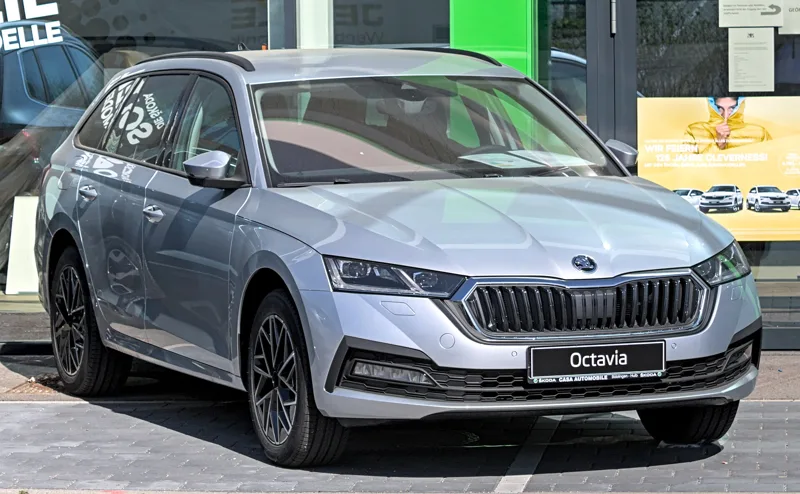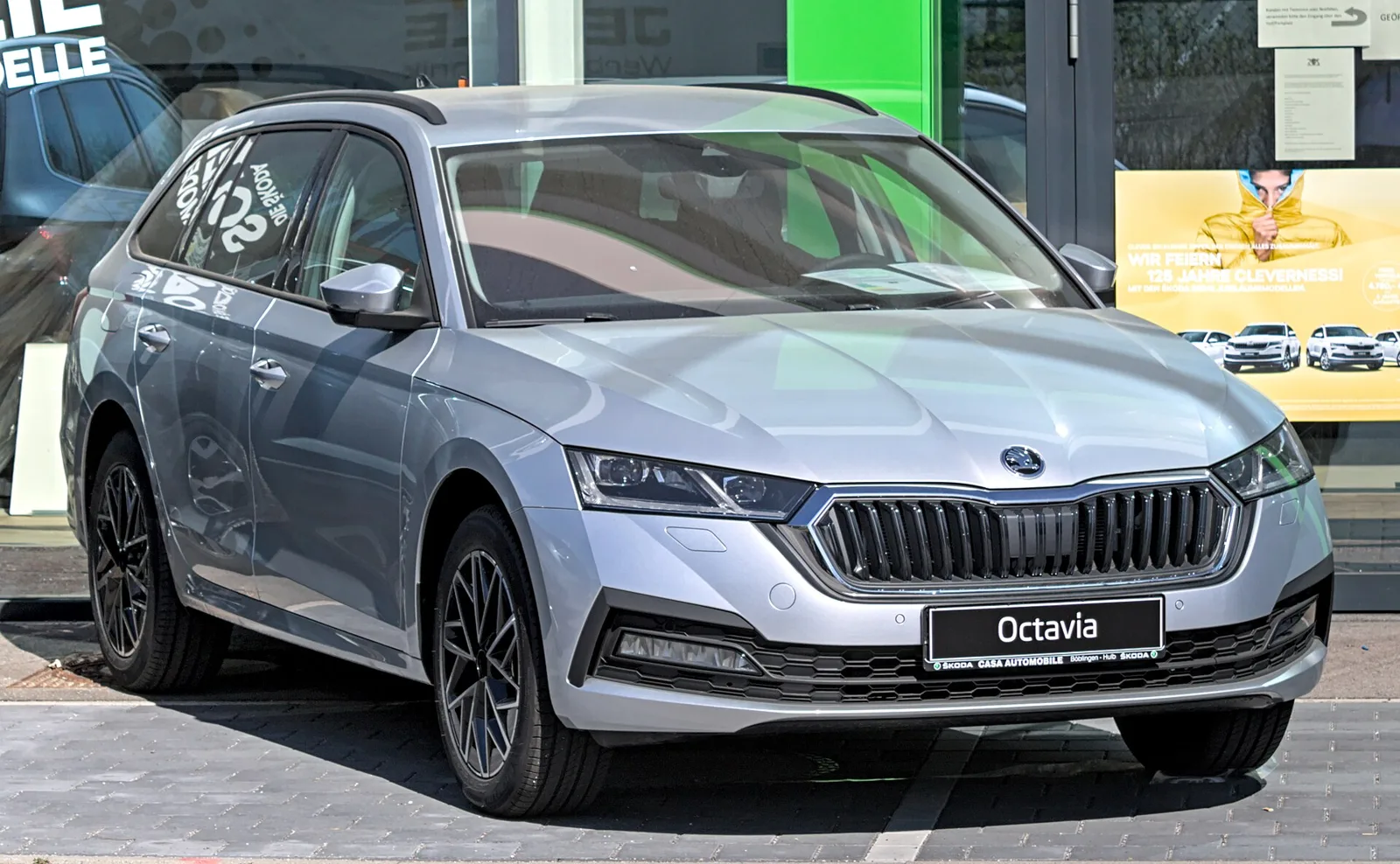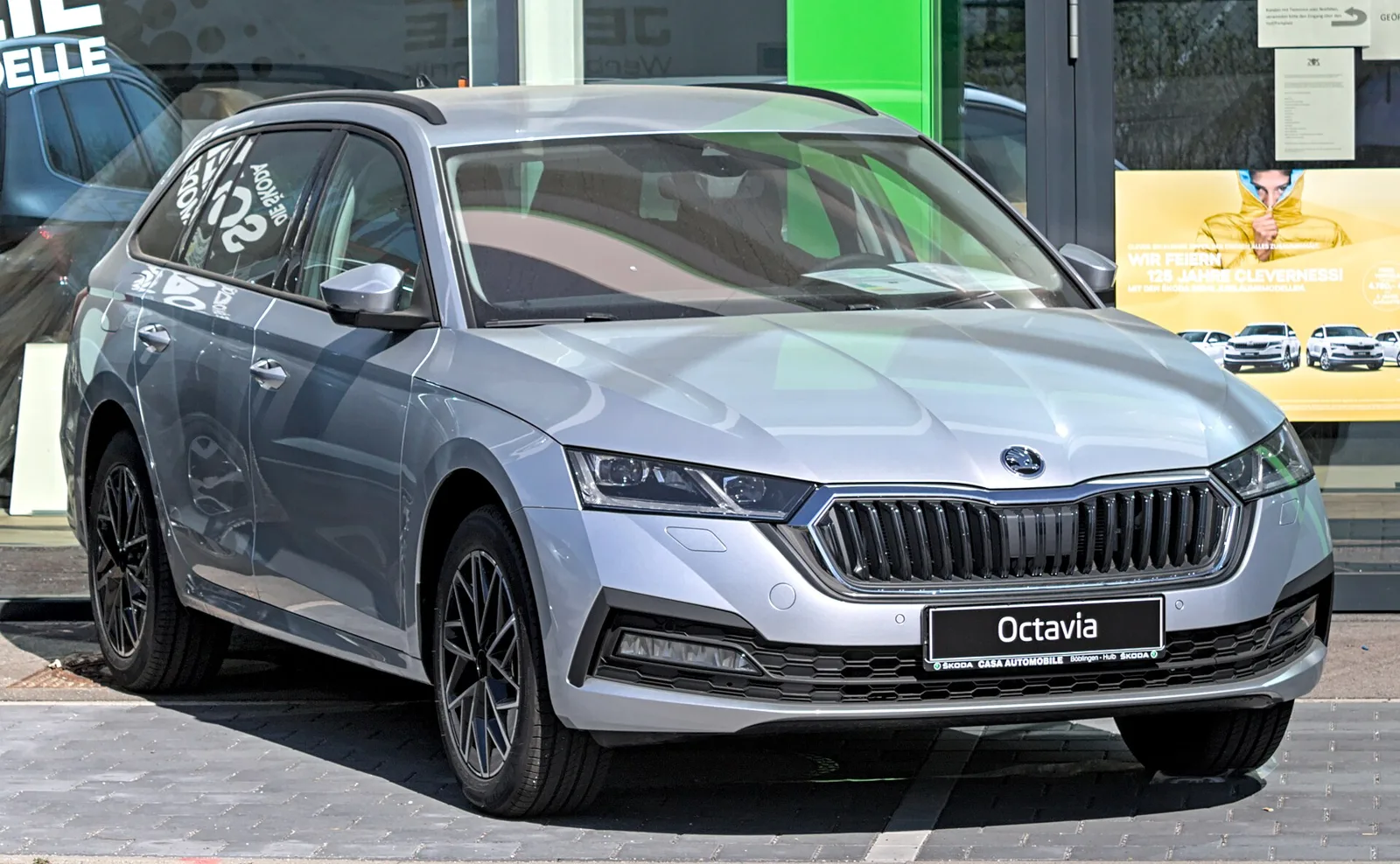
From a 1996 liftback with a 180 PS RS to a 2020 fourth generation with a head-up display, the Octavia has carried Skoda for almost thirty years.
The Skoda Octavia is a Czech family car built in four generations since 1996. It is the brand's most popular model, with about 40% of Skoda cars being Octavias, and its performance RS and Scout variants have kept the range varied.
The Skoda Octavia is a C-segment family car from the Czech maker that has been built in four generations since late 1996. Around five million have been sold, and about 40% of the company's cars are Octavias.
This profile follows the Octavia through each generation, then covers its performance models, its record run, its awards and its motorsport. Metric figures come first, with imperial values in brackets.
How did the Octavia begin?
The first Octavia arrived in November 1996 for the 1997 model year, built at the Mlada Boleslav factory in the Czech Republic. It came as a liftback or an estate, and sales in the UK began in 1998, where it went up against established family favourites such as the Ford Mondeo.
The name had been used before, on an earlier Skoda built between 1959 and 1971. The modern car kept the same practical role, and it quickly became the brand's most popular model.
Launch engines were an eight-valve 1.6 and a 20-valve 1.8 petrol, along with the well-known 1.9 TDI in 90 PS (66 kW) form. A more powerful TDI 110 soon joined the line-up, giving buyers a choice of power levels.
In April 1999 Skoda added the basic 1.4 LX, which used a 60 PS (44 kW) pushrod unit from the Felicia. It sold mainly in the Czech market and proved underpowered. Volkswagen's own 75 PS (55 kW) 1.4-litre replaced it at the 2000 facelift, which brought independent rear suspension and a revised interior for the 2001 model year.
In India the Octavia was launched in 2002, and its frugal engines and solid build made it an instant hit. The car went on to sell 44,900 units there, a strong result for a family car that was new to the market.
A practical family estate that became Skoda's best seller, then set a speed record and kept its RS badge alive.
What did the first-generation 4x4 and RS offer?
The facelifted car added a four-wheel-drive version using the Haldex Traction clutch. Its 63-litre (17 US gal) tank was larger than the 55-litre tank of the front-drive cars, and the 4x4 gave the Octavia more ground clearance.
The 4x4 was offered with a choice of petrol and diesel engines, all of them with manual gearboxes. The top-level RS used a 1.8-litre turbocharged straight four producing 180 PS (132 kW), and it was the quickest model in the range.
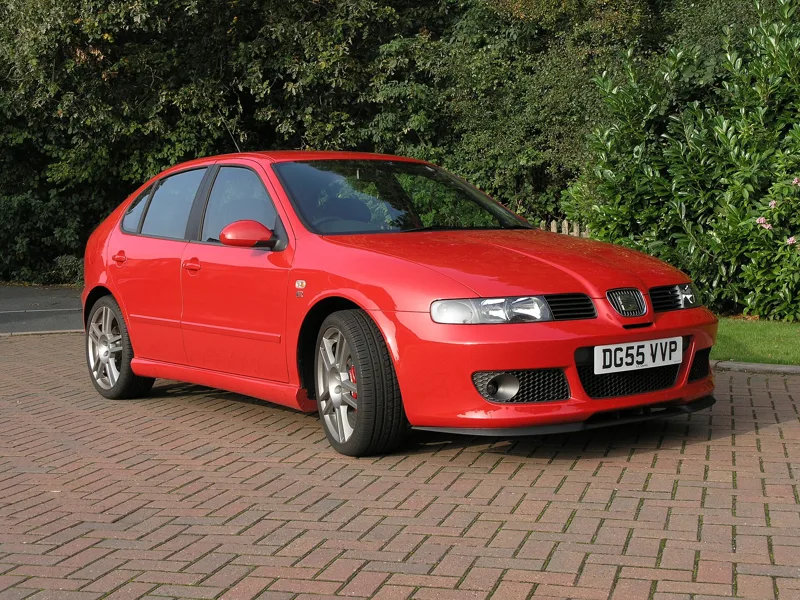
The facelifted car's four-wheel-drive system used the same Haldex Traction clutch as other Volkswagen Group A platform cars, including the Golf Mk4, the Audi A3 and the SEAT Leon Cupra R4. That shared engineering helped Skoda bring a capable four-wheel-drive family car to market quickly.
In 2002 Skoda built 100 WRC Replica cars worldwide. They were painted white, carried rally decals and came with extra kit such as ESP, xenon lights and heated front seats, which made them a limited homage to the rally-bred RS.
A special lengthened version appeared in 2001 for government use. The L&K Long was 8 cm (3.1 in) longer and fitted with the Laurin and Klement trim, but only 25 were delivered to the state administration, and they were hand-built.
What changed with the second generation?
The second-generation Octavia arrived in March 2004 on the Volkswagen Group A5 (PQ35) platform, which it shared with the Audi A3, Volkswagen Golf and SEAT Leon. Thomas Ingenlath and Peter Wouda led the design, which added rear legroom and extra ground clearance to avoid grounding on steep ramps.
Production spread widely. Mlada Boleslav and Vrchlabi in the Czech Republic were joined by Bratislava from 2008, while Shanghai and the Kaluga plant in Russia also built cars. In India the car was sold as the Laura, which kept it apart from the earlier Octavia that was still being offered there.
The Scout was announced in 2006 as an estate-only crossover with raised suspension and plastic cladding. Its ground clearance was 40 mm (1.6 in) higher than the standard car, while the 4x4 sat 24 mm (0.9 in) higher.
In August 2011 a special Octavia RS set a world record at the American Bonneville Speedway. It reached 365.43 km/h (227 mph), which made it the fastest car in the world with an engine of up to two litres.
A facelift was formally unveiled at the 2008 Paris Motor Show and launched in 2009. It brought new turbocharged petrol engines and a seven-speed direct-shift gearbox for the first time.
How did the third-generation Octavia change the car?
The third generation was revealed on 11 December 2012 at the Skoda Museum in Mlada Boleslav, and it reached showrooms in key European markets in February 2013. It measured 9 cm (3.5 in) more in length and 4.5 cm (1.8 in) more in width than the car it replaced, with a wheelbase 8 cm (3.1 in) longer and up to 102 kg lighter.
Designer Jozef Kaban drew on an earlier concept car. Interior space grew, and the luggage volume reached 590 L, a class-leading figure just above the 585 L of the previous car. The Combi estate later offered 610 L from May 2013.
This generation was the first Skoda to use front radar and a multifunction camera. The radar supported Front Assistant and Adaptive Cruise Assistant, while the camera handled lane keeping and traffic sign recognition. Driver monitoring also arrived in the form of a fatigue detection system.
The Bolero, Amundsen and Columbus car radios were protected against theft, because the central display was physically separated from the multimedia unit. A Phone Box storage compartment held a mobile phone with a planar antenna, which allowed an inductive exterior antenna connection.
Simply Clever details continued, including an ice scraper inside the fuel filler flap, a rubbish bin in the door panel and a parking ticket holder. The engine range stayed inline-four, and the GreenLine diesel emitted 85 g of CO2 per km, while the G-TEC CNG car emitted 97 g per km.
Front-drive petrol outputs ran from 63 to 132 kW (85 to 180 PS), while diesel outputs ran from 66 to 110 kW (90 to 150 PS). After the 2018 facelift, two-litre petrol engines were introduced, and the transmission was strengthened to handle 420 N m (310 lb ft) in those cars.
What made the Octavia RS special?
The RS premiered at the Goodwood Festival of Speed in 2013. It used the 162 kW (220 PS) 2.0 TSI from the Golf GTI and reached a top speed of 248 km/h (154 mph) with the manual petrol version. Acclaimed as the fastest production Octavia at the time, it was a clear step up from the standard car.
Sports features included progressive steering, a sports chassis and an electronic differential lock. A Performance Sound Generator also enhanced the engine note inside the cabin, using a pulse generator placed under the windscreen.
The RS 230 followed at the 2015 Geneva Motor Show with 230 PS and a top speed of 250 km/h (155 mph). It also gained lower, stiffer springs and a standard electronic differential, and it shaved a tenth off its benchmark sprint time.
Did the Octavia get a facelift in 2017?
Yes. The third-generation facelift was presented on 10 January 2017 in Vienna, with split front headlights and a solid centre section in the grille. The first cars reached customers before spring, and a predictive pedestrian protection system was added to the package.
The Scout was reworked too, and the facelift version dropped the plastic side door mouldings. A Chinese version with a different taillight design also appeared, drawing a resemblance to the larger Skoda Superb.
By 2016 Skoda had produced one million units of the third generation.
What is the fourth-generation Octavia?
The fourth generation was revealed in Prague on 11 November 2019 and reached customers from June 2020 as an estate and a liftback. It introduced Skoda's first head-up display, two 10-inch displays and a Canton sound system.
Other changes included wireless smartphone charging, several USB-C ports and a small joystick in place of the automatic gear stick. Safety features covered steering intervention in a possible accident, checks for oncoming vehicles when doors open, and detection of a driver who is falling asleep.
The range spread into a plug-in hybrid Octavia iV, a sporty RS and a CNG Octavia G-TEC. In China the liftback was sold as the Octavia Pro from 2021, and it was 64 mm (2.5 in) longer than the European car.
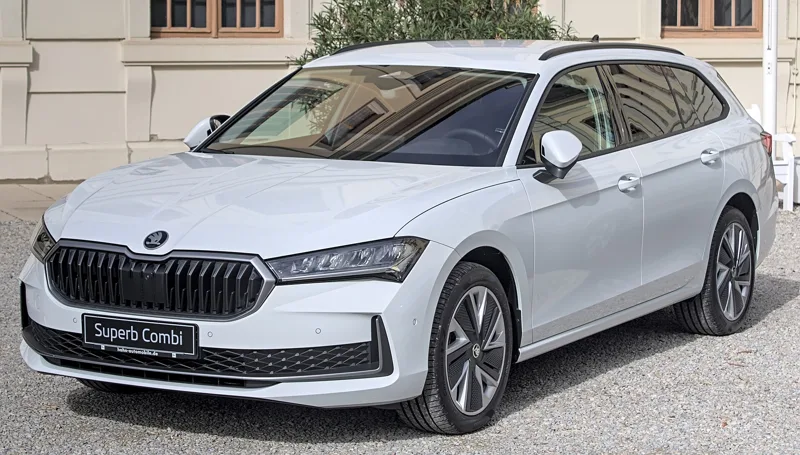
The 2024 facelift added a new grille, updated bumpers and headlights, with the option of second-generation matrix LED units. It also brought new exterior colours, new alloy wheel designs and sustainable seat upholstery, and it increased the power output of the high-performance RS.
Which awards has the Octavia won?
What Car? magazine chose the Octavia Estate 1.4 TSI iV SE Technology as its Plug-in Hybrid of the Year in January 2021, and it awarded the estate a top rating of five stars.
Motorsport has been part of the story too. The car has competed in the European Touring Car Championship, in the World Rally Championship, and in the FIA two-litre rally cup.
What are the Skoda Octavia generations?
The table summarises the four generations, their introduction dates, notable versions and key figures. Where a figure applies only to one version, such as the RS or the Scout, the row says so, so the standard car is not overstated.
| Generation | Introduced | Notable version | Key figure |
|---|---|---|---|
| First (Typ 1U) | November 1996 | RS | 180 PS (132 kW) from a 1.8-litre turbo |
| Second (Typ 1Z) | March 2004 | Scout and RS | Bonneville record of 365.43 km/h (227 mph) |
| Third (Typ 5E) | Revealed 11 December 2012 | RS 230 | 230 PS and 250 km/h (155 mph) |
| Fourth (Typ NX) | Revealed 11 November 2019 | Octavia iV | Plug-in hybrid, deliveries from June 2020 |
Luggage volume is another useful yardstick. It grew from 585 L in the second generation to 590 L in the third, while the Combi estate reached 610 L.
Frequently asked questions
Was the Octavia ever sold as a saloon?
No. Every modern Octavia has been offered only as a liftback or an estate, and the estate is sold as the Combi in most markets.
What is the Octavia Scout?
The Scout is an estate-only Octavia with four-wheel drive, raised suspension and plastic cladding. It gives the car a crossover look while keeping the practical layout of the standard estate.
What does Simply Clever mean?
Simply Clever is Skoda's name for practical touches, such as a bin inside the door, an ice scraper set into the fuel filler flap and a ticket holder. These small details are a big part of the car's appeal to families.
Is there a plug-in Octavia?
Yes. The fourth generation includes the Octavia iV, a plug-in hybrid available as both an estate and a liftback.
Which Octavia is the most economical?
The GreenLine diesel is the most frugal choice in the range, with CO2 emissions quoted at 85 g per km. The G-TEC runs on CNG and is quoted at 97 g per km.