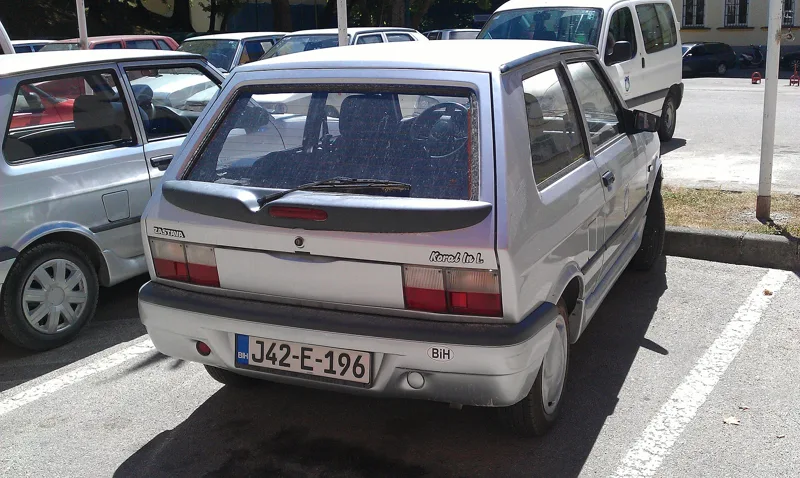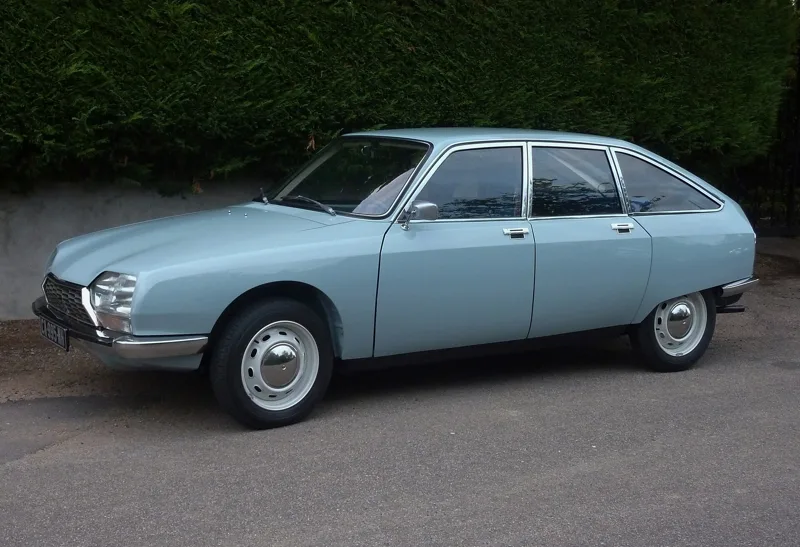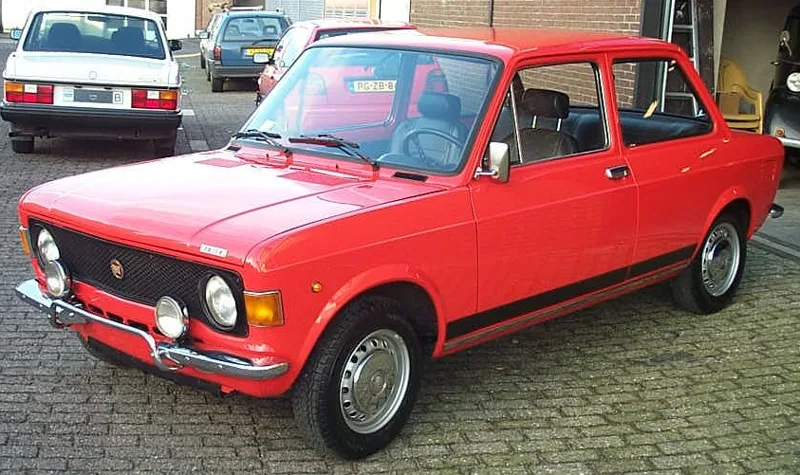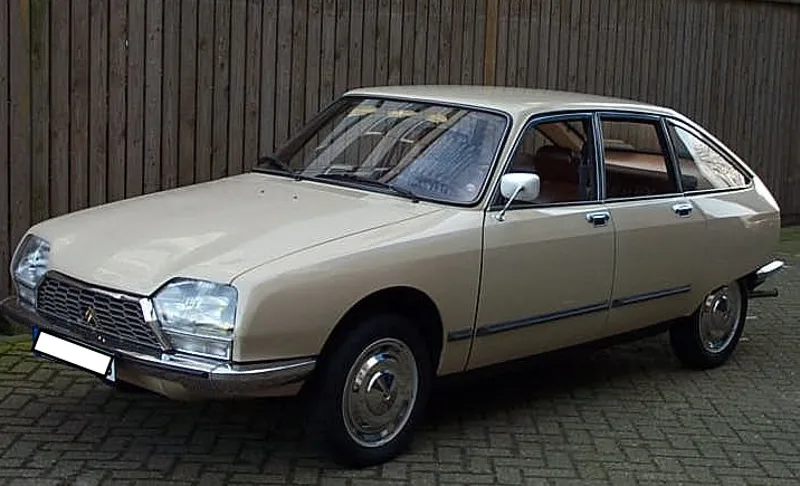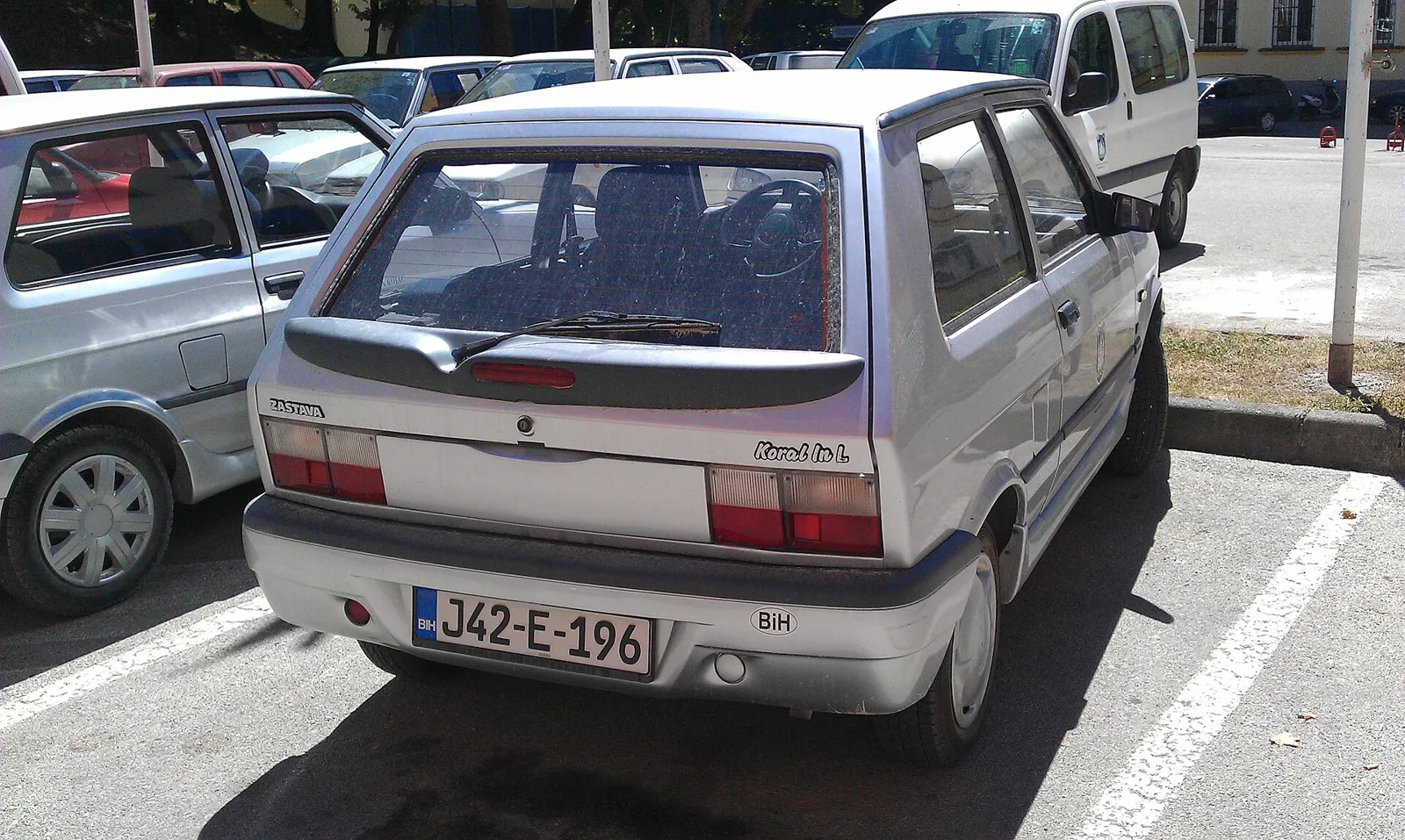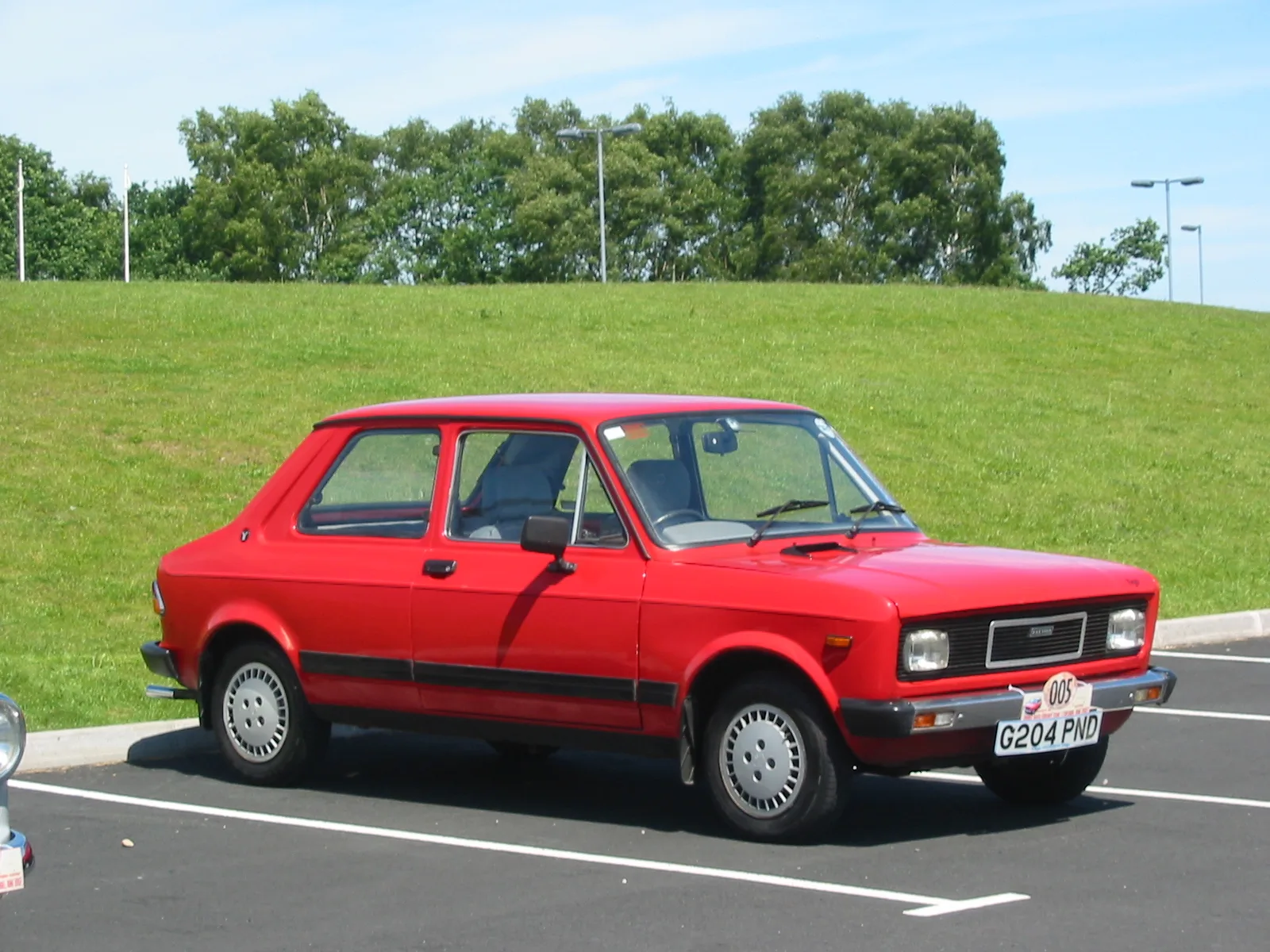
A Fiat 128-based liftback that Zastava built from 1971 to 2008, sold in Britain as the Yugo and remembered for its fifth door.
Zastava Skala is the name for a family of Yugoslav and then Serbian liftbacks, derived from the Fiat 128 and produced from 1971 until late 2008. Sold in Britain under the Yugo name, its fifth door made it more practical than the Fiat original.
The Zastava Skala was a family of liftback cars built by the Yugoslav and later Serbian maker Zastava Automobili. It began life as the Zastava 101 in 1971, based on the Fiat 128, and added a fifth door that made it practical. Production ran until November 2008, and the car is still remembered across the former Yugoslavia.
What is the Zastava Skala?
The Zastava Skala, also sold as the Yugo Skala, is a family of cars built by Zastava Automobili of Yugoslavia and later Serbia. Based on the Fiat 128 sedan, it was introduced in 1971 as a three or five-door liftback. Production ended in November 2008.
The liftback style was not built in Italy at the time, and the car was aimed squarely at the Balkan market. Its names over the years included Zastava 101, 1100, 1300, GTL, Yugo Skala 55c and Yugo Skala 65c.
In its home market the 101 picked up nicknames. Stojadin came from sto jedan, the Serbo-Croatian for 101, while Slovenes used Stoenka, meaning 101-ette. A four-door sedan arrived in 1979 as the Zastava 128, and that model was discontinued in 2003.
A fifth door, a Fiat 128 base and a low price carried the Skala from a Yugoslav factory to a regional legend.
Where did the Skala come from?
The car descended from the Fiat 128, which Zastava also built as the Zastava 128. The Skala first emerged on 15 October 1971 as the Zastava 101, and the 101 added a practical fifth door to the Fiat layout.
Why was the 101 ahead of its time?
The 101 arrived three years ahead of Fiat's own 128 3P and Volkswagen's Golf. It was among the first hatchbacks with its engine and gearbox placed astride each other, and it used front-wheel drive when most rivals had not yet switched.
Independent rear suspension helped on rough Eastern European roads. The engines, credited to Aurelio Lampredi, were best suited to high revs.
The fifth door was the car's most useful feature. With the rear seat folded, cargo room expanded from 325 liters to 1,010 liters.
What engines did the Zastava 101 use?
The base car used a 1,116 cc engine with 8.8:1 compression, producing 55 hp (41 kW) in its 1983 form. Larger 1,290 cc and 1,301 cc engines followed, with the Special reaching 73 hp (54 kW) and the SC model 64 hp (48 kW).
Carburettors varied across the range, with Weber, Holley, IPM and Solex units all used on the early 1,116 cc engine. In 1976 the camshaft was widened from 14 mm to 20 mm, and the 1,301 cc unit made 65 hp (48 kW) by 1983.
The 1988 Skala 65 paired its 1,301 cc engine with a 5-speed gearbox.
Which trims and models were offered?
Launch models came in Standard and De Luxe trims. The 1976 101L replaced the De Luxe, the 1979 101B replaced the Standard, and the 1979 101S (Super) and SC (Super Confort) launched alongside them. The 101L also brought rubber-trimmed bumpers and servo brakes.
The De Luxe trim added red seats, chrome trim and imitation wood. The 1979 Mediteran was a three-door model, while the 1983 GT and GTL 55 and 65 brought wider chrome bumpers and new side skirts.
The 1983 cars sat lower, with softer suspension for better stability. In 1988 the models gained larger plastic bumpers and redesigned interiors, and from 1994 the models were called Skala 55C and Skala 65C.
Why did Zastava rename the car Yugo?
In 1987 Zastava applied the YUGO name to the cars, after their success in the United States. The models were sold as YUGO 1.1 and 1.3 GX before the Yugo Skala 55 and Yugo Skala 65 names arrived in 1988.
The Yugo name followed the car into Britain, where the UK slogan was Go New! Go Yugo!.
How cheap was the Skala in Britain?
The early 1980s brought popularity in the United Kingdom, and the 1984 entry-level model cost under 2,400 pounds sterling. That was roughly half the price of the equivalent Ford Escort, which made the Skala a budget choice.
Rust was a concern on British roads, so hard PVC coating covered the underside, sills and valances to resist road gritting.
How did the Skala stay in production until 2008?
The Skala kept selling because it was practical and robust at a low price. Production continued after the Zastava 128 was discontinued, and in the final years the Skala was offered in one trim only, the 55-horsepower 1.1-liter five-door Skala 55.
The 2008 update was shown at the Belgrade Car Show. It added a new aluminium radiator, new wheel bearings and a new instrument cluster with tachometer, and the car could be bought for just under 4,000 euros. It also undercut the Zastava Koral, an improved Yugo, on price.
A factory natural gas option was also available, fitted with a 40-litre Lovato tank and feed. Production ended on November 20, 2008.
How many Skalas were built?
Zastava built 1,273,532 Fiat 128-based cars from 1971 to 2008. In 1979 alone 88,918 Zastava 101 models left the Kragujevac lines, and the millionth 101, a Yugo Skala, was produced in 1991.
The total included 228,274 Zastava 128s. Poland's FSO factory also built the Zastava 101 through 1976, so the car had production beyond Yugoslavia for a time.
In late 2007 Zastava estimated that the Skala 55 was the world's second most-affordable car at the time.
What did the Zastava 101 achieve in motorsport?
In 1973 the Zastava 101 won its class in the 17th Tour d'Europe rally. The following year Yugoslav driver J. Palikovic was reportedly faster than Porsche rivals over several stages.
In February 1975 Zastava sent an expedition from its home town of Kragujevac to Kilimanjaro. Five standard 101 cars and 11 crew members travelled African deserts and savanna, finishing a 45-day journey on top of the mountain.
Zastava then marketed the car as Vozilo uspeha, meaning vehicle of success. Each of the five cars was a standard production model, not a special build.
Why is the Skala still remembered?
The Skala is remembered as a solid, inexpensive car that still appears across former Yugoslav territory and Eastern Europe. It was named Yugoslavia's Car of the Decade two years after 1979, and in Serbia it remains something of a legend.
Its practicality, robustness and low price explain much of that reputation. A total of 1,273,532 cars shows how widely it was bought in its own region.
What are the Zastava Skala specifications?
| Specification | Detail |
|---|---|
| Launch | 15 October 1971 as the Zastava 101 |
| Basis | Fiat 128 sedan; 3 or 5-door liftback |
| Base engine | 1,116 cc, 8.8:1 compression, 55 hp (41 kW) in 1983 |
| 1,290 cc engine (Zastava 101 L 1300) | 73 hp (54 kW) |
| SC model | 64 hp (48 kW) |
| 1,301 cc engine | 65 hp (48 kW) |
| Cargo space | 325 liters seat up; 1,010 liters seat folded |
| 2008 price | Just under 4,000 euros |
| Units built | 1,273,532 since 1971, including 228,274 Zastava 128s |
| Production ended | November 20, 2008 |