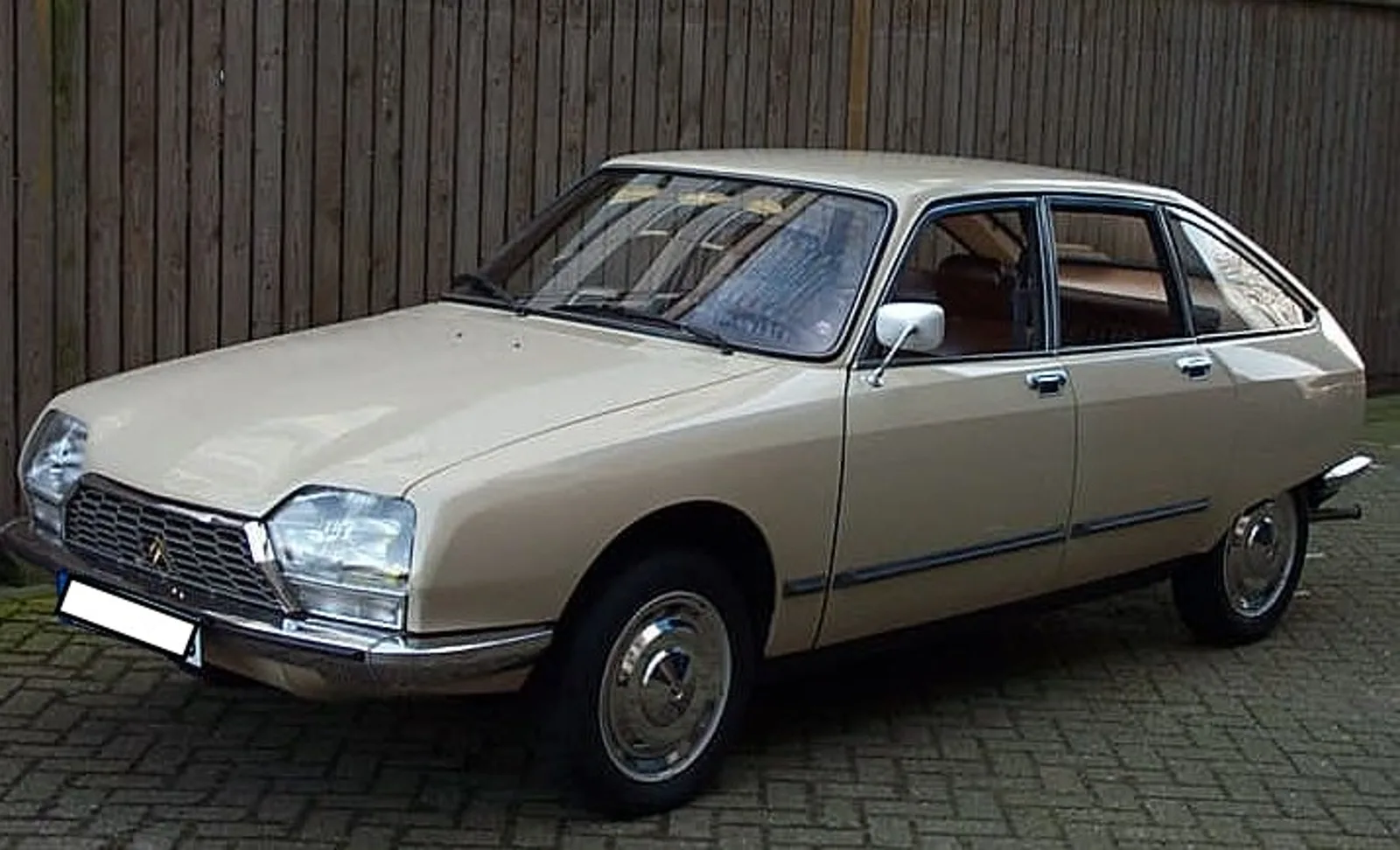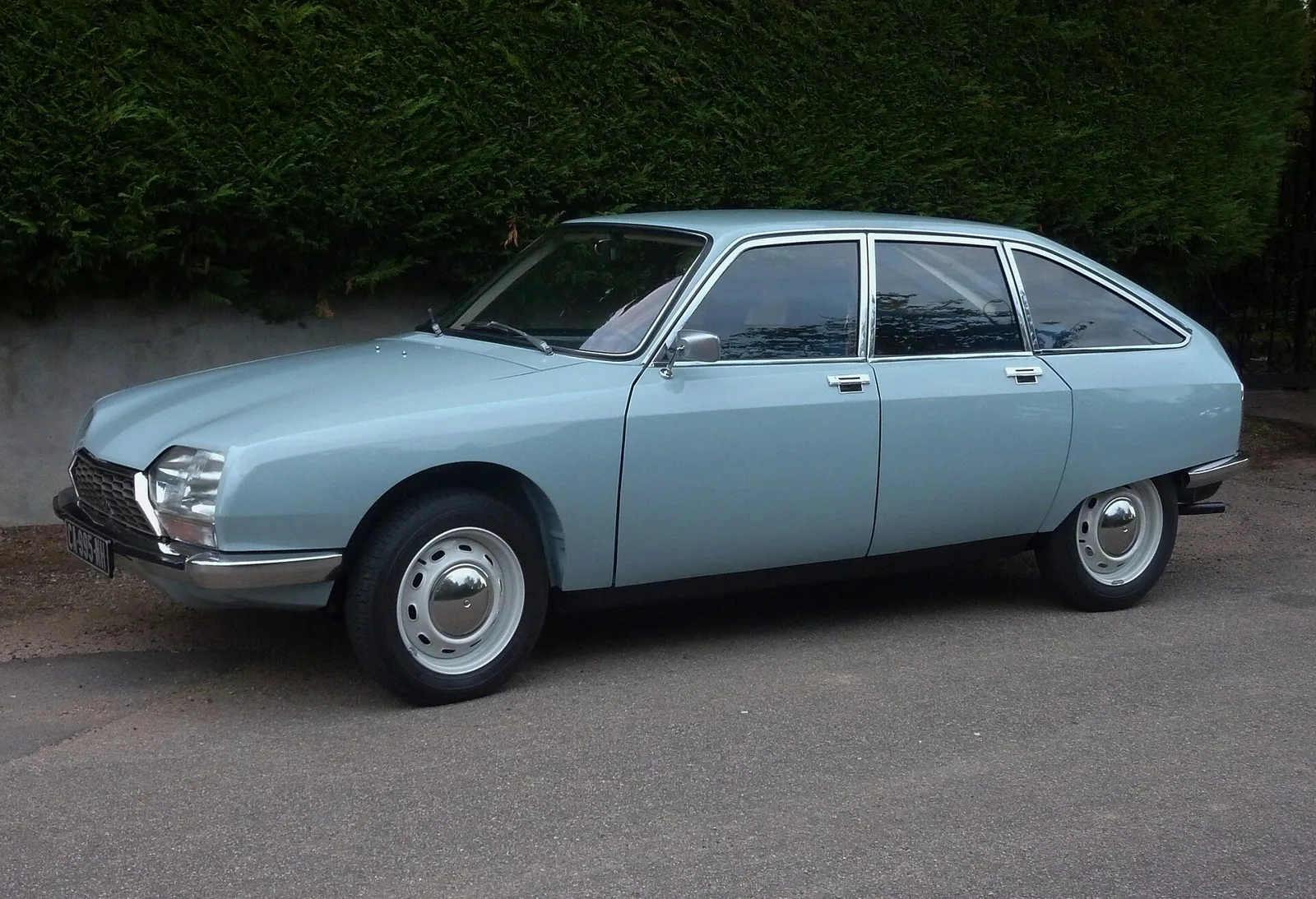
A hydropneumatic, air-cooled Citroen fastback set against Fiat's transverse-engined 128, the car that set the layout for front-wheel drive: origins, engines, road tests, sales and the buyer each suited.
The Citroen GS and Fiat 128 were early-1970s family cars that took the European Car of the Year title in successive years. The GS came in 1970 with hydraulic brakes and suspension, while the 128, from 1969, set the layout that other makers copied.
The Citroen GS and the Fiat 128 were two of the most influential small family cars of the early 1970s, and both won the European Car of the Year title within two years of each other. The GS was a fastback saloon with an air-cooled flat-four and hydropneumatic brakes. The 128 was a practical Italian saloon whose transverse engine and front-wheel drive layout set a template that others copied.
This comparison covers why the two were rivals, how each came about, their engines and mechanics, their road tests and reception, their sales and which buyer each car suited on the facts available.
Why were the Citroen GS and Fiat 128 rivals?
They were rivals in the European family car market of the early 1970s. At its August 1970 launch the GS was pitted against the Fiat 128, Ford Escort, Renault 6 and Vauxhall Viva, so the 128 was one of the cars it was measured against from the start.
Both cars took the European Car of the Year title. The 128 won for 1970 and the GS for 1971, which gave the two cars a shared place in the prize's history and a clear role as the reference points for the class. Between them they set the standard that a family car was expected to meet in the early 1970s.
The GS also had a different market job. It filled the gap in Citroen's range between the 2CV and Ami economy cars and the luxurious DS executive, a position that had been empty for some fifteen years. The 128, by contrast, sat in the core of the mainstream family car market.
One car carried the DS's hydraulic genius into the family market; the other set the front-wheel drive layout the world would copy.
How did the two cars come about?
The GS took fourteen years to develop, from the first ideas in the mid-1950s to launch. Project F was shelved in 1967 as too close to the Renault 16, and its mechanical parts moved to Project G, which became the GS under the design of Robert Opron.
Citroen had explored several ideas before the GS. In 1956 it developed the C10, a bubble car prototype to fill the gap between the DS and the 2CV, and a later iteration, the C60, resembled an Ami 6 with a long, smooth nose.
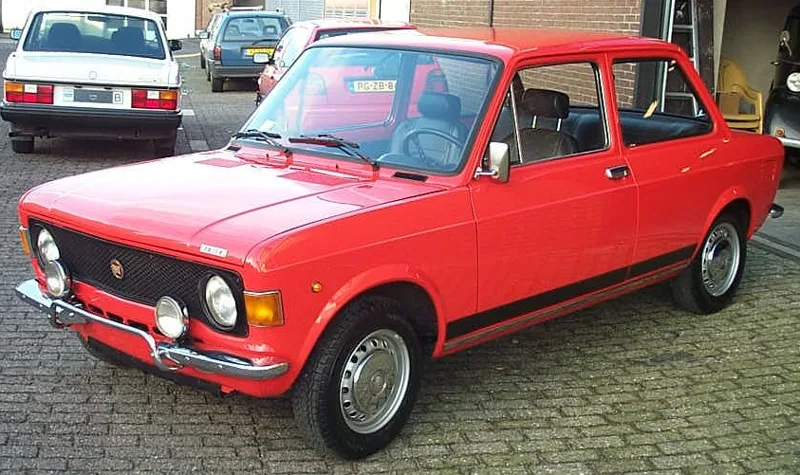
The 128 was engineered by Dante Giacosa, and its engine was designed by Aurelio Lampredi. Fiat built an entirely new plant at Rivalta di Torino to make it, and it became the reference point for front-wheel drive, with Volkswagen reportedly dismantling one in 1970 as the basis for its forthcoming Golf.
Fiat tested the 128's transverse layout first on the Autobianchi Primula for five full years, which allowed the company to resolve issues such as uneven power transmission and torque steer. The result was a compact layout that other makers later adopted as an industry standard.
The GS launched in Citroen's own crisis. Citroen declared bankruptcy in 1974, partly because of development costs for the CX and the failed Wankel project, and it was later taken over by Peugeot in 1975.
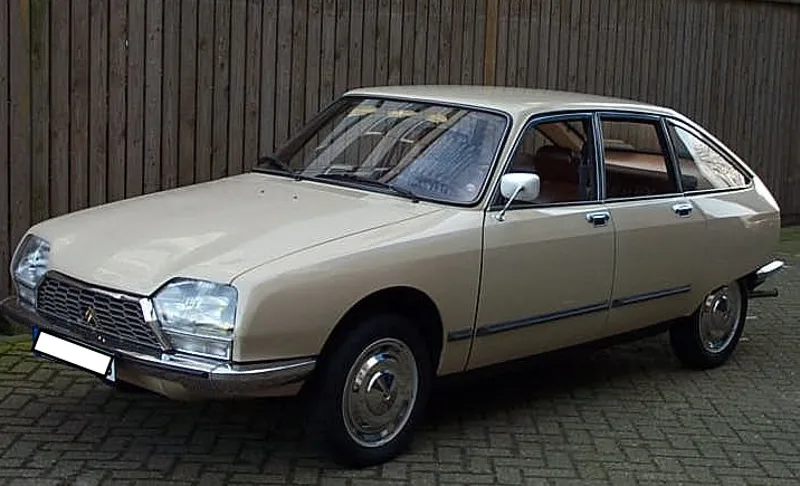
The GS was offered in four trims: the G Special as the base, the GS Club in the middle, the GS X as the sporting model and the GS Pallas as the luxury version. Its body was low at the nose, with a two-box shape, partly covered rear wheels and a steep Kamm tail that gave it its slippery look.
The GS had a more exotic sibling too. Its Birotor version, launched in October 1973, used a 79 kW (106 hp) Wankel engine. It cost 70 percent more than the standard GS, and it was pulled from the market after 847 sales, just as the oil crisis began.
How did the engines and mechanics differ?
The GS had an air-cooled flat-four in a range of 1,015 to 1,299 cc, with power from about 40 to 49 kW (54 to 66 hp). In September 1972 an optional 1,222 cc engine raised claimed power from 55.5 PS to 60 PS (44 kW; 59 bhp), with torque improved and the second gear and final drive adjusted.
The 128 used a 1.1-litre SOHC four with 55 PS (40 kW) at launch, and a 1,290 cc unit with 60 PS (44 kW) arrived with the 1974 128 Special. Its engine and gearbox sat side by side without sharing oil, and the layout used unequal-length driveshafts to drive the front wheels.
The GS's suspension and brakes were its signature. The hydropneumatic self-levelling system and its brakes were derived from the DS, with inboard front discs to reduce unsprung weight. The suspension could raise the car for rough country lanes and lower it for easy access to the partly enclosed rear wheels.
The 128's suspension was independent all round, with a strut-type front and independent rear, and it used rack-and-pinion steering and front disc brakes. The 128 used a more conventional set-up, while the GS relied on its hydraulic system for a very different kind of ride.
The 128 range grew over time. A sporty Rally arrived in 1971, a Coupe in the same year, and the 3P Berlinetta in 1975, which was partly intended to compete internally with the mid-engined X1/9 that Fiat built.
How did the two cars perform on the road?
The GS's aerodynamics let it make the most of modest power. Its drag coefficient was 0.318, one of the best figures of its time, and with the 1,222 cc engine it could reach 151 km/h (94 mph). The later GSA with a five-speed gearbox reached 164 km/h (102 mph).
Motor tested a Fiat 128 in April 1970, shortly after its UK launch. It recorded a top speed of 85.4 mph (137.4 km/h) and 0 to 60 mph in 15.5 seconds, with an overall fuel consumption of 27.5 miles per imperial gallon (10.3 L/100 km; 22.9 mpg-US).
In that test the 128 was fractionally behind the Morris 1300 on top speed but usefully ahead on acceleration, while the two were closely matched on fuel economy, both outrun by the Ford Escort 1300 Super. Testers commended the Fiat's interior space and performance, though engine noise was noticeable.
The GS's own road record is less detailed in the material available for this comparison. Contemporary journalists praised its smooth ride, which the hydropneumatic suspension delivered over bumps and ripples that would unsettle a conventionally sprung car.
How did the two cars sell?
The GS met with instant market acceptance and became the largest-selling Citroen model for many years. A total of 1,896,742 GS and 576,757 GSA models were produced, for combined production of about 2.5 million.
The 128 sold in enormous numbers in Italy. Some 2,776,000 sedans and wagons were built there, plus 330,800 coupes and 3P models, and its output included licensed and assembled production around the world.
The GS also sold abroad in large numbers. Production outside France added to its reach, with 385,000 built at Vigo in Spain and assembly in South Africa, Chile, Rhodesia and Indonesia, where it continued until at least 1990.
The two cars are hard to compare on a single figure. The GS's total is about 2.5 million, while the 128's Italian output alone is above 3 million. Both figures show how strongly each car answered a real demand for family transport in the early 1970s. Neither was a niche product, and both were built for ordinary families.
Which buyer suits each car?
On the facts given, the GS suits a buyer who wants a distinctive fastback family car with hydropneumatic brakes and suspension, a very comfortable ride and a strong aerodynamic shape. The 128 suits a buyer who wants a roomy, conventional front-wheel drive saloon with a proven layout and a broad body range.
A buyer who valued a smooth ride and unusual engineering would look at the GS, and it is the car to choose if the hydraulic character is the point. Its suspension and brakes gave it a character that few rivals matched, and its fastback body was distinctive in its day.
A buyer who wanted space, a conventional set-up and a wide range of bodies would look at the 128. Its saloon, wagon and coupe choices and its roomy cabin made it an easy car to live with.
Neither car is shown to be better across the board. The GS has the more distinctive engineering, while the 128 has the larger production total, the wider body choice and the more influential layout. The better choice depends on whether the buyer values character or a conventional, spacious family car.
Specifications at a glance
| Feature | Citroen GS | Fiat 128 |
|---|---|---|
| Launch | 24 August 1970 | 1969; UK launch around April 1970 |
| Production | 1970 to 1979 as GS; 1979 to 1986 as GSA | 1969 to 1985 |
| Cars built | 1,896,742 GS and 576,757 GSA | 2,776,000 sedans and wagons in Italy, plus 330,800 coupes and 3P |
| Engine | Air-cooled flat-four, 1,015 to 1,299 cc | 1.1-litre SOHC four, later 1,290 cc |
| Power at launch | About 40 to 49 kW (54 to 66 hp) | 55 PS (40 kW) for the 1,116 cc |
| Top speed | 151 km/h (94 mph) with 1,222 cc; GSA 164 km/h (102 mph) | 85.4 mph (137.4 km/h), Motor 1970 |
| 0-60 mph | No figure given | 15.5 seconds, Motor 1970 |
| Drag coefficient | 0.318 | No figure given |
| Brakes and suspension | Hydropneumatic, derived from the DS | Independent suspension, front discs |
| Awards | European Car of the Year, 1971 | European Car of the Year, 1970 |
| UK price | No figure given | GBP 876 in 1970 |