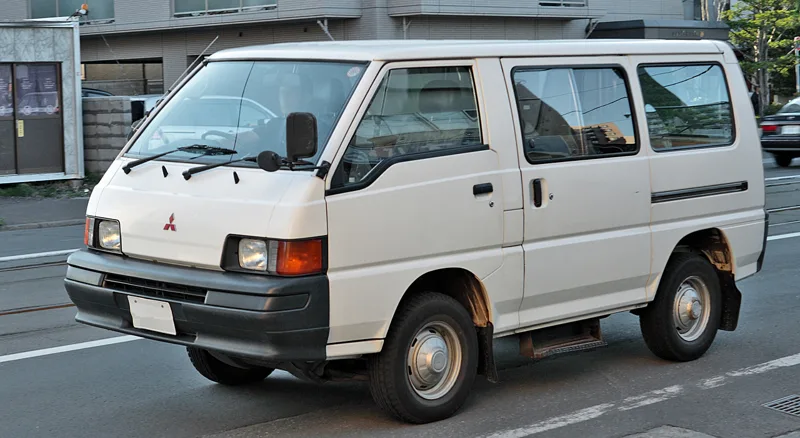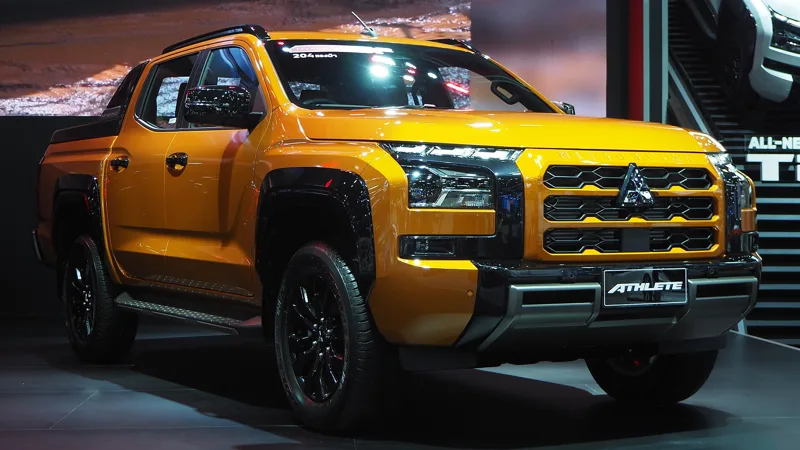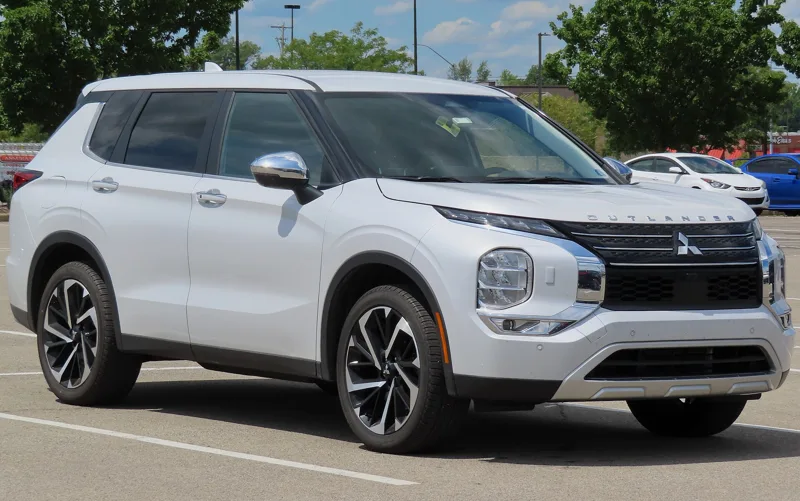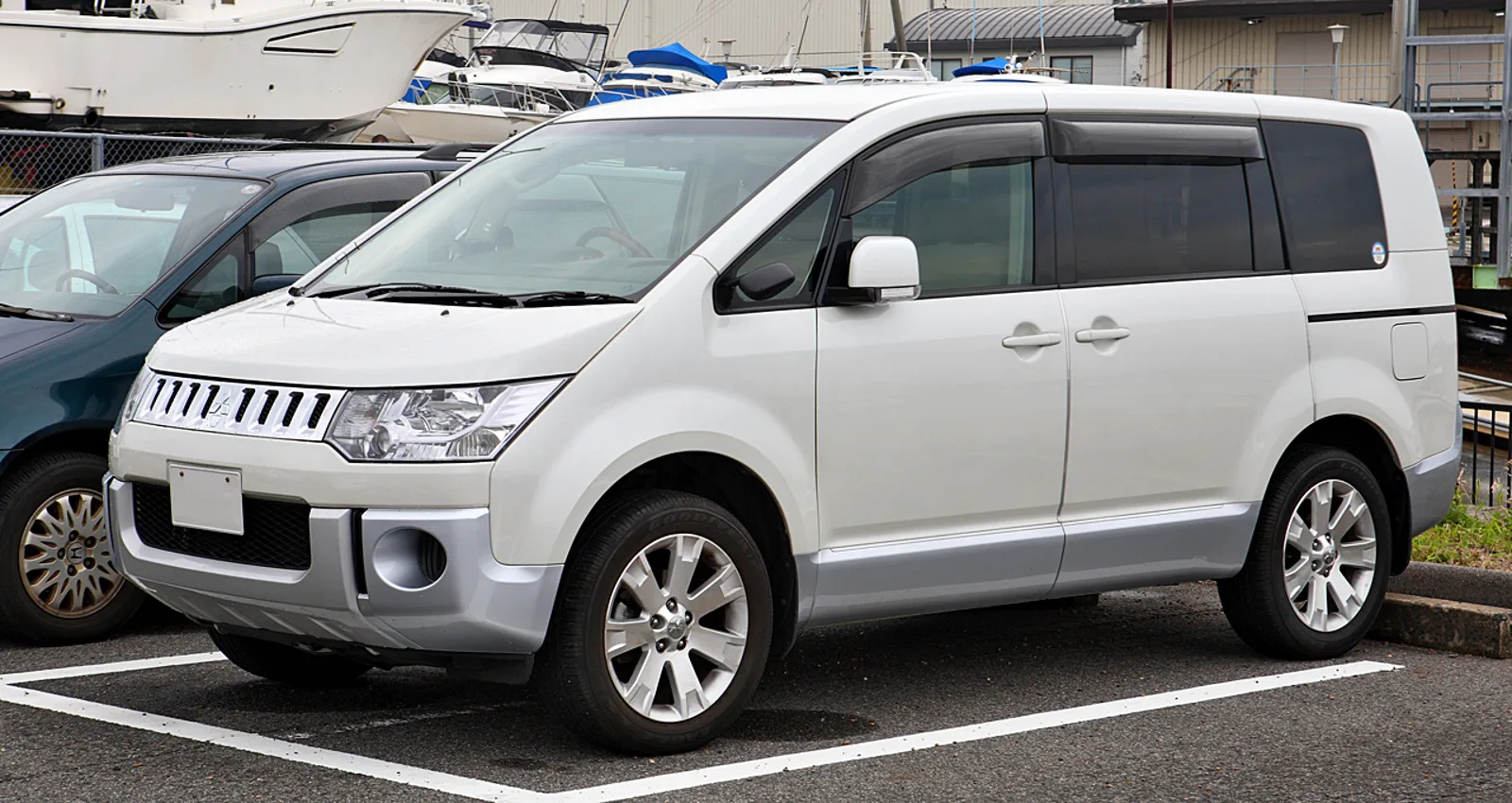
A rib-bone frame, a 4WD system borrowed from the Outlander and a clean diesel in 2012 marked the Delica D:5, which later suspended sales over fuel figures.
The Mitsubishi Delica D:5 is a passenger car in SUV-minivan form, on sale since 31 January 2007 and built by Pajero Manufacturing in Gifu until 6 August 2021. It uses a rib-bone frame, a 2.4-litre petrol engine at launch, and later 2.0-litre petrol and clean-diesel versions.
Mitsubishi's Delica D:5 reached showrooms in January 2007 as a minivan that also set out to be a capable off-roader. Its body sat on a rib-bone frame, a design drawn from aircraft, one of Mitsubishi's own roots. Until 6 August 2021 it was built by Pajero Manufacturing in Gifu.
What did Mitsubishi set out to build?
The Delica D:5 succeeded the Delica Space Gear, which had pioneered the front-engined one-box minivan. Its development rested on the basic concept of the world's only all-rounder minivan. Mitsubishi announced the model name on 30 October 2006 and aimed to sell 2,300 units a month.
The name explains the numbering: D:5 meant the fifth generation of the Delica line.
The concept car, Concept-D:5, came first at the October 2005 Tokyo Motor Show. It was based on the GS platform of the Outlander and the Galant Fortis. The production model reached the Tokyo Auto Salon on 12 January 2007, and sales began on 31 January.
A minivan built for rough roads, with a rib-bone frame at its core.
Why does the Delica D:5 use a rib-bone frame?
The rib-bone frame is a ring-shaped skeleton formed by securing the cross-section at the body frame's joints, much like the ribs of a mammal. Mitsubishi used it to give the body the rigidity an off-road RV needs, alongside a large under-body cross member and a low floor.
Underneath sat the PM version of Mitsubishi's GS platform, which is aimed at compact cars. The rib-bone frame and the cross member were added on top of that base to suit an off-road RV.
The Delica also moved from the previous rear-wheel-drive base to a front-wheel-drive one. Its lower seating position reduced the rolling motion that had been a concern with the earlier model. Overall height and step height dropped sharply, while ground clearance rose.
How did the Delica D:5 score in crash tests?
The Delica D:5 earned the top overall rating of six stars in the automobile assessment crash safety tests for the 2007 fiscal year.
The launch model also came with large-diameter Mud and Snow tyres and active cornering lights.
How does the Delica D:5's four-wheel drive work?
The 4WD system is electronically controlled and based on the Outlander rather than the Pajero. Three modes are available: 2WD for fuel economy, 4WD Auto, which shares drive force between the axles as road and driving conditions require, and 4WD Lock for maximum traction. A rotary dial lets the driver switch between them while moving.
Earlier Delicas had a mechanical low-range gear, and that set them apart on the most extreme ground. The newer system, by contrast, is said to be less capable on very rough terrain than those earlier models.
The suspension used MacPherson struts at the front and a multi-link rear with trailing arms. Widening the track over the previous Delica improved handling stability, ride comfort and cornering performance.
What engines did the Delica D:5 use?
At first only 4WD was offered, with a 2,359 cc (144 cu in) 4B12 inline-four giving 170 PS (125 kW; 168 hp). The 2WD models used the same 4B12 before a minor change brought the 1,998 cc (122 cu in) 4B11, rated 150 PS (110 kW; 148 hp), and then the 4J11 SOHC unit.
The 4B11 was chosen for its better fuel economy, and the 4J11 pushed the same idea further. In the 22 December 2011 update, the 2WD models received a 2.0-litre 4J11 SOHC MIVEC engine and an Auto Stop and Go idling-stop system as standard, which lifted the car's fuel economy.
Transmissions changed as well. The launch car used an INVECS-III CVT, while the diesel carried an INVECS-II six-speed automatic with sport mode. The February 2019 update moved that automatic to eight speeds, again with a sport mode.
Why was the 2012 clean diesel important?
Mitsubishi added a 2,267 cc (138 cu in) clean diesel, the 4N14, to the 4WD line, announced on 26 December 2012 with sales from 11 January 2013, and it was the first clean-diesel engine offered in a minivan. The diesel made 148 PS (109 kW; 146 hp), and its turbocharged torque of 360 Nm (266 lb ft) arrived between 1,500 and 2,750 rpm.
The engine was a version of the Outlander's diesel for Europe, adapted to Japan's post-new long-term emissions rules. Mitsubishi said NOx and particulate matter fell sharply, while fuel economy of 13.6 km/L (JC08 mode) matched the 2.0-litre petrol model. Engine bay limits meant the MIVEC unit was not fitted.
The diesel was about 1.6 times as strong in torque as the 2.4-litre petrol model, which gave it a strong pull at low revs. The extra weight of the diesel led to revised shock damping and steering gear. The diesel was rated to tow up to 750 kg.
What was the Delica D:5 line-up in 2007?
The first year brought the 2WD C2 model and the aero-grade ROADEST, released on 22 May 2007, with a 4WD ROADEST added on 17 October. The CHAMONIX winter edition followed on 25 December 2007, with a seven-seat version that used captain's chairs in the second row.
An Executive concept, with the third-row seats removed to make a four-seater, was shown at the October 2007 Tokyo Motor Show as a reference exhibit. The January 2008 Tokyo Auto Salon brought a ROADEST Executive, again as a reference exhibit rather than a production car.
Mid-cycle updates followed on 25 May 2008, when the seven-seat captain's chairs and power seats from CHAMONIX became options or standard on some grades. The M-Power package with a passenger-side power sliding door arrived then as well.
Which special editions did Mitsubishi sell?
Several special editions carried the Delica D:5 through its life, most built on existing grades. CHAMONIX returned in several batches, EXCEED and EXCEED II arrived in 2009, ROYAL EXCEED came in January 2014, and ACTIVE GEAR followed in April 2017.
CHAMONIX first appeared on 25 December 2007 with a larger battery, front seat heaters and a quick-warm rear heater. Later batches added wood-look trim, navigation and a driver's power seat, and by the eighth batch the special equipment matched the seventh apart from the ceiling lighting.
EXCEED was announced on 4 February 2009 on the 2WD C2 G-Power package, with a 7-inch wide-display HDD navigation system and a wood-grain interior. EXCEED II followed on 2 July 2009 with 4WD models added, and it came with 16-inch tyres and alloy wheels.
ROYAL EXCEED, released on 23 January 2014, sat on the top clean-diesel grade with an 18-inch alloy wheel finish and beige leather seats. The M-Limited, announced on 22 May 2014, brought leather-wrapped controls and five-spoke alloy wheels to the petrol M grade, though it was offered as an eight-seater only.
The ROADEST Limited Edition, announced on 8 July 2010, put dedicated ROADEST parts onto the standard-grade M, with sales from 15 July.
The Navi Collection M, announced on 20 December 2010, used the M grade with a 7-inch navigation system, built-in ETC and cruise control. The ACTIVE GEAR of 21 April 2017 used orange accents and a Diamond Black Mica finish on a seven-seat D-Power package.
What happened to the Delica D:5's fuel figures in 2016?
In August 2016 Mitsubishi admitted it had reported fuel-economy figures better than the real ones. Manufacture and sales stopped for the time being, and the website was closed. Corrected figures were published on 9 September 2016.
The correction changed the labels. Diesel models were then rated at the 2015 standard plus 10%, and petrol 2WD models at the 2015 standard plus 5%. Petrol 4WD models fell short of the 2015 standard and carried no fuel-economy label at all.
The July 2012 update had claimed the 2015 standard for the 4WD models, so the correction removed that claim.
What were the Delica D:5's specifications?
Across its life the Delica D:5 used two petrol sizes, 2,359 cc and 1,998 cc, plus a 2,267 cc diesel. Power ran from 148 PS to 170 PS, and the diesel's torque of 360 Nm came from a VG turbocharger that delivered it low in the rev range.
| Specification | Detail |
|---|---|
| Launch date | 31 January 2007 |
| Launch engine | 4B12, 2,359 cc (144 cu in), 170 PS (125 kW; 168 hp) |
| Later petrol engines | 4B11, 1,998 cc (122 cu in), 150 PS (110 kW; 148 hp); 4J11 SOHC |
| Diesel engine | 4N14, 2,267 cc (138 cu in), 148 PS (109 kW; 146 hp) |
| Diesel torque | 360 Nm (266 lb ft) from 1,500 to 2,750 rpm |
| Towing capacity | Up to 750 kg (diesel) |
| Transmission | INVECS-III CVT at launch; INVECS-II six-speed, later eight-speed automatic on the diesel |
| Fuel economy | 13.6 km/L (JC08 mode), diesel |
| Crash rating | Six stars, the top score for fiscal 2007 |
| Production | Pajero Manufacturing until 6 August 2021 |
What safety and convenience features were added?
The most visible additions came in the 2009 and 2010 updates. Hill start assist, an emergency stop signal system and brake override control all arrived in that period. The welcome lights, by contrast, were not offered on the M grade.
The ESS arrived in the November 2009 update. During sudden braking or ABS operation it flashes the hazard lights rapidly to warn the vehicles behind. Hill start assist was added in the same update to make pulling away on a slope easier.
Brake override control came in December 2010 and gives the brakes priority when the driver presses the brake and accelerator together. The June 2010 update had already changed the brake assist so it responds to the force and speed of the pedal press.
Welcome lights and coming-home lights were part of the November 2009 update as well. They keep the position lamps and headlights on for 30 seconds when the driver gets in or out at night, and the feature was not offered on the M grade.
How did the grade structure change in 2008 and 2009?
Mitsubishi reshuffled the grade list twice in the late 2000s. In December 2008 the 2WD C2 S gave way to the C2 M, which carried the equipment of the 4WD M, and the M-Power package was dropped. The February 2009 EXCEED then used the 2WD C2 G-Power package as its base.
The May 2008 update had already made the seven-seat version with second-row captain's chairs standard on some grades. The December 2008 change made built-in ETC standard on every model except the M, and gave the 4WD cars a cold-region specification with a larger battery.
On 24 December 2009 the 2WD models took on the same exterior design as the 4WD, and the C2 name was dropped so the grades matched. The re-released EXCEED II used the M as its base and came with 16-inch tyres and alloy wheels, while the 2WD update's sales began on 13 January 2010.
What did ROADEST ROYAL TOURING change?
ROADEST ROYAL TOURING, announced on 27 October 2016, was built on the ROADEST D-Power package and went on sale the same day. It made seven seats standard, fitted genuine leather upholstery and gave both front seats heaters, with a power seat for the driver.
Outside, the alloy wheels came in the sputtered finish that the base car had offered as a maker option, and that finish was now standard. The seven-seat layout used captain's chairs in the second row in place of the earlier second-row seat.
Navigation, a rear 9-inch wide LCD display with remote control, audio and video inputs and a premium sound system came as a bundle that buyers could take or leave. Body colours were limited to two, Warm White Pearl as an option and Diamond Black Mica.
Where was the Delica D:5 built?
Sales began on 31 January 2007, and until 6 August 2021 the car was built by Pajero Manufacturing at Sakahogi in Gifu, known as the town of the Pajero. Along the way the car received a long string of mid-cycle updates, including changes in 2008, 2009, 2010, 2011, 2012, 2014 and 2015.
The later updates were smaller in scope. The 2015 change added one-touch operation to the power sliding doors and a ROADEST D-Power package, and the 2017 update extended the AC power supply to every grade except the M.