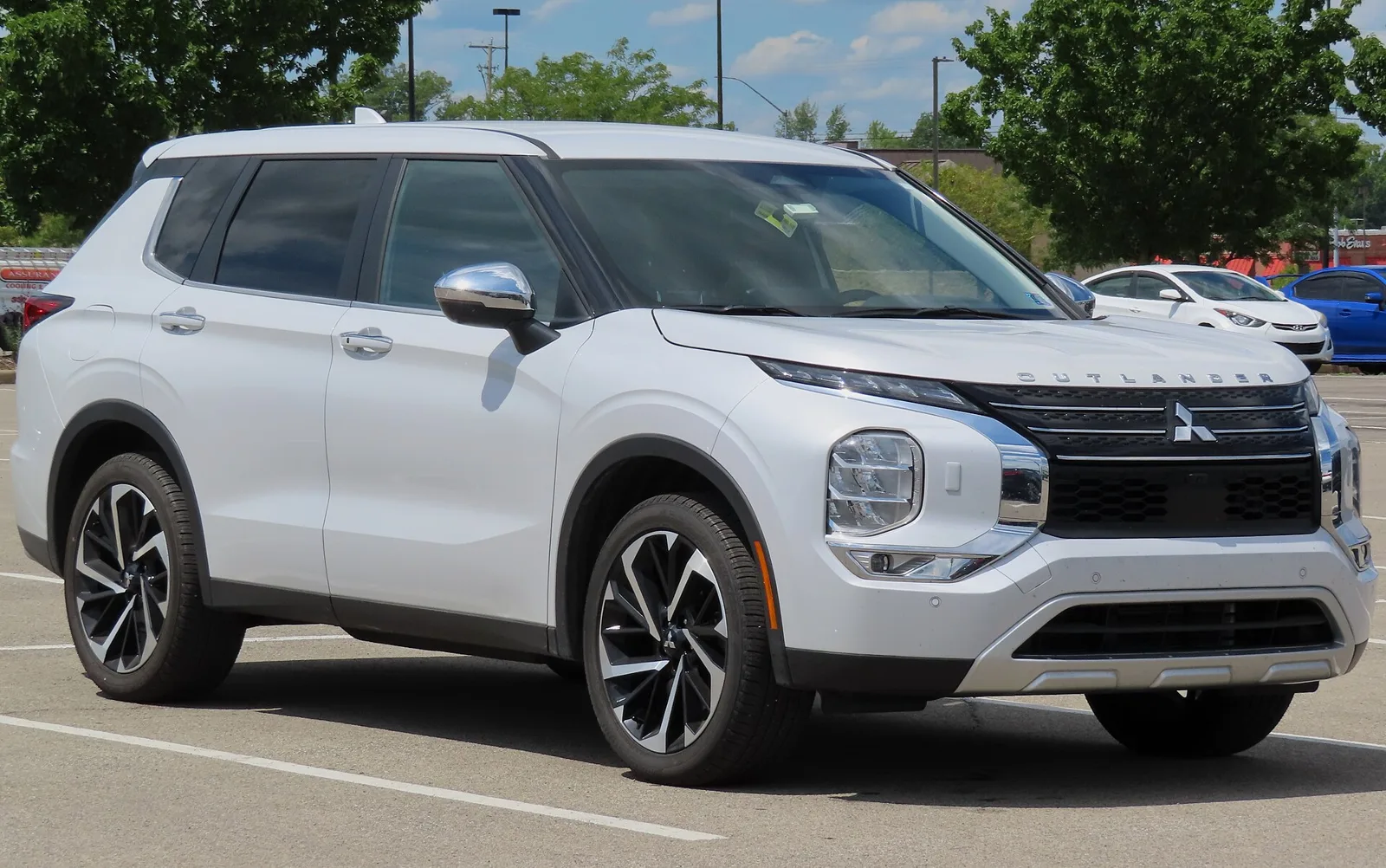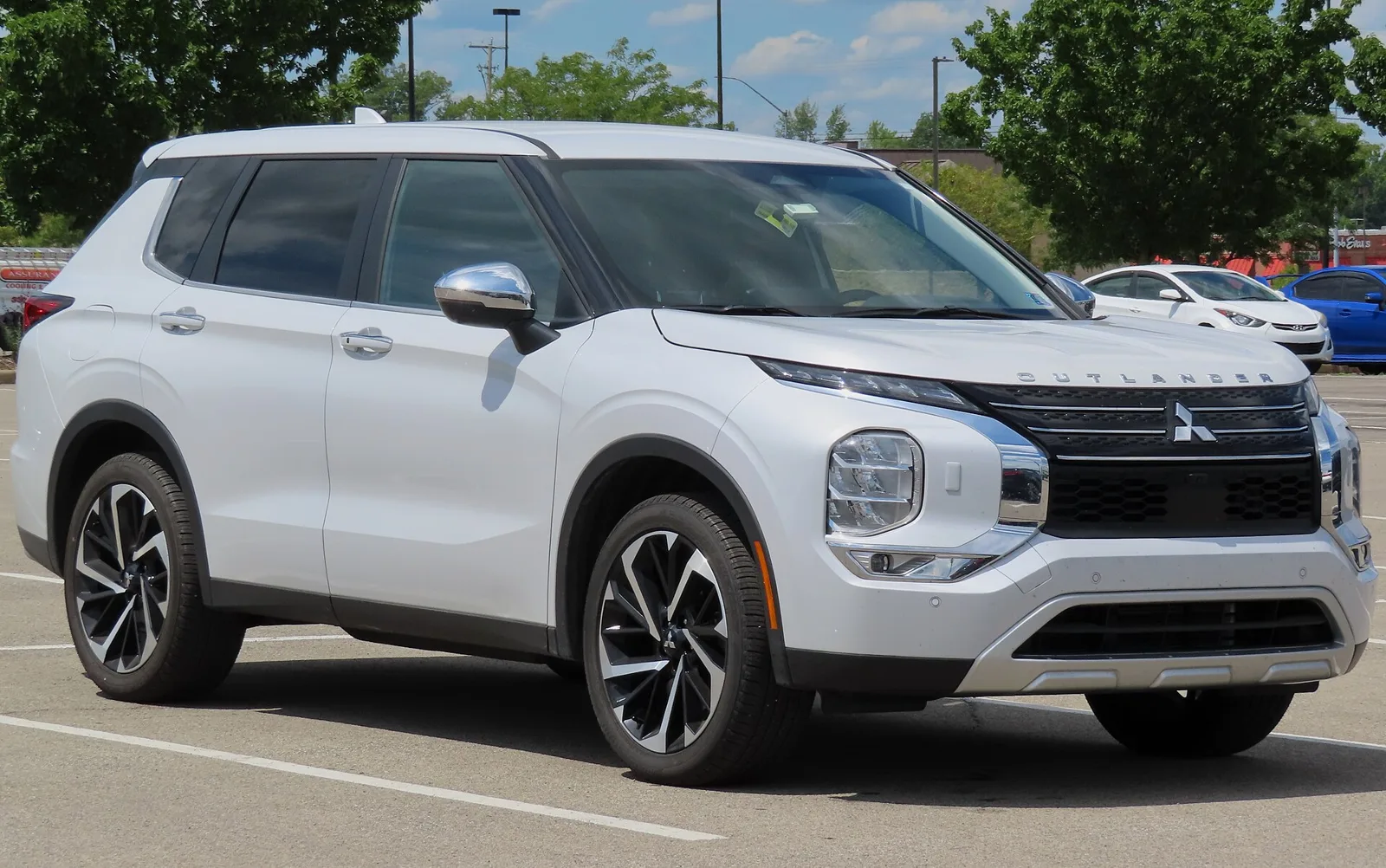
How Mitsubishi tied its active centre differential, yaw control, stability control and ABS into one four-wheel drive system that steers torque at each wheel.
Mitsubishi S-AWC, or Super All Wheel Control, is an advanced full-time four-wheel drive system that combines active differential, yaw control, stability control and ABS. It was developed for the 2007 Lancer Evolution and later reached Outlander and Eclipse Cross models.
Mitsubishi S-AWC, short for Super All Wheel Control, is the company's most advanced four-wheel drive control system. It links the active centre differential, yaw control, stability control and ABS so that torque and braking can be set at each wheel. Mitsubishi says the aim is more drive power, better cornering and greater stability, whatever the road and speed.
What is S-AWC?
S-AWC is a full-time four-wheel drive system that Mitsubishi describes as a four-wheel drive based integrated vehicle dynamics control system. Rather than managing drive, brakes and steering separately, it coordinates the systems so each one supports the others. The result is a car that responds to the driver's inputs more faithfully and recovers more predictably when grip is lost.
The name belongs to the advanced branch of Mitsubishi's All Wheel Control family. Mitsubishi presents it as the fullest expression of that philosophy, combining the four-wheel drive hardware with the integrated controls developed through its motorsport work.
Tie the differential, the yaw control and the brakes together, and the car steers the torque as well as it sends it.
Where did S-AWC first appear?
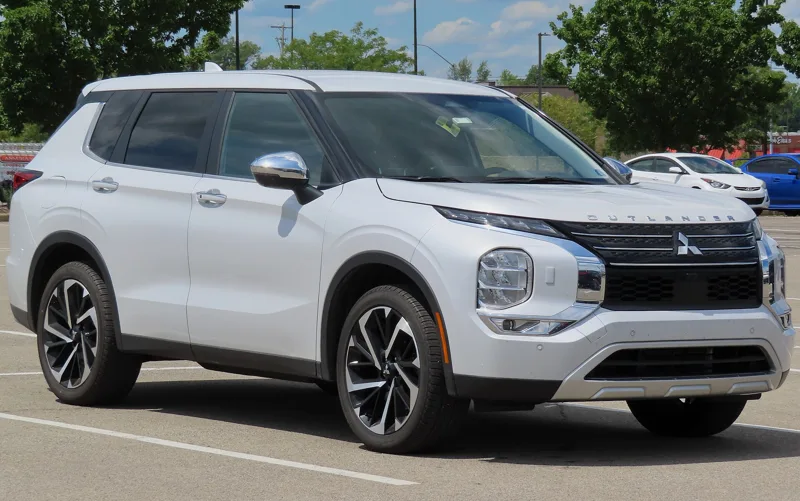
S-AWC was first shown as integrated control in the Concept-X concept at the 39th Tokyo Motor Show in 2005. Its production debut came on the new 2007 Lancer Evolution, which was the car it was developed for. Advanced AWC versions later appeared on the 2010 Outlander and 2014 Outlander, where equipment varied by market, as well as on the Outlander PHEV and the Eclipse Cross.
Each application reused the core logic but added its own hardware. The Lancer Evolution used the full set of differentials and sensors, while the Outlander and Eclipse Cross adapted the approach to electronically controlled four-wheel drive. That split is why the same name covers both a performance sedan and a family crossover.
What does S-AWC integrate?
S-AWC brings together the Active Center Differential, Active Yaw Control, Active Stability Control and Sports ABS. It also adds braking force control to Mitsubishi's AYC system, so that torque and braking can both be regulated at each wheel. Each component contributes something specific, and the integration is what turns them into a single control problem.
The Active Center Differential uses an electronically controlled hydraulic multi-plate clutch. It adjusts the clamp load on the clutch cover to suit the driving condition, moving between free and locked states to set the balance of torque between the front and rear axles. The aim is the best trade-off between traction and steering response.
Active Yaw Control relies on a torque transfer unit in the rear differential that varies how much torque reaches each rear wheel. It limits the yaw moment acting on the body and works like a limited-slip differential, suppressing rear wheel slip. In its latest form it uses a yaw rate sensor and adds braking force control.
Active Stability Control manages engine power and braking force at each wheel. Brake pressure sensors at every corner allow more precise modulation of braking, which improves traction on acceleration and stops the car from skidding in an emergency evasive manoeuvre.
Sports ABS helps the car brake while entering a corner by controlling the power delivered to each tyre, according to the handling needs of the moment. It relies on four wheel-speed sensors and a steering angle sensor, and yaw rate and brake pressure sensors were added to improve braking through corners compared with the Lancer Evolution IX.
How does yaw rate feedback work?
Yaw rate feedback is the technology at the core of S-AWC. It is a form of direct yaw moment control that affects left-right torque vectoring and governs cornering during acceleration, steady driving and deceleration. The system measures how quickly the car is rotating and compares that with the behaviour the steering input appears to call for.
When the two disagree, S-AWC corrects the car by changing how torque and braking are shared across the wheels. Engine torque and brake pressure data help it recognise faster whether the car is accelerating or decelerating, which matters because the right correction differs in each case. Mitsubishi says this lets the car follow the driver's chosen line more closely.
Braking force control adds another lever. In understeer the inside wheel receives extra braking, and in oversteer the outside wheel does. Combined with torque transfer, this gives higher cornering performance and stability than either method could deliver alone, especially in on-the-limit driving.
What are the three S-AWC modes?
S-AWC offers three operating modes, and the driver picks the one that suits the surface. Tarmac is for dry, paved roads, Gravel is for wet or unmade surfaces, and Snow is for snow-covered roads. Once the mode is selected the system adjusts its control to suit, so the driver can draw the most dynamic performance from the car.
| Application | Year | S-AWC change |
|---|---|---|
| Lancer Evolution | 2007 | Production debut with ACD, AYC, ASC and Sports ABS |
| Outlander | 2010 | Active front differential added; yaw rate feedback; NORMAL, SNOW and OFFROAD modes |
| Outlander | 2014 | Inner wheel brake control; EPS control; link to ECO mode |
| Outlander PHEV | Later model | Fail-safe diagnosis and a 4WD lock switch |
| Eclipse Cross | Later model | AUTO, SNOW and GRAVEL modes with AYC braking control |
Which units and sensors run S-AWC?
Two electronic control units regulate vehicle motion. Mitsubishi Electric developed the unit that controls the ACD and AYC, while Continental Automotive Systems of Germany built the unit that controls ASC and ABS. Both can communicate with other ECUs over a CAN network, and they also exchange data over a dedicated CAN line, so that corrections are applied more quickly.
One module combines longitudinal and lateral acceleration sensing with yaw rate sensing, and it sits near the centre of gravity between the driver and passenger seats. Wheel speed and steering angle sensors sit elsewhere, and the system uses no vertical acceleration sensor.
When the car has Mitsubishi's Twin Clutch SST transmission, S-AWC can tell it that a gear change should be avoided during a turn. The link runs one way only, so S-AWC does not take control inputs from the gearbox.
How were the S-AWC algorithms developed?
Mitsubishi developed the vehicle motion algorithms in-house, using MATLAB and Simulink, which are widely used control modelling tools. The company used a model-based method, testing each algorithm against a physical model of the vehicle built with CarSim simulation software from Mechanical Simulation Corporation.
The algorithms were written for each function, such as ACD and AYC, rather than for each vehicle type. That approach means the same logic can be reused across different models, which is one reason S-AWC could move from the Lancer Evolution to the Outlander and beyond.
Which S-AWC concepts never reached production?
The prototype system also included two components controlling steering and suspension that did not make it into the production S-AWC on the 2007 Lancer Evolution. The first was an Active Steering System, which adapted the front wheel angle to steering input and vehicle speed. At low speed it used a quicker steering ratio, and at high speed a slower one.
The second was the Roll Control Suspension, which hydraulically linked all the shock absorbers and regulated their damping pressures. It could control roll and pitch stiffness separately, and because it controlled roll stiffness hydraulically it removed the need for stabilizer bars. S-AWC used its hydraulic information to estimate the tyre load at each wheel.
What changed on the Outlander and Eclipse Cross?
The 2010 Outlander added an active front differential that controls the limiting force between the left and right front wheels. This was built on an electronically controlled four-wheel drive that sends drive to the rear wheels. Mitsubishi reported greater turning performance and stability, along with fuel economy close to that of the earlier electronically controlled system.
The 2014 Outlander added brake control on the inner wheel to sharpen turn-in and reduce wheel slip when pulling away, plus EPS control to limit steering wheel movement caused by slippery roads. S-AWC could also be linked to the ECO mode, so that selecting ECO switched S-AWC into an economy-oriented setting.
The Outlander PHEV added a fail-safe system that checks the CPU, power supply and external wiring, and it provided a 4WD lock switch on the floor console. The Eclipse Cross, meanwhile, applied S-AWC logic to an electronically controlled coupling integrated within the rear differential, with its own AUTO, SNOW and GRAVEL modes.
How does S-AWC handle acceleration and braking?
S-AWC uses engine torque and brake pressure information to decide quickly whether the car is accelerating or decelerating, and then sets the Active Center Differential and Active Yaw Control to match. Integrated management of the ASC and ABS systems extends that control through acceleration, braking and cornering in every driving condition, so the car is handled as one unit.
The braking and drive logic share one set of inputs, which is what allows the system to act as a single controller. A correction made at one wheel is therefore weighed against what the other wheels are doing, rather than being applied in isolation.
What do the 4WD Lock and ECO modes do on the Outlander PHEV?
On the Outlander PHEV the 4WD lock switch sits on the floor console and works only when the electric motor switch is on. Pressing it toggles 4WD LOCK on and off, and if ECO mode is selected while in 4WD LOCK the system switches to ECO MODE/4WD LOCK. Turning ECO mode off returns the car from that combined mode to plain 4WD LOCK.
The 4WD lock mode gives the driver better ground covering ability. Choosing between 4WD LOCK and ECO MODE/4WD LOCK lets the driver trade extra grip against efficiency, and the S-AWC logic keeps the front and rear torque split under control in each case.
How does S-AWC improve cornering and traction?
S-AWC improves cornering in three ways: by optimising the torque split between the front and rear wheels when turning, by tuning the AYC control value alongside braking to improve manoeuvrability, and by enhancing launch performance on icy slopes. Each change targets a different driving problem, and together they make the car more stable and more agile.
On slippery roads the front and rear torque distribution is adjusted to keep the car stable against the steering direction. Mitsubishi says the braking tuning of AYC helps the car change direction more readily, while the revised traction logic improves start-up on icy inclines.