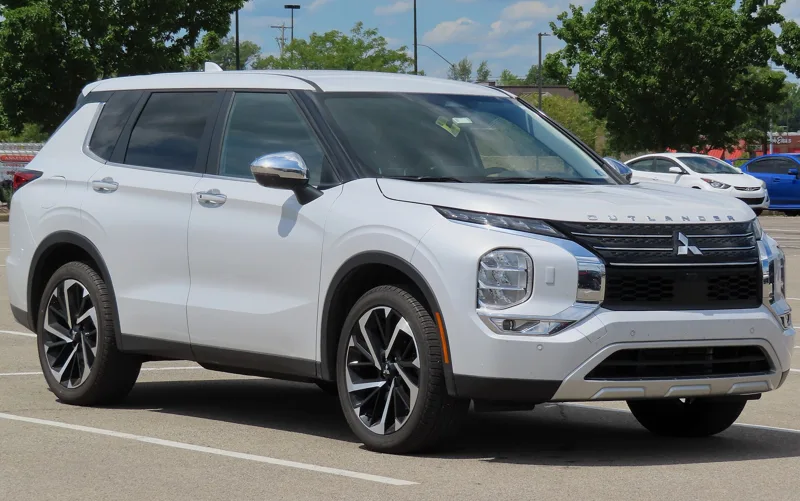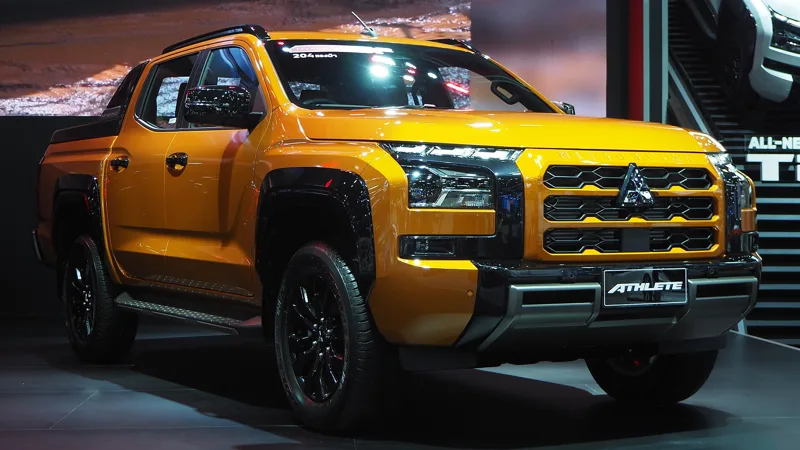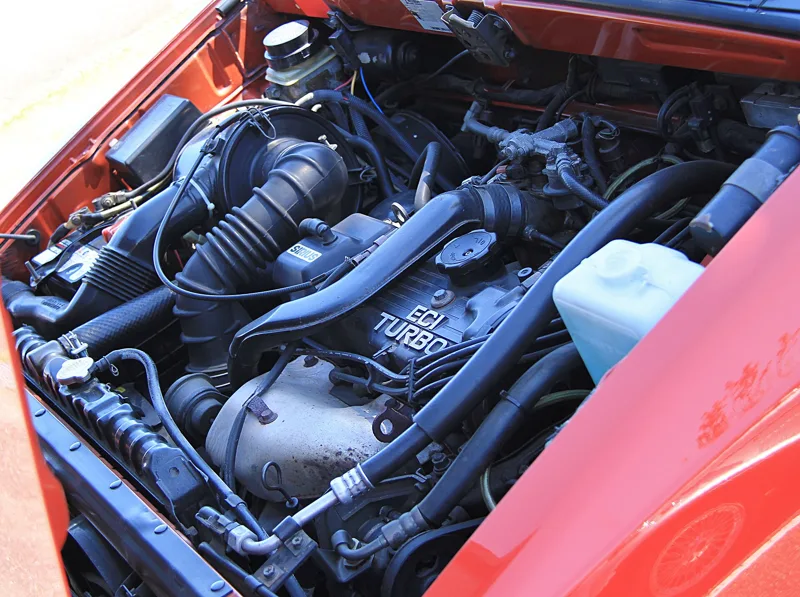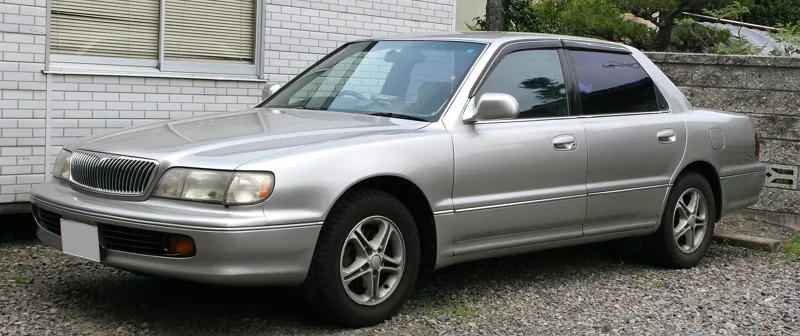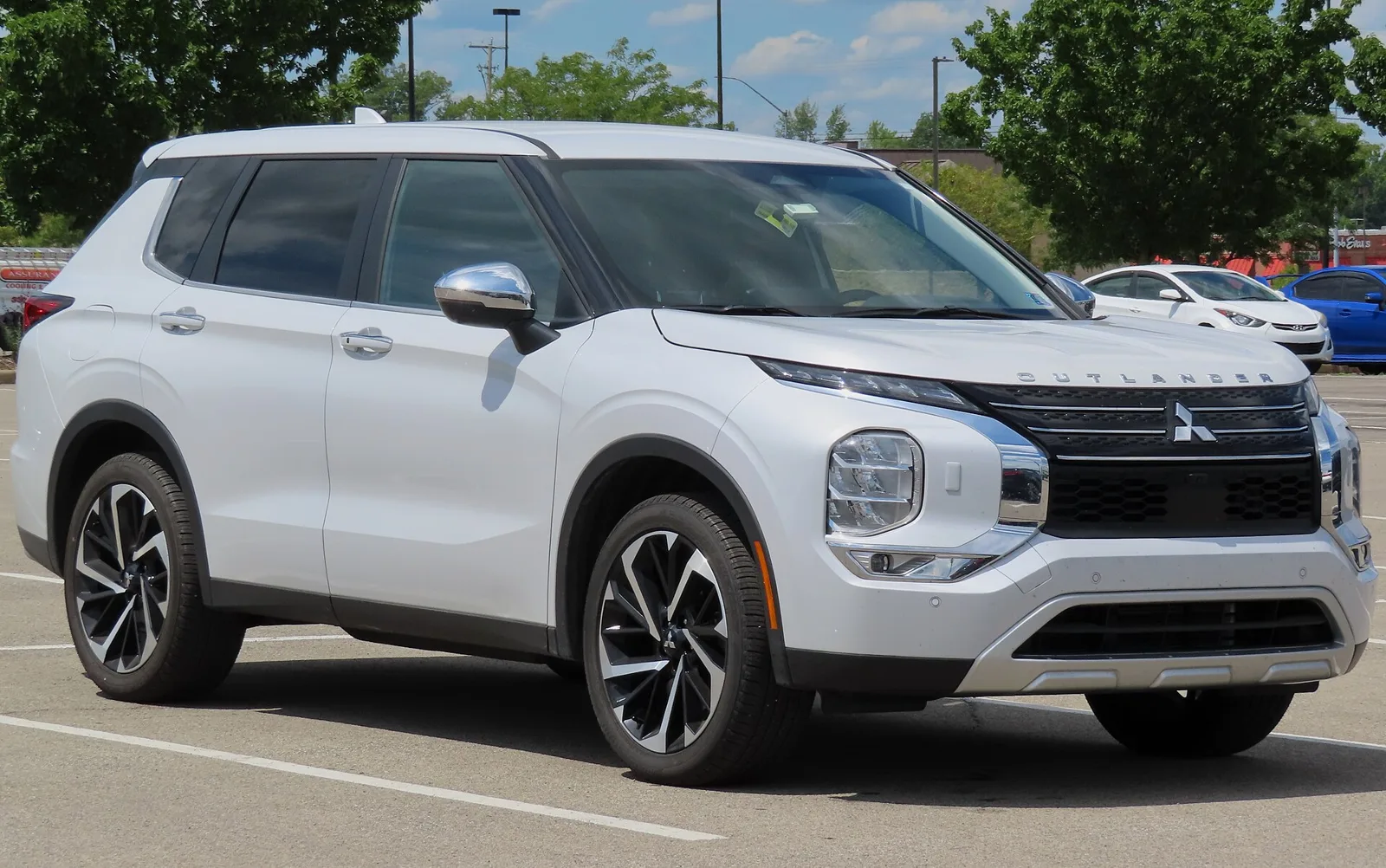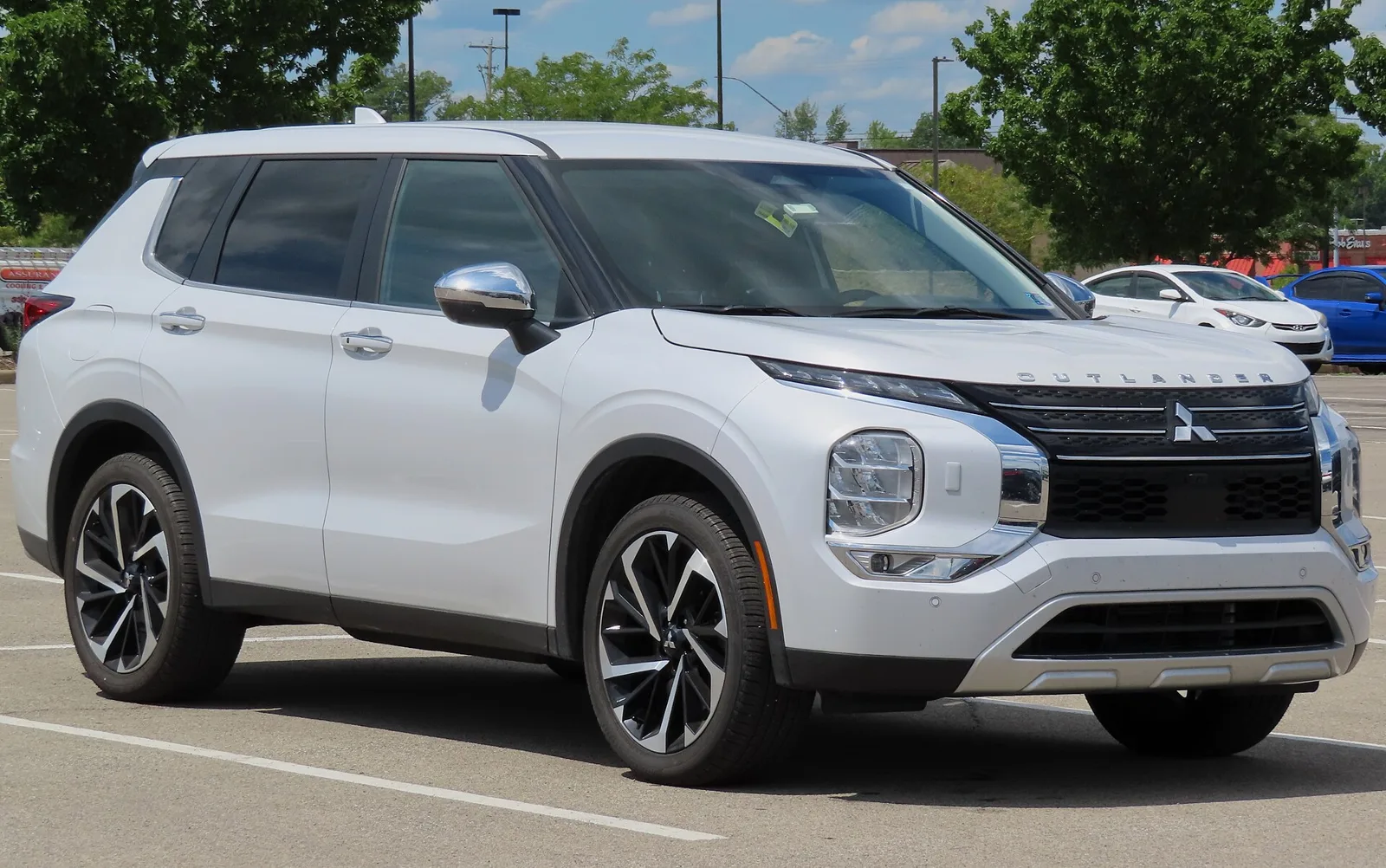
From the 1987 Galant VR-4 to the Lancer Evolution, Outlander and Pajero, Mitsubishi's AWC philosophy linked the drivetrain, suspension, braking and stability controls.
Mitsubishi AWC, or All Wheel Control, is the company's name for a family of four-wheel drive systems that link drivetrain, suspension, braking and stability controls. Its roots go back to the 1987 Galant VR-4, and it was later refined through the Lancer Evolution, Outlander and Pajero.
Mitsubishi AWC, short for All Wheel Control, is the name Mitsubishi Motors gives to its family of four-wheel drive systems. Its roots lie in the 1987 Galant VR-4, and it was first incorporated in the 2001 Lancer Evolution VII, where the drivetrain, brakes, suspension and stability controls were managed as one. Later it spread to the Outlander, Delica and Pajero, each with a configuration suited to its role.
What is Mitsubishi AWC?
AWC is best understood as a philosophy as much as a single system. Mitsubishi combines its 4WD drivetrains, suspension technologies, braking systems, stability and traction controls, and differentials into one integrated approach. The company says the core lies in how those parts work together rather than in any one component.
Mitsubishi credits the approach to its motorsport programmes and a rallying history that reaches back almost half a century. The first AWC-branded cars were full-time four-wheel drive Lancer Evolution models, but the same thinking now runs through the company's other four-wheel drive vehicles, each with its own layout.
Four-wheel drive managed as a whole, so the car steers as well as it pulls.
Where did AWC begin?
AWC grew out of the 1987 Galant VR-4, the first high-performance four-wheel drive car Mitsubishi produced. Its Dynamic Four system used a centre differential with a viscous coupling, alongside four-wheel steering, independent suspension and four-wheel ABS, and the car also carried Dynamic ECS semi-active air suspension.
The Galant took the Japan Car of the Year prize for 1987 and 1988, and the Dynamic Four system was honoured by the Japan Society for the Promotion of Machine Industry. Few production cars of the period combined so many advanced systems, and Mitsubishi treated that early integration as the foundation for everything that followed.
What were TCL and Active Yaw Control?
TCL arrived in 1990 on the Diamante (Sigma), the Mitsubishi 3000GT and, later, the Debonair. It was the first electronic system to combine active trace control with traction control. Its trace function adjusted traction in corners by reading steering angle, throttle position and individual wheel speeds, although it had no yaw input.
Active Yaw Control arrived in 1996 on the Lancer Evolution IV, and it moved drive torque between the left and right rear wheels through a torque transfer rear differential run by an electronic control unit. The eighth-generation Galant and Legnum VR-4 followed with AYC plus an active stability control system that used braking force differences between wheels. The Galant won the Car of the Year Japan award for 1996-1997.
When did the systems become integrated?
Integration arrived with the 2001 Lancer Evolution VII. That car carried AYC, Sports ABS and a new Active Center Differential, or ACD, which used an electronically controlled multi-plate clutch. Mitsubishi says the ACD could limit differential action three times more than the viscous coupling it replaced, and the two systems were managed together for the first time.
Integrated control meant the ACD passed its feedback and feedforward information to the AYC logic, so a larger ACD locking force produced a larger yaw moment from AYC. Out of a corner this improved traction and steering response together. A three-way switch let drivers choose tarmac, gravel or snow, and the ACD released when the handbrake was pulled, which helped rally drivers with handbrake turns.
How does AWC manage the tyres?
Mitsubishi describes the AWC philosophy as three forms of control. The first keeps each tyre pressed firmly onto the road by managing vertical loading. The second manages slip ratios and slip angles through ABS, traction control and steering systems. The third manages how drive and lateral forces are assigned across the four tyres.
Each form draws on different hardware. Vertical loading relies on the basic specification, body and suspension. Slip control leans on ABS, TCL and steering technologies. Force assignment uses powertrain and braking controls. The shared aim is a balanced use of grip, so that each tyre contributes its share without being overloaded.
How does the Outlander's AWC work?
The second-generation Outlander, launched in 2005, combined electronically controlled four-wheel drive with Active Skid and Traction Control. A drive-mode dial offers front-wheel drive for economy, 4WD Auto for automatic rear drive and 4WD Lock for extra rear torque. A rear transfer clutch routes power backwards as conditions change.
In 4WD Auto the rear axle always receives some torque. Under full throttle the coupling can route as much as forty percent of its available torque backwards. Once the car passes 40 miles per hour that share shrinks to twenty five percent, and on a steady cruise roughly fifteen percent is sent aft. Through tight corners the coupling eases off, which keeps the steering smooth.
4WD Lock is aimed at snow and loose surfaces. It increases rear torque transfer by 50 percent over Auto, so up to 60 percent can reach the rear wheels under hard acceleration on dry pavement. Front and rear torque are still apportioned automatically, but the lock mode gives priority to traction and high-speed stability.
What changed with the Lancer Evolution IX?
The Lancer Evolution IX, introduced in 2005, kept full-time four-wheel drive and added Super AYC, ACD and Sport ABS. Super AYC uses a planetary gear differential that transfers almost twice the torque between the rear wheels compared with the earlier system. Mitsubishi also revised the AWC logic so that driving force stayed actively controlled even while Sport ABS was working.
On the Evolution VIII, Sport ABS took priority under heavy braking and effectively disengaged ACD and Super AYC. The Evolution IX closed that gap. Through a series of high-speed bends the system kept controlling yaw even when the driver was on the brakes, which improved agility and the accuracy of steering on corner entry.
Mitsubishi's position is that Evolution uses four-wheel drive to sharpen handling rather than to add traction. Super AYC acts like a limited slip differential during hard driving, and Sport ABS uses steering angle, lateral G and speed sensors to apportion braking pressure to each wheel individually.
Where else is AWC used?
AWC spread well beyond the Evolution. The 2007 Delica D:5 used the same electronic four-wheel drive as the new Outlander, with 2WD, 4WD AUTO and 4WD LOCK settings. In North America the 2012 Lancer became available with AWC, first on the SE model, paired with a CVT and a 2.4 liter MIVEC engine producing 168 bhp at 6000 rpm.
The fourth-generation Pajero, launched in 2006, kept Super Select 4WD II with four drive modes: 2H, 4H, 4HLc and 4LLc. Its viscous coupling centre differential has a basic front to rear torque split of 33:67, and a factory rear differential lock works alongside ASTC to help the vehicle get out of soft ground.
| Model | Year | AWC feature |
|---|---|---|
| Galant VR-4 | 1987 | Dynamic Four with centre viscous coupling and four-wheel steering |
| Diamante (Sigma) | 1990 | TCL active trace and traction control |
| Lancer Evolution IV | 1996 | World first Active Yaw Control |
| Lancer Evolution VII | 2001 | ACD with AYC under integrated control |
| Outlander | 2005 | Electronic 4WD with ASTC and three drive modes |
| Lancer Evolution IX | 2005 | Super AYC, ACD and Sport ABS |
| Pajero | 2006 | Super Select 4WD II with 33:67 basic split |
| Delica D:5 | 2007 | Outlander-style electronic 4WD with three modes |
| Lancer | 2012 | AWC with CVT and 2.4 liter MIVEC engine |
What came after the Lancer Evolution VII?
Subsequent developments led to S-AWC, or Super All Wheel Control, which was developed specifically for the new 2007 Lancer Evolution. The name marks a further step in the same line of thinking, in which the drivetrain, brakes and suspension are treated as parts of one control problem rather than separate systems. Earlier milestones, from AYC in 1996 to the ACD in 2001, all fed into that step.
Mitsubishi presents AWC as an umbrella across its four-wheel drive vehicles rather than a single product. A Lancer, an Outlander and a Pajero therefore share a philosophy but not identical hardware. That flexibility is why one name can describe a rally-bred sedan, a family crossover and an off-road SUV.
How did the Delica's system differ from the Outlander's?
The 2007 Delica D:5 used the same electronically controlled four-wheel drive as the new Outlander, and it kept a selector dial beside the shift lever with three modes: 2WD, 4WD AUTO and 4WD LOCK. Mitsubishi's Active Stability Control came with it too. Because its wheelbase and weight differ from the Outlander's, the drive management was retuned for the larger vehicle.
In 4WD mode the software increases the share of torque sent to the rear wheels when climbing hills, and it reduces that share during small steering inputs. In LOCK mode the system watches for diagonally opposite wheels that are losing grip at low speed, and it applies brake traction control at lower speeds than the Outlander system does. The aim was better hill climbing, steadier cornering and stronger all-terrain performance.
What does the Lancer's AWC system include?
The Lancer sold in North America from 2012 carried AWC, first on the SE model and then on the GT as well from 2013. Canada offered both grades, with the GT arriving there in 2014 or 2015. The AWC Lancers use a continuously variable transmission, and the GT includes paddle shifters that simulate 6 speeds.
The engine is a 2.4 litre MIVEC unit producing 168 bhp at 6000 rpm and 167 lb.ft of torque at 4100 rpm. Those figures show how the same control philosophy reaches a mainstream sedan with a CVT, rather than only the performance models at the top of the range.
How does the Pajero's four-wheel drive work in practice?
The standard 4H setting suits town streets, expressways and country roads, and it also copes with packed snow, icy surfaces and flat dirt. Selecting 4HLc locks the centre differential so that drive reaches all four wheels in soft snow, sand or dirt. Mode 4LLc locks the centre differential and keeps the transmission in a low gear, which helps on rocky or swampy ground.
The Pajero also carries Engine Brake Assist Control, multi-mode anti-lock braking, Electronic Brakeforce Distribution, Hill Hold Assist and Mitsubishi Body Optimised Suspension. Taken together these systems mean the four-wheel drive hardware is supported by braking and body controls designed for rough going as well as road use.