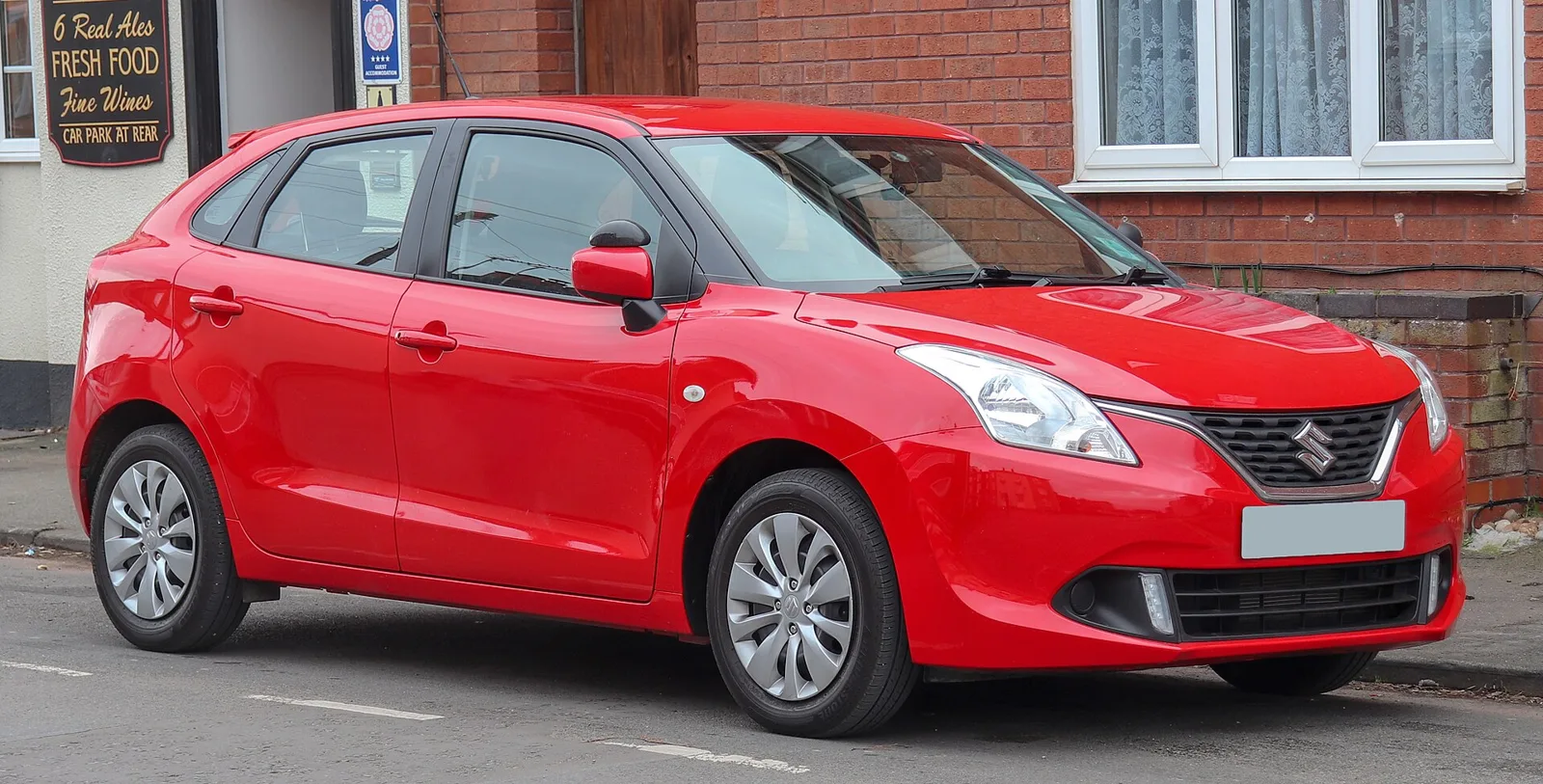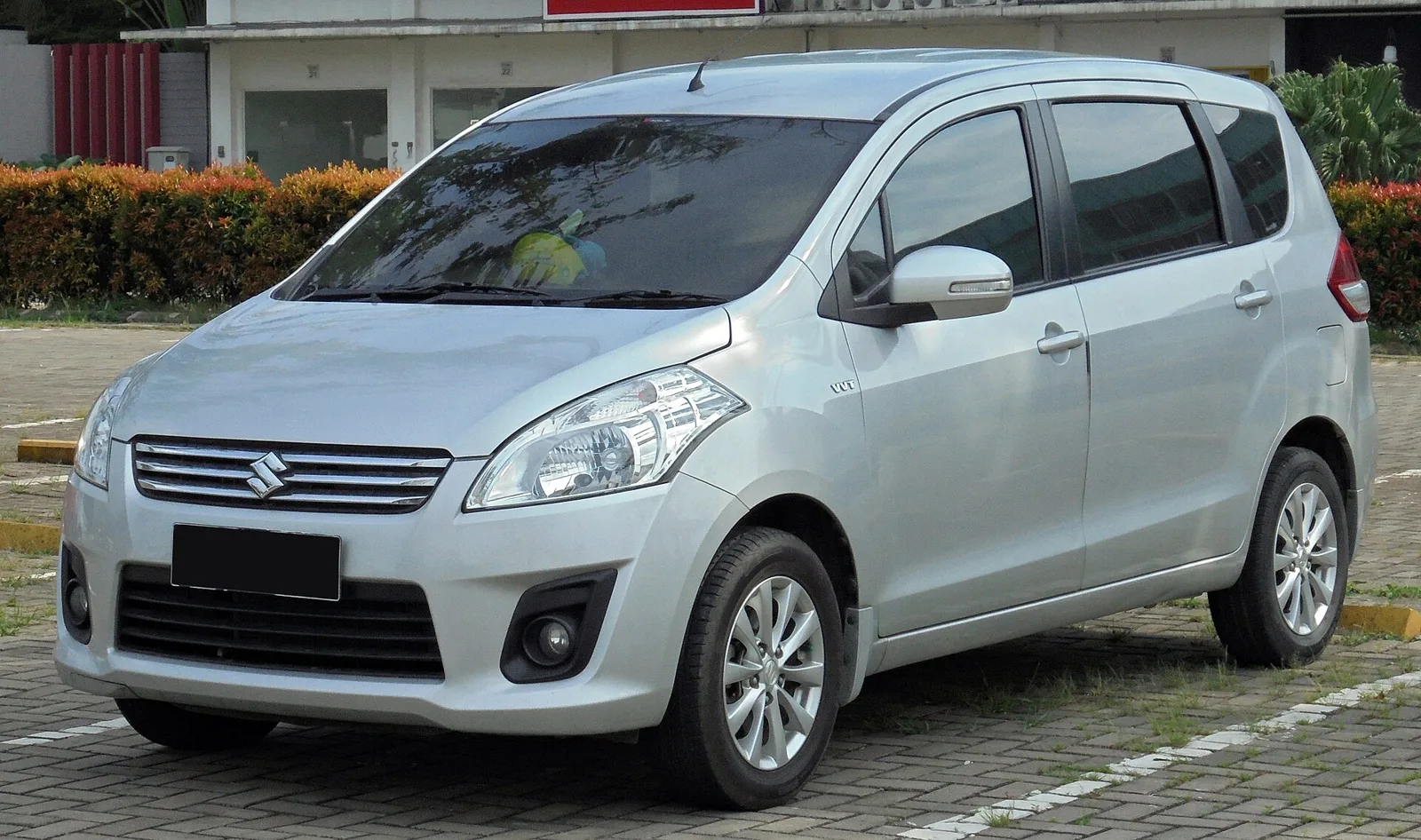
A practical three-row MPV from Suzuki that started in 2012, grew larger in 2018 and was sold under Mazda, Proton and Toyota badges.
The Suzuki Ertiga is a three-row MPV that Suzuki has built since 2012, first on the Swift platform and then on HEARTECT from 2018. India and Indonesia are its main markets, and Mazda, Proton and Toyota have all sold rebadged versions.
The Suzuki Ertiga is a three-row multi-purpose vehicle that Suzuki has built since 2012, designed mainly for emerging markets. The first generation was based on the second-generation Swift, and the second generation arrived in 2018 on the HEARTECT platform. India and Indonesia are its biggest markets, and the model has been rebadged by Mazda, Proton and Toyota.
What is the Suzuki Ertiga?
The Ertiga is a family people mover with three rows of seats, sold across South and Southeast Asia, Africa, the Middle East, the Pacific Islands, the Caribbean and Latin America. Its main production is in India and Indonesia, where most of the cars are built, and it has also been exported widely from those plants.
Suzuki calls the Ertiga a Life Utility Vehicle, a label the company uses to describe its purpose as a practical, everyday vehicle for families. Maruti Suzuki, which sells the car in India, says it was designed specifically for Indian buyers rather than adapted from a global model.
A practical three-row MPV that began as a Swift-based family car and became a rebadged favourite across three carmakers.
Where does the Ertiga name come from?
The name is taken from R-tiga, a pronunciation of R3 in Indonesian. Tiga means three in that language, while R stands for row, a reference to the car's three-row seating.
The car was previewed by the R-III (R3) concept shown by Maruti Suzuki at the 2010 Auto Expo. The production version was unveiled at the 11th Auto Expo in New Delhi on 6 January 2012, and its development was led by chief engineer Toshikatsu Hibi.
How did the first-generation Ertiga launch?
The first-generation Ertiga went on sale in India on 12 April 2012 and in Indonesia on 22 April 2012. It reached South Africa on 9 June 2014 and the Philippines on 17 July 2014, so its rollout across markets took several years.
India gave the car an early response. Maruti Suzuki reported that 11,000 vehicles were ordered within five days of the launch, which pointed to strong early demand.
How was the first-generation Ertiga built?
The first-generation car was built on the Swift subcompact platform. Indian buyers could choose diesel or petrol engines, and both were retuned for the car to give suitable performance.
In June 2013 Maruti Suzuki added compressed natural gas models. The Indian CNG cars used an intelligent gas port injection system, which the company claimed would achieve 22.8 km/L (64 mpg-imp; 54 mpg-US).
The Indonesian cars came in GA, GL and GX trim, and early models had only a five-speed manual. A four-speed automatic became available on the GL and GX from 17 May 2013. In South Africa the first-generation car used a 1.4-litre petrol engine with either a five-speed manual or a four-speed automatic.
Why is Indonesia so important to the Ertiga?
Indonesia is one of the two largest markets for the Ertiga, and the car sold strongly there from the start. It sold 109,461 units in its first two years, and in one year it outsold the Toyota Avanza.
Indonesia also produced new concepts from the Ertiga. At the 20th Indonesia International Motor Show in September 2012, Suzuki showed Sporty, Luxury and Crossover versions that were heavily modified Ertigas. A GX-based Elegant version followed in August 2013, and the Sporty went on sale in February 2014 with a different front fascia and sporty body kit.
What did the facelift and the Dreza change?
The facelifted Ertiga was launched at the 23rd Gaikindo Indonesia International Auto Show on 20 August 2015. It had a wider grille, redesigned bumpers on all trim levels and a new trunk garnish for the GL and GX. India followed on 16 October 2015, and the diesel versions gained SHVS mild hybrid technology.
The flagship Dreza arrived on 8 January 2016. It had a different front fascia, its own wheel design and a special colour option. Inside it had a different seat upholstery, a wooden dashboard panel and a 9-inch Android touchscreen with 1280 x 720 pixel resolution, which Suzuki said no competitor offered at the time.
A short-lived ZDi diesel trim followed in February 2017. It used a diesel hybrid engine imported from India, and it was sold with manual transmission only. The ZDi was a limited addition rather than a new generation.
Why did Mazda and Proton sell rebadged Ertigas?
Mazda sold the first-generation Ertiga in Indonesia as the Mazda VX-1 under an OEM agreement. It was launched on 11 March 2013 in V and R grades, with additional exterior accessories, and it was sold until March 2017. Its manual versions were only available at first, and the automatic option arrived in September 2014. A facelift in March 2016 made no technical changes. In its lifespan the VX-1 sold only 1,640 units.
Proton assembled and sold the car in Malaysia as the Proton Ertiga, launched on 24 November 2016 at the Setia City Convention Centre in Selangor. It was Malaysia's first mini MPV to qualify for the EEV emissions standard. The seating layout was 2-2-2, so the middle-row centre seat had only a lap belt and the car counted as a six-seater, even though it could carry seven people.
The Proton version was updated in August 2018 as the Ertiga Xtra, with darker seat upholstery and a 7-inch touchscreen. The Proton Ertiga was discontinued in September 2019, after the second-generation Suzuki-branded car arrived.
What changed in the second generation?
Suzuki showed the second-generation Ertiga to the public at the 26th Indonesia International Motor Show, held in Jakarta, on 19 April 2018. It was built on the HEARTECT platform, and chief engineer Satoshi Kasahara oversaw the project. The new car was 130 mm longer, 40 mm wider and 5 mm taller than its predecessor, and both petrol and diesel versions received a larger 1.5-litre engine.
Indian-built cars were exported to South Asia, Africa and the Middle East, while Indonesian-built cars went to Southeast Asia, the Pacific Islands, Mexico, the Caribbean and Latin America. Myanmar also assembled the car for its local market. The second generation reached Indonesia on 8 May 2018 with GA, GL and GX trim, all powered by a K15B 1.5-litre petrol engine. Vietnam followed on 29 June 2019 with GL and GLX trim, both using the same petrol unit.
How has the second-generation Ertiga sold in India?
Indian sales of the second generation began on 21 November 2018. Maruti Suzuki assembles it locally and sells it exclusively through its Arena dealerships. At launch it came with four petrol trims, LXi, VXi, ZXi and ZXi+, and four diesel trims, LDi, VDi, ZDi and ZDi+, with a 1.3-litre turbocharged diesel engine.
The Indian car has been one of the country's strongest sellers. The model passed 10 lakh total sales in February 2024, and in October 2024 it was the top-selling car in India for the second month running, with 18,785 units.
In July 2025 the Indian-built Ertiga gained six airbags as standard. The change is visible in a new rear quarter panel with a thicker D-pillar, 40 mm longer, and an extra rear upper spoiler fitted as standard. The air vents were also moved, behind the console box for the second row and beside the armrests for the third row. The update applied only to Indian-built cars, including those exported to the Middle East and Africa.
Which safety ratings did the Ertiga receive?
The Indian Ertiga scored 3 stars for adult occupants and 3 stars for toddlers in Global NCAP 1.0 testing in 2019, which was similar to the Latin NCAP 2013 standard. The African version received 1 star for adults and 2 stars for toddlers under Global NCAP 2.0 in 2024, a standard similar to Latin NCAP 2016.
The ASEAN version received 4 stars from ASEAN NCAP in 2019. The ratings come from different testing protocols, so they cannot be compared directly.
What is the Toyota Rumion?
The Indian-built second-generation Ertiga is also sold by Toyota as the Toyota Rumion, an entry-level MPV in several African countries. The Rumion name was used earlier on the Japanese-market Corolla Rumion hatchback. The Rumion debuted in October 2021 in South Africa, offered in S, SX and TX trim, and it reached Egypt in January 2022.
A facelifted Rumion with a different front fascia from the Ertiga launched on 7 July 2023. It has also been sold in India since 10 August 2023, and by September 2024 it had reached 10,295 units sold.
What are the XL6 and XL7?
The XL6 and XL7 are crossover-inspired versions of the second-generation Ertiga. They are called the XL6 in India, Nepal, Bangladesh, Bhutan and Africa, and the XL7 elsewhere, while Mexico uses the Ertiga XL7 name. Suzuki says the crossovers have more than 200 component differences from the regular car, including the engine control module, body control module, a redesigned fuel tank and retuned suspension.
The XL6 is a six-seater with second-row captain seats in India, while the international XL7 is a seven-seater. The XL6 debuted in India on 21 August 2019 through Maruti's Nexa showrooms, and the XL7 reached Indonesia on 15 February 2020. The name stands for Xtra Large 6-seater or 7-seater.
Ertiga specifications
| Specification | Detail |
|---|---|
| Type | Three-row multi-purpose vehicle |
| First generation platform | Swift subcompact platform |
| First generation launch | India 12 April 2012; Indonesia 22 April 2012 |
| Second generation platform | HEARTECT |
| Second generation launch | Unveiled 19 April 2018; India 21 November 2018 |
| Size change | 130 mm longer, 40 mm wider, 5 mm taller than the first generation |
| Petrol engine (second generation) | 1.5-litre K15B |
| Diesel engine (India) | 1.3-litre turbocharged D15A, discontinued August 2019 |
| South African engine (first generation) | 1.4-litre petrol, five-speed manual or four-speed automatic |
| CNG claim (India, 2013) | 22.8 km/L (64 mpg-imp; 54 mpg-US) |
| Global NCAP (India, 2019) | 3 stars adults, 3 stars toddlers |
| ASEAN NCAP (2019) | 4 stars |
| Toyota Rumion launch | October 2021, South Africa |
| XL6 launch (India) | 21 August 2019 |