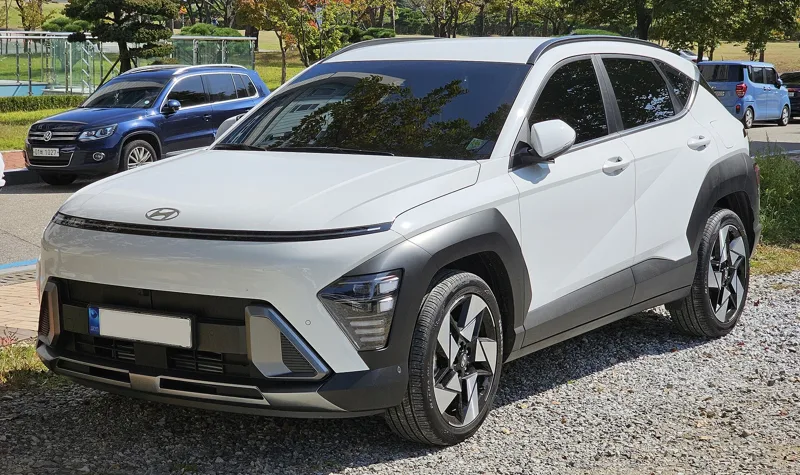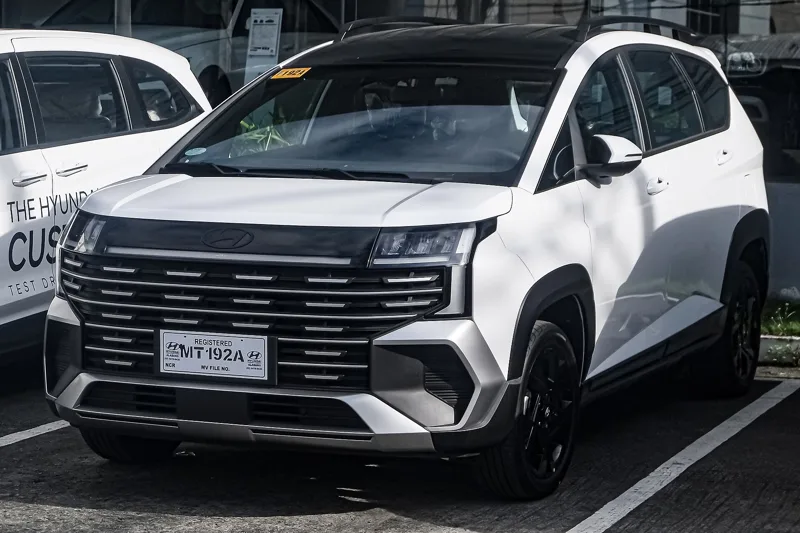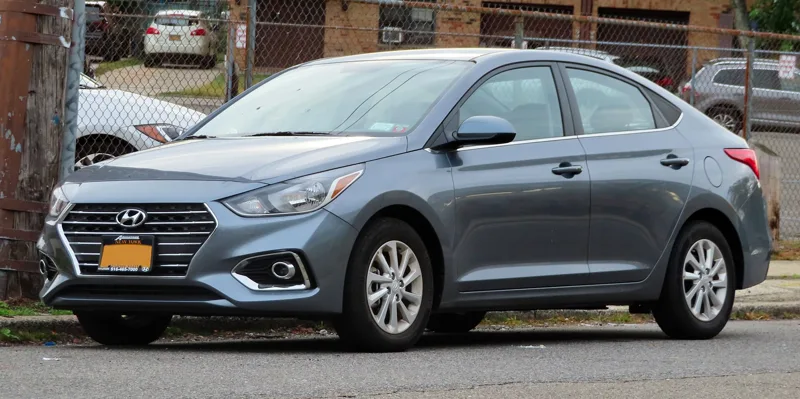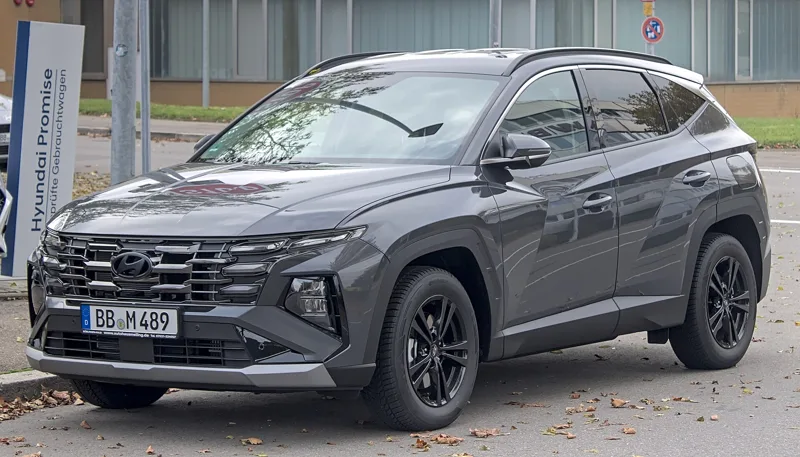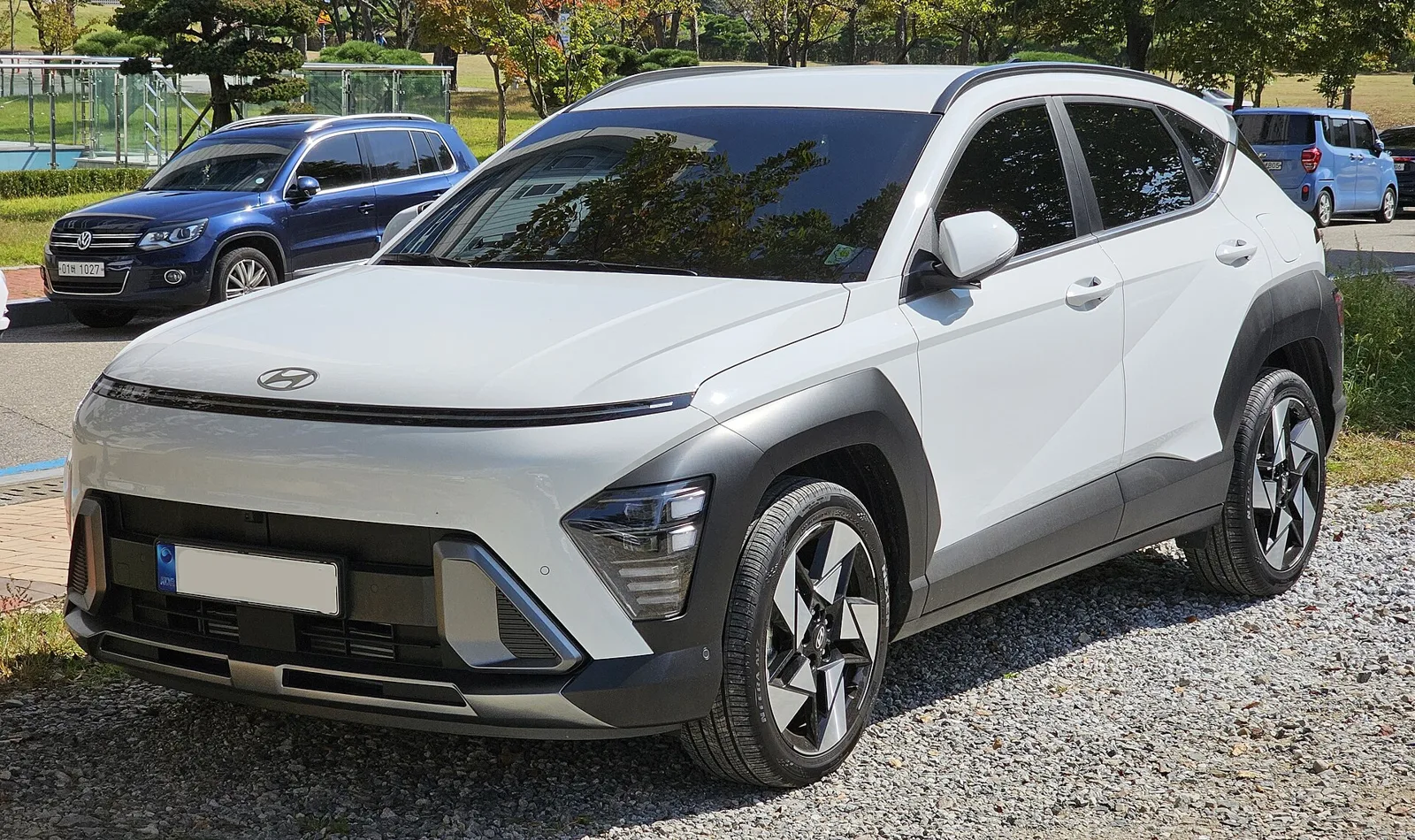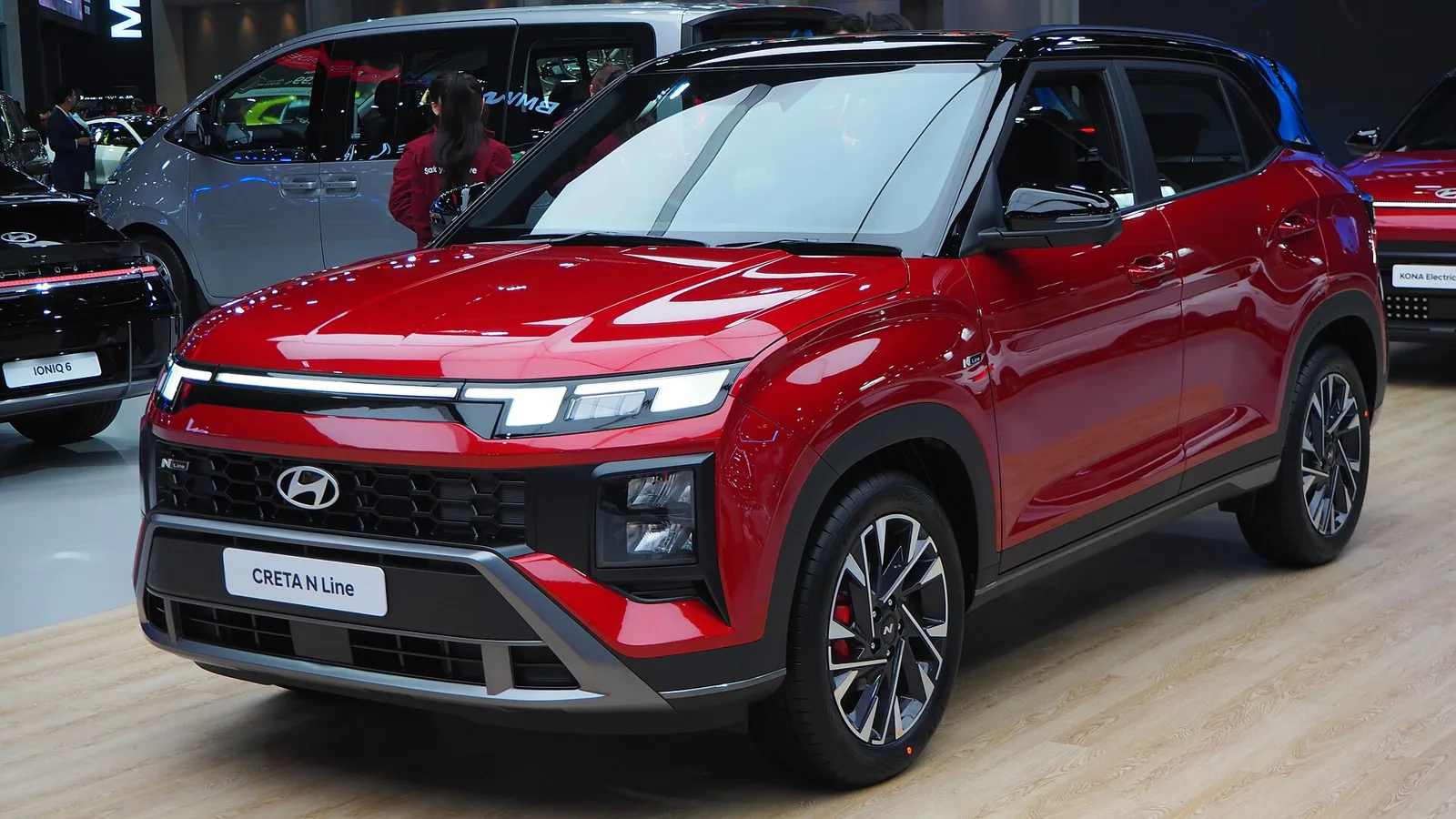
A subcompact SUV that grew from a 2014 concept in China into a sales leader in India and Russia, and never reached the US.
The Hyundai Creta is a subcompact crossover SUV that Hyundai has produced since 2014, mainly for emerging markets. It sits above the Venue and below the Alcazar, and it is not offered in the US or Australia, where the Kona fills that role.
Hyundai's Creta grew out of a concept shown in China in 2014 and became a fixture of emerging markets. It has been built in five countries, and for a time it was the best-selling SUV in Russia and the highest-selling SUV in India. Its story also runs through a three-row sibling, a Brazilian and Indonesian rebuild, and a deliberate absence from the largest developed markets.
Where did the Hyundai Creta come from?
The Creta is a subcompact crossover SUV produced by Hyundai since 2014, built mainly for emerging markets and BRICS countries in particular. It is placed between the Venue and the Alcazar in Hyundai's SUV range. It has been manufactured in China, India, Russia, Brazil and Indonesia.
The first generation debuted as a near-production concept car in China in April 2014. The concept was called the ix25 Concept, and it appeared at the 2014 Beijing Motor Show. The production version went on sale in China in October 2014.
Indian production came next, and the car went on sale there in July 2015 under the Creta name. Hyundai based the design on its Fluidic Sculpture 2.0 concept, which gave the car a consistent look across the Chinese and Indian versions.
A Crete-named SUV built for emerging markets, which led sales in India and Russia while staying out of the US and Australia.
Why is the Creta named after Crete?
The model takes its name from the Greek island of Crete. The name is also meant to suggest creative, which Hyundai used as a marketing thread across the car's early years.
The same vehicle carries other names in other places. In the Dominican Republic it is sold as the Hyundai Cantus, and in China it was sold as the Hyundai ix25. Those names reflect the regional marketing that made the car a global model in name as well as in engineering.
Which markets did the first generation serve?
The Creta was intended to be a global model for emerging markets. It was launched in Brazil in December 2016, with deliveries starting in January 2017. In Brazil it was built at the Piracicaba plant, alongside the HB20.
In Argentina the model was originally imported from India and later from Brazil. It was offered in GL, Style, Safety and Safety+ trim levels, and the car was launched there in June 2026.
Russian output started at the Saint Petersburg plant in August 2016, aimed at Russia and neighbouring CIS markets. The Russian car was assembled on the same line as the Solaris and was sold in three trim levels.
How did India become the Creta's biggest market?
Indian sales opened on 21 July 2015, with cars built at the Chennai factory. Bookings in India passed 70,000 by November 2015, and 15,770 more came in from the rest of the world. By August 2017 the country had absorbed more than 200,000 units.
In 2017 the vehicle contained about 90% Indian parts, which helped it fit the local manufacturing story. The car has led India's SUV rankings since 2020, and in April 2026 it led mid-size SUV sales in the country.
The Indian range came in six trims, running from Base up to the SX (O) at the top. The Creta SX was also offered in a dual-tone colour option, in red and black or white and black.
What engines did the first generation offer?
Argentina had a single engine, a 1.6-litre Gamma petrol. Its output was 96 kW (130 PS), and it generated 162 N m (16.5 kg m) of torque. It was paired with a 6-speed automatic or a 6-speed manual.
Brazil offered the same 1.6-litre Gamma, along with a new 2.0-litre Nu petrol rated 122 kW (166 PS), with 201 N m (20.5 kg m) of torque. Both engines were ethanol-compatible and used double variable valve timing and start-stop, and both were paired with a 6-speed automatic.
In India at launch, the car could be had with a 1.6-litre petrol or a 1.4 or 1.6-litre diesel. A six-speed manual was standard across the Indian variants, and only the 1.6 diesel SX+ offered a six-speed automatic.
In Russia the petrol options were a 1.6-litre producing 123 PS (90 kW; 121 hp) and a 2.0-litre producing 149 PS (110 kW; 147 hp). Front-wheel drive or all-wheel drive was available with both.
What did the facelifts change?
The refreshed first generation arrived in China in August 2017, in India in May 2018 and in Brazil in July 2019. The cosmetic update added a larger hexagonal chrome-lined grille, a new rear bumper, new headlamps and tail lamps, and a new wheel design.
The Chinese version received an altered front bumper compared with the Indian and Brazilian cars. The Brazilian Creta also gained newly designed rear LED taillights. The Russian version received only a minor change in April 2020, when the front end got a new grille design.
The Creta N Line sports trim followed on 11 March 2024. The Creta Electric then launched in India on 17 January 2025, adding an electric version to the Indian line-up.
How did the second generation change the car?
The second generation was first introduced in 2019. Hyundai unveiled it in India at the Auto Expo in February 2020, and it reached the Indian market in March 2020. The Indian car was a lightly changed ix25 from China, and its front grille was the main visible difference.
The Indian-made Creta was exported to 85 countries across Africa, the Middle East and Latin America. Second-generation output began in Russia in July 2021, followed by Brazil in August 2021 and Indonesia in January 2022.
In the GCC markets the second-generation car arrived in October 2020 as an import from India, in Smart and Comfort trims. In July 2022 the Indian-made Creta was replaced there by the Indonesian-made car.
Which engines does the second generation use?
The Indian second-generation Creta offered three engines. The 1.5-litre petrol produced 115 PS (85 kW; 113 hp) and 144 N m (15 kg m; 106 lb ft) of torque. The 1.5-litre diesel produced the same power with 250 N m (25 kg m; 184 lb ft), and a 1.4-litre turbocharged petrol produced 140 PS (103 kW; 138 hp).
In April 2022 an iMT gearbox option was released alongside the Knight Edition variant. The Chinese ix25 relied on one 1.5-litre petrol unit, rated 85 kW (115 PS; 113 hp).
In Brazil the second generation used a 1.0-litre three-cylinder turbocharged petrol-flex engine with 122 PS (90 kW; 120 hp). The top engine was a naturally aspirated 2.0-litre petrol-flex, rated 124 kW (169 PS; 167 hp).
Indonesian cars ran a Smartstream G1.5 MPi 1.5-litre petrol making 85 kW (115 PS; 113 hp). The N Line variant offered a turbocharged T-GDi 1.5-litre, rated 118 kW (160 PS; 158 hp).
What does the facelifted Creta offer?
The facelifted Indian Creta was released on 16 January 2024. The front and rear fascias were redesigned, with full-width LED light bars for both headlights and taillights, and the interior received a larger 10.25-inch touchscreen.
The updated Creta offered an option of Level 2 advanced driver-assistance system with 19 functions. That made the car one of the more equipped models in its class in the markets where the option was sold.
In Brazil the facelift arrived on 7 October 2024 with five trim levels. The Ultimate trim used a 1.6 T-GDi turbocharged petrol engine producing 196 PS (144 kW; 193 hp), while the other trims used the 1.0 T-GDi petrol-flex engine.
How safe is the Creta?
Latin NCAP 1.0 rated the basic Indian-made car for Latin America in 2015, giving it 4 stars for adults and 3 stars for toddlers. That was the first measure of its safety in the region.
Global NCAP later tested the Indian-market car in the first half of 2022, in its most basic form with only two airbags and anti-lock brakes. The Creta narrowly reached three stars for adults, and it earned three stars for children.
The Indian specification included two frontal airbags, ABS, belt reminders and tyre pressure monitoring. Better-equipped trims added electronic stability control, ISOFIX anchorages, side airbags and head-protecting curtains.
What is the Alcazar?
Hyundai's long-wheelbase, three-row Creta arrived in June 2021, sold as the Alcazar in India. In Mexico the same car was sold as the Creta Grand, and elsewhere as the Grand Creta. The Alcazar used a reworked front end and was offered with 6-seater and 7-seater options.
The Alcazar's engines were the 2.0-litre Nu petrol and a 1.5-litre diesel. It sat above the standard Creta in the Hyundai range, so buyers who needed more room could move up to it without leaving the brand.
How did the Creta sell in its other markets?
Russia's best-selling SUV label ran from 2017 to 2021. India's top spot began in 2020, and globally the car has ranked as Hyundai's third best-seller since 2019.
Production in Russia was halted in March 2022 at the Saint Petersburg plant. Hyundai sold the factory in September 2023, and in February 2024 the Creta was relaunched there as the Solaris HC. The plant was then owned by AGR Automotive, a subsidiary of Art-Finans.
The Indonesian plant, Hyundai Motor Manufacturing Indonesia, was built at Cikarang in Bekasi, West Java. Production started there on 17 January 2022, and the cars were exported to several Southeast Asian, Middle Eastern and African markets.
Why was the Creta never sold in the US?
The Creta is not offered in developed markets such as South Korea, the United States, Canada, Europe, Singapore and Australia. In those places Hyundai favoured the more advanced Kona instead, which the company placed in the same segment.
The decision reflects where the Creta was designed to sell. The model was engineered for emerging markets first, and its volume came from Russia, India, Brazil and Indonesia rather than from the developed markets where the Kona was positioned.
What are the Hyundai Creta specifications?
| Specification | Detail |
|---|---|
| Type | Subcompact crossover SUV |
| First generation launch | April 2014 concept; China production from October 2014 |
| Indian launch | 21 July 2015 at the Chennai plant |
| First-generation engine | 1.6-litre Gamma petrol, 130 PS (96 kW; 128 hp) |
| First-generation torque | 16.5 kg m (162 N m; 119 lb ft) |
| Second-generation Indian engine | 1.5-litre petrol, 115 PS (85 kW; 113 hp) |
| Second-generation diesel torque | 250 N m (25 kg m; 184 lb ft) |
| Brazilian 2.0-litre engine | 166 PS (122 kW; 164 hp) |
| Indonesian N Line engine | 160 PS (118 kW; 158 hp) |
| Alcazar engines | 2.0-litre Nu petrol or 1.5-litre diesel |
| Latin NCAP 1.0 (2015) | 4 stars adult, 3 stars toddlers |
| Global NCAP (H1 2022) | 3 stars adult, 3 stars child |