From midget cars on dirt ovals to three world championships, a Cooper-built revolution and a Repco-powered 1966 title nobody has repeated.
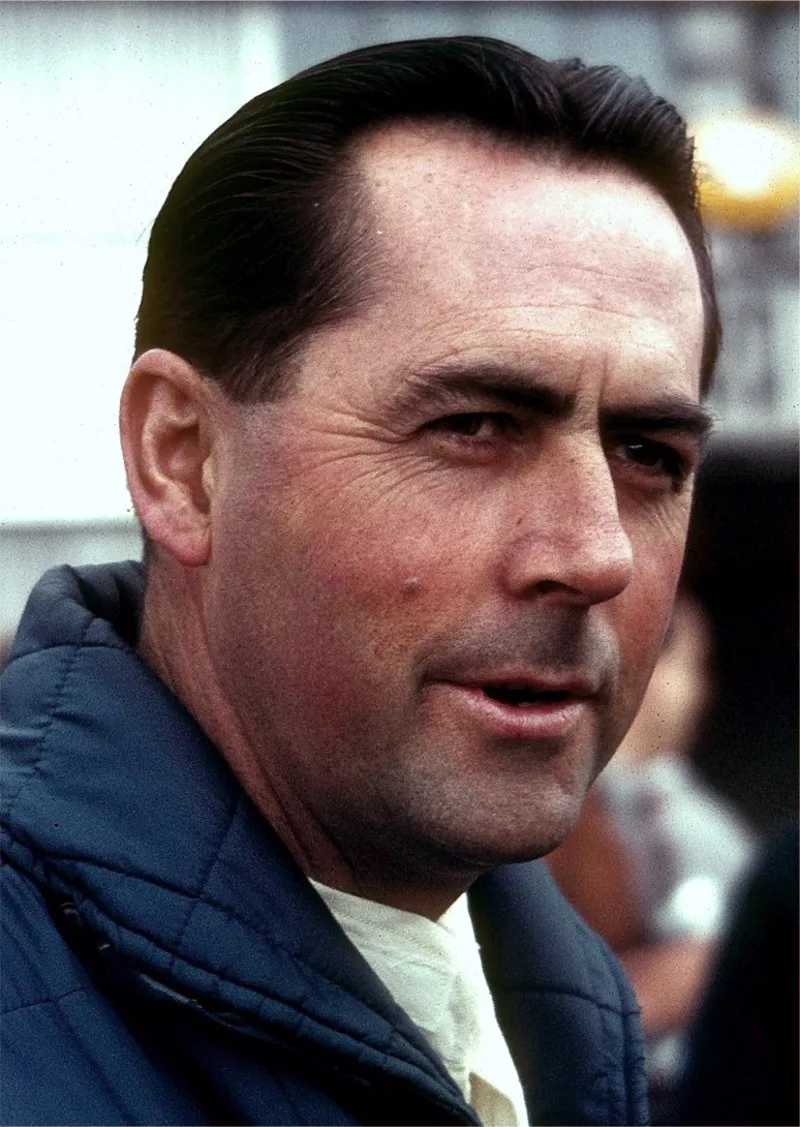
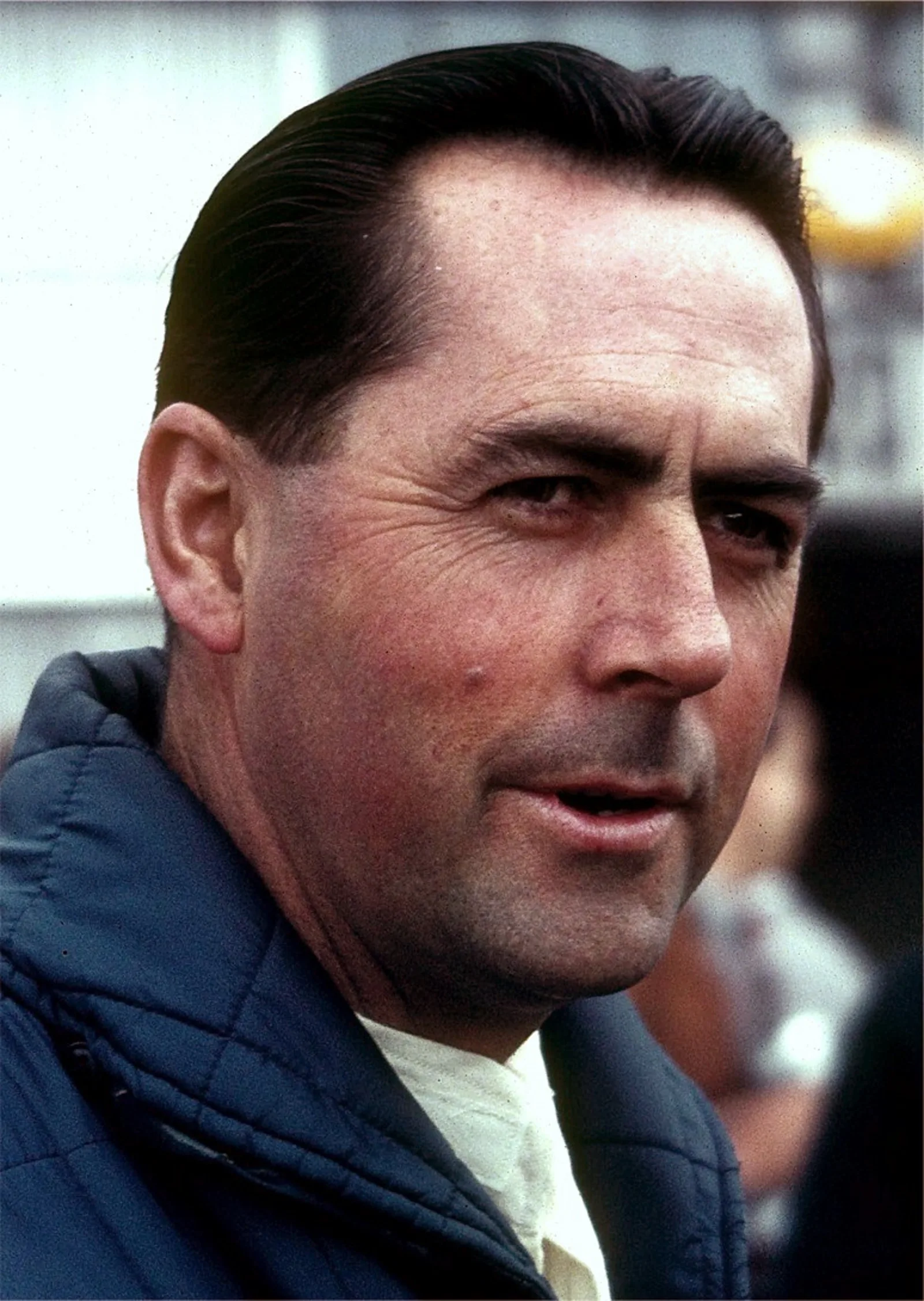
Jack Brabham, an Australian former flight mechanic, won Formula One world titles in 1959 and 1960 with Cooper and again in 1966 in a car of his own make, a Brabham-Repco. He remains the only driver to win the championship in a car bearing his own name.
Only one man has ever taken the Formula One title in a car with his own name on it, and as of 2026 it has happened exactly once. Jack Brabham did it in 1966, three decades after a Sydney boy had first taken the wheel of the family car.
Who was Jack Brabham?
Sir John Arthur Brabham (2 April 1926 to 19 May 2014), an Australian driver who also became a motorsport executive, contested Formula One from 1955 to 1970. He won three world championships, in 1959, 1960 and 1966, and 14 Grands Prix across 16 seasons. No other 1950s champion outlived him.
He was born in Hurstville, then a commuter town outside Sydney, and at 12 was already driving the family car and the delivery trucks of his father's grocery firm. He studied metalwork, carpentry and technical drawing at technical college, then left school at 15 for a job in a local garage, balancing it with an evening course in mechanical engineering. Soon he was buying, repairing and selling motorbikes from his parents' back veranda.
In 1944 he joined the Royal Australian Air Force. He wanted to fly, but there were already more trained aircrew than needed, and wartime shortages of flight mechanics put his skills to use instead. Based at RAAF Station Williamtown, he maintained Bristol Beaufighters. On his 20th birthday, 2 April 1946, he was discharged as a leading aircraftman and opened a little machining and repair shop in a workshop his uncle built behind his grandfather's house.
As of 2026, 1966 is the only time a driver has won the title in a car of his own construction and name.
How did midget racing start his career?
An American friend, Johnny Schonberg, talked Brabham into watching a midget car race, a category for small open-wheel cars on dirt ovals that drew crowds of up to 40,000 in Australia. Brabham thought the drivers mad, yet agreed to help Schonberg build a car around a modified JAP motorcycle engine.
Schonberg drove it first. In 1948 his wife persuaded him to stop, and Brabham took over, winning on his third night. Midgets, known in Australia as Speedcars, became his living, with races at Sydney's Cumberland Speedway, the Sydney Showground, Adelaide's Kilburn and Rowley Park, and the Ekka in Brisbane. He later called it terrific driver training, since quick reflexes decided whether you lived or, possibly, died. He won the Australian Speedcar title in 1948, the Australian and South Australian titles in 1949, and the national crown again in 1950 and 1951.
After running the midget at hillclimbs in 1951, he turned to road racing on closed tarmac circuits. He bought and modified a string of Cooper cars from Britain and committed to that form of racing from 1953. His commercial approach caused friction: the title RedeX Special painted on his Cooper-Bristol, for the fuel additive firm that supported him, was banned by the Confederation of Australian Motor Sport. During these years he earned the tag Black Jack.
Dean Delamont, who ran competitions at Britain's Royal Automobile Club, urged him after the 1954 New Zealand Grand Prix to try a season in Europe. He left in early 1955, eventually winning the Australian Grand Prix of that year in a car he had built in England.
How did he end up at Cooper?
He arrived alone in early 1955, based himself in the UK and bought a second Cooper for national events. His dirt-track roots showed: by his own description he took corners with full steering lock and plenty of throttle. Trips to the Cooper factory for spares grew into friendships with Charlie and John Cooper, and from mid-season he worked there daily, constructing the Bobtail, a modified sports car with a Bristol engine behind the driver.
He made his Grand Prix debut at 29 in the 1955 British Grand Prix, in that car. Its 2-litre engine was half a litre under the limit, and a broken clutch slowed it before it retired. Later in the year he tussled with Stirling Moss for third in a non-championship race at Snetterton. Moss finished ahead, but Brabham counted it as proof he could compete at that level. He shipped the Bobtail to Australia, won the Australian Grand Prix with it and sold it to pay for a permanent move to the UK with his wife Betty and son Geoff.
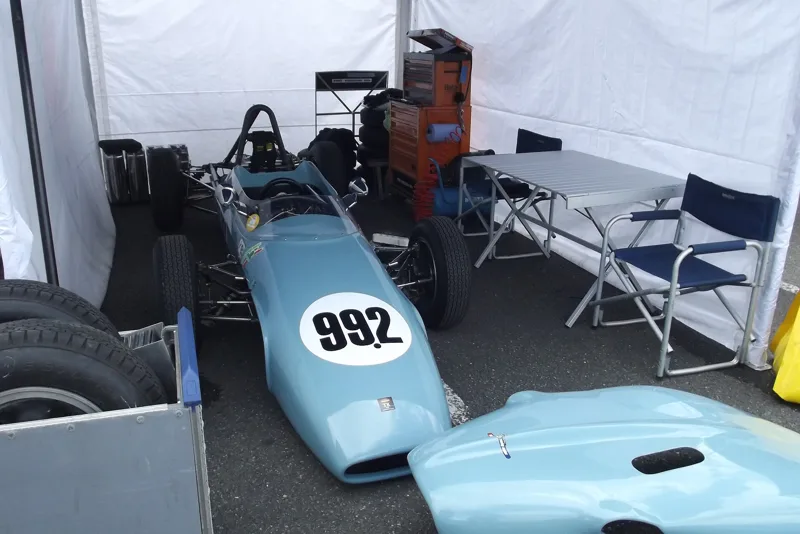
Cooper was the key. Almost all racing cars of the time had their engines in front, but Coopers carried theirs behind the driver, which improved handling. The origin was practical rather than visionary. The first Coopers, built by Charles and John Cooper after the war, used motorcycle engines driving through a chain, so it was more convenient to put the engine at the back.
The company, which built its earliest single-seaters from two joined Fiat Topolino front ends, was founded in December 1947 and dominated Formula Three, winning 64 of 78 major races between 1951 and 1954. In 1957 Brabham drove a mid-engined Cooper in the Monaco Grand Prix and was running third when the fuel pump mount failed. Worn out after more than three hours at the wheel, he manhandled the car over the line to take sixth. In 1958 he won the Autocar Formula Two crown, again in a Cooper.
How did he win the 1959 title?
Cooper got 2.5-litre engines for the first time in 1959, and Brabham made the most of the extra power. He won the season-opening race at Monaco once Behra's Ferrari and Moss's Cooper had dropped out, then took the British Grand Prix at Aintree by saving his tyres, which let him beat Moss, who had to pit for fresh ones. That gave him a 13-point lead with four races to go.
In Portugal a slower car veered across his path and sent the Cooper flying. It hit a telegraph pole and threw him on to the track, but he narrowly avoided one of his own teammates and escaped without serious injury. Going into the final round at Sebring, Brabham, Moss and Ferrari's Tony Brooks could each take the title.
Brabham was working on the team cars until 1 am the night before. In the race he sat behind Moss, who soon retired, and led nearly to the end, but the tank ran dry on the final lap and he shoved the car over the line in fourth, though Brooks finished only third, so the effort was not needed. Brabham won by four points. Writer Gerald Donaldson noted that some thought the title owed more to stealth than skill.
What changed in 1960?
Brabham flew home from the 1960 opener in Argentina and talked frankly with John Cooper. A Cooper had won, but faster cars had broken down, and Charlie Cooper and designer Owen Maddock were reluctant to update the car. Brabham helped design the more advanced T53, with advice from his friend Ron Tauranac.
After he spun the new car out of Monaco, five straight victories followed, at the Dutch, French, Belgian, British and Portuguese Grands Prix. At the Belgian race his title rival Moss was badly injured in practice, and the race itself claimed two more drivers. At the British Grand Prix, Graham Hill spun off while Brabham was closing, and in Portugal he came from eighth to take the win after John Surtees crashed. The British teams then withdrew from the Italian Grand Prix on safety grounds, which put Brabham's points total out of reach. Author Mike Lawrence credits Brabham's gift for setting up the cars as an important element in Cooper's 1960 titles.
| Season | Car | How the title was won |
|---|---|---|
| 1959 | Cooper-Climax, 2.5-litre engine | Two wins, including Monaco and Aintree; margin of four points over Brooks |
| 1960 | Cooper T53 | Five straight victories after a Monaco spin; points out of reach before the Italian race |
| 1966 | Brabham-Repco, 3-litre V8 | Four straight wins from the French Grand Prix; clinched at the Italian Grand Prix when Surtees retired |
What did Brabham do at Indianapolis?
In 1961 he entered the Indianapolis 500 for the first time in a modified Formula One Cooper with a 2.7-litre Climax engine. The car produced 200 kW (268 bhp), while the front-engined roadsters around it used 4.4-litre Offenhauser engines of 321 kW (430 bhp). Rival teams laughed at the odd little European car when it turned up.
Brabham qualified 17th at 145.144 mph, against 147.481 mph for pole winner Eddie Sachs. The roadsters were quicker on the long straights, but the Cooper's better handling through the turns kept the reigning world champion competitive. He climbed to third at one point, finished ninth and completed every one of the 200 laps. He later said the performance triggered the rear-engined revolution at Indy. Jim Clark drove a rear-engined Lotus in 1965, and every winner since has had the engine behind him.
How did Brabham build his own team?
He had met Ron Tauranac in 1951, when both were building and racing cars in Australia. In late 1959 Brabham asked him to come to the UK, and they began by tuning Sunbeam Rapier and Triumph Herald road cars with upgrade kits sold through Jack Brabham Motors, his car dealership, with a long-term aim of designing racing cars.
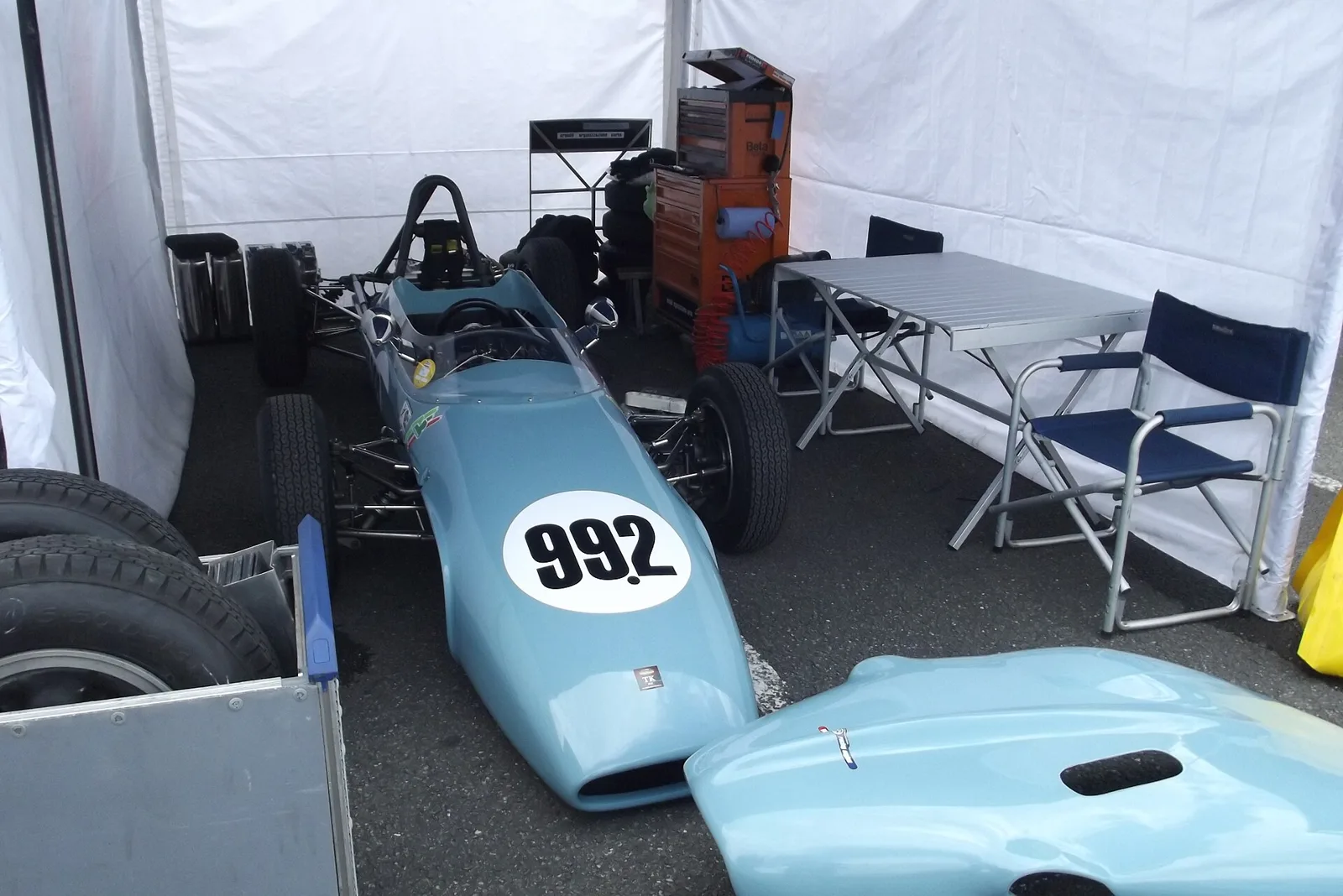
Together they set up Motor Racing Developments, avoiding either man's name. Since Brabham was still employed by Cooper, Tauranac built the first car, a Formula Junior, in secret. When the car appeared in the summer of 1961, the initials MRD were soon changed after journalist Jabby Crombac pointed out that, said by a Frenchman, they sounded perilously like a rude French word. The cars became Brabhams, with type numbers starting BT for Brabham Tauranac.
The 1961 Formula One season was poor, with Lotus and Ferrari ahead of Cooper. In 1962 Brabham left to drive for the Brabham Racing Organisation, based in Weybridge. It began the year with a customer Lotus chassis, delivered at 3am to keep it secret, and the turquoise Brabham BT3 first appeared at the German Grand Prix, dropping out with a throttle fault before taking two fourth places late in the season.
From 1963 the team ran in Australian green and gold and partnered Brabham with American Dan Gurney. The team's first victory, Brabham's, came in 1963 at the Solitude Grand Prix, a race outside the championship, and Gurney scored its first two championship wins at the French and Mexican Grands Prix of 1964. Meanwhile the company had become the largest builder of customer racing cars in the world, with more than 500 built by 1970. It also pioneered the use of a wind tunnel in Formula One.
How did Brabham win in a Brabham in 1966?
For 1966 the FIA doubled the engine limit to 3 litres, and suitable engines were scarce. Brabham turned to Repco, an Australian firm that had never made a Formula One engine. Its V8 used aluminium blocks from the abandoned Oldsmobile F85 road car project, along with off-the-shelf parts, and Phil Irving was the project engineer responsible for the first version.
Hardly anyone rated the Brabham-Repcos, yet the light, dependable cars were up front from round one. Brabham's first win of the year, at Reims-Gueux in France, made him the first driver to take a championship race in a car with his own name. His former teammate Bruce McLaren is the only other to have done so. In that race Lorenzo Bandini's Ferrari led until its throttle cable broke on lap 32, after which Brabham inherited the lead. Bandini tied a piece of string to the throttle and steered back to the pits by hand.
It was the first of four straight wins. At Brands Hatch Brabham and teammate Denny Hulme finished first and second. In the Dutch race Jim Clark's Lotus passed him before a broken part sent Clark to the pits, and Brabham won again. At the Nurburgring, where Formula Two cars raced alongside, Brabham took the lead by the end of the first lap. After four victories he led the championship with 39 points to Hill's 17.
The title came at the Italian Grand Prix. John Surtees had to take all three remaining rounds to deny the Australian. Brabham retired with an oil leak on lap 4, but Surtees retired too, and the championship was settled. It was Brabham's third crown and first since 1960, a six-year gap that set a record, broken in 1984 when Niki Lauda won his third title seven years after his second. In 1967 the title went to Hulme, and Brabham took the Constructors' Championship in both years.
What happened after 1966?
Quickly, the team lost its edge. In 1968 Repco's more powerful V8 could not keep pace with Ford's new Cosworth DFV, and a poor reliability record left Brabham and new teammate Jochen Rindt with only ten points. In 1969 Jacky Ickx won twice, in Germany and Canada, while Brabham was out of action following a test accident.
His final victory came in the first race of 1970. He lost secured victories on the last corner at both Monaco and Britain, and decided he had had enough. He sold his share to Bernie Ecclestone as the year ended and went home to Australia, buying a farm and keeping business interests that included the Engine Developments racing engine firm and several garages.
The team carried on. Under Ecclestone and chief designer Gordon Murray it won two more drivers' titles with Nelson Piquet, in 1981 and in 1983, when Piquet became the first driver to win with a turbocharged car. Its strange fan car won its only race in 1978. Ecclestone sold the team in 1988, and in mid-1992 it collapsed financially under owner Middlebridge and was investigated for fraud.
Cooper faded sooner. The company was sold to the Chipstead Motor Group in April 1965, and its last Grand Prix victory came in South Africa in 1967. In 129 Formula One championship events over nine years, Coopers won 16 races.