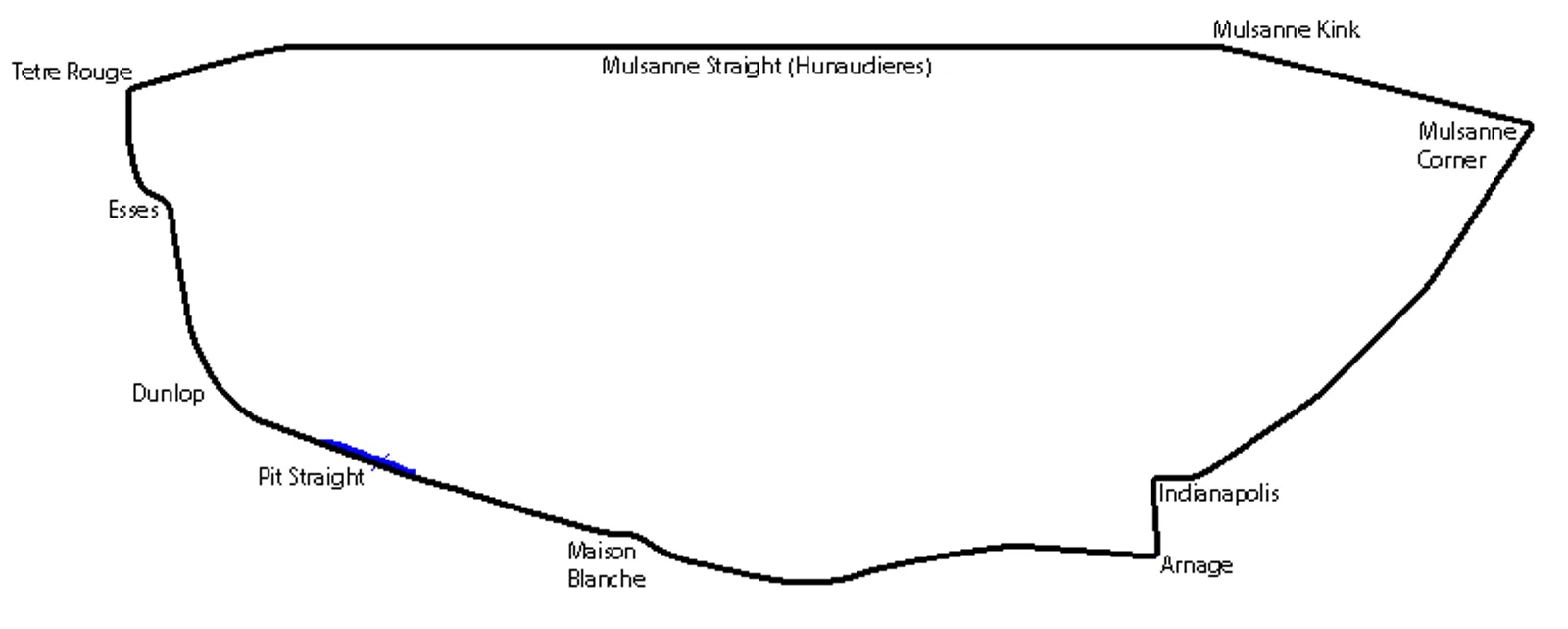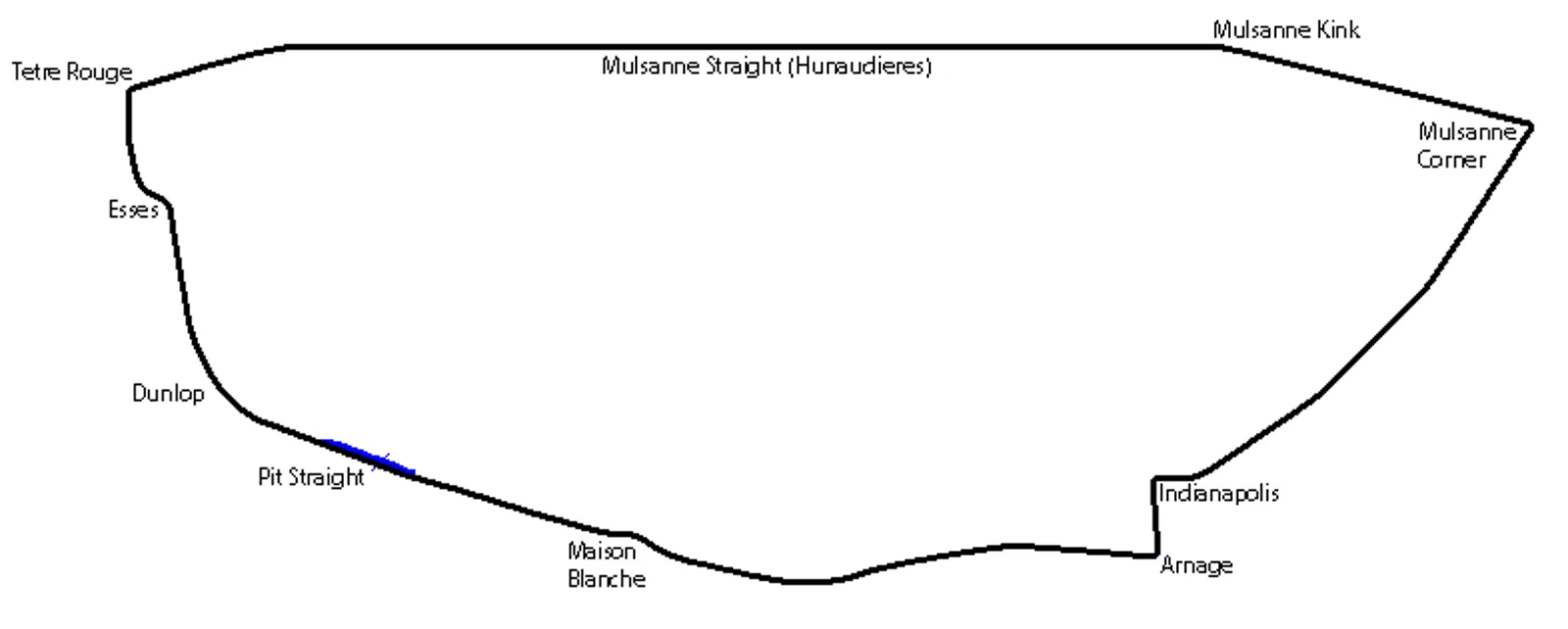
Only 13 of the 54 starters completed a race of attrition in which Aston Martin finally took the outright win that had eluded it for three decades.
Roy Salvadori and Carroll Shelby won the 1959 race in an Aston Martin, with Maurice Trintignant and Paul Frere second in the sister car. Only 13 of the 54 starters finished, and the win was the marque's first outright victory at Le Mans.
Aston Martin took the 1959 24 Hours of Le Mans with a 1-2 finish, its first outright win at the race. Roy Salvadori and Carroll Shelby crossed the line a lap ahead of Maurice Trintignant and Paul Frere. Only 13 of the 54 starters completed a race that was decided by mechanical failure as much as by pace.
Who won the 1959 24 Hours of Le Mans?
Roy Salvadori and Carroll Shelby won in an Aston Martin DBR1/300, and Maurice Trintignant and Paul Frere finished second in the sister car. The third-placed car was a Ferrari GT, 26 laps behind the winners. Salvadori drove the majority of the race, and the pair finished in a formation finish.
The result was a clean sweep of the top places for the British team. The two Aston Martins crossed the line close together, with Shelby a lap clear of Trintignant, and the Ferrari GT cars followed well behind.
A race of attrition in which only 13 cars finished was enough to give Aston Martin its first outright win.
Why did the win matter for Aston Martin?
It was the marque's first outright win at Le Mans. Aston Martin had first entered the race in 1928 and had run every race since 1931, finishing second three times and third twice before this victory. The 1-2 gave the team a place on the podium in all three competitions.
Managing director David Brown celebrated by jumping about the winning car on its victory lap. It was a moment of open delight in the Aston Martin pit.
The season ended well. A Tourist Trophy victory later that year sealed the World Constructors Championship for Aston Martin. Brown then withdrew the company from motorsport, including its unsuccessful venture into Formula One.
What rules changed for the 1959 race?
The ACO opened its entry list to GT cars for the first time, following the FIA's revised Appendix J rules for grand touring cars. Each GT model needed a minimum production run of 100 cars over 12 consecutive months, and any model that fell short went into the sports prototype class.
The ACO also introduced the Index of Thermal Efficiency. It took a car's weight, speed and fuel consumption into account, using standard 95 and 100-octane fuel, but it did not include engine size. The competition ran alongside the Index of Performance, whose target distances were increased.
Refuelling still required a minimum of 30 laps between stops. Only two men and a refueller were allowed to work on a car in the pits, so a driver had to step out and stand behind the pit wall to avoid counting against that total.
The ACO also installed IBM calculators to help with administration. It invited the racing magazine The Motor to send a journalist who gave English commentary once an hour, reflecting the large number of British spectators at the race.
How did practice set the grid?
Practice was held in April, when the ACO closed the public roads for a test day. Only 19 cars ran, for six and a half hours, and Phil Hill set the pace in the new Ferrari. Qualifying then took nine hours over two sessions, with Dan Gurney setting the fastest time at 4:03.3.
Moss recorded 4:10.8 in his Aston Martin, and Graham Hill put in a competitive 4:20 in the 2-litre Lotus. Jean Behra was less pleased. He clashed with team manager Romolo Tavoni, who had capped the revs at 7500rpm to protect the engines.
Some cars went into the race with problems. Dickie Stoop's Lotus Elite crashed on its way back to the garage and was too badly damaged to race. Whitehead's Aston Martin and the Tojeiro both needed parts flown in urgently before the start.
Who was in the 1959 field?
Seven works teams took part, led by Ferrari and Aston Martin and including Porsche, Lotus, DB, OSCA and Triumph. They were joined by the specialist Lister, Cooper and Stanguellini teams, and half the cars in the race were works entries. The ACO had 97 entries to choose from for 54 starting places.
Ferrari's 250 TR had been redesigned, made 77 kg lighter and given 306 bhp. Enzo Ferrari had finally agreed to fit Dunlop disc brakes to the works cars, after six years of resisting them.
Aston Martin arrived fresh from winning the 1000km of the Nurburgring with its DBR1/300. Moss was paired with Jack Fairman, Salvadori with the Texan Carroll Shelby, and Trintignant with Paul Frere. Moss and Fairman's car ran a stronger 255 bhp engine so it could match the Ferraris.
Ecurie Ecosse brought a D-Type crewed by Masten Gregory and Innes Ireland, alongside a Tojeiro-Jaguar crewed by Ron Flockhart and Jock Lawrence. Lotus, meanwhile, entered several classes, with Graham Hill paired with the Australian Derek Jolly in a 2-litre Lotus 15.
Porsche's 718 RSK had won the Targa Florio 1-2-3-4 in May, the first outright championship victory for the marque. Its works cars were driven by Hans Herrmann with Umberto Maglioli, and by Wolfgang von Trips with Jo Bonnier.
How did the race start?
Saturday began with heavy rain, but by 4pm the track was dry and very hot. Moss was first away, as he usually was, and team orders had asked him to act as the pace-setter to bait the Ferraris into a punishing rhythm.
Behra stalled twice at the line and had dropped to 15th by the end of lap one. He then set a new 3-litre lap record, passed Moss on the Mulsanne straight on lap 17, and took the lead. Still angry with his team, he pushed the engine so hard that it reached 9500rpm on the Mulsanne straight.
By 7pm, after three hours, Behra and Gurney led Moss and Fairman by 40 seconds. Hill and Gendebien were third in the Ferrari, while the Gregory and Ireland Jaguar and the Salvadori and Shelby Aston Martin were not far behind.
What happened during the night?
Darkness brought the first major accident at dusk, in the fifth hour. Naylor slid on oil and overturned the Whitehead Aston Martin at Maison Blanche. He got out of the car, but the wreck was then struck by Jim Russell's Cooper Monaco.
The Faure Stanguellini then struck the Cooper's fuel tank. Both cars caught fire, and Russell's broken leg and ribs came from the first impact; both drivers escaped with minor burns.
Around 10pm, on lap 70, the Ireland and Gregory Jaguar and the Moss and Fairman Aston Martin both retired. Innes Ireland's connecting rod broke, dropping oil onto his rear tyres and sending him into a spin in the pitch darkness.
Behra's Ferrari was then called into the pits by officials to fix malfunctioning lights. While it was stopped, the Salvadori and Shelby Aston Martin suddenly found itself in the lead, with Behra and Gurney slipping to second.
Why did the Ferraris fail?
Ferrari's challenge collapsed in stages. Behra lost the lead after his lights were fixed, his engine failed before 2am, and the leading Hill and Gendebien car overheated and seized just before noon. By noon the Ferrari challenge was over.
Hill and Gendebien had been running second, then third, behind the Aston Martins. Soon after the pair's car was delayed by engine trouble, which dropped it to eighth, the overheating that had troubled the team returned.
Why did so many cars retire?
Attrition was the story of the race. Mechanical failures came one after another, and by midnight more than half the field had retired. Engines, gearboxes and fuel systems all failed, and the cars that survived had to nurse their machinery for the rest of the race.
Among the cars that fell out were the Lister of Bueb and Halford, whose engine failed, and the Tojeiro, which leaked fluids long before its refill point and then seized.
Salvadori's Aston Martin lost a good deal of time after a pit stop at about 2am, when it began to vibrate badly. The team feared a transmission fault, but they found a destroyed tyre tread lodged in the wheel-well, a far cheaper fix.
That stop handed the lead to Hill and Gendebien. Their Ferrari's engine trouble was resolved when the water levels dropped, and the pair built a solid lead through the night. By 4am it was two laps.
Behra's engine gave way shortly before 2am, by which point he had dropped to fourth. Behra and the team's management had been at odds all weekend.
What happened in the morning?
By daylight the Stacey and Greene Lotus had climbed to 14th and was leading the Index of Performance by a wide margin. It was then stopped by distributor trouble, the same problem that had ended the race of its team-mate.
By 6am only 23 runners were left. The Ferrari was pulling away from the two remaining Aston Martins, and four Porsches were still running behind them.
Gendebien then pitted the leading Ferrari with serious overheating. The team tried to cool the engine, and he ran slow laps to reach his pit window, but after two more laps the engine seized, just before noon. The Ferrari challenge was over.
With the last Ferrari out, Aston Martin team manager Reg Parnell ordered his two cars to ease off and protect their engines for the last four hours. The lead car was already using oil at a worrying rate, and with no pressure from rivals, the two Aston Martins could cruise to the finish.
The Triumphs had a difficult race. Two were eliminated early when their cooling fan blades broke off and went through the radiators. The third, with its fan removed as a precaution, moved up to seventh before its oil pump failed late in the race.
Perhaps the unluckiest team was the privateer DB of Bartholoni and Jaeger. It battled clutch problems through the whole race, only for the clutch to break completely with minutes to run.
Results and class placings
| Position | Crew | Car | Result |
|---|---|---|---|
| 1 | Roy Salvadori and Carroll Shelby | Aston Martin DBR1/300 | Winners, a lap clear |
| 2 | Maurice Trintignant and Paul Frere | Aston Martin DBR1/300 | Second, a lap behind |
| 3 | Beurlys and Elde | Ferrari 250 GT LWB | First GT home, 26 laps behind |
| 6 | Lino Fayen | Ferrari GT | Sixth overall |
| 7 | Rudd Racing | AC Ace | Sole 2-litre finisher |
How did the smaller classes finish?
DB took the Index of Thermal Efficiency with the Armagnac and Consten car, which returned 25.7 mpg-imp (11.0 L/100 km; 21.4 mpg-US). The same team also won the Index of Performance and the Biennial Cup, after several lean years for the French marque.
The winning Aston Martin managed only 10 mpg, and even the Porsches could manage just 12 mpg. The Porsche 718 RSK had won the Targa Florio 1-2-3-4 that May, but at Le Mans none of the marque's cars finished, its worst performance to that date.
What happened to the drivers after the race?
Jean Behra was dismissed by Ferrari after a series of disputes, and he was killed about a fortnight later at AVUS while racing his own Porsche. Ivor Bueb, who had raced in the Lister, was killed two months after Le Mans at Clermont-Ferrand in a non-championship race.
Lino Fayen, who had fled France to Venezuela to escape his debts, finished sixth in his Ferrari GT. He was arrested while celebrating the finish.
How was the 1959 win received at Aston Martin?
David Brown treated the result as the finest hour in the company's history. The team had taken a place in all three competitions, and Brown's personal delight was part of the story of the weekend.