A rebuilt Circuit de la Sarthe, a field cut to 52 starters and a private Jaguar D-Type gave Flockhart and Sanderson the win, one lap clear of Aston Martin.
Flockhart and Sanderson took the 1956 race for the private Ecurie Ecosse team, a lap ahead of Aston Martin. Thirteen cars were classified, and the event was the first held on the reworked track after the 1955 disaster. The race ran on 28 and 29 July, several weeks after its planned June date.
Ron Flockhart and Ninian Sanderson won the 1956 24 Hours of Le Mans in a Jaguar D-Type for Ecurie Ecosse. They finished a lap ahead of Aston Martin, and the race was the first on the rebuilt circuit after 1955.
Who won the 1956 24 Hours of Le Mans?
Flockhart and Sanderson took the win in a Jaguar D-Type, with the Aston Martins close behind for much of the race. The Ecosse Jaguar finished one lap ahead, and the team had won its first Le Mans on its first attempt.
The victory came on a track that had been redesigned after the 1955 disaster, with a new pit straight and a shortened lap. It was run on 28 and 29 July, several weeks later than the June date that had been planned before the crash.
The winning average speed was 168.12 km/h (104.46 mph), and the distance covered was 4,034.93 km (2,507.19 mi). The race had only 13 classified finishers, the lowest ratio of the decade.
A private Jaguar on a rebuilt track, one lap clear of the factory-backed Aston Martin.
How was the circuit rebuilt after 1955?
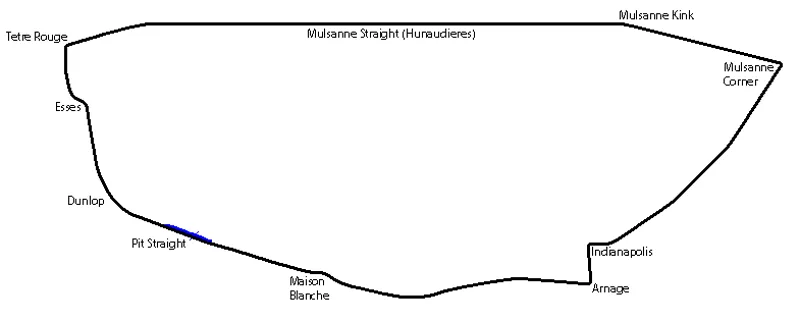
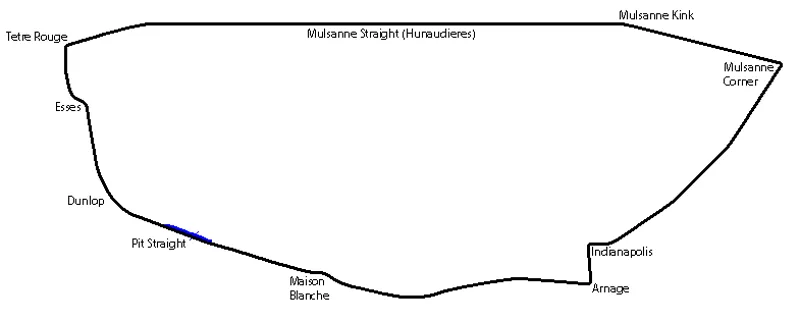
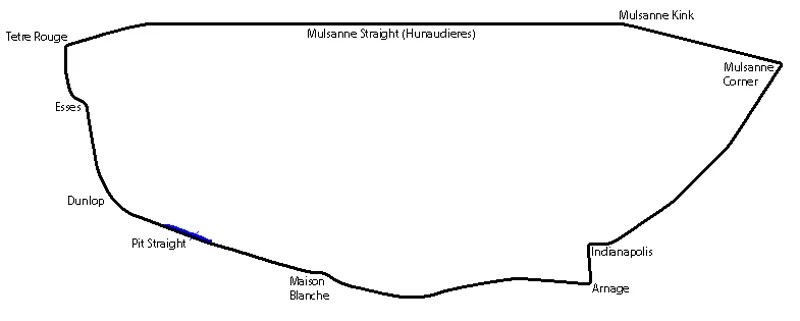
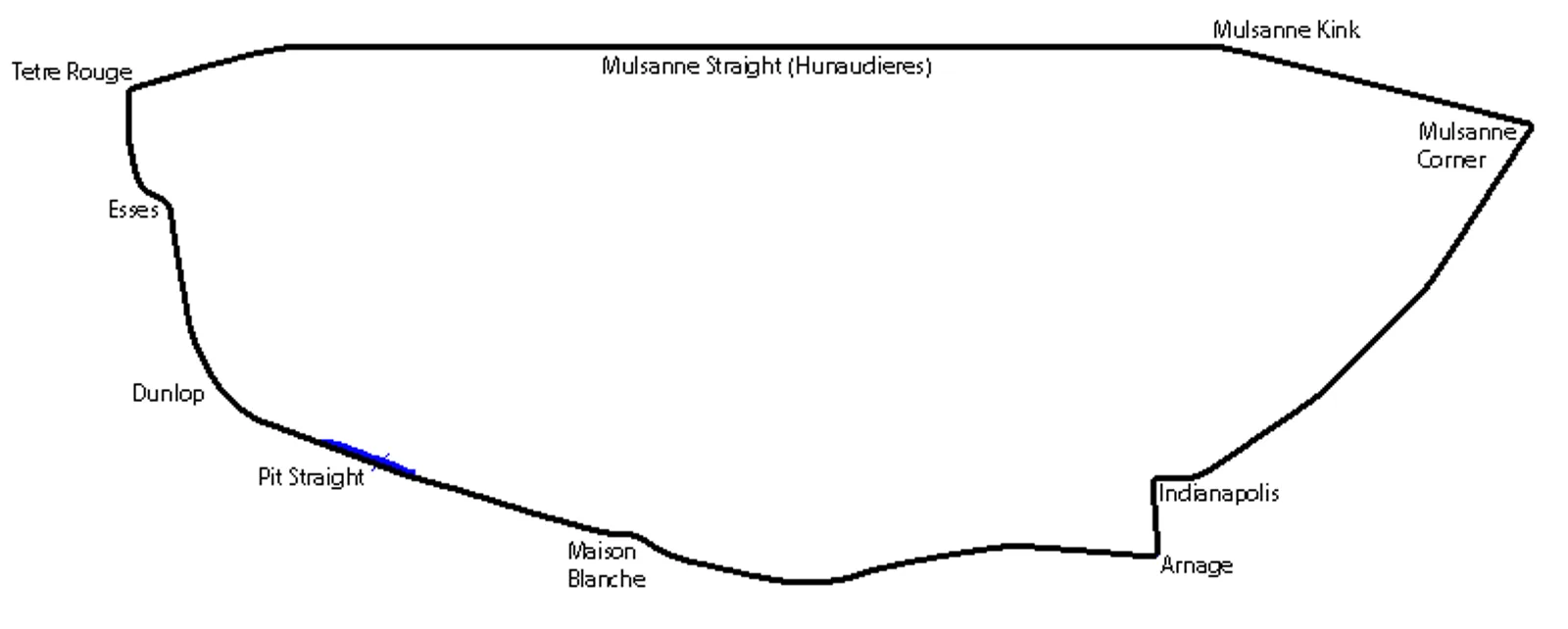
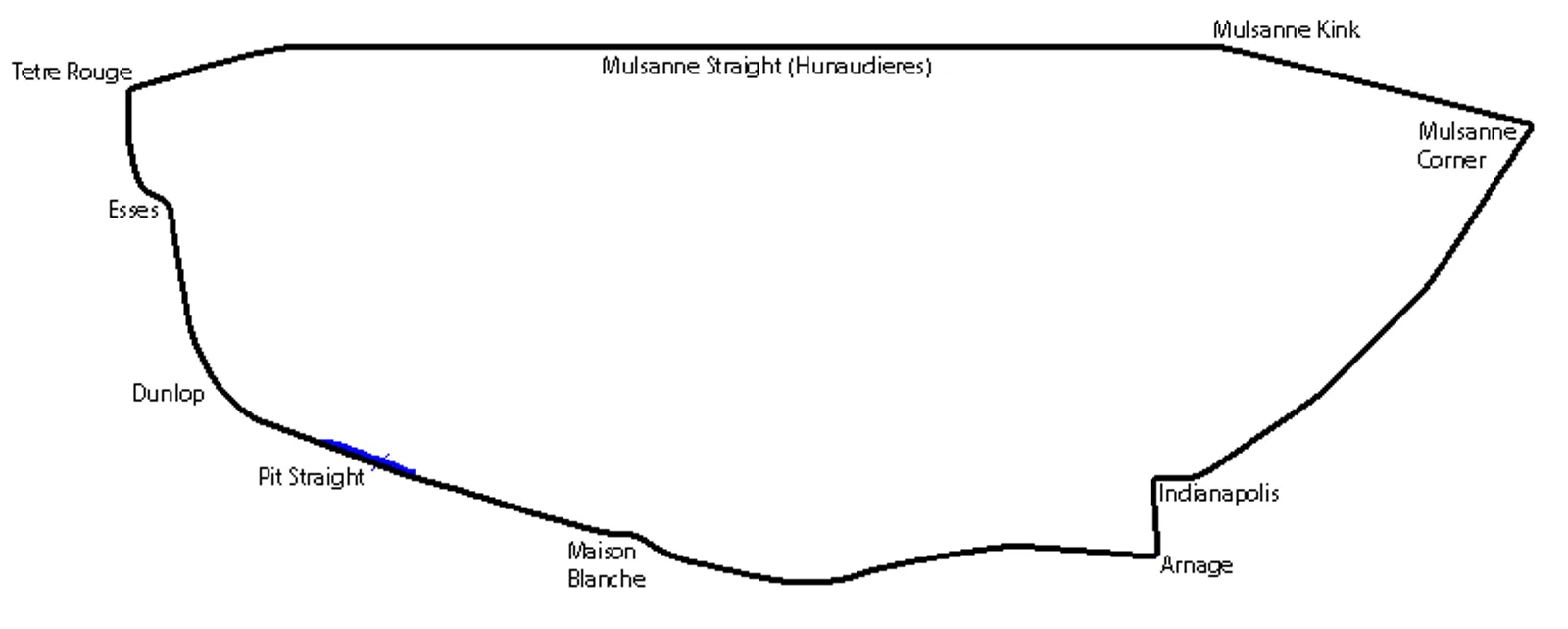
The official inquiry into the 1955 disaster found serious deficiencies in the track layout along the main straight. The ACO convinced the French government to allow the race to continue, but the renovation was expensive. It cost FF300 million and moved 70,000 cubic metres of earth.
The changes were aimed at driver and spectator safety. The pit straight was widened by 13 metres, which gave room for a deceleration lane. The small kink was removed by straightening the approach, and the Dunlop curve was realigned, steepened and eased, which moved the Dunlop bridge. The changes shortened the lap by 31 metres.
The grandstand was pulled down and replaced by new terraces, with a ditch in front. The postwar pits were torn down, and a new three-storey complex was built with more room for crews and hospitality suites above.
Elsewhere the Indianapolis and Maison Blanche corners were widened and resurfaced, and a dangerous hump after Arnage was removed. A new signalling pit was built just after the Mulsanne corner, so that crews were less congested on the pit straight.
What new rules applied in 1956?
Prototypes were now limited to 2.5L, and production cars needed 50 units built or committed. Production cars were still unrestricted in engine size, but the prototype limit kept the ACO out of step with the FIA.
Full-width windscreens at least 200mm high became mandatory, which trimmed top speeds further. Fuel tanks were limited to 130 litres, and the liquids replenishment window was extended from 32 to 34 laps.
Drivers were now limited to 72 consecutive laps and 14 hours in total. Because of the new limits, the race was dropped from the 1956 World Sportscar Championship.
Who was in the field for 1956?
Mercedes-Benz and Cunningham had withdrawn from racing, but there were still 14 manufacturer works entries. The Jaguars were the strongest group, with three updated D-types that were 130 kg lighter and up to 275 bhp.
Jaguar's lead car was the fuel-injected entry of Mike Hawthorn and Ivor Bueb. The other two works Jaguars were driven by Jack Fairman with Ken Wharton, and by Paul Frere with Desmond Titterington.
Ecurie Ecosse's entry was crewed by Ron Flockhart and Ninian Sanderson. The team was owned by David Murray, and the two drivers had stepped up from the smaller classes.
Aston Martin returned with a pair of DB3S cars, nominally production models. Stirling Moss, now a works driver for Maserati, shared one with Peter Collins, while Roy Salvadori was paired with Peter Walker. The team also brought its own 2.5L prototype, the DBR1/250, which made 212 bhp and was driven by Reg Parnell and Tony Brooks.
Ferrari developed a new 2.5L prototype for the race, the 625 LM, which used last year's S-4 grand prix engine. It gave 225 bhp and had a top speed about 10 km/h slower than the Jaguars. Its drivers included Maurice Trintignant with Olivier Gendebien, and Phil Hill with Andre Simon.
Porsche returned in force after a strong showing in the Targa Florio, where its new 550A had beaten the larger works Ferraris and Maseratis in a non-championship race. Two 550A coupes and a 356 Carrera production model were entered.
What happened in practice?
There were only two practice sessions, on the Wednesday and Thursday. Hawthorn set the fastest practice lap at 4:16.0, and Titterington was barely three seconds slower before he crashed his Jaguar. The team then had to prepare the spare car for the race.
Moss managed only a 4:27 lap in the Aston Martin. The team also found that the fuel consumption of its prototype DBR1 was excessive, and the car had to be trimmed back so it could last. Most of the larger rivals were also checking their fuel use under the new rules.
How did the race start?
A minute's silence was held before the start, and a commemorative plaque was unveiled for the victims of the previous year. The race began in light drizzle, which made the new track surface treacherously greasy.
Moss was first off the line in his Aston Martin, as usual. Hawthorn's Jaguar swept past him on the back straight and was in front by the end of the opening lap.
On lap three Paul Frere spun his Jaguar in the narrow Esses. Fairman, close behind in the sister car, braked hard and also spun, and de Portago arrived unsighted and broadsided him. Fairman got back to the pits, but the damage was too severe to repair.
Frere limped on but stopped on the Mulsanne straight. De Portago got further, but his Ferrari's oil cooler was smashed. Ten minutes into the race, three of the leading works entries were already out.
What were the first hours like?
More drama came from the Ferrari of Hawthorn, who came in from the lead with an engine misfire. The fault turned out to be a hairline crack in a fuel line. Fixing it cost him an hour and 21 laps, which dropped the remaining works Jaguar out of contention.
Between these problems, Louis Hery lost control of his private Monopole-Panhard at Maison Blanche. The car tumbled and disintegrated, and Hery died in the ambulance.
On lap seven Flockhart used his superior speed to take the Ecosse Jaguar into the lead, but Moss and Walker stayed within reach in their Aston Martins. Once the first stops were done, Sanderson eased off his pace, and Collins took the lead in the third hour as the rain grew heavier.
Yet again Gordini was quick. The T15 of Manzon and Guichet, with a 2.5L F1 engine, held a solid fifth place, and its sister car was not far behind.
What happened during the night?
Shortly before 10pm, between Maison Blanche and the pits, Fernand Tavano's Ferrari left the road, spun and struck the bank. Facing the other way, the Ferrari's headlights blinded Helm Glockler, whose Porsche Carrera ran straight into it. Tavano was thrown clear, but the Porsche rolled and burst into flames.
Helm Glockler was pulled from the wreck with minor burns and a broken leg. Sanderson was back in front by midnight, but when the track got damp again, the experience of the F1 racers told. Moss and Collins retook the lead by 3am, with Gendebien and Trintignant third, four laps down.
Hill and Simon, who had been fourth, retired with rear axle failure shortly before half-time. The Porsche 550s were running fifth and sixth, and the prototype Aston Martin was surprising many by climbing into fourth in the early hours.
In the small hours Cliff Allison's Lotus, doing 190 km/h, struck a dog on the Mulsanne straight and wrecked its radiator. Both Gordinis had dropped out with engine problems by then.
How did the leading Jaguars pull clear?
The rain stopped for a while around dawn, which suited the bigger Jaguars. They retook the lead and by 8am had built a three-minute margin over the field.
At dawn the final 2-litre runner was lost when a Ferrari that had climbed into the top ten was disqualified for refuelling two laps too early. Around 7.30am, in a sudden downpour, Peter Walker went off at the Dunlop bridge, just past the pits. The car overturned and stopped in the road, and Walker climbed out with a broken finger and cuts.
Later the same morning, Moss and Collins lost second gear and fell back steadily. Around noon the Talbot of Behra and Rosier stopped with a broken rear axle, having climbed to eighth.
How did the race finish?
The leading cars stayed reliable to the finish, apart from the Aston Martin prototype. It had slipped to seventh with engine trouble, then its rear suspension broke late on.
The Ecosse car crossed the line a lap clear of the Aston Martin. The Ferraris could not match the leaders, and Gendebien and Trintignant came home third, six laps back. The Belgian Jaguar was fourth, 16 laps behind the winner.
The leading Porsche, a 550 of von Trips and von Frankenberg, took fifth. Its margin over the only other class finisher, the privateer Maserati of Bourillot and Perroud, was 37 laps, the Maserati being ninth. Hawthorn and Bueb recovered to sixth after driving from the back of the field, and Hawthorn set the fastest race lap, although it was well down on the previous year's pace.
The three DB works cars that finished took the top 10 to 12 places, and the team won the Index of Performance prize. The 1956 race was also the last to be overseen by Charles Faroux, who co-founded the race and was its director.
Results and class placings
| Position | Crew | Car | Result |
|---|---|---|---|
| 1 | Flockhart and Sanderson | Ecurie Ecosse Jaguar D-Type | Winners, one lap clear |
| 2 | Aston Martin | Aston Martin | One lap behind |
| 3 | Gendebien and Trintignant | Ferrari 625 LM | Six laps behind |
| 4 | Belgian Jaguar | Jaguar | 16 laps behind |
| 5 | Von Trips and Von Frankenberg | Porsche 550 | Leading Porsche |
| 6 | Hawthorn and Bueb | Jaguar | Fastest race lap |
What did the 1956 race mean for Ecurie Ecosse?
The result came at the team's first attempt. The team was still fledgling at the time, and its manager was Walter Wilkinson, known as Wilkie. Its sole aim was to win on the strength of a single well-prepared car. A private team had beaten the factory-backed cars on a track that had just been rebuilt after one of the sport's worst disasters.
The ACO's golden jubilee, marking its founding in 1906, fell in the same season. Those celebrations were deferred to 1957 because of the previous year's disaster, so the anniversary was marked alongside the 25th running of the race.
Faroux, the engineer and journalist who co-founded the race, was also the race director for the Monaco Grand Prix. He died the following February, aged 74, and the 1956 race was the last he oversaw at Le Mans.