Fifteen hours of rain, thirteen accidents and a Porsche 3-4-5 shaped a race that Ferrari won at the end of the afternoon.
Ferrari took the 1958 24 Hours of Le Mans through Phil Hill and Olivier Gendebien, a pairing that gave an American and a Belgian their first overall win at the race. Fifteen hours of rain and thirteen accidents marked the race, and Whitehead's Aston Martin finished second.
Phil Hill and Olivier Gendebien won the 1958 24 Hours of Le Mans for Ferrari in a race ruled by water. Their win was the first overall victory for an American and a Belgian driver. The race was also marked by thirteen accidents, one of them fatal, and a Porsche 3-4-5 that was the marque's best Le Mans result to that date.
Who won the 1958 24 Hours of Le Mans?
Phil Hill and Olivier Gendebien won the 1958 race in a Ferrari 250 TR. It was Ferrari's third Le Mans victory and its first since 1949. Whitehead's Aston Martin finished second, and Porsche took third, fourth and fifth.
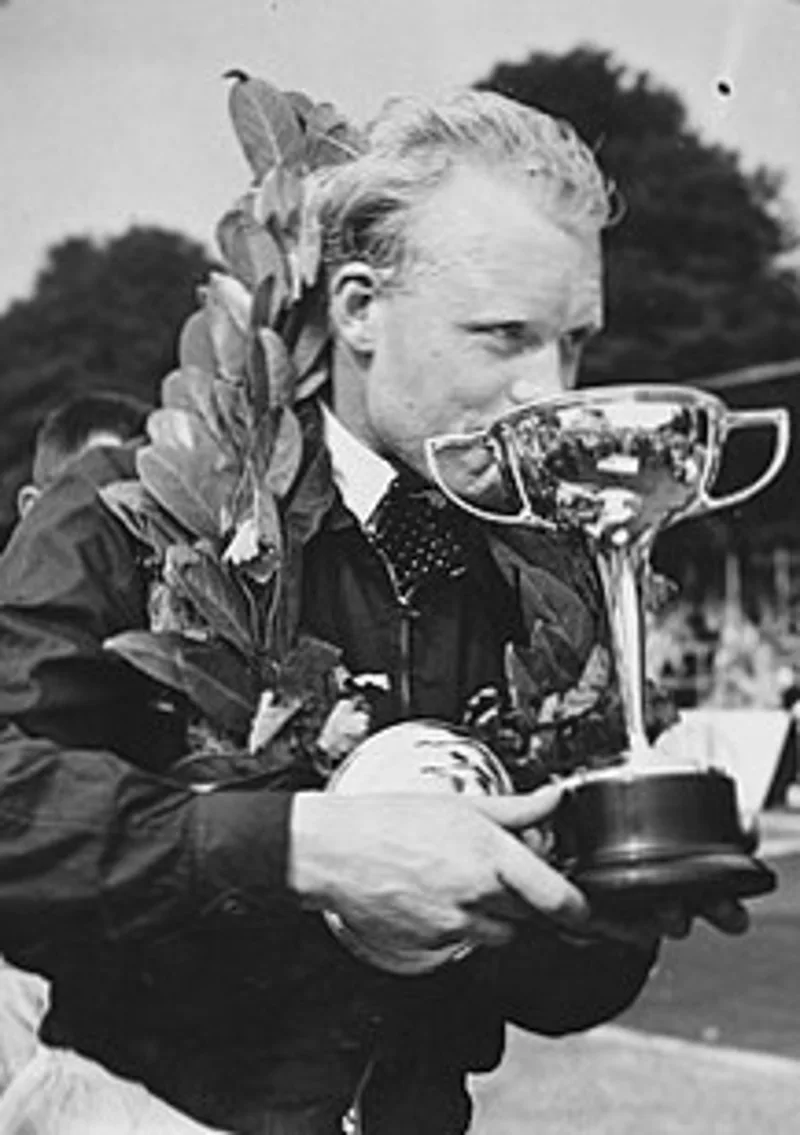
Hill crossed the line at 4pm, when the rain had finally ceased and the track was drying. The finish ended one of the wettest and most difficult Le Mans races in the race's history. Gendebien had handed over to Hill during the night, and Hill kept the lead through the rain.
By around noon Hill had a lead of ten laps over the Whitehead Aston Martin. That margin came after Hamilton's accident had removed the Jaguar that had been running second for most of the morning.
Fifteen hours of rain turned Le Mans into a contest of nerve as much as speed.
Why was the 1958 race so difficult?
Fifteen hours of rain fell during the race, three of them torrential, and the track flooded so badly that a dozen cars were caught up in crashes between 6.30pm and 10pm. Thirteen accidents were recorded in all, and one of them killed the French driver Jean-Marie Brussin.
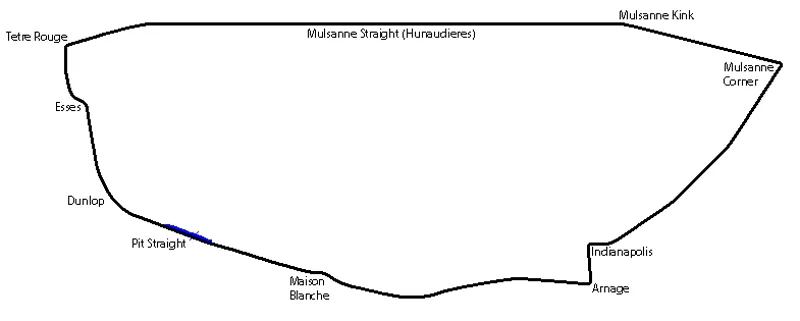
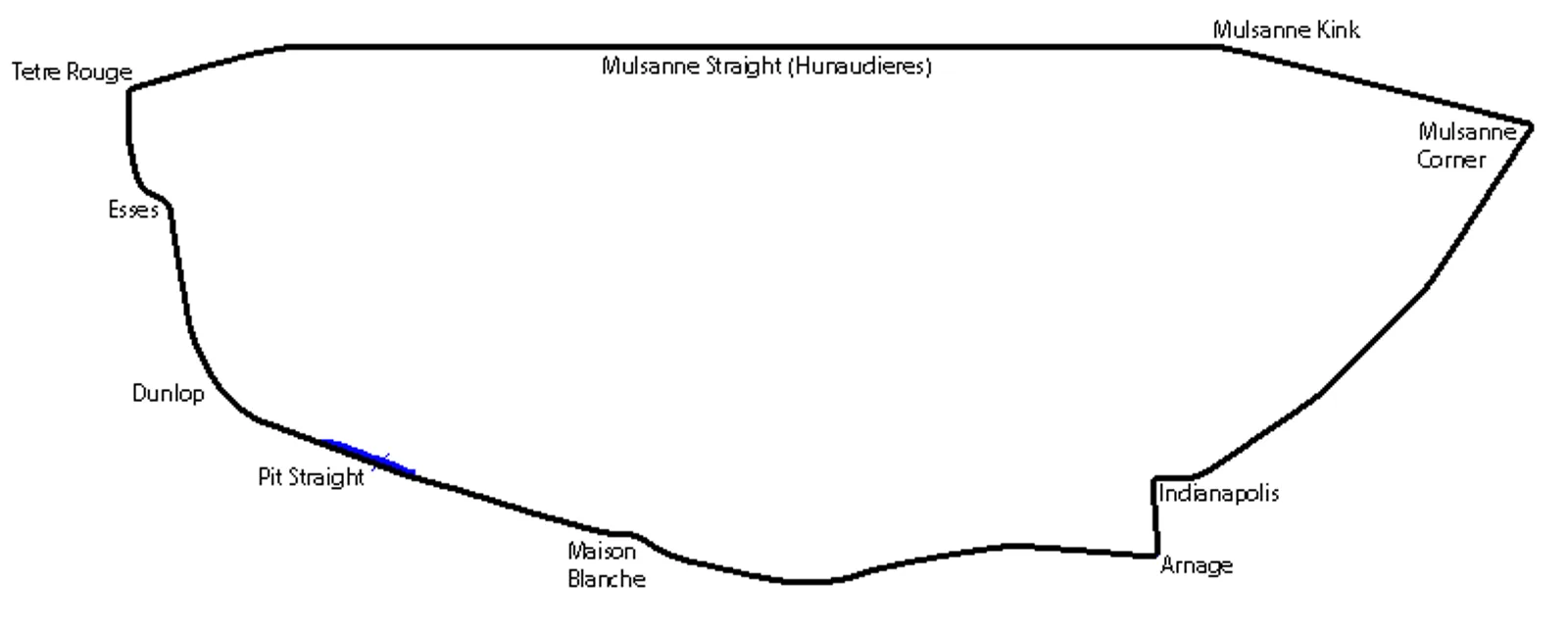
Brussin, racing under the pseudonym Mary, lost control of his Jaguar after the pits at the Dunlop curve in the twilight. Bruce Kessler's Ferrari, running fifth, hit the wreck and burst into flames, and Kessler was thrown clear with bruising and broken ribs.
Duncan Hamilton, running second, was next to the scene. A spectator threw his hat onto the track, which gave Hamilton just enough warning to lift off and avoid the wreckage. Hamilton later thought the hat might have saved his life.
What were the rules for the 1958 race?
The second year under FIA Appendix C capped engines at 3.0 litres, an attempt to rein in the top speeds of the new Maserati and Ferrari prototypes. Forced-induction engines were given a smaller equivalence factor, a change meant to encourage turbocharging. Drivers could run stints of up to 40 laps, up from 36, but the 14-hour total still applied.
Pushing a car anywhere on the track, outside the pit lane, was no longer allowed. The wraparound windscreen that Colin Chapman had popularised for Lotus became common across the field, and Chapman added tonneau covers over the passenger seat to cut draught.
Who entered the 1958 race?
Ferrari arrived with eleven cars, both works and private. Aston Martin brought three updated DBR1s, and Jaguar had no works team but ran Ecurie Ecosse and Lister. Lotus came with four works cars and two private entries.
Ferrari's line-up was led by Hawthorn and Collins, Hill and Gendebien, and von Trips with Wolfgang Seidel. Seidel had been brought in after Luigi Musso was hurt at the Belgian Grand Prix the week before.
Ricardo Rodriguez was judged too young at 16 to start, so Jose Behra took his place in the 2-litre Ferrari entered for the Mexican Rodriguez brothers. Lister entered two cars with Jaguar engines, but its lead driver, Archie Scott-Brown, had been killed at Spa-Francorchamps three weeks before.
Aston Martin's three works DBR1s carried Moss with Jack Brabham, Brooks with Maurice Trintignant, and Salvadori with Stuart Lewis-Evans. The regulations suited the British marque, which had already been running 3-litre cars for several years.
The Whitehead brothers ran a privateer DB3S, a three-year-old Aston Martin that had been the runner-up car at Le Mans in 1955. It would go on to finish second overall.
Maserati was in serious financial trouble and made little effort. It entered only two private cars, one in the 3-litre class and one in the 2-litre class.
Jaguar had no works team, but it developed a short-stroke 3-litre XK engine that used carburettors instead of fuel injection. That let its customer teams meet the 3-litre limit.
What happened in qualifying?
Qualifying covered 660 minutes over Wednesday and Thursday. Moss set the best time of 4:07, averaging 121.7 mph (195.85 km/h). The fastest Jaguar was Fairman's 4 min 13 sec, a time that Hawthorn matched in his Ferrari.
The 2-litre Lotus 15 proved remarkably quick. Allison and debutant Graham Hill took the fourth and fifth fastest times, in a car roughly half the weight of the Ecosse Jaguars.
The small works Lotus broke a new engine in practice and had to switch to a spare. The ACO also held a one-hour regularity trial for classic race cars on the Friday evening.
How did the race start?
It was a hot and sunny afternoon when the tricolour fell at 4pm. Moss was first away, as he usually was, followed by Brooks, the Jaguars and the Ferraris.
At the end of the first lap Moss had a quarter-mile lead, five seconds clear of Hawthorn, Brooks, von Trips, Gendebien and Salvadori. Sanderson's Jaguar broke a piston after lap two, and Fairman's suffered the same failure five laps later.
Both Ecurie Ecosse Jaguars were gone early. The team blamed the official fuel for burning out the pistons, but the fault was traced to defective valvegear operation.
Moss extended his lead by three seconds a lap over the pursuing Ferraris. Hawthorn set the fastest race lap, 4min 08sec, but that was well down on the 3:58.7 record of 1957. After the first hour Moss led Hawthorn by 26 seconds.
At 6.10pm, a lap before the first pit stops, Moss stopped at Mulsanne corner with a broken con-rod. Hill inherited the lead, with his team-mate von Trips close behind him.
What did the storm do to the field?
Between 6.30pm and 10pm a dozen cars were involved in crashes as the storm swept across the circuit. Visibility fell to almost nothing, and the track was soon awash.
In the third hour the rain at Maison Blanche sent Maurice Charles's Jaguar out of control. Two other cars struck it, and Charles was taken to hospital. In the fifth hour Stuart Lewis-Evans tangled his Aston Martin with a backmarker at Dunlop, which did terminal damage to the car.
Hawthorn was still the quickest driver over a single lap for a fourth consecutive race, but he was held up by a slipping clutch and his pace fell away. The leaders were now nursing their cars through the water.
How did the night change the order?
Hamilton drove superbly in the wet and was up to second by 10pm. Within the hour he had taken the lead after the next scheduled stops. Hill then drove through the rain, passed Hamilton's co-driver Ivor Bueb and went back into the lead.
Hill later recalled the night as one of sitting on the tool roll and tilting his head back to see just over the top of the windscreen. He also listened for the sound of downshifting cars ahead to judge where the Mulsanne corner lay.
Von Trips, running second, reached the high-speed Mulsanne kink at 11.40pm. Jean Hebert had rolled his Alfa Romeo to avoid a crashed car, and the Alfa then caught fire. Von Trips halted, went back on foot and dragged the driver clear, before climbing back into his own car.
Around midnight Jay Chamberlain's Lotus crashed at Dunlop while avoiding a spinning car, and Francois Picard's Ferrari hit it. At 12.15am Wolfgang Seidel slid his Ferrari into the mud at Arnage. He was later reprimanded for not making more effort to dig it out.
Why did the Ferrari and Jaguar challenge fade?
Hawthorn and Collins retired at 2am after falling as low as 18th with clutch problems. The Rodriguez and Behra Ferrari retired with a holed radiator before half-time, and by then only about half the field was still running.
The Hawthorn and Collins retirement left Hill and Gendebien leading, with Hamilton and Bueb a lap adrift. Brooks and Trintignant were third in the Aston Martin, still going strong, and the Porsche of Behra and Herrmann had moved up to fourth.
What happened in the morning?
Soon after 6am Trintignant, who had run a solid third through the night, was stopped by a broken gearbox at Mulsanne corner. Moss had parked the sister car in the same spot almost twelve hours earlier.
Bruce Halford's Lister lost half an hour replacing a camshaft and then stopped on the Mulsanne straight. Brian Naylor spent more than an hour repairing the gearbox alone, with a crowd watching, and then bump-started it.
Hamilton had been running second all morning when another heavy thunderstorm, around noon, brought his race to an end. Taking avoiding action for a stationary Panhard, he lost control and rolled the Jaguar, which landed upside down across a water-filled ditch. Two spectators pulled him out, and he went to hospital with concussion.
Hamilton's accident happened in front of Hill, which left him unchallenged at the front. Behra and Herrmann's 1.6L RSK had climbed to third despite fading brakes.
Results and class placings
| Position | Crew | Car | Result |
|---|---|---|---|
| 1 | Phil Hill and Olivier Gendebien | Ferrari 250 TR | Winners |
| 2 | Whitehead brothers | Aston Martin DB3S | Privateer second place |
| 3 | Behra and Herrmann | Porsche 718 RSK 1.6L | S-2000 class win |
| 4 | Barth and Frere | Porsche 718 RSK 1.5L | A lap behind the leaders |
| 5 | Carel de Beaufort | Porsche privateer | Fifth overall |
| 8 | Tojeiro-AC | AC | Second in S-2000 |
| 11 | De Tomaso and Davis | OSCA | S-750 class win |
How did the smaller classes finish?
The OSCA of de Tomaso and Davis won the S-750 class, finishing 11th overall and only two laps ahead of the DB-Panhard of Laureau and Cornet. Both OSCAs finished 1-2 on the Index of Performance, giving both major trophies to Italian cars.
Three DBs finished, but only one representative from Lotus, Stanguellini and Monopole reached the finish in the largest class. The Lister reached the finish too late to be classified, and the second AC missed out on classification by a small margin.
The Tojeiro-AC finished eighth and was the other classified car in S-2000, 31 laps behind the Porsche. Stoop and Bolton had fought loose handling all the way, a fault traced to differential mountings that were gradually coming apart.
What became of the drivers after Le Mans?
Musso and Collins were both killed in Grand Prix racing later in 1958, and Hawthorn was killed within the following year. This was the last Le Mans for three of Ferrari's works drivers, in a grim year for the team.
Peter Whitehead was killed in an accident in the Tour de France Automobile, in which his half-brother was driving. Alejandro de Tomaso, whose OSCA finished 11th, founded his own supercar company the following year with his racing wife, the Coca-Cola heiress Elizabeth Isabel Haskell.