A Kidderminster driver who won three Formula One Grands Prix for Ferrari before his death at the 1958 German Grand Prix.
Peter Collins was a British driver who raced between 1952 and 1958. Each of his three Grand Prix wins came with Ferrari, and he also took the 1958 12 Hours of Sebring for the team. He died in 1958 after a collision during the German Grand Prix at the Nurburgring.
Peter Collins was a British racing driver who competed in Formula One from 1952 to 1958. He won three Grands Prix, all for Ferrari, and took the 12 Hours of Sebring in 1958 with the same team. His career ended at the 1958 German Grand Prix, only weeks after he had won at Silverstone.
Where did Peter Collins grow up?
Collins was born on 6 November 1931 and grew up at Mustow Green, near Kidderminster in Worcestershire. His father ran a motor garage and a haulage business, so the boy was exposed to vehicles from an early age. He was expelled from school at 16 after spending school hours at a local fairground, and he then became an apprentice in his father's garage.
He took part in local trials events in his teens. His parents bought him a Cooper 500 from the new Cooper Car Company, and that small single-seater started his competitive career. The 500cc category became Formula 3 at the end of 1950, so his first races were in the lower rungs of the sport.
A driver who gave up a title chance for a team leader, won at Silverstone and died weeks later at the Nurburgring.
How did Collins break into professional racing?
His breakthrough came after he switched to a JBS-Norton in 1951, and he finished third in the Autosport National Formula 3 Championship that year. A party hosted by the pre-war racer Kay Petre introduced him to John Wyer, then team principal at Aston Martin. A test drive at Silverstone followed, and by the end of the day he had deals with Aston Martin and the Formula Two team HWM.
At HWM he formed part of a three-car line-up with Lance Macklin and Stirling Moss. The team competed in most of the Formula Two races in Britain and Europe, and Collins showed real speed in the underfinanced HWM-Alta. The car rarely reached the chequered flag, but he took second place at the Grand Prix des Sables d'Olonne, a useful early result.
When did Collins make his Formula One debut?
Collins made his Formula One debut in 1952, when HWM handed him the seat Stirling Moss had vacated. He started at the Swiss Grand Prix, and his best World Championship finish that year was sixth at the French Grand Prix at Rouen-Les-Essarts. He scored no championship points in his first seasons, but he was consistently quick in the cars he drove.
He left HWM after the 1953 season and joined Vanwall in 1954, when Tony Vandervell gave him the Thinwall Special. That car was a crowd pleaser at Formula Libre events, and Collins also drove the Vanwall on the world stage, finishing seventh at Monza. For 1955 he moved to BRM, where he raced a Maserati 250F owned by Alfred Owen and won the BRDC International Trophy and the London Trophy.
Away from the Formula One grid, Collins was a strong sports car driver. He won the 1952 Goodwood Nine Hours with Aston Martin, and in 1953 he took the RAC Tourist Trophy at Dundrod in a DB3S he shared with Pat Griffith. Those results made him a valuable name for any team that wanted a driver who could win endurance races as well as single-seater events.
He also finished second at Le Mans in 1955 and again in 1956, driving an Aston Martin DB3S that he shared with Paul Frere in the first year and with Moss in the second. Those podium places showed that his talent was not limited to a single class of car, and they added to a record that was already broad by the time he reached Ferrari.
Why did Ferrari sign Peter Collins for 1956?
Ferrari signed Collins for the 1956 season after his strong performance at the 1955 Targa Florio, where he had shared a Mercedes-Benz 300 SLR with Moss to victory. The move paid off quickly. He finished second to Moss at Monaco, then won his first Grands Prix at Belgium and France.
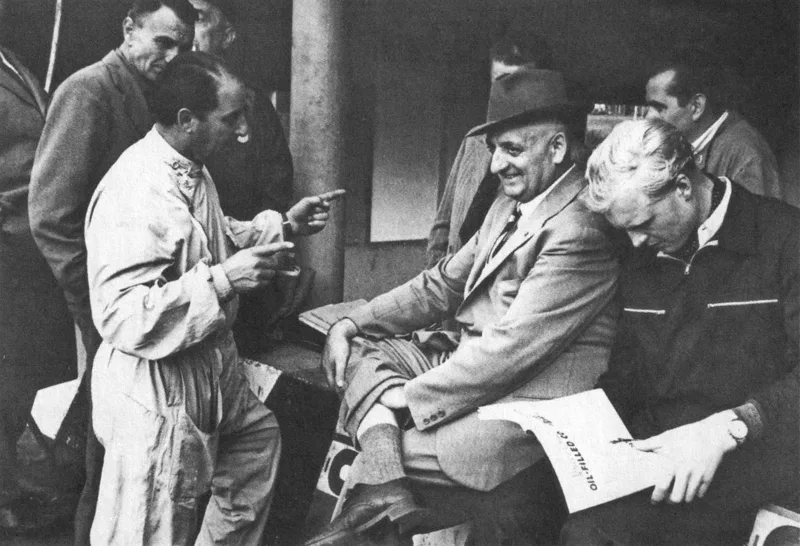
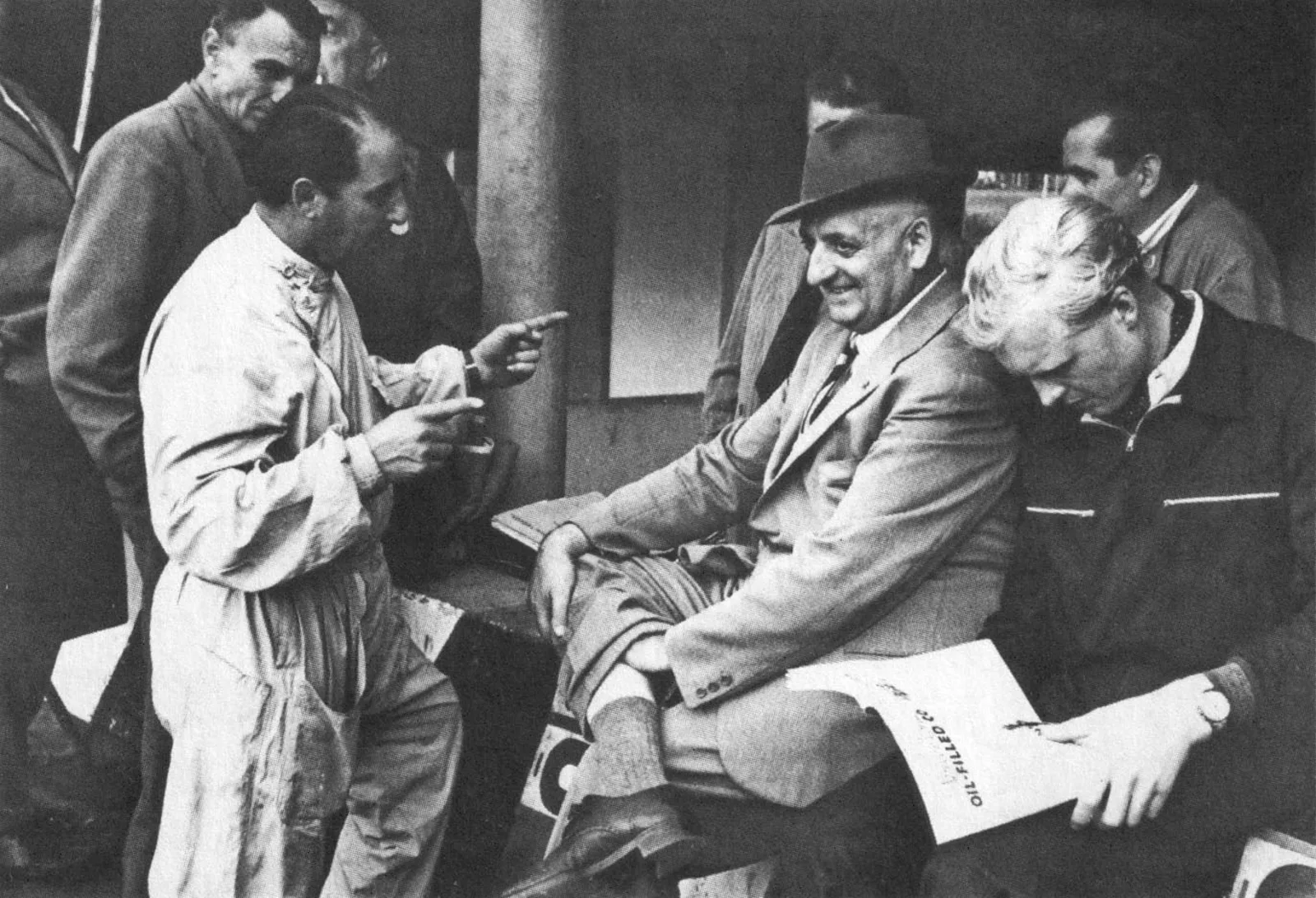
Enzo Ferrari had lost his son Dino, who died at the age of 24 from muscular dystrophy, and he turned to Collins with a fatherly warmth. The driver became close to the team's leader in a way few other drivers did. By the end of the 1956 season Collins had won two races and finished third in the World Drivers' Championship, a strong return for a newcomer to the Ferrari squad.
What happened at the 1956 Italian Grand Prix?
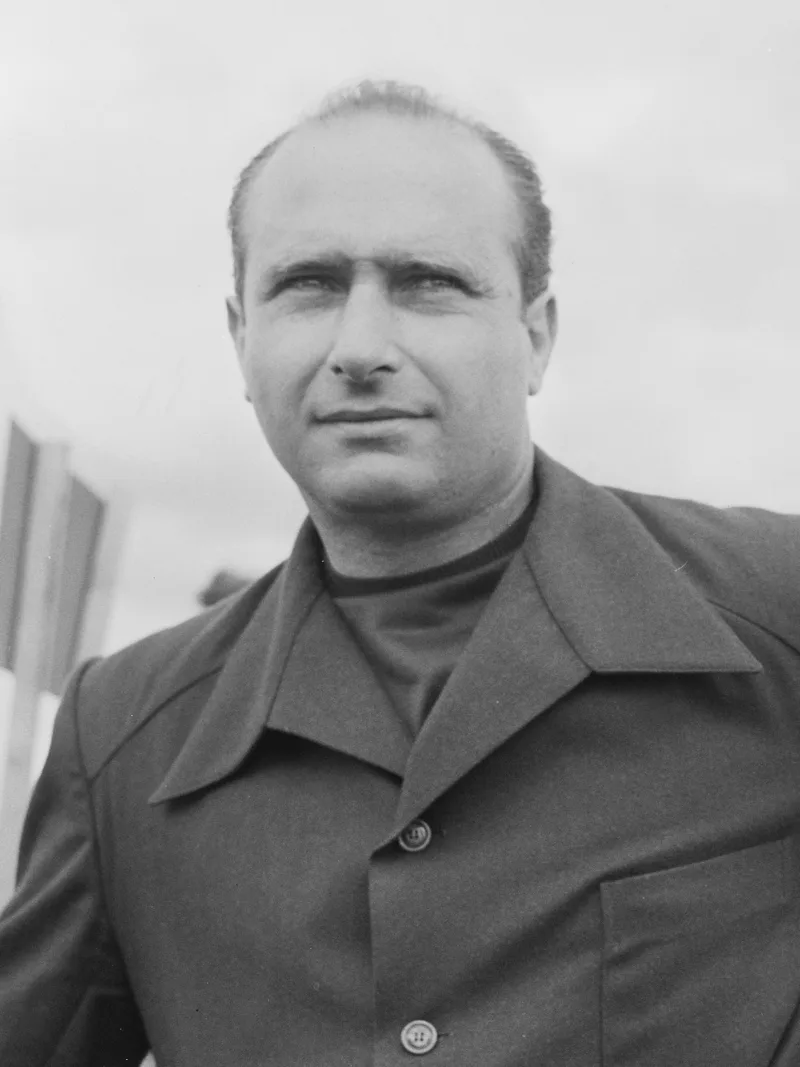
At Monza in 1956, Collins was on the verge of becoming Britain's first Formula One world champion. Late in the race he handed his Lancia-Ferrari D50 to team leader Juan Manuel Fangio. He finished second in the race, but the points Fangio gained and the advantage given to Moss dropped Collins to third in the championship.
Fangio later said the gesture had moved him almost to tears, and he praised Collins as one of the finest and greatest gentlemen he had raced against. Collins had also taken second place at the 1956 Mille Miglia in a Ferrari 860 Monza, a result that showed his versatility across different kinds of racing at the time.
How did the 1957 and 1958 seasons go for Collins?
The 1957 Ferrari was the 801, an evolution of the Lancia D50 that proved overweight and underpowered for much of the year. Collins had no Formula One victories that season, but he finished third at the German Grand Prix. He did win the non-championship Syracuse and Naples Grands Prix, and in 1958 he teamed with Phil Hill to win the 1000 km Buenos Aires in a Ferrari 250 TR.
Mike Hawthorn joined Ferrari in 1957, and the two became close friends. They agreed to share their winnings equally, which created a tight partnership inside a team that also faced rivalry from Luigi Musso. Fiamma Breschi, Musso's girlfriend at the time of his death, later said that the rivalry encouraged all three drivers to take risks. The introduction of the Dino 246 in 1958 gave the team a better car, and Collins won the BRDC International Trophy at Silverstone and finished third at Monaco.
His relationship with Ferrari became difficult that summer. Ferrari dismissed him after an incident at the 24 Hours of Le Mans, where he damaged the clutch of the car he shared with Hawthorn, and later allowed him to drive a Formula Two car for the rest of the season. Hawthorn refused to start at Reims unless Collins was given a Formula One seat, and Collins finished fifth there before Ferrari dismissed him again.
Why is the 1958 British Grand Prix remembered?
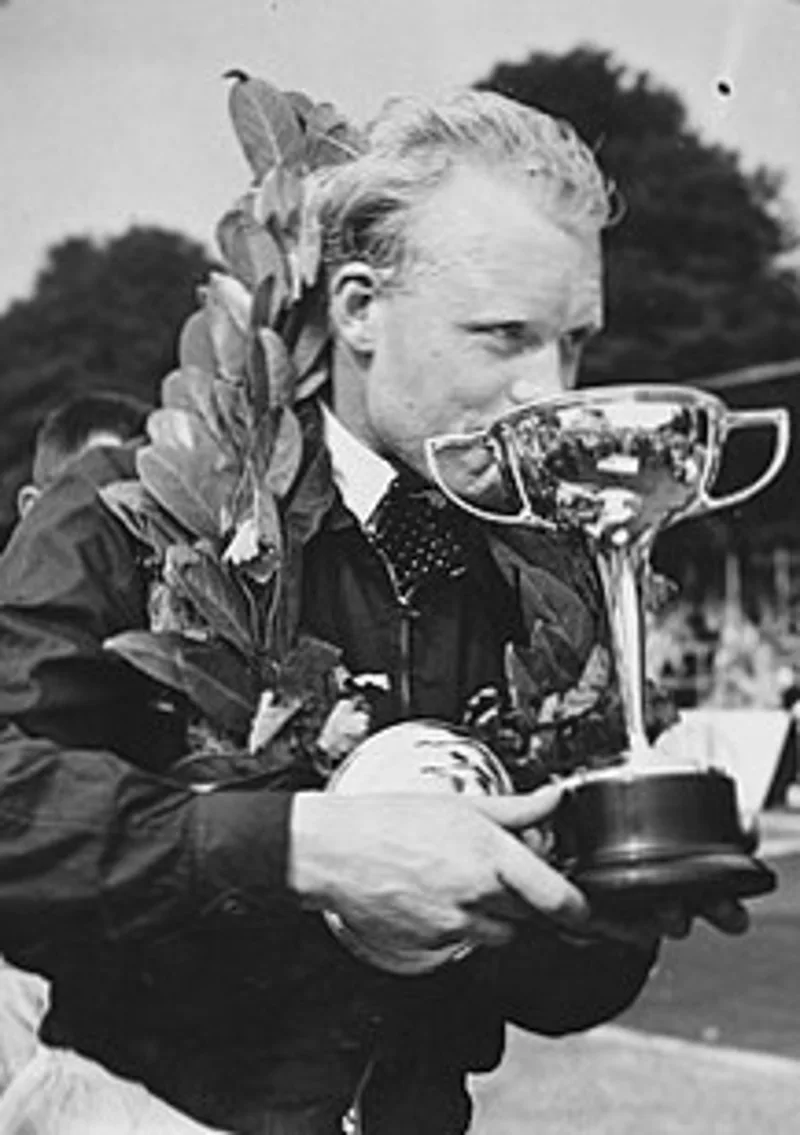
Collins won the 1958 British Grand Prix at Silverstone, his third and final Formula One victory. He ran under team orders to help Hawthorn win the championship, but he led from the start and drove at the limit for 45 laps to pull away from Moss's Vanwall. When the Vanwall expired, the win was his, and Ferrari did not slow him down to let Hawthorn through.
Rob Walker, who later became Stirling Moss's patron, told Collins afterwards that his driving had been frightening and that he should never drive like that again. It was a fitting last win for a driver whose speed had always been his defining quality, and it came only weeks before his death at the Nurburgring.
How did Peter Collins die?
Collins died after a crash at the 1958 German Grand Prix at the Nurburgring. He was chasing Tony Brooks's Vanwall through the Pflanzgarten section when he entered a corner too quickly. The Ferrari ran wide into a ditch, flipped into the air and landed upside down. Collins was thrown out, struck a tree and died later that afternoon in a hospital in Bonn.
The death was almost identical to the fate of his Ferrari team-mate Luigi Musso, who had died at Reims earlier that season. Hawthorn was deeply affected and retired from racing immediately after winning the 1958 Drivers' Championship. Hawthorn himself died in a road accident near Guildford the following year.
Brooks later recalled that he had driven harder in that battle with Collins and Hawthorn than at any other time in his life. Even so, the two Ferrari drivers passed and repassed each other only on the safer parts of the circuit, a detail that shows how carefully the duel was fought.
What is Peter Collins's legacy?
Collins is remembered for two things above all: his long drive at Silverstone in 1958, and his willingness to give up a title chance to a team leader in 1956. His friendship with Hawthorn and his rivalry with Musso are recorded in a television documentary about Enzo Ferrari, and his life was portrayed by Jack O'Connell in the 2023 film Ferrari.
The gesture at Monza is one of the defining moments of his career, and Fangio's public praise is a large part of why Collins is remembered as a gentleman as well as a fast driver.
That 1958 season ended with Hawthorn as champion, a title he won after losing his closest team-mate. Collins's name remains attached to that year, and the rivalry inside the team forms part of the story told in the television documentary The Secret Life of Enzo Ferrari.
Career summary at a glance
| Season | Main team | Notable result |
|---|---|---|
| 1951 | JBS-Norton | Third in the Autosport National Formula 3 Championship |
| 1952 | HWM | Formula One debut; sixth at the French Grand Prix; Goodwood Nine Hours win |
| 1953 | Aston Martin | RAC Tourist Trophy win at Dundrod with Pat Griffith |
| 1954 | Vanwall | Seventh at the Italian Grand Prix |
| 1955 | BRM, Maserati 250F | BRDC International Trophy and London Trophy; Targa Florio win with Mercedes |
| 1956 | Ferrari | Maiden Grand Prix wins at Belgium and France; third in the championship |
| 1957 | Ferrari | Syracuse and Naples Grand Prix wins; third at the German Grand Prix |
| 1958 | Ferrari | British Grand Prix win; 12 Hours of Sebring win |