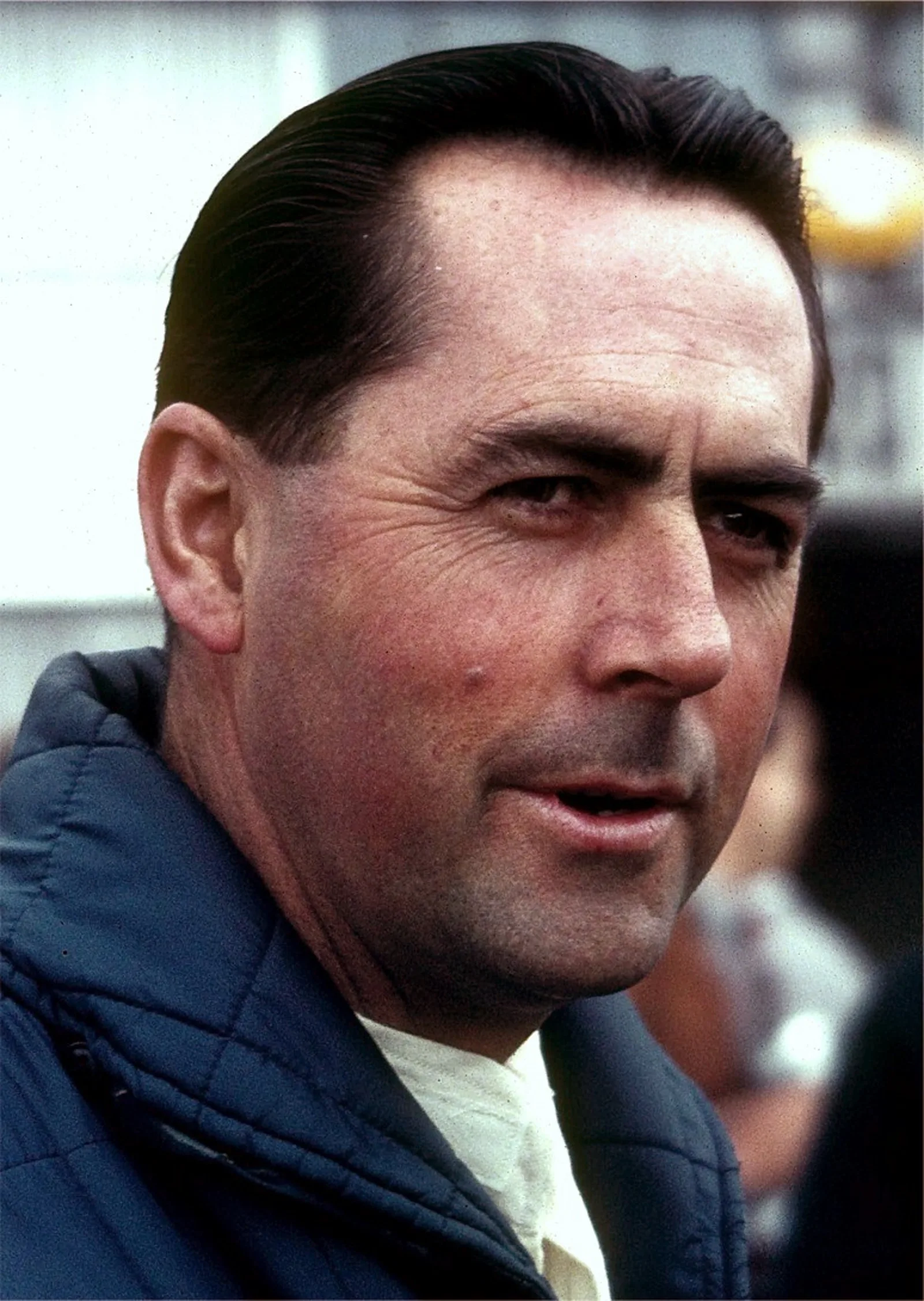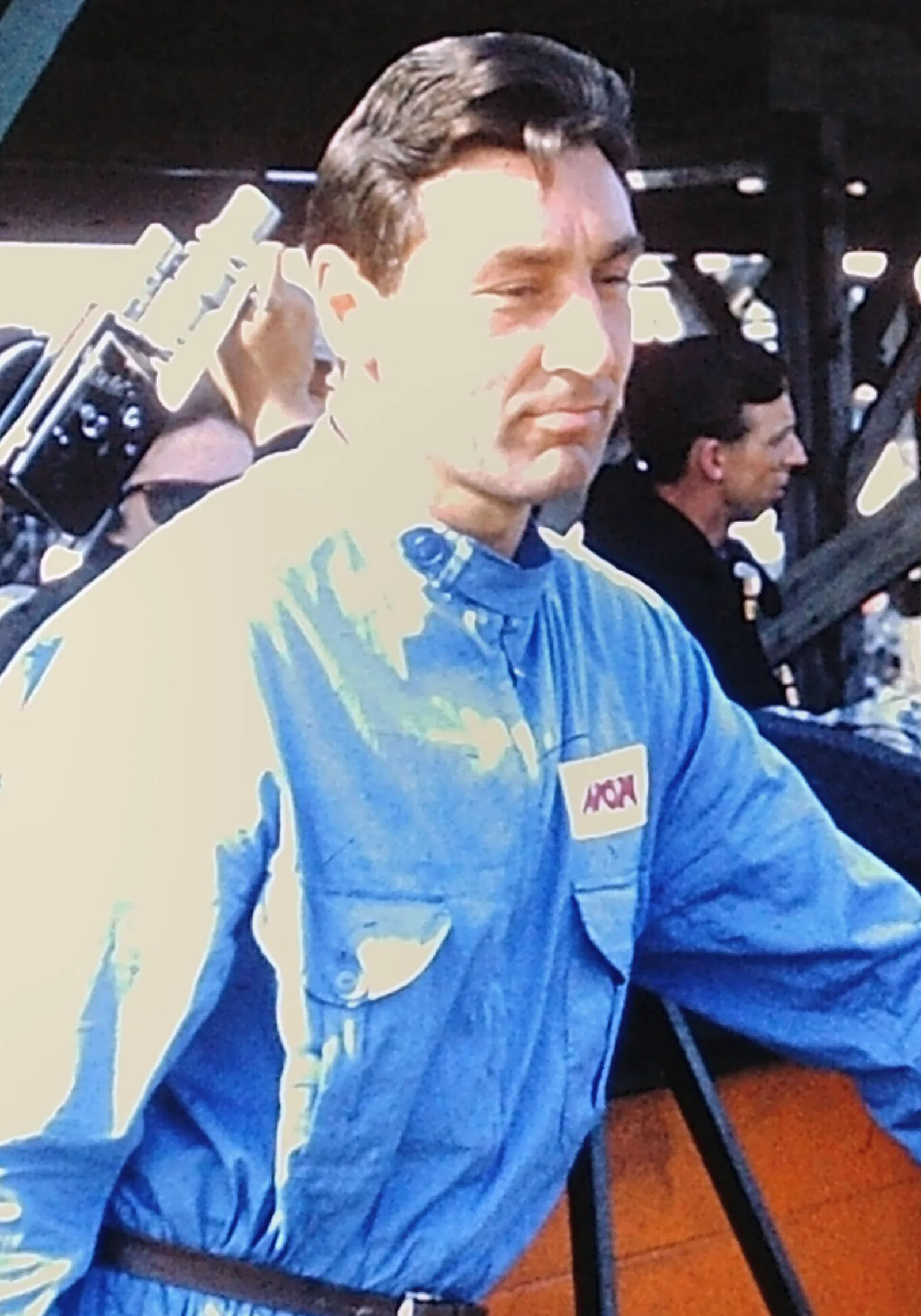
From post-war airfield wins and a near-fatal 1951 crash to Formula One with Cooper and a 1959 Le Mans victory with Aston Martin.
Roy Salvadori, a British driver, raced in Formula One between 1952 and 1962. His best championship finish was fourth in 1958, and his 1959 Le Mans victory came with Aston Martin. He earned the King of the Airfields nickname through post-war wins on English airfield circuits.
Roy Salvadori was a British driver and team manager who raced in Formula One between 1952 and 1962. Alongside that, he won the 1959 Le Mans race for Aston Martin with Carroll Shelby, and he picked up the King of the Airfields tag on English circuits after the war.
How did Salvadori begin racing?
He came into the world in Dovercourt, the son of Italian-descended parents. Wartime interrupted his plans, but in 1946 he raced for fun in small events, first in an MG and then in a Riley that had once run at Brooklands.
In 1947 he stepped up to an Alfa Romeo P3 that had once been raced by Tazio Nuvolari. He raced it in the Grand Prix des Frontieres, where the car stuck in top gear late in the event, yet he still recovered to take fifth place.
He then turned professional and drove a variety of makes as his career developed. Racing was his aim from the start.
The career nearly ended in May 1951, at the BRDC International Trophy at Silverstone. His Frazer Nash Le Mans Replica rolled two and a half times and threw him into the hay bales, leaving him with a fractured skull and other severe injuries that brought him close to death.
A near-fatal crash in 1951, then Formula One with Cooper and a Le Mans win with Aston Martin.
What made Salvadori the King of the Airfields?
Salvadori knew his limitations. Chasing Stirling Moss on the steeply cambered, high-banked circuits such as Dundrod or Pescara, with their blind bends, was not a sensible contest for him. He chose the flat English airfield tracks instead. Those tracks suited his approach better.
The nickname King of the Airfields followed, since his wins piled up at Silverstone, Snetterton and other flat airfield venues. He was not alone in that, but the nickname stuck to him.
Twice he took the International Gold Cup at Oulton Park, a meeting where trees and a lake waited for any wayward car. On one occasion he ended up in that lake in a Jaguar Mk.II 3.8 saloon.
His association with David Brown and the Feltham-built Aston Martin cars defined much of his career. Brown's team took him on in mid-1953. His own favourite win was the 1963 Inter-Europa Cup round at Monza, where he beat Ferrari's 250 GTO in a DP214.
How did Salvadori's Formula One career begin?
Salvadori recovered from the Silverstone crash in time to make his first Grand Prix start in 1952, driving a two-litre Ferrari 500 for G. Caprara. He finished eighth, three laps down, in the British Grand Prix, and he later won the Joe Fry Memorial Trophy in the same car.
For 1953 he joined the Connaught team and entered five Grands Prix in the Connaught A type, retiring from every one. He still picked up a number of non-championship victories that season, which showed his pace.
From 1954 to 1956 he drove a Maserati 250F for Syd Greene's Gilby Engineering. Many good results came in mostly non-championship races. At Silverstone in 1956, a fuel line problem cost him a possible win in the RAC British Grand Prix after Moss had got the better of him.
Across the ten races he contested between 1953 and 1956, Salvadori retired early in every single one. The pattern shifted in 1957, when he joined Cooper and collected one fifth place at the British Grand Prix.
How did Salvadori fare at Cooper?
His best Formula One season came in 1958, when he was teammate to Jack Brabham at Cooper. That made it his strongest championship year. He ended the 1958 standings fourth, with Mike Hawthorn, Stirling Moss and Tony Brooks ahead of him.
Over the season he earned two podium finishes, third at the British Grand Prix and second at the German Grand Prix.
Cooper did not keep him for 1959, when Brabham went on to win the first of his titles. Salvadori drove a privately entered Cooper and also the works Aston Martin, which achieved two sixth-place finishes for him. The front-engined Aston Martin looked dated beside the rear-engined Cooper design, and it was soon left behind.
He did win the London Trophy at Crystal Palace that year with a Formula Two Cooper. The Aston Martin effort carried on into 1960 without luck, and Salvadori kept running a privately entered Cooper alongside it.
What happened in Formula One from 1961 to 1962?
In 1961 he switched to Reg Parnell's Yeoman Credit outfit, partnering John Surtees. Three sixth places came in five Grands Prix, using a 1.5-litre Cooper T53-Climax. Colin Chapman's Lotus cars were the Cooper's main rivals that year, which made those sixth places harder to earn.
At Watkins Glen in the United States Grand Prix, he was closing on Innes Ireland for the lead when the engine gave out. The Cooper now faced strong competition from Colin Chapman's Lotus cars.
He continued with Parnell in 1962 under the Bowmaker Racing Team name, driving a Lola Mk4-Climax. Eight attempts produced seven retirements and one failure to start, because John Surtees took the car for that race.
A serious qualifying crash in a Cooper at the Warwick Farm 100 in Australia opened his 1962 season. It left him with temporary facial paralysis, and it was his last year in Formula One. His total came to 47 Formula One starts.
What were Salvadori's sports car highlights?
Throughout his Formula One years Salvadori kept racing sports cars, mostly in the United Kingdom, and he became very well known at home. In 1952 he won his first race at BARC Goodwood, and further wins followed at Snetterton and Goodwood later that season.
His first Le Mans attempt, in 1953, was a works Aston Martin shared with George Abecassis. A clutch failure ended that race early. His aggressive driving impressed, and he came second at the Nurburgring 1000 km in an Ecurie Ecosse Jaguar C-Type with Ian Stewart.
His 1959 run was among the best of his career. A second at the British Empire Trophy opened the streak, then came wins at the Aintree 200 and at an international Silverstone race, and a win at the National Open at Crystal Palace in May. Only then did he turn to the Circuit de la Sarthe for Le Mans.
How did Salvadori win the 1959 Le Mans 24 Hours?
David Brown's racing department entered him in an Aston Martin DBR1/300 with Carroll Shelby, a Texan he had raced with at the 12 Hours of Sebring earlier that year. Attrition took its toll, and the field was down to just 13 cars.
Salvadori and Shelby were heading the surviving cars, and Salvadori brought the car across the line first. The win gave both him and Brown the Le Mans victory they had long hoped for.
Shelby was struck by dysentery during the race, so Salvadori did the greater share of the driving. That win was the peak of his sports car career, and four further victories followed before the year was out, making 1959 his best season.
He followed it with another strong year in 1960, when he scored five victories and won four races out of five at one stage. At Le Mans that year he gave Jim Clark room to drive, yet steadied things enough for the pair to take third in a Border Reivers DBR1.
What happened at the 1963 Le Mans?
The 1963 race ended badly for Salvadori, who had finished fourth overall with a class win at Le Mans in 1962 alongside Briggs Cunningham. This time a crash involved several cars, and it set fire to his machine. His car was one of several caught up in the accident.
The 1963 race ended badly for him. Early in the race he spun on oil left by Bruce McLaren's Aston Martin DP214, and his E-Type flipped onto its roof and caught fire. Jean-Pierre Manzon's Aerodjet LM6 struck him and halted mid-track.
Christian Heins could not avoid the wreckage. His machine slid out of control, struck another car, spun into a lamp car and went up in flames. Both Salvadori and Manzon were hurt, and Heins was killed outright.
The crash eventually ended his racing; he stopped in early 1965 after a second place in the Whitsun Trophy at Goodwood in a Ford GT40. His last sports car victory had come the season before at the Scott-Brown Memorial at Snetterton.
What did Salvadori do after racing?
He came back to Formula One as team manager at Cooper in 1966 and 1967. A dispute with the team ended that role, and he turned to his own business. The return kept him close to the sport he had left in 1965.
Away from the track he ran a car dealership in Surrey between 1968 and 1969. He also helped with the early Ford GT40 programme, quitting when the car's handling looked troubled, and he charged nothing for his input.
He retired to Monaco in the late 1960s and died there on 3 June 2012, aged 90. Carroll Shelby, his Le Mans co-driver, had died three weeks earlier.
What were Salvadori's key results?
| Year | Event | Result |
|---|---|---|
| 1952 | British Grand Prix | Eighth, three laps down |
| 1953 | Connaught Formula One | Five Grands Prix, all retired |
| 1957 | British Grand Prix | Fifth for Cooper |
| 1958 | British Grand Prix | Third |
| 1958 | German Grand Prix | Second |
| 1958 | World Drivers' Championship | Fourth overall |
| 1961 | Formula One season | Three sixth-place finishes |
| 1959 | 24 Hours of Le Mans | Winner with Carroll Shelby |
| 1960 | 24 Hours of Le Mans | Third with Jim Clark |
| 1962 | 24 Hours of Le Mans | Fourth overall, class win with Briggs Cunningham |