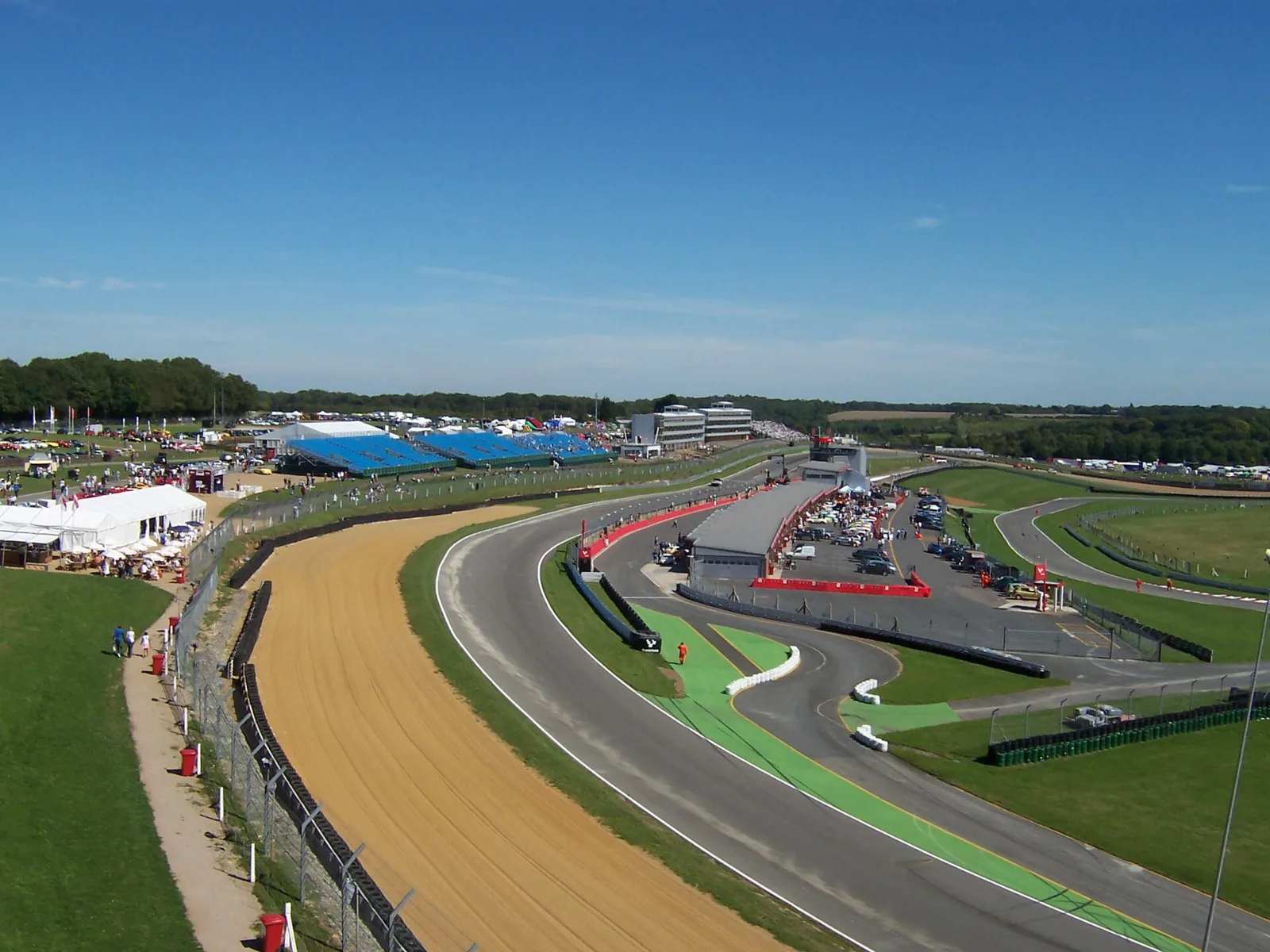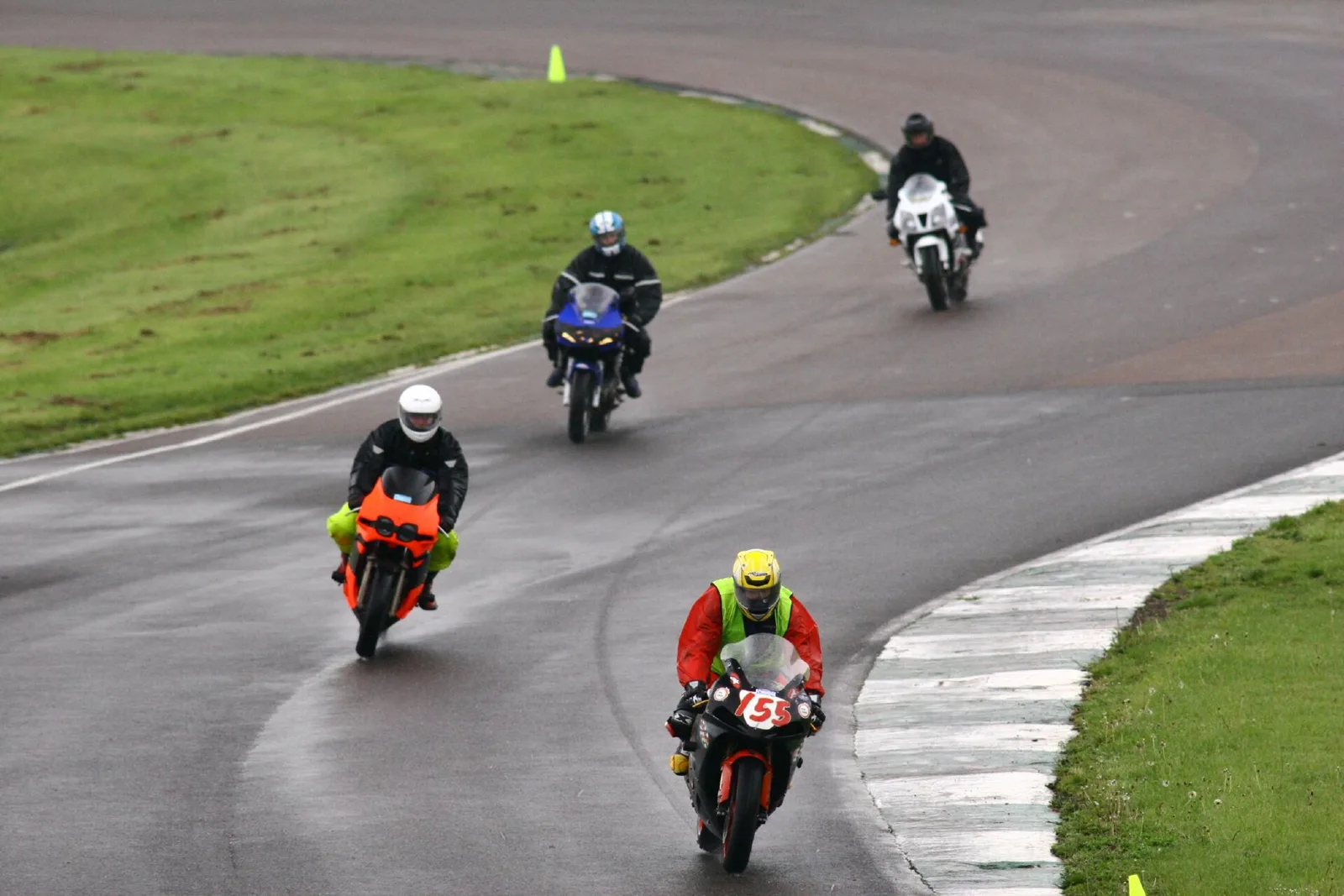
A short circuit whose tarmac replaced a grass track in 1956, which has hosted Surtees, Hailwood and Rindt and is still raced on today.
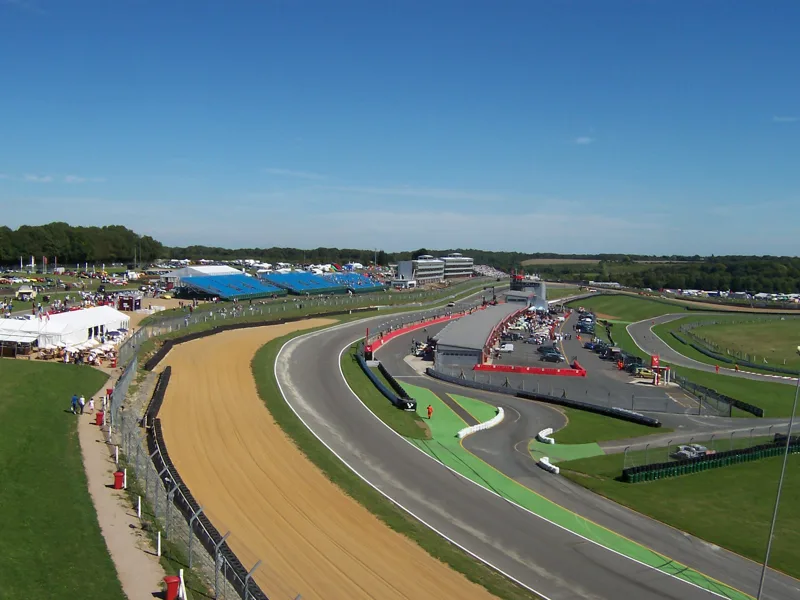
The Leicestershire venue's tarmac dates from 1956, when it replaced a grass track. Its 2.173 km (1.350 mi) layout is among the briefest in Britain, and Shaw's Corner and Gerard's Bend give it a distinct character.
Mallory Park is a motor racing circuit set in Kirkby Mallory, a Leicestershire village close to the A47 linking Leicester and Hinckley. Its car layout covers 1.350 mi (2.173 km), placing it among Britain's briefest permanent courses.
The track began life as a grass circuit for motorcycles, was rebuilt in tarmac in 1956 and has hosted many of the country's major championships since. This article covers the layout, the estate's history, the famous names who raced there, the ownership changes, the restrictions of the 1980s and the lap records.
Where is Mallory Park and how long is the circuit?
Mallory Park sits in the village of Kirkby Mallory, a short drive from Leicester and Hinckley. The main layout runs 2.173 km (1.350 mi), and a separate Superbike version is longer at 2.269 km (1.410 mi), because chicanes were added to slow the motorcycles.
Shorter British venues include Lydden Hill, the Indy circuit at Brands Hatch, Knockhill in Scotland and the Stowe circuit at Silverstone. Mallory's place among them rests on its compact footprint, which keeps the pace high even on a short lap.
A short Leicestershire circuit that began as a grass track, hosted Surtees, Hailwood and Rindt and still runs its tarmac lap.
How did the circuit's layout take shape?
The circuit is built on a basic one-mile oval, with a northerly extension that forms a loop. Most configurations include Shaw's Corner, a 180 degree hairpin at the northern end, which is the tightest corner of any UK track apart from the hairpin on the short circuit at Cadwell Park. When the loop is not used, the link section becomes the shorter one-mile layout.
Gerard's Bend, a long right-hander about a third of a mile in length, waits at the far end of the layout that turns through nearly 200 degrees. It is named after Bob Gerard, the local racing hero who opened the reconstructed circuit on 25 April 1956.
Large lakes occupy roughly half of the infield, and the track's fast character sits oddly with that setting. Clive Wormleighton formed the lakes soon after the circuit opened, by fitting a sluice gate across the brook. Chicanes were introduced to slow the motorcycles, with Edwina's, named after former managing director Edwina Overend, at the end of the straight after Gerard's, plus the Bus Stop Chicane on the way down toward the Devil's Elbow.
The Devil's Elbow is a left-hander that drops away out of the driver's view, with an off-camber surface, and it arrives on Kirkby Straight, just ahead of the line. In 2003 a further complex was added near Gerard's to reduce speeds on the approach to Edwina's and to keep motorcycles from colliding as they jockeyed for position.
The circuit has no true permanent garages, only a few open garages in the pitlane. Mallory is also the last major oval in Britain now that Rockingham Motor Speedway has closed.
When did racing begin at Mallory Park?
The estate has deep roots. A defended Anglo-Saxon moat, known as Kirkby Moats, lies within it, and a Roman road crosses the land. Lord Byron is said to have composed verse under a Lebanon cedar that still stands at Kirkby Hall.
During the Second World War the site was an RAF satellite landing ground, Royal Air Force Kirkby Mallory, which closed in 1947. The estate of 300 acres was sold at auction in 1953, and after the war the area had become a pony trotting circuit whose outline still defines the oval.
When the equestrian club that ran the trotting circuit collapsed, motorcycle clubs took over the track for grass-track racing. The Leicester Query Motorcycle Club held meetings there from 1949 to 1954, before the estate was bought by Clive Wormleighton in 1955.
Under Wormleighton the present tarmac was laid in 1956 at a cost of 60,000 pounds. A test on 26 April 1956 saw Bob Gerard drive a Cooper-Bristol Formula Two car around the new surface at an average of 81 mph, and the grand opening followed on 13 May 1956 before a crowd of more than 20,000.
That opening meeting attracted 248 riders, and George Salter posted the first lap record, 84.08 mph, on a Norton. Cars first appeared at a Whit Monday meeting organised by the Nottingham Sports Car Club, and D. Rees won the first car race in an Austin.
Which famous racers competed at Mallory?
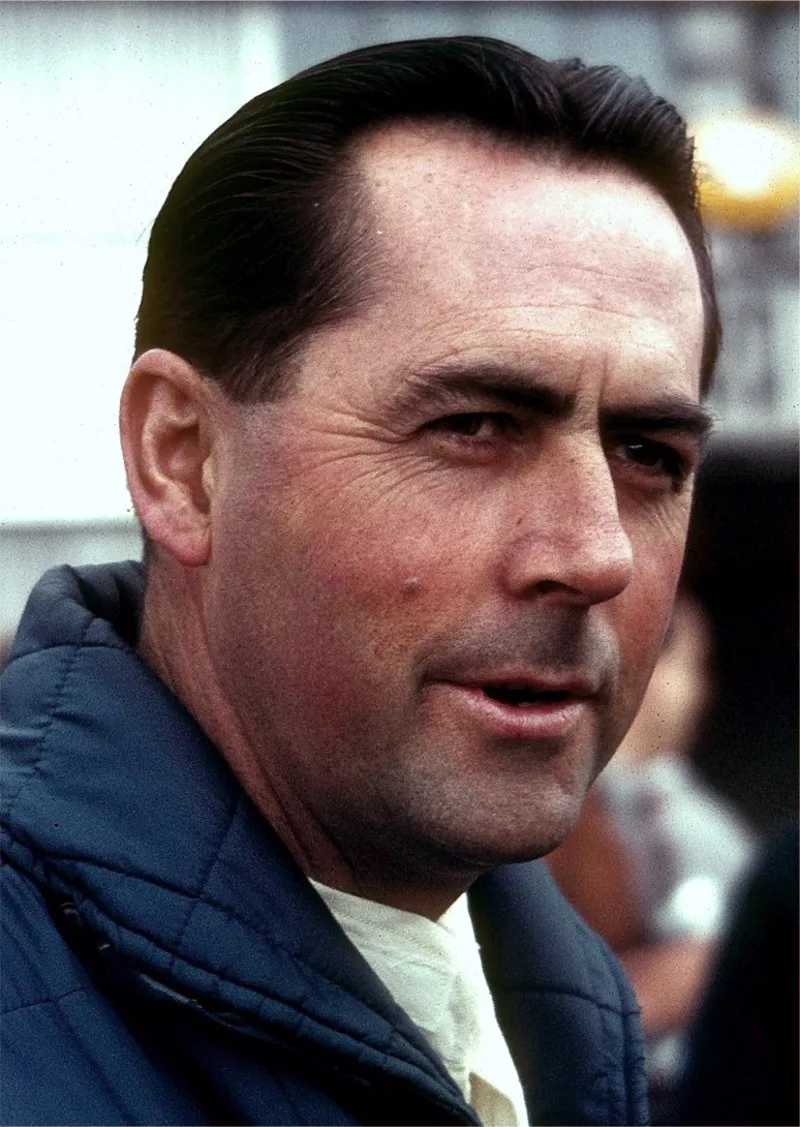
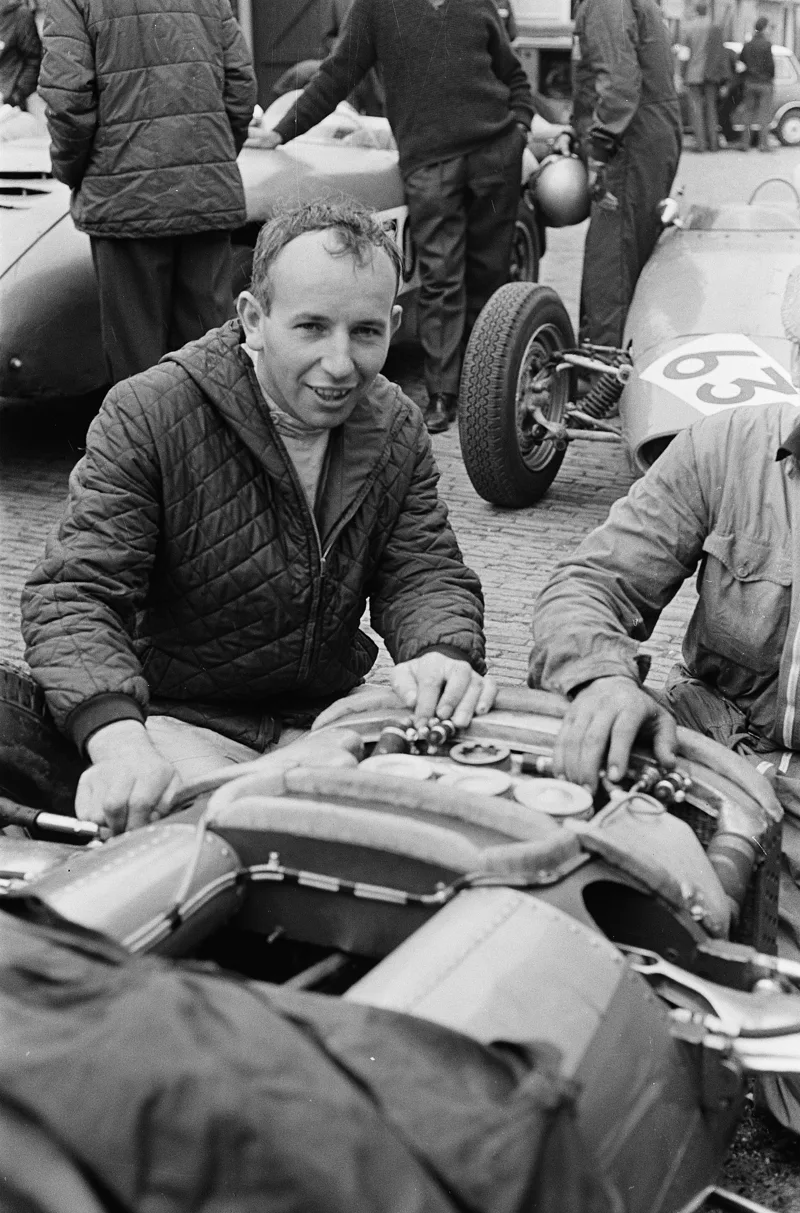
Many well-known names raced at Mallory in its early years. John Surtees took the inaugural Race of the Year in 1958, and Mike Hailwood won in 1960 with a new lap record of 89 mph. Jack Surtees had been a successful grass-track racer at Mallory before his son arrived on the scene.
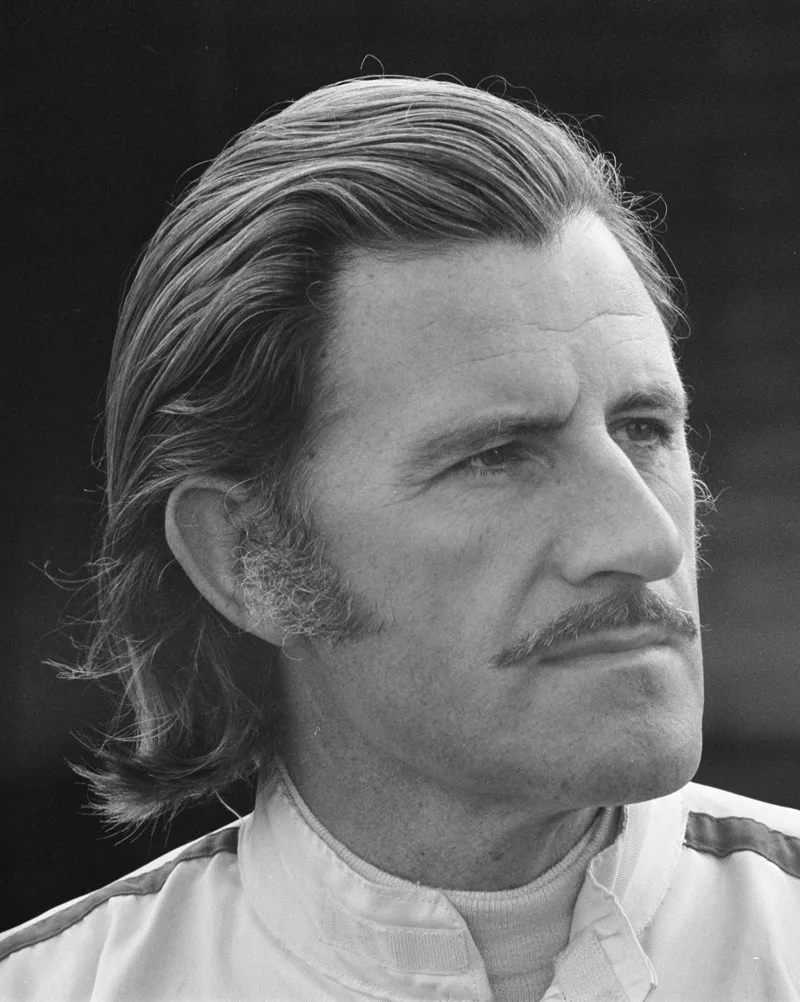
Surtees is unique, having won world titles on both two and four wheels, and his local success continued. On 11 June 1962 he won a non-championship Formula One race at Mallory in a Lola Mk4, ahead of the privately entered Lotus cars of Jack Brabham and Graham Hill.
Jochen Rindt made his English debut at a Whit Sunday meeting in 1964 in a Formula Two Brabham. He asked Denny Hulme to show him the circuit, then qualified fastest, and despite a delay in the race he finished third behind Jim Clark and Peter Arundell.
Statues of Surtees, Hailwood, Clark and Colin Chapman now stand at the front gate, a reminder of how many of those names raced there.
How did ownership change in the 1960s and 1970s?
Wormleighton ran the circuit successfully until July 1962, when Grovewood Securities took over. Grovewood also owned Brands Hatch, and the 1960s and 1970s became the golden days of the circuit.
Many of Britain's top car and motorcycle championships ran at the venue in those decades. Two-wheel racing was equally prominent: in 1962 more than 50,000 people paid to watch the Post TT meeting, where Hailwood's win pushed the lap record up to 91.70 mph, and the Daily Mail became the sponsor of the meeting's headline races. European championship rounds also came to the track, and on 12 March 1972 the FIA European Formula Two Championship event was won by Dave Morgan in a Reeves Racing Brabham-Ford BT35, ahead of Niki Lauda and Carlos Reutemann, who later drove for Ferrari.
The track even staged cycling. In 1970 the world road race championship for professionals ran on a road course that started and finished at Mallory and included the circuit reversed on each lap, and the race was won by Jean-Pierre Monsere of Belgium.
After about twenty years the owners offered the estate for sale. Its future was clouded by the reopening of Donington Park, about 20 miles away, and by planning permission for 30 dwellings on the estate. A concert on 18 May 1975, staged on a stage in the middle of the lake, featured the Bay City Rollers during a BBC-organised fun day.
How did the circuit survive the 1980s?
Edwina Overend, who served as competitions secretary for the BRSCC's Midlands branch, approached Chris Meek about buying the estate in 1982, when the future of racing there looked doubtful. Meek, a racing driver and businessman, bought it late that year and relaunched the circuit on 29 May 1983, when the 750 Motor Club organised the first race of the new era.
Trouble soon returned. The owners announced in late 1983 that the circuit would close, because restrictions limited it to race days only, which made it unviable without practice days. A noise nuisance order in December 1985 cut the number of racing days to 40 a year, with a curfew on Sundays and no racing engines after 6 pm.
By late 1987, Edwina and Ron Overend, operating as Mallory Park (Motorsport) Ltd, agreed a long-term lease with Meek's company, Titan Properties, to secure racing's future at the venue.
What championships has Mallory Park hosted?
Mallory has hosted nearly every major post-war English formula, from European Formula Two and British Formula One to Group 7 sports cars, European Formula 5000, British Formula Three and the British Saloon Car Championship. In 1981 a young Damon Hill was among the amateurs in a Yamaha RD350 Pro-Am series.
Superbikes ran at the circuit from 1995, except in 2003, and the British Superbike Championship was last held there in 2010. The Festival of Sidecars takes place each October, with entries from all categories, including three-wheelers of the kind Morgan has built.
From the mid-1990s the BRSCC ran a class called EuroCars, for V6 and V8 saloon-style cars that had graduated from stock car circuits, running anticlockwise on the oval.
What are the lap records at Mallory Park?
| Category | Record and details |
|---|---|
| Full circuit, outright | Johan Rajamaki, Footwork-Judd FA13, 127.12 mph, 0:38.230, 5 May 1997 |
| Oval, car | Ian Fewings, V6 Ford Mondeo Eurocar, 106.51 mph, 0:33.840, May 1995 |
| Full circuit, motorcycle | Bradley Ray, Suzuki GSX-R1000, 97.86 mph, 0:50.660, 2017 Race of the Year |
| Karting, Superkart | John Riley, 110.30 mph, 0:44.071, June 2006 |
| First 100 mph lap | Denny Hulme, Lola T70, 102.10 mph, 29 May 1966 |
| Formula Three, 100 mph lap | Roy Pike, Titan, two years after Hulme's lap |
| Outright, 1979 | Ricardo Zunino, Arrows A1, 121.32 mph |
What is Mallory Park's place in British motorsport?
Mallory's place rests on its survival. A grass track that became a tarmac circuit in 1956 has outlasted many rivals, and it remains one of the few oval courses left in Britain, which gives it a distinct role in the country's racing calendar.
The venue has also kept its variety. Cars, motorcycles, sidecars and karts have all raced on its tarmac, and its lap records span categories from superkarts to Formula One machinery, which makes its record board unusually broad.
What else happens at the site?
The circuit sits beside a purpose-built motocross track, which hosted the 2008 Grand Prix of Great Britain. Organisers reported more than 30,000 fans over that weekend, but the event returned only once more, in 2009.
The motocross circuit has been unused since late 2013, after motocross ended because of noise concerns. The park's tarmac circuit also suits triathlon training and cycling, and the lake is used for open water swimming.