Ickx and Oliver won in the Ford GT40 that had won the year before, after a final hour in which the lead changed hands with Herrmann's Porsche 908.
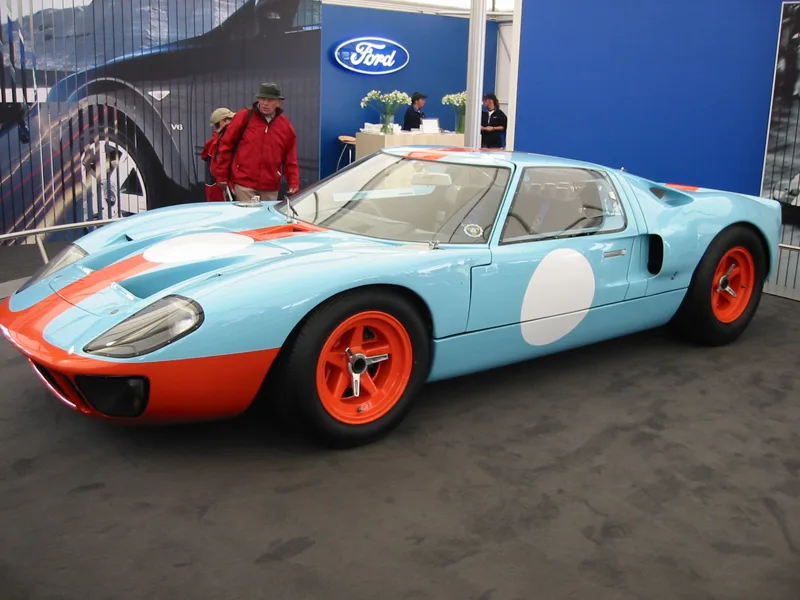
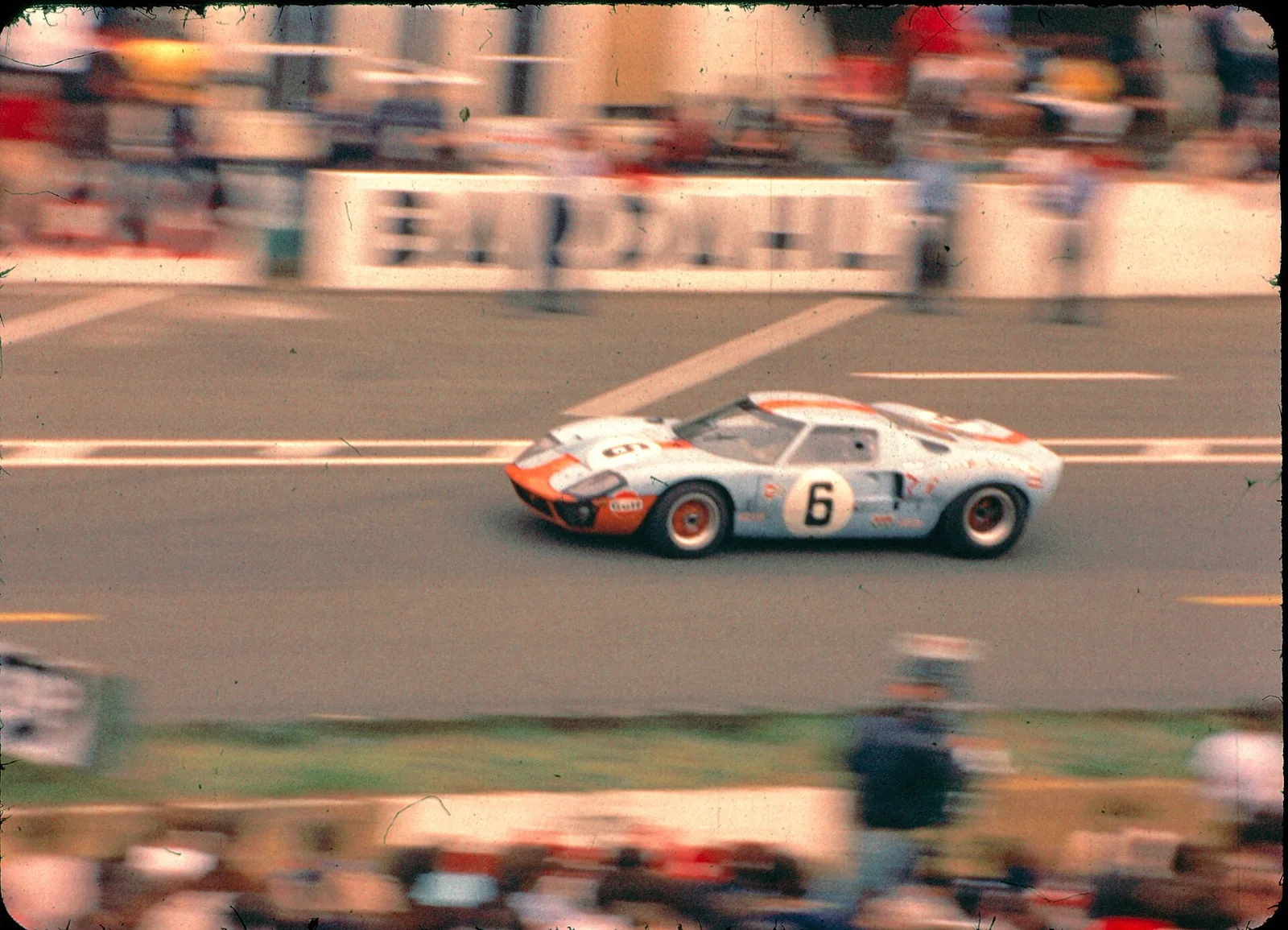
Ickx and Oliver won the 1969 race in Ford GT40 chassis 1075, which had also won in 1968. The race covered 4,998.00 km (3,105.61 mi) at an average of 208.25 km/h (129.40 mph), and they finished about 120 metres clear of Herrmann and Larrousse in the Porsche 908.
Jacky Ickx and Jackie Oliver won the 1969 24 Hours of Le Mans in the Ford GT40 chassis that had won the year before, finishing about 120 metres ahead of Herrmann and Larrousse. Ickx had walked to his car at the start as a protest, and his win came from the back of the grid.
Who won the 1969 24 Hours of Le Mans?
Ickx and Oliver won in the Ford GT40, chassis 1075, which was the same car that had won in 1968. Only a Bentley Speed Six had managed the feat before, winning in 1929 and 1930.
The win was settled in a dramatic final hour. Ickx and Herrmann repeatedly overtook one another, and both cars crossed the line with less than a minute to go and had to run one more lap.
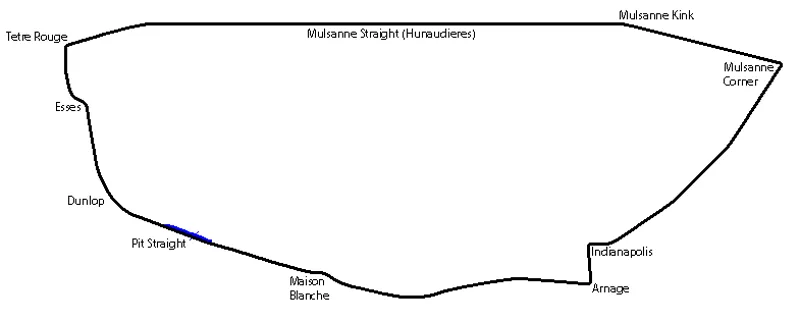
Ickx let Herrmann pass early on the Mulsanne straight and then used the Porsche's slipstream to save fuel. He passed Herrmann under braking at the end of the 5 km straight, and held the lead to the flag.
Ickx walked to his car at the start and still won, and the old Le Mans start was gone the next year.
Why did the Le Mans start change?
The 1969 race was the last to use the traditional Le Mans start, in which drivers ran across the track to their cars. Ickx walked to his car, put on his safety belts, and only then moved off. The ACO discontinued the start after the race.
The start had become dangerous. Willy Mairesse had crashed on the first lap of the 1968 race while trying to shut a door at speed on the Mulsanne, and closed GT coupes with flimsy doors had become common. Drivers who were not belted in when they pulled away were at real risk.
Ickx's protest cost him his place near the front, and he was relegated to the back of the grid. He still won.
What happened on the first lap?
On the first lap John Woolfe crashed his Porsche 917 approaching Maison Blanche and was killed. He had bought the car for 16000 pounds (US$40,000) only days before the race. He was thrown free as the car spun, rolled and exploded, and he was dead on arrival at hospital.
Woolfe's fuel tank landed burning in front of Chris Amon's Ferrari 312P. Amon ran over it, the tank jammed under his car and ruptured its tank too, and the Ferrari caught fire. Amon was unhurt but forced out of the race.
Debris blocked the road, and several cars were affected, including the Austin-Healey, Gardner's Ford and Jabouille's Alpine. The field picked its way slowly through the wreckage.
Porsche racing manager Rico Steinemann had pleaded with Woolfe before the race to let the works driver Herbert Linge take the first stint. Woolfe refused.
Why was the 917 so controversial in 1969?
The 917 had movable aerodynamic wings linked to its suspension, and the CSI banned them at Monaco in May as dangerous. Porsche argued the car was unstable without them, and the FISA allowed the 917s to race at the last minute, although the 908s had to run without flaps.
The 917 had been developed in only ten months, with a 4.5-litre flat-12 producing 520 bhp. Twenty-five chassis were needed for homologation, and customer cars were intended to sell for about 35,000 dollars each.
Team Matra was upset by the decision, but it did not protest. It was widely believed that if the ban had been reinstated after a protest from other teams, Porsche would have pulled out of the race entirely.
How big was the 1969 field, and who was in it?
The entries opened with 109 applications, the biggest number in a decade. After the requisite culling, 60 cars were accepted, but withdrawals meant only 51 practised, and the final grid of 45 was the smallest of the decade. Porsche arrived with 16 cars, a third of the field.
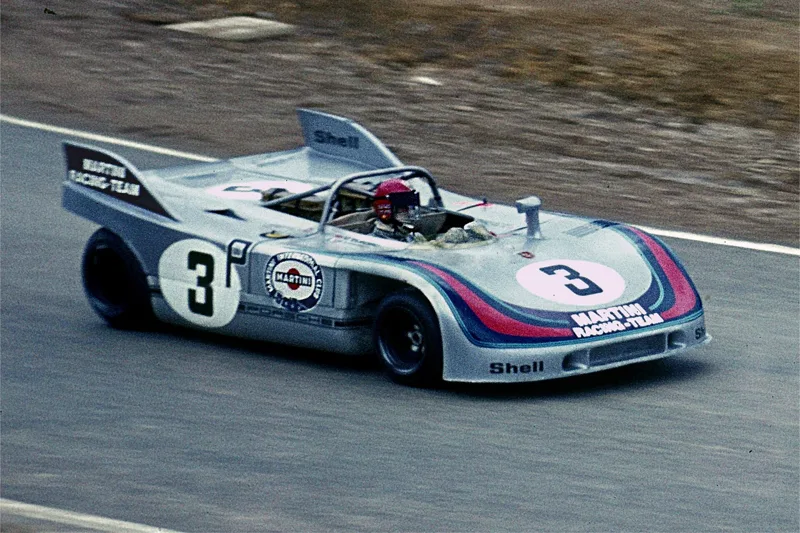
Porsche's three works 917s were the headline entries, joined by three works 908s in long-tail form. Mitter and Schutz drove one of the 908s, and the 908/2 spyder of Siffert and Redman ran with backing from Hart Ski. Two privateer 910s completed the Prototype class.
Ford was no longer as strong as its Porsche rivals. John Wyer's team entered two GT40s, for Ickx and Oliver and for Hobbs and Hailwood, while Alan Mann Racing and Reinhold Joest also ran cars. The Lola works entries were withdrawn after Paul Hawkins was killed in May at the Tourist Trophy, and Scuderia Filipinetti ran a Lola for Bonnier and Gregory instead.
Ferrari returned to Le Mans after a year's absence with the 312P, a 3-litre V12 producing 430 bhp, driven by Amon and Schetty and by Rodriguez and Piper. The NART team had three cars, a 275LM, a 365 GTB/4 and a Dino 206 S. Alpine's A220 had a fuel-injected 3-litre Renault engine at 330 bhp, and Mauro Bianchi was now the works manager after failing his medical at Monza.
Matra gave up Formula One work to concentrate on sports cars. Its 640, designed by Robert Choulet, took off on the first kilometres of the Mulsanne Straight during a test, looped, and burst into flames. Henri Pescarolo survived with two broken vertebrae and severe burns, and the project was cancelled.
Autodelta withdrew after the death of Lucien Bianchi in March, and VDS ran two of the older Tipo 33/2 cars instead. The British entries were the Chevron B8, the Healey prototype, the Unipower GT and the Piper GTR, and the smallest car in the field was the Abarth 1000SP.
What happened in practice?
The test weekend on 29 and 30 March was marred by the fatal accident of Lucien Bianchi. He was killed in the new Alfa Romeo at more than 305 km/h (190 mph) on the Mulsanne straight, when the car hit a telephone pole and a transformer station and exploded.
From the test weekend Rolf Stommelen, in the brand new Porsche 917, recorded 3:30.7, three seconds quicker than Servoz-Gavin in the Matra. Stommelen then took pole on the first night of practice with 3:22.9, more than two seconds faster than Vic Elford's sister car.
The pole lap was also 0.7 seconds faster than the lap record set by the big Mark IVs in 1967. Woolfe blew his engine in practice after grabbing first gear instead of third, and Porsche supplied him with a replacement.
Siffert and Lins were third and fourth on the grid. Servoz-Gavin's Matra was 11th at 3:36.4, and Ickx put the top Ford in 13th. The top 2-litre car was the Alfa Romeo of Gosselin and Bourgoignie in 27th at 4:09.8, and the first 911 qualified 35th at 4:28.2.
A NART Dino collided with its Daytona stablemate near the Mulsanne corner, and both cars were out for the race. A bird was sucked through a cooling vent into Bonnier's Lola, leaving him covered in blood and feathers after he pitted. The rule that every car had to qualify within 85 percent of the pole car's average speed meant several cars missed the grid.
Leading finishers in 1969
| Position | Car | Drivers | Notes |
|---|---|---|---|
| 1 | Ford GT40 chassis 1075 | Ickx and Oliver | Winners, a few seconds clear |
| 2 | Porsche 908 | Herrmann and Larrousse | About 120 metres behind |
| 3 | Ford GT40 | Hobbs and Hailwood | Four laps behind the winners |
| 4 | Matra | Beltoise and Courage | Raced hard, second at dusk |
| 5 | Matra, older car | Vaccarella and Guichet | Nine laps behind |
| 6 | Ford, German entry | Kelleners and Joest | 18 laps behind |
| 8 | NART Ferrari 275LM | Veteran NART crew | Covered 250 km less than its 1965 race win |
| 12 | Alpine A210, 1-litre | Serpaggi and Ethuin | 80 laps behind, won the Index of Performance |
How did the race unfold during the day?
Stommelen led the first pit stops with a train of five Porsches. Siffert and Redman, then leading, were delayed by a gearbox oil leak after four hours, and the Elford and Attwood 917 took the lead. Herrmann lost 20 minutes repairing front suspension with parts from Siffert's car.
As night fell, the three works Porsches ran ahead of the two Wyer Fords. Bonnier and Gregory's Lola was running sixth until overheating at 11pm forced a three-hour pit stop to change its heads and gaskets.
At 2.45am the two 908s of Schutz and Larrousse collided at the Mulsanne kink. Schutz's car rolled, burst into flames and almost broke in half, and he walked away unhurt. Larrousse's car was repaired, and it went on to finish second.
At dawn the 917 of Elford and Attwood was driving within itself, still leading the 908 of Lins and Kauhsen. A heavy mist came down over the circuit, and at 6am only 19 cars were still running.
Around 10.15am, with about three hours left, the leading Porsches made unscheduled stops. The Lins and Kauhsen 908 stopped on the Mulsanne with a broken clutch, and the 917 eventually limped to a halt with a cracked weld in its gearbox. The Ickx and Oliver Ford was then in the lead.
How did Ickx hold on at the finish?
Ickx and Herrmann were barely 10 seconds apart in the final hour. The Porsche had fading brakes and had lost some of its power, while the Ford had exhaust problems of its own. It was a very even contest, and the lead changed hands again and again.
Ickx knew that if he led onto the Mulsanne, Herrmann would pass him, so he let Herrmann go first and then slipstreamed past him. The Ford had only ever done 23 laps on a tank of fuel, and it needed an extra lap, so Ickx had to save every drop.
Ickx and Oliver won with chassis 1075, the car that the team nicknamed the Old Lady. Ickx dedicated the victory to Lucien Bianchi, who had died earlier in the year and had helped Wyer's team win the previous year's race.
What happened to Porsche and the factory teams?
The Porsche works team suffered several serious blows in August 1969. Gerhard Mitter was killed in practice for the German Grand Prix, Udo Schutz retired from racing altogether, and Vic Elford broke his arm in three places after a crash with Mario Andretti.
Porsche had won the 1969 championship before Le Mans, and its strength in the race had been the 917's speed in the early hours. Its 908s then fell away with clutch and gearbox failures, leaving the Ford to win.
What did the 1969 race change for Le Mans?
The win was the first of six for Jacky Ickx, a record that stood until Tom Kristensen beat it in 2005. Ickx's walk across the track at the start led the ACO to discontinue the traditional Le Mans start.
Ickx had a road accident near Chartres on the Monday after the race. His Porsche was crushed against a utility pole, but he unbuckled and stepped out unharmed.
Enzo Ferrari sold enough shares to Fiat later in the year to lift its holding to 50 percent. Jacques Loste, the ACO's race director since 1957, retired later in the year, and the manufacturer and engineer Charles Deutsch succeeded him.