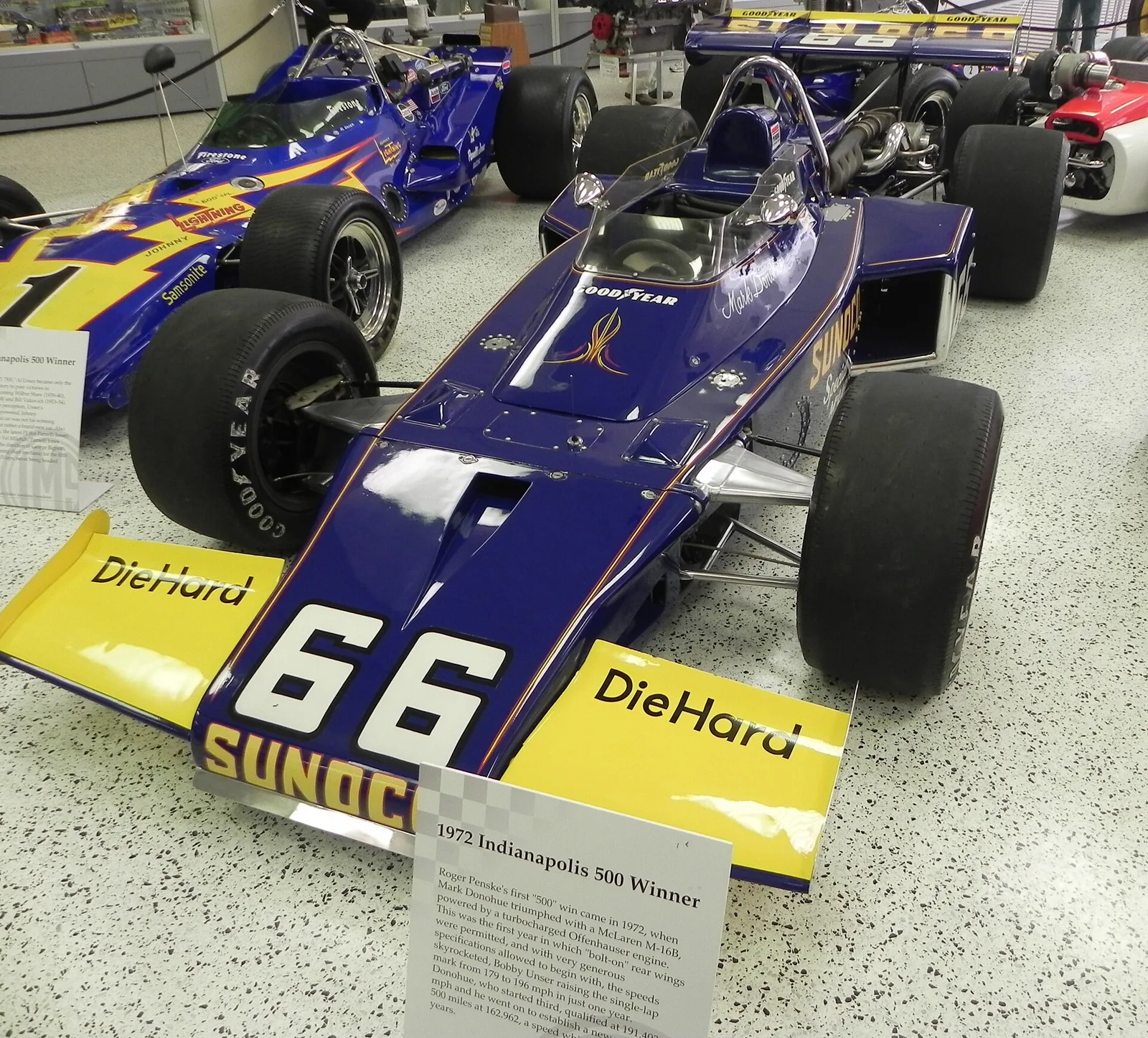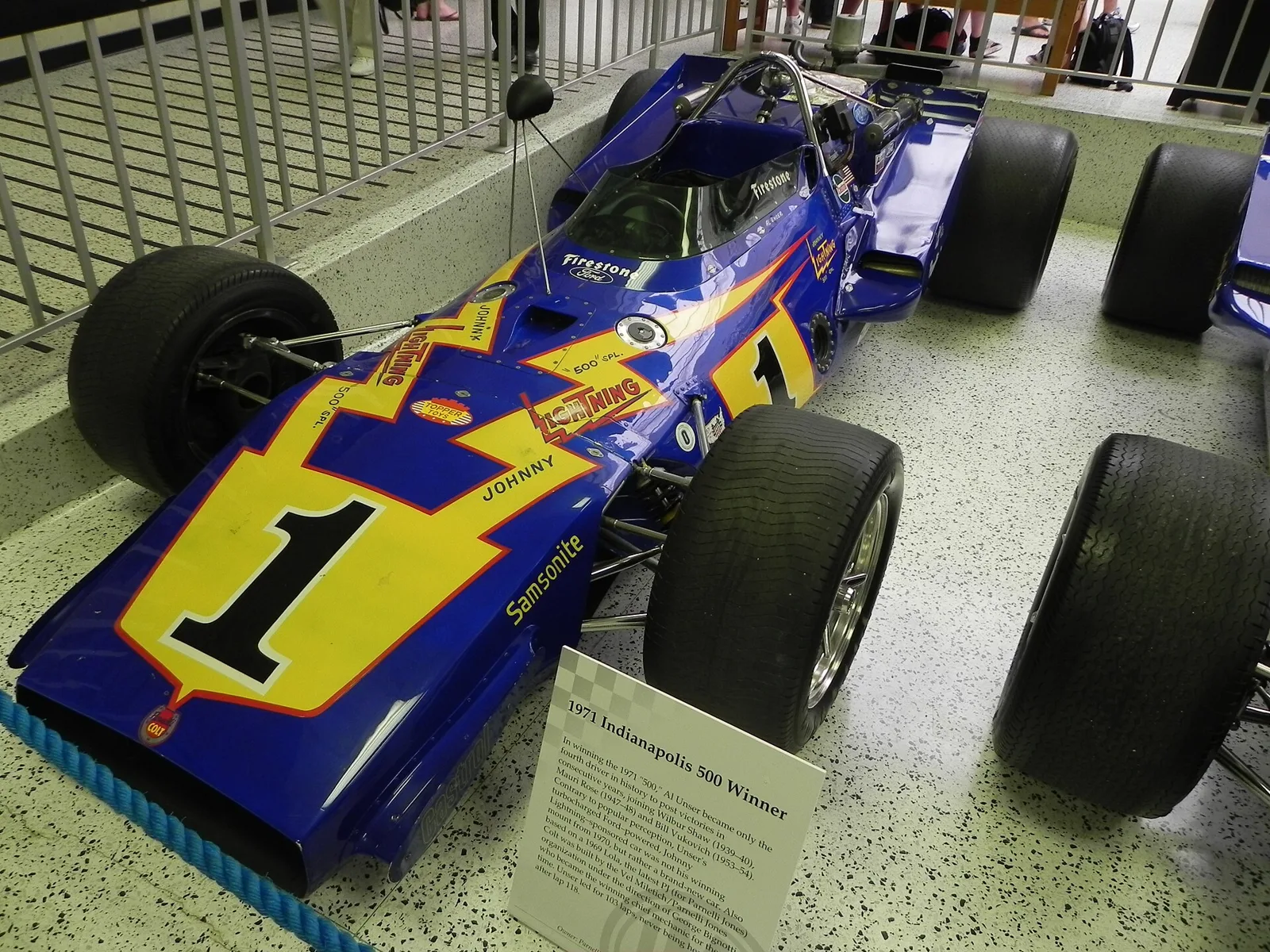
Al Unser Sr. defended his title, Peter Revson set the pole in a McLaren, and a pace car crash injured 29 people in the pit area.
Al Unser Sr. won the 1971 Indianapolis 500, held on 29 May 1971, and became the first driver since Bill Vukovich to defend the title. The race is remembered for a pace car crash that injured 29 people and for a race average speed that was a record at the time.
The 1971 Indianapolis 500 was the 55th running of the race, staged by the Indianapolis Motor Speedway in the Indiana town of Speedway on Saturday 29 May 1971. Al Unser Sr. won it for the second year running, but the day is equally remembered for a pace car crash in the pit lane that injured 29 people in a photographers' stand. The race also produced a record average speed for its time.
Who won the 1971 Indianapolis 500?
Al Unser Sr. won the 1971 race after taking the lead when Mark Donohue retired on lap 66, then holding it for the final 83 laps. His consecutive victories made him the fourth man to win in successive years, and he was the first driver to successfully defend a title since Bill Vukovich in 1953 and 1954.
Unser's win was his second of a record-tying four Indianapolis victories. The race also fell on his 32nd birthday, and he was the only winner to date to do so.
The victory lane itself was new that year. The celebration area had moved to a horseshoe-shaped space below the Master Control Tower, close to the start and finish line, and Unser was the first winner to use it. The ramps were black and white checkered.
A pace car crash in the pit lane and a second straight win for Al Unser Sr. defined the 1971 Indianapolis 500.
The pace car crash
The pace car lost control at the south end of the pit lane after its driver accelerated, believing he had to cross the start line in the pits, and missed his planned braking point.
Eldon Palmer, a local Dodge dealer, had set up a reference marker to judge his braking, but according to some accounts it had been removed before the start. Palmer was travelling at perhaps 125 mph (201 km/h) when he braked heavily. Rather than veer back onto the racing surface, he kept the car in the pit area, and it skidded to the end of the lane and struck a photographers' stand. The structure gave way, and 29 people were hurt.
Palmer did not blame the car. He said the brakes had been adequate and that there was not enough track to stop. Testimony during a civil trial in 1974, however, claimed the pace car had been ordered with power disc brakes but was delivered with manual drum brakes. His lawyer also argued that a guard who ran clear of the path had shut off the pit exit.
Two of the injured were seriously hurt. One of them was a freelance photographer from Argentina who lived until the late 1990s. Tony Hulman sprained an ankle, and Chris Schenkel, the ABC broadcaster who had been riding in the car, was unable to finish the broadcast.
No one was killed. The car was repaired and restored, and Palmer was largely cleared of blame. The public reaction was harsh, and for several years afterwards the pace car was driven by former Indianapolis drivers or people with racing experience.
How did qualifying go in 1971?
Peter Revson took the pole on Pole Day, Saturday 15 May, with a four-lap average of 178.696 mph (287.6 km/h). The margin over every other qualifier was more than one mile per hour, and three McLaren M16s filled the first, second and fourth starting spots. Bobby Unser qualified third in an Eagle.
Mark Donohue had passed 180 mph in practice on the Thursday before, but his pole day average of 177.087 mph was only a new track record and noticeably slower than that practice lap. Revson then bumped him off the provisional pole, reportedly after using set-up advice that Donohue had shared with him in confidence.
The McLaren's large rear wing caused a stir. The rules of the era demanded that aerodynamic devices be integral to the bodywork, and officials only approved the wing after McLaren argued that it was part of the engine cover. For the first time, USAC also spelled out how pole day worked: each car in the draw order was entitled to at least one try in the pole round, even if rain stopped the session.
The later days were less dramatic. Bud Tingelstad was fastest on the second day at 170.156 mph, and Mike Mosley returned after two crashes to qualify at over 169 mph. Bump Day on Sunday 23 May was windy, and only three drivers got into the field, with six crashes recorded that day.
Mel Kenyon bumped Carl Williams, Bob Harkey bumped Dick Simon and Art Pollard made the field by ousting Jim McElreath. Jim Hurtubise hit the outside wall at the top of the main straight in his front-engined roadster. The grid was not complete until Saturday 22 May, when Steve Krisiloff bumped rookie Sam Posey and the field reached 33 cars.
John Mahler had qualified 27th, but Dick Simon later took over that car, and by rule it moved to the back of the grid for the race. It started 33rd.
The race, lap by lap
Mark Donohue, starting in the middle of the front row, moved to the front and led the first 50 laps, with the lead passing between Joe Leonard, Bobby Unser and Al Unser during pit stops.
Donohue's race ended on lap 66, when broken gears stopped him and he parked in the infield near the pit entrance, having led 52 laps in total. Trouble came early. On lap 12, Steve Krisiloff's engine failed and spilled oil in turn three. Mel Kenyon slid into the wall, and Gordon Johncock, who had been racing Mario Andretti hard through three yellow lights, crashed into Kenyon's car and ran over the top of it. Kenyon escaped with a small cut to his shin, but all four cars were out and the yellow stayed on for 19 minutes.
Lloyd Ruby was in front at the halfway point. On lap 111, David Hobbs' engine failed on the main straight, and Rick Muther spun in the oil, bounced across the track and hit Hobbs. The two cars came to rest just past the start and finish line, and the yellow was out for 12 minutes while they were cleared.
The most serious incident followed on lap 167. Mike Mosley lost a wheel in turn four, hit the outside wall and then the inside wall. His car struck the parked cars of Donohue and Steve Krisiloff near the pit entrance and caught fire. Gary Bettenhausen, running eighth, stopped and ran back to help, and crews put out the flames. Mosley broke a leg, and the yellow stayed out for 22 minutes.
Bill Vukovich II spun to avoid the crash and carried on. Bettenhausen finished 10th and was cheered at the finish for stopping to help. The green flag came back with less than 20 laps to go, and Unser held a comfortable lead to the end. With fewer than 40 laps left, Revson had been second, Bobby Unser third and A. J. Foyt fourth.
Unser led the final 83 laps. The average speed for the 500 miles was 157.735 mph, a new record at the time, despite four yellow periods that added up to 53 minutes.
What changed in the schedule and series?
The race was part of the reorganised USAC Marlboro Championship Trail. Dirt tracks were separated from paved ovals and road courses, so from 1971 the Gold Crown schedule was made up only of paved circuits. With 500-mile races now at Ontario and Pocono as well, Indy car racing had its first triple crown of 500s.
The calendar moved too. The Uniform Monday Holiday Act took effect in 1971, and the race left its traditional fixed date of 30 May. Between 1911 and 1970 it ran on 30 May, or on 31 May when 30 May fell on a Sunday, but the 1971 race took place on 29 May for the first time.
Other preparations stood out. Carburetion Day on Wednesday 26 May was open to the public for the first time, and the speedway allowed female reporters into the pit and garage areas for the first time as well. Indianapolis also hosted the 1971 NATO International Conference of Cities during race week, while the city marked its Sesquicentennial.
How was the race broadcast?
The race was carried live by the IMS Radio Network on more than 1,200 affiliates, with shortwave transmissions reaching Europe, Asia and Vietnam. Sid Collins was chief announcer, Len Sutton served as driver expert, and Lou Palmer reported from victory lane. Collins dropped celebrity booth interviews during the race itself.
On television, ABC Sports showed the race in the United States on the same day for the first time, using a same-day tape delay. The two-hour programme began at 8:30 p.m. Eastern in prime time. Chris Schenkel began a decade-long run as host, and Jim McKay called the play-by-play.
Other broadcast details stand out. David Letterman, then working for the ABC affiliate WLWI in Indianapolis, was a roving turn reporter and interviewed Mario Andretti after his early exit. Evel Knievel made his first visit to the 500 as a guest of Foyt's organisation, and he was interviewed in the pit area during the early laps.
Why does the 1971 race still matter?
The 1971 race is remembered for a repeat winner, a record average speed and a pace car crash that changed who was asked to drive the pace car in the years that followed. Its victory lane, its schedule and its broadcast each marked a step in how the Speedway presented the event.
Palmer's crash in the pit lane is the moment most often recalled from the day, and the choice of pace car drivers in the seasons that followed shows how the event responded to it.
| Measure | Detail |
|---|---|
| Date | Saturday 29 May 1971 |
| Pole position | Peter Revson, 178.696 mph (287.6 km/h) |
| Winner | Al Unser Sr., second straight victory |
| Winner's laps led | 83, in the final stretch |
| Mark Donohue | Led 52 laps in total, out on lap 66 |
| Race average | 157.735 mph, a record at the time |
| Pace car crash | 29 injured, two seriously, no deaths |
| Yellow flag time | 19, 12 and 22 minutes for three major incidents |