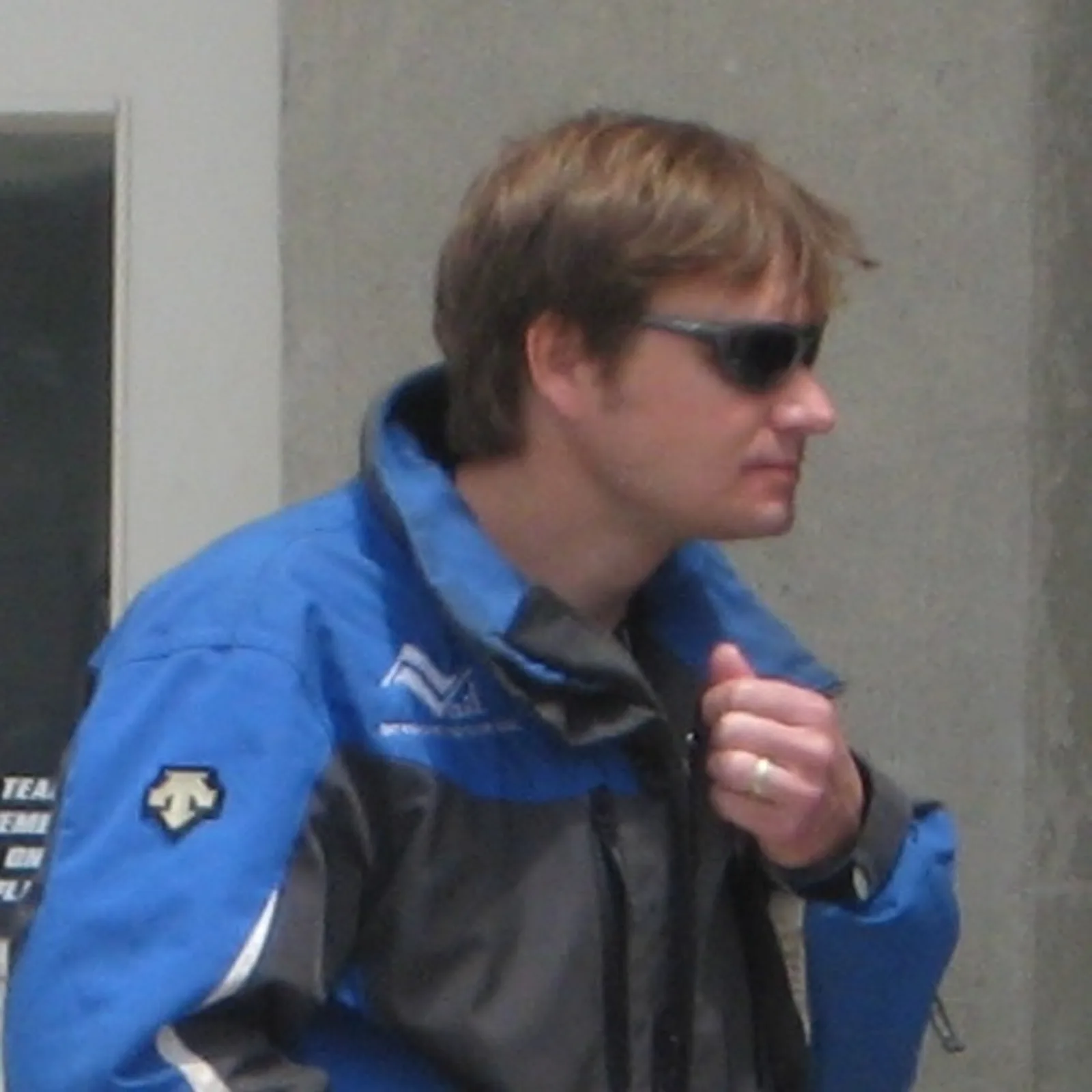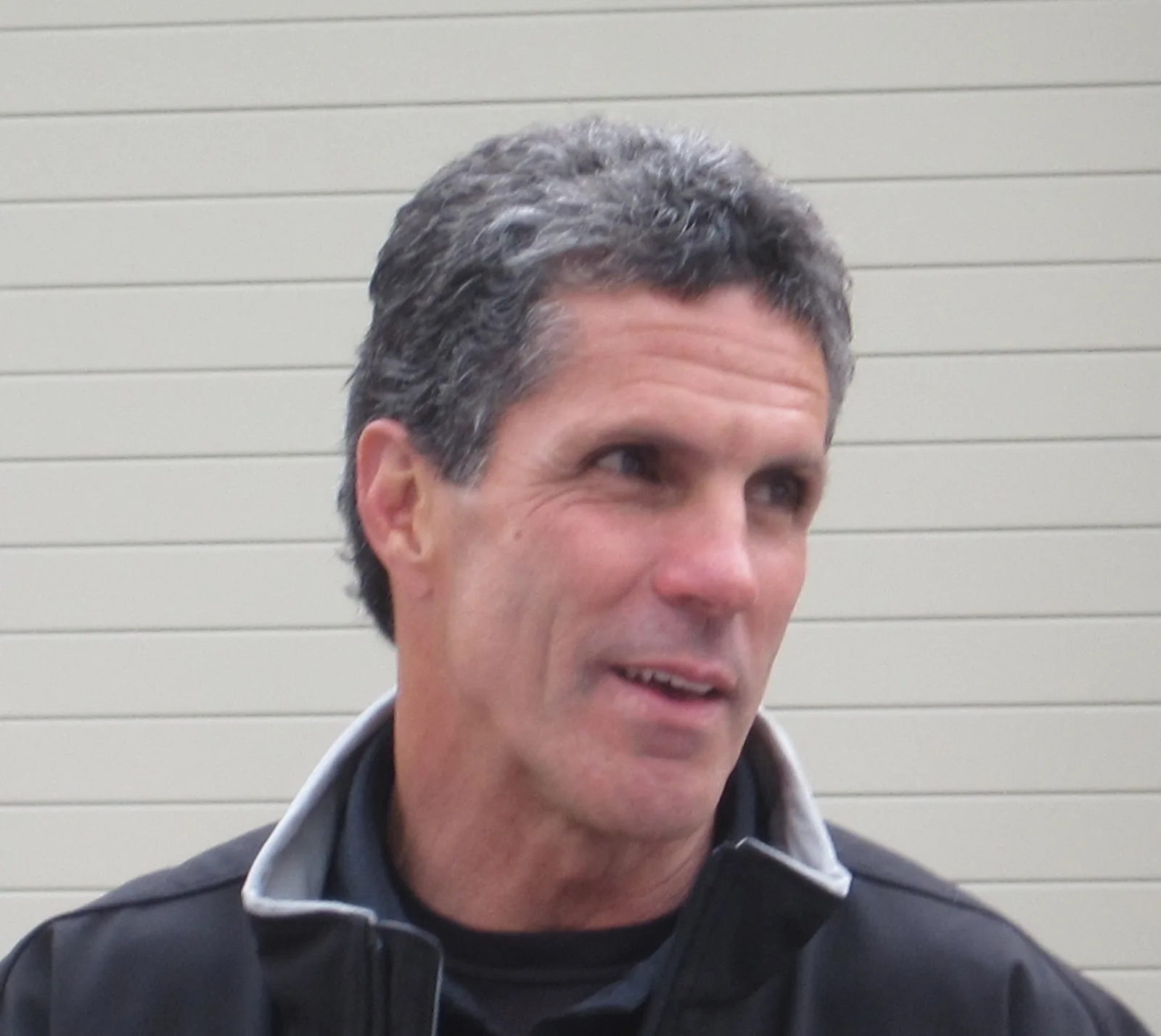
A Colombian who started 29 Formula One Grands Prix, became a CART regular with two Indianapolis 500 runner-up finishes, survived a 17-day coma and later raced in Baja.
Roberto Guerrero is a former Colombian-American racing driver who started 29 Formula One Grands Prix and became the first Colombian to start one. In CART and Indy cars he finished second at the Indianapolis 500 in 1984 and 1987, and he later raced in Baja.
Roberto Guerrero, a Colombian-born driver, took part in 29 Formula One Grands Prix before finding his main success in American open-wheel racing. He finished second at the Indianapolis 500 twice and survived a near-fatal accident in 1987. Later he turned to off-road racing in Baja.
Who is Roberto Guerrero?
Roberto Jose Guerrero Isaza was born on 16 November 1958 in Colombia. He began racing in 1972, and he became a naturalised United States citizen in 1989 after building most of his career in Britain and America.
His early years followed a route familiar to many ambitious drivers of his generation, moving from karting to British single-seaters and then European Formula Two. He crossed to the United States in 1983 and stayed there for the rest of his racing life. The couple has three children, and the family lives in San Juan Capistrano, Orange County.
Twenty-nine Grands Prix, two Indianapolis runner-up finishes and a recovery that turned a near-fatal crash into a career in brain-injury study.
How did karting and British racing prepare him?
Karting began for Guerrero in 1972, and by 1977 he had collected two national titles in Colombia. In 1977 he joined the Jim Russell Racing School, where he won five of the six races he entered and finished second in the other.
In 1978 he began competing in British Formula Ford 1600 and took eight wins during the season. Next he raced for Angila Cars in British Formula 3, in a Toyota-powered Argo, and placed ninth with fifteen points.
He returned to British Formula 3 in 1980 with Argo Racing Cars. That season he won five races at Thruxton, Cadwell Park, Brands Hatch and Oulton Park, and he tied for second in the championship with Kenneth Acheson on 95 points each.
In 1981 he moved into European Formula Two with Maurer Motorsport and won the Jochen Rindt Memorial Trophy at Thruxton. Two fourth places in Italian rounds, at Enna and Misano, helped him to seventh in the table with 16 points.
What was his Formula One career?
Guerrero started 29 Formula One Grands Prix, all for Ensign and then Theodore. His first start came on 23 January 1982, which made him Colombia's first Grand Prix starter, although he never scored a championship point.
The 1982 season was frustrating from the start. He was withdrawn from the South African opener after his former Formula Two team, Maurer Motorsport, filed an injunction against Ensign, and the Ensign boss issued a statement that questioned his physical and mental fitness to drive. He failed to qualify for the Brazilian race that followed.
At the United States Grand Prix West he started nineteenth, and a crash 27 laps in still left him classified fifteenth. Ensign then lost its tyre supplier, Avon, before Monaco, and the team's first Michelin race at Detroit gave him an eleventh place on the grid. He crashed six laps into that race and was credited with nineteenth.
His best Formula One result was eighth place at the 1982 German Grand Prix. He was unranked in the championship because he had scored no points, and at the season-ending Caesars Palace race his engine blew during the warm-up.
In 1983 Ensign merged with Theodore, and Guerrero drove a Theodore N183. He failed to qualify only at Monaco that year and finished twelfth at both the Dutch and European Grands Prix, but he again scored no points.
Why did Guerrero leave Formula One for American racing?
With no points and no realistic prospect of a competitive seat, Guerrero left Formula One at the end of 1983 to race in the United States. He made his Indy car debut in 1984 with Bignotti-Cotter Racing, and the move reshaped his career.
The American series offered him a new route into motorsport's biggest races. The Indianapolis 500 became the centre of his story, and it was there that his best results and his most painful setbacks both occurred.
How close did he come to winning the Indianapolis 500?
Guerrero finished second at the Indianapolis 500 in 1984 and again in 1987. He was also in contention in several other years, took pole in 1992 and led a race-high 47 laps in 1996, but he never won the race.
In 1984 he drove for Bignotti-Cotter Racing with the legendary chief mechanic George Bignotti. He was runner-up in the 500, and the rookie honour was shared with Michael Andretti. His March ran well all season, and he finished 11th in the championship with 52 points.
The following season the squad became Team Cotter, after Bignotti stepped away. Guerrero finished third at Indianapolis that year, and in 1986 he took fourth in the race and two second places elsewhere, at Mid-Ohio and Tamiami Park.
In 1987 he drove for Vince Granatelli Racing. He had qualified third at Phoenix before his car was declared illegal, and he started 22nd and won, his first Indy car victory. At Indianapolis he qualified fifth and ran second behind Mario Andretti for much of the race, until a wheel from another car struck his car and flew into the grandstand, killing a spectator.
Late in the race Guerrero took the lead, but an engine stall after his final pit stop let Al Unser Sr. through. Guerrero got going again and was unable to pass Unser on the restart, and he finished second to a year-old March 86C.
What happened in the 1987 accident?
Shortly after the Mid-Ohio win, a test session at Indianapolis ended with Guerrero crashing, and a tyre from his own car struck him. He spent 17 days in a coma and missed the final three races of the 1987 season. Despite missing the last three races, he ended the season fourth overall on 106 points, his best ever.
The IndyCar medical director, Dr Steve Olvey, later described the treatment in his memoir. Olvey said he lowered the pressure inside Guerrero's brain with injections of medicines that were new and not widely practised at the time. Recovery took less than three months.
The experience directed Guerrero toward the study of traumatic brain injuries, which became his main area of study. His Mid-Ohio win that year was his second and last IndyCar victory, following the Phoenix win earlier in the season.
What did the late 1980s and early 1990s bring?
After Granatelli, Guerrero drove for Alex Morales Motorsports in 1989 and for Patrick Racing in 1990, but his results were modest. In 1992 he qualified on pole at Indianapolis as a part-time driver, the first to do so since Pancho Carter in 1985.
The 1988 season with Granatelli brought a second place at the Phoenix season opener. At Indianapolis the race ended before the first lap was complete after Scott Brayton collected him, and his only top-ten finishes after the 500 came at Pocono and Nazareth.
The Alfa Romeo engine was delayed, so the squad sat out the opening four rounds, Indianapolis among them. Guerrero finished eighth at Detroit and scored just one more point that year, leaving him 23rd in the championship.
Patrick Racing took the Alfa Romeo programme on in 1990. Guerrero qualified 28th for the Indianapolis 500 and finished 23rd, and a switch to a Lola chassis later that year brought a fifth place at Michigan.
In 1992 King Racing gave him a Lola, and in qualifying he produced a four-lap average of 232.482 mph, with a one-lap best of 232.618 mph. He then spun out on the second parade lap, and he was credited with 33rd and last place.
How did he perform in the Indy Racing League?
In 1996 he raced full-time in the Indy Racing League for Pagan Racing, ending fourth overall on 237 points. At the Indianapolis 500 he qualified sixth and led a race-high 47 laps before the race ended in a dramatic final-lap crash.
The Indy 200 opener at Walt Disney World Speedway saw him qualify second and finish fifth. At Indianapolis he was in the mix with Tony Stewart, Arie Luyendyk and Buddy Lazier, the eventual winner. Lazier was the eventual winner, and Guerrero was in contention for much of the afternoon.
During a pit stop on lap 167 the fuel nozzle was connected awkwardly, fuel spilled and the car began to catch fire. Guerrero started to climb out before officials decided it was safe to continue. After that he dropped out of contention and was a lap down. On the final lap he slid out in the fourth turn, took out Alessandro Zampedri and Eliseo Salazar, and Zampedri flipped.
He finished the 1996 season in the top ten, and in 1997 he was seventh in points with 221. A major accident at the Las Vegas season finale that year saw his car flip, but he climbed out of the wreck.
In 1998 Pagan released him after the Texas race, and he joined Cobb Racing. He won the Scott Brayton Award that year for best showing the spirit of the late driver at Indianapolis, and he finished fourth at the Lone Star 500 in Texas.
His final Indy car seasons were brief. A one-off drive for A. J. Foyt Enterprises in 2000 ended in failure to qualify at Indianapolis, and a late run with Team Coulson at Kentucky Speedway ended with engine trouble. He failed to qualify at Indianapolis again in 2001, and he left the sport by 2003.
What did he do in stock cars and the International Race of Champions?
Guerrero drove in IROC XII in 1988 in an identical Chevrolet Camaro. He qualified on pole for two races and finished last in the championship with nineteen points, and his season's earnings came to $30,400. He also tried NASCAR Busch Series races in 2000 and 2002, but he failed to qualify both times.
He missed the season-opening IROC race at Daytona because of injuries from a 1987 test. At Riverside he crashed after ten laps and finished 11th, and at Michigan he led four laps and finished tenth.
Guerrero later became a commentator on SpeedTV and on FOX 3 Latin America broadcasts. From 2009 to 2013 his commentary covered sports car events in the United States, including Grand-Am races, for Spanish-speaking viewers.
How did he move into Baja racing?
Guerrero's off-road career began at the Baja 2000 after his Indy car years had ended. He has since raced in Baja 1000 events and guides tours of the Baja Peninsula with the company Wide Open Baja.
Baja racing offered a different kind of test from ovals and fixed circuits, with long desert routes rather than a single track. His return to competition came well after his Indy car career had finished, and it showed that his appetite for racing had outlasted the American open-wheel years.
What is his career at a glance?
| Series | Years | Best result |
|---|---|---|
| British Formula Ford 1600 | 1978 | Eight wins in the season |
| British Formula 3 | 1980 | Five wins; tied second with 95 points |
| European Formula Two | 1981 | Jochen Rindt Memorial Trophy at Thruxton |
| Formula One | 1982 and 1983 | Eighth at the 1982 German Grand Prix |
| CART Indycar World Series | 1984 to 1988 | Indianapolis 500 runner-up in 1984 and 1987; two wins in 1987 |
| Indy Racing League | 1996 | Fourth in the championship with 237 points |
| International Race of Champions | 1988 | Pole in two races; last in the championship |
| Busch Series | 2000 and 2002 | Attempts to qualify, both unsuccessful |